Pick the other format
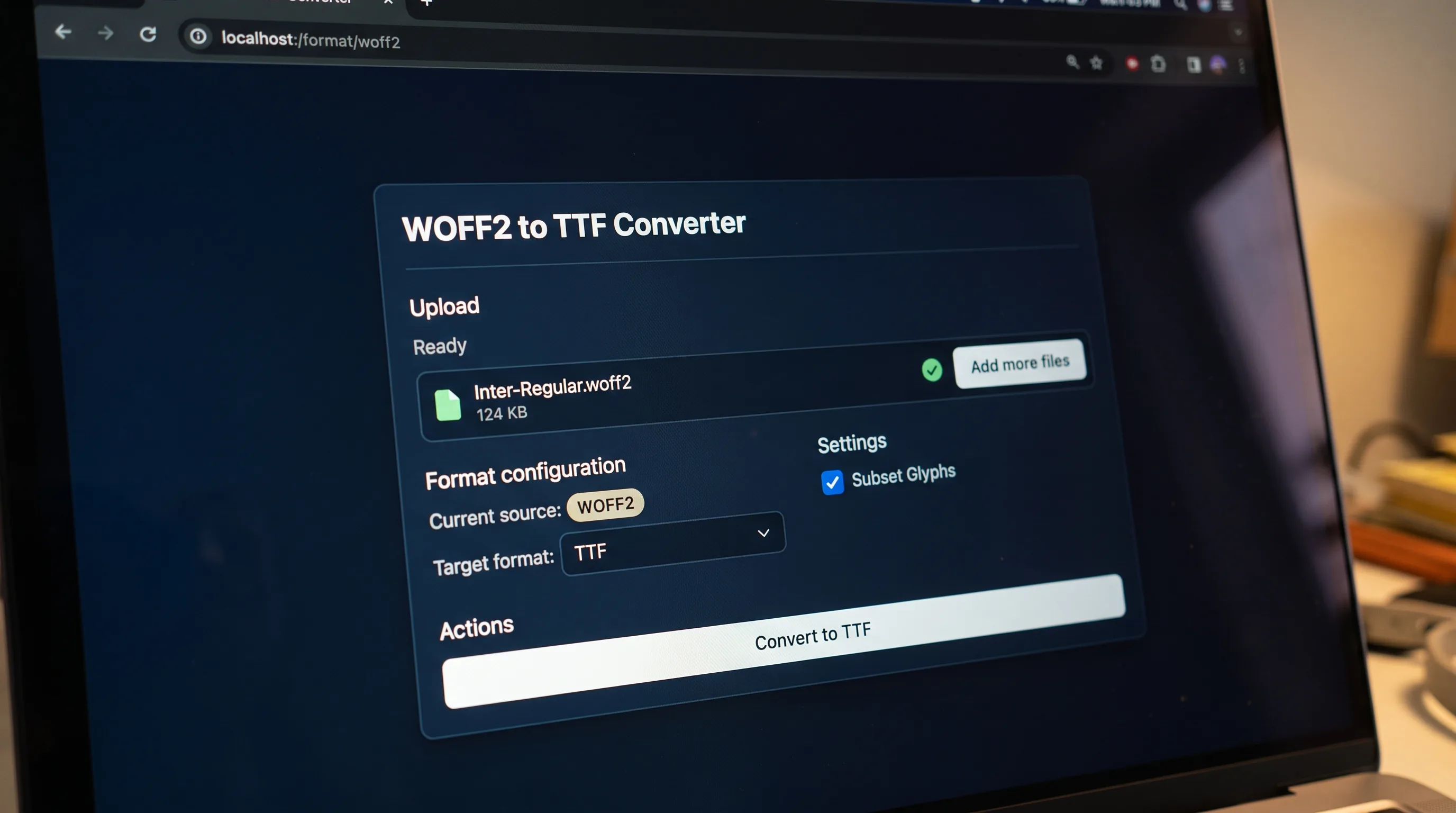
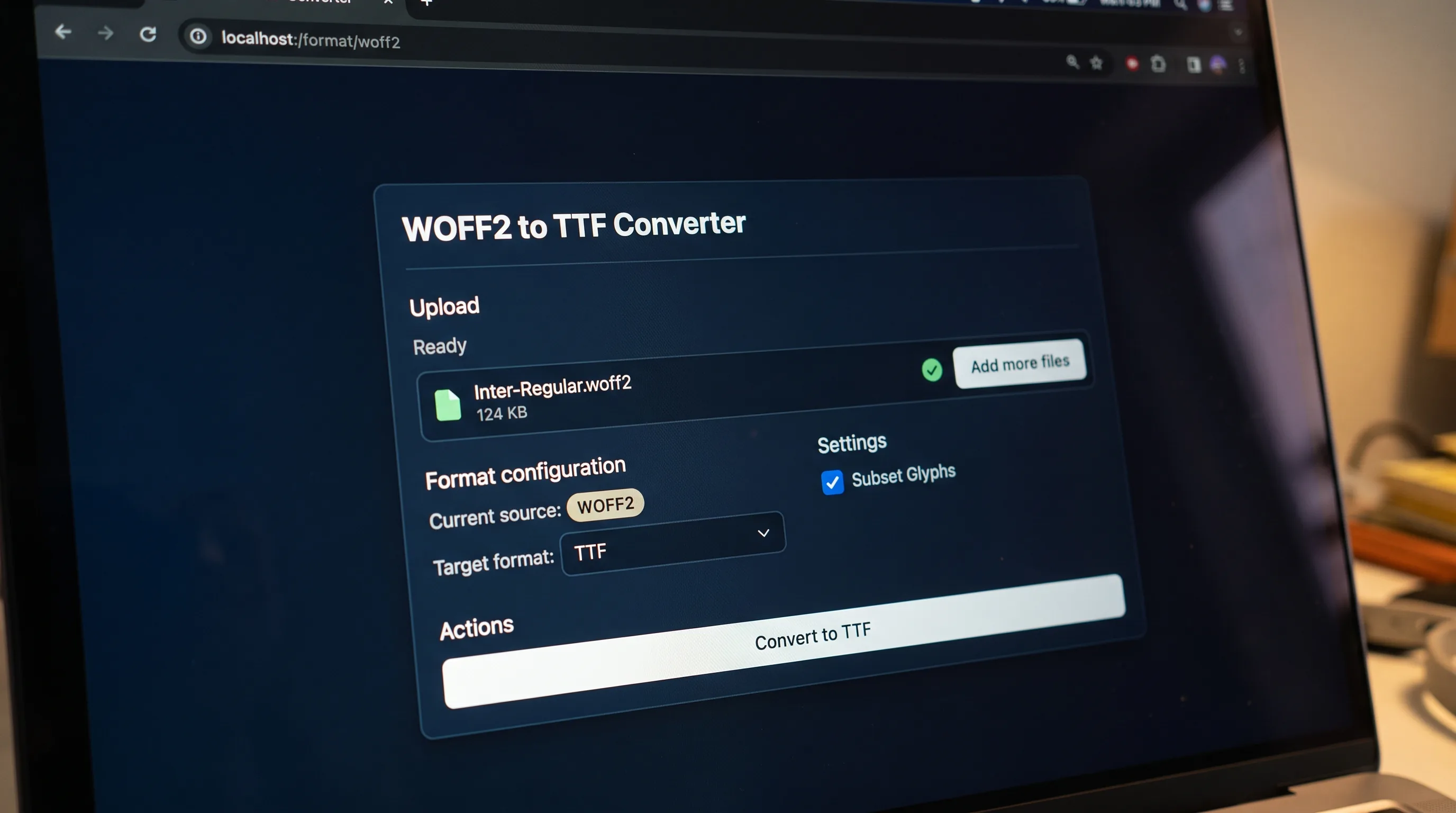
Choose the source format in the converter above. The target is already set to EOT, so you only add the file.
EOT converter
Drop a .ttf file here or click to upload
EOT (Embedded OpenType) is the legacy web font format created by Microsoft for Internet Explorer. It is a TrueType or OpenType font wrapped in a Microsoft-specific container with a lightweight digital-rights wrapper that satisfied font foundries before web licensing was common. EOT only ever shipped in one browser engine, Internet Explorer 4 through 11, so its relevance ended when IE retired in 2022. Today EOT exists mainly to keep legacy enterprise intranets running.
Choose the source format in the converter above. The target is already set to EOT, so you only add the file.
Drop a font on the box or browse for one. A progress row shows while the job runs.
When the job finishes you see the new file name. Download it, or convert another font straight away.
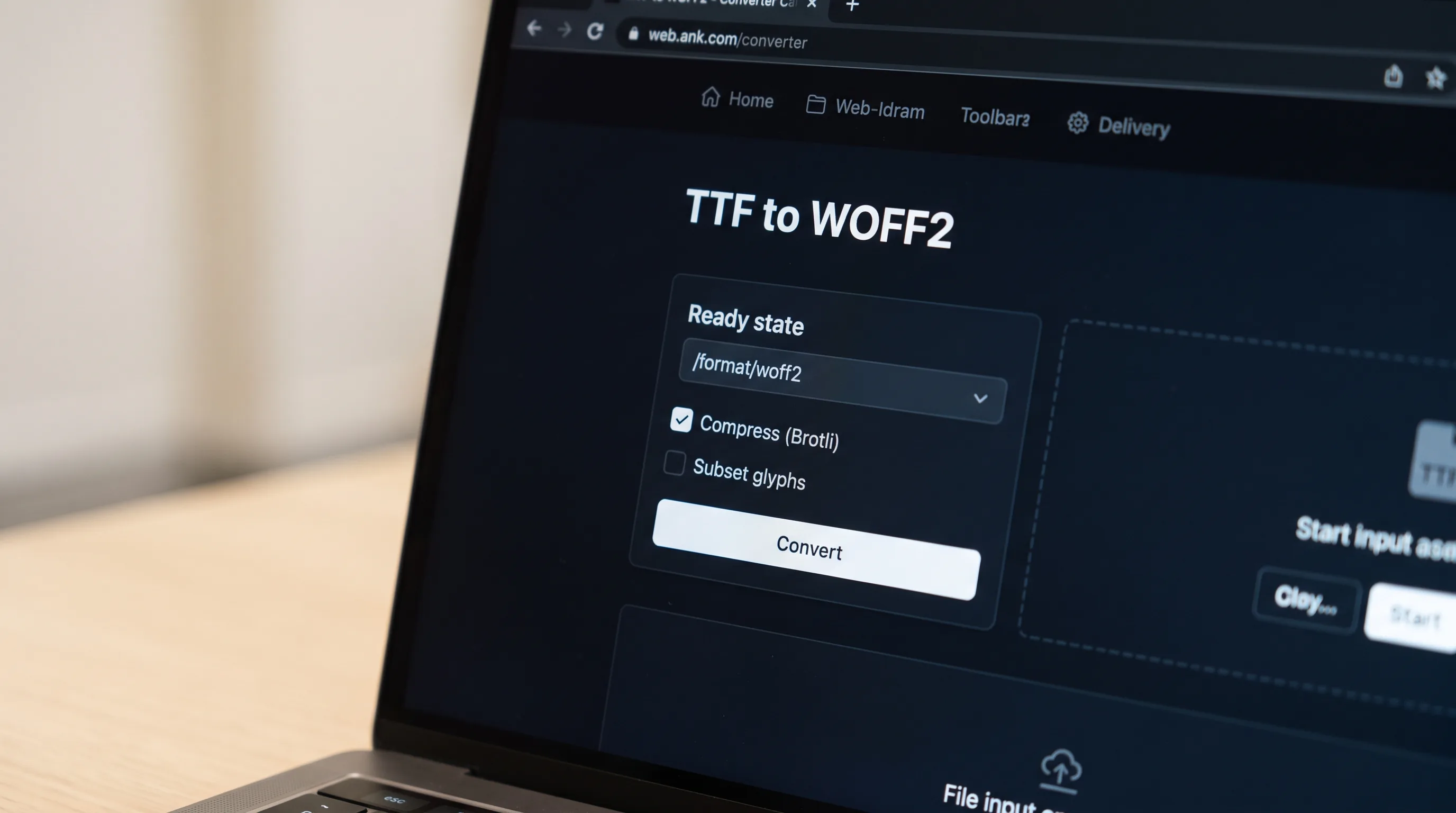
Compress
Repack the font into a smaller, browser-ready container.
Decompress
Unpack a compressed web font back to its raw outline data.
Subset
Ship only the glyphs a page actually uses.
Pick the format of the font you have. EOT is already the target.
Drop the file on the upload box or click to browse, then press Convert to EOT.
Wait for the result, then download it. Free-tier files are deleted automatically.
Microsoft introduced EOT with Internet Explorer 4 in 1997, almost a decade before the open web caught up. The W3C submitted EOT for standardisation in 2008, but Mozilla, Apple, and Opera refused to implement it, preferring the open WOFF specification that arrived in 2010. EOT remained an IE-only quirk for its entire life. When Microsoft shipped Edge in 2015 and discontinued IE11 in 2022, EOT effectively retired. The format is still important for two reasons: large enterprise environments often run pinned IE-mode browsers inside Edge for legacy intranet apps, and a handful of PDF and ePub readers use EOT-style embedded fonts internally. The format also leaks into a few unexpected places, some Windows administration tools, internal Microsoft Office font installers, and a handful of font-management utilities still emit EOT files when exporting cross-format bundles. That long tail of producers keeps the format alive in archival workflows long after the last EOT-consuming browser shipped.
The upload box shows the live size limit before you add a file. Signing in raises it, and paid plans raise it further.
EOT converts to and from the other seven public font formats. The lists further down the page link to each pair.
Files are uploaded to Cloudflare R2 storage for processing and are encrypted in transit.
Free-tier files are deleted automatically after the job finishes. Signed-in output stays in your history for your plan's retention period.
Inspect a font for free in the font workspace, then convert it.
Open the font workspaceFor PDFs, Word, PowerPoint and scans, AI Extract turns documents into clean Markdown or JSON, tables, layout and reading order preserved.
Open AI Extract →

Turn the font a designer sent into a file you can load with @font-face.
Convert a web font back into one you can install, when its licence allows it.

Move an old font on an older site into a format current browsers open.
No tool matches that search.
Almost never on the public web. The last browser to support EOT was Internet Explorer 11, which Microsoft retired in 2022. EOT is only relevant for internal corporate environments that still run IE-mode inside Edge for legacy applications.
Yes. Our converter unwraps the EOT container, extracts the underlying TrueType data, and re-wraps it in a Brotli-compressed WOFF2 envelope. Glyph outlines and hinting transfer cleanly.
EOT was a Microsoft-only specification that other browser vendors refused to implement. WOFF was designed as an open standard with multi-vendor agreement from day one, so foundries and browser vendors backed WOFF and let EOT die with IE. The lesson, that proprietary web formats lose to open ones, became a defining pattern of the standards era.
Yes. Free conversions need no signup and add no watermark.
No. You can convert a font without signing up. Signed-in conversions use credits, and the result stays in your history.
Yes. Every pair has its own page. The links under the conversion lists open them.
Converting a file does not change its licence. Check that the licence lets you convert the font and embed it on the web before you publish it.