Header and penalty note
Name, U.S. taxpayer identifying number, reference ID number, and addresses in the country of residence and in the United States, under a note on the penalty for not disclosing.
8833
Treaty-Based Return Position Disclosure Under Section 6114 or 7701(b)
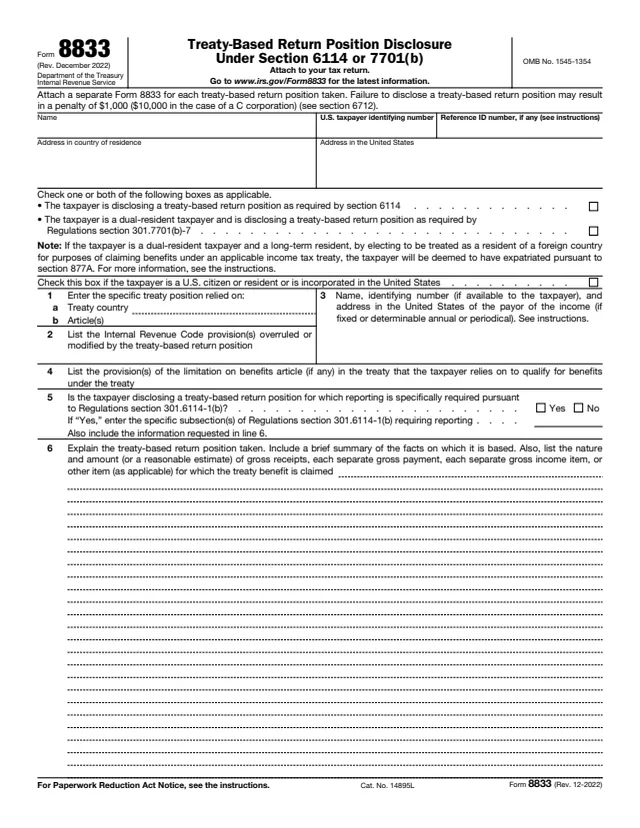
Form 8833, Treaty-Based Return Position Disclosure Under Section 6114 or 7701(b), is the form taxpayers use to make the treaty-based return position disclosure required by Internal Revenue Code section 6114. The About page says dual-resident taxpayers also use it to make the disclosure required by Regulations section 301.7701(b)-7.
The instructions explain that a taxpayer takes a treaty-based return position by maintaining that a U.S. treaty overrules or modifies a provision of the Internal Revenue Code and thereby causes, or potentially causes, a reduction of tax on the return. A separate form is attached for each position taken, and some positions are waived from reporting under Regulations section 301.6114-1(c).
The form is attached to a tax return such as Form 1040-NR or Form 1120-F. The instructions are printed in the same PDF. You can fill out the PDF free in your browser on this page and download it without an account.
Name, U.S. taxpayer identifying number, reference ID number, and addresses in the country of residence and in the United States, under a note on the penalty for not disclosing.
Boxes for a section 6114 disclosure, a dual-resident disclosure under Regulations section 301.7701(b)-7, and a taxpayer who is a U.S. citizen, resident or U.S. incorporated.
The treaty country and article(s) relied on, and the Internal Revenue Code provision(s) overruled or modified by the position.
Name, identifying number and U.S. address of the payor of the income, if the income is fixed or determinable annual or periodical.
The limitation on benefits provisions relied on, and whether the position is one specifically required to be reported under Regulations section 301.6114-1(b).
An explanation of the position, a brief summary of the facts, and the nature and amount of each item for which the treaty benefit is claimed.
Enter the name and U.S. taxpayer identifying number: an SSN or ITIN for an individual, an EIN for others. The instructions say to enter the foreign address as city, province or state, and country, without abbreviating the country.
Check one or both disclosure boxes, and the separate box if the taxpayer is a U.S. citizen or resident or is incorporated in the United States.
Enter the treaty country and the article(s) relied on, then list the Code provision(s) the position overrules or modifies.
For FDAP income, enter the payor's name, identifying number if available, and U.S. address. The instructions say FDAP includes interest, dividends, rents, premiums, annuities, salaries, wages, and other compensation.
The instructions say to name the specific test in the treaty's Limitation on Benefits article that is met, and point to Table 4 on IRS.gov for a summary.
If line 5 is Yes, enter the subsection(s) of Regulations section 301.6114-1(b). Then explain the position on line 6, with a brief summary of facts and the amount, or a reasonable estimate, of income affected.
You get the real form, filled in a browser tab, with nothing standing between you and the finished PDF.
The instructions say to attach Form 8833 to the tax return, such as Form 1040-NR or Form 1120-F.
The instructions say a taxpayer not otherwise required to file a return files one at the IRS Service Center where a return would normally be filed, to make the disclosure.
The form says to attach a separate Form 8833 for each treaty-based return position. The instructions allow payments of the same type from the same payor to be treated as a single item.
The form says failure to disclose a treaty-based return position may result in a penalty of $1,000 ($10,000 in the case of a C corporation), citing section 6712.
The instructions say a dual-resident individual claiming benefits as a foreign resident is treated as a nonresident alien in figuring U.S. income tax for that part of the year, but still a U.S. resident for other purposes.
The instructions say a person is a long-term resident if they were a lawful permanent resident of the United States in at least 8 of the last 15 tax years ending with the year that status ends.
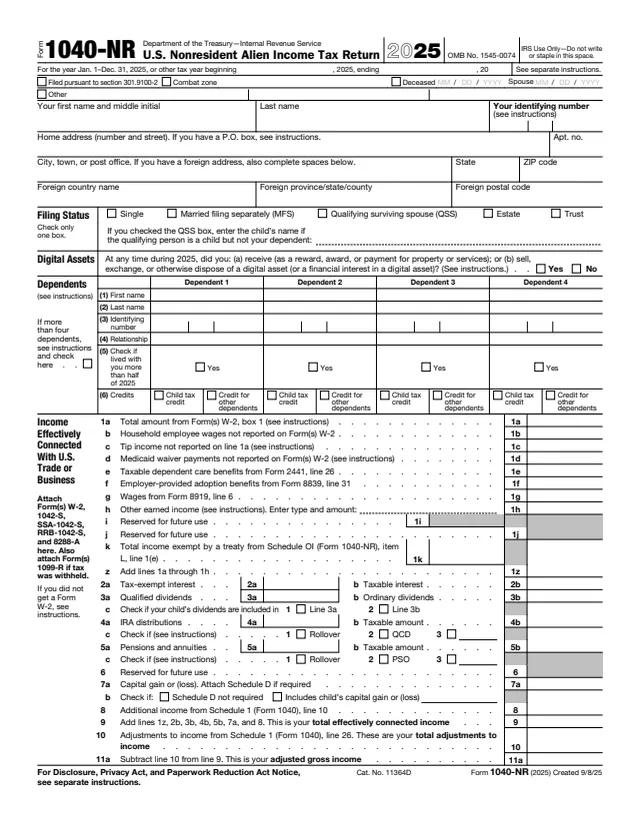
1040-NR
171 fields, 2 pages
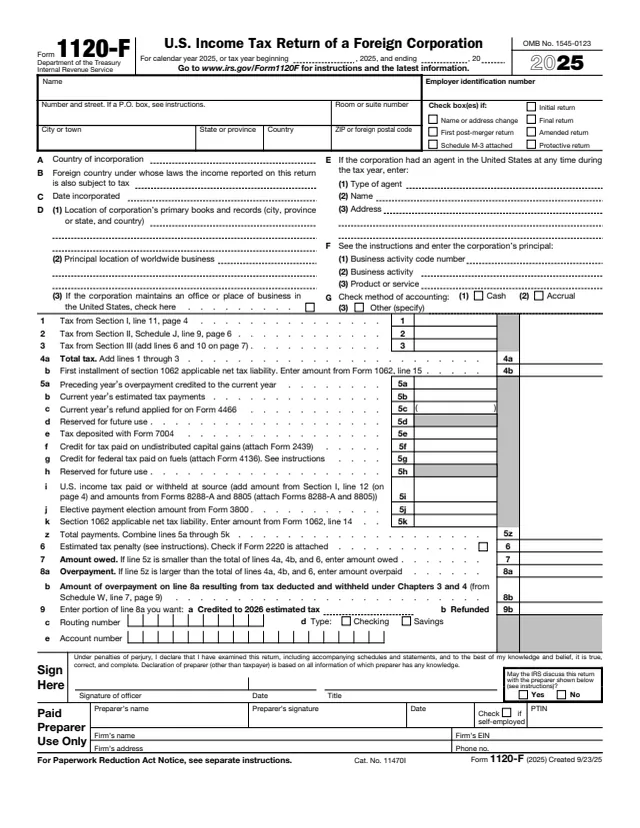
1120-F
527 fields, 9 pages
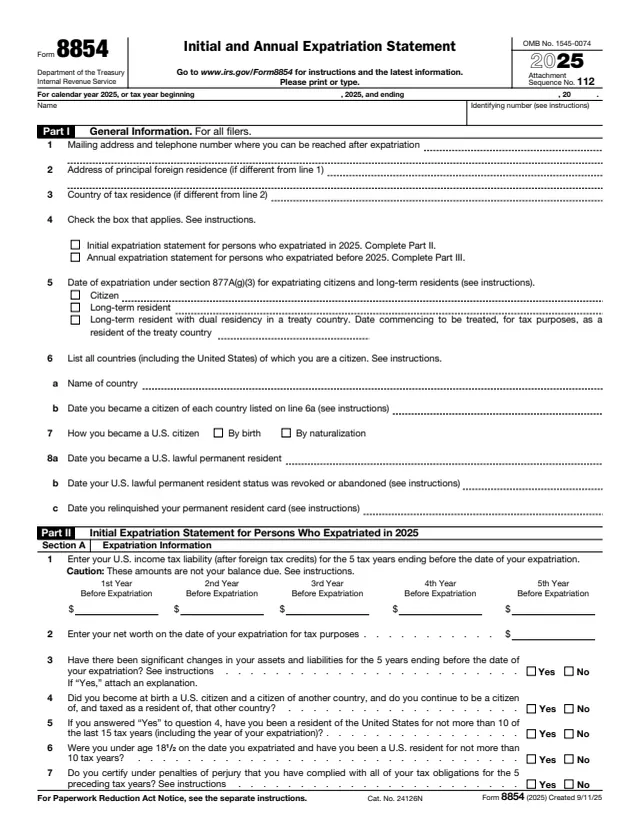
8854
208 fields, 5 pages
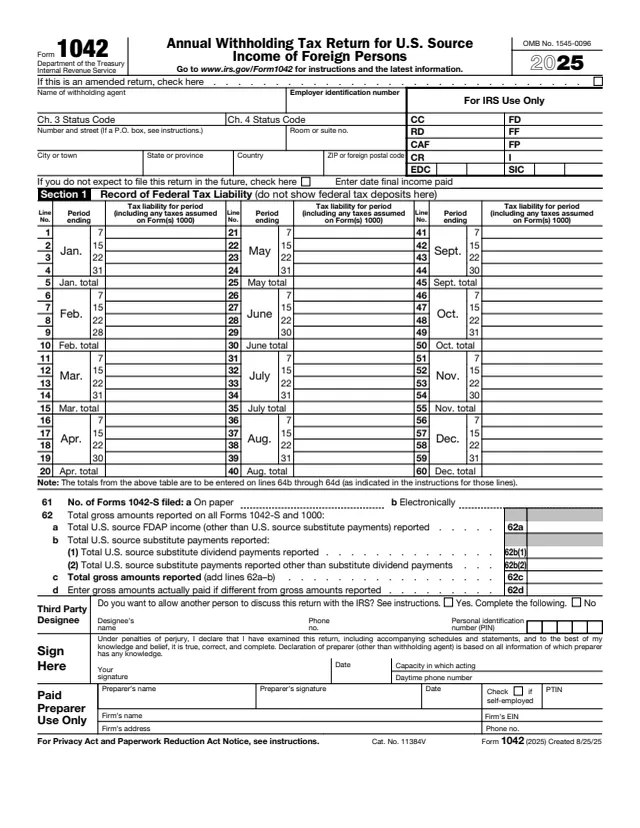
1042
134 fields, 2 pages
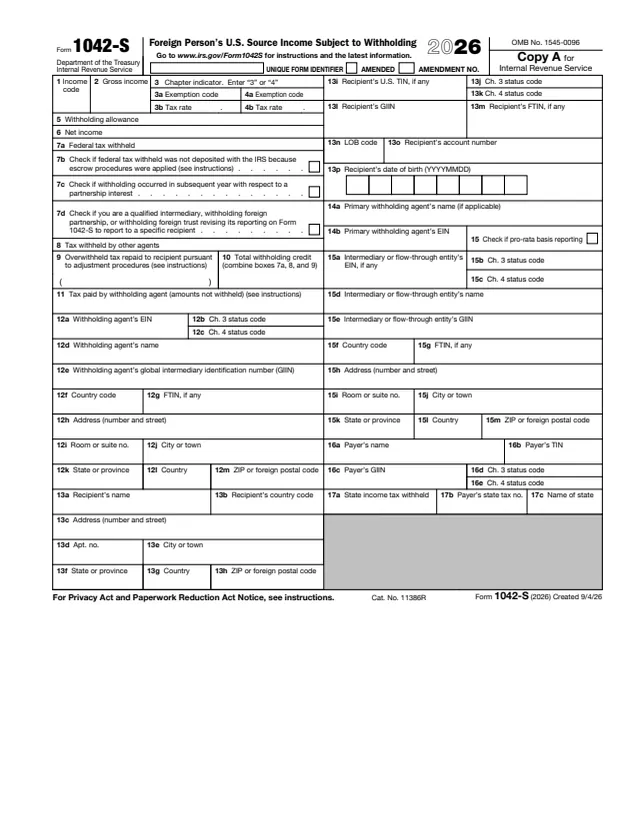
1042-S
300 fields, 7 pages
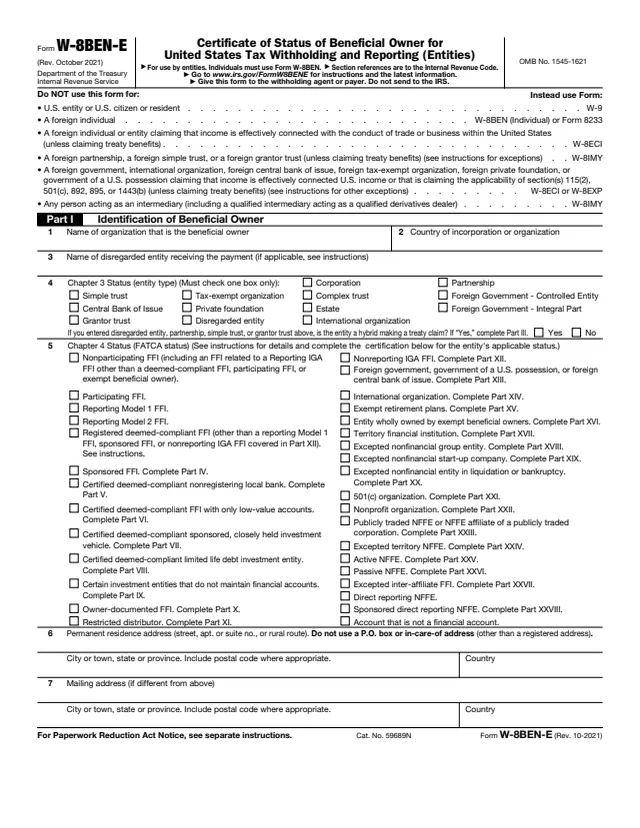
W-8BEN-E
179 fields, 8 pages
Individuals and entities that take a treaty-based return position attach it to their own tax return.
No tool matches that search.
No. The form says to attach it to the tax return, and the instructions name returns such as Form 1040-NR and Form 1120-F.
No. The form says to attach a separate Form 8833 for each treaty-based return position taken.
The form says failure to disclose may result in a penalty of $1,000, or $10,000 in the case of a C corporation, under section 6712.
No. The instructions say Regulations section 301.6114-1(c) waives reporting for certain positions, and advise careful review because some waivers apply narrowly.
The instructions say an alien individual is a dual-resident taxpayer if considered a resident of both the United States and another country under each country's tax laws.
The instructions say a return is still filed, at the IRS Service Center where a return would normally be filed, to make the disclosure.