Name and identifying number
The name(s) shown on the return and the identifying number.
8932
Credit for Employer Differential Wage Payments
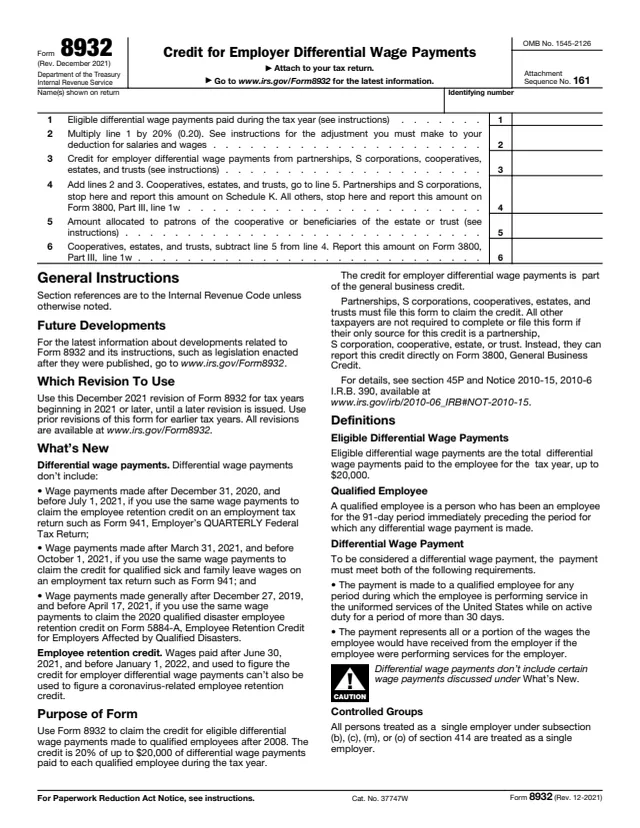
Form 8932 is the Credit for Employer Differential Wage Payments. The About page says an employer can use this form to claim the credit for employer differential wage payments made to qualified employees after 2008. It is a business credit form, attached to the employer's tax return, and the form says the credit is part of the general business credit.
The instructions say the credit is 20% of up to $20,000 of differential wage payments paid to each qualified employee during the tax year. A differential wage payment is made to a qualified employee for any period during which the employee is performing service in the uniformed services of the United States while on active duty for a period of more than 30 days, and represents all or a portion of the wages the employee would have received from the employer.
The instructions say to use the December 2021 revision for tax years beginning in 2021 or later, until a later revision is issued. You can fill out Form 8932 free in your browser on this page and download it without an account.
The name(s) shown on the return and the identifying number.
Eligible differential wage payments paid during the tax year.
Line 1 multiplied by 20% (0.20), with a pointer to the instructions on the wage deduction adjustment.
Credit for employer differential wage payments from partnerships, S corporations, cooperatives, estates and trusts.
Lines 2 and 3 added, with routing to Schedule K for partnerships and S corporations or to Form 3800, Part III, line 1w for others.
For cooperatives, estates and trusts: the amount allocated to patrons or beneficiaries, and the remainder reported on Form 3800, Part III, line 1w.
Enter the total eligible differential wage payments made to qualified employees during the tax year. The instructions say not to include more than $20,000 of payments for any employee.
Multiply line 1 by 20%. The instructions say the deduction for salaries and wages is generally reduced by the line 2 amount, even if the full credit cannot be taken this year.
Enter credits from Schedule K-1 (Form 1065) box 15 code P, Schedule K-1 (Form 1120-S) box 13 code P, Schedule K-1 (Form 1041) box 13 code Q, or Form 1099-PATR box 12.
Add lines 2 and 3. Partnerships and S corporations stop and report on Schedule K. Cooperatives, estates and trusts go to line 5. All others report on Form 3800, Part III, line 1w.
Enter the amount allocated to patrons or beneficiaries on line 5, subtract it from line 4, and report line 6 on Form 3800, Part III, line 1w.
You get the real form, filled in a browser tab, with nothing standing between you and the finished PDF.
The form says to attach it to your tax return.
The instructions say a qualified employee is a person who has been an employee for the 91-day period immediately preceding the period for which any differential wage payment is made.
The instructions say certain wage payments used for the employee retention credit, the credit for qualified sick and family leave wages, or Form 5884-A are not differential wage payments.
The instructions say any research credit or orphan drug credit for compensation paid to an employee is reduced by the differential wage payment credit figured for that employee.
No credit is allowed for any tax year in which the taxpayer is under a final order of a U.S. district court under section 4323 of title 38 for a violation of chapter 43, and for the 2 succeeding tax years.
The instructions say all persons treated as a single employer under subsection (b), (c), (m) or (o) of section 414 are treated as a single employer.
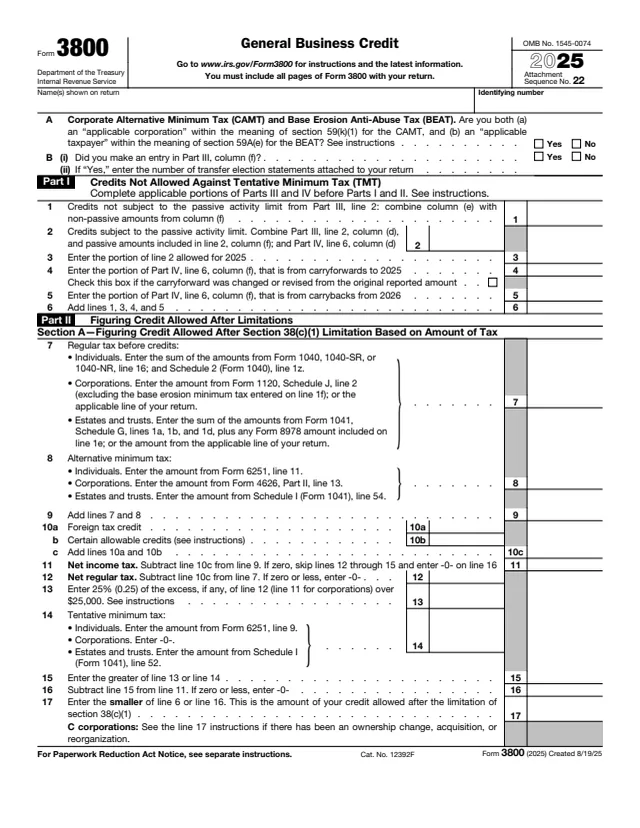
3800
1,921 fields, 9 pages
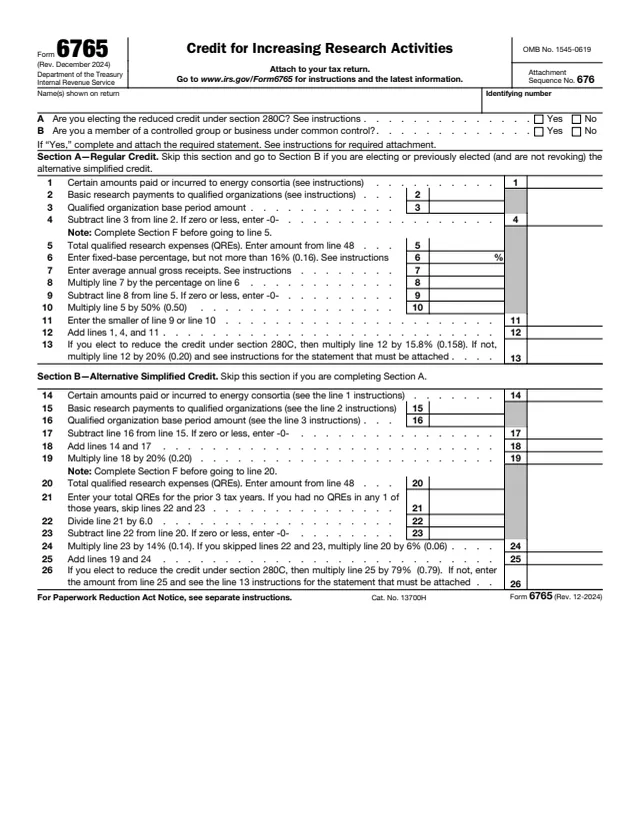
6765
270 fields, 4 pages
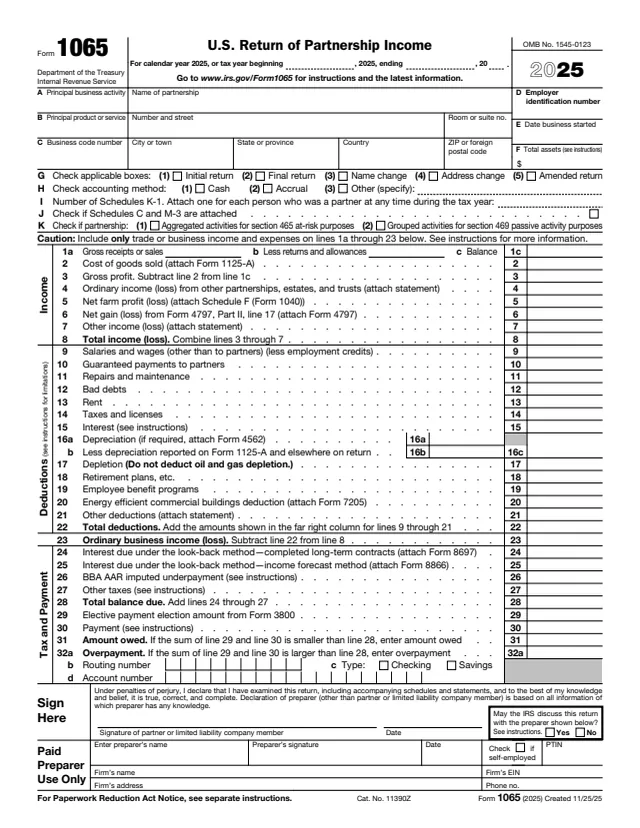
1065
440 fields, 6 pages
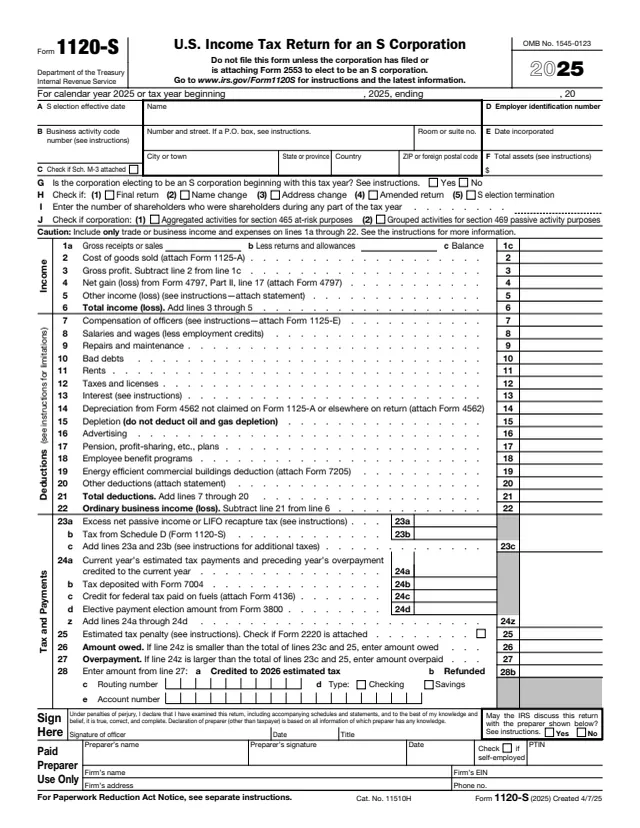
1120-S
390 fields, 5 pages
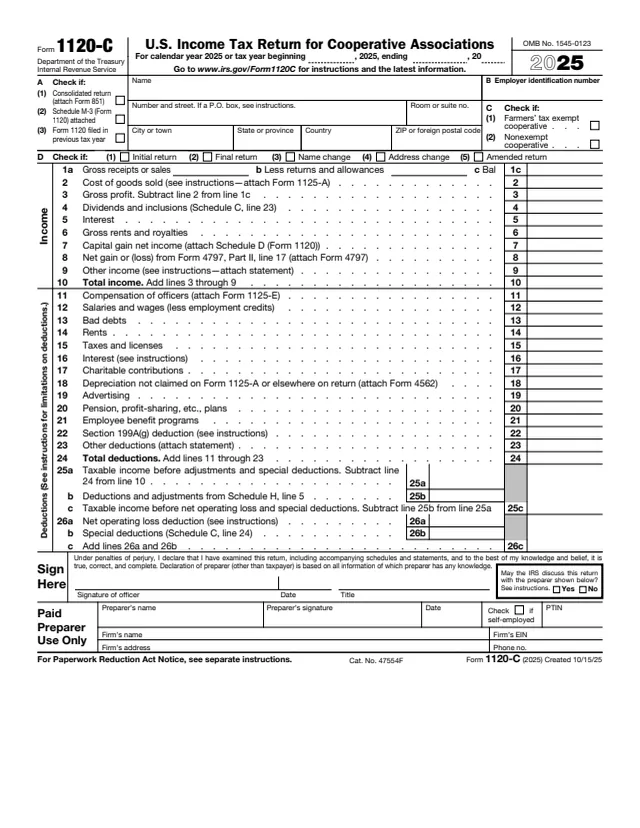
1120-C
449 fields, 5 pages
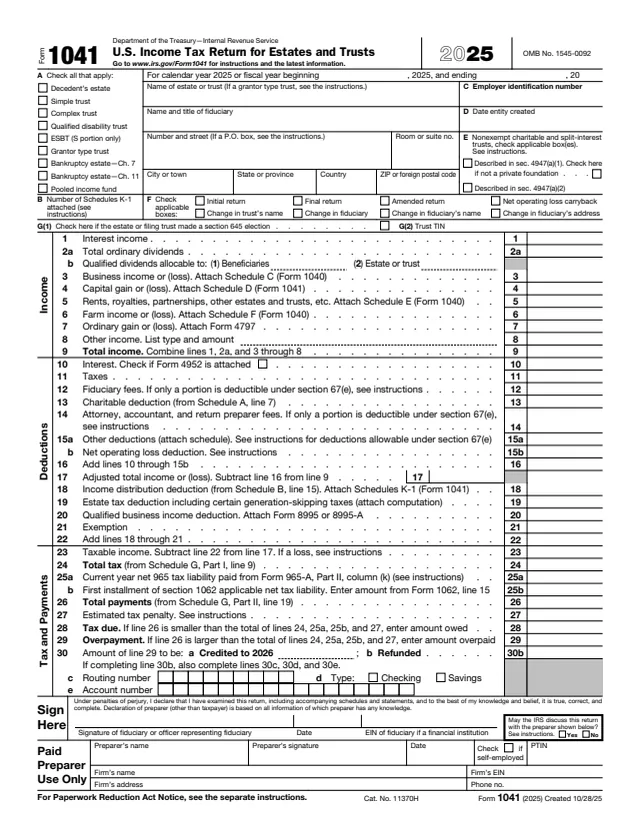
1041
173 fields, 3 pages
The form is completed by employers and pass-through entities, not by the employees who receive the payments.
No tool matches that search.
The instructions say it is 20% of up to $20,000 of differential wage payments paid to each qualified employee during the tax year.
A payment to a qualified employee for a period of active duty in the uniformed services of more than 30 days that represents all or part of the wages the employee would have received from the employer.
The instructions list the Armed Forces, the Army and Air National Guard in certain duty, the commissioned corps of the Public Health Service, and others designated by the President in time of war or national emergency.
The form says other taxpayers are not required to file it if their only source for the credit is a pass-through entity. They can report it directly on Form 3800.
No. The About page says an employer uses this form to claim the credit for payments made to qualified employees.
The instructions say to use the December 2021 revision for tax years beginning in 2021 or later, until a later revision is issued, and prior revisions for earlier years.