Part I, lines 1 to 3b: the facility
IRS-issued registration number for an elective payment or transfer election, facility type, owner's name and TIN if different from the filer, address, and latitude and longitude.
8835
Renewable Electricity Production Credit
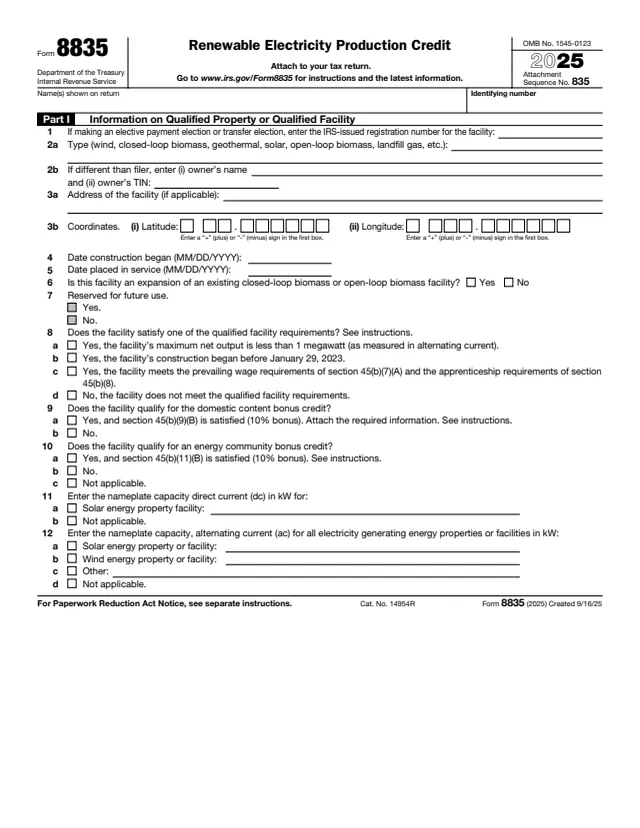
Form 8835 is used to claim the renewable electricity production credit. The IRS says the credit is allowed only for the sale of electricity produced in the United States or U.S. territories from qualified energy resources at a qualified facility.
The instructions say a separate Form 8835 is used for each qualified facility. Part I reports information about the facility, such as its type, address and coordinates, the dates construction began and it was placed in service, and bonus credit questions. Part II figures the credit from the kilowatt-hours produced and sold. The form says to attach it to the tax return, and line 15 sends the credit to Form 3800, General Business Credit, or to Schedule K for partnerships and S corporations.
This page has the 2025 form. You can fill out the PDF free in your browser on this page and download it without an account.
IRS-issued registration number for an elective payment or transfer election, facility type, owner's name and TIN if different from the filer, address, and latitude and longitude.
Date construction began, date placed in service, and whether the facility is an expansion of an existing closed-loop or open-loop biomass facility. Line 7 is reserved for future use.
The qualified facility requirements for the increased credit, the domestic content and energy community bonus questions, and nameplate capacity in kW.
Kilowatt-hours produced and sold for ten resource types, each times the rate printed on the form, then the phaseout adjustment and the credit before reduction.
Reduction for tax-exempt bond financing, reductions for certain wind facilities, the increased credit amount, the domestic content and energy community bonuses, and the elective payment phaseout.
Credit from partnerships, S corporations, cooperatives, estates and trusts, the total on line 15, and the amount allocated to patrons or beneficiaries.
Enter the facility type, address and coordinates, with a plus or minus sign in the first box, then the date construction began and the date placed in service. Enter the IRS-issued registration number if making an elective payment or transfer election.
Check the box that applies to each question and enter the nameplate capacity. The instructions say a Yes on line 8, 9 or 10 calls for attached statements, and line 8c calls for Form 7220.
Enter the kilowatt-hours produced and sold for each resource and multiply by the rate. The form prints $0.006 for wind, closed-loop biomass, geothermal, solar and offshore wind, and $0.003 for the other five, with notes for older and newer facilities.
Add column (c). The instructions say calendar year filers enter -0- on line 3. If tax-exempt bonds financed the facility, figure the reduction on lines 5a to 5d. Lines 7a to 7g apply to certain wind facilities.
If a Yes box on Part I, line 8 is checked, line 9 multiplies line 8 by 5.0. Lines 10 and 11 add 10% bonuses for domestic content and energy communities, and line 13 applies 90% where the elective payment phaseout applies.
Enter credits from pass-through entities on line 14, which the instructions say goes on a separate Form 8835. Add line 15 and report it where line 15 or 17 directs, such as Form 3800, Part III, line 1f or 4e.
You get the real form, filled in a browser tab, with nothing standing between you and the finished PDF.
The form says to attach it to the tax return. Applicable entities making the elective payment election also file Form 3800 and Form 990-T or another applicable return.
Line 15 says partnerships and S corporations report the amount on Schedule K. Others report it on Form 3800, Part III, line 4e for electricity produced during the 4-year period beginning on the placed in service date, and line 1f for all other production.
The instructions say a pre-filing registration is completed for each facility before filing the return when making an elective payment or transfer election, at IRS.gov/Credits-Deductions/Register-for-Elective-Payment-or-Transfer-of-Credits.
The instructions list a credit period of 10 years from the placed in service date for each resource type, for facilities placed in service after August 8, 2005.
The instructions say fiscal year filers with sales in 2025 and 2026 at different rates make separate calculations, attach them and write "FY" in the margin.
The About Form 8835 page lists a recent development dated 20-MAR-2026: Tax years 2023, 2024, and 2025 reporting relief for Form 3468 and Form 8835.
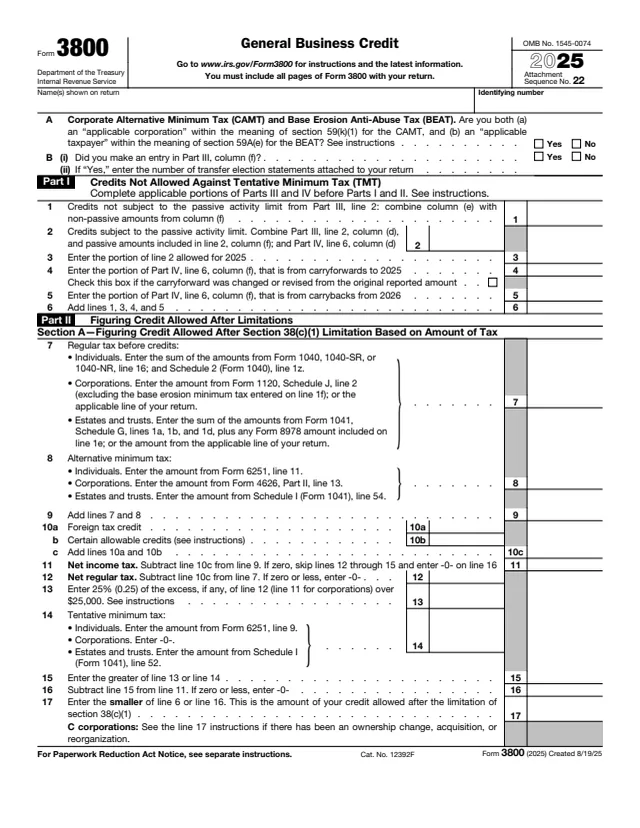
3800
1,921 fields, 9 pages
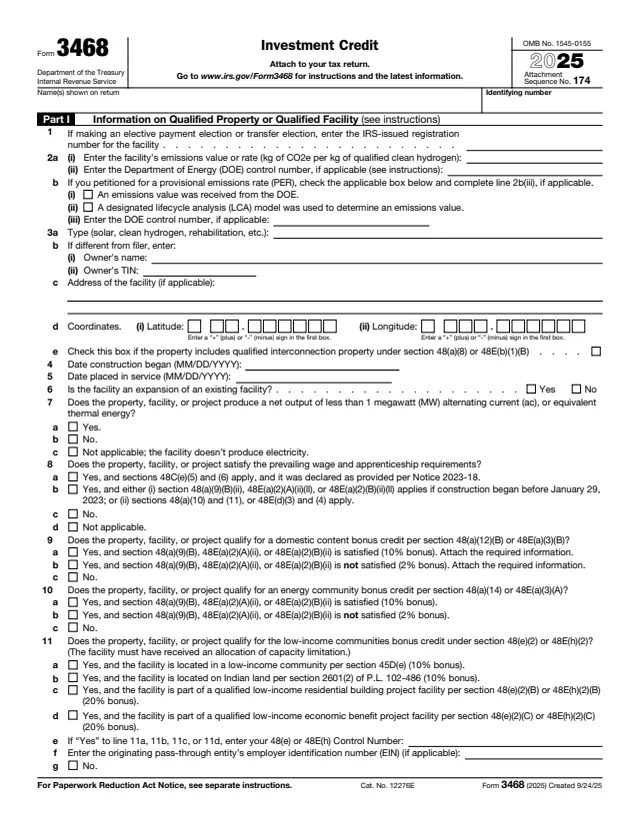
3468
321 fields, 12 pages
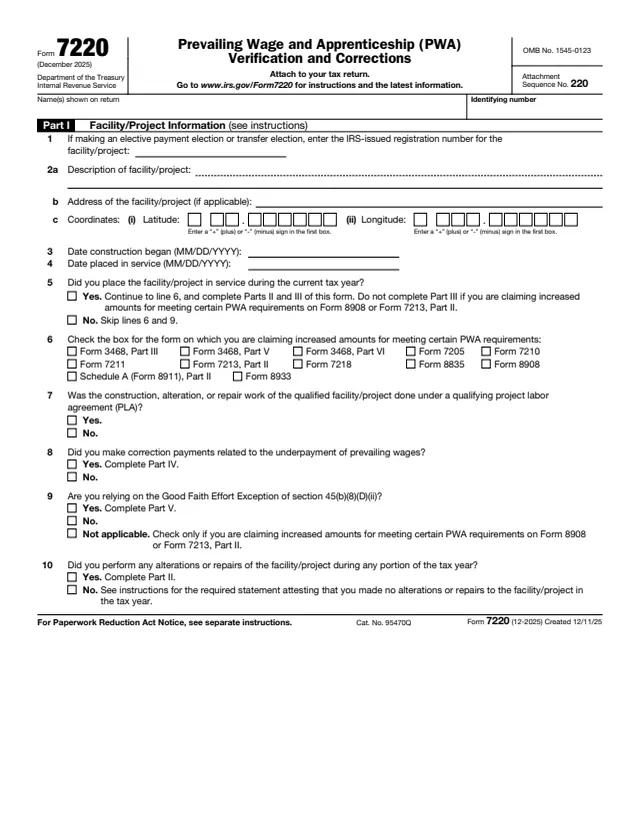
7220
653 fields, 5 pages
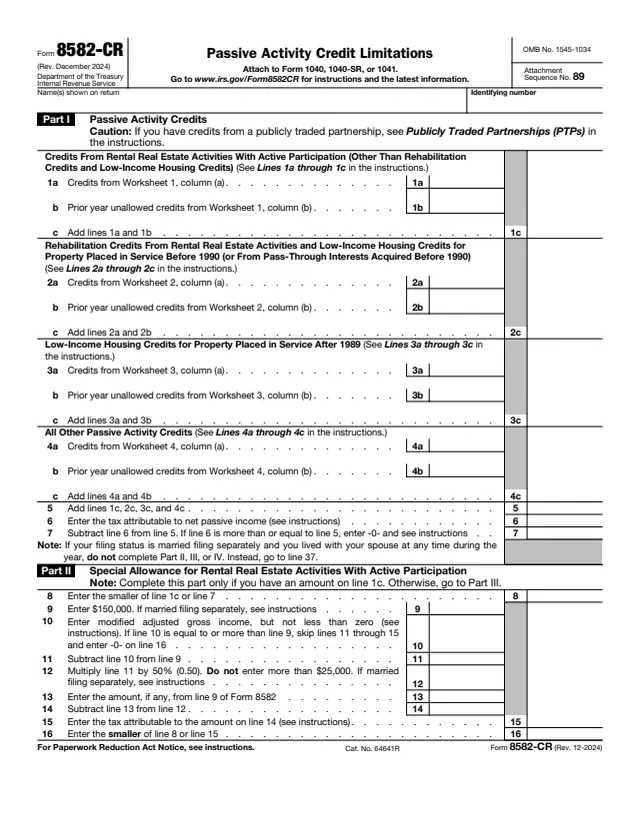
8582-CR
52 fields, 2 pages
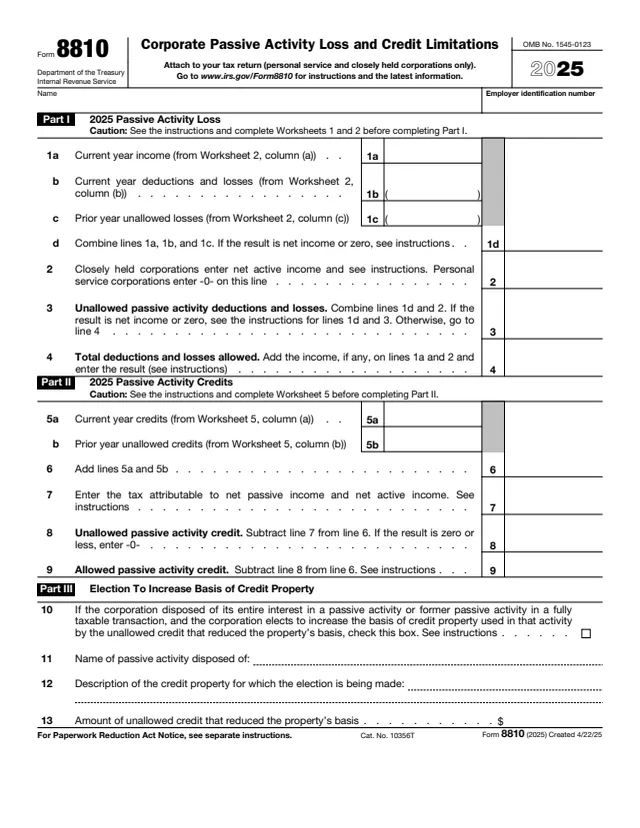
8810
20 fields, 1 page
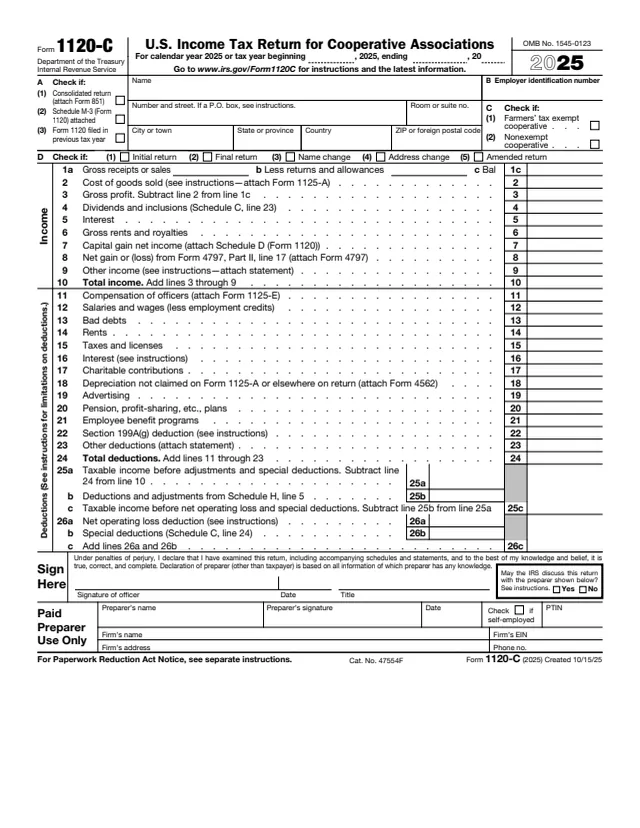
1120-C
449 fields, 5 pages
The instructions say taxpayers, applicable entities, partnerships and S corporations file a separate form for each qualified facility used in their trade or business to claim the credit.
No tool matches that search.
Yes. The instructions say to use a separate Form 8835 for each qualified facility, and credits from pass-through entities go on another separate form.
Part II prints $0.006 per kilowatt-hour for wind, closed-loop biomass, geothermal, solar and offshore wind, and $0.003 for open-loop biomass, landfill gas, trash, hydropower and marine and hydrokinetic renewables.
The form multiplies line 8 by 5.0 for a facility that checks Yes on Part I, line 8: maximum net output under 1 megawatt, construction begun before January 29, 2023, or meeting the prevailing wage and apprenticeship requirements.
The instructions say that if the only credit allocated to you is this credit, it is reported directly on Form 3800, Part III, line 1f or 4e, as applicable.
The instructions say that under section 6418, eligible taxpayers, partnerships and S corporations can elect to transfer all or part of the credit to an unrelated third party in exchange for cash.
The instructions list wind, closed-loop and open-loop biomass, geothermal, solar, landfill gas or trash, hydropower and marine and hydrokinetic facilities, generally with construction beginning before 2025.