Taxpayer information
Name(s) of the consenting taxpayer(s), identifying number, spouse's social security number for a joint return, and address.
7204
Consent To Extend the Time To Assess Tax Related to Contested Foreign Income Taxes—Provisional Foreign Tax Credit Agreement
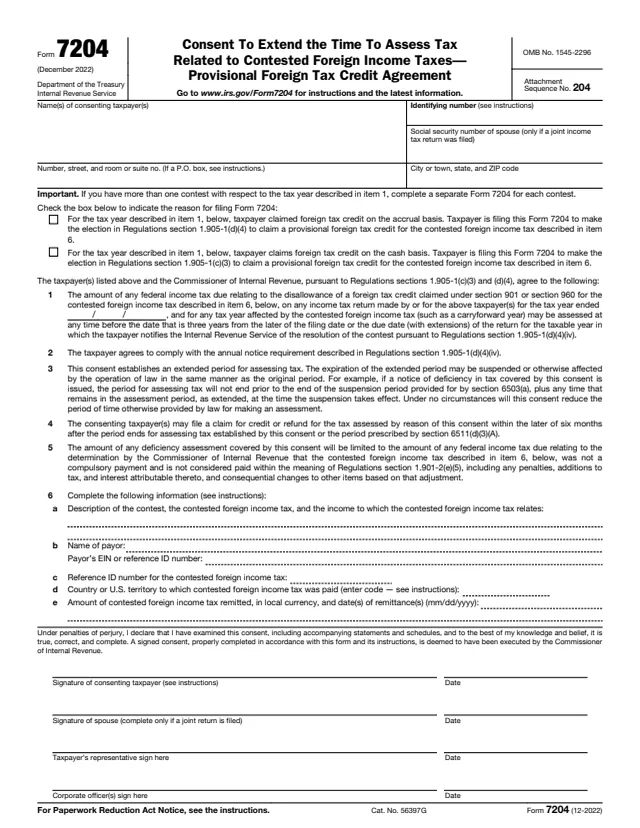
Form 7204, Consent To Extend the Time To Assess Tax Related to Contested Foreign Income Taxes, Provisional Foreign Tax Credit Agreement, is the form the instructions say is used for elections to claim a provisional credit for contested foreign income taxes under Regulations sections 1.905-1(c)(3) and 1.905-1(d)(4).
It is an agreement between the consenting taxpayer and the Commissioner of Internal Revenue. In it the taxpayer agrees to an extended period for assessing federal income tax tied to the contested foreign income tax, and to the annual notice requirement in Regulations section 1.905-1(d)(4)(iv). Item 6 describes the contest, the payor, the tax, the country and the amount remitted.
The filer can be an individual, a married couple filing jointly, a corporation, or a fiduciary, and the form is filed with Form 1116 or Form 1118 rather than by itself. You can fill it out free in your browser on this page and download the result without an account.
Name(s) of the consenting taxpayer(s), identifying number, spouse's social security number for a joint return, and address.
Two boxes: one for a taxpayer that claimed the credit on the accrual basis and one for a taxpayer that claims it on the cash basis.
The tax year, and the agreement that related federal income tax may be assessed any time before three years from the later of the filing date or due date (with extensions) of the return for the year the taxpayer notifies the IRS that the contest is resolved.
The annual notice requirement, how the extended period works, the period for a claim for credit or refund, and a limit on any deficiency assessment covered by the consent.
Description of the contest, the payor's name and EIN or reference ID, a reference ID for the contested tax, a country code, and the amount remitted in local currency with dates.
Lines for the consenting taxpayer, a spouse on a joint return, the taxpayer's representative and corporate officers, each with a date.
Enter the consenting taxpayer(s) and identifying number: a social security number for an individual, an employer identification number for others. Add any suite or room number, or a P.O. box if mail is not delivered to the street.
Check the box that shows whether the foreign tax credit was claimed on the accrual basis or the cash basis.
Accrual basis: enter the U.S. tax year to which the contested tax relates. Cash basis: enter the U.S. tax year it was remitted. The instructions say a separate Form 7204 is filed for each tax year a contest covers.
Describe the nature of the contest, the type of foreign tax and the venue, such as appeals, court or competent authority. Then enter the payor's name and EIN or reference ID number.
The reference ID should have 12 characters: four for the year and two for the month of the line 1 tax year end, the two-letter country code from IRS.gov/CountryCodes, then a counting number starting with 0001. Line 6d is that country code.
Enter the amount of contested foreign income tax remitted, in local currency, and the date(s) of remittance as mm/dd/yyyy. Accrual basis filers include only the amount for the line 1 tax year.
You get the real form, filled in a browser tab, with nothing standing between you and the finished PDF.
Accrual basis: with an original or amended Form 1116 or Form 1118 and return for the tax year the contested tax relates to. Cash basis: with the Form 1116 or Form 1118 for the year the tax is remitted.
The instructions say each later year, up to and including the year the contest is resolved, the taxpayer files Schedule C (Form 1116) or Schedule L (Form 1118), as applicable.
The form says to complete a separate Form 7204 for each contest for the tax year in item 1. The instructions add a separate form for each tax a contest covers.
The instructions say both spouses sign for a joint return unless one signs as agent under a power of attorney, and a responsible officer signs for a corporation.
An attorney or agent attaches a copy of Form 2848. A trustee attaches Form 56 and the trust instrument, and an estate fiduciary attaches Form 56 and the certified court documents the instructions list.
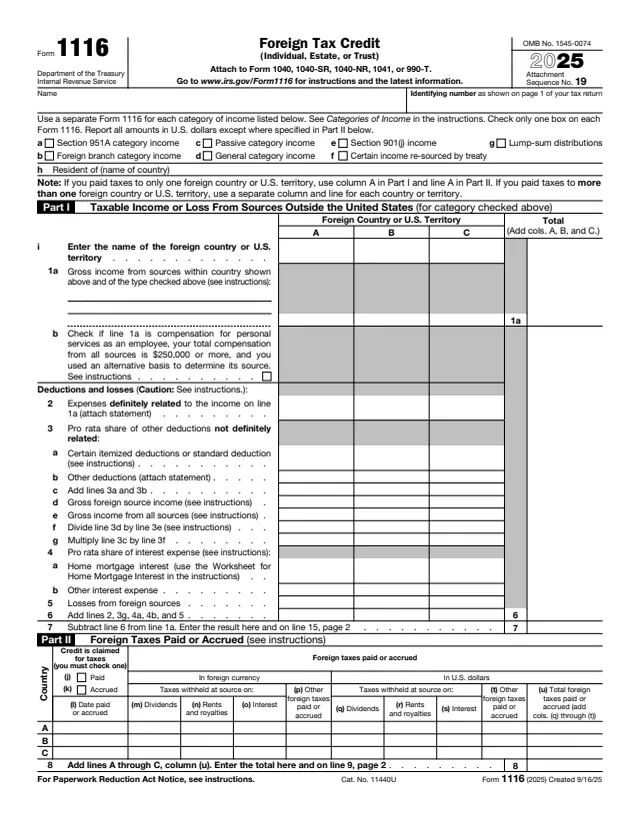
1116
118 fields, 2 pages
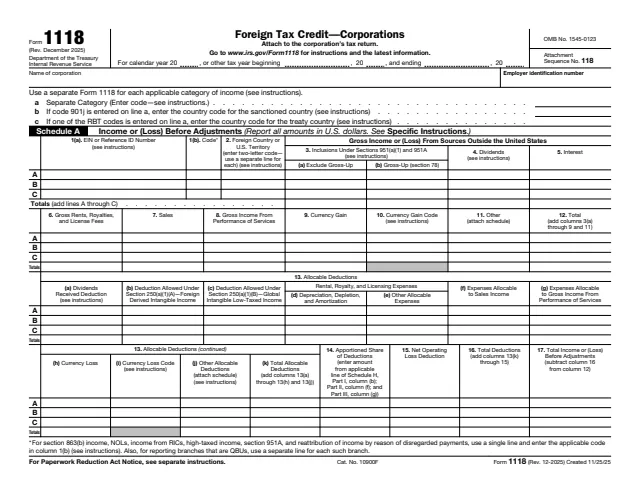
1118
1,263 fields, 12 pages
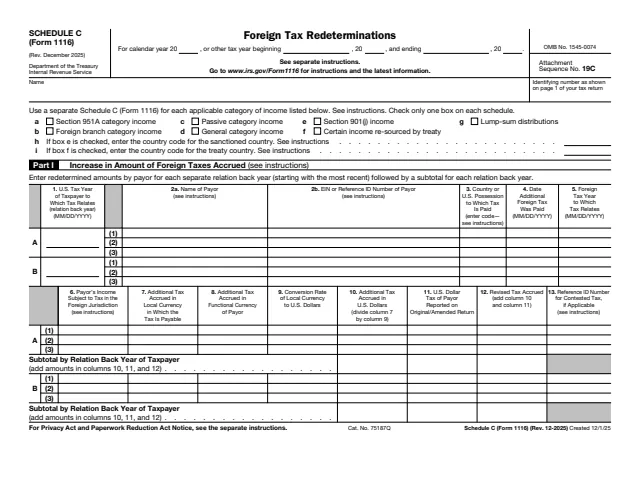
1116 Sch. C
256 fields, 3 pages
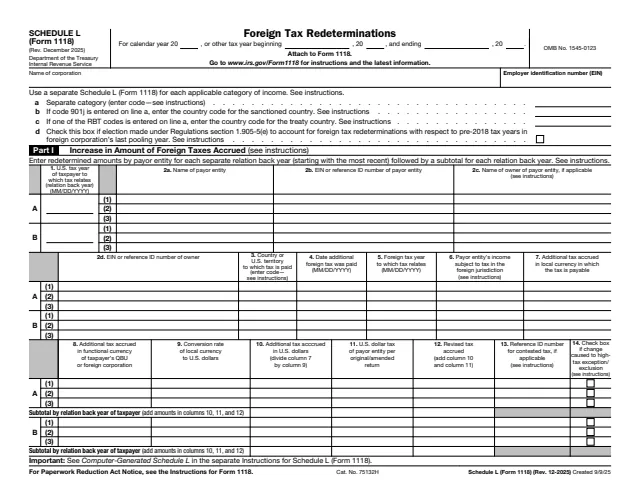
1118 Sch. L
317 fields, 4 pages
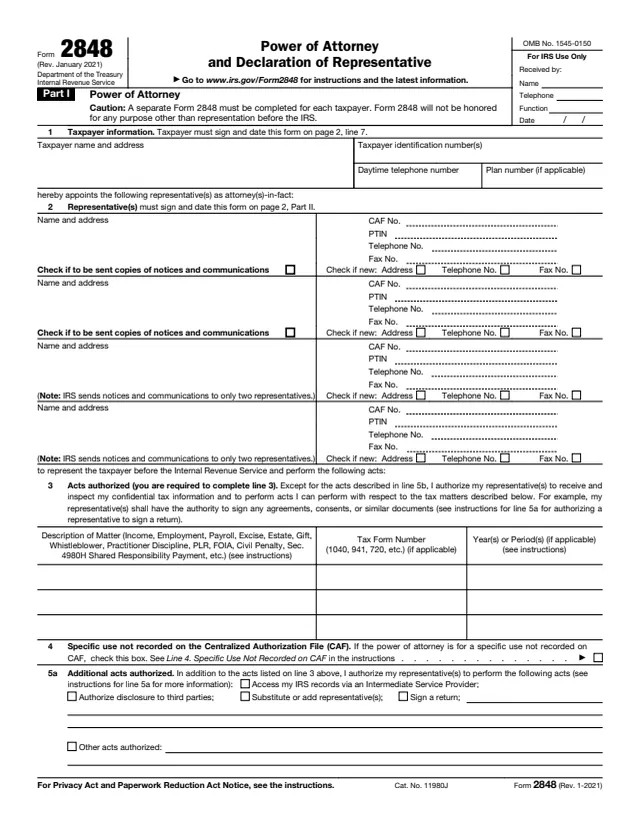
2848
92 fields, 2 pages
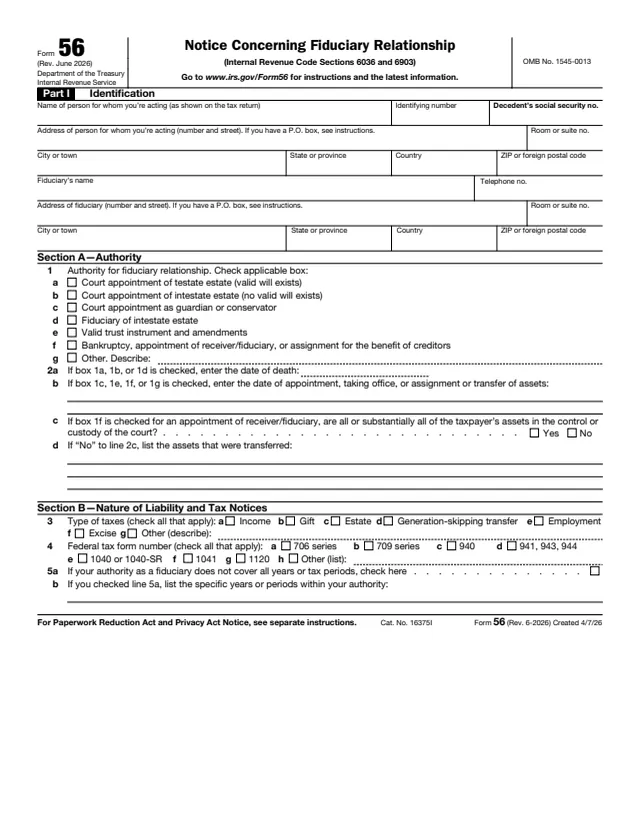
56
72 fields, 2 pages
The instructions say: any taxpayer that elects to claim a provisional credit under Regulations section 1.905-1(c)(3) or 1.905-1(d)(4).
No tool matches that search.
The instructions say it is used for elections to claim a provisional credit for contested foreign income taxes under Regulations sections 1.905-1(c)(3) and 1.905-1(d)(4).
No. The instructions say it is filed together with Form 1116 or Form 1118, for the tax year that depends on whether credits are claimed on the accrual or cash basis.
Item 1 says tax may be assessed any time before three years from the later of the filing date or due date (with extensions) of the return for the year the taxpayer notifies the IRS that the contest is resolved.
The instructions say Schedule C (Form 1116) or Schedule L (Form 1118) is filed each year up to and including the year the contest is resolved.
The instructions describe 12 alphanumeric characters with no spaces: year and month of the tax year end, a two-letter country code, and a sequential number starting with 0001.
No. The form says to complete a separate Form 7204 for each contest with respect to the tax year in item 1.