Decedent information
The decedent's name as it appears on Form 706 and the decedent's Social Security number.
706 Sch. K
Debts, Mortgages, and Liens
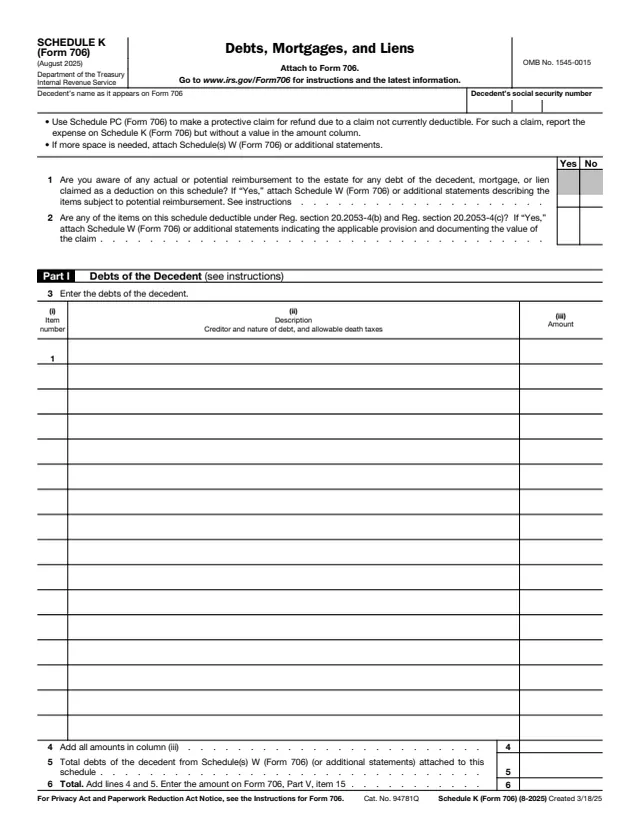
Schedule K (Form 706) reports deductions claimed for debts of the decedent and for mortgages and liens, the IRS About Form 706 page says. It is attached to Form 706, the estate tax return the executor of a decedent's estate uses to figure the estate tax. The Instructions for Form 706 say Schedule K is completed and attached if deductions are claimed on Form 706, Part V, item 15 or item 16.
Part I lists valid debts the decedent owed at the time of death. Part II lists obligations secured by mortgages or other liens on property included in the gross estate. Each part has its own total, which is carried to Form 706, Part V. Two yes or no questions at the top ask about reimbursements and about items deductible under Reg. section 20.2053-4(b) and (c).
You can fill out Schedule K (Form 706) free in your browser on this page and download it without an account.
The decedent's name as it appears on Form 706 and the decedent's Social Security number.
Yes or no questions on any actual or potential reimbursement to the estate for a claimed debt, mortgage or lien, and on items deductible under Reg. section 20.2053-4(b) and (c).
Line 3 is a table with item number, a description of the creditor, nature of debt and allowable death taxes, and the amount.
Line 4 adds column (iii), line 5 holds totals from attached Schedule W (Form 706) or statements, and line 6 is the total carried to Form 706, Part V, item 15.
Line 7 is a table for mortgages and liens on, or in respect of, any property of the decedent, with the same three columns.
Line 8 adds column (iii), line 9 holds totals from attached Schedule W or statements, and line 10 is the total carried to Form 706, Part V, item 16.
If either answer is Yes, the schedule says to attach Schedule W (Form 706) or additional statements describing the items subject to reimbursement, or giving the provision and documenting the claim's value.
The instructions say to list only valid debts the decedent owed at death. A disputed debt is deducted only for the amount the estate concedes to be a valid claim.
Give the creditor and the exact nature of the claim, and the period covered for services. For unsecured notes, the instructions ask for the payee, face and unpaid balance, date and term, interest rate and the date interest was paid to.
The instructions say property taxes are limited to those accrued before death. Federal taxes on income received during the decedent's lifetime are deductible, and taxes on income received after death are not.
In column (ii), give the schedule, line and item number where the property is reported, the mortgagee's name and address, the date and term, the face amount, unpaid balance, interest rate and the date interest was paid to.
Add column (iii) on lines 4 and 8, add any Schedule W totals on lines 5 and 9, then carry line 6 to Form 706, Part V, item 15 and line 10 to item 16.
You get the real form, filled in a browser tab, with nothing standing between you and the finished PDF.
The schedule says "Attach to Form 706." Its totals are entered on Form 706, Part V, items 15 and 16.
The Form 706 instructions say Form 706 is filed within 9 months after the date of the decedent's death, and Form 4768 is used to apply for an automatic 6-month extension of time to file.
The Form 706 instructions give Department of the Treasury, Internal Revenue Service, Kansas City, MO 64999. The About page points to Filing estate and gift tax returns for the latest address.
The instructions say to keep all vouchers or original records for inspection by the IRS.
The schedule says to attach Schedule W (Form 706) or additional statements if more space is needed.
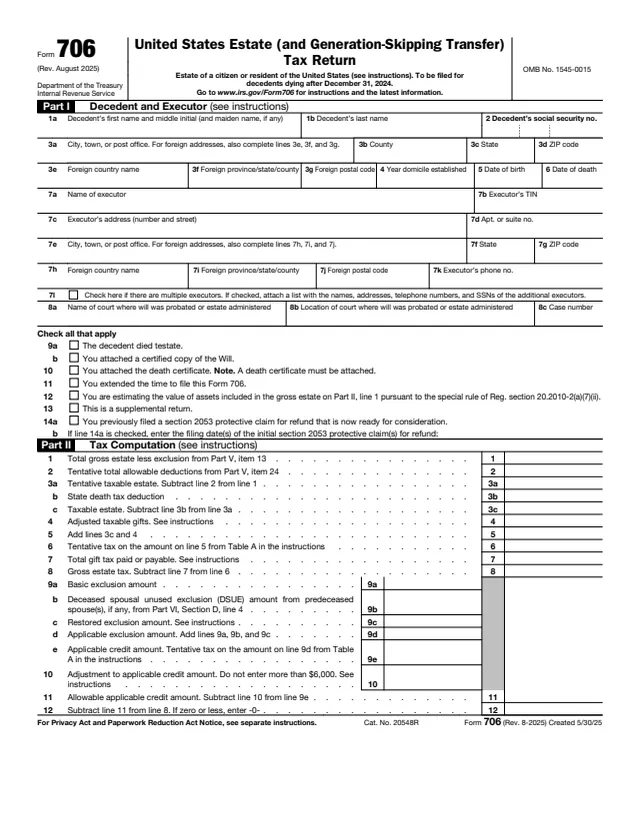
706
316 fields, 5 pages
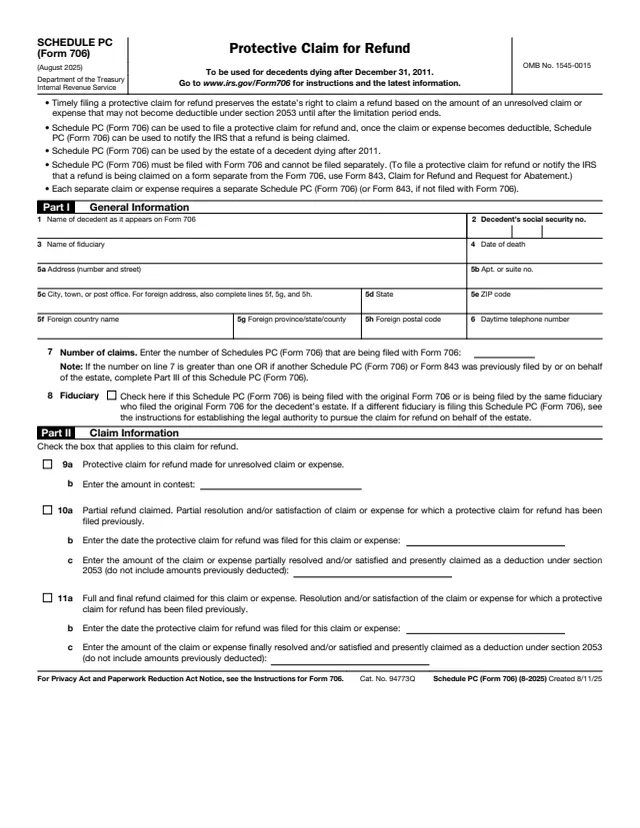
706 Sch. PC
354 fields, 3 pages
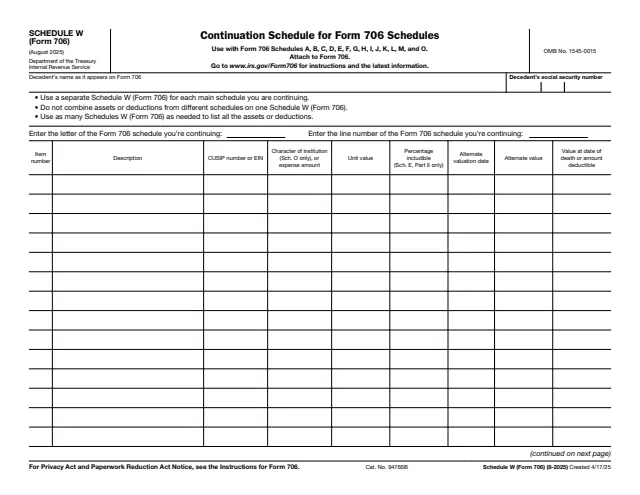
706 Sch. W
303 fields, 2 pages
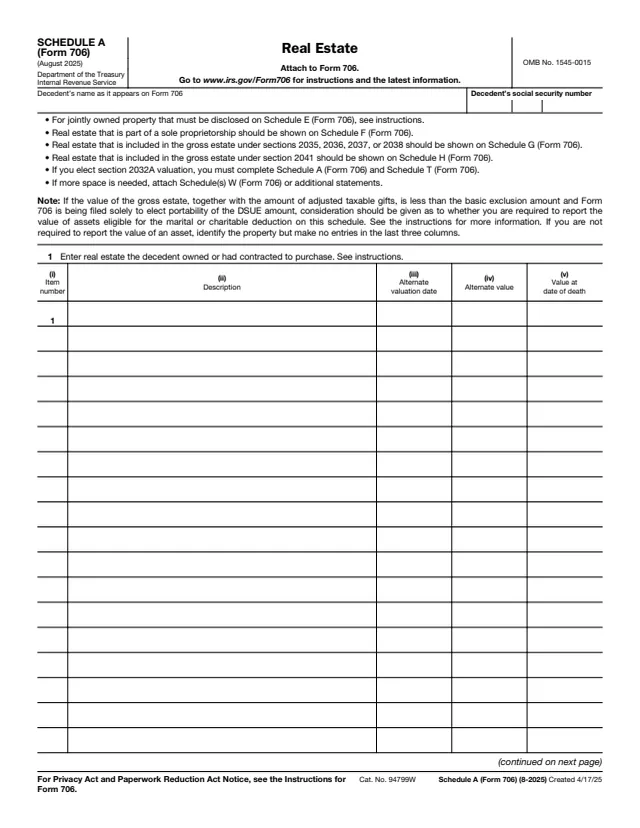
706 Sch. A
223 fields, 2 pages
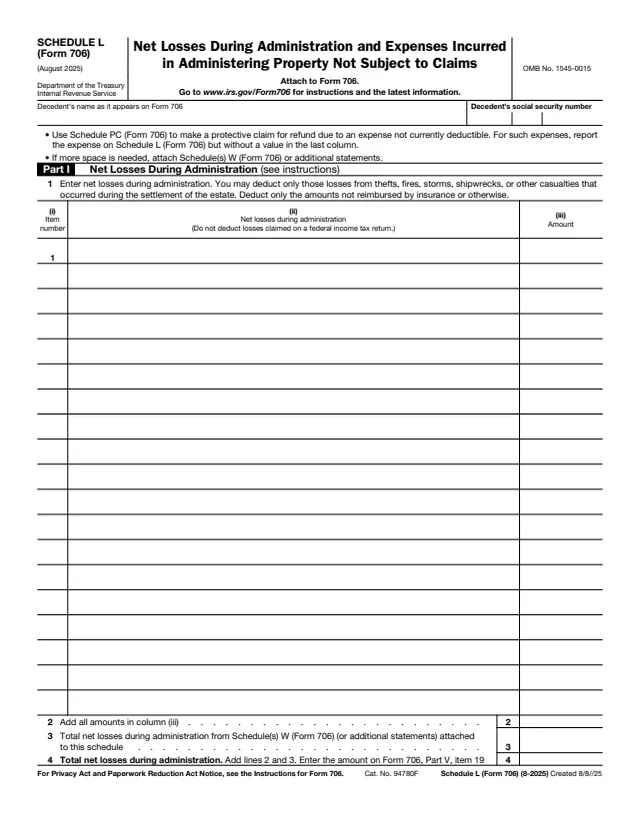
706 Sch. L
137 fields, 2 pages
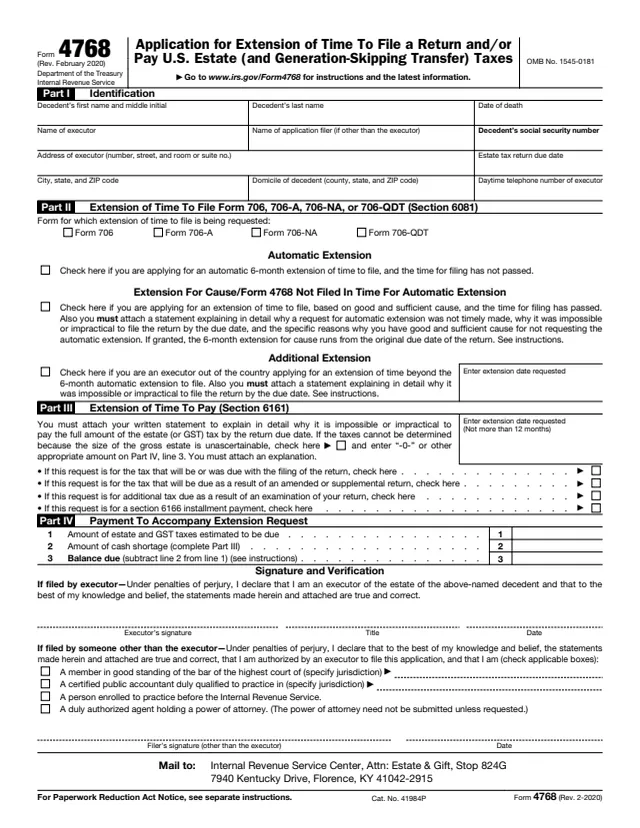
4768
35 fields, 1 page
The schedule is completed for a decedent's estate as part of Form 706 and goes to the IRS with that return. It is not an individual income tax form.
No tool matches that search.
The About Form 706 page says it is used to report deductions claimed for debts of the decedent and mortgages and liens.
The instructions say it is completed and attached if deductions are claimed on Form 706, Part V, item 15 or item 16.
The instructions say that if the amount is disputed or the subject of litigation, only the amount the estate concedes to be a valid claim is deducted.
The instructions say taxes, interest and business expenses accrued at the date of death are deductible both on Schedule K and as deductions in respect of the decedent on the estate's income tax return.
The instructions say that if the estate is not liable, only the equity of redemption is included in the gross estate and no part of the debt is deducted on this schedule.
The instructions say certain claims based on the relinquishment of marital rights are deductible on Schedule K when the conditions they list, such as a written agreement and a divorce within the stated period, are met.