Decedent and requester
The decedent's name, date of death and Social Security number, and the requester's name, title, address and daytime phone number.
5495
Request for Discharge from Personal Liability Under Internal Revenue Code Section 2204 or 6905
Form 5495 is the Request for Discharge From Personal Liability Under Internal Revenue Code Section 2204 or 6905. The IRS says the executor representing a decedent's estate or a fiduciary of a decedent's trust files it to request a discharge from personal liability for the decedent's income, gift and estate taxes.
The instructions on the back of the form say that ordinarily the IRS has 3 years after an income tax, gift tax or estate tax return has been filed to assess tax. Nine months, or 6 months for a fiduciary's request, after the IRS receives the request or the earlier payment of any amount the IRS determines is owed, the executor or fiduciary is discharged from personal liability for any deficiency later found to be due.
You can fill out Form 5495 free in your browser on this page and download the result without an account.
The decedent's name, date of death and Social Security number, and the requester's name, title, address and daytime phone number.
Three boxes: Income, Gift and Estate.
For each return: form number, tax period ended, SSN or EIN on the return, name and address shown on the return, service center where filed and date filed.
If applicable, the name and Social Security number of the decedent's spouse, surviving or deceased.
Boxes for copies of the returns listed, copies of letters of administration or letters testamentary, and Other, with space to describe.
The request for discharge under section 2204 or 6905, a declaration under penalties of perjury, a certification about fraud, and the requester's signature, date and identifying number.
Enter the decedent's name, date of death and Social Security number.
Enter the requester's name, title, street address, city, state and ZIP code, and daytime phone number. Then check the kind of tax.
List each return for which discharge is requested, with its form number, tax period, SSN or EIN, name and address, service center and filing date.
If applicable, enter the name and Social Security number of the decedent's spouse.
Check the items attached. The instructions say that if the form is filed after Form 706, a copy of pages 1 to 3 and Schedules A through I of Form 706 is attached. Filed with the estate tax return, no extra copy is needed.
Sign, date and enter the identifying number. If the fraud certification can't be made, the form says to attach a detailed statement explaining the circumstances.
You get the real form, filled in a browser tab, with nothing standing between you and the finished PDF.
Not until after the income or gift tax returns listed are filed. For estate tax, the form can be attached to Form 706 or filed any time during the 3-year period after Form 706 is filed.
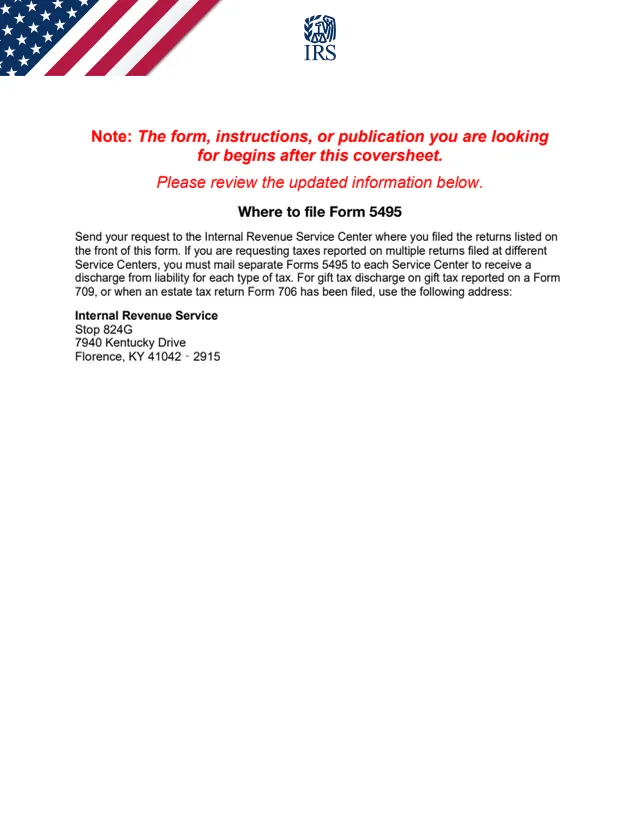
The updated note at the front of the PDF says to send it to the IRS service center where the listed returns were filed, with a separate Form 5495 for each service center when returns were filed at different ones.
For gift tax reported on Form 709, or when Form 706 has been filed, the note gives: Internal Revenue Service, Stop 824G, 7940 Kentucky Drive, Florence, KY 41042-2915.
The instructions say a separate request is submitted for any tax returns filed after this Form 5495.
In certain cases where the date for payment of the estate tax has been extended, the instructions say the IRS may require a bond as a condition for discharge.
A written request in your own format can be used if it lists the same information as the form and includes the applicable attachments.
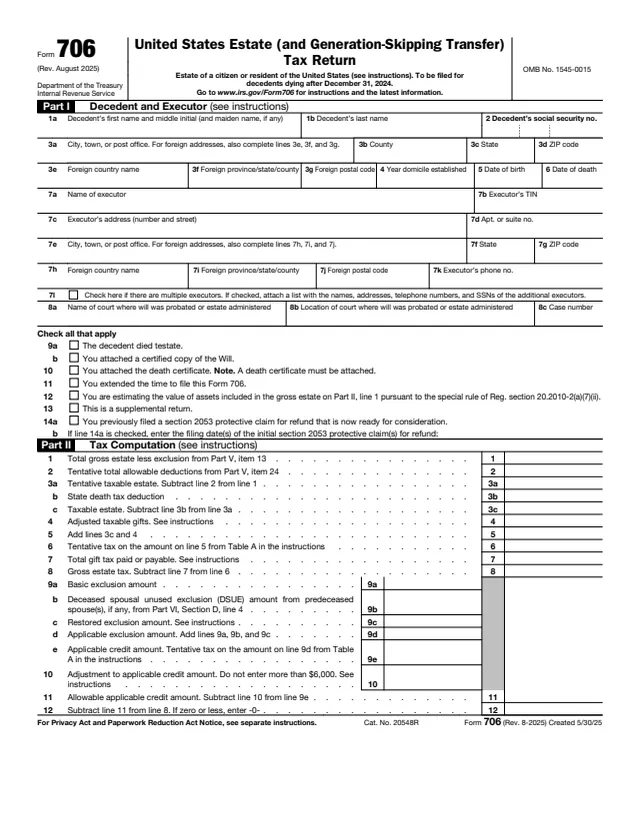
706
316 fields, 5 pages
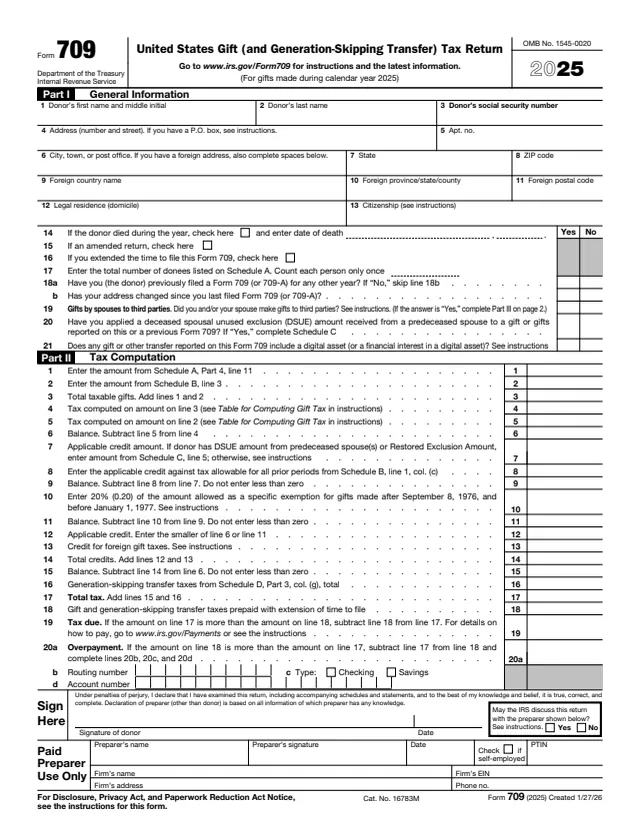
709
1,851 fields, 10 pages
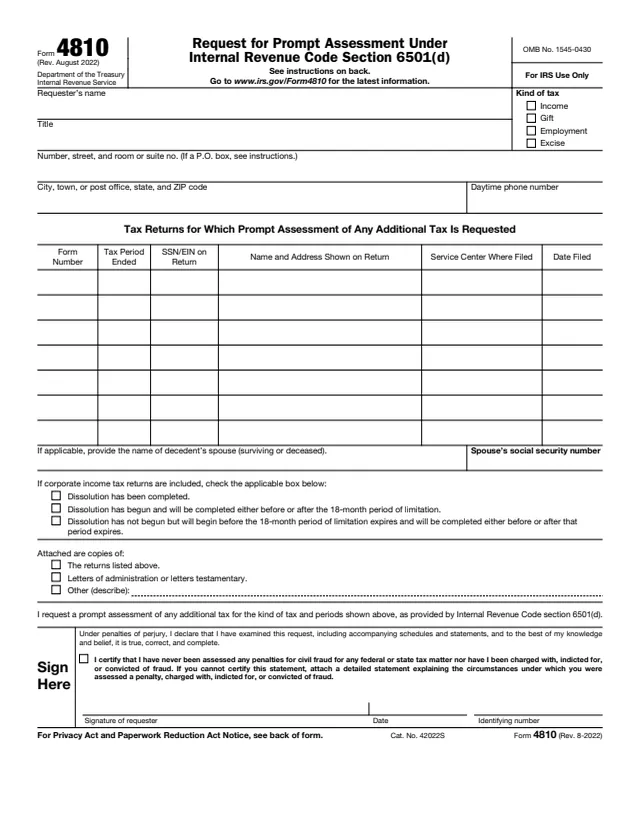
4810
62 fields, 2 pages
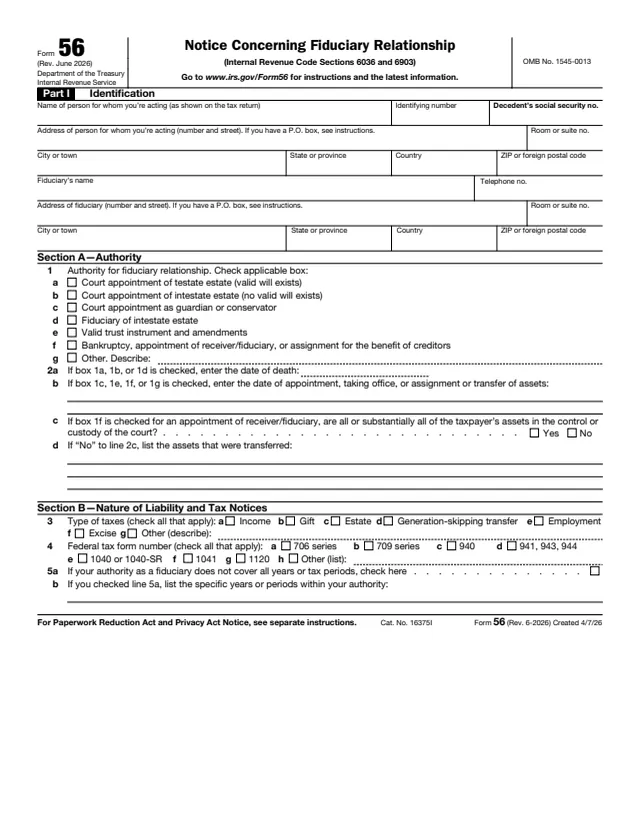
56
72 fields, 2 pages
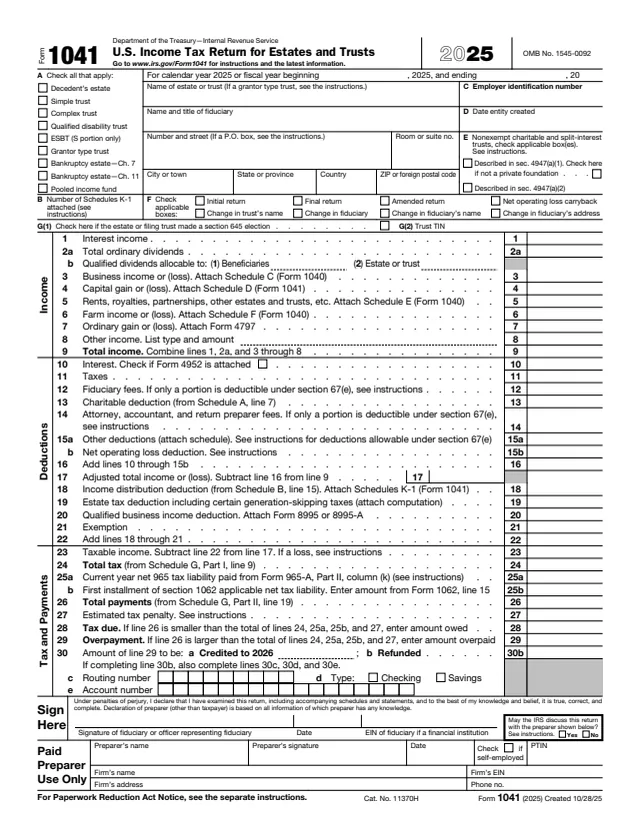
1041
173 fields, 3 pages
The IRS page says the executor of a decedent's estate or the fiduciary of a decedent's trust files it. The request goes to the IRS.
No tool matches that search.
The IRS says the executor representing a decedent's estate or a fiduciary of a decedent's trust files it.
The instructions say nine months, or 6 months for a fiduciary's request, after the IRS receives the request or the earlier payment of any amount the IRS determines is owed.
Yes. For estate tax, the instructions say it may be attached to Form 706 or filed any time during the 3-year period after Form 706 is filed.
To the service center where the listed returns were filed. For gift tax on Form 709, or when Form 706 has been filed, the form gives the IRS address in Florence, KY.
No. The instructions allow your own format if the written request lists the same information as Form 5495 and includes the applicable attachments.
A fiduciary requesting discharge under section 2204 checks Other and includes a copy of the trust instrument, a list of assets transferred from the decedent to the trust and any other relevant information.