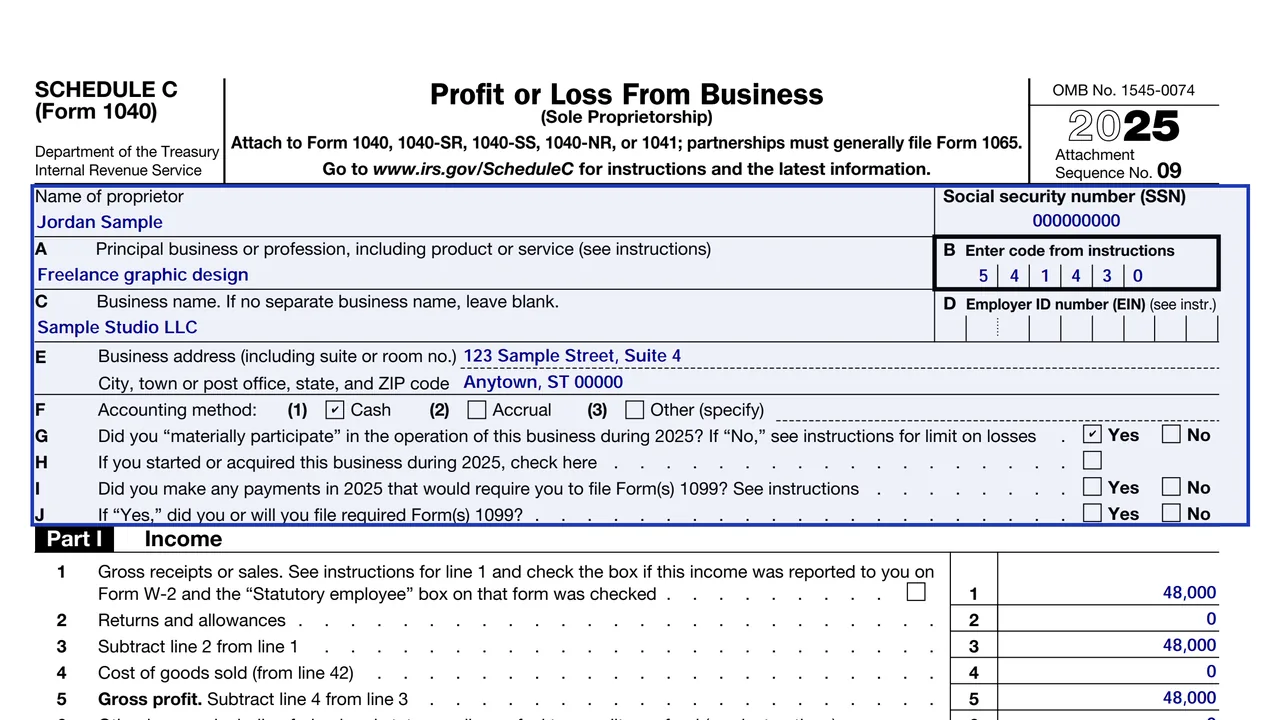
Business details at the top
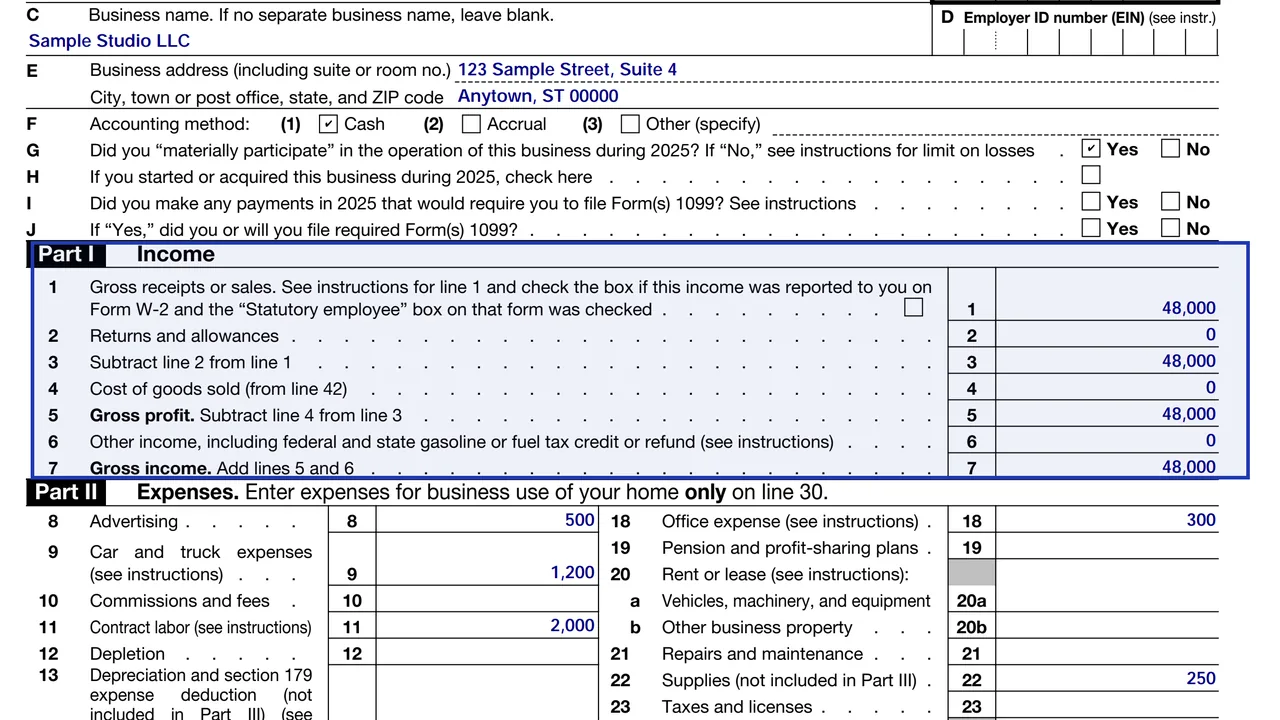
You enter the business name, a six-digit principal business code on line B, an EIN on line D only if the instructions require one, the accounting method on line F and whether you materially participated on line G.
1040
Profit or Loss From Business (Sole Proprietorship)
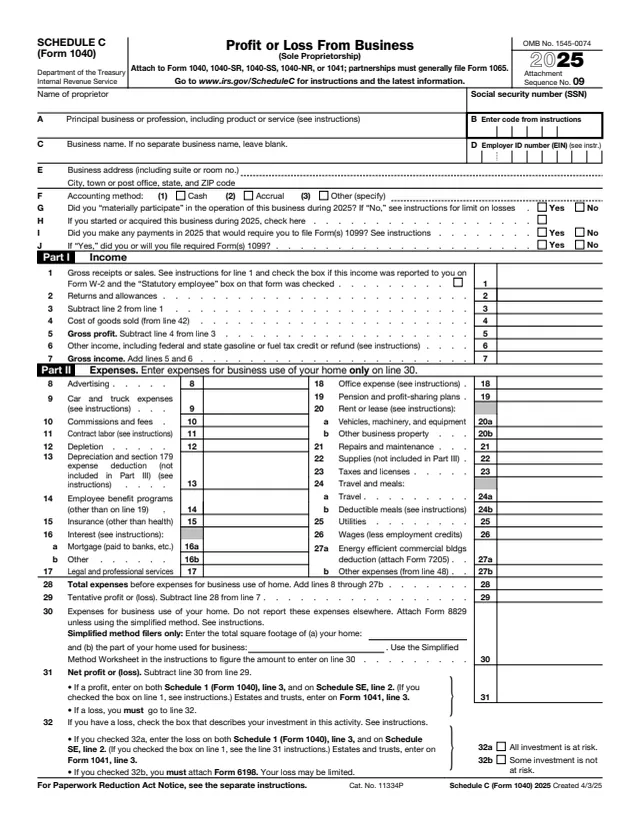
Schedule C is the form a sole proprietor uses to report the income and expenses of a business. It starts with what the business took in, subtracts the cost of running it, and ends with a net profit or loss that moves onto your Form 1040.
It matters to freelancers, consultants, gig workers, contractors and anyone who sells goods or services under their own name or a single-owner business. Nobody withholds tax from that income, so the profit on Schedule C also drives self-employment tax on Schedule SE and often estimated tax payments.
The IRS looks at the business activity as a whole. The figures you enter here should match your books and any Forms 1099 you received.
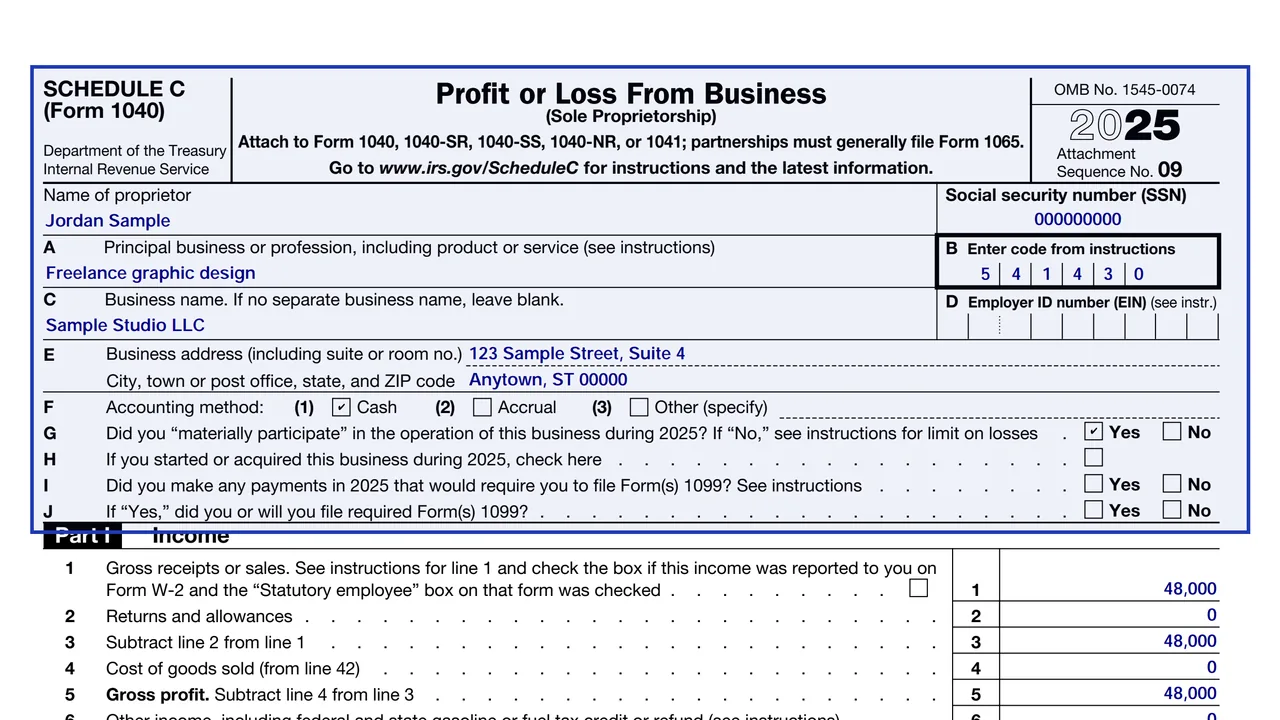
You enter the business name, a six-digit principal business code on line B, an EIN on line D only if the instructions require one, the accounting method on line F and whether you materially participated on line G.
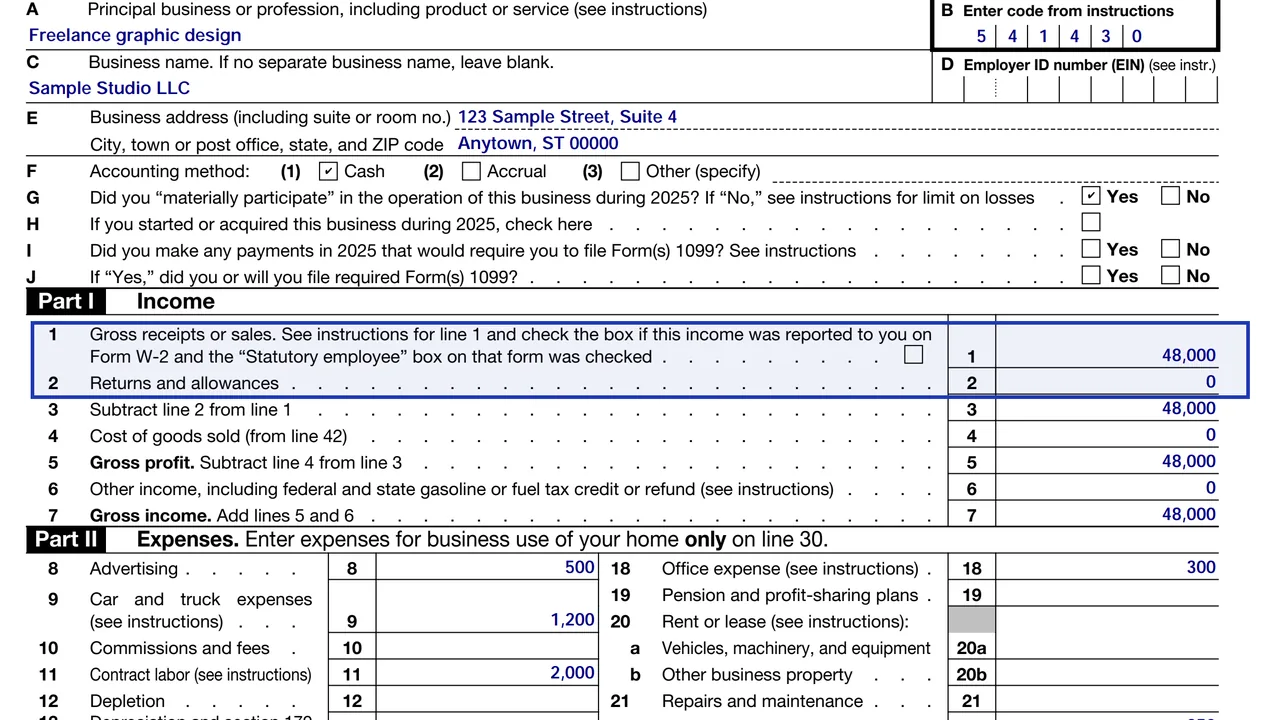
Gross receipts go on line 1, returns and allowances on line 2, and other business income on line 6.
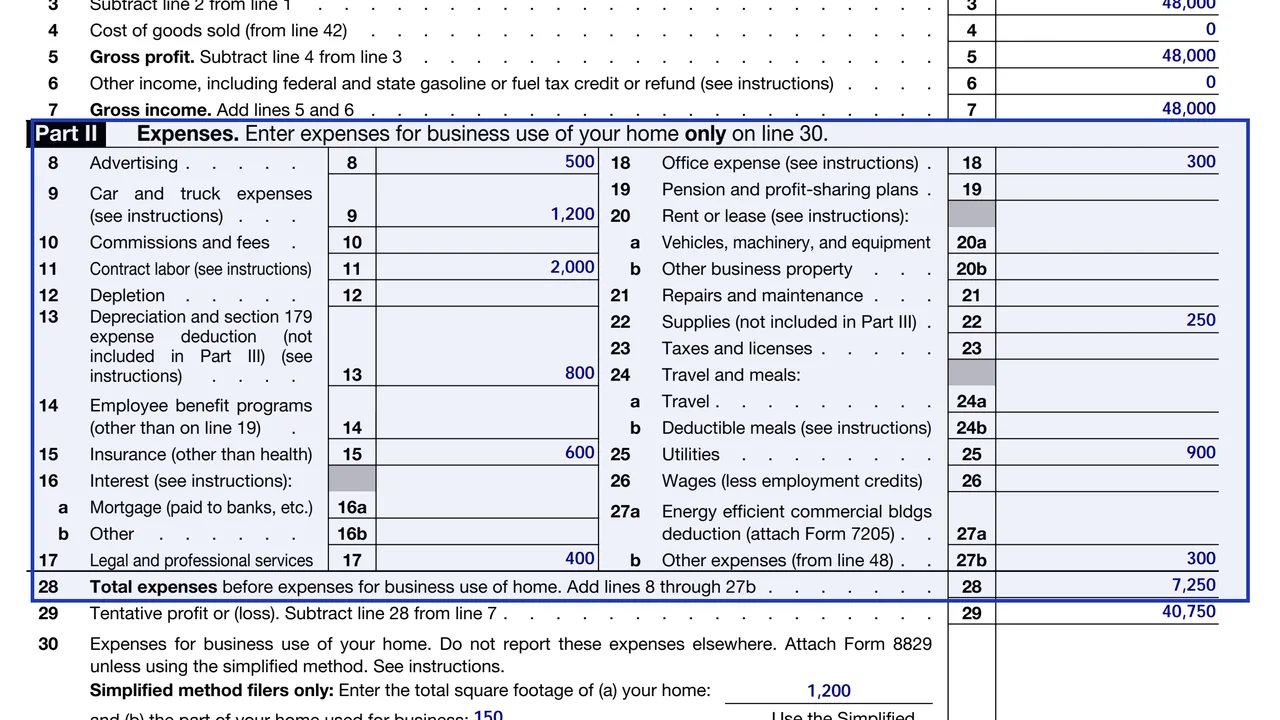
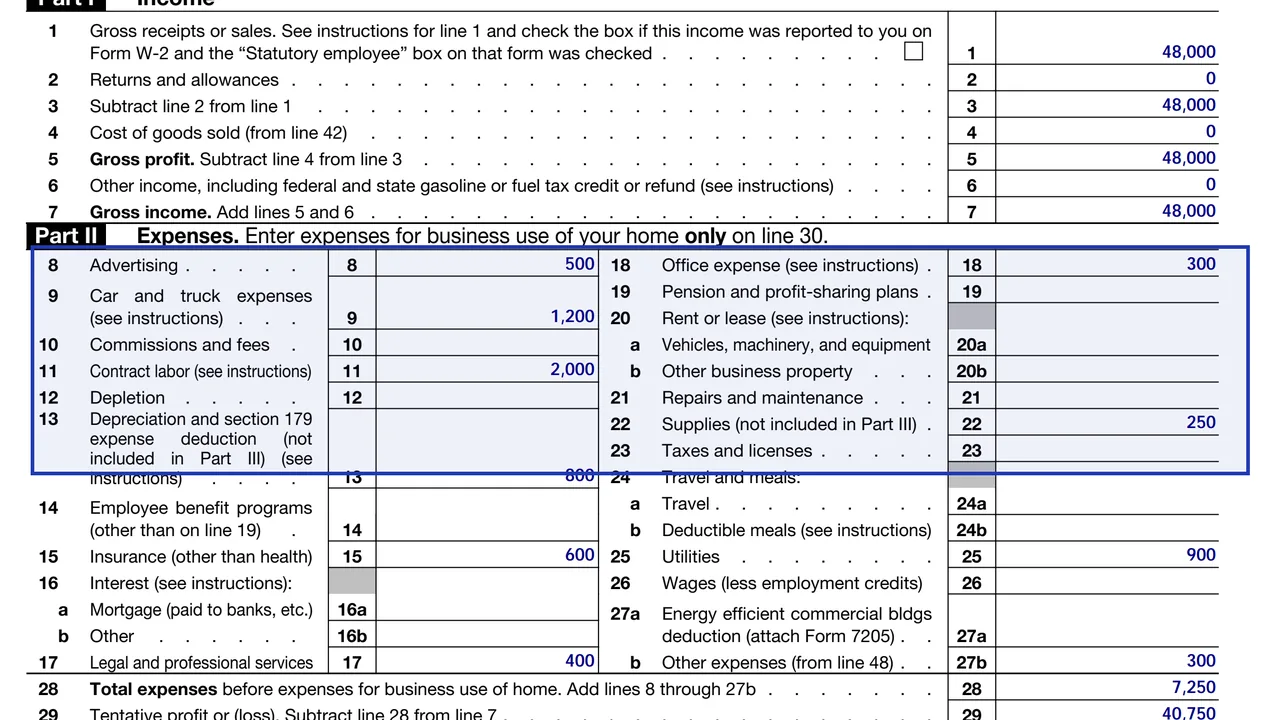
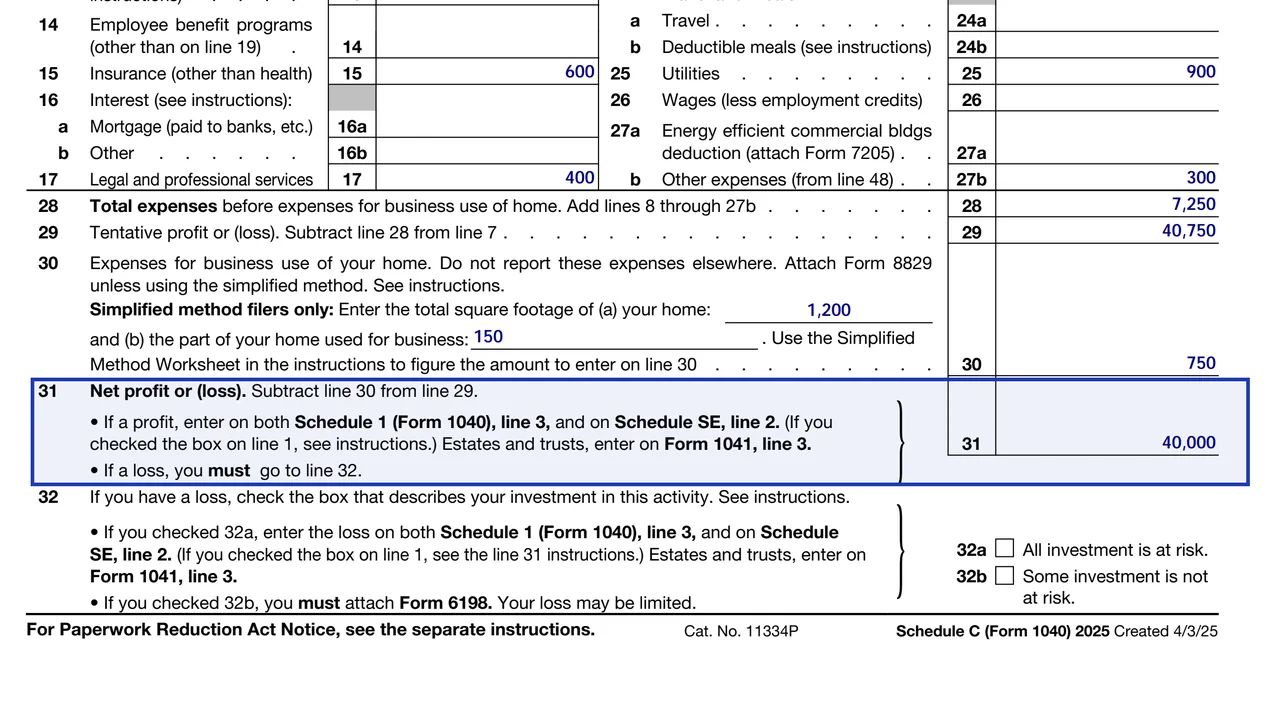
Lines 8 through 27a list common costs such as car and truck expenses on line 9, depreciation on line 13 and legal and professional services on line 17. Expenses for business use of your home appear in this part and on line 30.
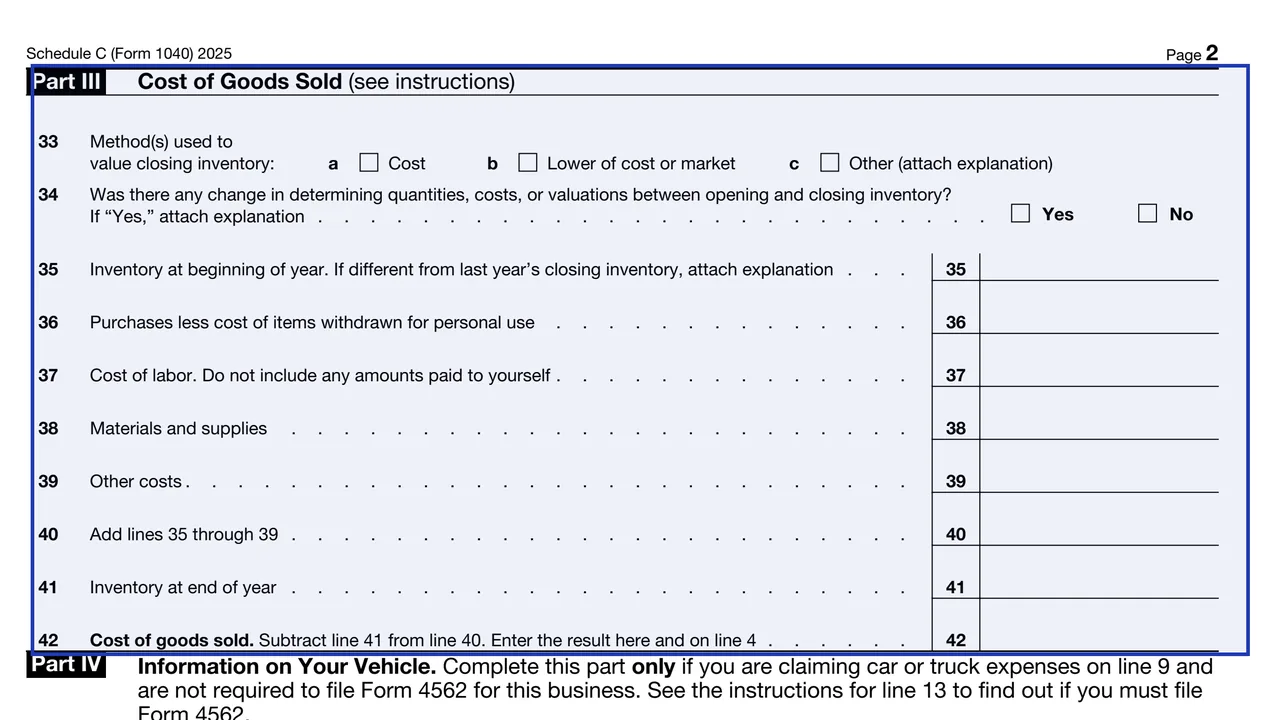
If you sell products, you figure the cost of the inventory here. The instructions note an exception for small business taxpayers.
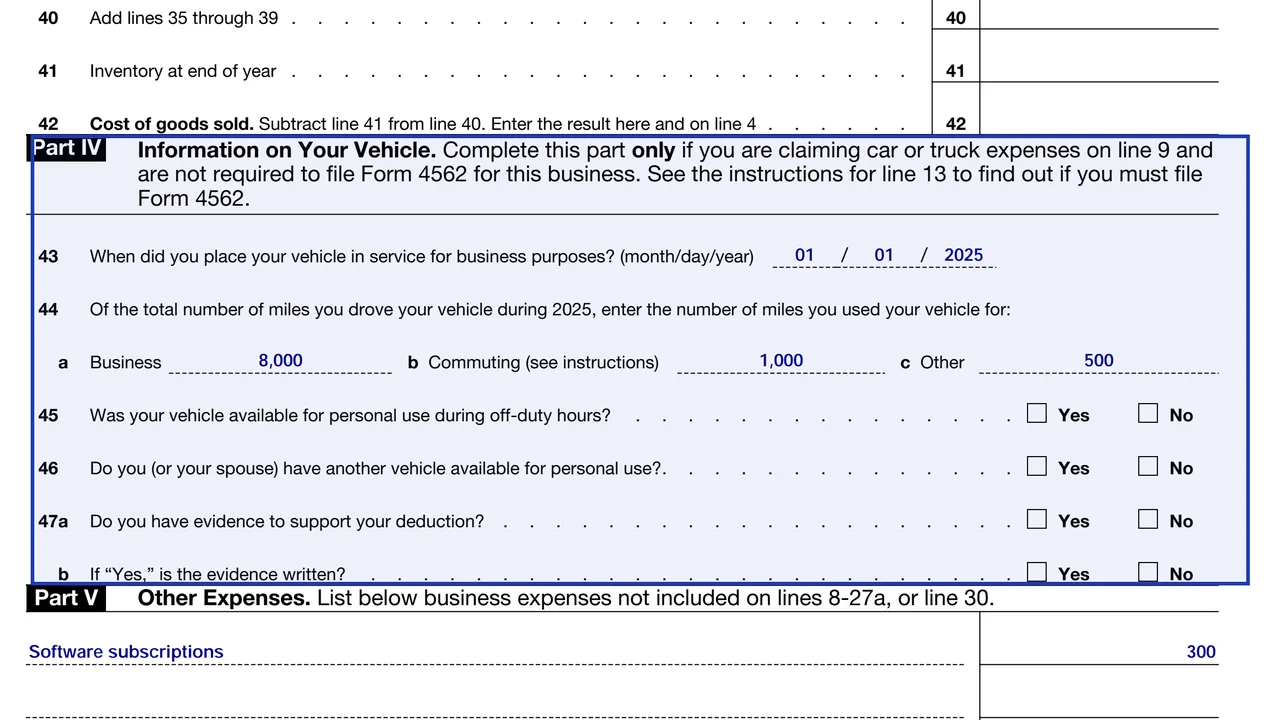
You complete it when you claim car and truck expenses and the instructions require the details.
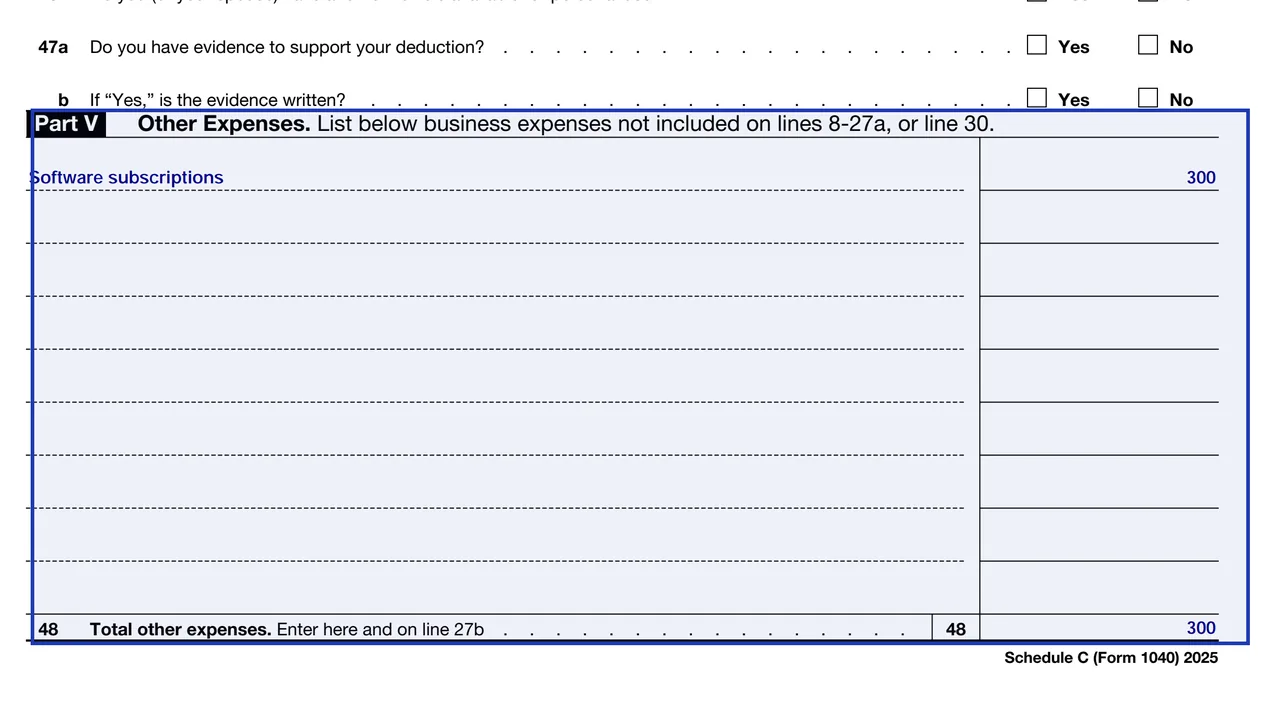
Costs that do not have their own line are listed here and the total carries to line 27b on the 2025 form.
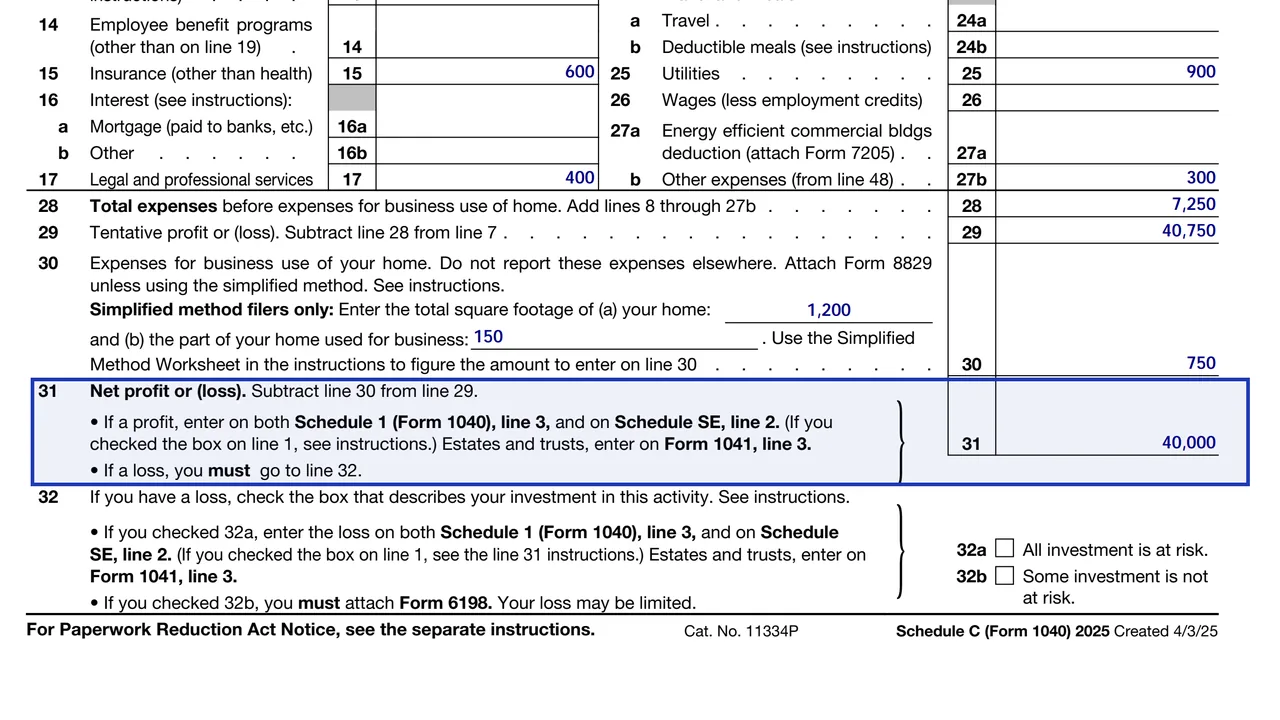
The result goes to your return and to Schedule SE. The instructions note that losses may be limited by the excess business loss rules on Form 461 or the passive activity rules on Form 8582.
Name it, choose the six-digit code that best describes what you do and enter your address.
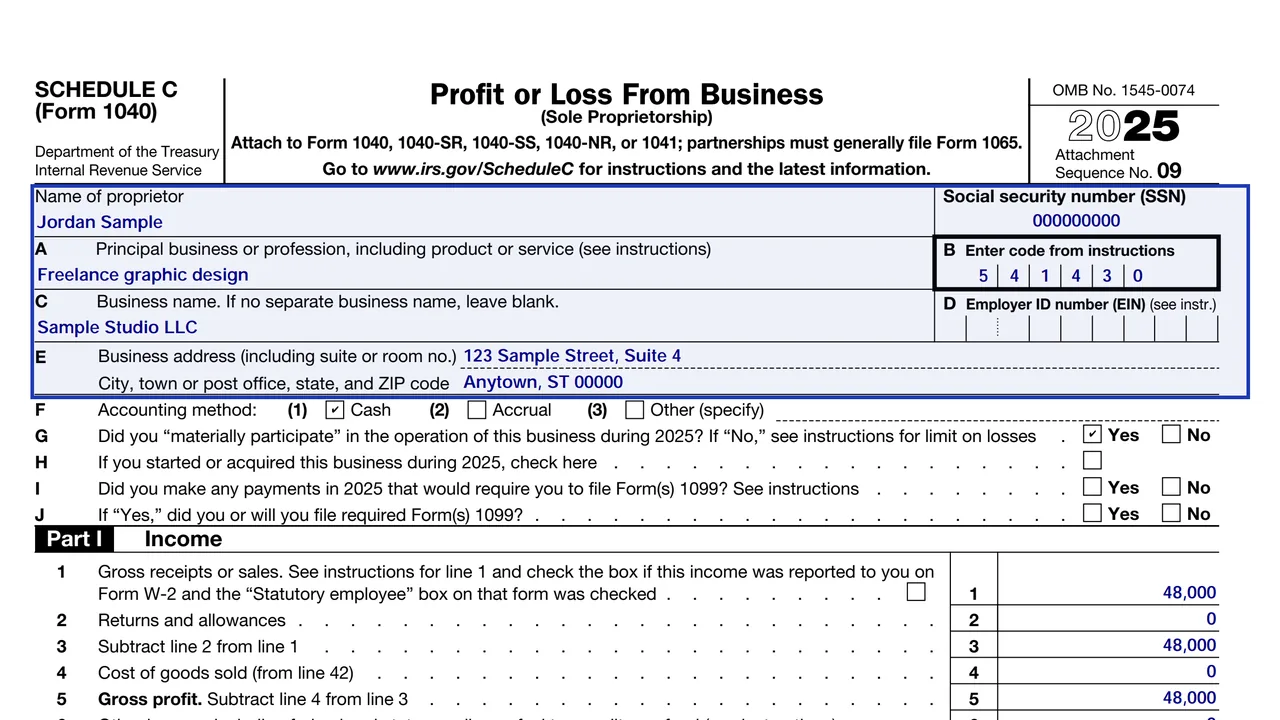
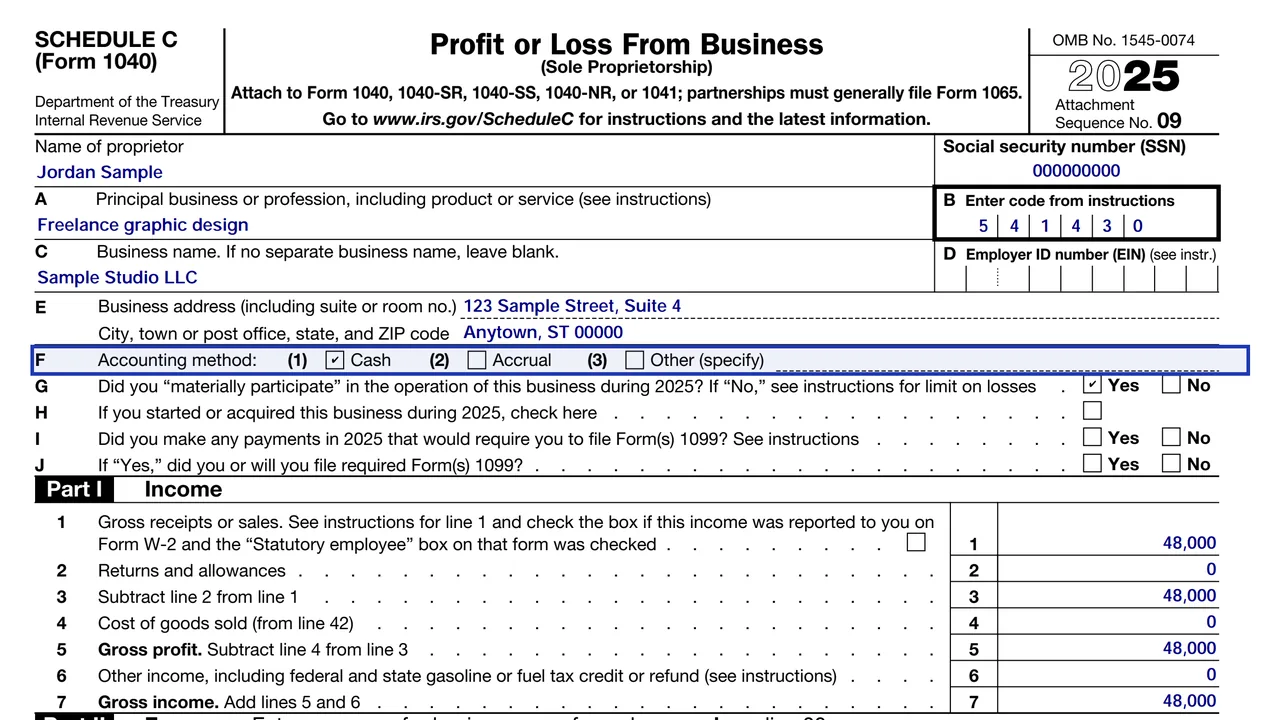
Cash, accrual or another method that clearly reflects income. The instructions say accrual is required for inventory purchases and sales unless you are a small business taxpayer.
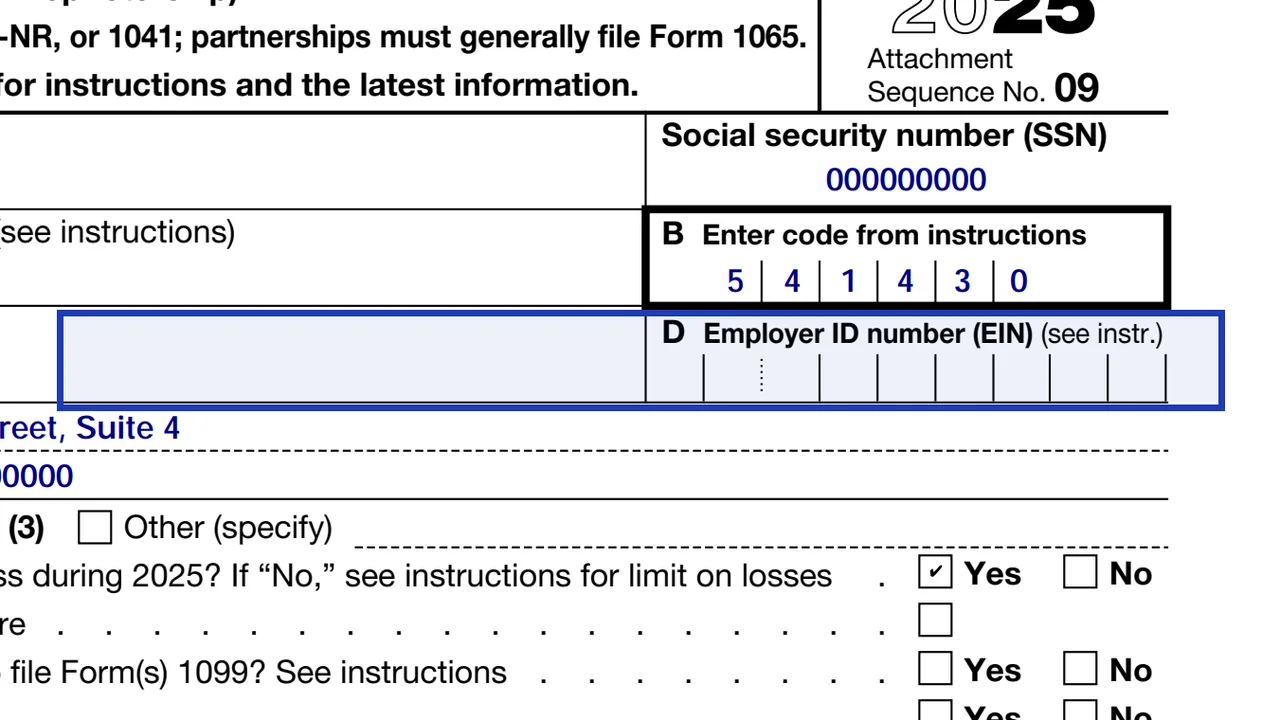
The instructions say to enter an EIN on line D only if you have a qualified retirement plan, must file certain employment or excise returns, or pay gambling winnings.
Check Yes if you meet one of the seven material participation tests. If you do not, the activity is passive.
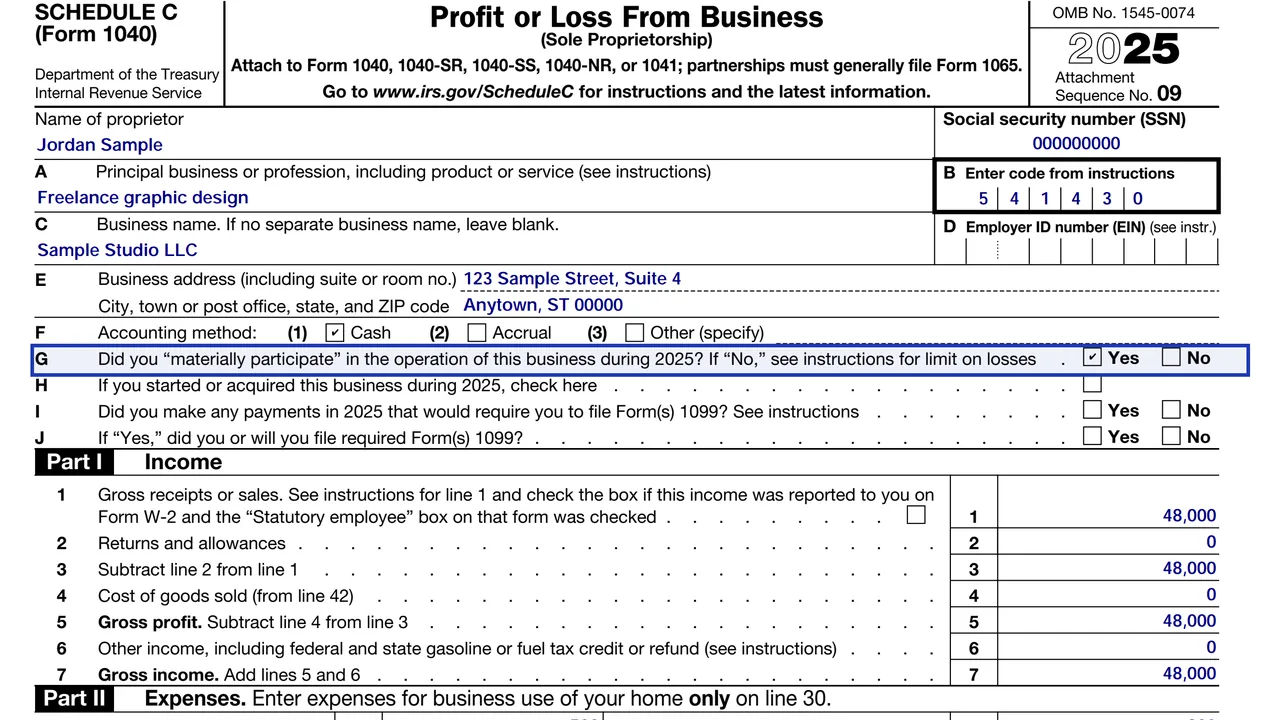
Add up all gross receipts, including amounts reported on Forms 1099, and subtract returns and allowances.
Use only business costs. Attach Form 4562 for depreciation on property placed in service in 2025, listed property, or a section 179 deduction.
Use Form 8829 for actual expenses, or the simplified method of $5 per square foot up to 300 square feet. You can fill this form free on this page.
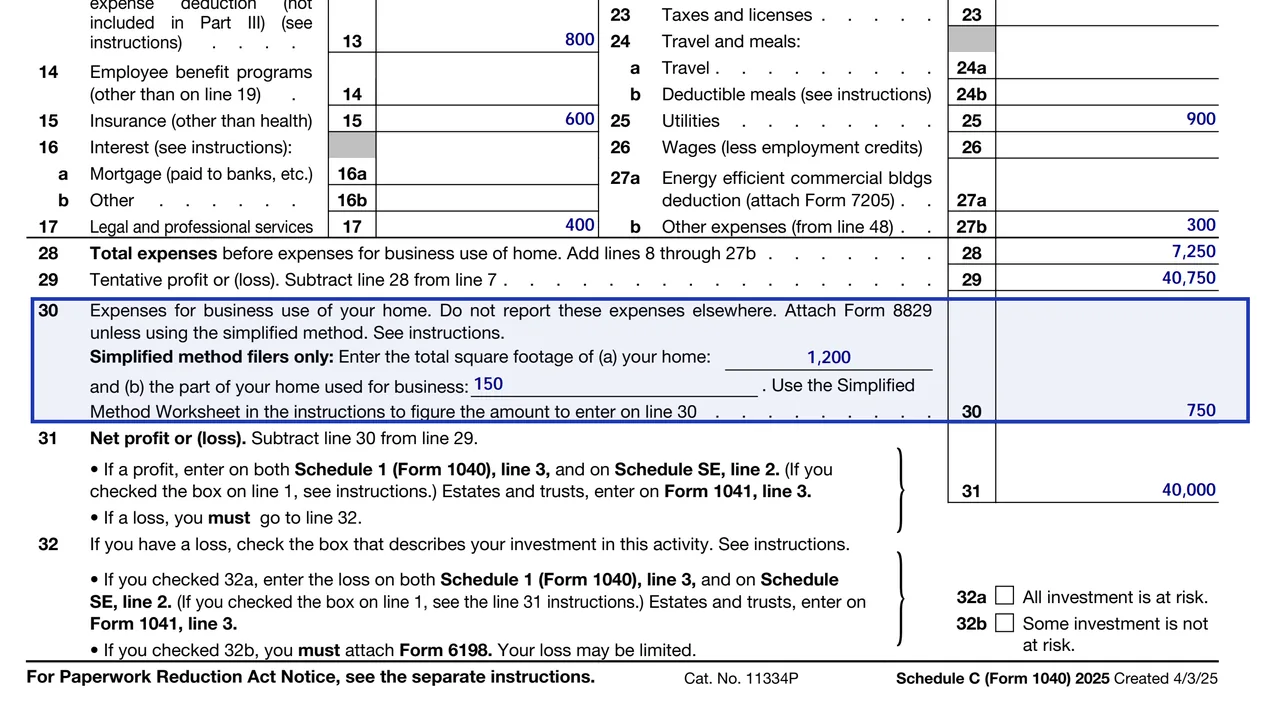
Line 31 is the net profit or loss that flows to the rest of your return.
You get the real form, filled in a browser tab, with nothing standing between you and the finished PDF.
Schedule C is part of your Form 1040 and is due with it.
Attach it to Form 1040 when you mail, or let tax software transmit it when you e-file.
The IRS form is free.
Keep receipts, mileage logs and bank statements that support each expense.
Mixing personal and business costs, skipping Schedule SE, using an SSN where an EIN belongs and entering gross receipts that do not match Forms 1099 are the errors that draw attention.
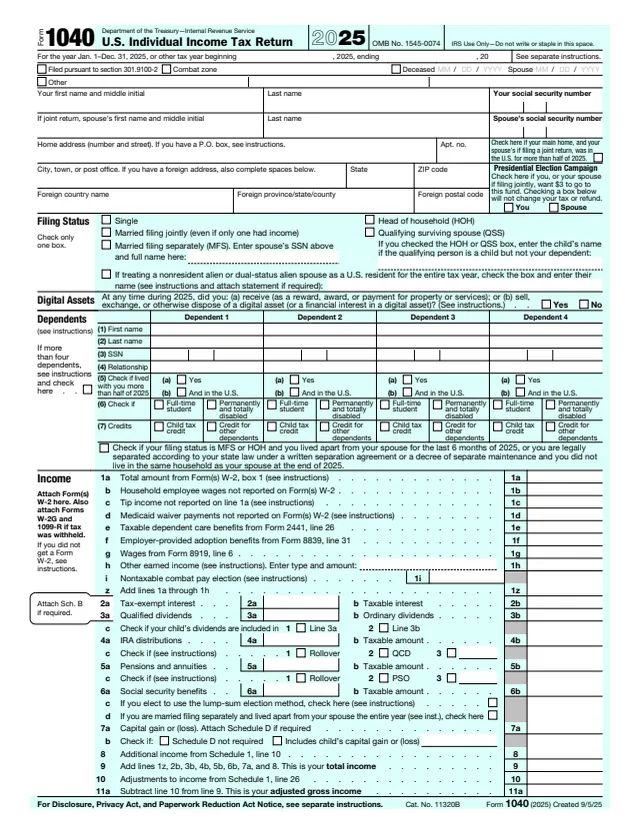
1040
199 fields, 2 pages
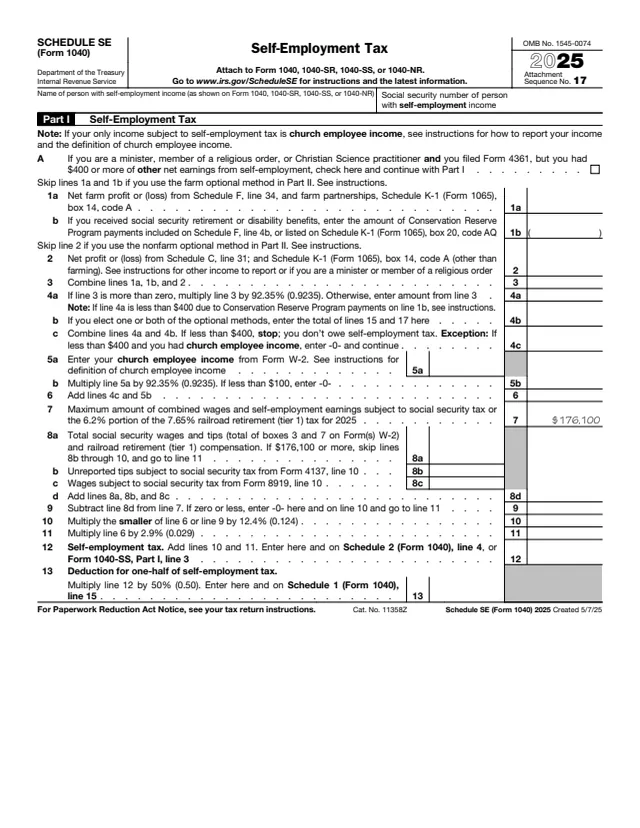
1040
27 fields, 2 pages
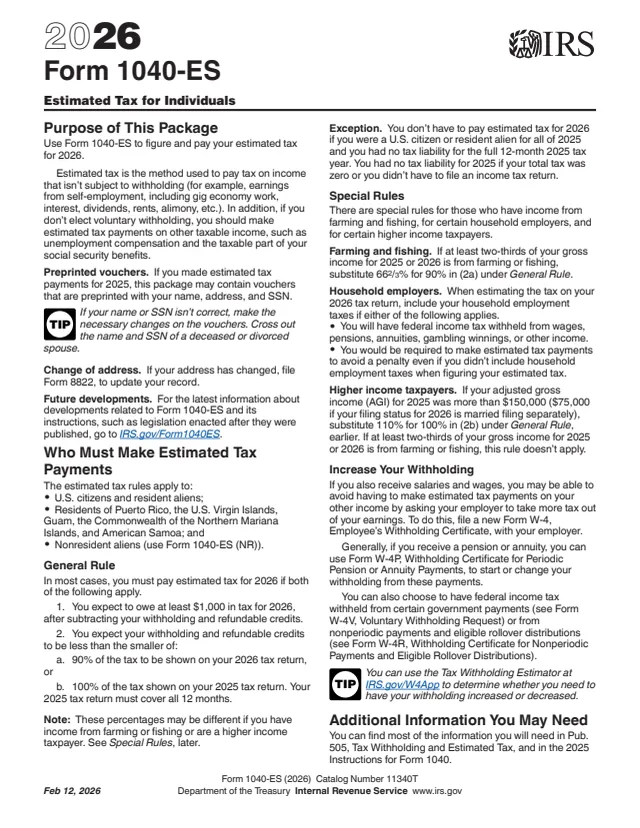
1040-ES
118 fields, 16 pages
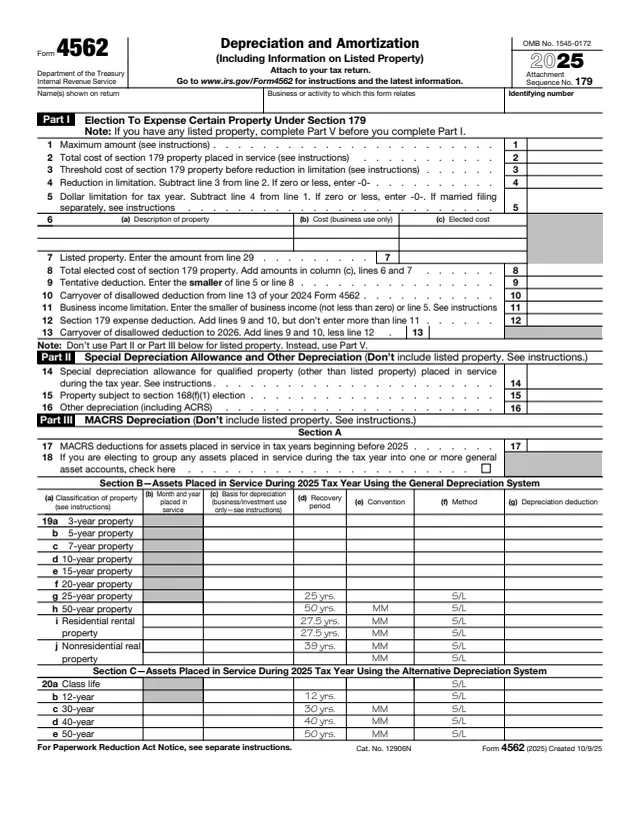
4562
277 fields, 3 pages
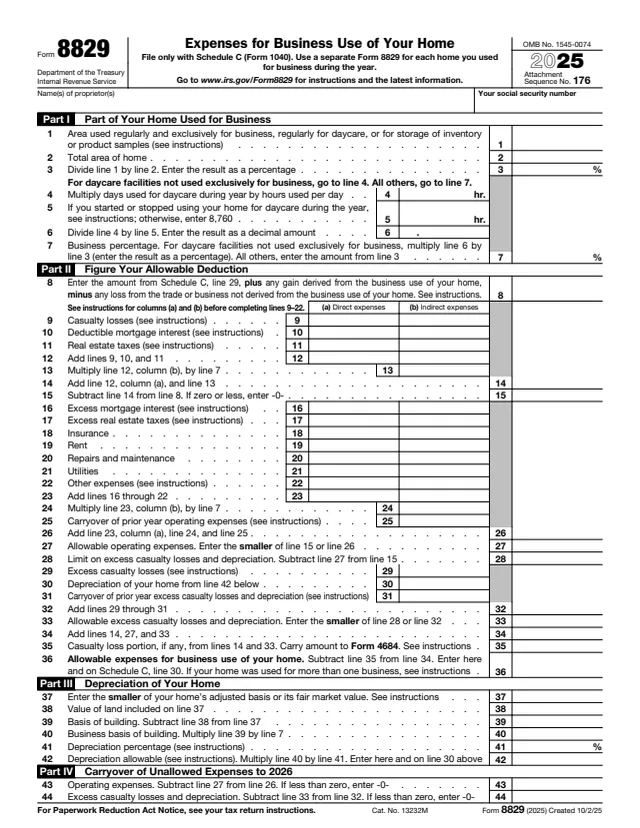
8829
58 fields, 1 page
1099-NEC
140 fields, 6 pages
No tool matches that search.
The instructions treat an activity as a business if you carry it on regularly and mainly to earn a profit. Net self-employment earnings of $400 or more also trigger a filing requirement for Schedule SE.
Schedule C figures your business profit or loss. Schedule SE figures self-employment tax on that profit.
Yes if you qualify. Use Form 8829 for actual expenses or the simplified method of $5 per square foot, up to 300 square feet.
No. Leave line D blank unless you need an EIN under the instructions.
A loss goes to your return on line 31, but the instructions say it may be limited by the excess business loss and passive activity rules.