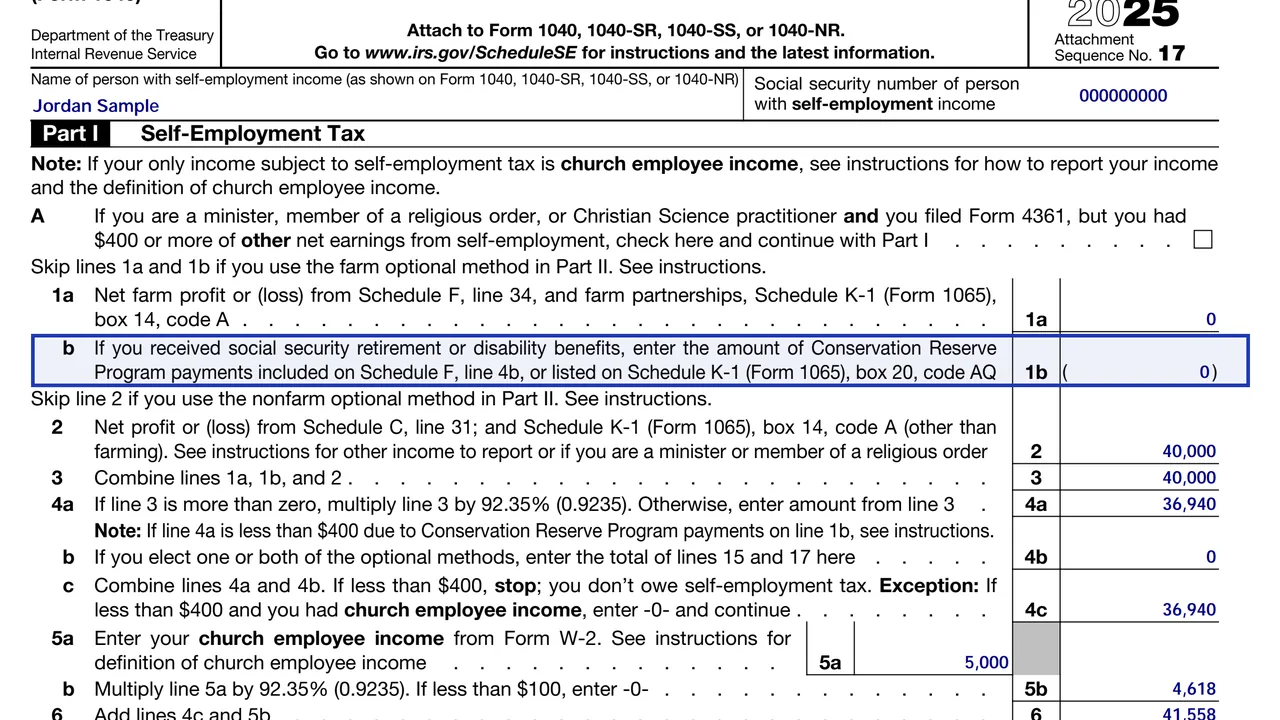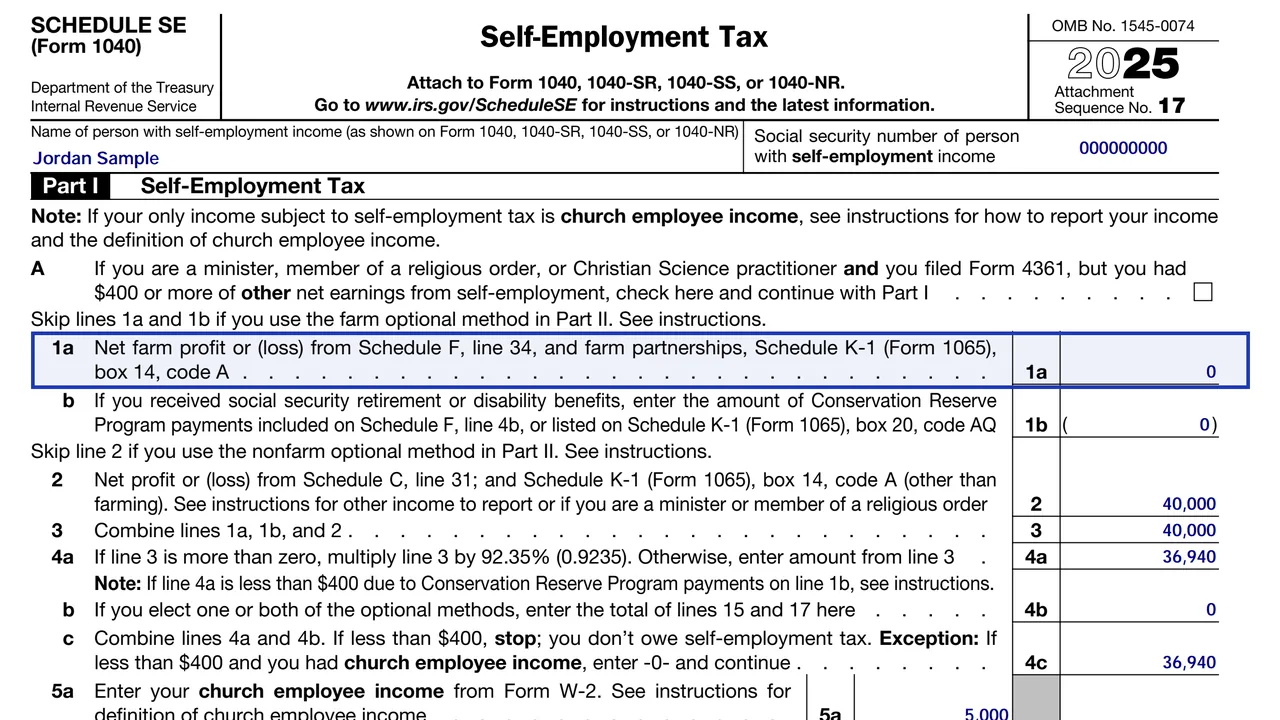
Line 1a: Net farm profit or loss
Enter net farm profit or loss here.
1040
Self-Employment Tax
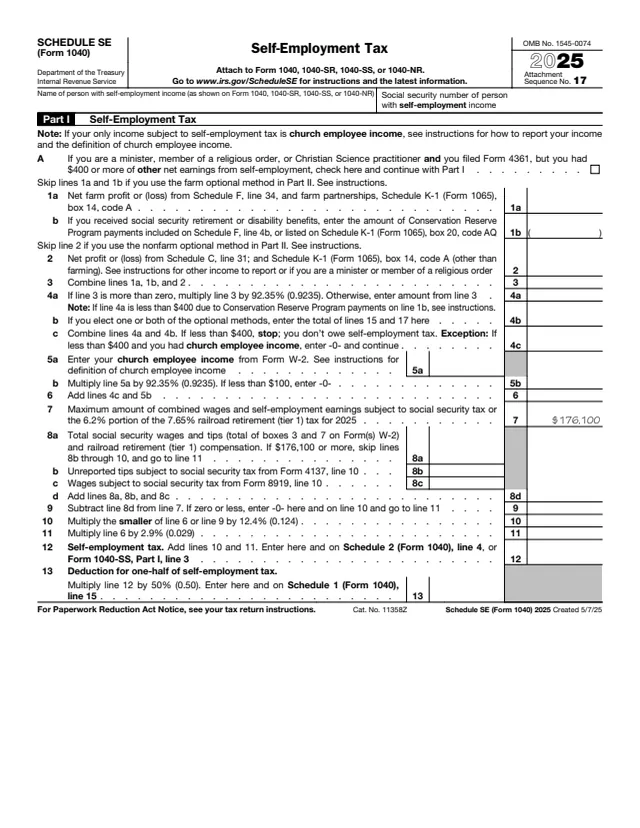
Schedule SE calculates self-employment tax, which is the way people who work for themselves pay into Social Security and Medicare. The IRS page says the Social Security Administration also uses the information on this form to work out your benefits.
The tax applies regardless of age. The IRS says you owe it even if you already receive Social Security or Medicare benefits.
You fill it out after Schedule C, because it starts with your net profit. The result is added to your tax on Form 1040 through Schedule 2.
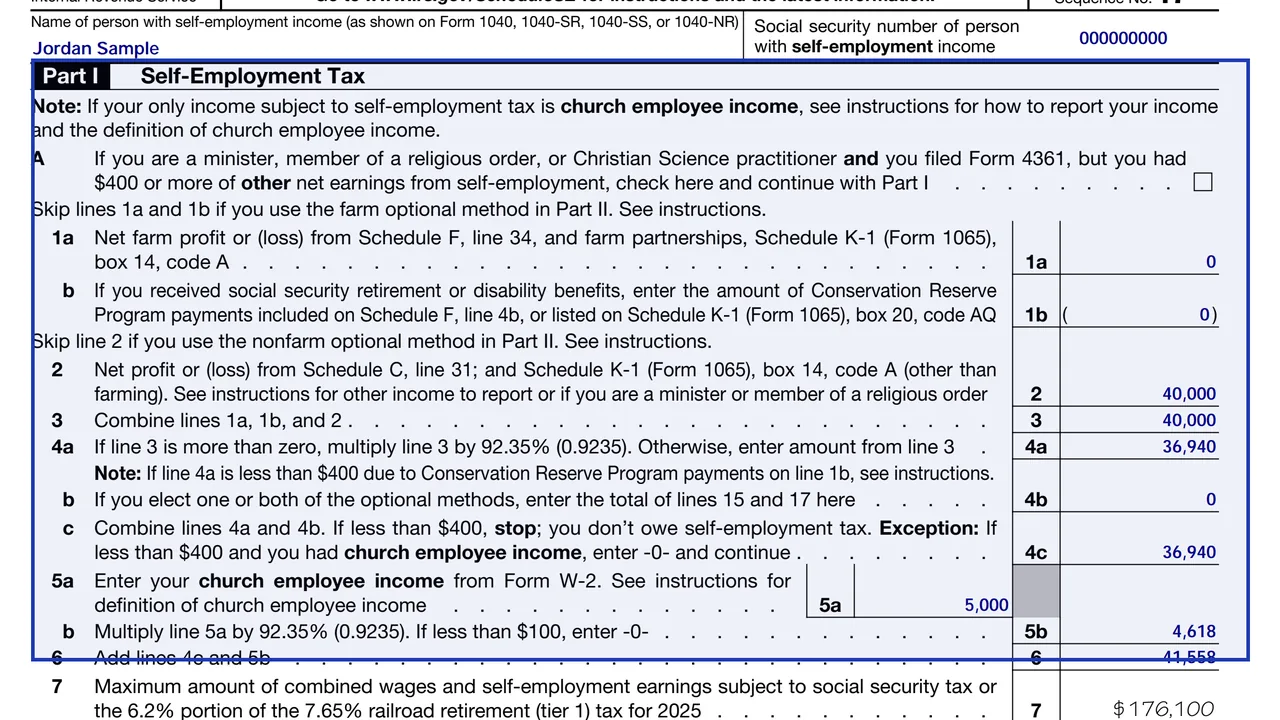
Enter net farm profit or loss here.
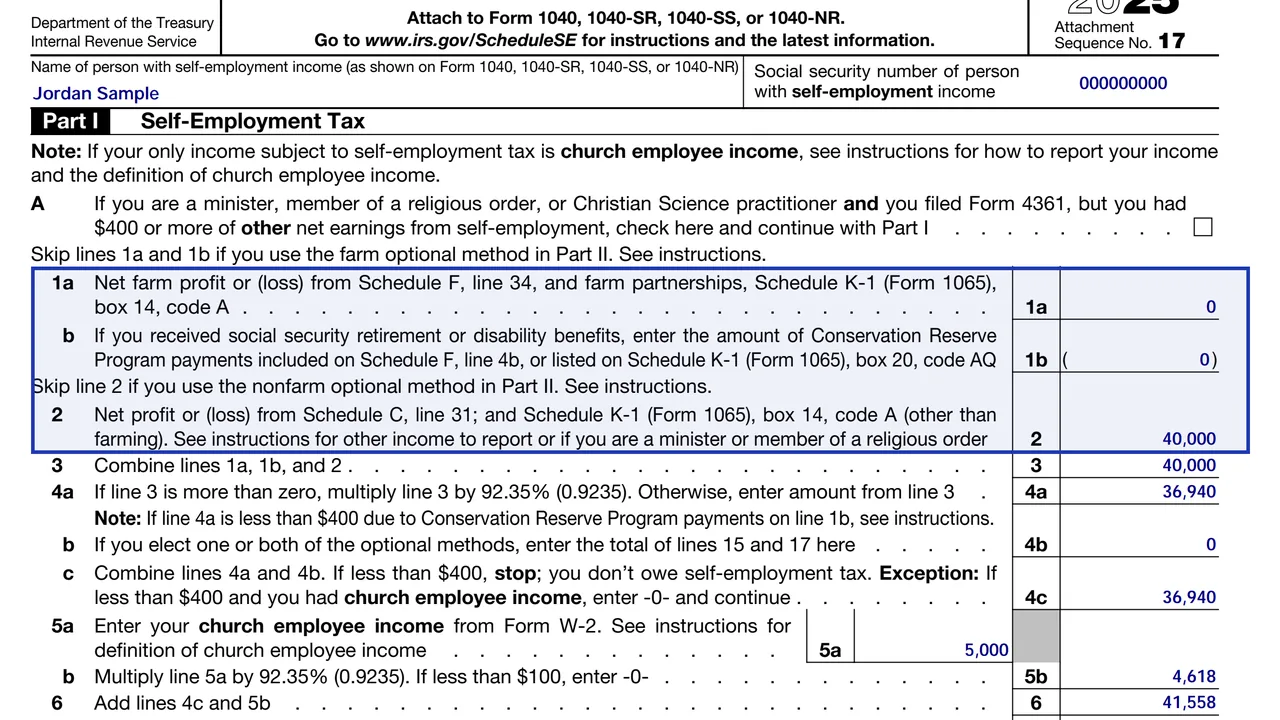
Included if you were receiving Social Security retirement or disability benefits when you received them.
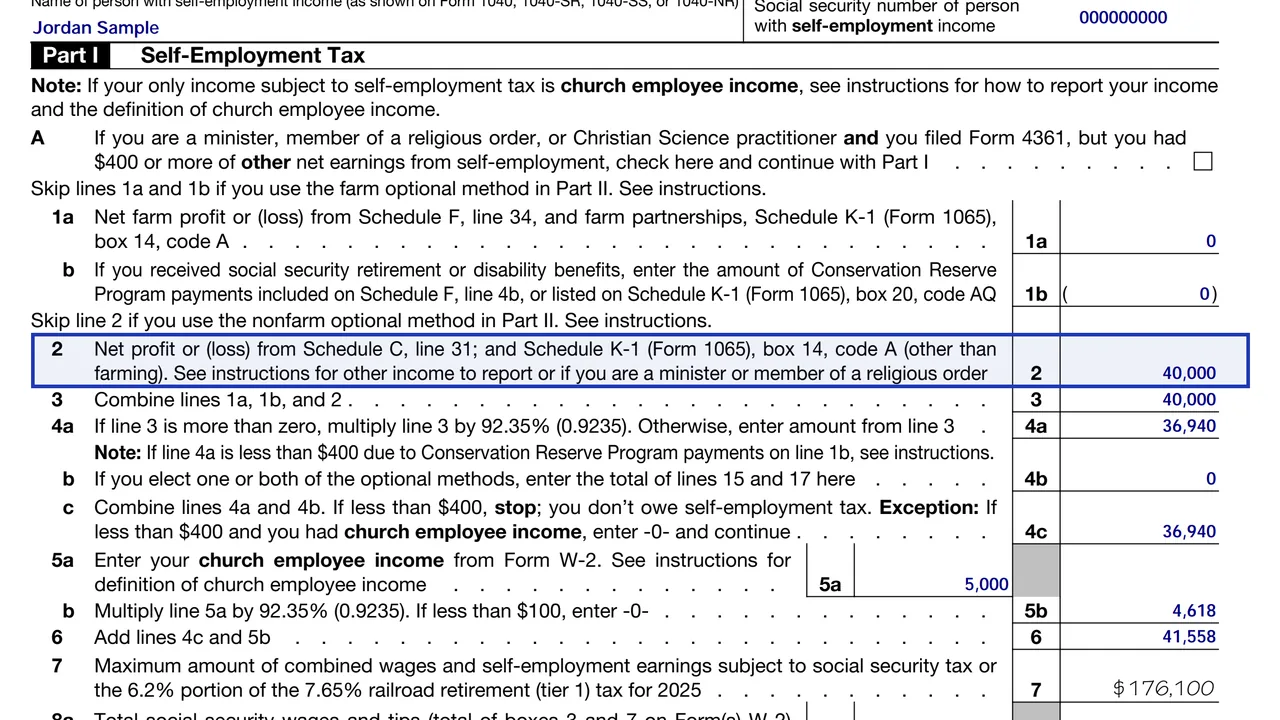
Other net earnings, such as certain minister income. Statutory employee net profit is not entered here.
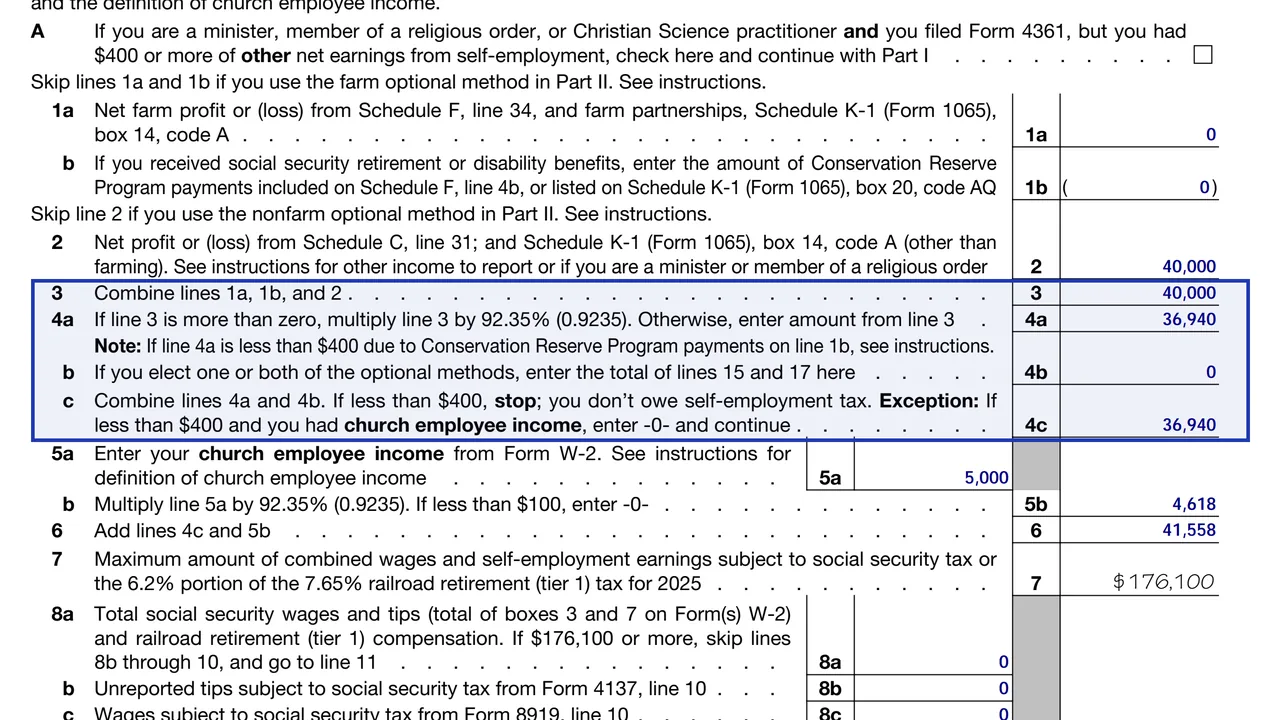
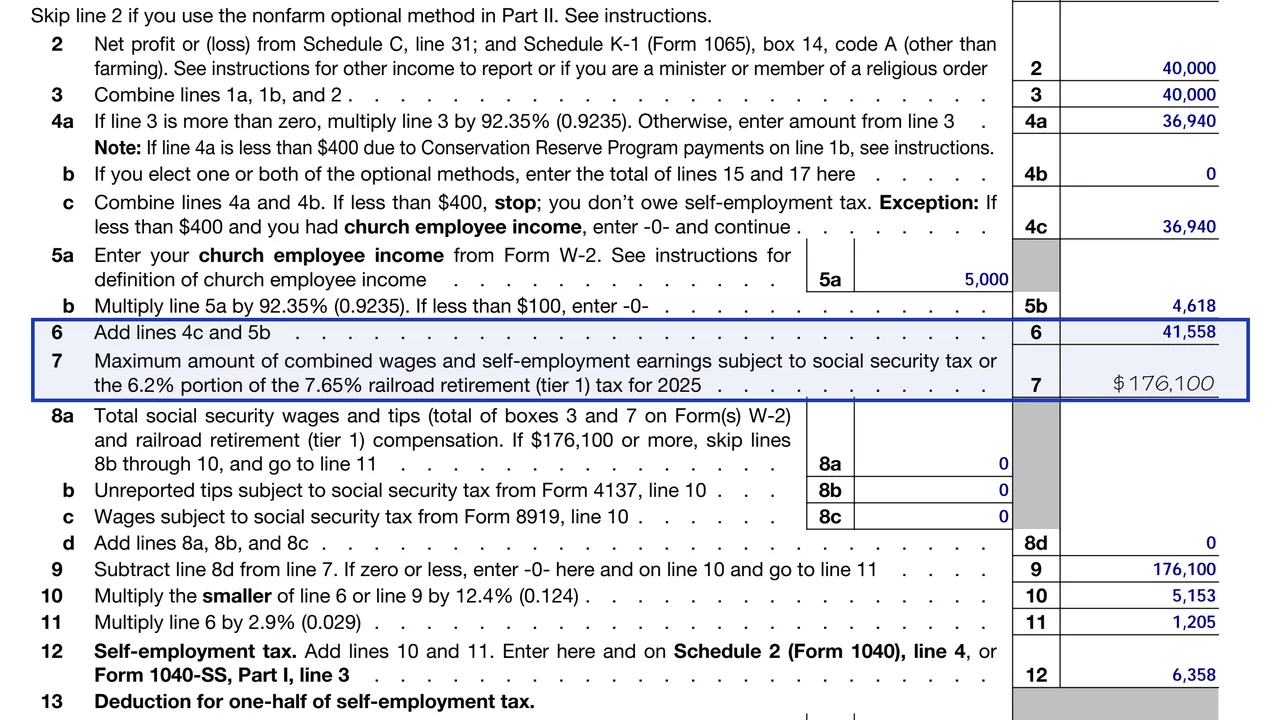
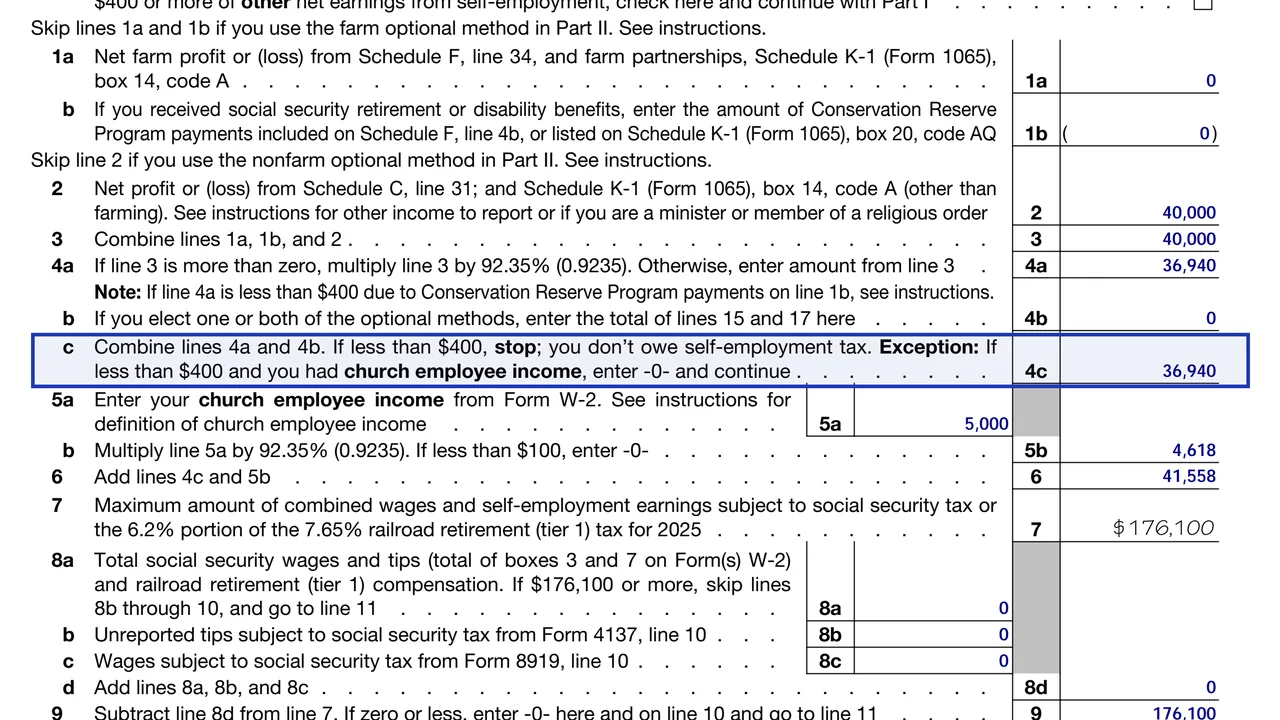
Line 3 combines the earlier lines and line 4c is the net earnings amount used for the $400 test.
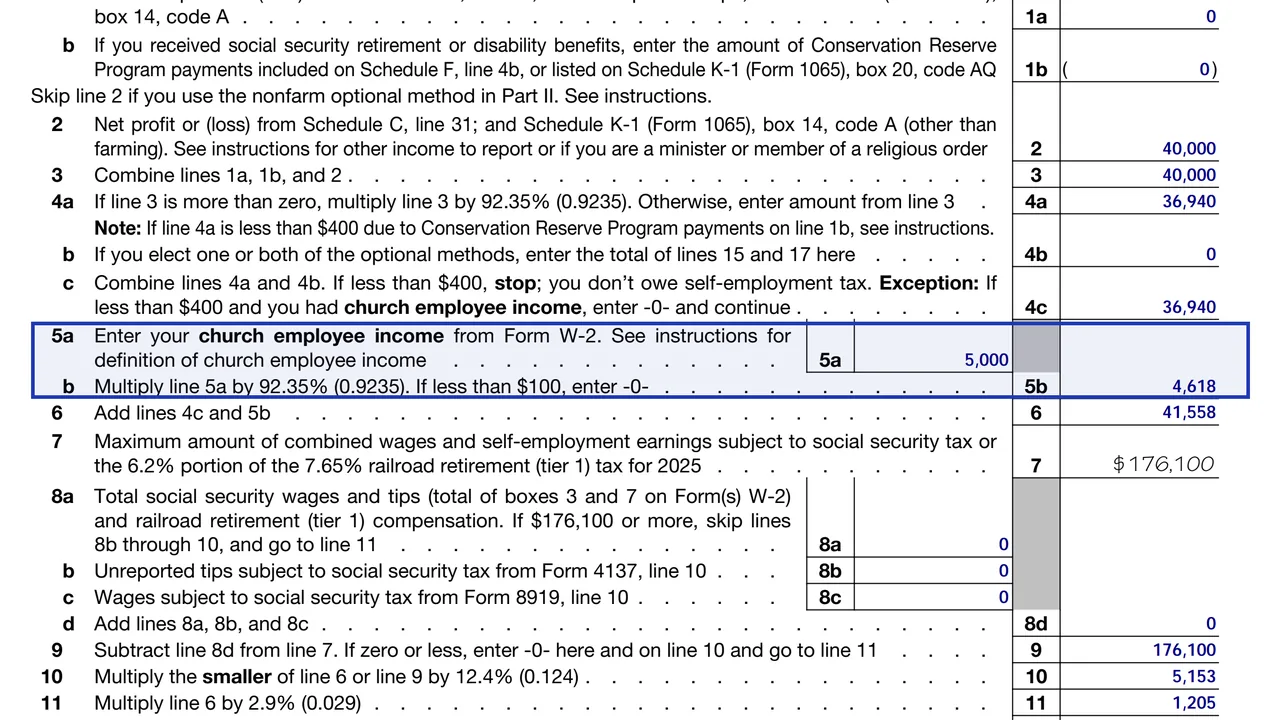
You complete these if you had church employee income.
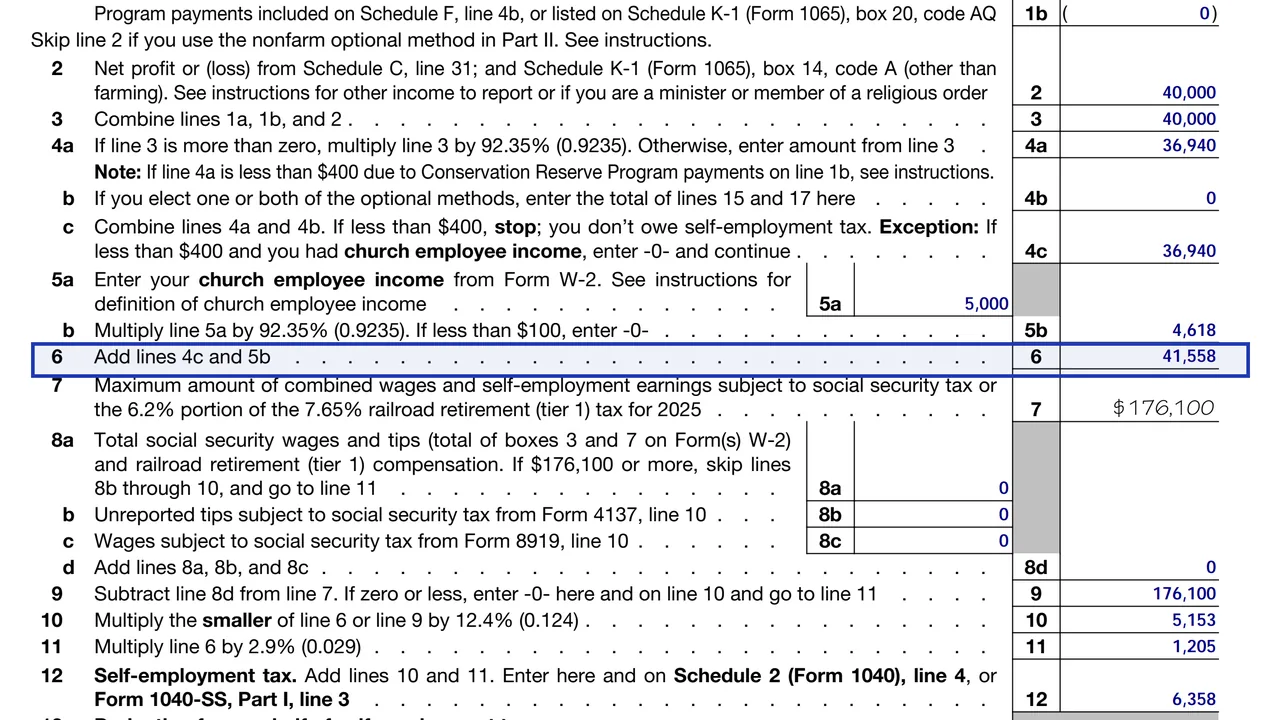
Line 6 is used to test the Additional Medicare Tax. The instructions give $176,100 as the 2025 maximum earnings subject to Social Security tax.
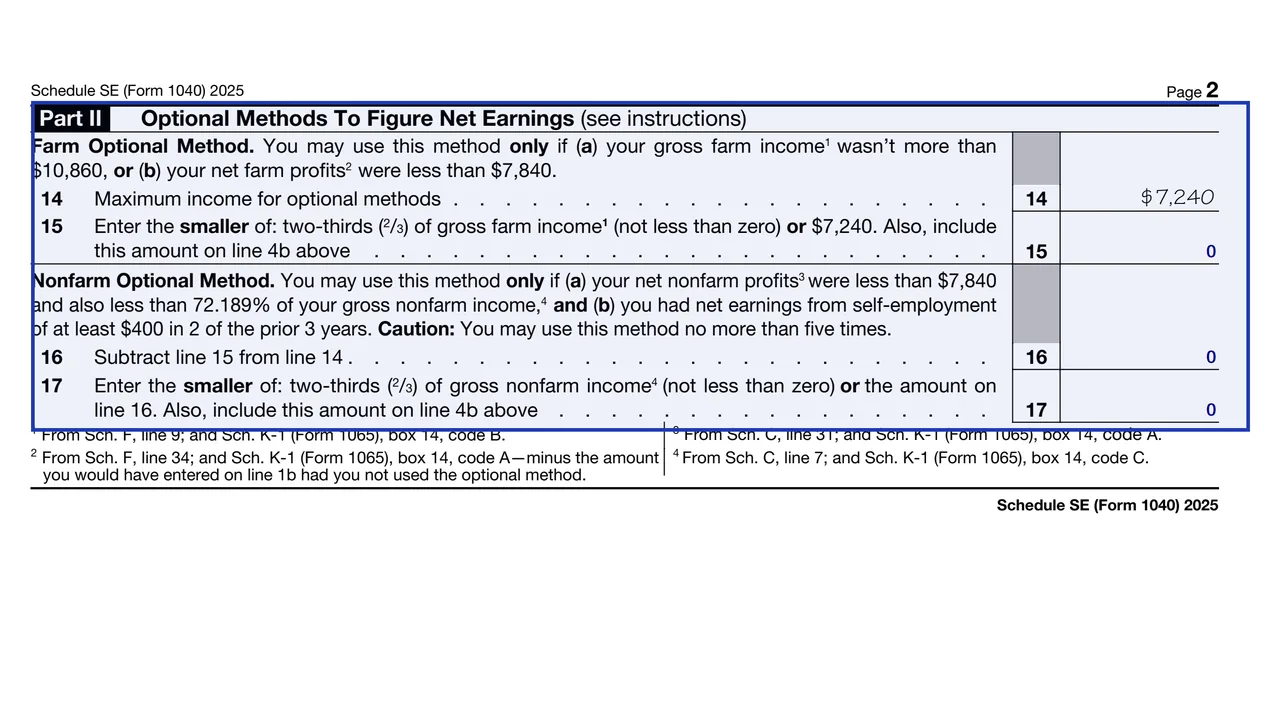
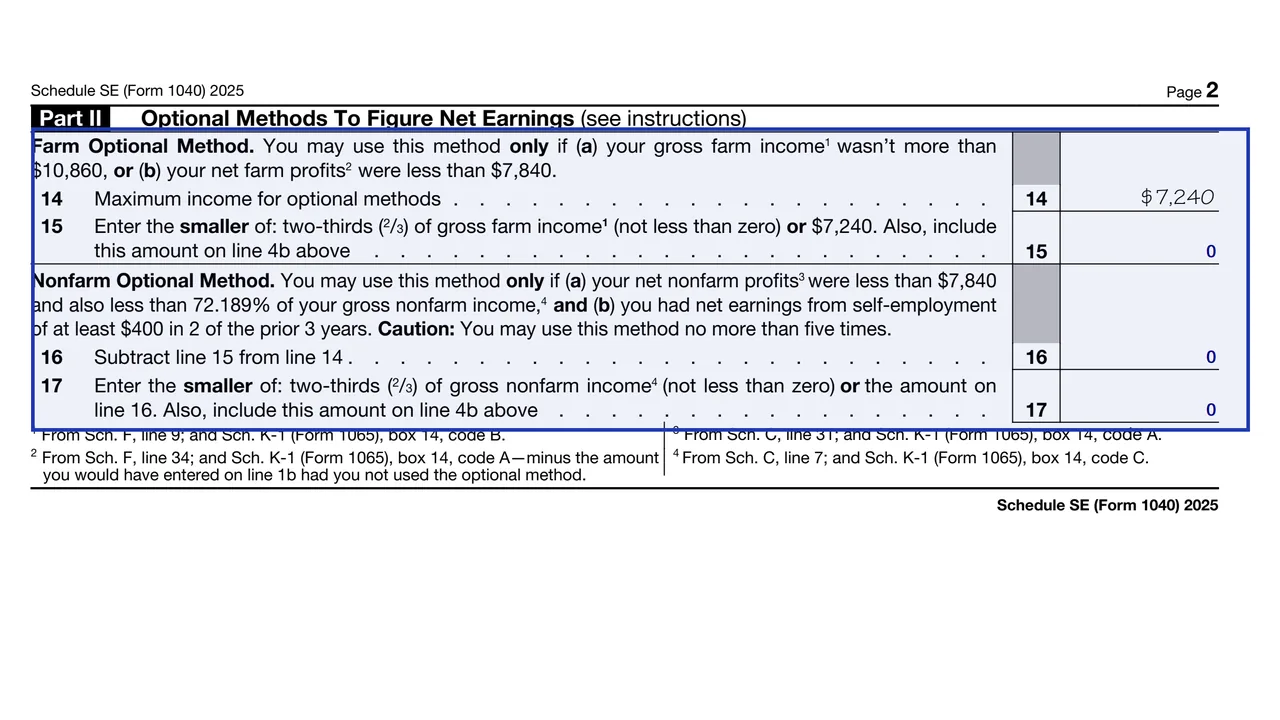
Lines 14 through 17 let some farmers and regularly self-employed nonfarm filers report a set amount instead of actual earnings.
Know your net profit from self-employment before you start. Schedule C is where a sole proprietor finds it.
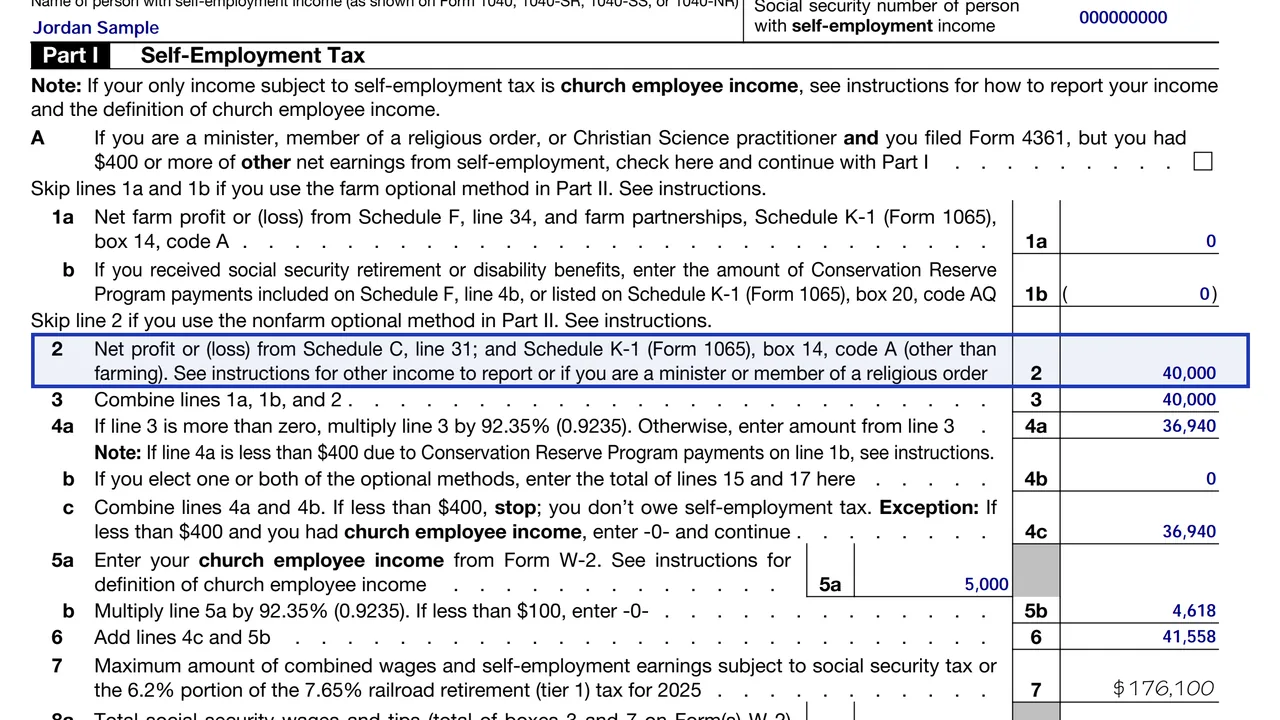
Use lines 1a, 1b and 2 as they apply to you.
If it is below $400 and you have line 1b income, the instructions say to file if lines 1a and 2 total $434 or more.
Complete lines 5a and 5b.
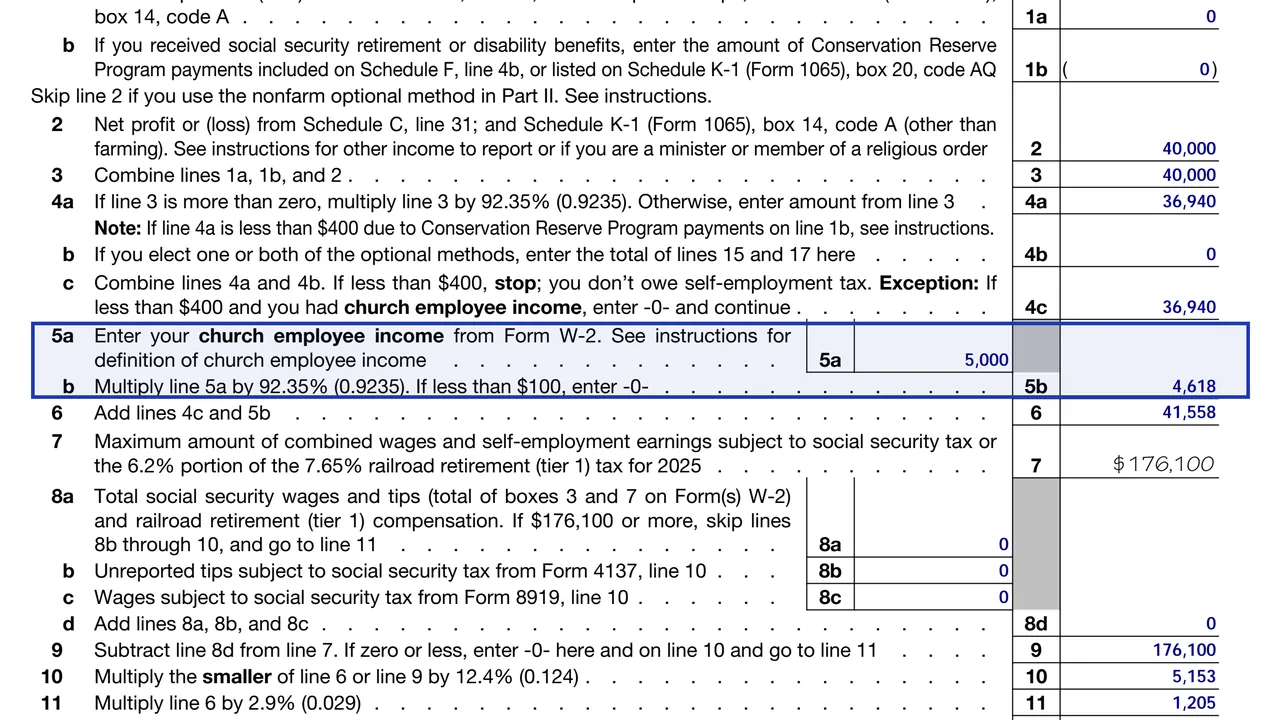
If line 6 passes the threshold for your filing status, you also file Form 8959.
The farm method is available if gross farm income was $10,860 or less or net farm profits were under $7,840. The nonfarm method requires net nonfarm profits under $7,840 and under 72.189% of gross nonfarm income, and it can be used for only 5 years. The instructions warn these methods may increase your tax.
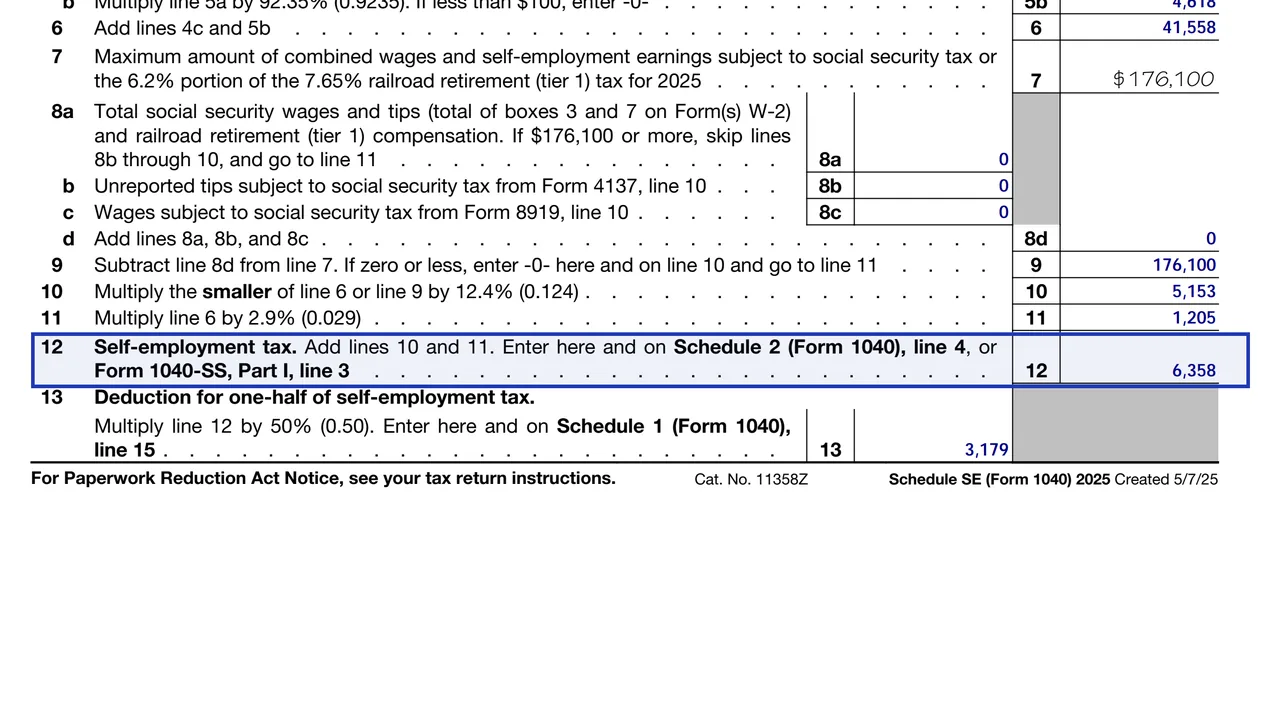
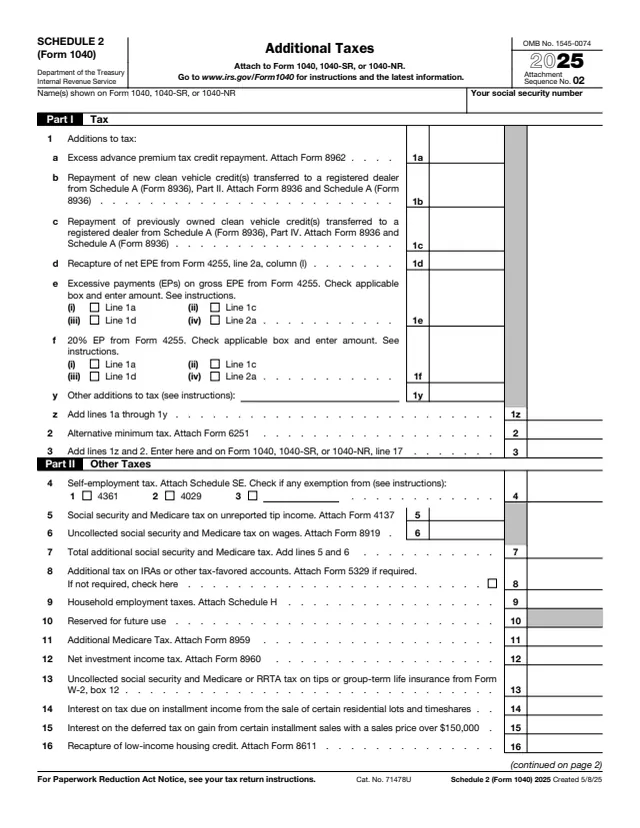
The tax goes to Schedule 2 (Form 1040). You can fill Schedule SE free on this page.
You get the real form, filled in a browser tab, with nothing standing between you and the finished PDF.
It is due with your Form 1040 on the return due date, and the tax is paid with your income tax.
Attach it to Form 1040 or let tax software include it when you e-file.
Because no one withholds this tax, self-employed people often make quarterly payments with Form 1040-ES.
If you are exempt, the instructions say to enter the code on Schedule 2, line 4.
Skipping the form because the profit was small, mixing in statutory employee income, using an optional method without qualifying and entering the wrong amounts from Schedule C are frequent errors.
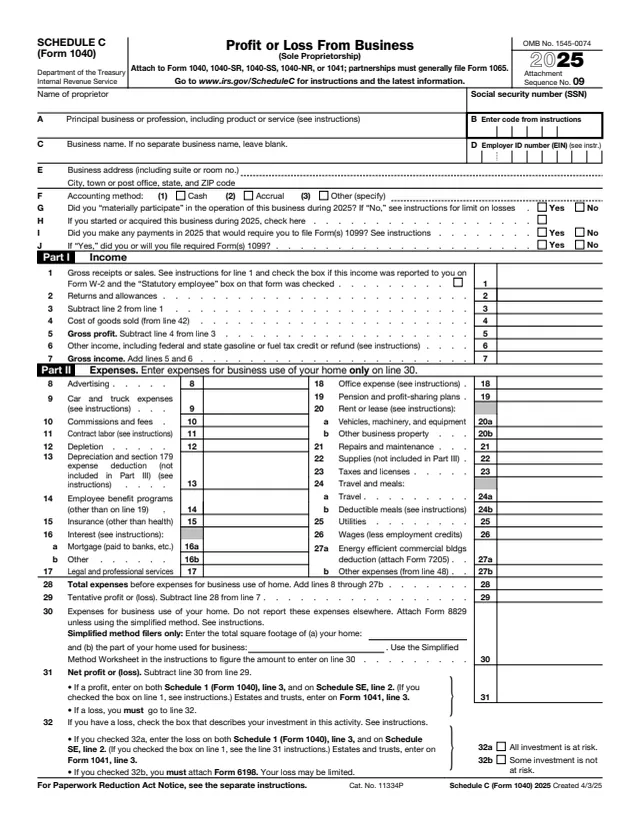
1040
105 fields, 2 pages
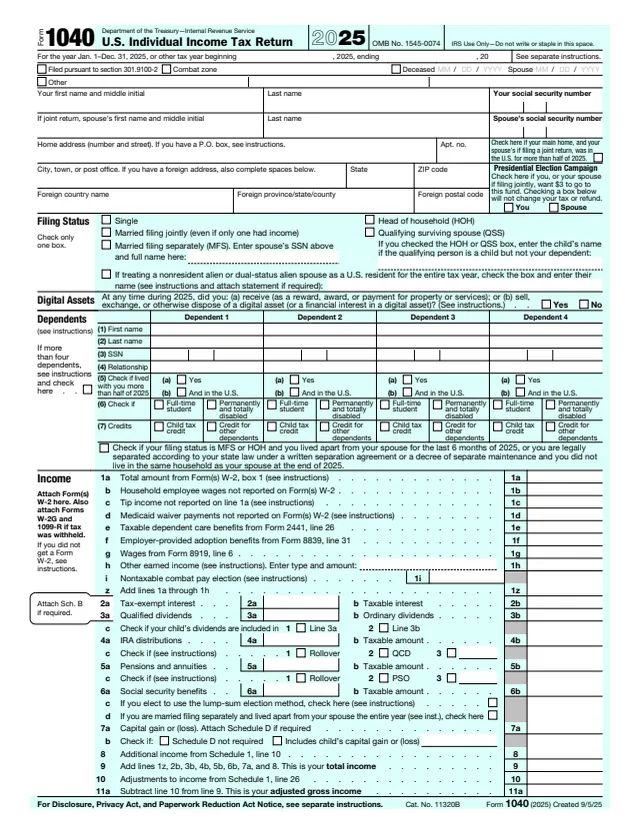
1040
199 fields, 2 pages
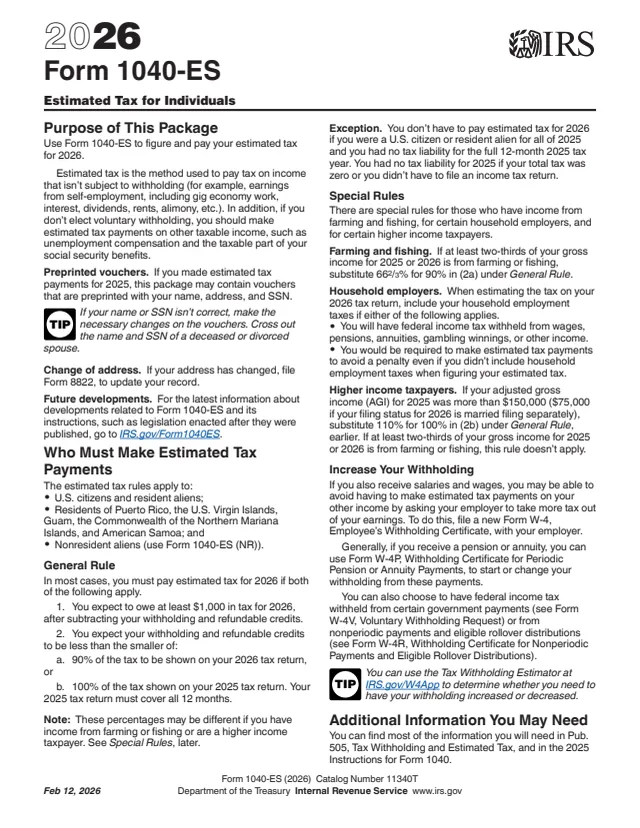
1040-ES
118 fields, 16 pages
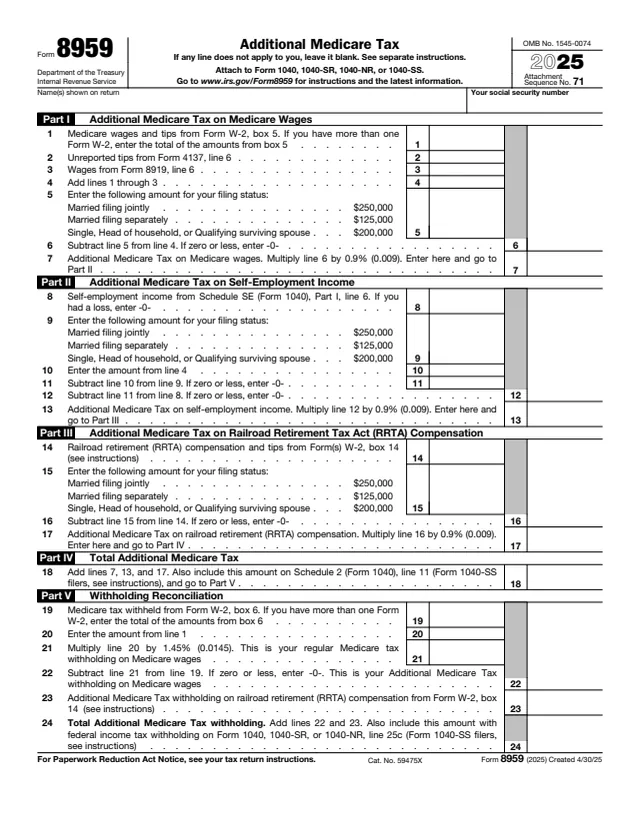
8959
26 fields, 1 page
1040
63 fields, 2 pages
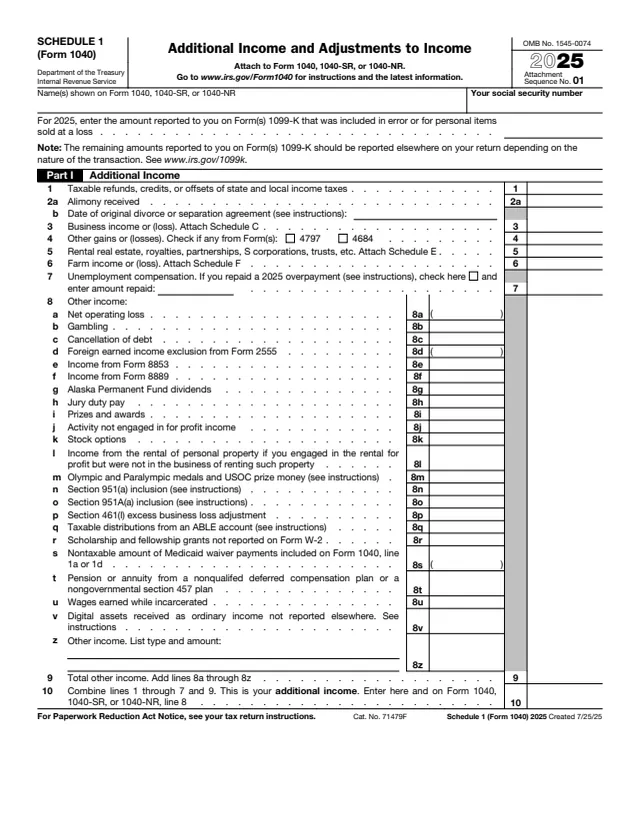
1040
73 fields, 2 pages
No tool matches that search.
If your net earnings from self-employment are $400 or more, the instructions require Schedule SE. The tax applies regardless of age.
The IRS says you owe it even if you already receive Social Security or Medicare benefits.
The instructions direct the self-employment tax to Schedule 2 (Form 1040).
The instructions give $176,100 as the maximum amount of self-employment income subject to Social Security tax for 2025.
Ministers with approved Form 4361 may be exempt, and church employee income has its own lines and a $108.28 threshold.