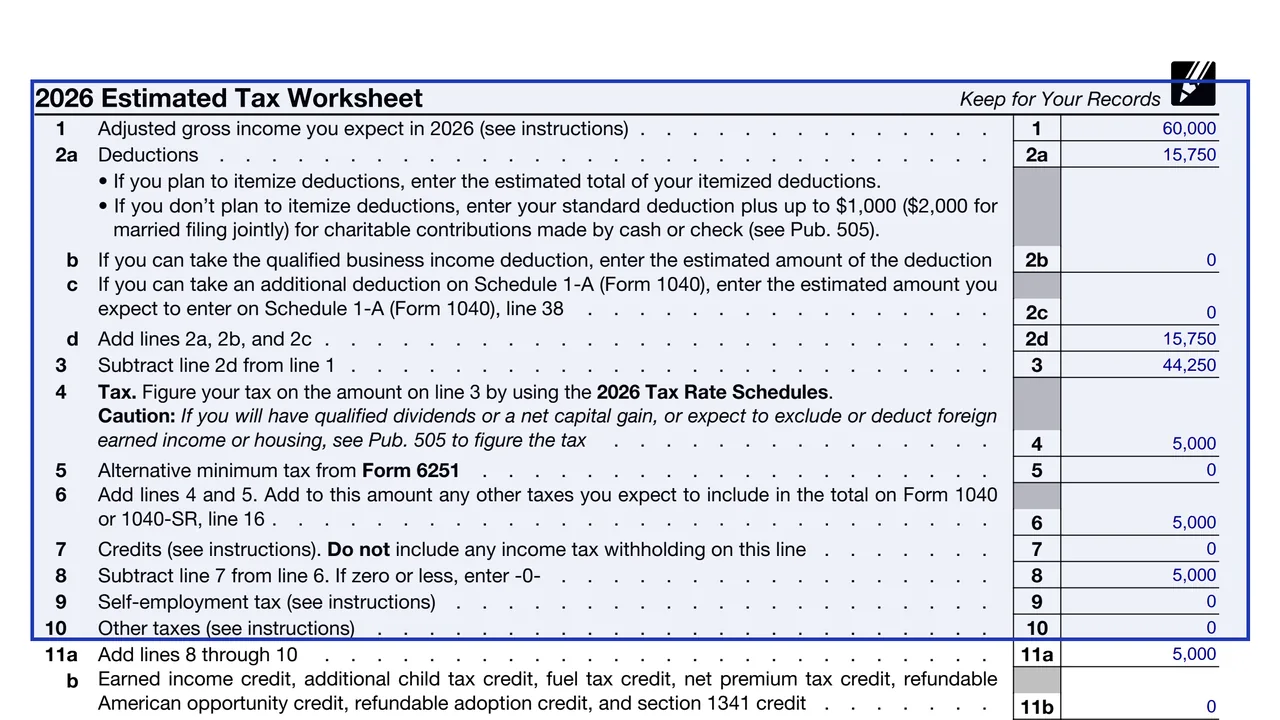
The estimated tax worksheet
You estimate your adjusted gross income, taxable income, taxes, deductions and credits for the year. The IRS says your prior-year return is a useful starting point, adjusted for changes in your situation and tax law.
1040-ES
Form 1040-ES, Estimated Tax for Individuals
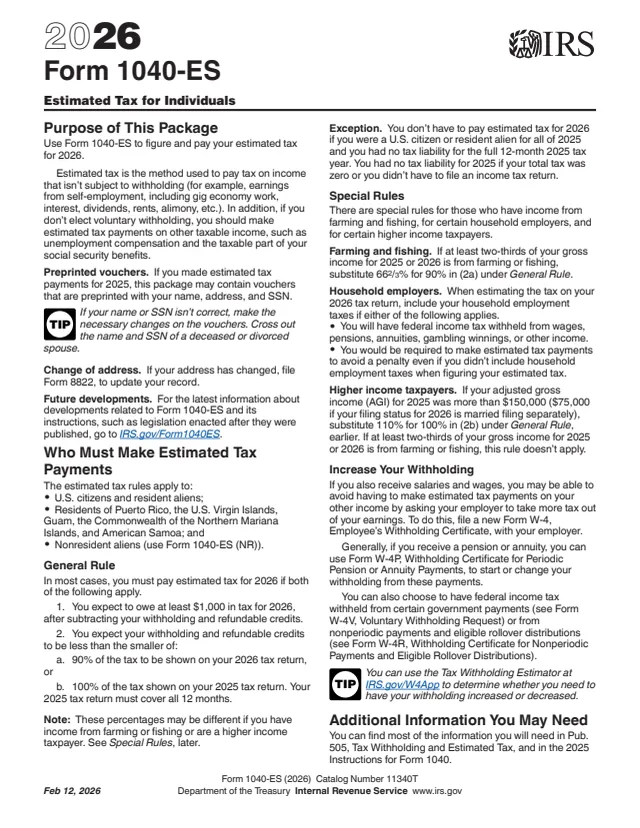
Form 1040-ES is how you figure and pay estimated tax. Tax is supposed to be paid as you earn income during the year. When an employer withholds from your pay, that happens automatically. When you earn money with no withholding, you send in the tax yourself in installments.
The IRS page names income such as self-employment earnings, interest, dividends, rents and alimony. You can also owe on unemployment compensation and the taxable part of Social Security benefits unless you choose to have tax withheld from them.
The form has a worksheet to estimate the year's tax and payment vouchers to send with each payment. You do not file it with your tax return. It is a planning and payment tool, and the payments you make show up later on your return.
You estimate your adjusted gross income, taxable income, taxes, deductions and credits for the year. The IRS says your prior-year return is a useful starting point, adjusted for changes in your situation and tax law.
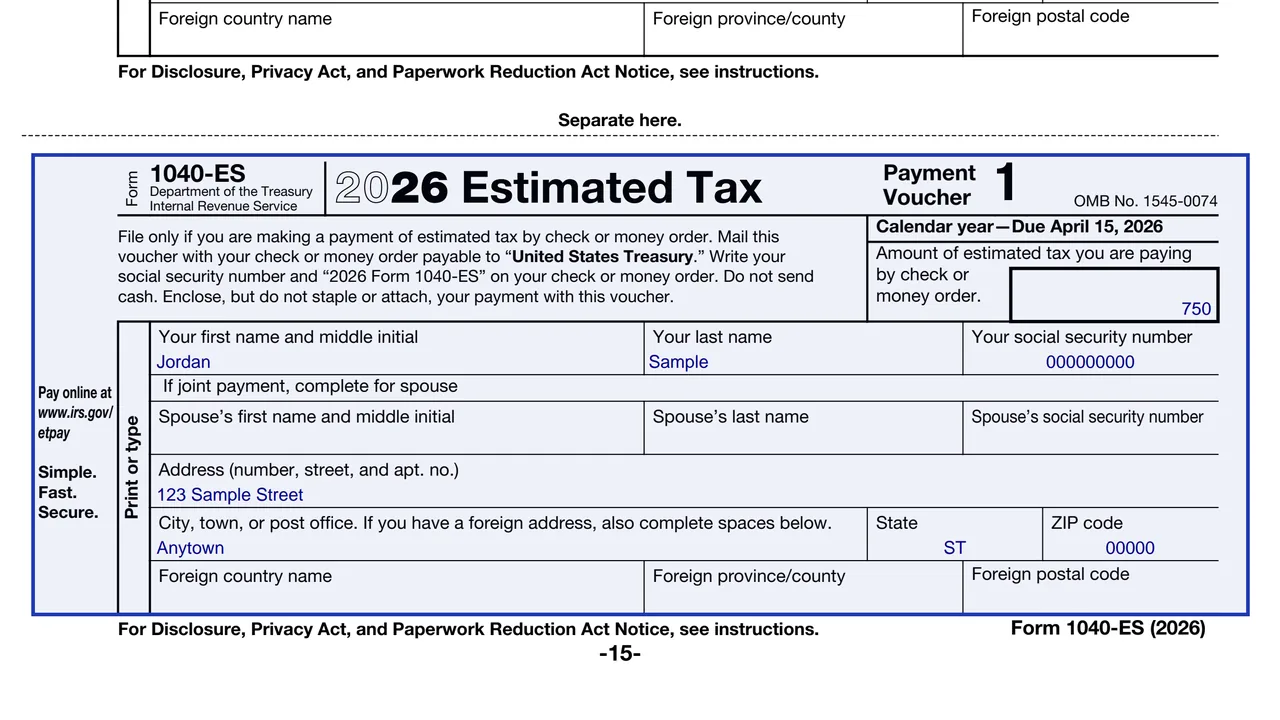
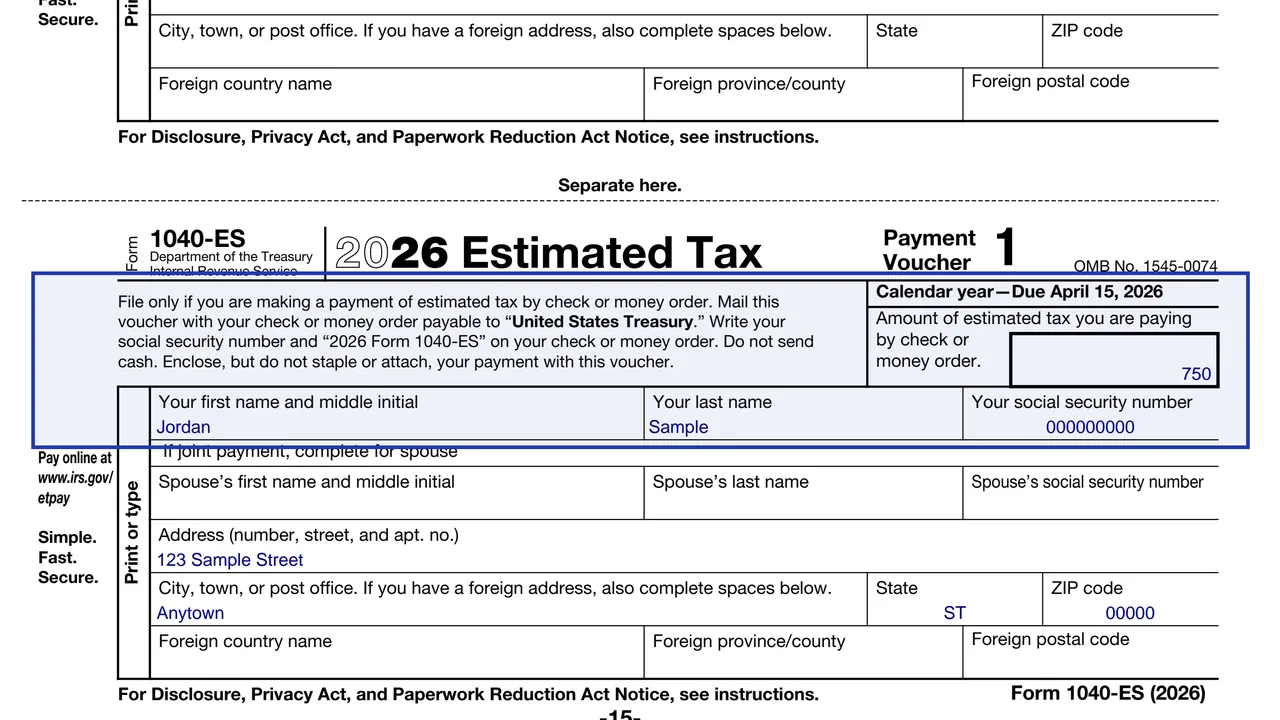
Each payment comes with a voucher that has your name, Social Security number or ITIN, the amount you are paying and the payment period.
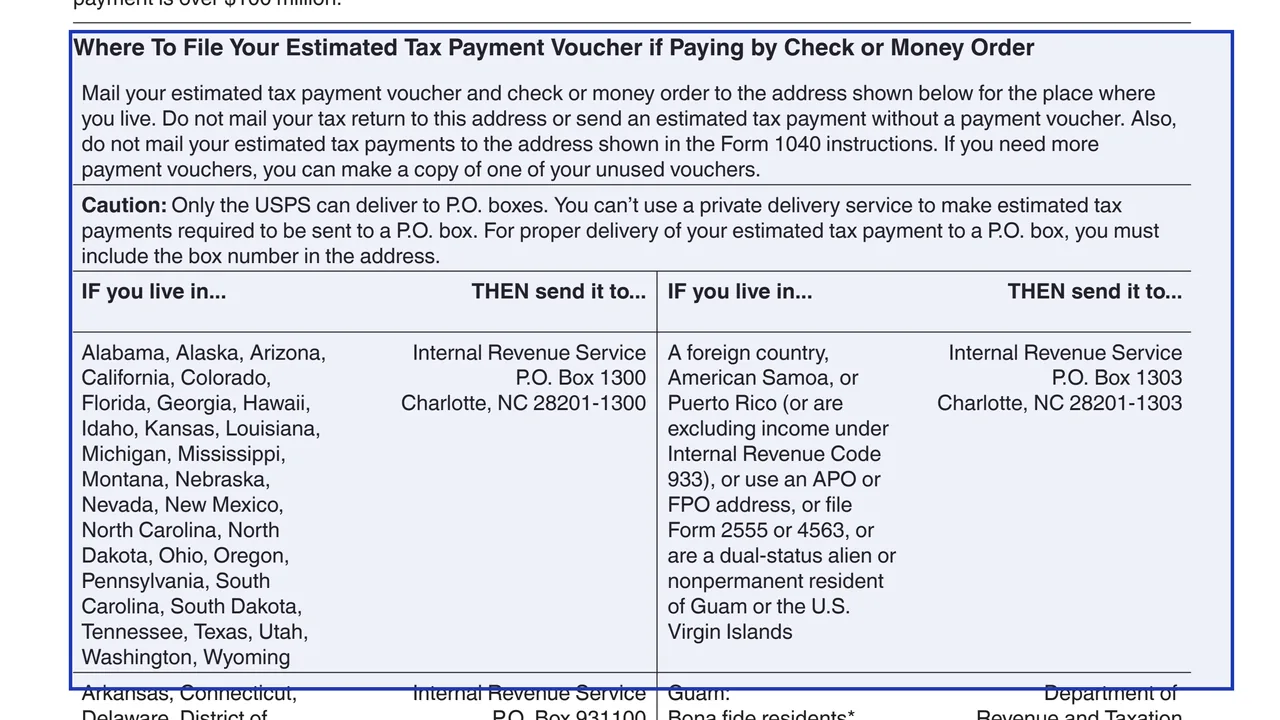
The form includes the instructions and the mailing addresses for vouchers. The IRS posted corrections to the 2026 form in February 2026, including to its mailing addresses, so use the current PDF.
Start from last year's return and adjust. Include every source that has no withholding.
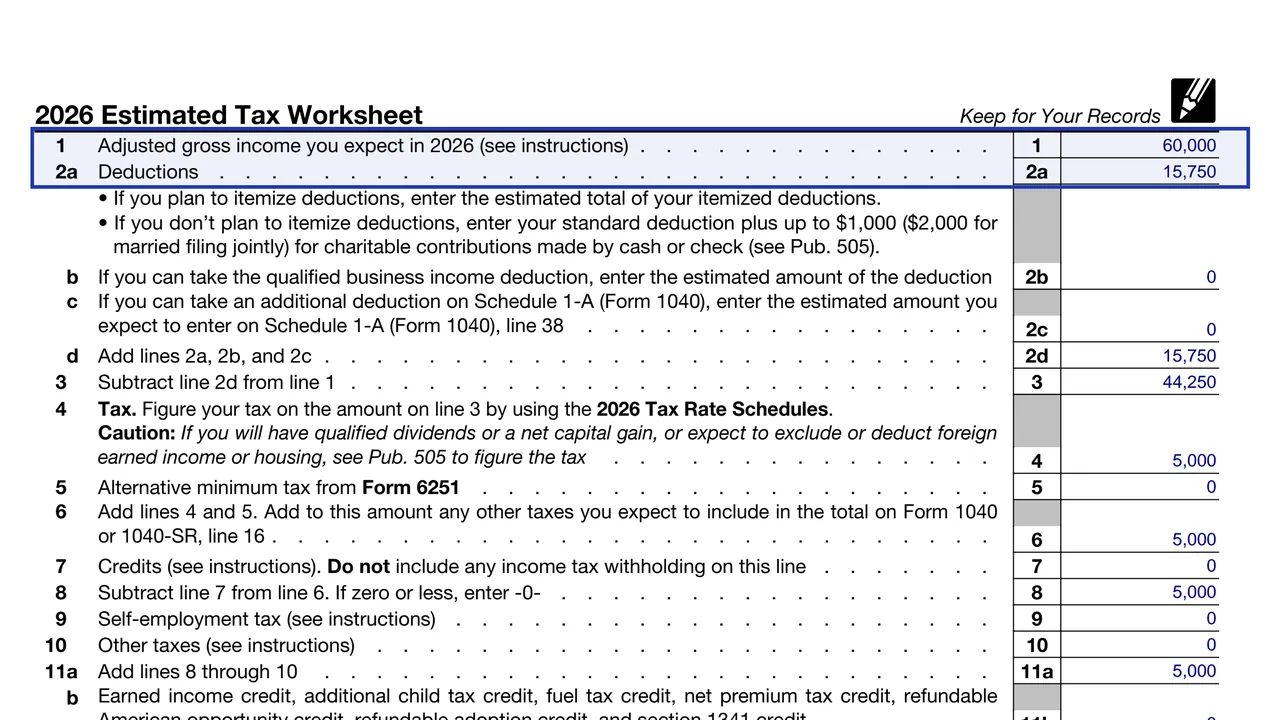
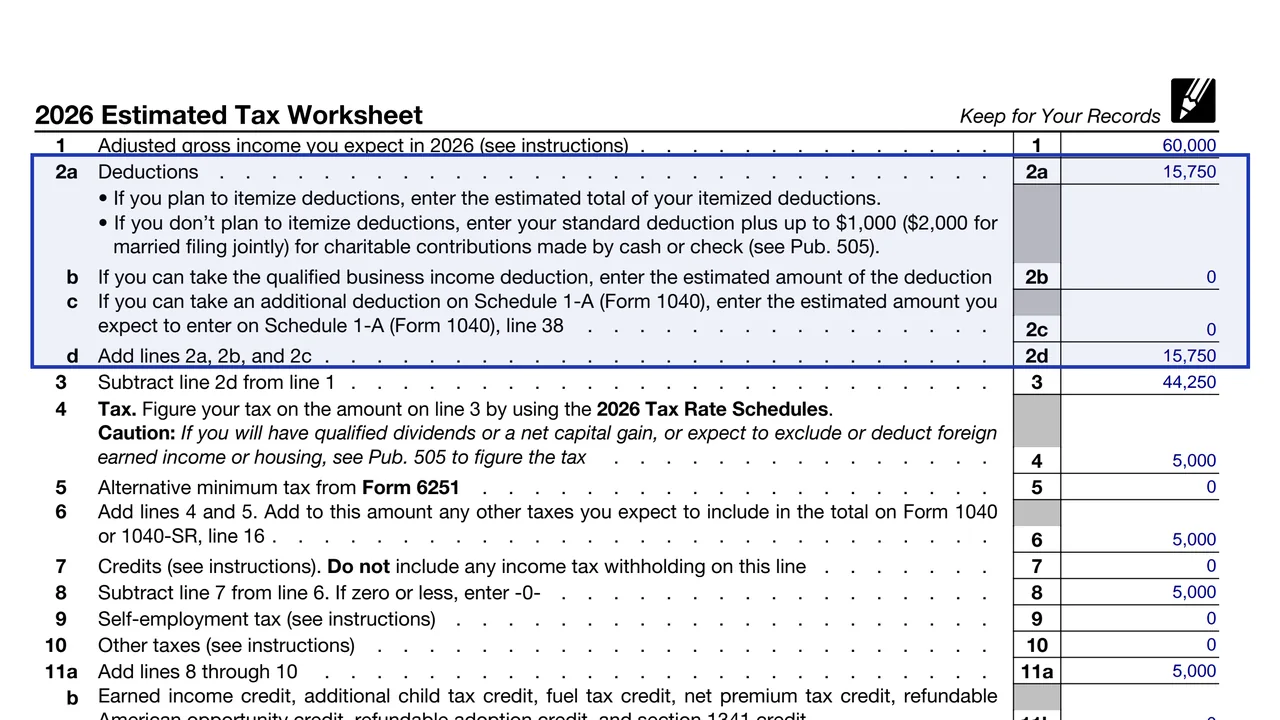
Use the standard or itemized deduction you expect to claim, plus credits you expect.
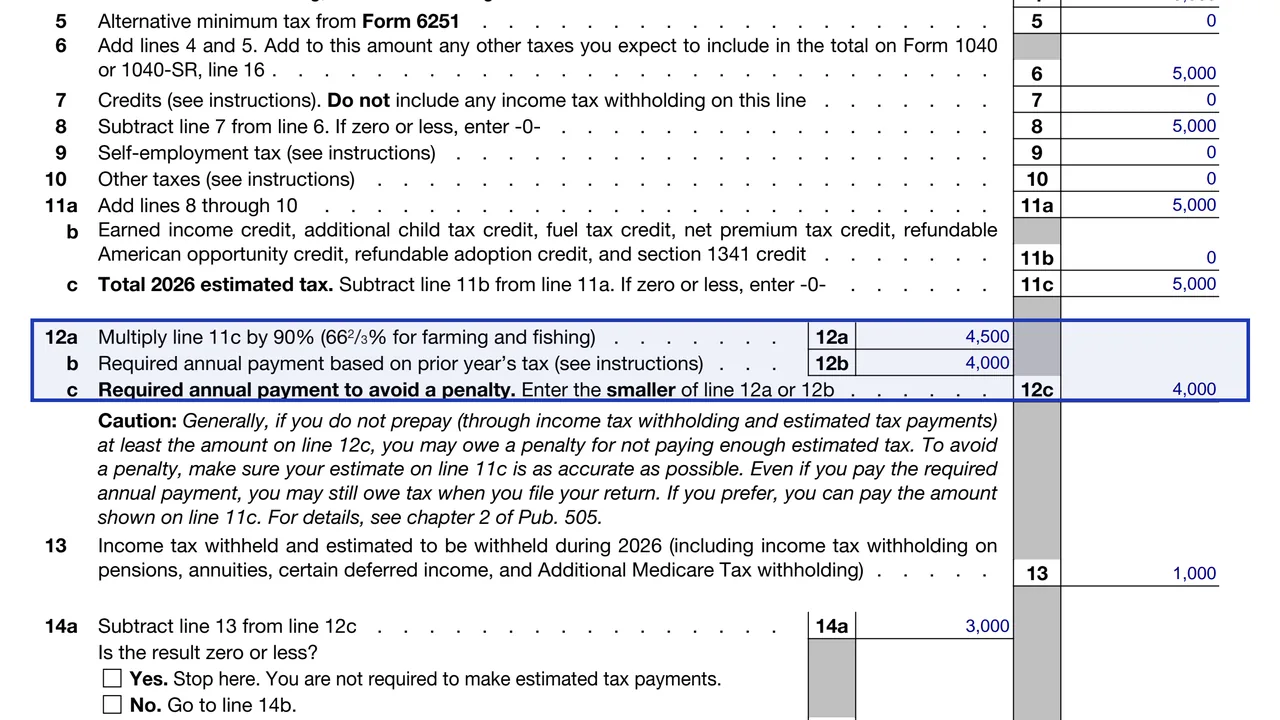
The worksheet gives your expected tax for the year. Subtract withholding and credits to find what you must pay.
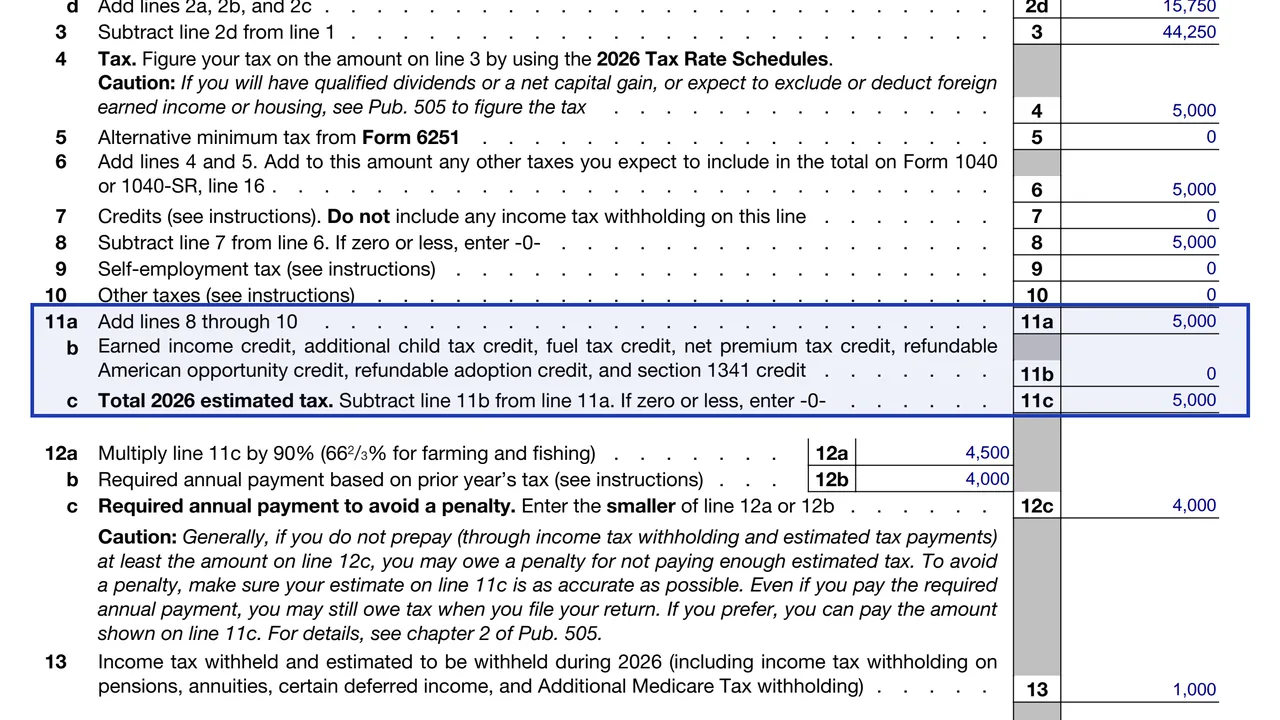
The form says you generally must pay estimated tax if you expect to owe at least $1,000 after withholding and refundable credits, and your withholding and credits will be less than the smaller of 90% of your 2026 tax or 100% of your 2025 tax. The 2025 return must cover all 12 months. Farmers, fishers and higher income taxpayers have different percentages, so read the special rules.
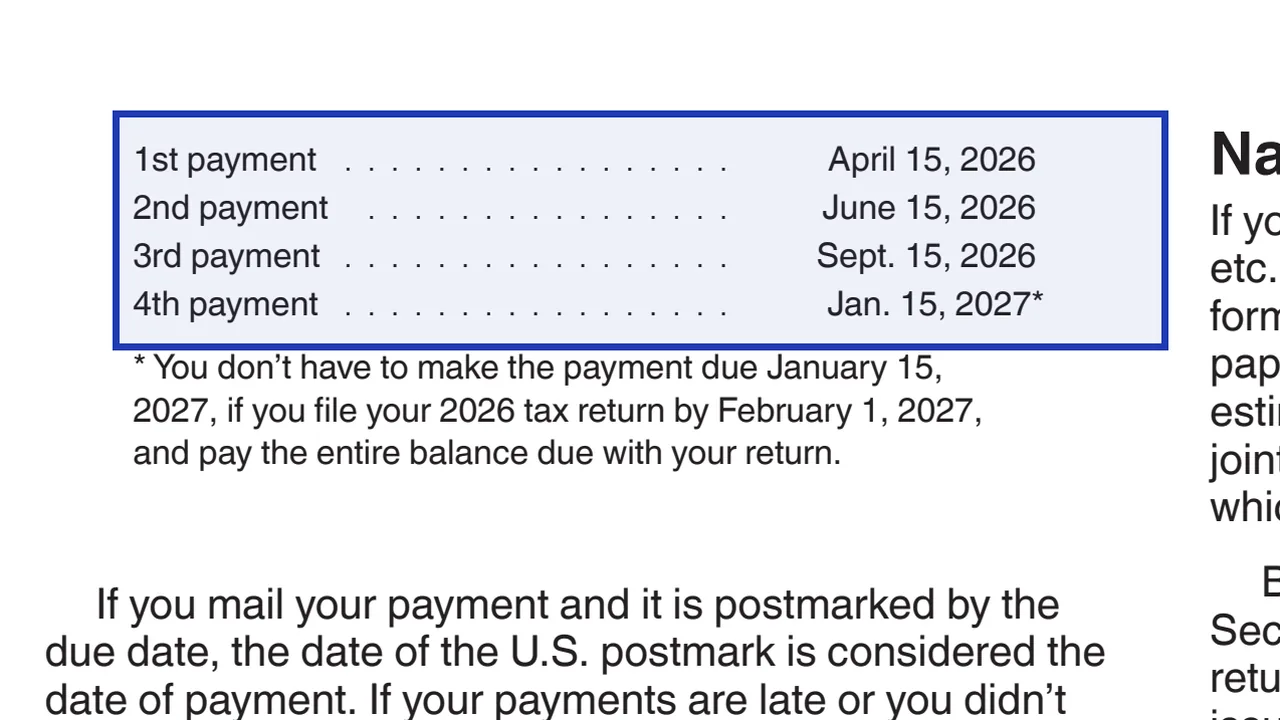
Split the amount into four equal payments by the due dates. You can also pay weekly, monthly or on another schedule, as long as enough is paid by the end of each period.
Enter your name, Social Security number or ITIN and the amount. This page lets you fill the form online for free.
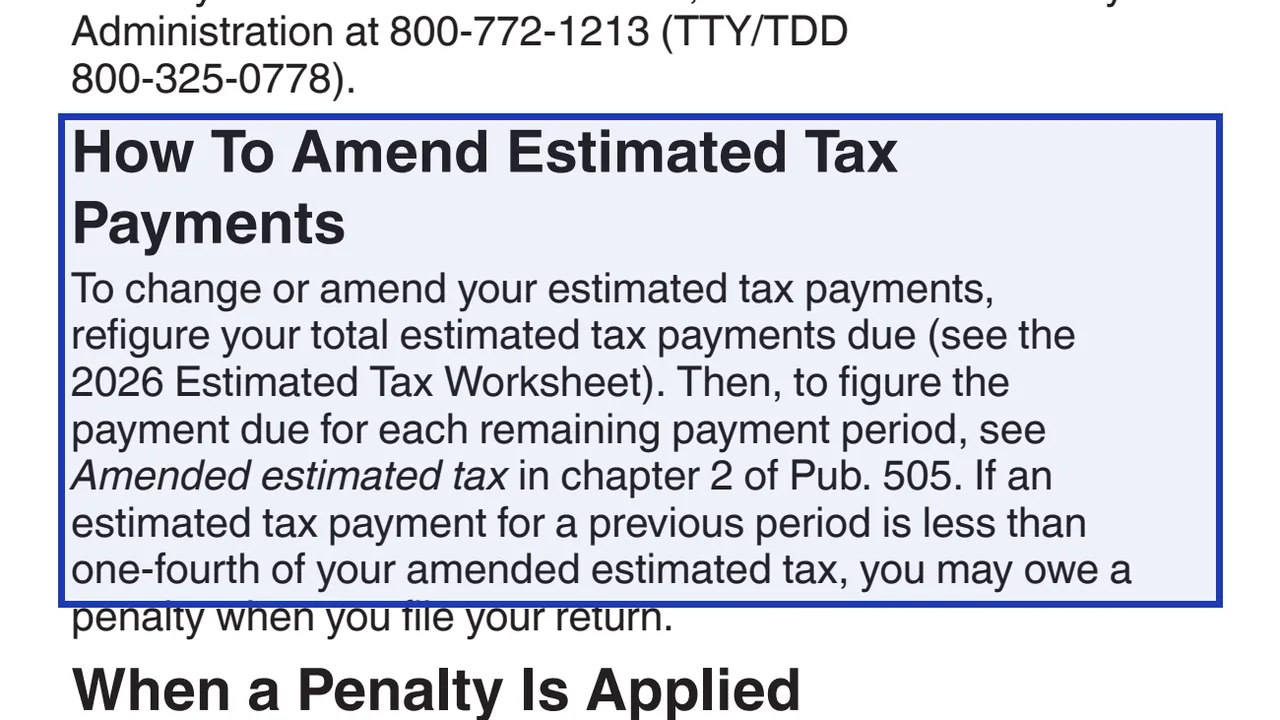
If your income changes, redo the worksheet. If your income is uneven, you may reduce the penalty using Form 2210.
You get the real form, filled in a browser tab, with nothing standing between you and the finished PDF.
For 2026 the form shows April 15, 2026, June 15, 2026, September 15, 2026 and January 15, 2027. You can also pay all of it by April 15, 2026. You do not have to make the January payment if you file your 2026 return by February 1, 2027 and pay the whole balance due with it.
If a due date falls on a weekend or legal holiday, the next business day counts. A mailed payment counts on its U.S. postmark date.
You can mail the voucher with a check, or pay online at IRS.gov/payments, by phone or through the IRS app. Direct Pay and EFTPS are among the IRS payment options. Your online account at IRS.gov/account shows your payment history.
The form is free.
Missing a period, using the wrong name or Social Security number on a voucher, paying too little and forgetting to record payments on your return are the common problems. The IRS posted an update about using an SSN or ITIN when paying estimated taxes.
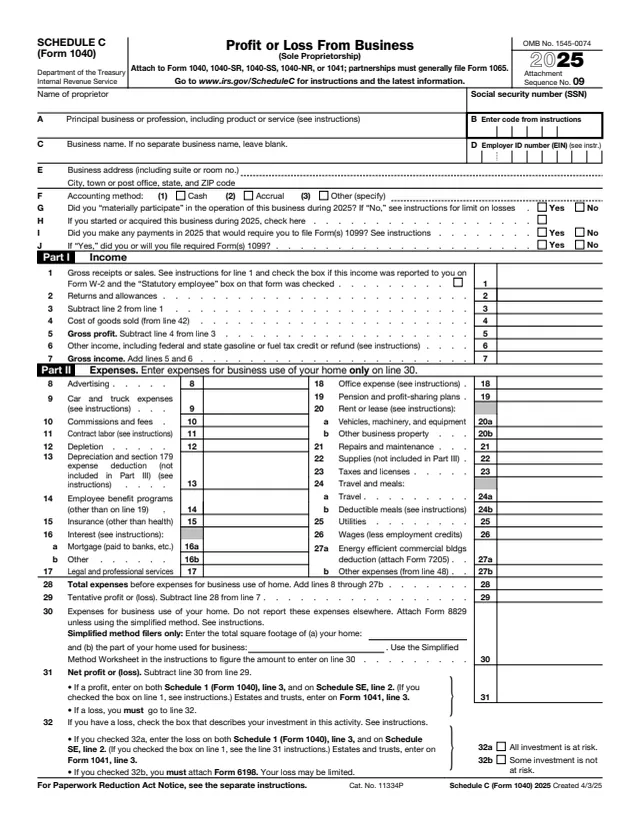
1040
105 fields, 2 pages
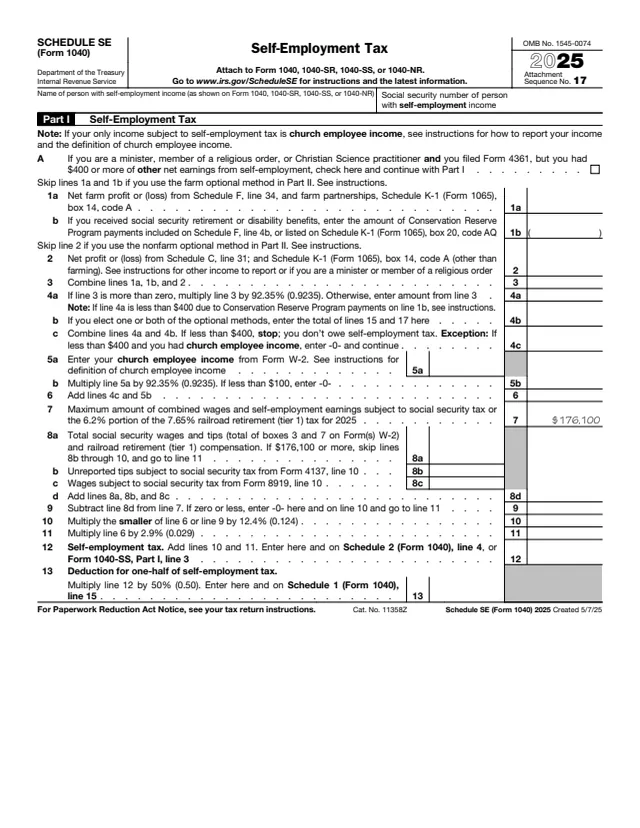
1040
27 fields, 2 pages
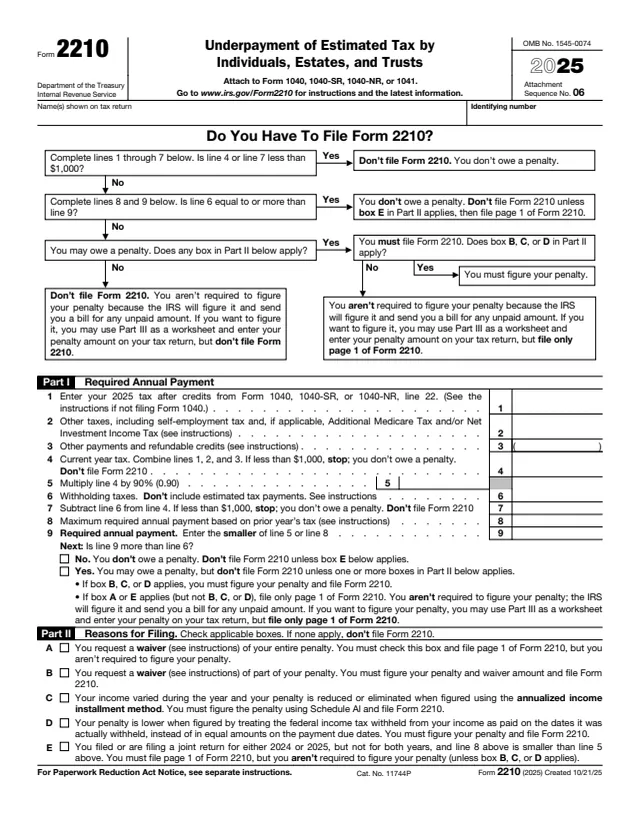
2210
199 fields, 3 pages
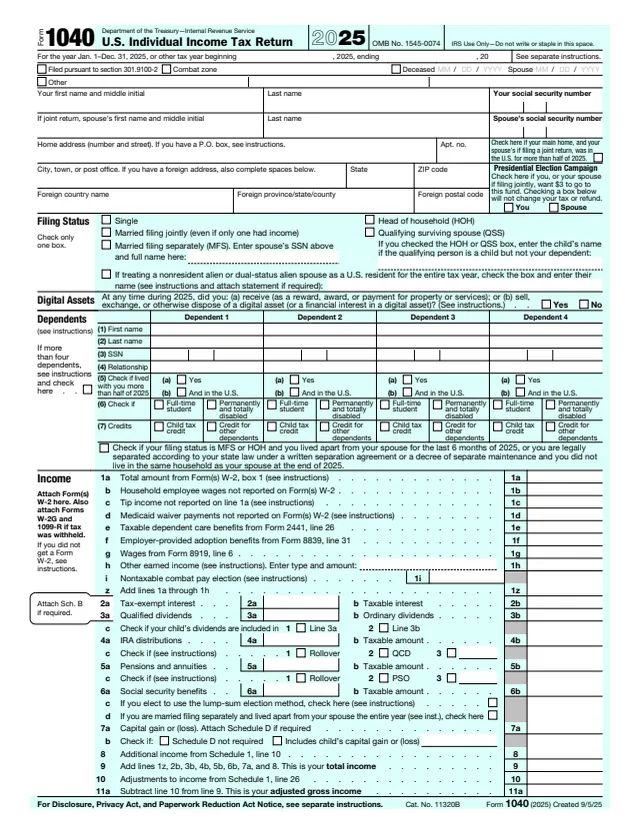
1040
199 fields, 2 pages
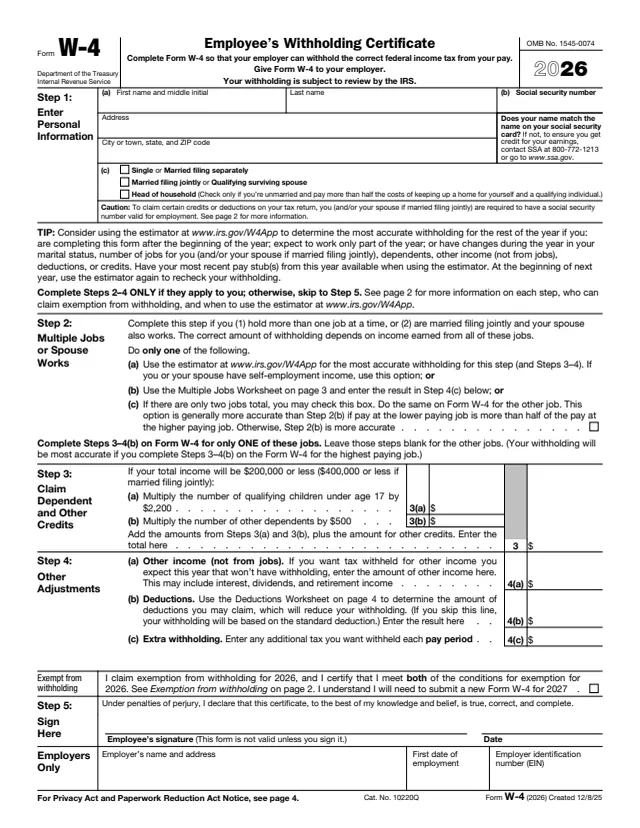
W-4
48 fields, 5 pages
No tool matches that search.
No. You send the vouchers with your payments. You claim the payments on your return, where they count toward your total tax paid.
The IRS says most people avoid it if they owe less than $1,000 after withholding and credits, or pay at least 90% of this year's tax or 100% of last year's tax, whichever is smaller.
Yes. The IRS lists payment at IRS.gov/payments, by phone and through its app, along with Direct Pay and EFTPS.
The IRS says you do not have to pay for the current year if you had no tax liability for the prior year, were a U.S. citizen or resident alien the whole year, and the prior year was 12 months.
You may be able to lower the penalty using Form 2210.