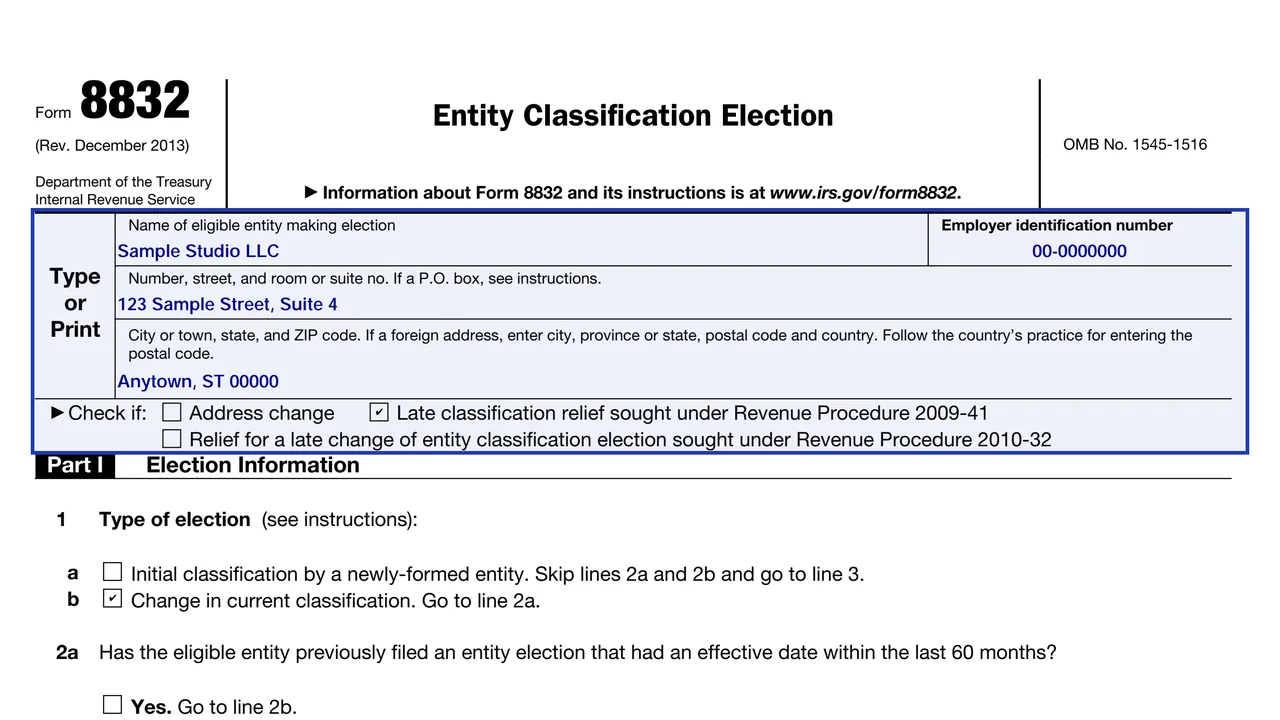
Entity name, EIN and address
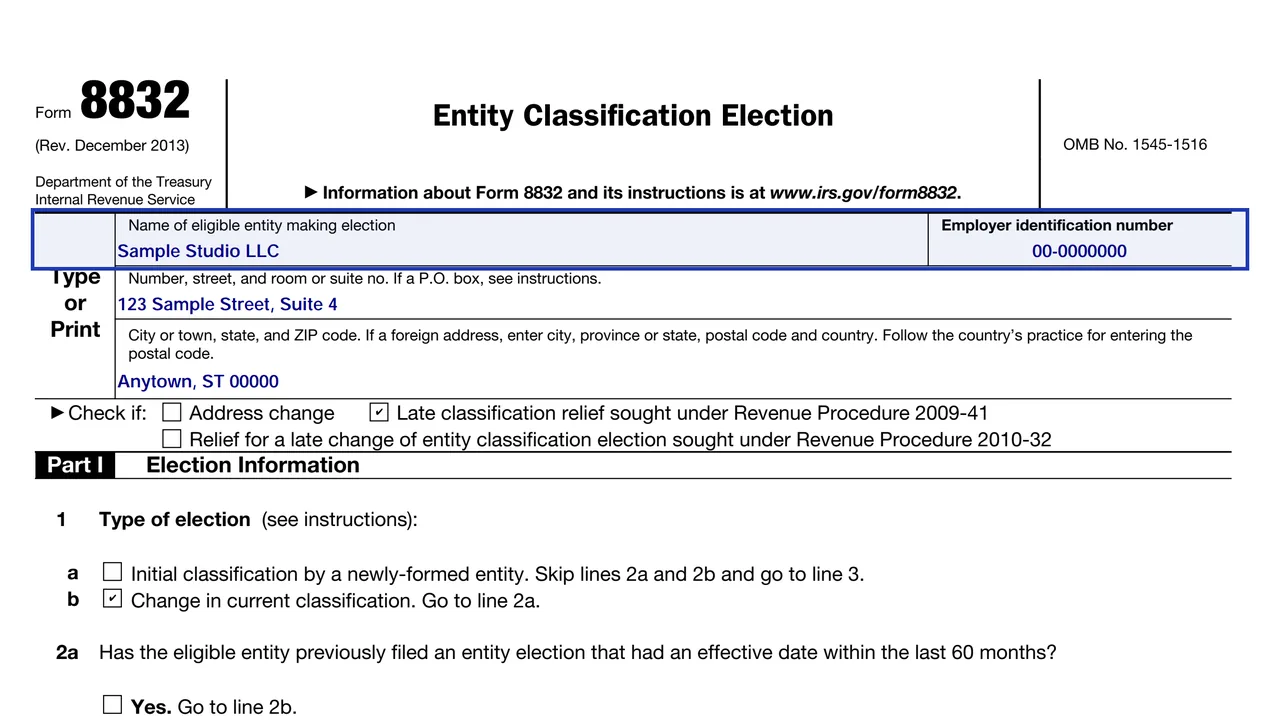
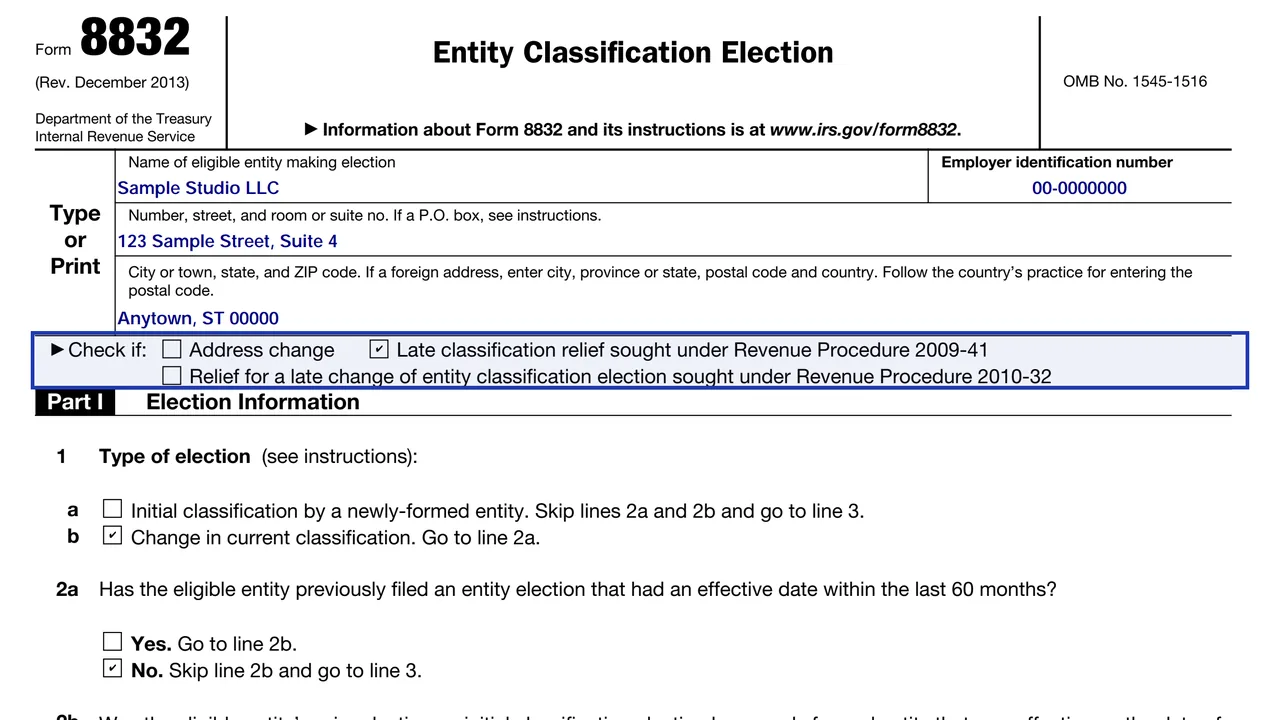
Top of page 1. The EIN is required, and the instructions say not to write Applied For.
8832
Entity Classification Election
An eligible entity uses Form 8832 to choose how it is classified for federal tax purposes: as a corporation, as a partnership, or as an entity disregarded as separate from its owner. Eligible entities include limited liability companies and partnerships.
If you do nothing, default rules apply. The Form 8832 instructions say a domestic eligible entity is a partnership if it has two or more members, and is disregarded if it has a single owner. A new entity that is happy with its default classification should not file this form.
The IRS uses the information on the form to set up the entity's filing and reporting requirements. You can fill out Form 8832 on this page, in your browser, without an account.
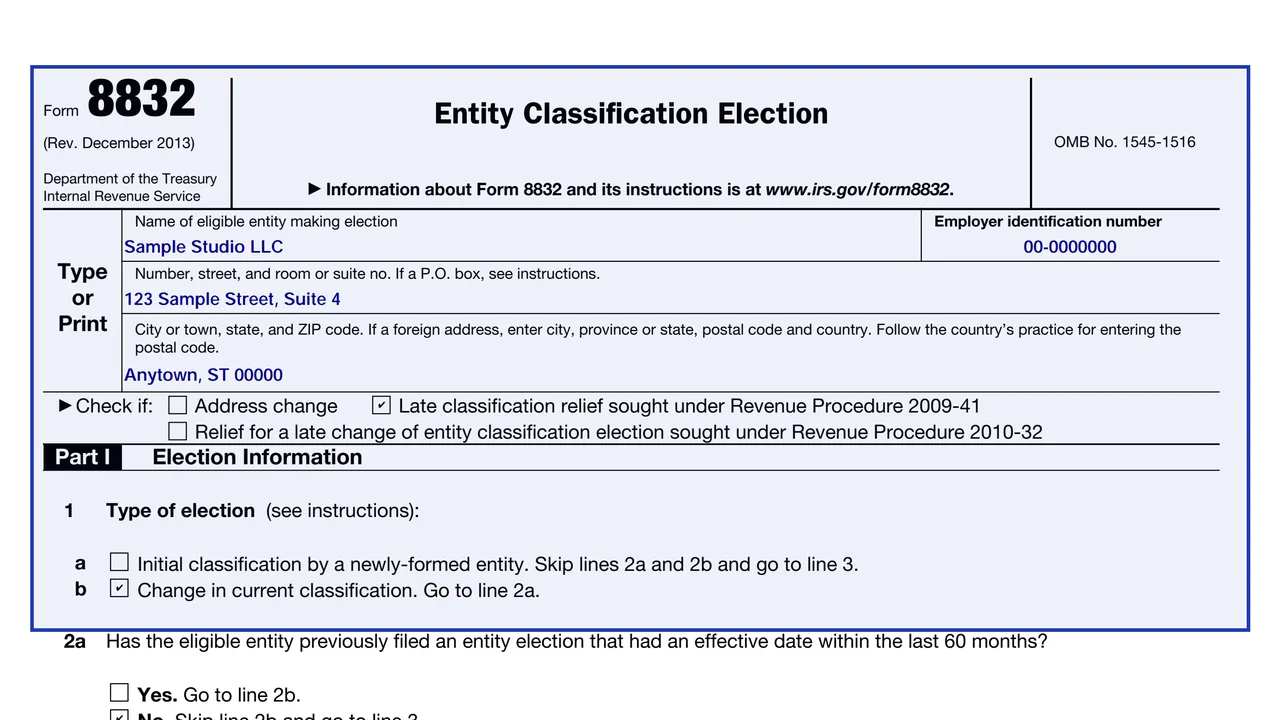
Top of page 1. The EIN is required, and the instructions say not to write Applied For.
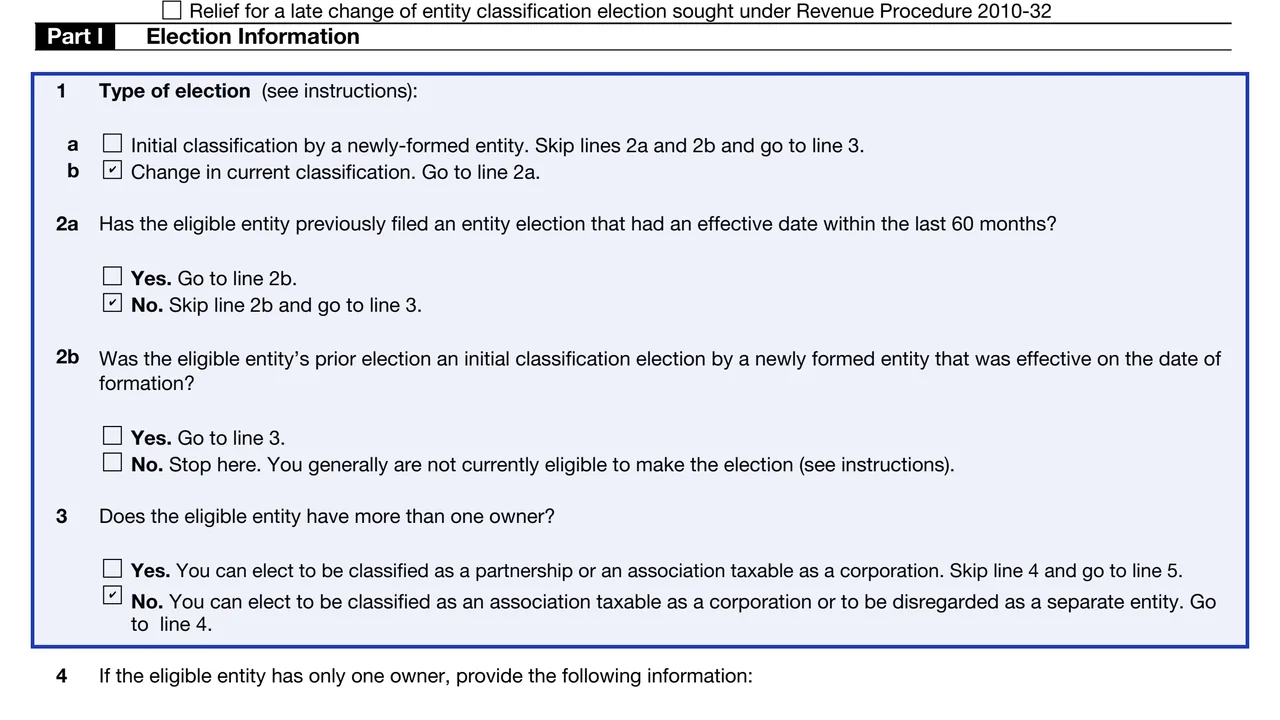
Initial classification or a change, the 60-month question, whether the entity has more than one owner, the owner's details for a single owner, and a parent corporation if it is owned by affiliated corporations filing a consolidated return.
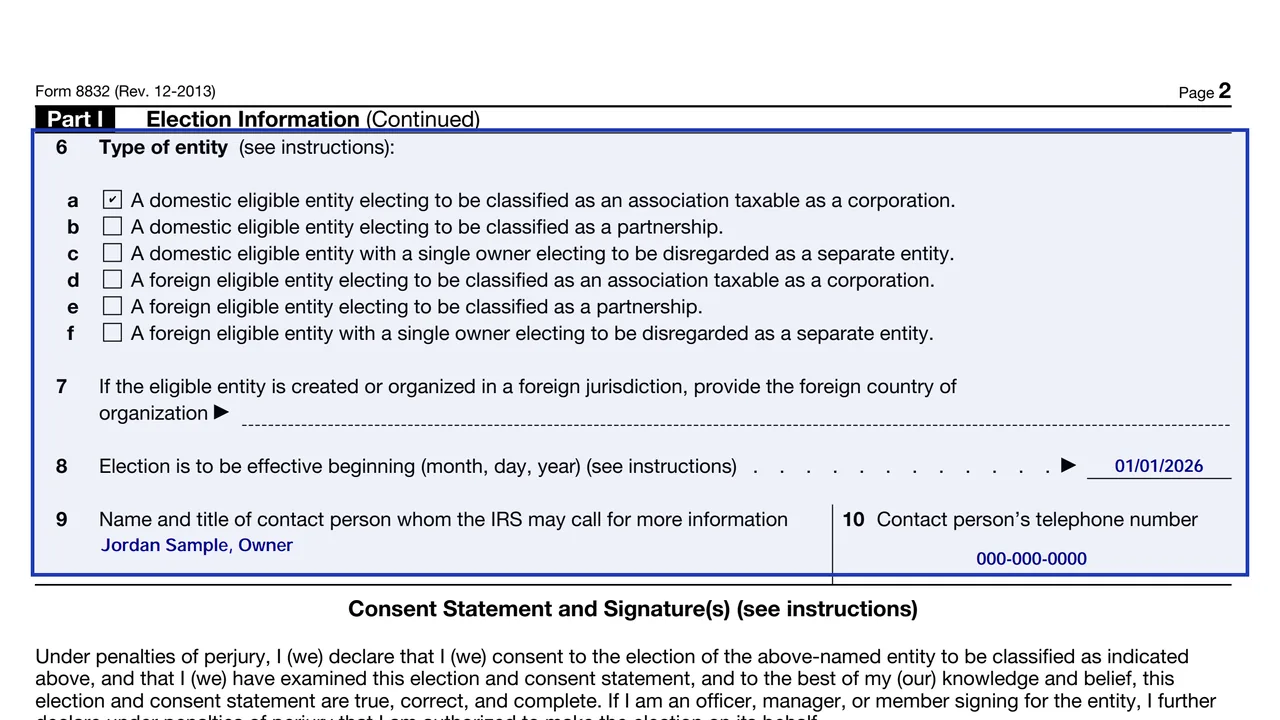
The type of entity and the new classification, the foreign country of organization if any, the effective date, and a contact person and phone number.
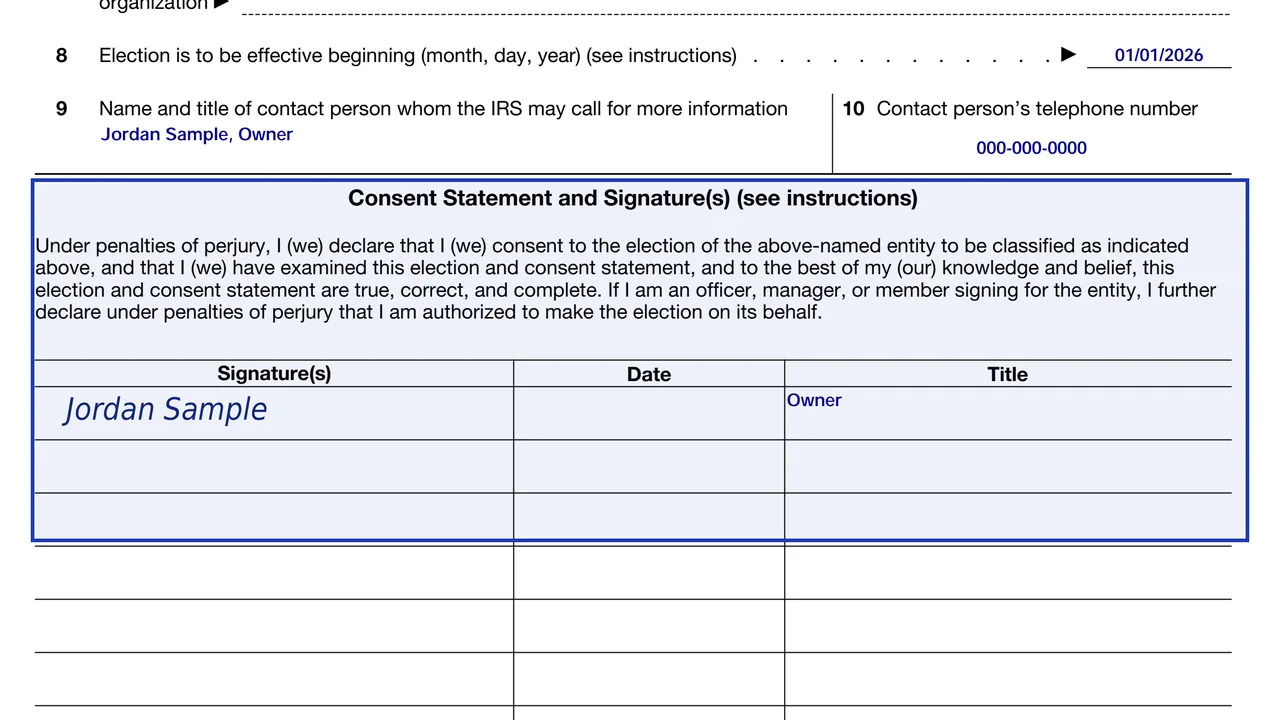
Signed under penalties of perjury by the members or an authorized officer, manager or member.
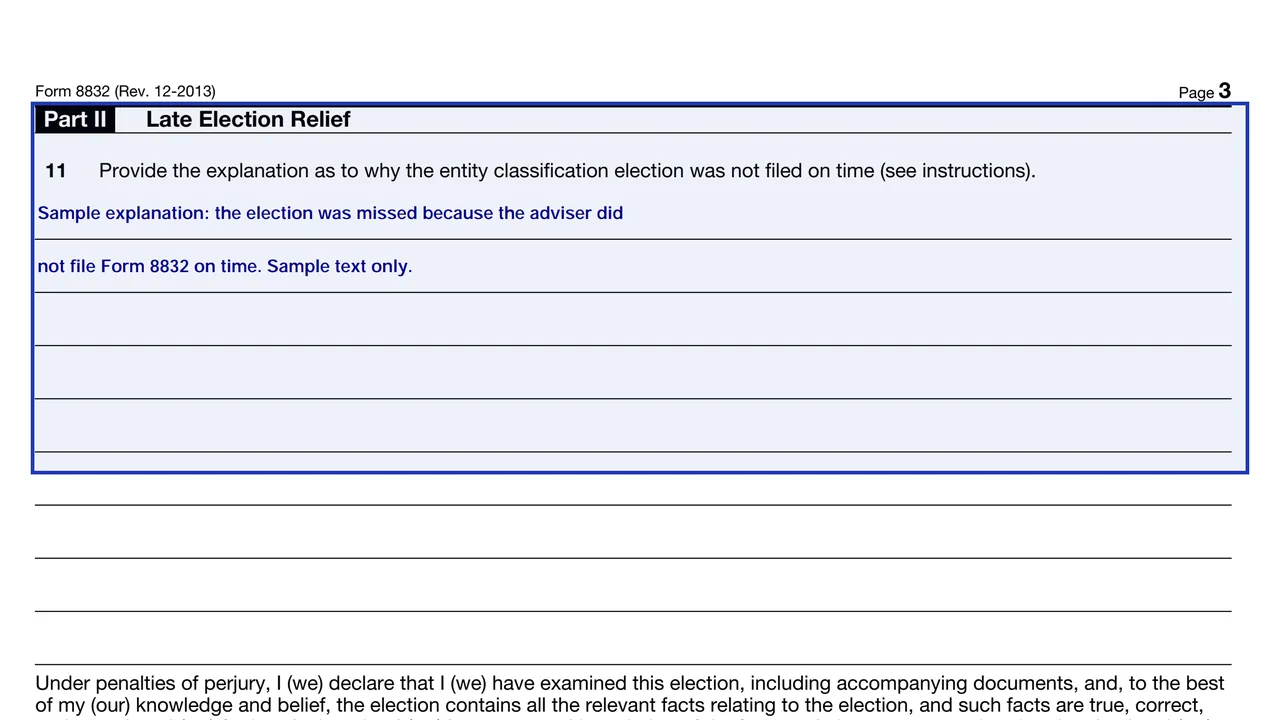
Line 11 asks for an explanation of why the election was not filed on time, with a separate declaration.
Enter the eligible entity's name and EIN. An election will not be accepted without an EIN.
Check 1a if the entity is choosing a classification for the first time and does not want the default. Check 1b if it is changing its current classification.
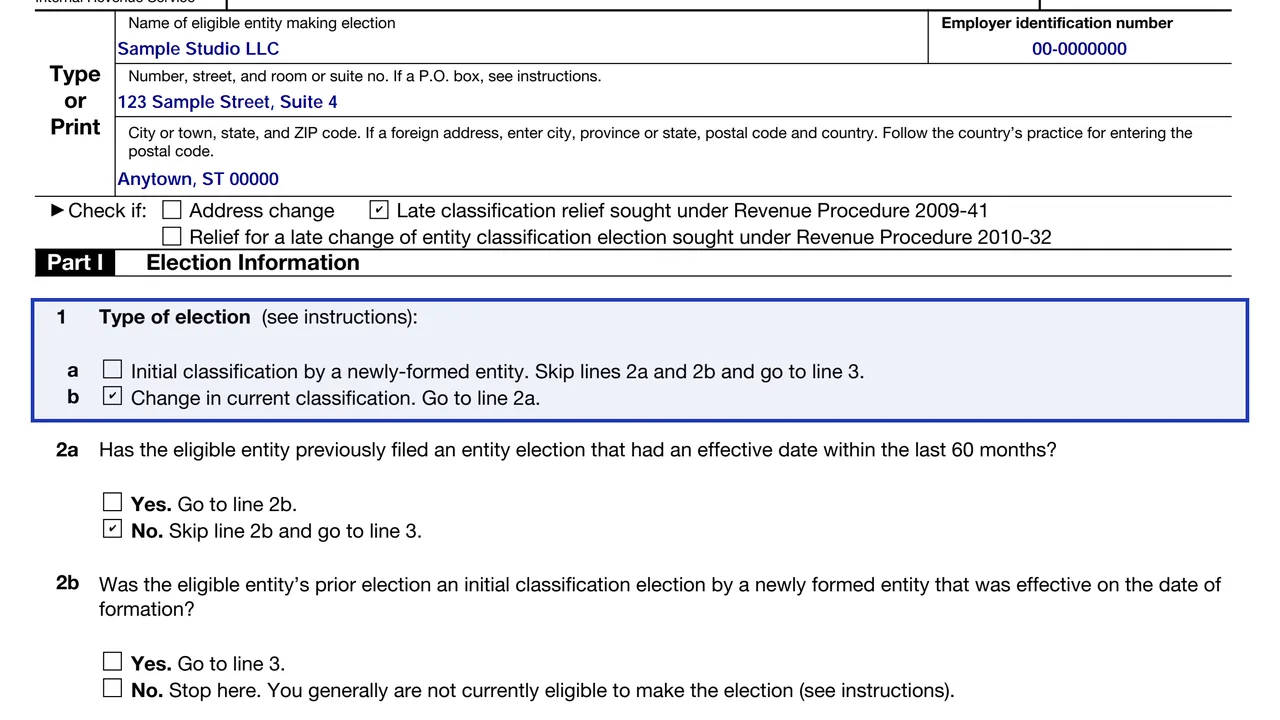
If the entity filed an election with an effective date in the last 60 months, answer line 2b. A No there means you generally are not currently eligible to make the election.
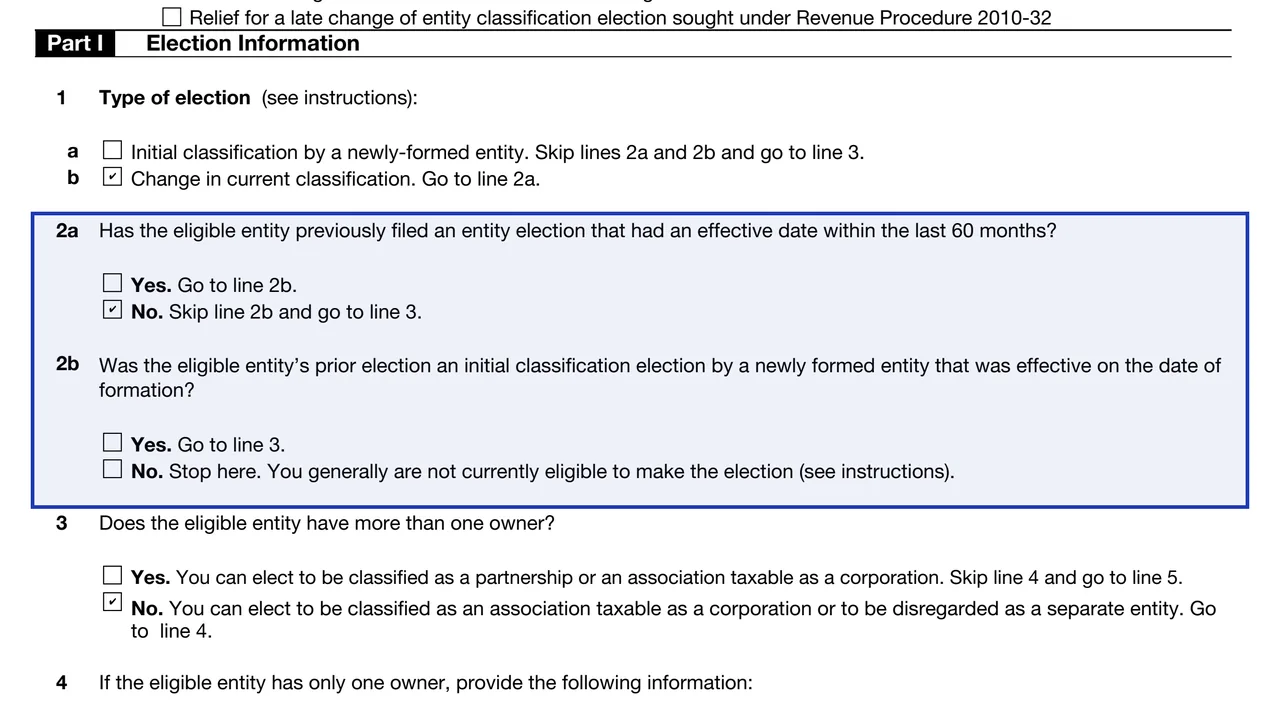
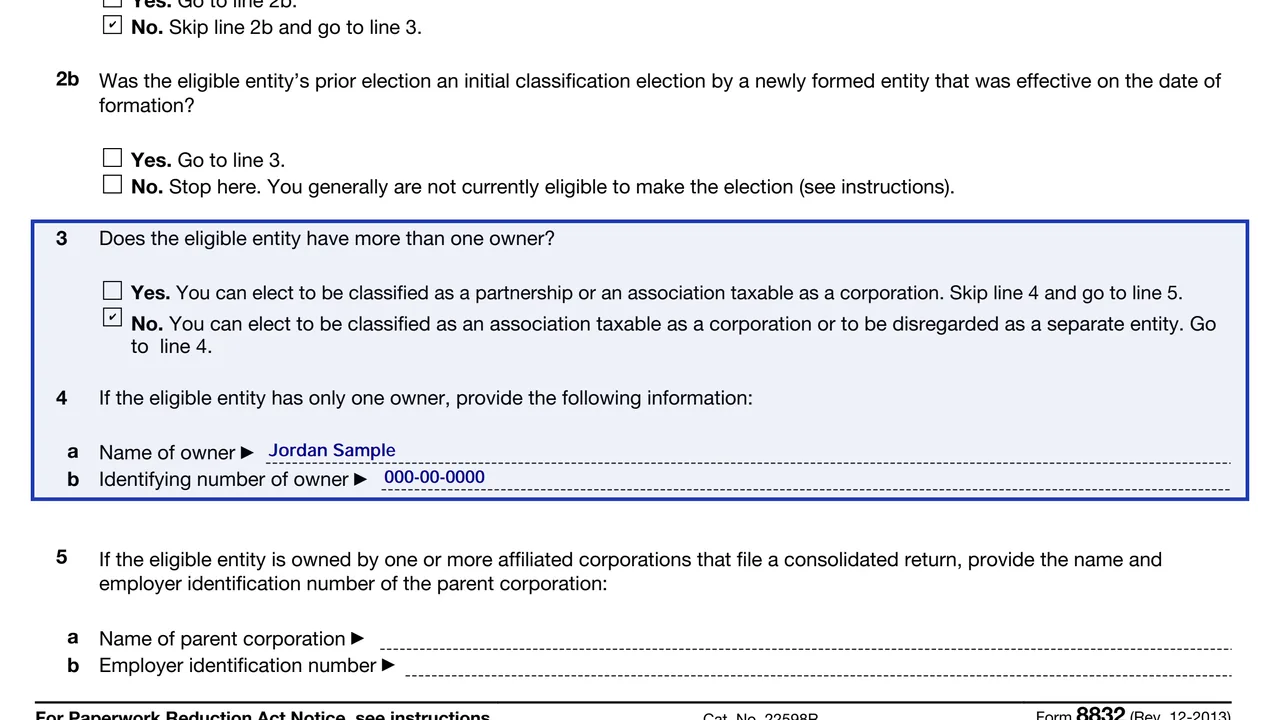
One owner may elect association status or disregarded status. More than one owner may elect partnership or association status. For a single owner, give the owner's name and identifying number on line 4.
Check the box that matches your entity and the classification you want, such as a domestic entity electing to be an association taxable as a corporation.
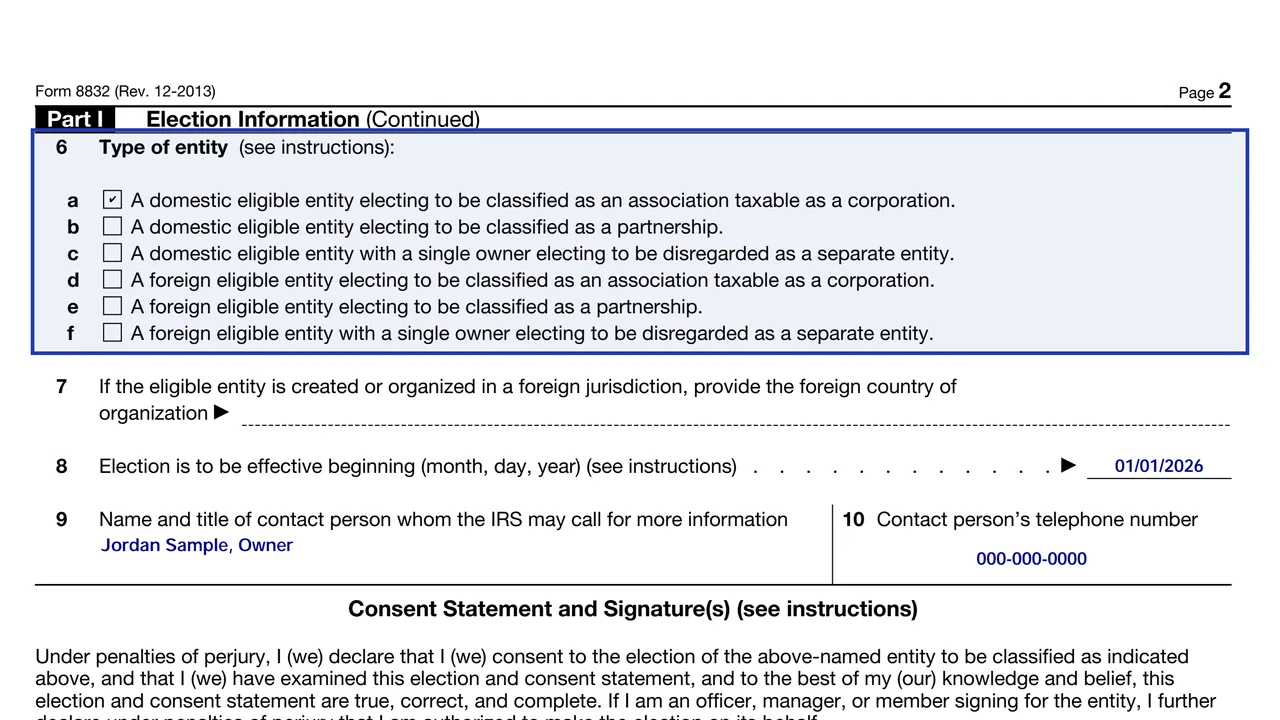
Enter the date the election should begin. If you leave it blank, the election takes effect on the date filed.
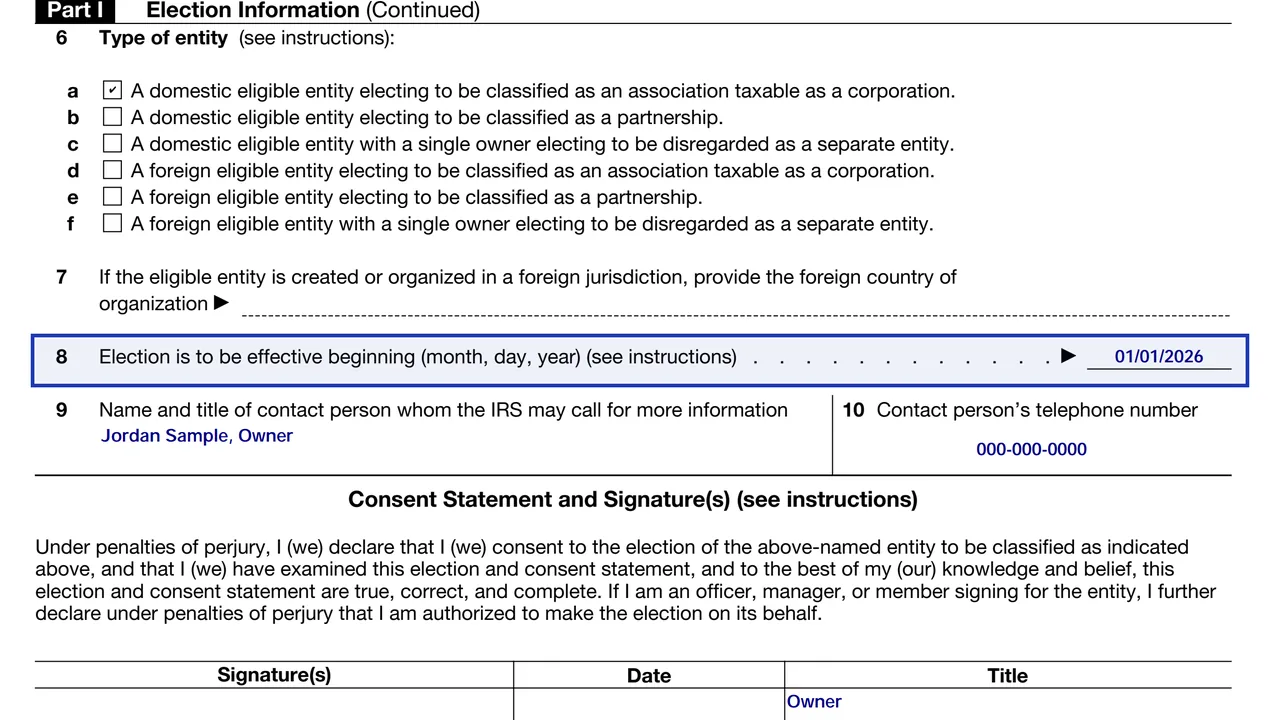
Give a contact person and phone number. Every owner who must sign does so under the consent statement.
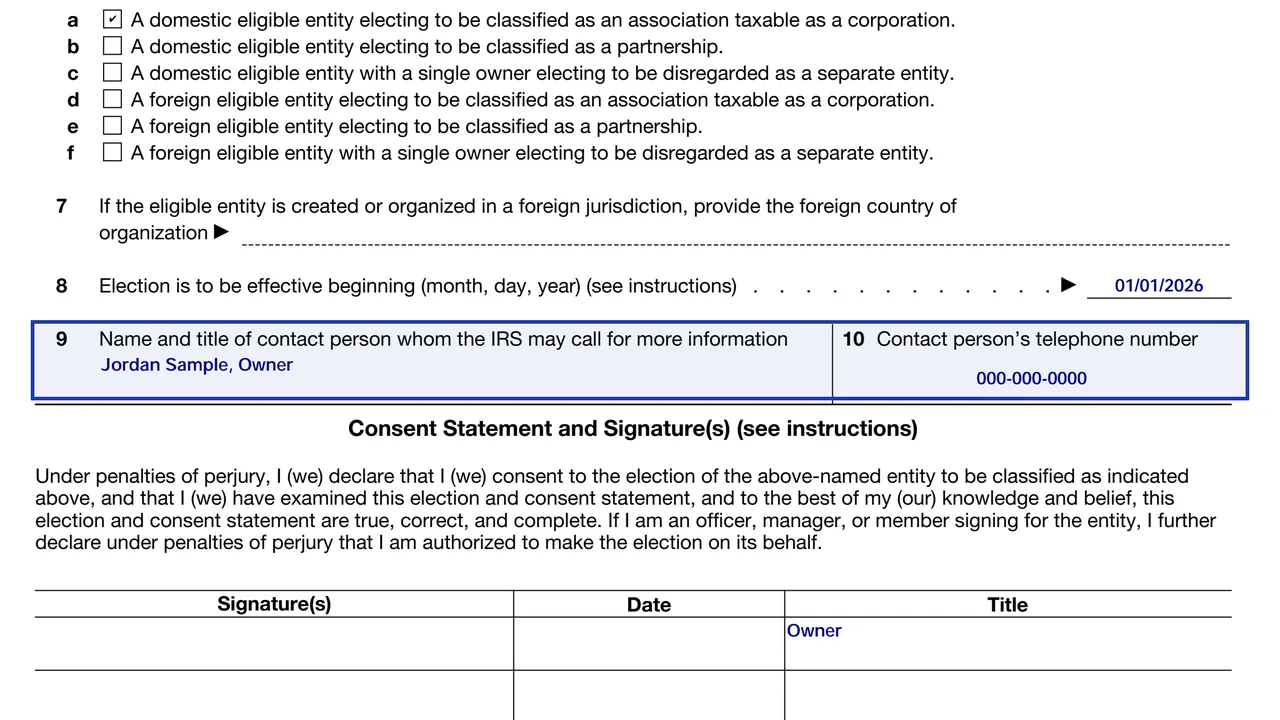
If you check a late election relief box at the top, complete Part II and explain the reason on line 11.
You get the real form, filled in a browser tab, with nothing standing between you and the finished PDF.
An election can take effect no more than 75 days before the date it is filed, and no later than 12 months after. A date outside that range is moved to the nearest limit.
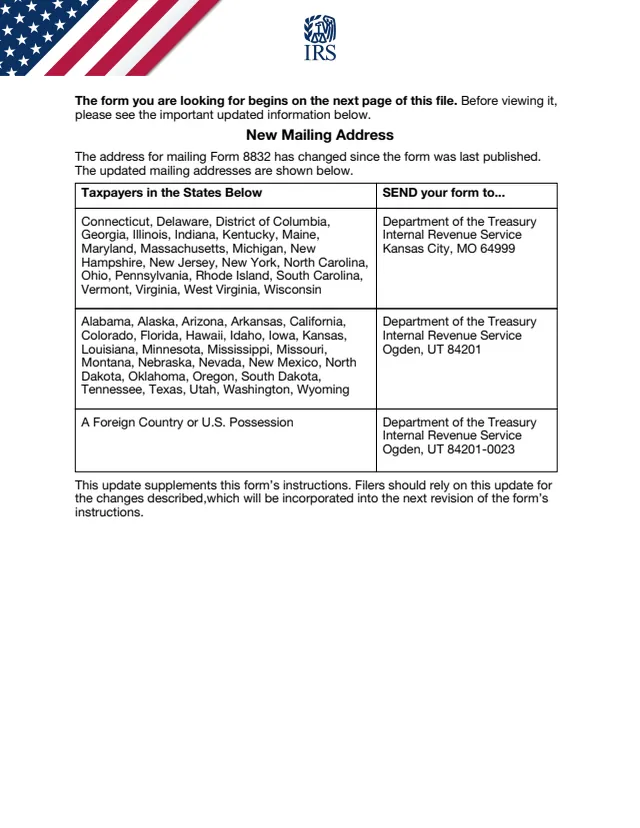
File with the IRS service center for your state. The form's cover page gives updated mailing addresses that replace the chart in the instructions, so use the cover page. Also attach a copy to the entity's federal return for the election year.
An entity not required to file a return for that year attaches a copy to the returns of all its direct or indirect owners for the year that includes the effective date.
The service center notifies the entity at the address on the form. You should generally receive a determination within 60 days. If not, call 1-800-829-0115.
After an election to change classification, the entity generally cannot elect again for 60 months after the effective date. The IRS may permit it by private letter ruling in some ownership changes.
The form references Rev. Proc. 2009-41 and Rev. Proc. 2010-32 for relief when an election was not filed on time.
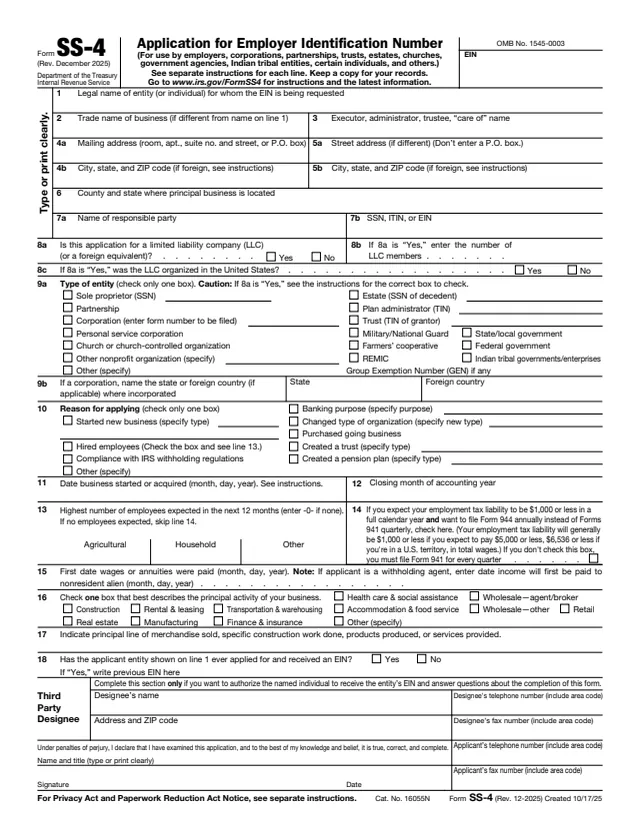
SS-4
89 fields, 2 pages
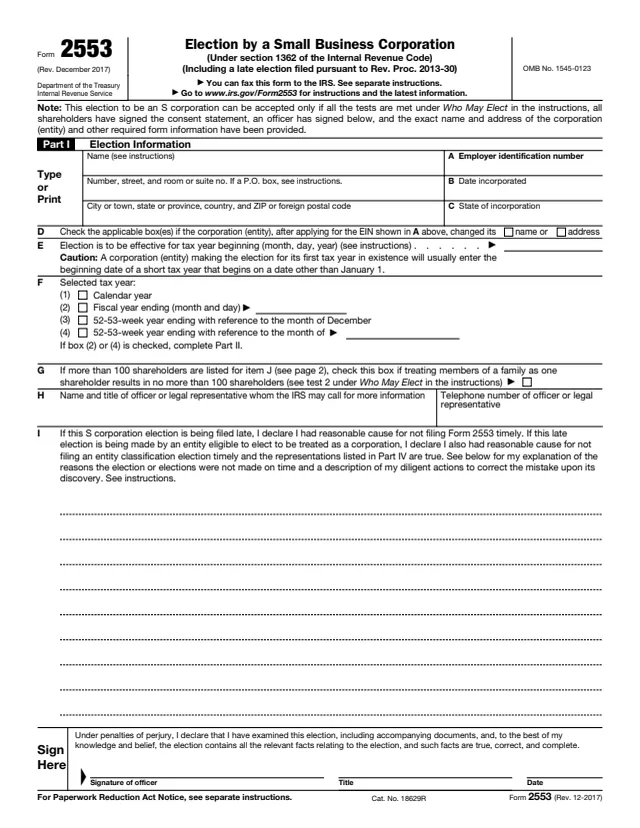
2553
100 fields, 4 pages
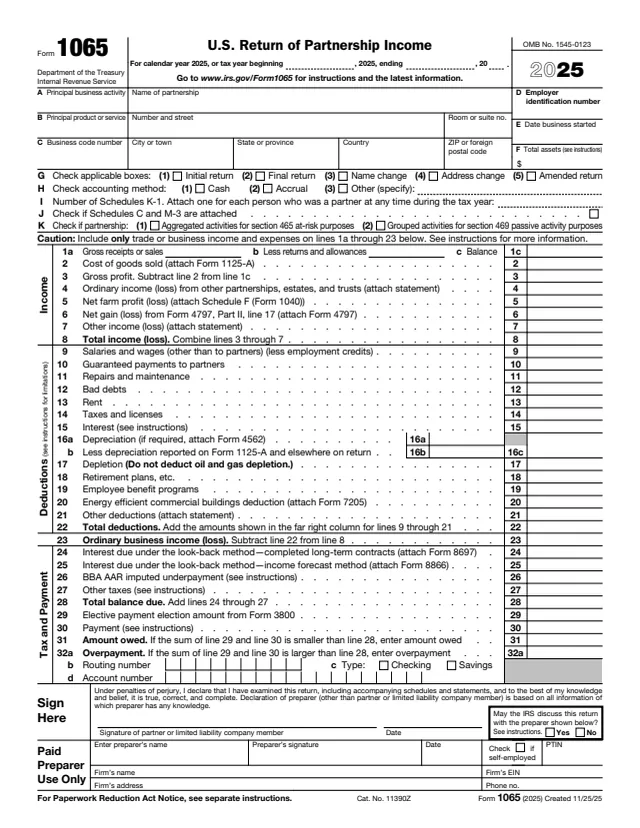
1065
440 fields, 6 pages
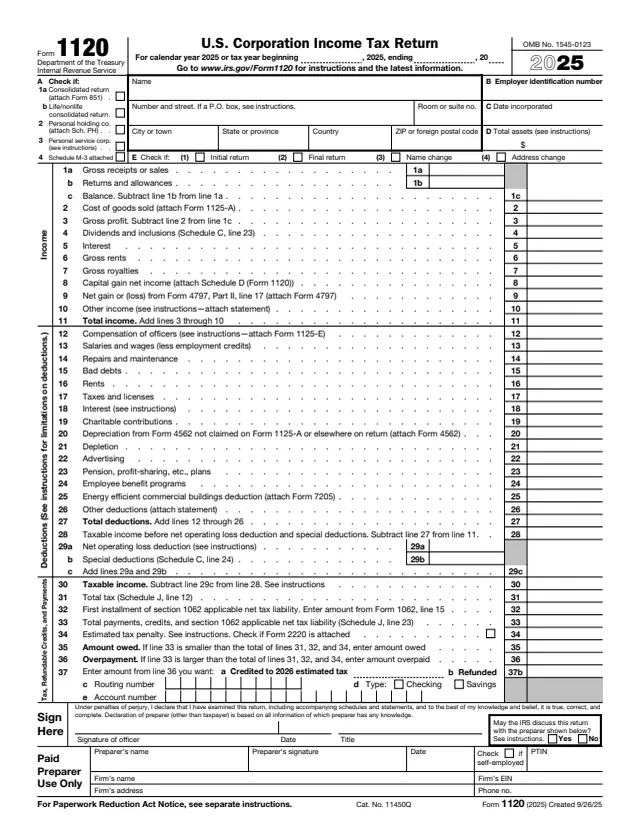
1120
481 fields, 6 pages
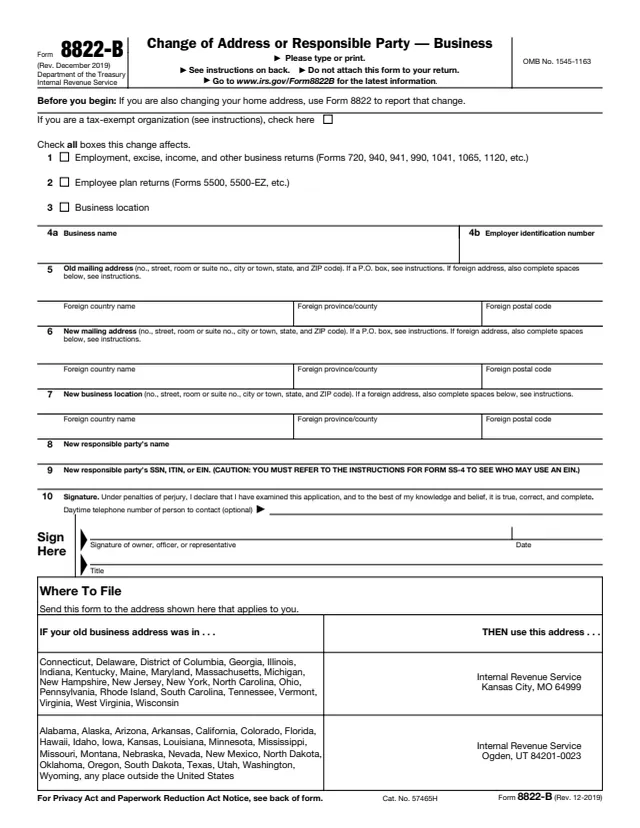
8822-B
22 fields, 2 pages
File it for an eligible entity that wants a classification other than its default.
No tool matches that search.
No. The instructions say an eligible entity that wants its default classification should not file. A single-member LLC is disregarded and a multi-member LLC is a partnership by default.
Not on this form. The instructions say an entity electing S corporation status files Form 2553. A qualifying entity that timely files Form 2553 is deemed to have elected association status.
No more than 75 days before the filing date. It can also be set up to 12 months after the date filed.
Generally not within 60 months of the effective date of the previous election, with limited exceptions described in the instructions.
Yes. The instructions say an election will not be accepted if the entity does not provide an EIN, and Applied For is not allowed on that line.
Each member who is an owner when the election is filed, or an officer, manager or member authorized to make the election. Owners during any back-dated period who are no longer owners must also sign.