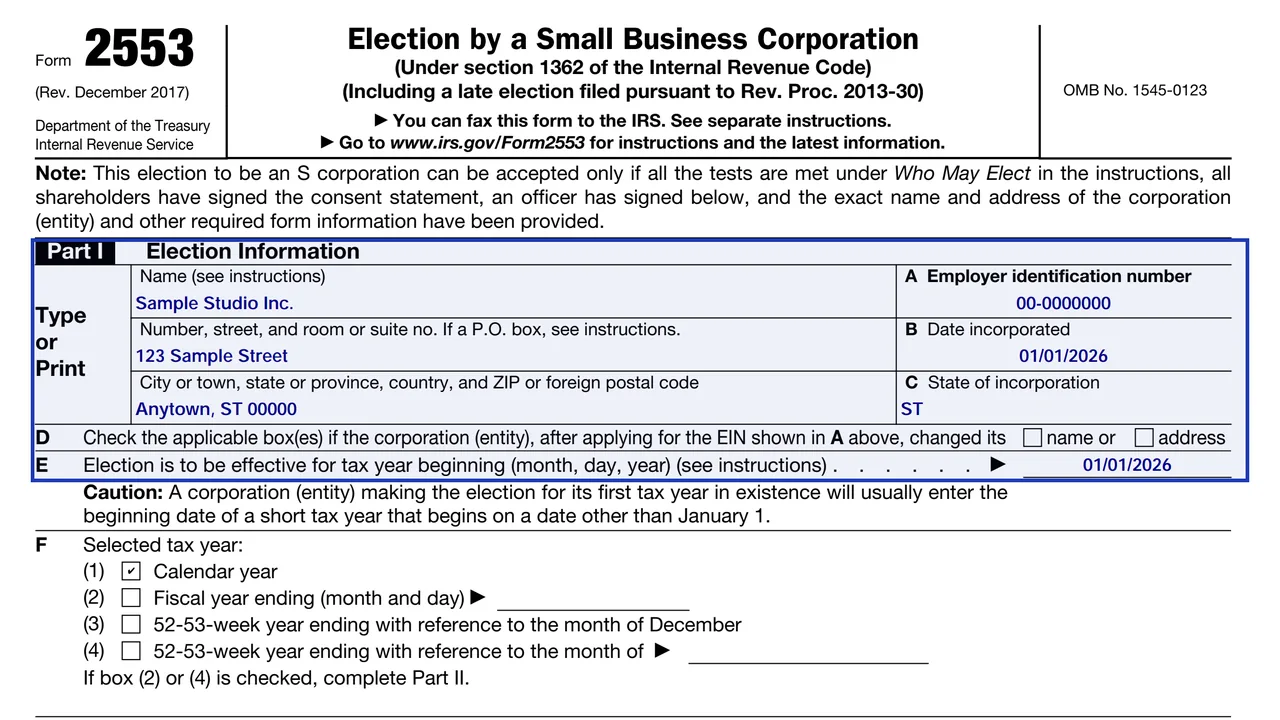
Part I: election information
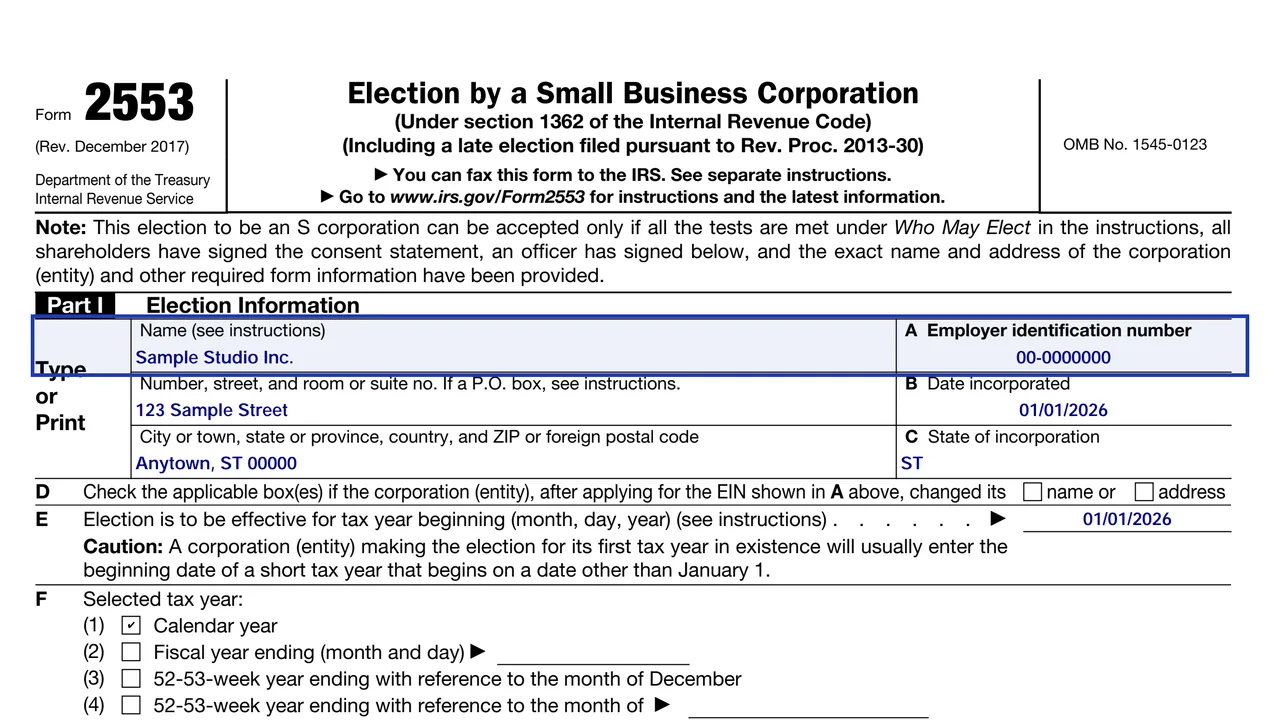
The corporation's name, address, EIN, the date the election takes effect and the tax year the election is made for.
2553
Election by a Small Business Corporation (Under Section 1362 of the Internal Revenue Code)
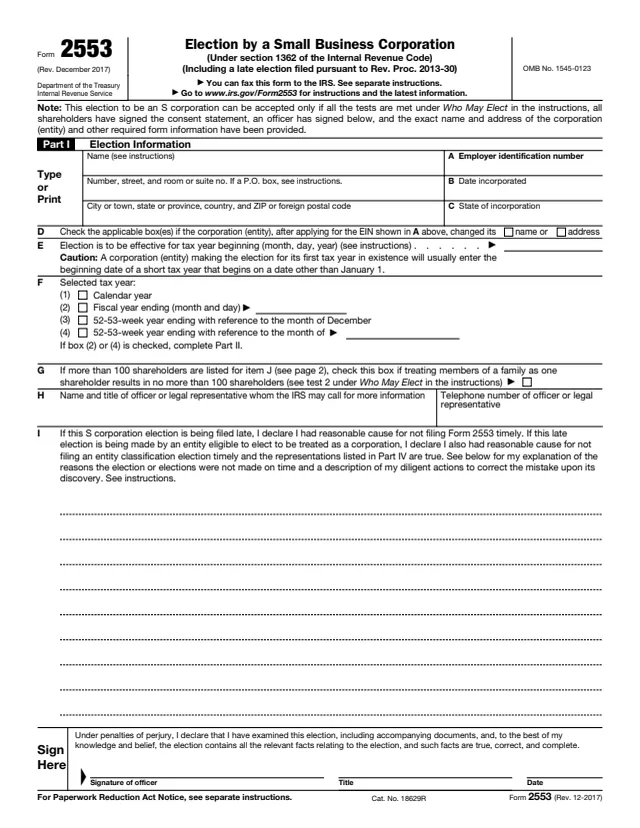
A corporation, or an eligible entity that elects corporate treatment, files Form 2553 to elect S corporation status under section 1362(a). The IRS explains that S corporation income is generally taxed to the shareholders rather than to the corporation itself.
You file this form once, near the start of the tax year the election should apply to. The election stays in effect until it is terminated or revoked, and the instructions say re-electing generally needs IRS consent for any year before the fifth tax year after the termination or revocation.
The IRS usually responds within 60 days. An eligible entity that qualifies and files Form 2553 on time does not need to file Form 8832 separately. You can complete Form 2553 on this page, in your browser, with no account.
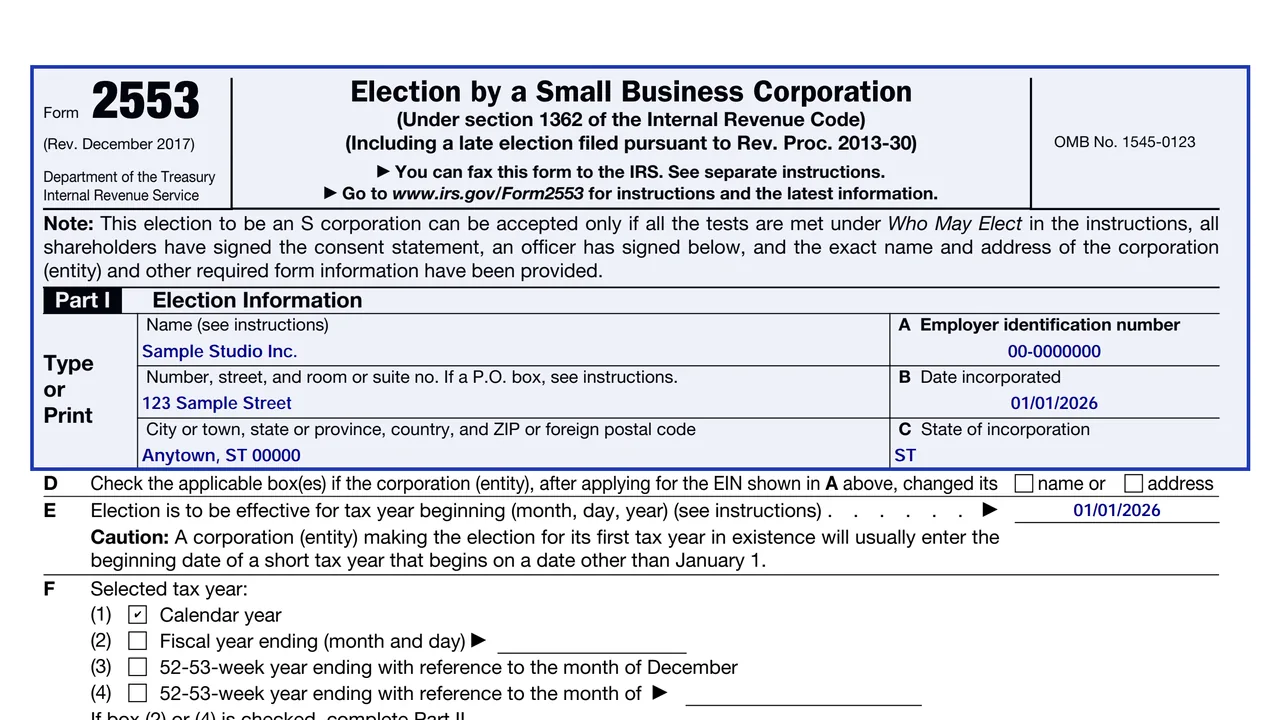
The corporation's name, address, EIN, the date the election takes effect and the tax year the election is made for.
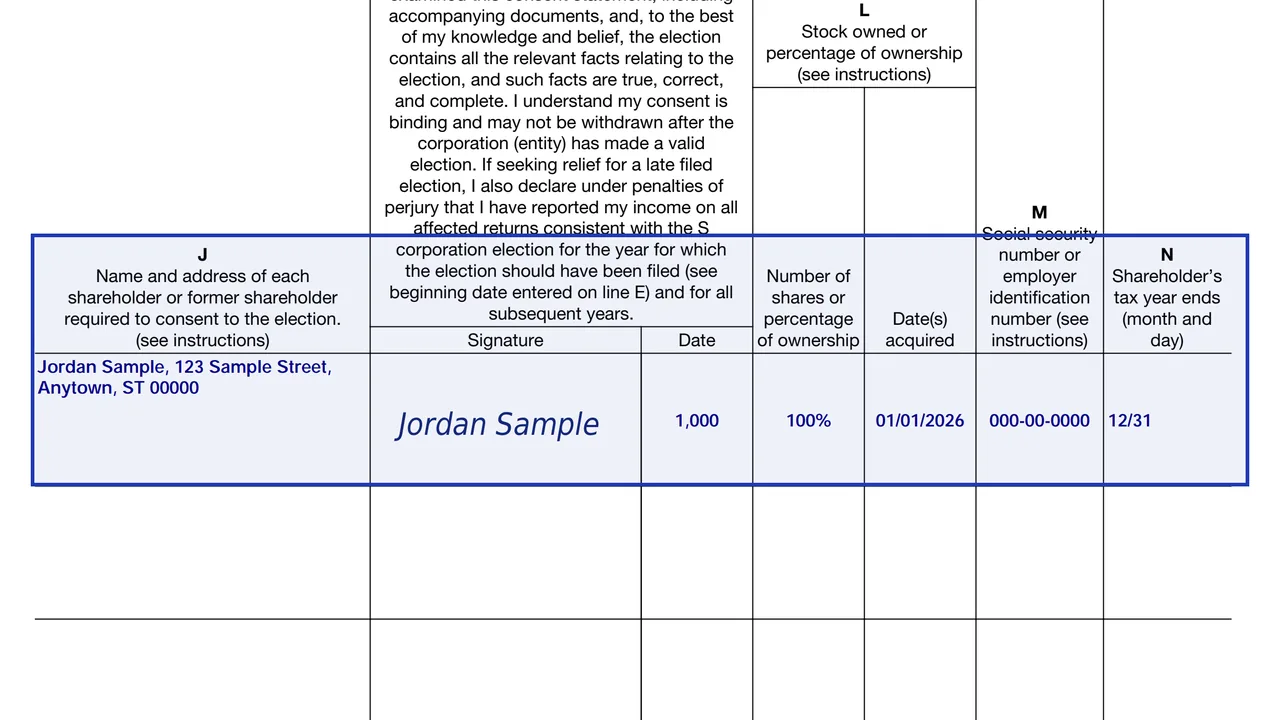
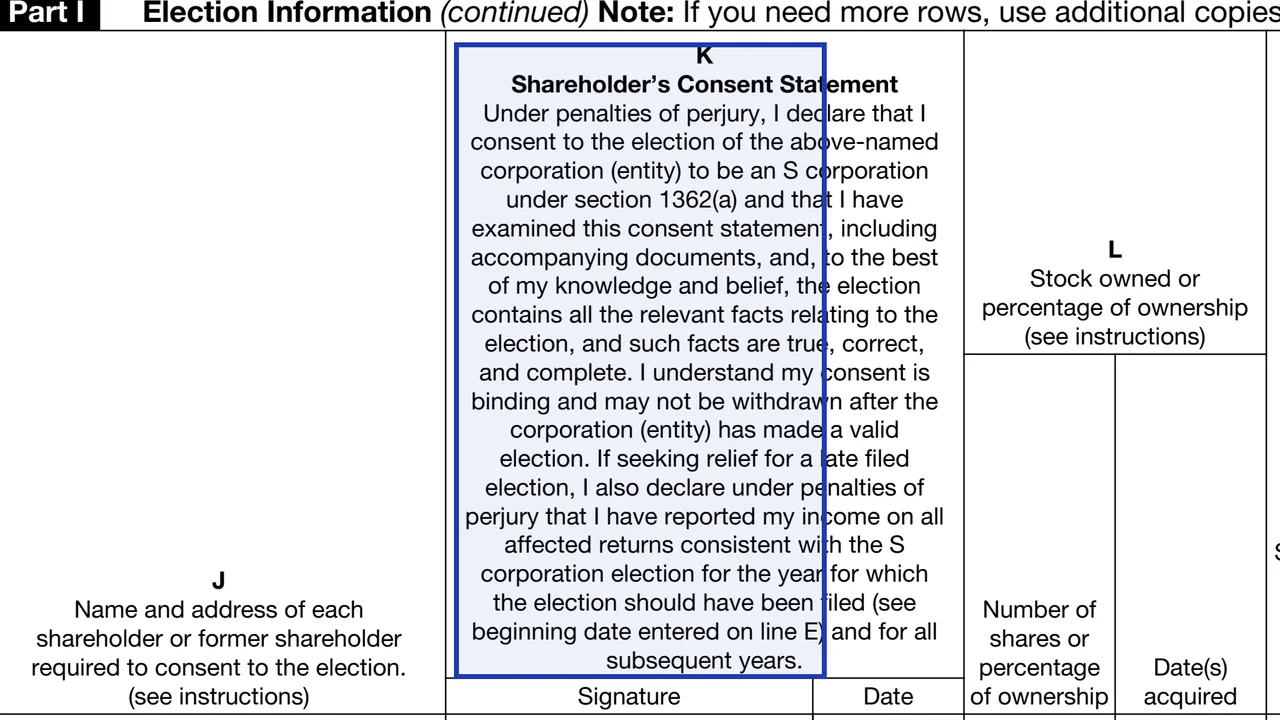
Each shareholder's name and address, shares owned and dates acquired, Social Security number or EIN, tax year end, and a signed consent in column K.
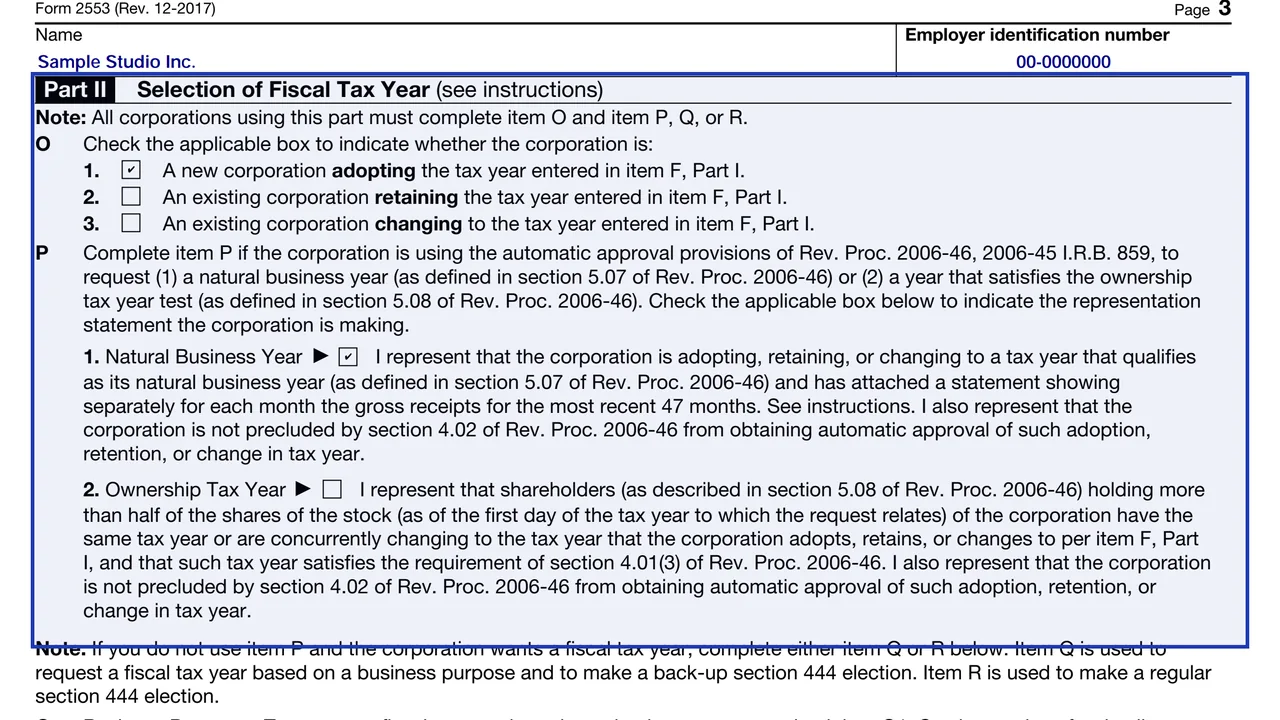
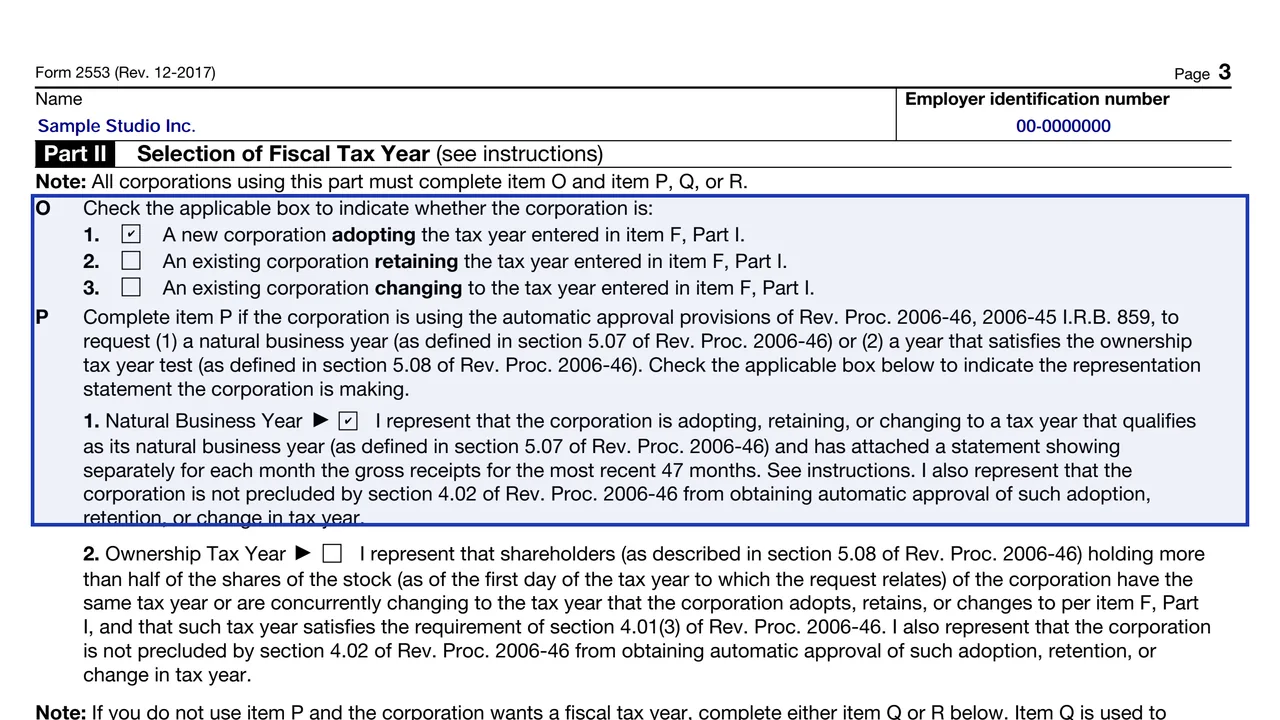
Used only when the tax year box in item F calls for it. It covers a natural business year, a business purpose request and section 444 elections.
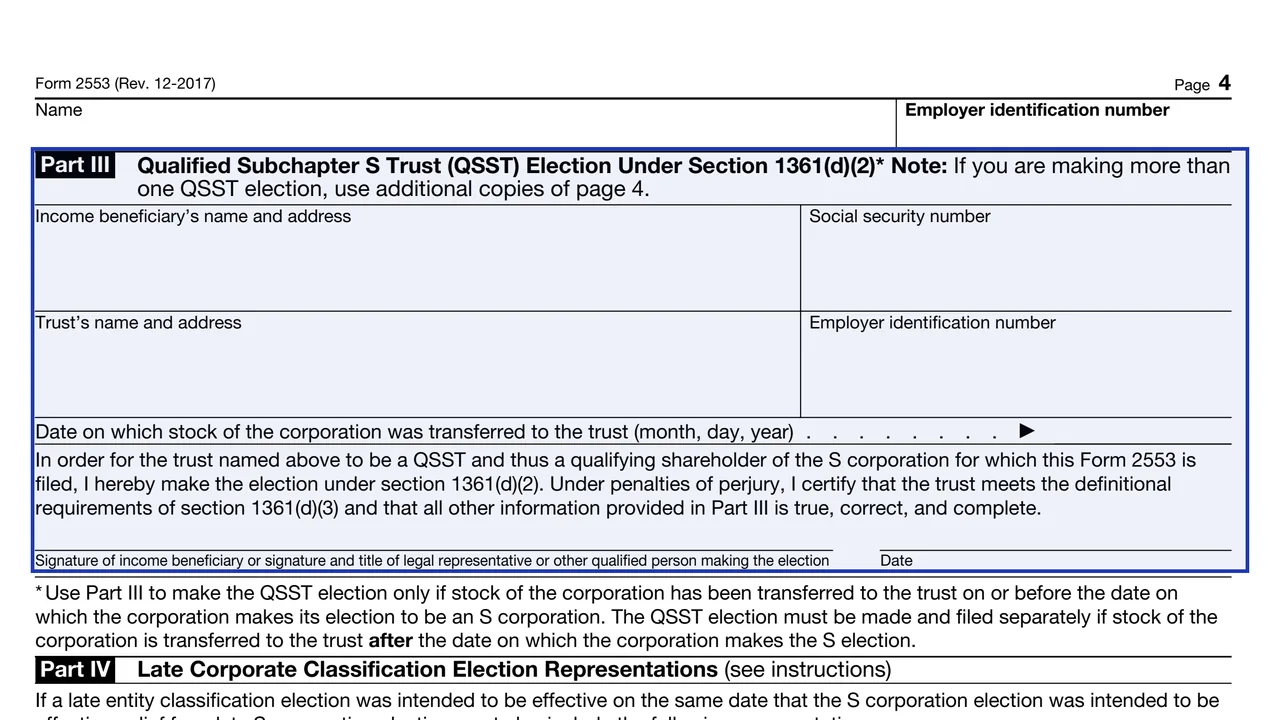
Used by the income beneficiary of a qualified subchapter S trust when the stock was transferred to the trust before the S election. It cannot be filed on its own.
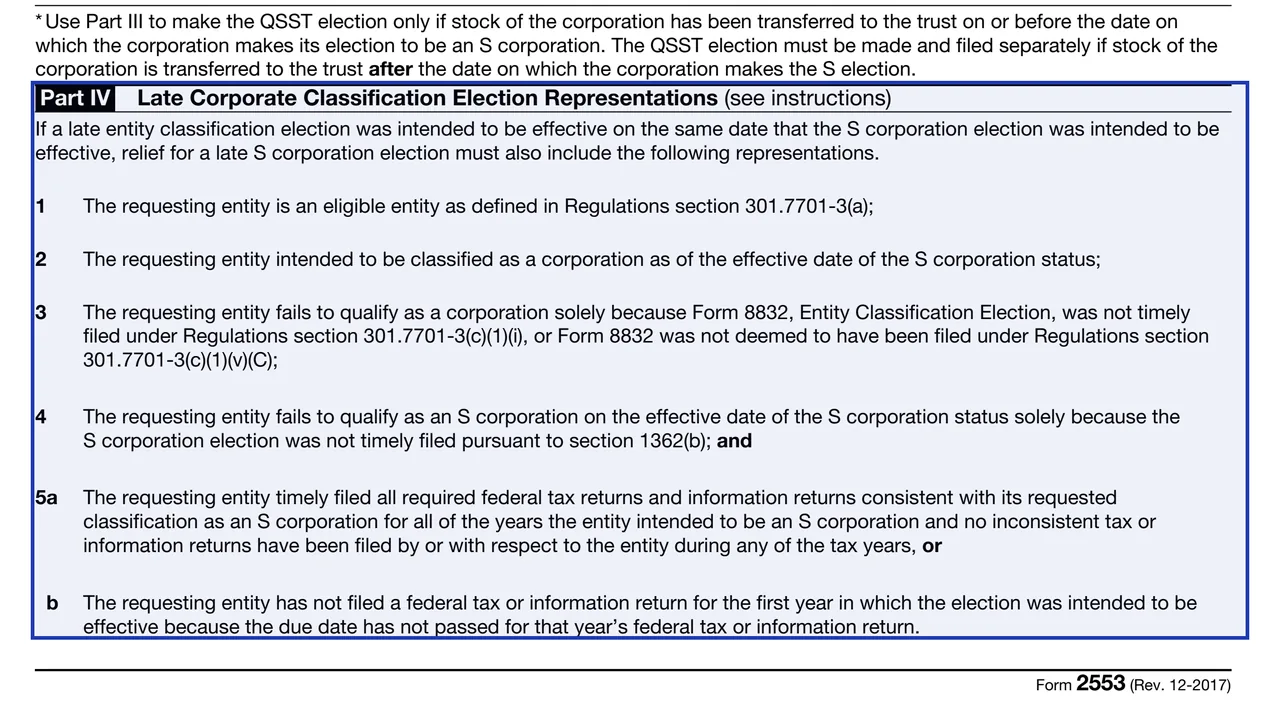
Representations that go with a late entity classification election made together with a late S election.
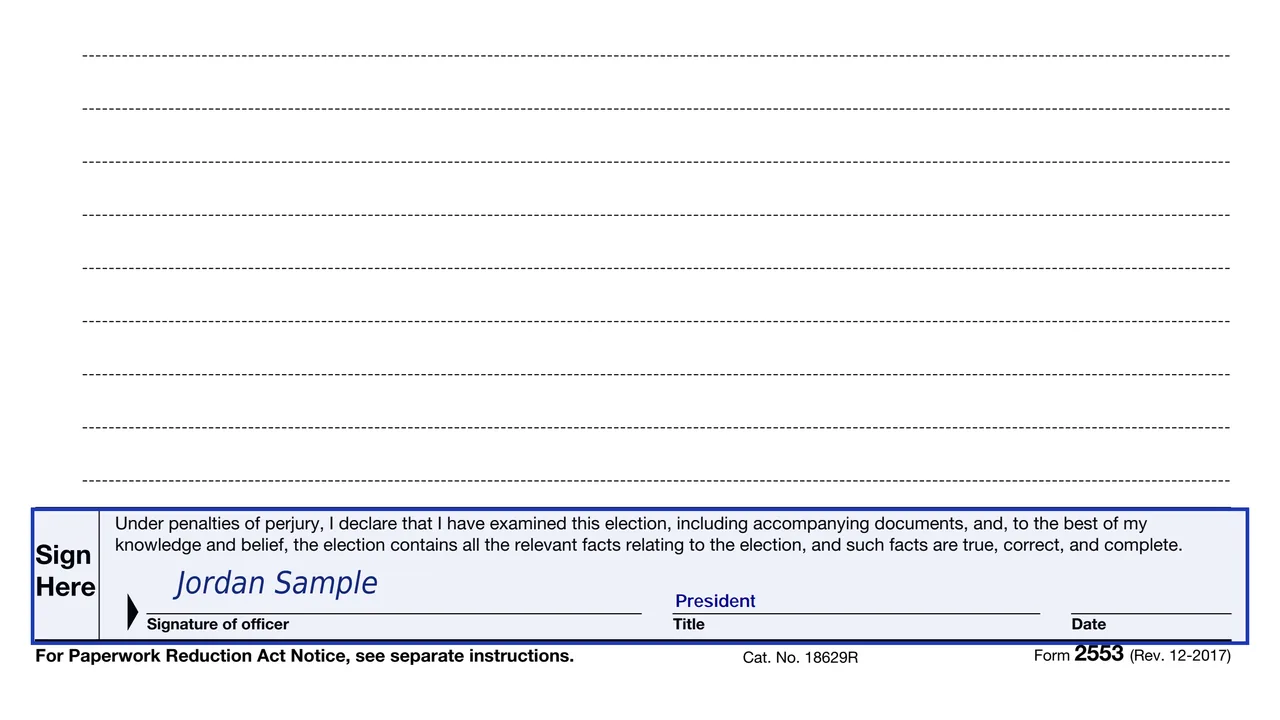
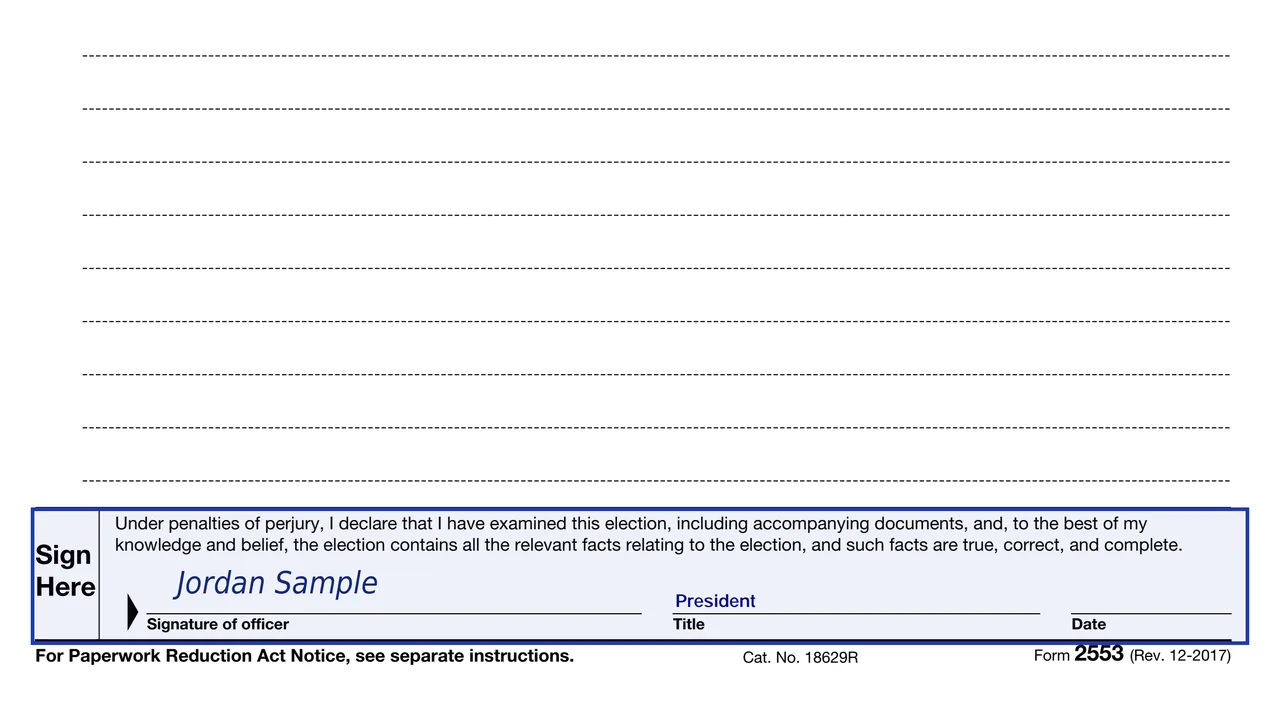
An authorized corporate officer signs and dates the form. The instructions say an unsigned form is not considered timely filed.
Enter the corporation's true legal name, using C/O if it applies. Item A asks for the EIN, or Applied For with the application date.
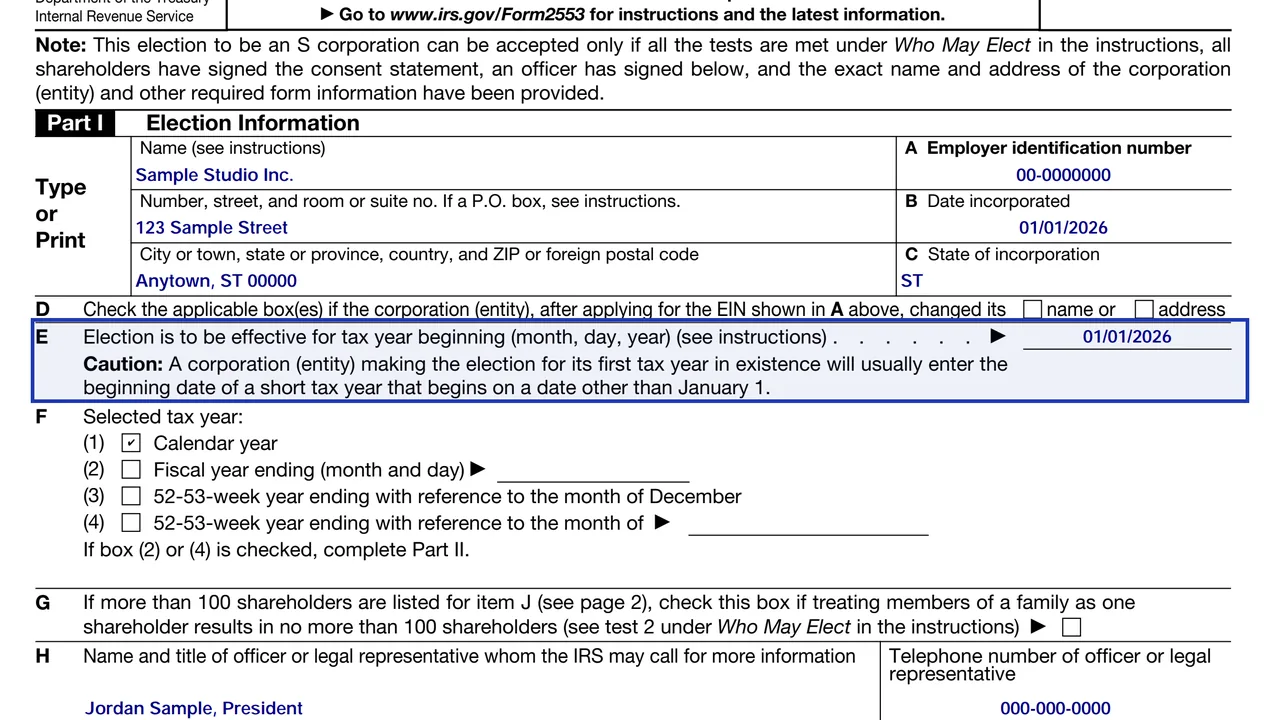
For a corporation in its first year this is generally the earliest date it had shareholders, acquired assets or began doing business.
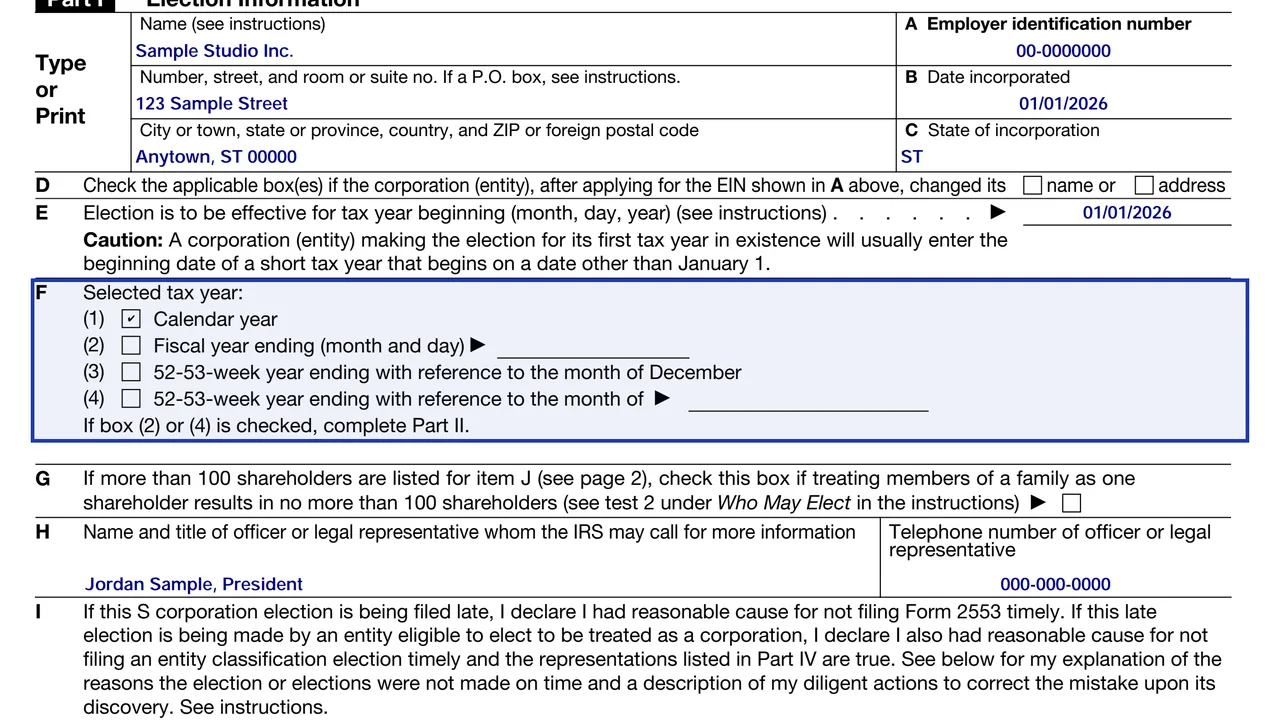
Select the tax year the election covers. Boxes (2) and (4) require Part II to be completed.
List every shareholder who must consent in column J. For an election filed before the item E date, only current shareholders consent. For a later filing, everyone who held stock during the period must consent.
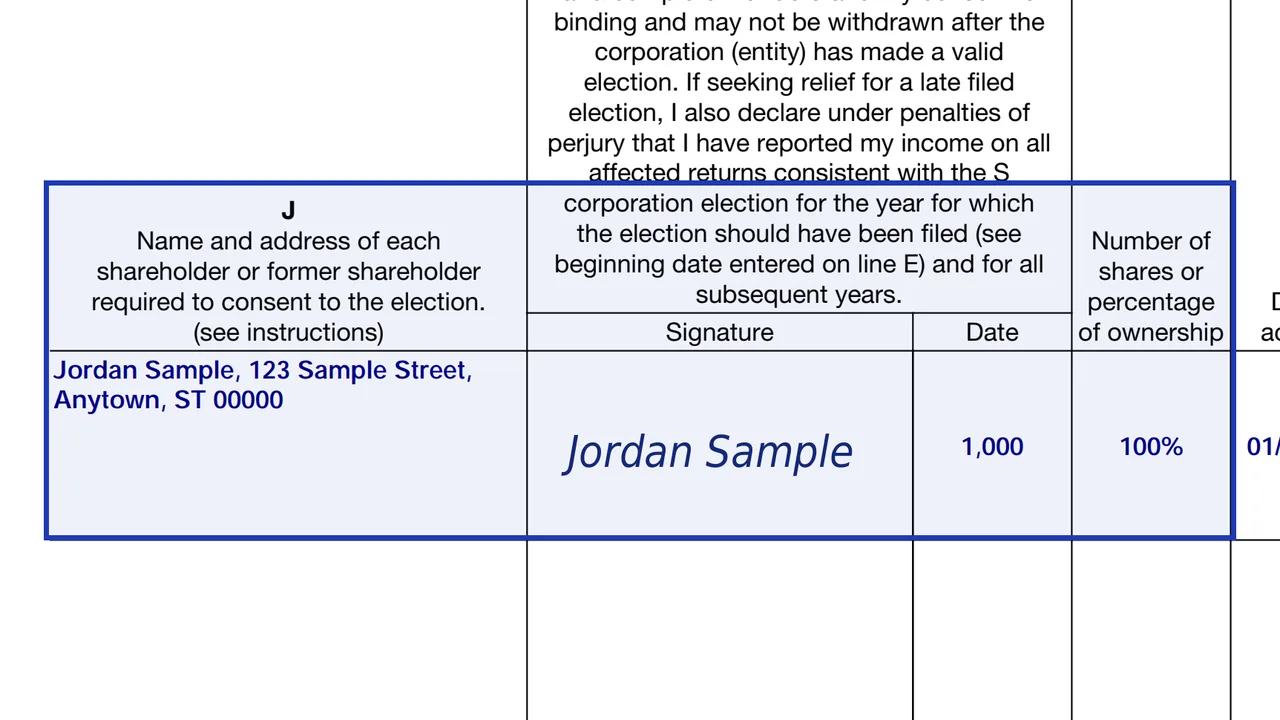
Community property spouses, tenants in common, joint tenants, minors, estates and trusts each have their own consent rules in the instructions. Read them before you collect signatures.
P1 asks about a natural business year and a 47-month gross receipts history. Q1 asks for a business purpose request, and Q2 for a back-up section 444 election.
An authorized officer signs. Keep a copy that shows how and when you filed.
You get the real form, filled in a browser tab, with nothing standing between you and the finished PDF.
File no more than 2 months and 15 days after the beginning of the tax year the election should take effect, or at any time during the preceding tax year. A calendar-year company switching from C to S status can file any time in its prior year or by March 15. A new company starting January 7 has until March 21.
Send the original, not a photocopy, to the IRS service center for your region, or fax it. The instructions name Kansas City, Missouri for the eastern states and Ogden, Utah for the western states, and tell you to check IRS.gov for current addresses and fax numbers.
Keep a timely postmarked certified mail receipt, a copy stamped accepted or received, or an IRS acceptance letter.
The IRS generally responds within 60 days. If you hear nothing in two months, or five months when box Q1 is checked, call 1-800-829-4933.
A corporation may qualify under Rev. Proc. 2013-30 if it shows reasonable cause, acted diligently once it found the problem, and files within 3 years and 75 days of the item E date. Write FILED PURSUANT TO REV. PROC. 2013-30 at the top of the first page.
Do not file Form 1120-S for any year before the election takes effect. The instructions treat an unsigned form as not timely filed, so check the signature and every required consent before you send it.
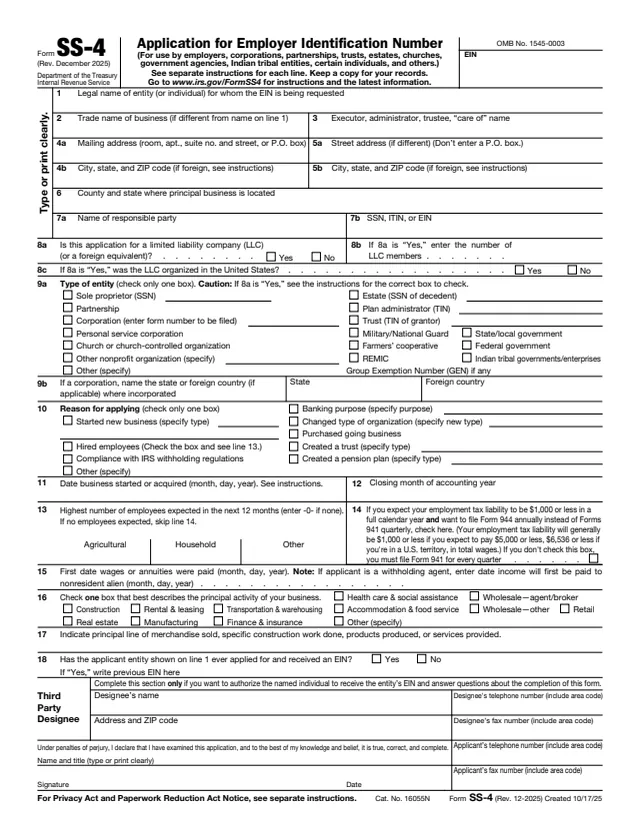
SS-4
89 fields, 2 pages
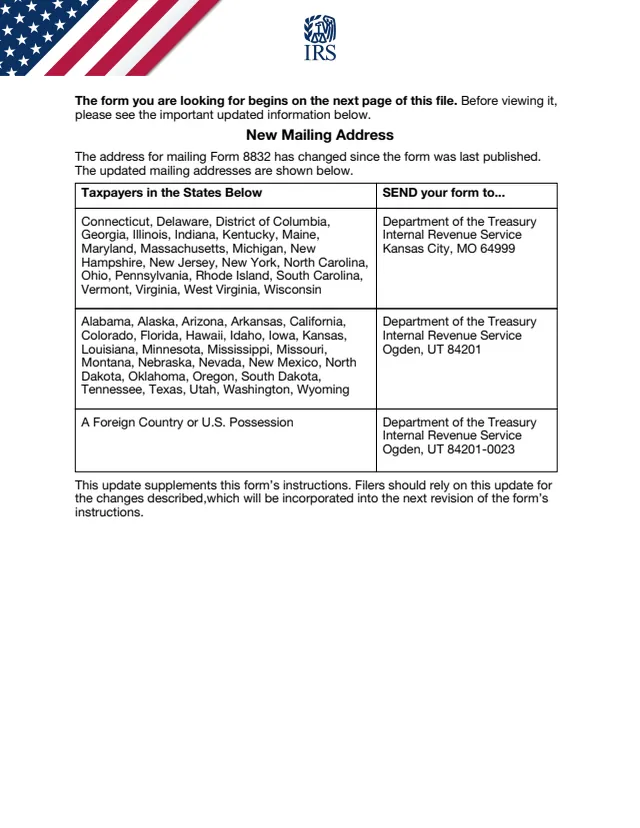
8832
70 fields, 8 pages
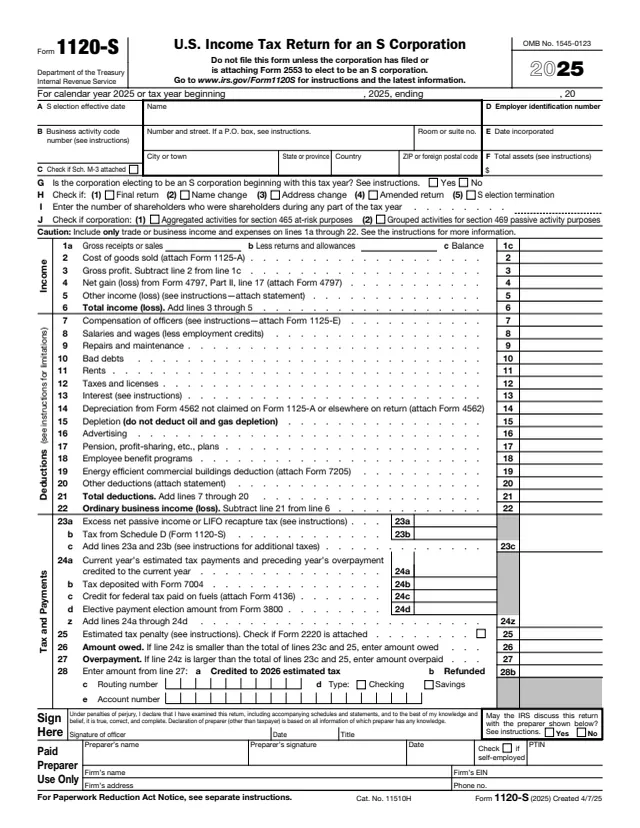
1120-S
390 fields, 5 pages
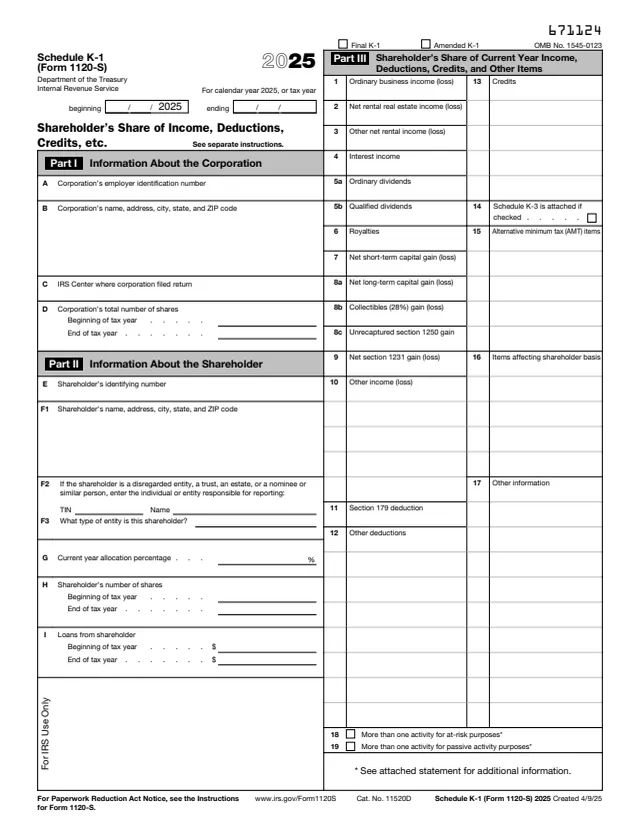
1120-S
114 fields, 1 page
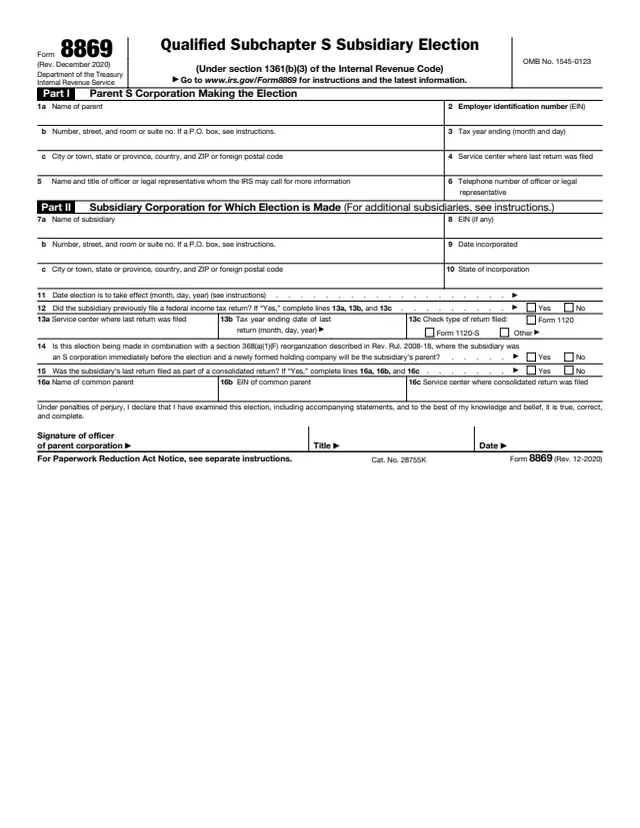
8869
31 fields, 1 page
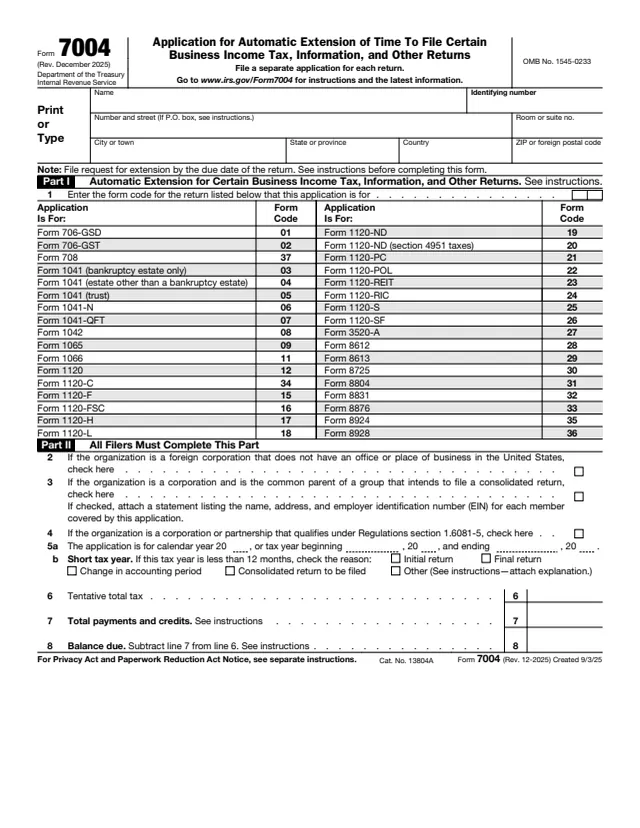
7004
26 fields, 1 page
The instructions list tests the business must meet before the election is valid.
No tool matches that search.
No more than 2 months and 15 days after the start of the tax year the election applies to, or any time in the preceding tax year.
Each shareholder who must consent signs in column K. The instructions list who counts, and the answer depends on when you file.
Yes. A domestic entity that can be treated as a corporation may elect. A qualifying eligible entity that files Form 2553 on time does not need Form 8832.
The instructions describe late election relief under Rev. Proc. 2013-30 for corporations that show reasonable cause. Otherwise a private letter ruling and user fee are generally needed.
Generally within 60 days. Call 1-800-829-4933 if you have not heard back in the period the instructions give.
The election continues until it is terminated or revoked. After that, re-electing S status generally needs IRS consent for years before the fifth tax year afterward.