Decedent information
The decedent's name as it appears on Form 706 and the decedent's social security number, followed by notes on section 2032A, Schedule W (Form 706) and portability returns.
706 Sch. G
Transfers During the Decedent's Lifetime
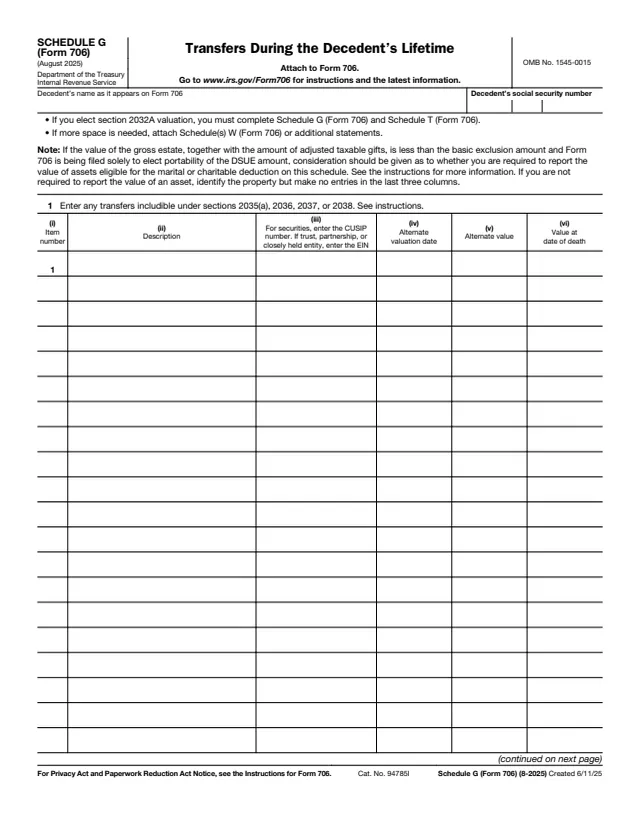
Schedule G (Form 706), Transfers During the Decedent's Lifetime, is part of Form 706, the return the executor of a decedent's estate uses to figure the estate tax, the IRS About Form 706 page says. The page says that if the decedent made any transfers under sections 2035(a), 2035(b), 2036, 2037 or 2038, this schedule is used to report the transfers.
The schedule has one table, line 1, for transfers includible under sections 2035(a), 2036, 2037 or 2038, with columns for the item number, a description, a CUSIP number or EIN, the alternate valuation date, the alternate value and the value at the date of death. Line 4 adds gift tax paid or payable on gifts made within 3 years before death (section 2035(b)), and line 5 totals the schedule for Form 706, Part V, item 7.
This page has the August 2025 edition. The PDF can be filled out free in the browser on this page and downloaded without an account.
The decedent's name as it appears on Form 706 and the decedent's social security number, followed by notes on section 2032A, Schedule W (Form 706) and portability returns.
Transfers includible under sections 2035(a), 2036, 2037 or 2038. Columns (i) and (ii) hold the item number and description. Column (iii) holds a CUSIP number for securities, or an EIN for a trust, partnership or closely held entity.
Column (iv) is the alternate valuation date, column (v) the alternate value and column (vi) the value at date of death. The table continues on page 2.
Line 2 adds the amounts in column (v) or column (vi), as applicable. Line 3 is the total from any Schedule(s) W (Form 706) or additional statements attached.
Gift tax paid or payable by the decedent or the estate for all gifts made by the decedent or the decedent's spouse within 3 years before the decedent's death (section 2035(b)).
Lines 2, 3 and 4 added together. The form says to enter these amounts on Form 706, Part V, item 7.
Enter the decedent's name exactly as it appears on Form 706 and the decedent's social security number at the top.
The instructions say to number each transfer consecutively beginning with 1 in column (i), and in column (ii) list the transferee's name, the date of the transfer and a complete description of the property.
The instructions say transfers are valued on the date of death in column (vi), or under column (v) if alternate valuation under section 2032 is elected. If only part of the value is included, the whole value goes in column (ii) with an explanation.
The instructions say to enter the total gift taxes paid by the decedent or the estate on gifts made by the decedent or the decedent's spouse within 3 years of death. The date of the gift, not the payment date, decides what is included.
Add lines 2, 3 and 4 on line 5 and enter the result on Form 706, Part V, item 7.
The instructions say that if a transfer was made by a written instrument, a copy is attached: certified if it is of public record, verified if not. Life insurance transfers also attach Form 712.
You get the real form, filled in a browser tab, with nothing standing between you and the finished PDF.
The schedule says "Attach to Form 706." It is filed with the estate tax return, not on its own.
The Form 706 instructions say the return is filed within 9 months after the date of the decedent's death. Form 4768 is used to apply for an automatic 6-month extension of time to file.
The instructions give Department of the Treasury, Internal Revenue Service, Kansas City, MO 64999. The About page says to see Filing estate and gift tax returns for the latest filing address.
The instructions say transfers not described in the Schedule G instructions are not shown on it. A statement listing the date, the amount or value and the type of transfer is attached instead.
If Form 706, Part IV, line 11b is answered "Yes" for a transfer reported here, the instructions say to attach a statement with the line and item number and the total effective discount taken.
The schedule says to attach Schedule(s) W (Form 706) or additional statements if more space is needed. Their total goes on line 3.
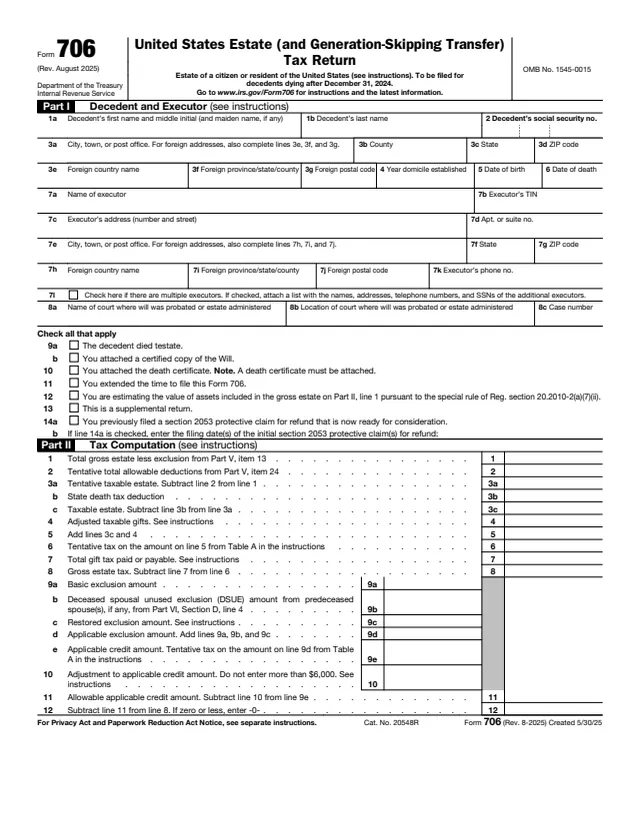
706
316 fields, 5 pages
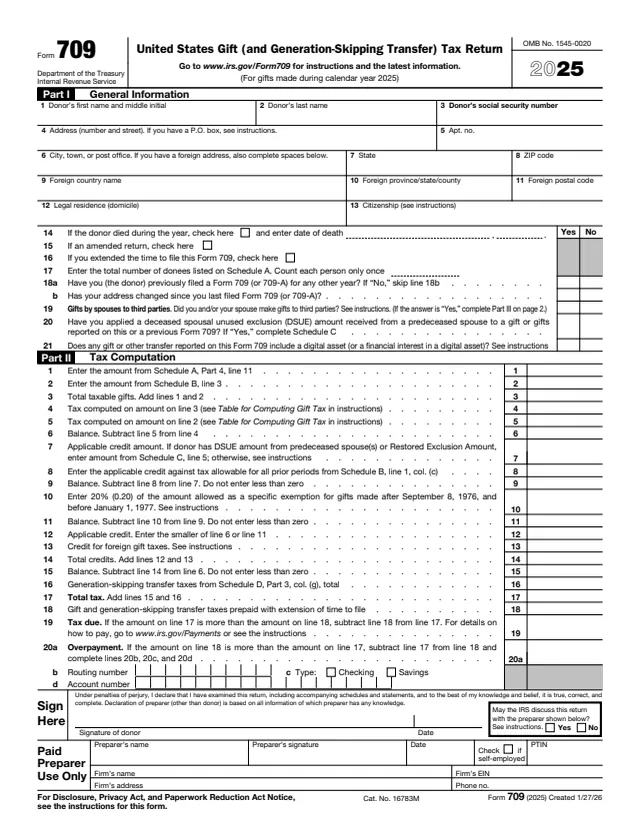
709
1,851 fields, 10 pages
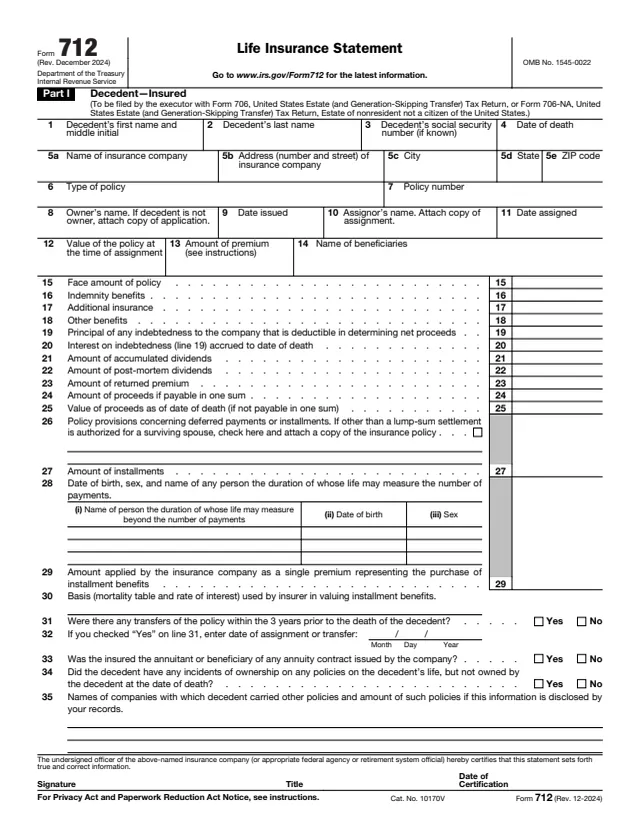
712
91 fields, 3 pages
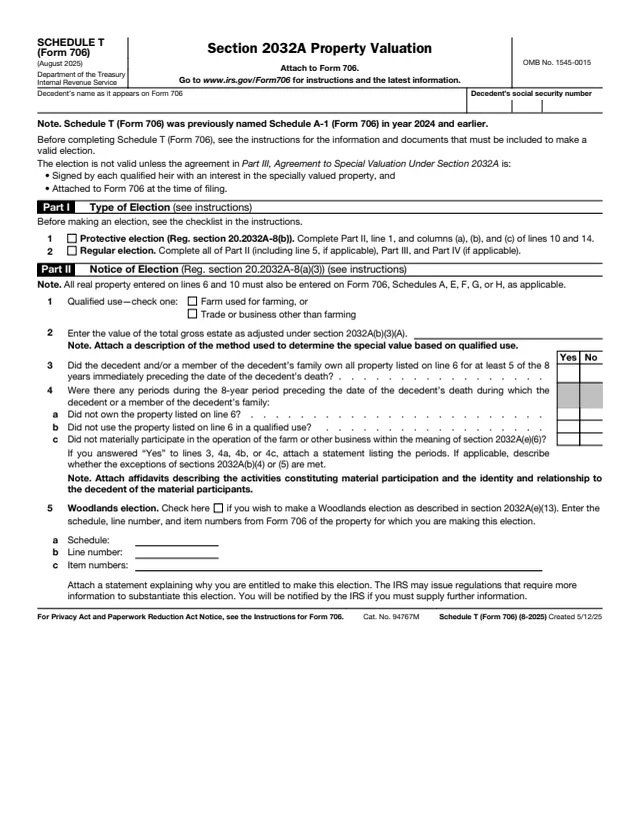
706 Sch. T
858 fields, 8 pages
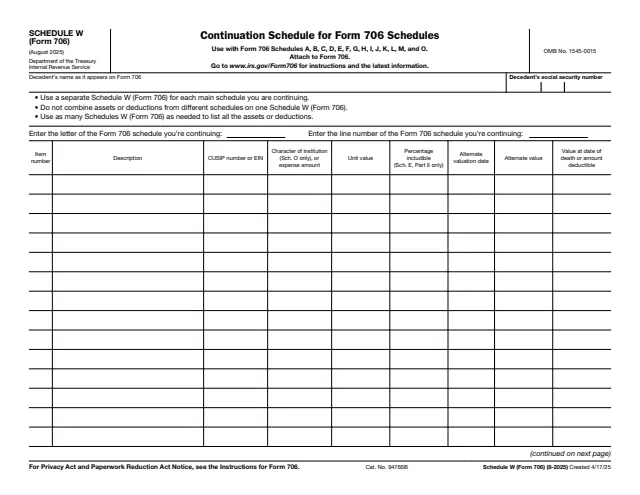
706 Sch. W
303 fields, 2 pages
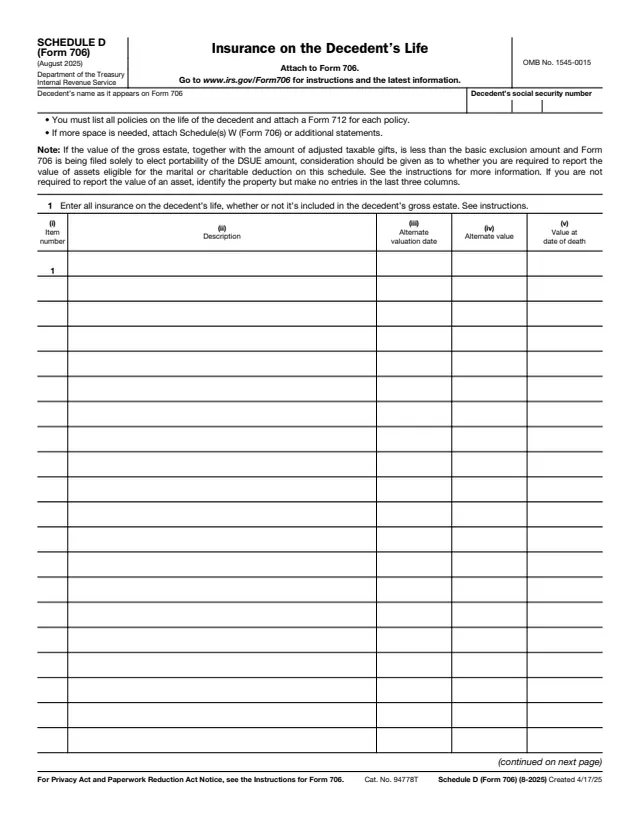
706 Sch. D
233 fields, 2 pages
The schedule is completed for a decedent's estate as part of Form 706 and goes to the IRS with that return. It is not an individual income tax form.
No tool matches that search.
The form's line 1 says transfers includible under sections 2035(a), 2036, 2037 or 2038. Line 4 covers gift tax on gifts made within 3 years before death under section 2035(b).
The instructions say all transfers other than outright transfers not in trust and bona fide sales made by the decedent during life are reported, regardless of whether they are believed to be subject to tax.
The instructions say the date of the gift, not the date the gift tax was paid, determines whether a gift tax paid is included in the gross estate.
The form says to enter the line 5 total on Form 706, Part V, item 7.
The instructions say a copy of the instrument is attached. It should be certified if it is of public record and verified if it is not.
The schedule's note says that if an asset's value is not required to be reported, the property is identified but no entries are made in the last three columns. The instructions explain the special rule.