Introduction and the 14581 series
Explains the seven tools: Forms 14581-A, B, D and G for federal, state and local government entities, and Forms 14581-C, E and F for state and local government entities only.
14581-E
Retirement Plan Coverage Compliance Self-Assessment For State and Local Government Entities
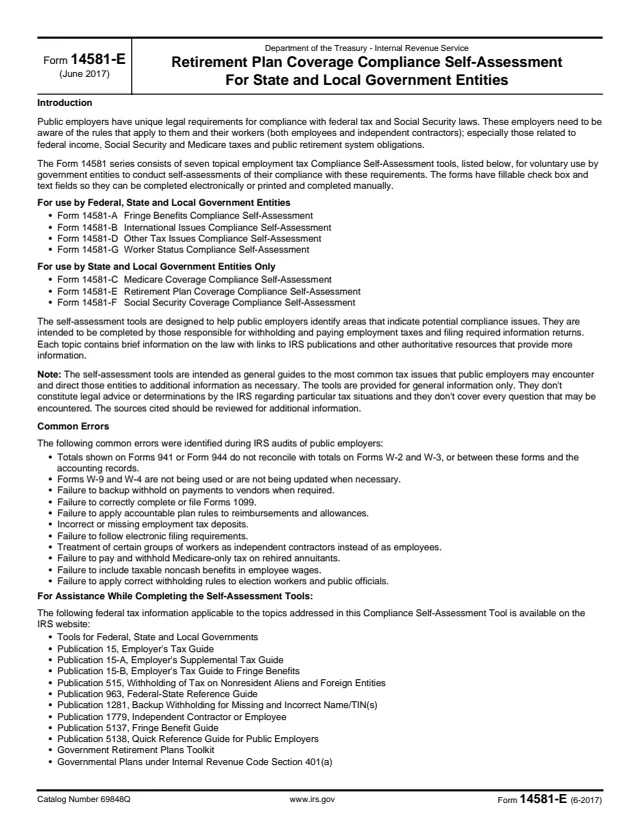
Form 14581-E, Retirement Plan Coverage Compliance Self-Assessment For State and Local Government Entities, is a checklist for public employers. The form says the Form 14581 series consists of seven topical employment tax Compliance Self-Assessment tools for voluntary use by government entities, and it lists Form 14581-E for use by state and local government entities only.
This form covers retirement plan coverage and refers to Publication 963. It asks whether the entity has a public retirement system that qualifies as a replacement for Social Security coverage, whether the public retirement plan is offered to all employees, and whether contributions to retirement plans are subject to applicable employment taxes under an IRC Section 3121(b)(7)(F) retirement system, a Section 401(a) and/or Section 403(b) plan, or a Section 457(b) plan. Each question has Yes, No and Follow Up boxes, a note on the rules and a Comments field.
The form says the tools are provided for general information only and don't constitute legal advice or determinations by the IRS. You can fill out the PDF free in your browser on this page and download it without an account.
Explains the seven tools: Forms 14581-A, B, D and G for federal, state and local government entities, and Forms 14581-C, E and F for state and local government entities only.
Errors the form says were identified during IRS audits of public employers, such as Forms 941 or 944 that do not reconcile with Forms W-2 and W-3, and failure to pay and withhold Medicare-only tax on rehired annuitants.
Whether the entity has a public retirement system that qualifies as a replacement for Social Security coverage. The note explains the minimum benefit or contribution standards and points to Chapter 6 of Publication 963.
Whether the public retirement plan is offered to all employees. If not, the form asks for the categories of employees that are not covered.
Whether contributions are subject to applicable employment taxes, with notes on employee deferrals and employer contributions for Section 3121(b)(7)(F), 401(a) and/or 403(b), and 457(b) plans.
A closing space for notes and follow-up items after all questions are answered.
The form says the tools are intended for those responsible for withholding and paying employment taxes and filing required information returns.
The form says it has fillable check box and text fields so it can be completed electronically or printed and completed manually.
Check Yes, No or Follow Up for a qualifying replacement plan. The note says the standards are based solely on a minimum benefit level provided to the participant (defined benefit plan) or contributed by the participant (defined contribution plan).
If the plan is not offered to all employees, list every category that is not covered. The note says employees in these categories "must be covered for Social Security" under mandatory coverage or a Section 218 Agreement.
Mark the boxes for question 3 and for each plan type in items 3a, 3b and 3c, using the notes on how employee deferrals and employer contributions are taxed.
Use the Comments field under each question to record details, and list open items in Notes/Follow-up at the end.
You get the real form, filled in a browser tab, with nothing standing between you and the finished PDF.
The form prints no filing address, deadline or signature line. It describes itself as a self-assessment tool for voluntary use by government entities.
The form says the tools are provided for general information only. They don't constitute legal advice or determinations by the IRS regarding particular tax situations, and they don't cover every question.
The note to question 1 says a person working for a public employer after July 1, 1991, who is not covered in a qualifying public retirement plan "must be covered by Social Security and Medicare" under the mandatory coverage provisions, except for exclusions.
Medicare and Social Security coverage have their own forms for state and local government entities, as do fringe benefits, international issues, other tax issues and worker status.
Page 1 lists Publications 15, 15-A, 15-B, 515, 963, 1281, 1779, 5137 and 5138, the Government Retirement Plans Toolkit and Governmental Plans under Internal Revenue Code Section 401(a).
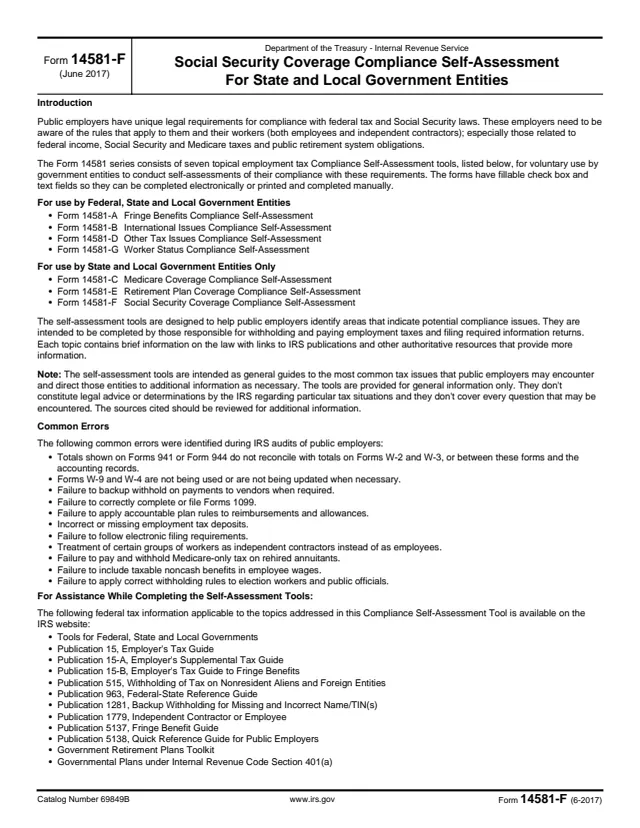
14581-F
19 fields, 4 pages
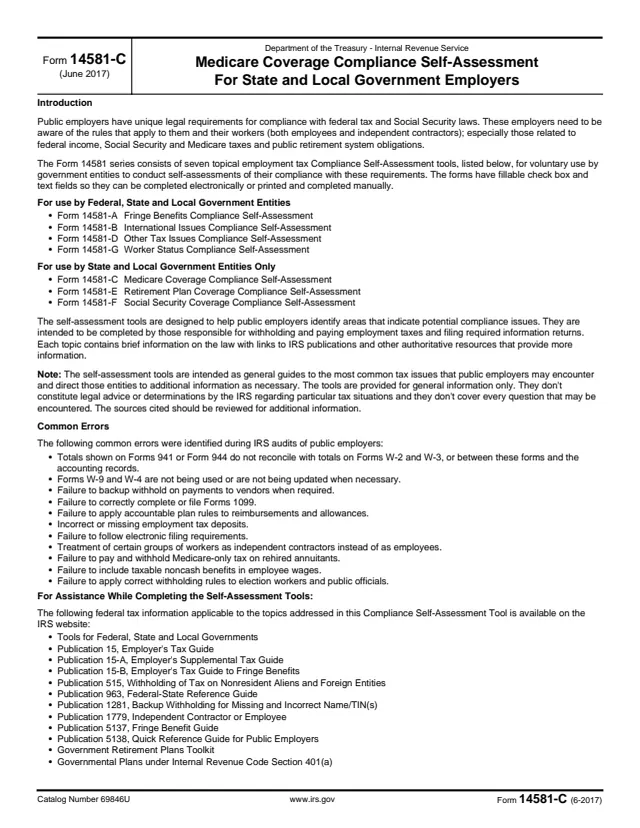
14581-C
21 fields, 3 pages
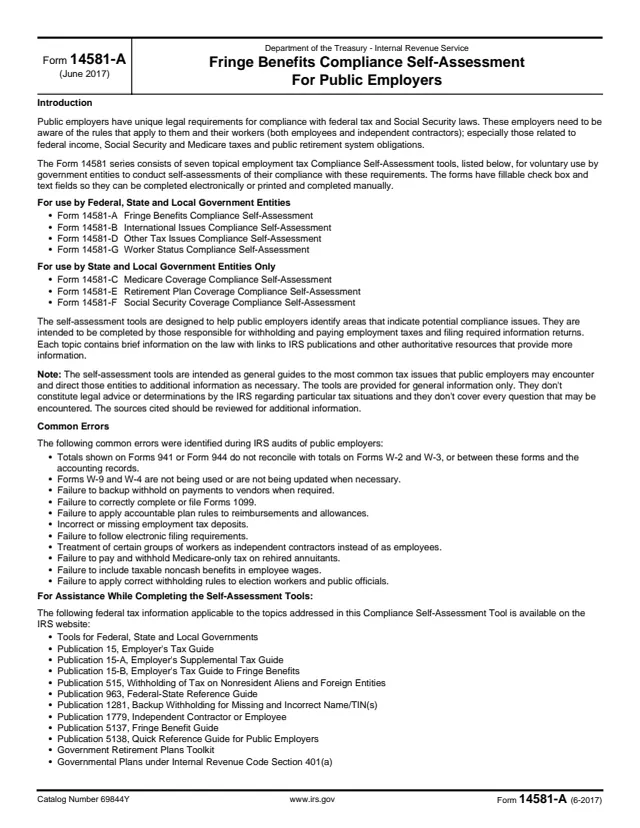
14581-A
45 fields, 4 pages
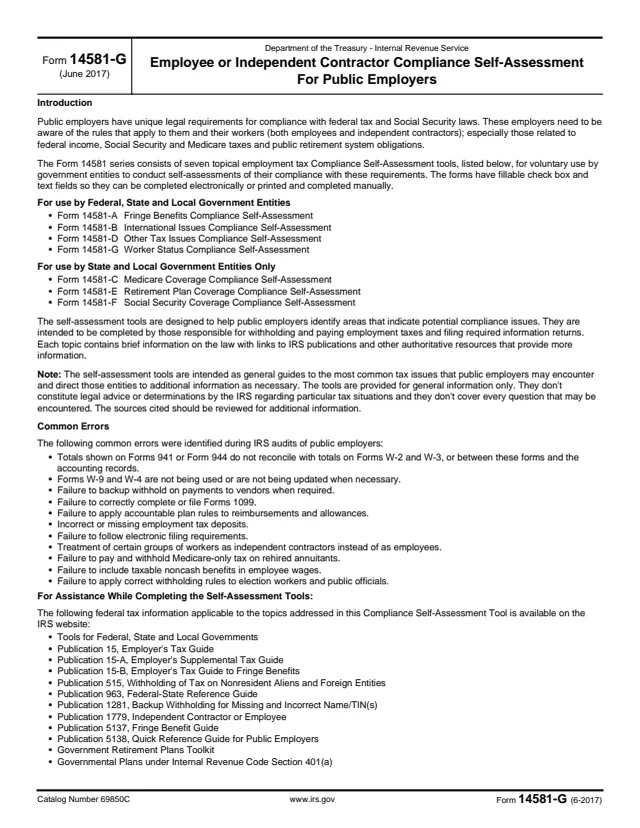
14581-G
31 fields, 3 pages
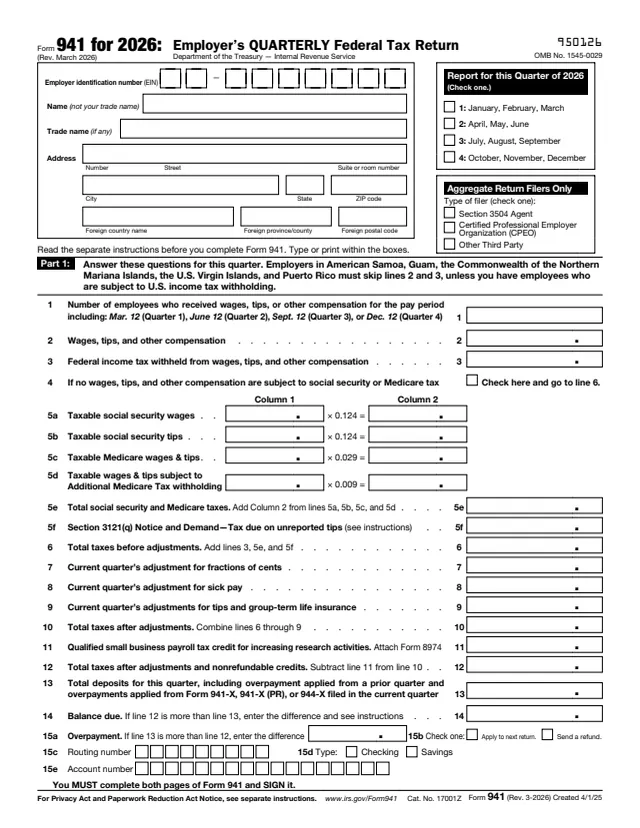
941
116 fields, 3 pages
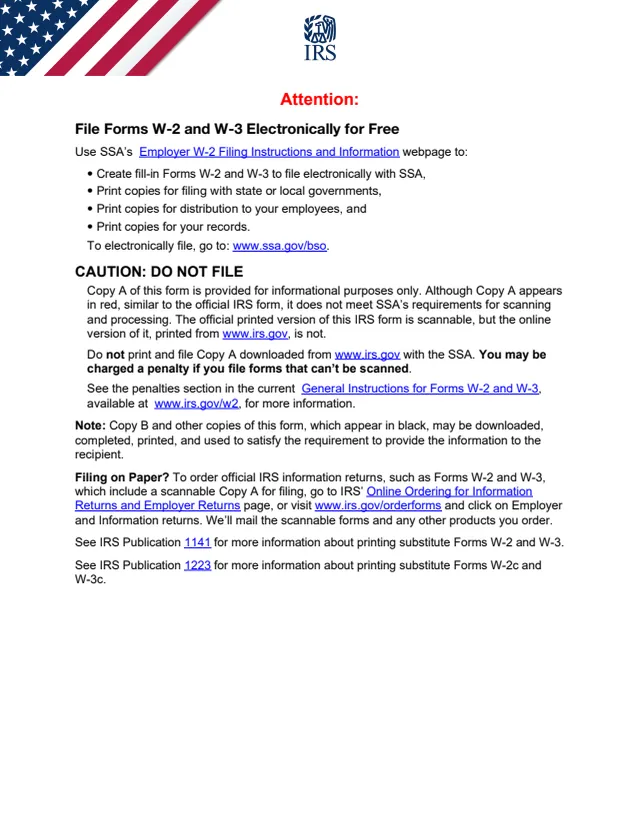
W-2
568 fields, 11 pages
The form says the self-assessment tools are intended to be completed by those responsible for withholding and paying employment taxes and filing required information returns. It lists Form 14581-E for use by state and local government entities only.
No tool matches that search.
The form prints no filing address or deadline. It describes the Form 14581 series as tools for voluntary use by government entities to assess their own compliance.
The form lists it for use by state and local government entities only, completed by those responsible for employment taxes and information returns.
No. The form says the tools don't constitute legal advice or determinations by the IRS regarding particular tax situations.
The form says a governmental retirement plan meeting certain minimum benefit or contribution standards qualifies as a public retirement system and serves as a replacement plan exempting the participants from mandatory Social Security coverage.
IRC Section 3121(b)(7)(F) retirement systems, Section 401(a) and/or Section 403(b) plans, and Section 457(b) plans.
The form points to Chapter 6 of Publication 963, Federal-State Reference Guide, for more about public retirement systems.