Part I: Total Investment Interest Expense
Line 1 is investment interest expense paid or accrued in 2025, line 2 is the disallowed amount from the 2024 Form 4952, line 7, and line 3 adds them.
4952
Investment Interest Expense Deduction
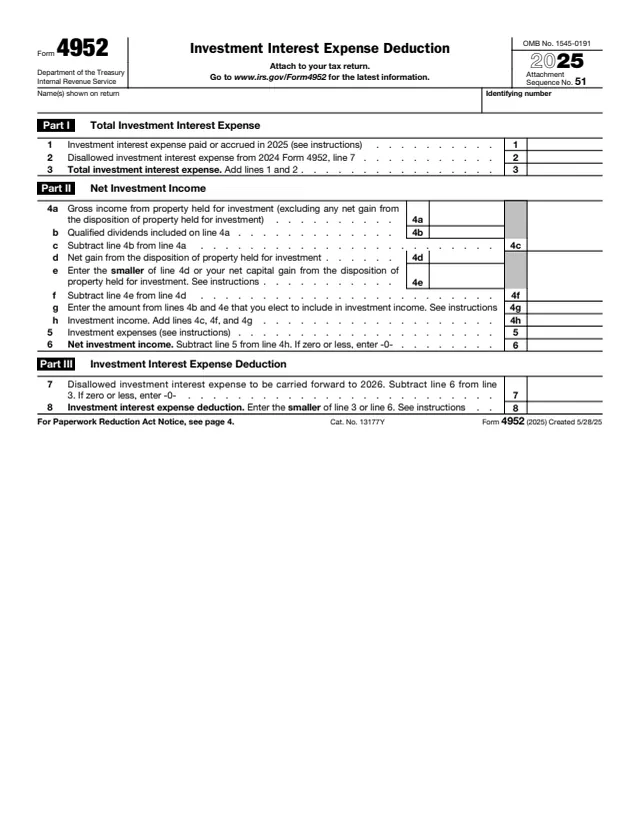
Form 4952, Investment Interest Expense Deduction, is used to figure the amount of investment interest expense that can be deducted for the year and the amount that carries forward to future years. The IRS says the deduction is limited to net investment income.
The form has three parts: total investment interest expense, net investment income, and the deduction itself. Line 7 shows the disallowed amount carried forward to 2026, and line 8 shows the deduction. The form says "Attach to your tax return." The instructions are printed on pages 3 and 4 of the same PDF.
This page has the 2025 form. You can fill it out free in your browser on this page and download the result without an account.
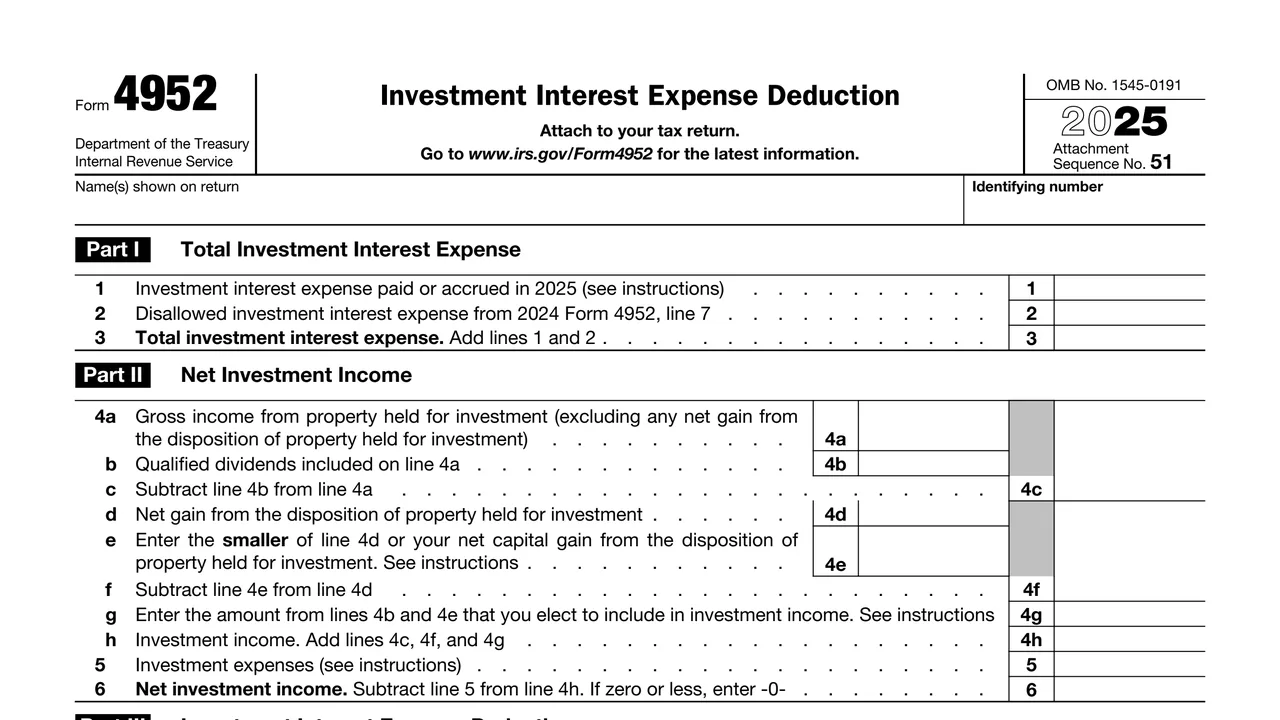
Line 1 is investment interest expense paid or accrued in 2025, line 2 is the disallowed amount from the 2024 Form 4952, line 7, and line 3 adds them.
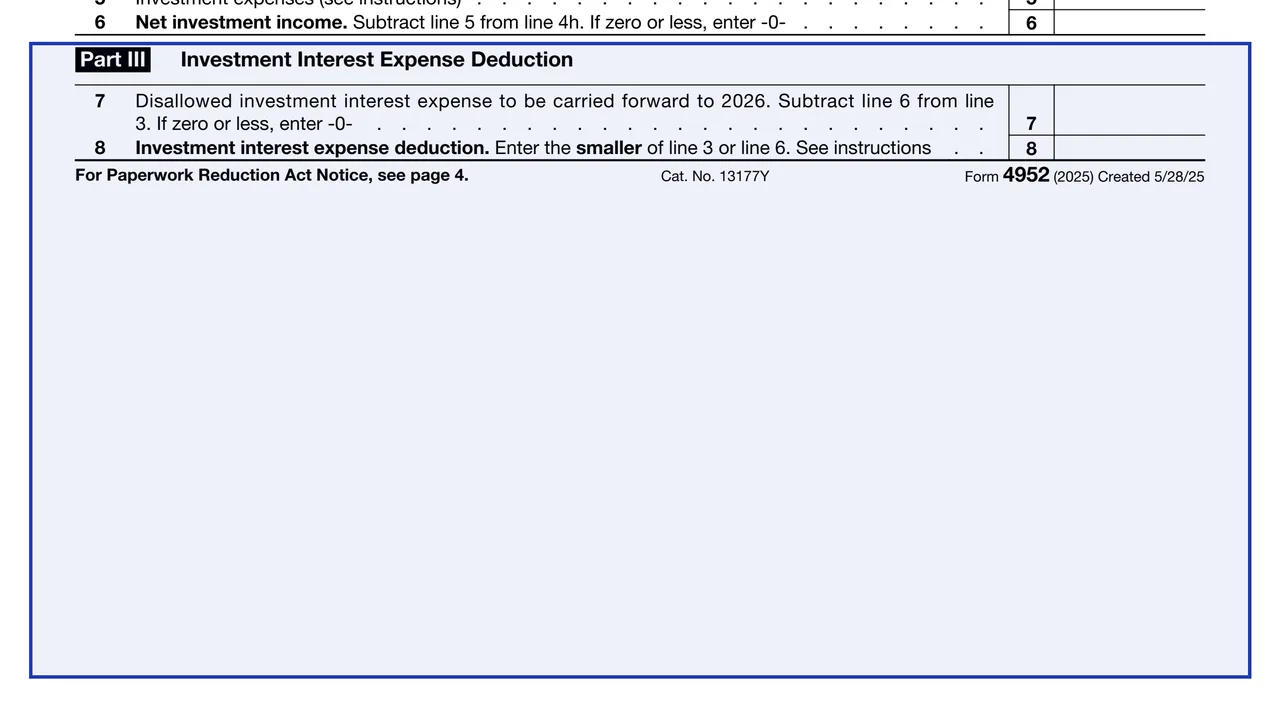
Gross income from property held for investment, qualified dividends, net gain from investment property, net capital gain and the amount elected into investment income on line 4g.
Line 5 is investment expenses. Line 6 is net investment income: line 4h minus line 5, or -0- if zero or less.
Line 7 is the disallowed amount carried forward to 2026. Line 8 is the deduction, the smaller of line 3 or line 6.
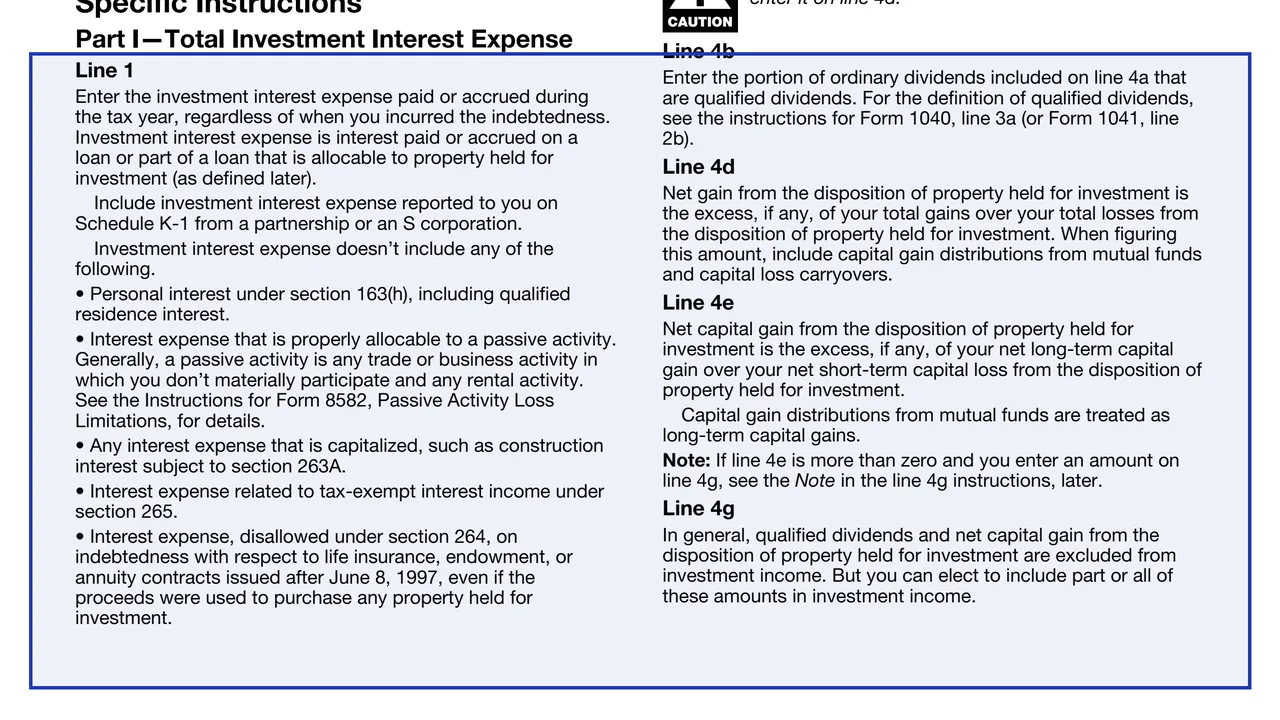
Enter investment interest expense paid or accrued during the tax year. The instructions say it does not include personal interest, qualified residence interest, passive activity interest or capitalized interest.
Enter gross income from property held for investment, such as interest, ordinary dividends, annuities and royalties. The instructions say net gain from selling investment property goes on line 4d instead.
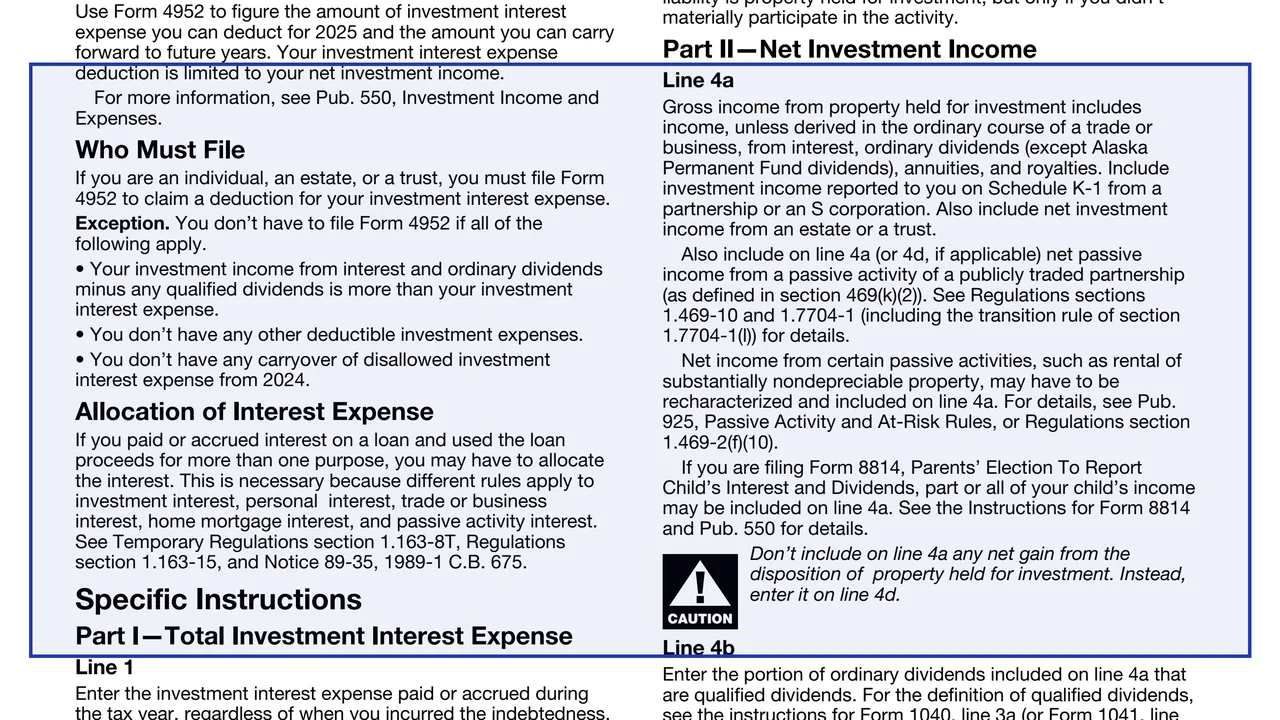
The instructions say qualified dividends and net capital gain are generally excluded from investment income, but part or all can be elected in here. Amounts elected are not taxed at the qualified dividend or capital gain rates.
Enter allowed deductions, other than interest, directly connected with producing investment income, such as depreciation or depletion on assets that produce it.
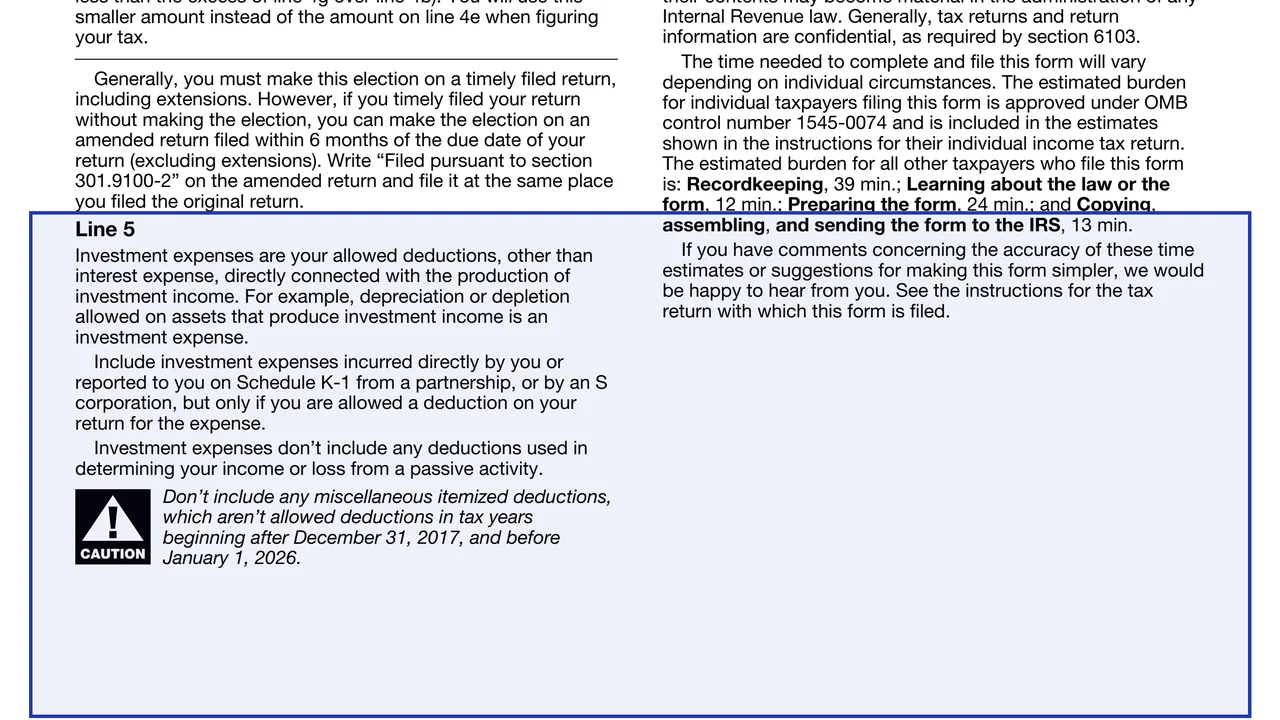
Subtract line 6 from line 3 for the carryforward on line 7. Enter the smaller of line 3 or line 6 on line 8, then carry it to the return as the instructions describe.
You get the real form, filled in a browser tab, with nothing standing between you and the finished PDF.
The form is attached to the tax return. It is not mailed on its own.
The line 7 amount is the disallowed investment interest expense carried forward. Next year it goes on line 2 of that year's Form 4952.
The instructions say the election is generally made on a timely filed return, including extensions. A timely return without it can be amended within 6 months of the due date, excluding extensions, marked "Filed pursuant to section 301.9100-2".
The instructions say that once made, the line 4g election can be revoked only with IRS consent.
The instructions point to Form 6198 when interest relates to an activity that is not at risk, and to Form 6251 or Schedule I (Form 1041) for the alternative minimum tax.
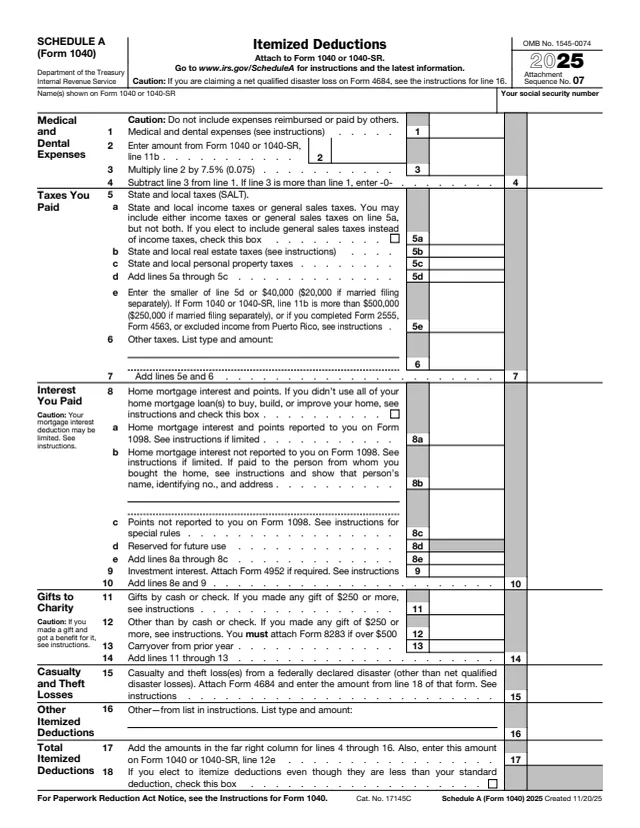
1040
33 fields, 1 page
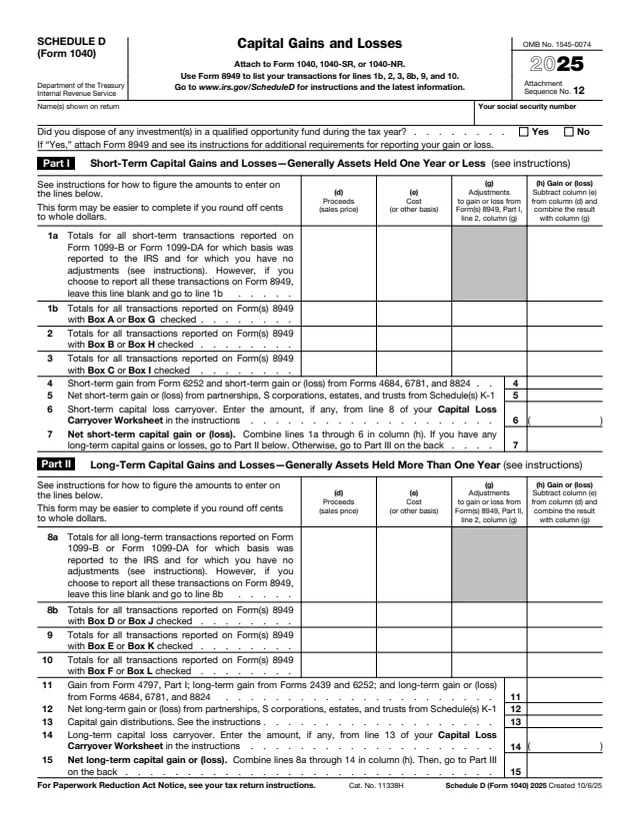
1040
55 fields, 2 pages
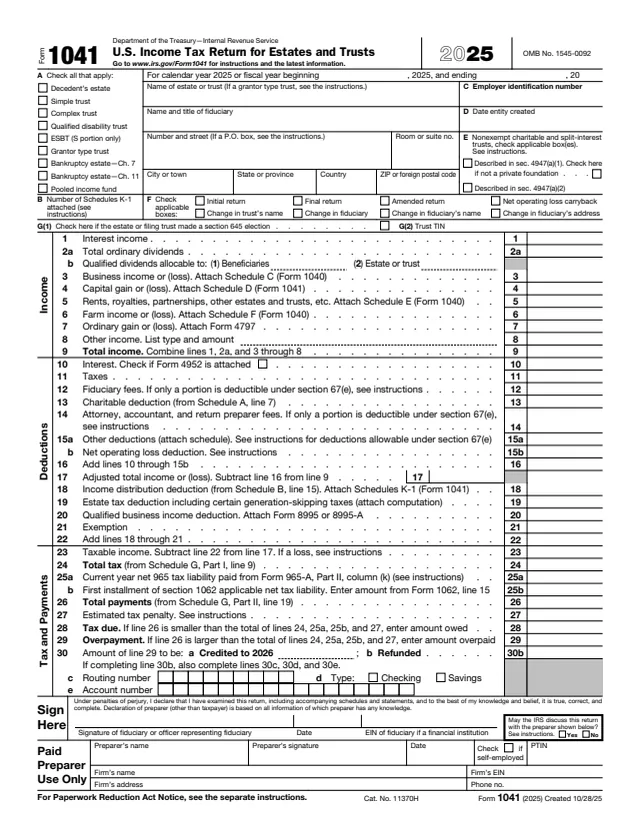
1041
173 fields, 3 pages
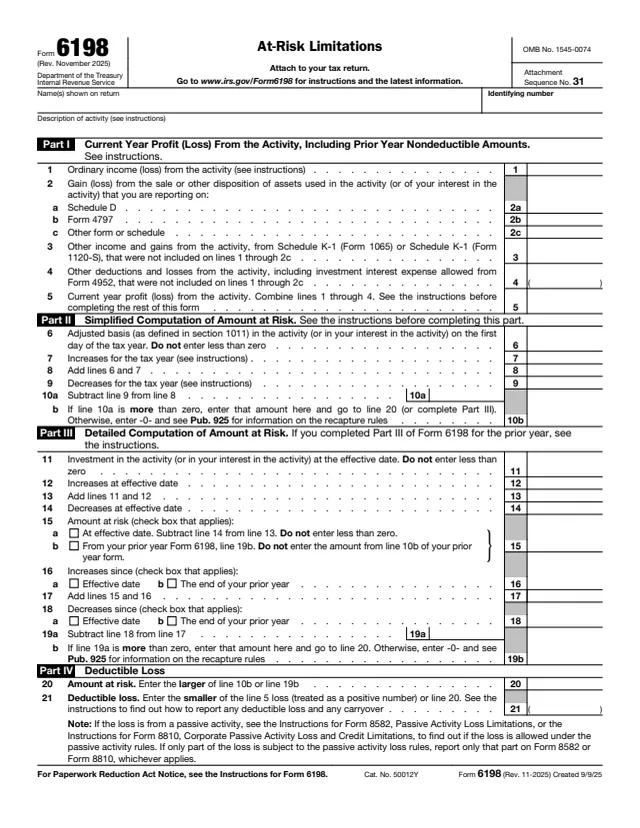
6198
34 fields, 1 page
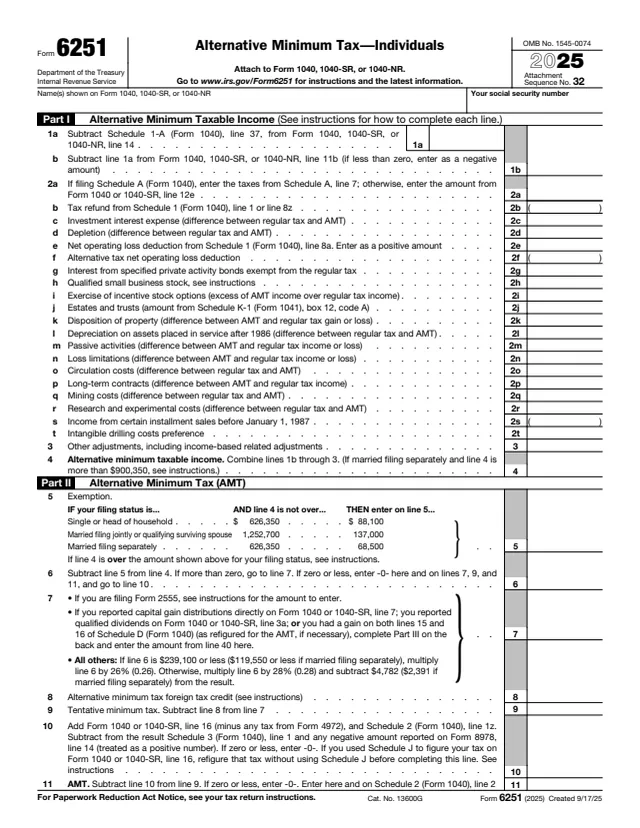
6251
62 fields, 2 pages
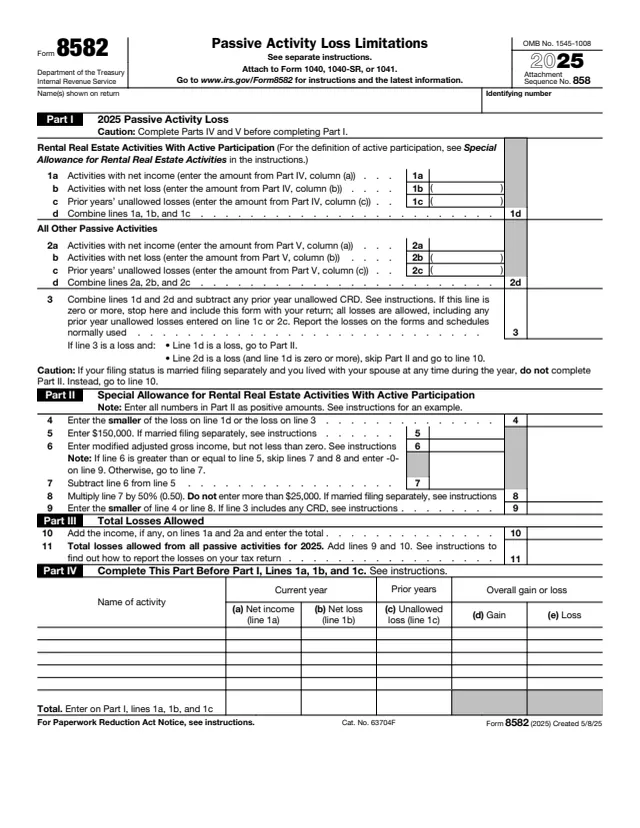
8582
205 fields, 3 pages
The instructions say individuals, estates and trusts file Form 4952 to claim a deduction for investment interest expense.
No tool matches that search.
The IRS says it is used to figure the investment interest expense that can be deducted for the current year and the amount that carries forward to future years.
Yes. The form and the About page say the investment interest expense deduction is limited to net investment income, figured on line 6.
The instructions name individuals, estates and trusts that claim a deduction for investment interest expense. They also list an exception when three conditions all apply.
It is entered on line 7 as disallowed investment interest expense carried forward to 2026.
The instructions say individuals generally enter it on Schedule A (Form 1040), line 9, and estates and trusts on Form 1041, line 10, with exceptions for royalties and business interest.
No. The instructions say investment interest expense does not include personal interest under section 163(h), including qualified residence interest.