Qualified opportunity fund question
At the top, you answer whether you disposed of any investment in a qualified opportunity fund during the year. If Yes, the form says to attach Form 8949.
1040
Capital Gains and Losses
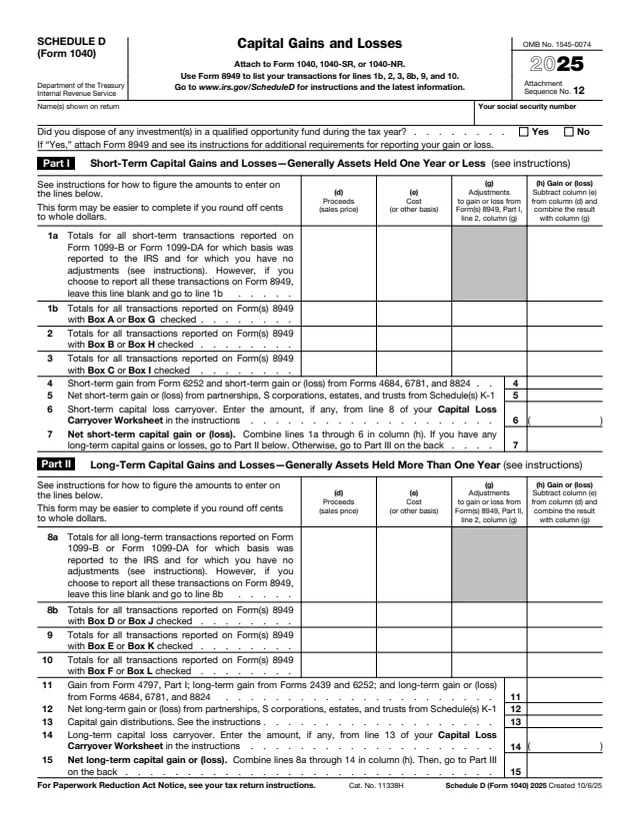
Schedule D is where your capital gains and losses for the year come together. Short-term results go in Part I, long-term results in Part II, and Part III combines them into the figure that goes on Form 1040, line 7a.
The instructions define a capital asset broadly: most property you own and use for personal purposes or investment, such as your house, furniture, car, stocks and bonds. Sales of stocks, bonds and digital assets usually reach Schedule D through Form 8949, which lists each transaction.
The schedule also applies the yearly loss limit. The instructions say you can deduct capital losses up to the amount of your capital gains plus $3,000 ($1,500 if married filing separately).
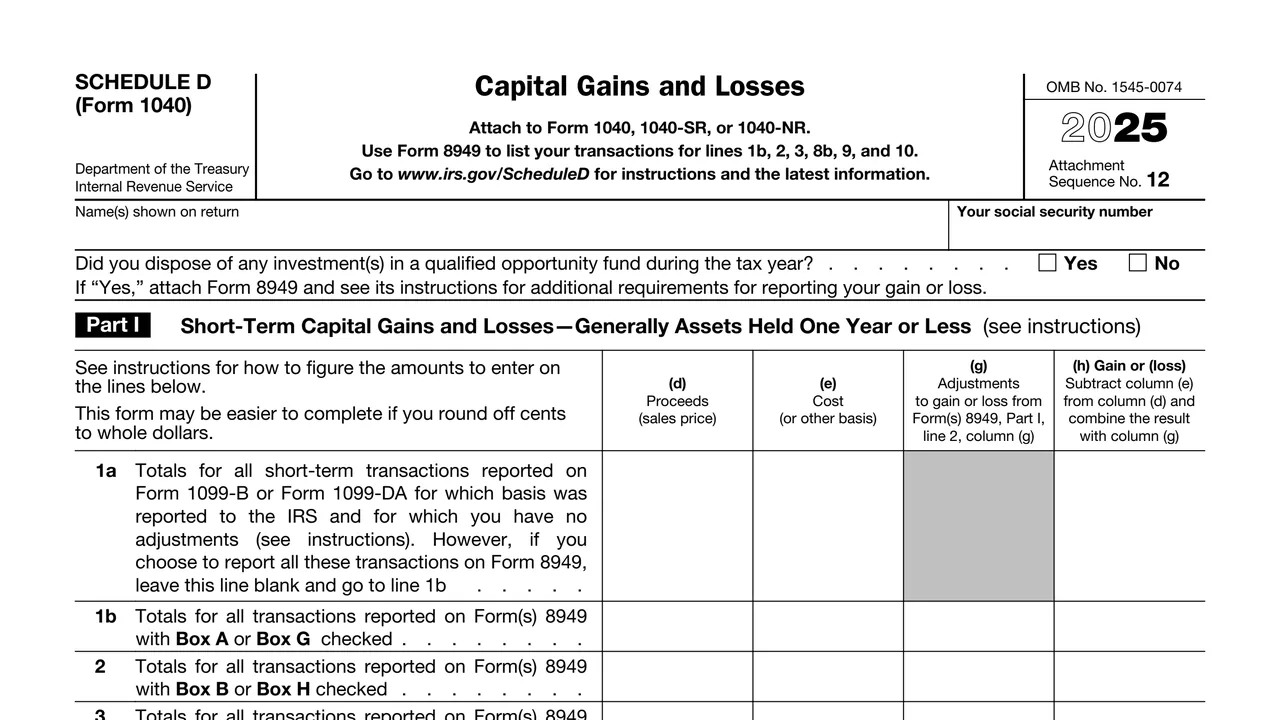
At the top, you answer whether you disposed of any investment in a qualified opportunity fund during the year. If Yes, the form says to attach Form 8949.
For assets generally held one year or less. Line 1a takes totals from Forms 1099-B or 1099-DA with basis reported and no adjustments. Lines 1b, 2 and 3 take totals from Form 8949.
Short-term gains from other forms, amounts from Schedule K-1 and any short-term loss carryover on line 6. Line 7 is the net short-term gain or loss.
For assets generally held more than one year. Line 8a works like line 1a, and lines 8b, 9 and 10 take totals from Form 8949.
Gains from Form 4797 and other forms, Schedule K-1 amounts, capital gain distributions on line 13 and any long-term loss carryover on line 14. Line 15 is the net long-term gain or loss.
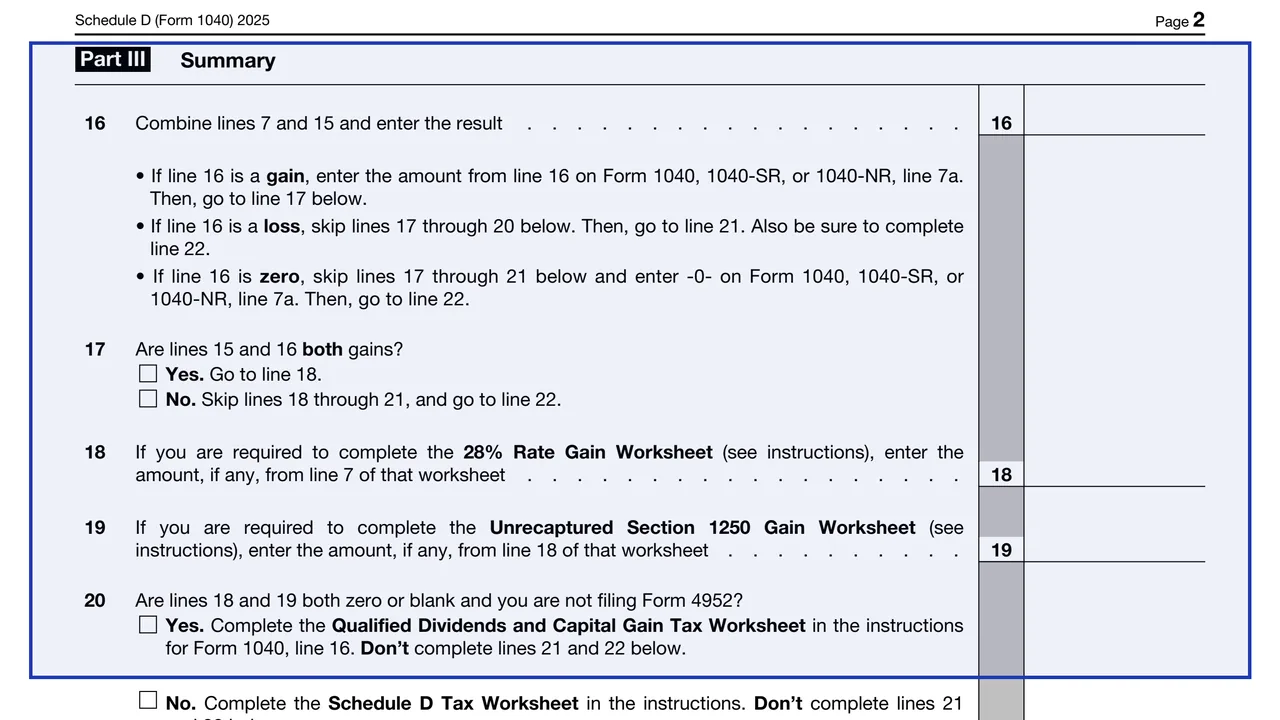
Line 16 combines lines 7 and 15. A gain goes on Form 1040, line 7a. A loss is limited on line 21 to $3,000, or $1,500 if married filing separately. Lines 17 to 22 point you to the right tax worksheet.
Forms 1099-B and 1099-DA show your proceeds, your cost basis and whether the basis was reported to the IRS.
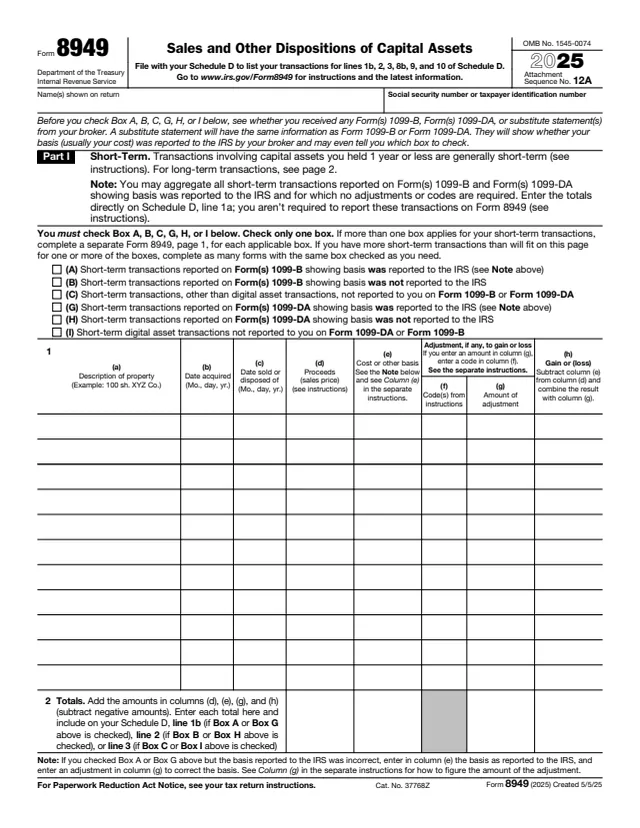
List the transactions that need it on Form 8949, grouped by the box that applies, then carry each total to its Schedule D line.
Transactions with basis reported to the IRS and no adjustments can go on line 1a or 8a as totals, without Form 8949.
Enter any loss carryover from last year on line 6 or 14, using the Capital Loss Carryover Worksheet in the instructions, and capital gain distributions on line 13.
Line 16 combines your net short-term and long-term results and decides which lines you complete next.
A gain on line 16, or the limited loss on line 21, goes on Form 1040, 1040-SR or 1040-NR, line 7a. You can fill this form free on this page.
You get the real form, filled in a browser tab, with nothing standing between you and the finished PDF.
Schedule D is attached to Form 1040, 1040-SR or 1040-NR and is due with it.
Attach it, with any Forms 8949, to your return when you mail it, or let tax software transmit it when you e-file.
The IRS form is free.
Keep broker statements and records of what you paid for each asset, and keep the Capital Loss Carryover Worksheet for next year.
The instructions say a loss from the sale of a capital asset held for personal use isn't deductible, though some of those sales are still reported on Form 8949.
8949
202 fields, 2 pages
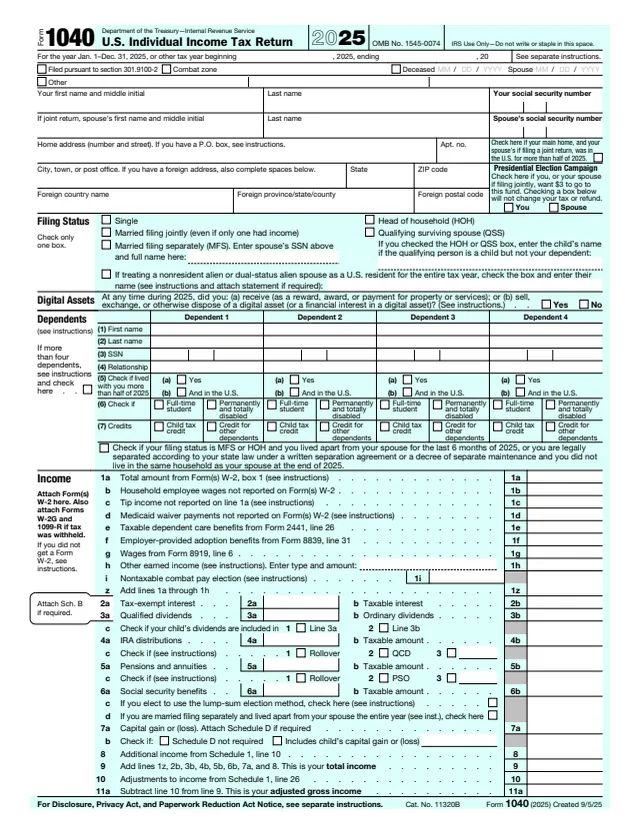
1040
199 fields, 2 pages
1099-DIV
140 fields, 6 pages
1099-S
65 fields, 4 pages
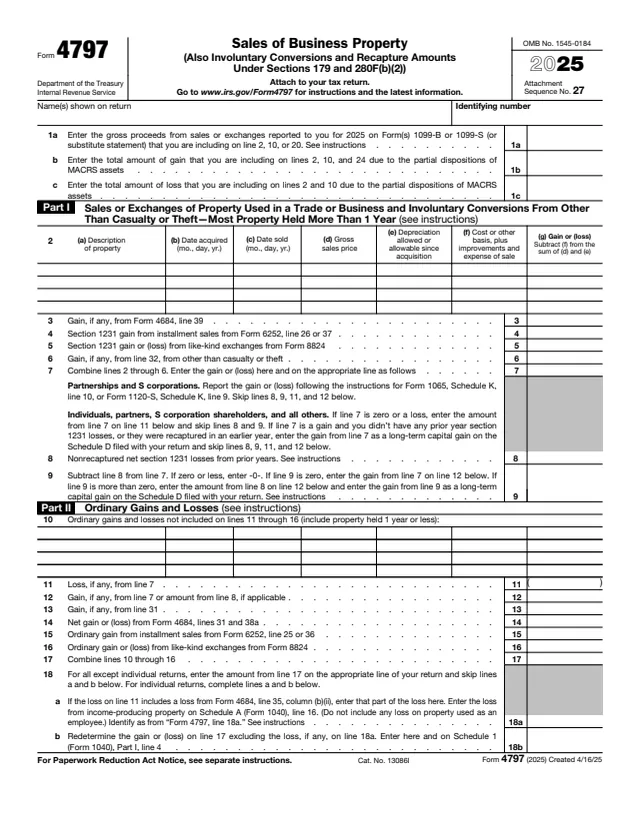
4797
182 fields, 2 pages
6252
49 fields, 4 pages
No tool matches that search.
Maybe not. Exception 1 in the Form 1040 instructions lets you skip Form 8949 and Schedule D if you have no capital losses, your only capital gains are distributions from Form 1099-DIV box 2a, boxes 2b, 2c and 2d are empty, and you aren't deferring gain in a qualified opportunity fund.
Up to your capital gains plus $3,000, or $1,500 if married filing separately. The instructions say losses above that limit may be usable in future years.
Form 8949 lists individual sales. Schedule D adds up the totals and figures your net gain or loss.
The Form 8949 instructions say the holding period for short-term gains and losses is generally 1 year or less. More than 1 year is generally long-term.
No. The instructions say a loss from the sale or exchange of a capital asset held for personal use isn't deductible.