Part I, lines 1a and 1b
The starting point, taken from Form 1040, 1040-SR, or 1040-NR and Schedule 1-A (Form 1040), line 37, which holds the enhanced deduction for seniors.
6251
Alternative Minimum Tax—Individuals
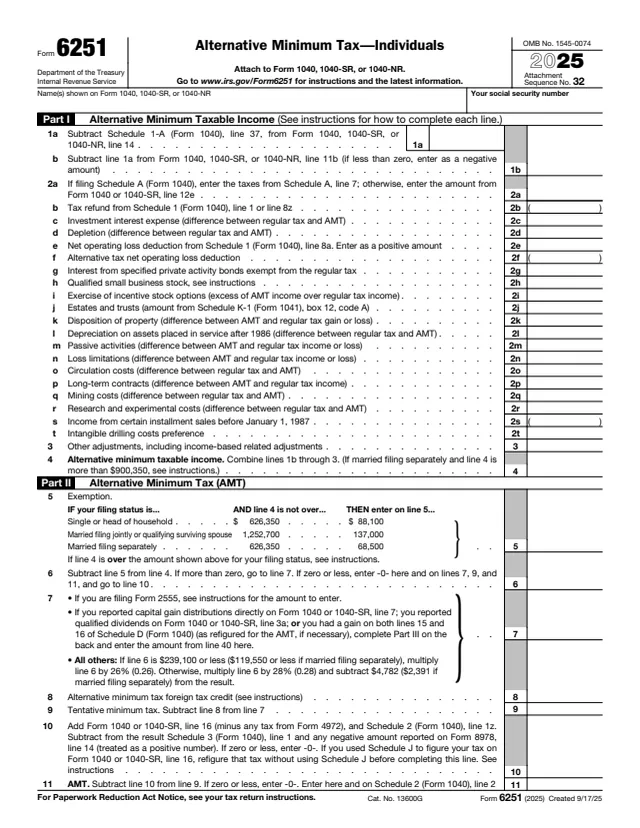
Form 6251 is the IRS form individuals use to figure the amount, if any, of their alternative minimum tax (AMT). It is attached to Form 1040, 1040-SR, or 1040-NR. The instructions describe the AMT as a separate tax imposed in addition to the regular tax. It applies to taxpayers who have certain types of income that receive favorable treatment, or who qualify for certain deductions, under the tax law, and it sets a limit on how much those benefits can reduce total tax.
The form starts from amounts on your Form 1040, 1040-SR, or 1040-NR, adds the items that are figured differently for the AMT, subtracts an exemption, and compares the tentative minimum tax with your regular tax. The instructions say the form is also used to figure tentative minimum tax on line 9, which some credits need for their tax liability limit.
This page covers the 2025 form. You can fill it out free in your browser on this page and download the result without an account.
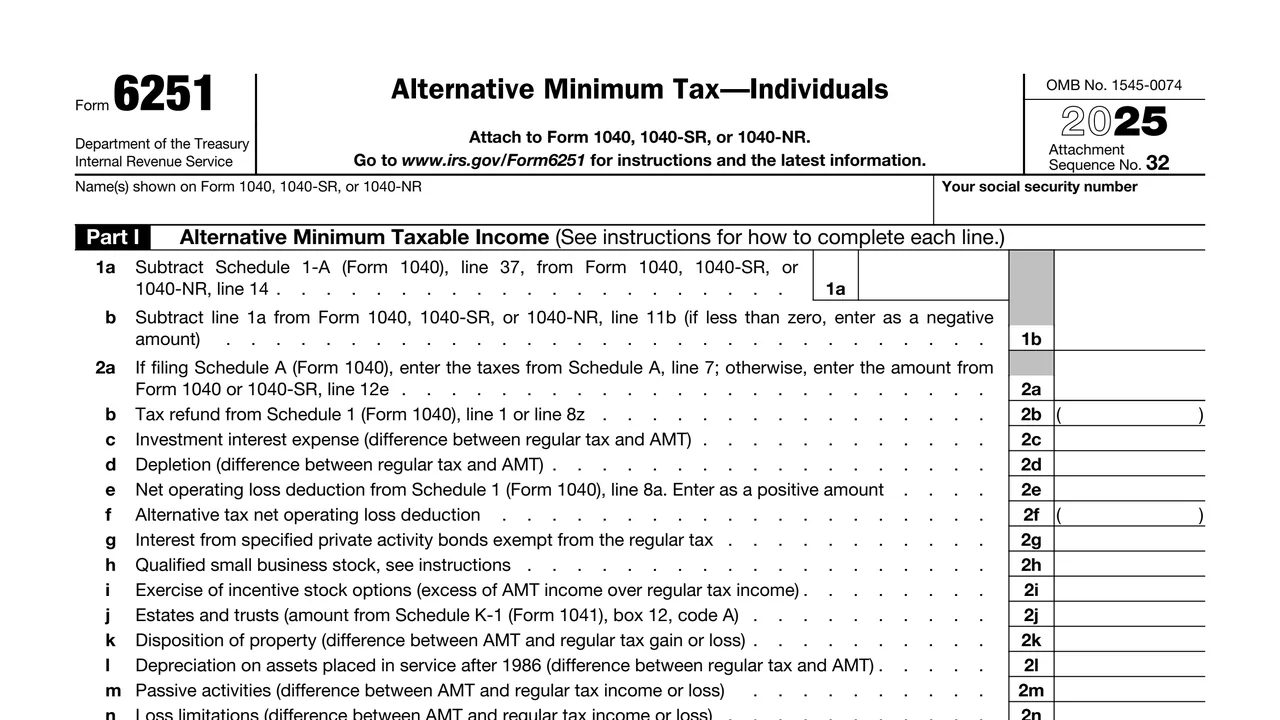
The starting point, taken from Form 1040, 1040-SR, or 1040-NR and Schedule 1-A (Form 1040), line 37, which holds the enhanced deduction for seniors.
Twenty adjustment and preference lines, such as taxes, tax refunds, investment interest, private activity bond interest, incentive stock options, depreciation and passive activities.
Line 3 holds other adjustments, including income-based related adjustments. Line 4 combines lines 1b through 3 into alternative minimum taxable income.
The exemption chart by filing status, then line 6, which subtracts the exemption from line 4.
The tax on line 7, the AMT foreign tax credit on line 8, tentative minimum tax on line 9, the regular tax amount on line 10 and the AMT on line 11.
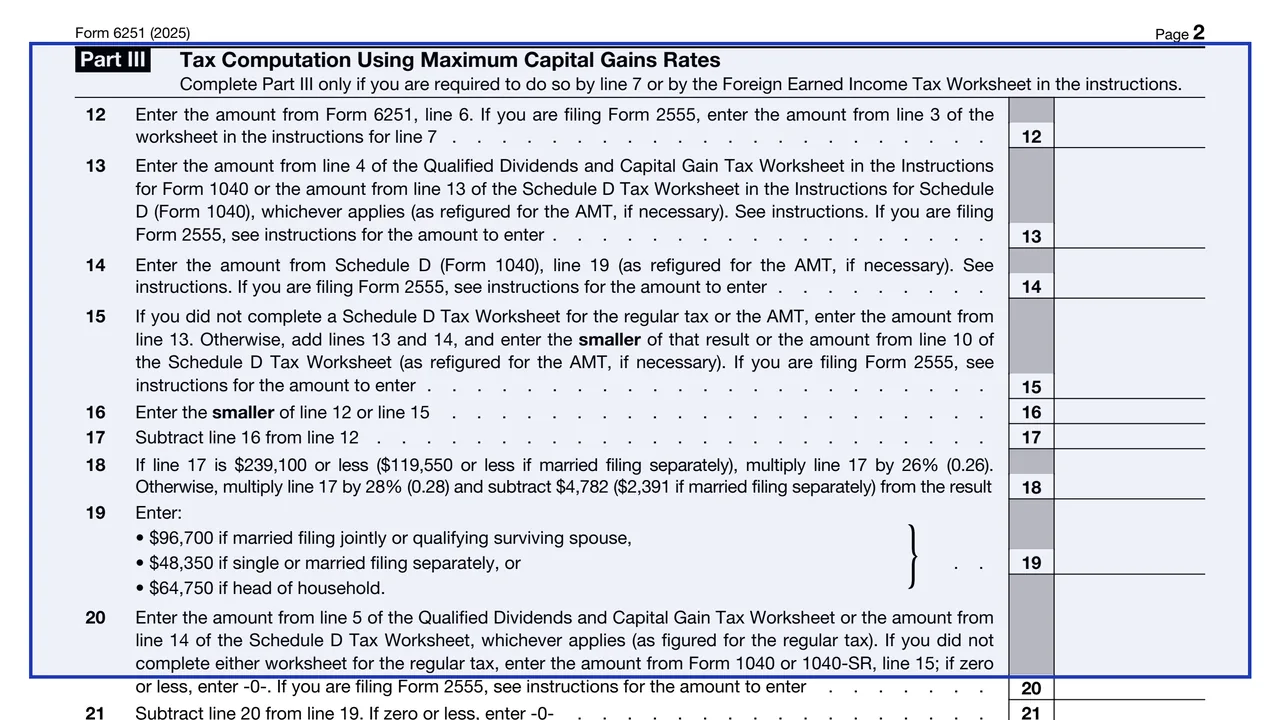
Tax computation using maximum capital gains rates. The form says to complete it only if line 7 or the Foreign Earned Income Tax Worksheet in the instructions requires it.
On line 1a, subtract Schedule 1-A (Form 1040), line 37, from line 14 of Form 1040, 1040-SR, or 1040-NR. On line 1b, subtract line 1a from line 11b of the same return; if less than zero, enter it as a negative amount.
Line 2a takes the taxes from Schedule A, line 7, or the standard deduction from Form 1040 or 1040-SR, line 12e, if you are not filing Schedule A. Line 2b holds the tax refunds the instructions describe, entered as a negative amount.
Enter each difference between regular tax and AMT that applies. For example, line 2i holds the excess of the stock's fair market value over the amount paid when an incentive stock option is exercised, as the instructions explain.
Combine lines 1b through 3. The form says that if you are married filing separately and line 4 is more than $900,350, see the instructions for an additional amount.
Enter the exemption for your filing status from the chart. If line 4 is over the amount shown, the instructions point to the Exemption Worksheet. Subtract line 5 from line 4 on line 6.
Figure line 7 from the bullet that applies to you, or from Part III. Subtract the AMT foreign tax credit, figure line 10 from your return, and enter the AMT on line 11 and on Schedule 2 (Form 1040), line 2.
You get the real form, filled in a browser tab, with nothing standing between you and the finished PDF.
Attach Form 6251 to Form 1040, 1040-SR, or 1040-NR. The amount on line 11 is also entered on Schedule 2 (Form 1040), line 2.
The instructions say some items are refigured by completing a form or worksheet a second time. Do not attach that AMT version unless instructed to do so, such as an AMT Form 1116.
The instructions say to keep records that show how you figured income, deductions and other items for the AMT, including carrybacks, carryforwards, basis and depreciation that differ from the regular tax.
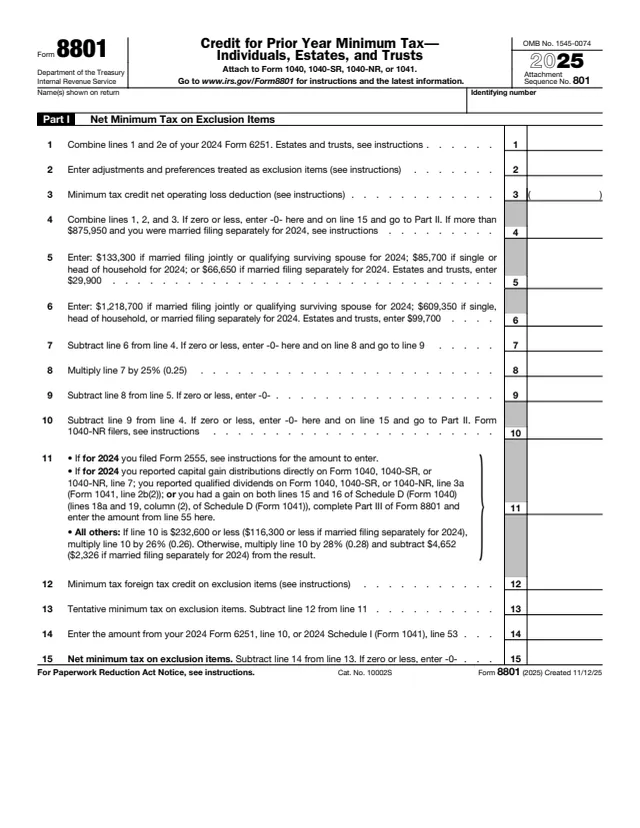
The instructions say that if you pay AMT for 2025, you may be able to take a credit on Form 8801 for 2026.
The instructions note that the standard deduction is not allowed for the AMT, and that a filer who owes AMT may be able to lower total tax by itemizing even when itemized deductions are below the standard deduction.
8801
57 fields, 4 pages
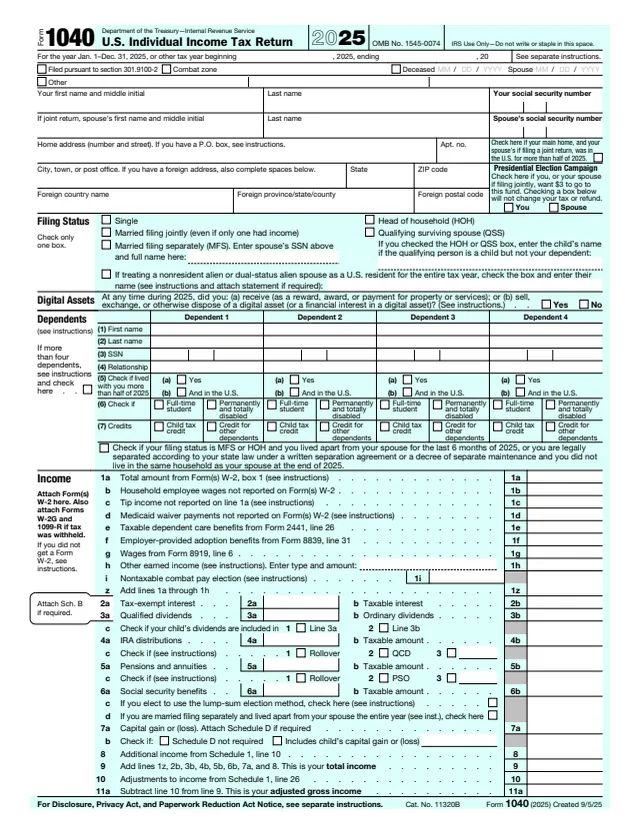
1040
199 fields, 2 pages
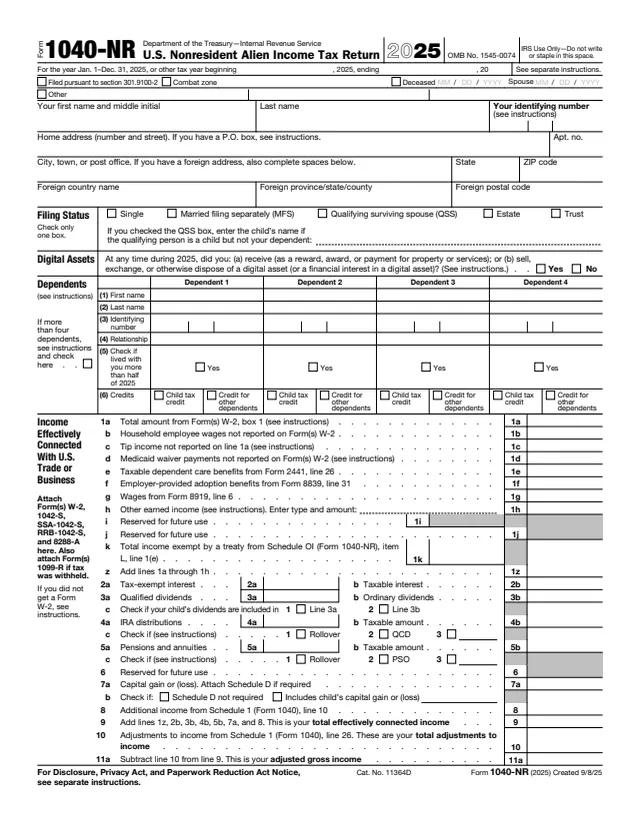
1040-NR
171 fields, 2 pages
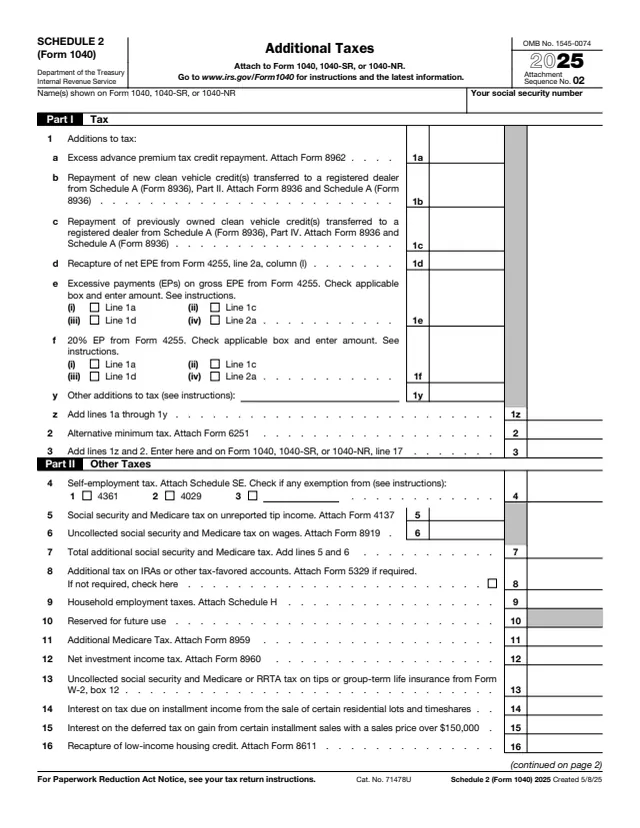
1040
63 fields, 2 pages
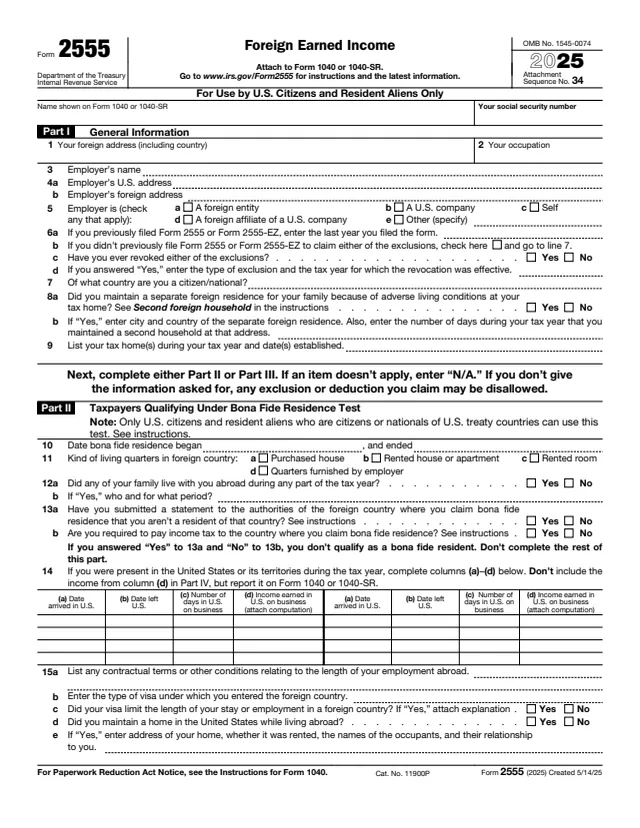
2555
160 fields, 3 pages
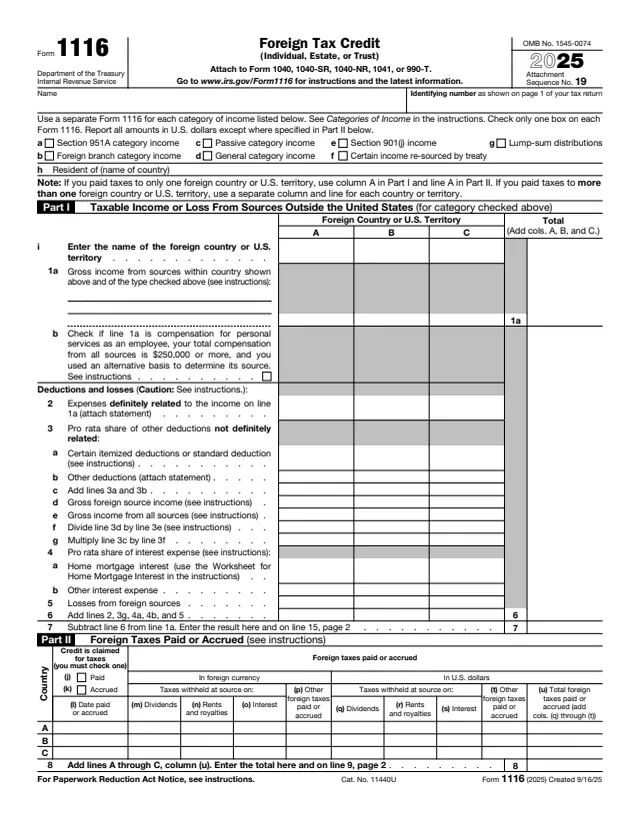
1116
118 fields, 2 pages
The instructions say to attach Form 6251 to your return if any of the statements below is true.
No tool matches that search.
The instructions describe it as a separate tax imposed in addition to the regular tax. It limits how much certain income that receives favorable treatment, and certain deductions, can reduce total tax.
The instructions list when to attach it: line 7 is greater than line 10, you claim certain credits such as a general business credit or Form 8801, or lines 2c through 3 are negative and line 7 would otherwise exceed line 10.
The form lists $88,100 for single or head of household, $137,000 for married filing jointly or qualifying surviving spouse, and $68,500 for married filing separately, when line 4 is not over $626,350 ($1,252,700 for joint filers).
For 2025, line 7 uses 26% of line 6 if it is $239,100 or less ($119,550 or less if married filing separately). Otherwise it uses 28% minus $4,782 ($2,391 if married filing separately).
The form says to enter line 11 on Schedule 2 (Form 1040), line 2.
The instructions say that if you pay AMT for 2025, you may be able to take a credit on Form 8801 for 2026.