Medical and Dental Expenses, lines 1 to 4
Line 1 is the total after reimbursements, line 2 is the amount from Form 1040 or 1040-SR, line 11b, and line 3 is 7.5% of line 2. Line 4 is what is left, or zero.
1040
Itemized Deductions
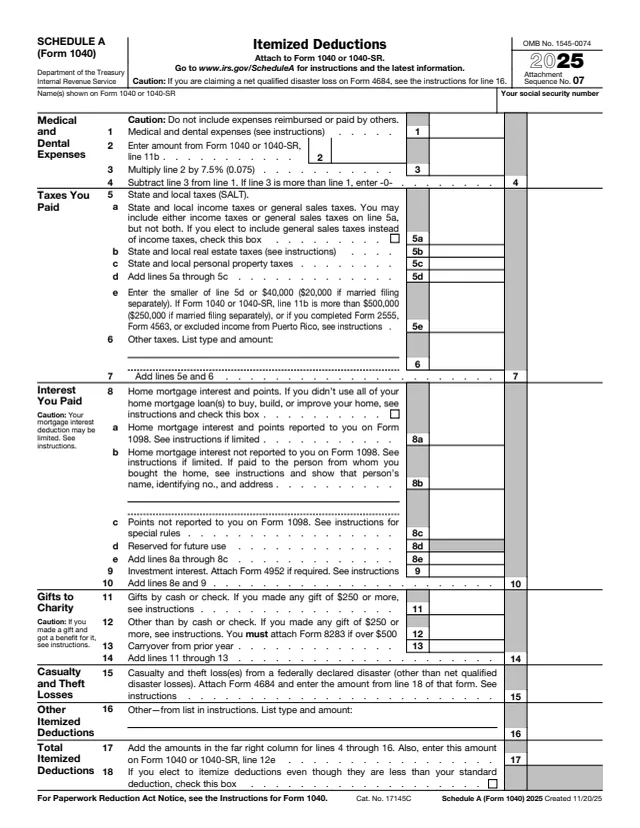
Schedule A is where itemized deductions are added up. The IRS page says to use it to figure your itemized deductions, and that in most cases your federal income tax will be less if you take the larger of your itemized deductions or your standard deduction.
The 2025 form has sections for medical and dental expenses, taxes you paid, interest you paid, gifts to charity, casualty and theft losses and a short list of other itemized deductions. Line 17 adds them up, and the form says to enter that total on Form 1040 or 1040-SR, line 12e.
The 2025 instructions note two changes. The overall limit on the state and local tax (SALT) deduction rose to $40,000 ($20,000 if married filing separately). And four new deductions, including no tax on tips and no tax on overtime, are claimed on Schedule 1-A, not on Schedule A.
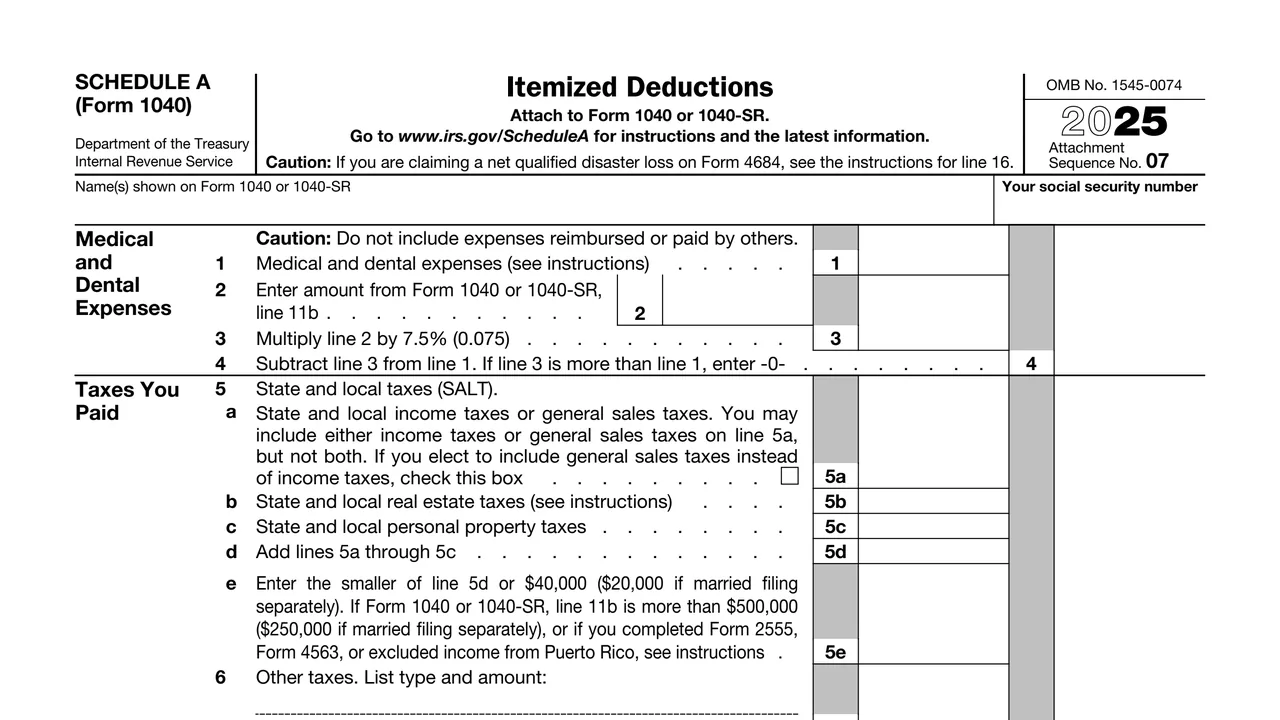
Line 1 is the total after reimbursements, line 2 is the amount from Form 1040 or 1040-SR, line 11b, and line 3 is 7.5% of line 2. Line 4 is what is left, or zero.
Line 5a takes state and local income taxes or general sales taxes, not both, then real estate taxes (5b) and personal property taxes (5c). Line 5e applies the $40,000 limit ($20,000 if married filing separately) printed on the 2025 form. Line 6 lists other taxes.
Home mortgage interest and points reported on Form 1098 (8a), interest not reported on Form 1098 (8b) and points not reported on Form 1098 (8c). Line 9 is investment interest, with Form 4952 attached if required.
Gifts by cash or check on line 11, other gifts on line 12 and a carryover from a prior year on line 13. The form says to attach Form 8283 if the line 12 amount is over $500.
Losses from a federally declared disaster, taken from Form 4684, line 18. The instructions allow them only to the extent each loss is more than $100 and the total, after that reduction, is more than 10% of Form 1040, line 11b.
Line 16 takes only items from the list in the instructions, such as gambling losses up to gambling winnings. Line 17 is the total for Form 1040 or 1040-SR, line 12e, and line 18 is the box to itemize anyway.
Form 1098 for mortgage interest, Forms W-2 for state and local income tax withheld, real estate tax records, medical bills and the records or acknowledgments for each gift to charity.
Enter expenses after insurance and other reimbursements. The instructions say to fill out Form 8962 before line 1 if advance payments of the premium tax credit were made.
Check the box on line 5a if you deduct general sales taxes instead of income taxes. The instructions allow actual receipts, the optional sales tax tables or the IRS Sales Tax Deduction Calculator.
Use line 8a for amounts on Form 1098. The instructions say to check the box on line 8 if loan proceeds weren't all used to buy, build or substantially improve the home, and to see Pub. 936 when a limit applies.
Enter gifts on lines 11 to 13 and any disaster loss on line 15. Attach Form 8283 or Form 4684 where the form calls for them.
Add the far right column for lines 4 through 16 and carry the total to Form 1040 or 1040-SR, line 12e. You can fill this form free on this page.
You get the real form, filled in a browser tab, with nothing standing between you and the finished PDF.
Schedule A is attached to Form 1040 or 1040-SR and is due with it.
Attach it to your return when you mail it, or let tax software transmit it when you e-file.
The IRS form is free.
The instructions say not to attach charity acknowledgments or cash contribution records to the return, but to keep them with your other tax records.
The instructions say not to include items deducted elsewhere, such as on Form 1040, Form 1040-SR, Schedule 1-A or Schedule C, E or F.
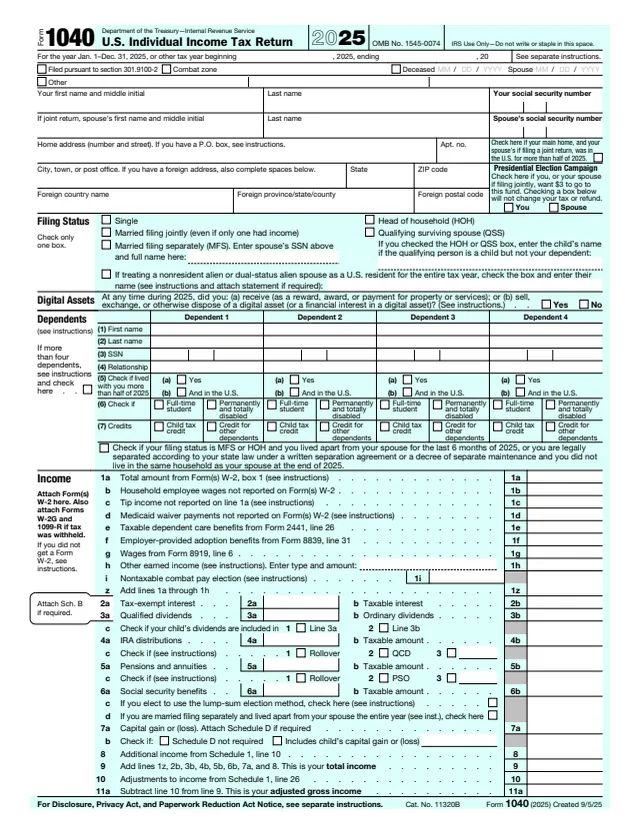
1040
199 fields, 2 pages
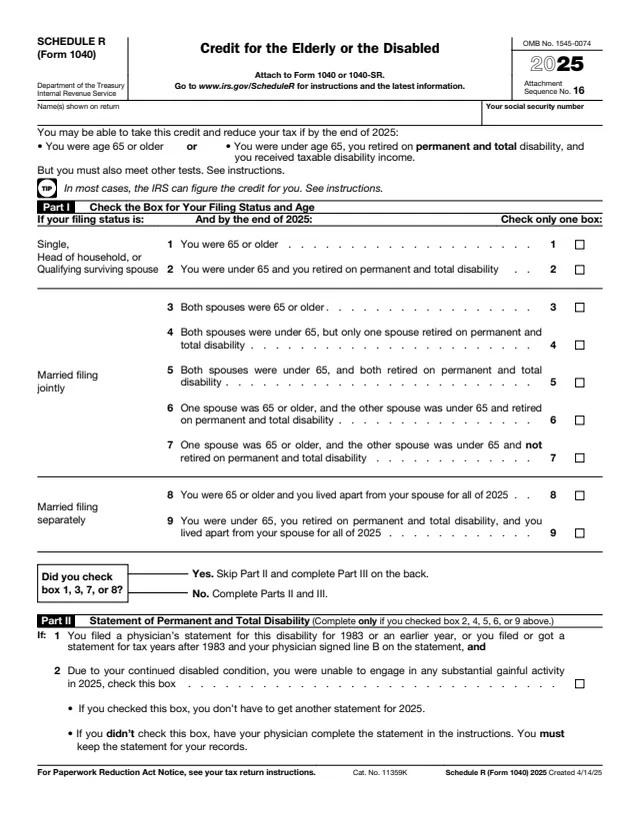
1040
27 fields, 2 pages
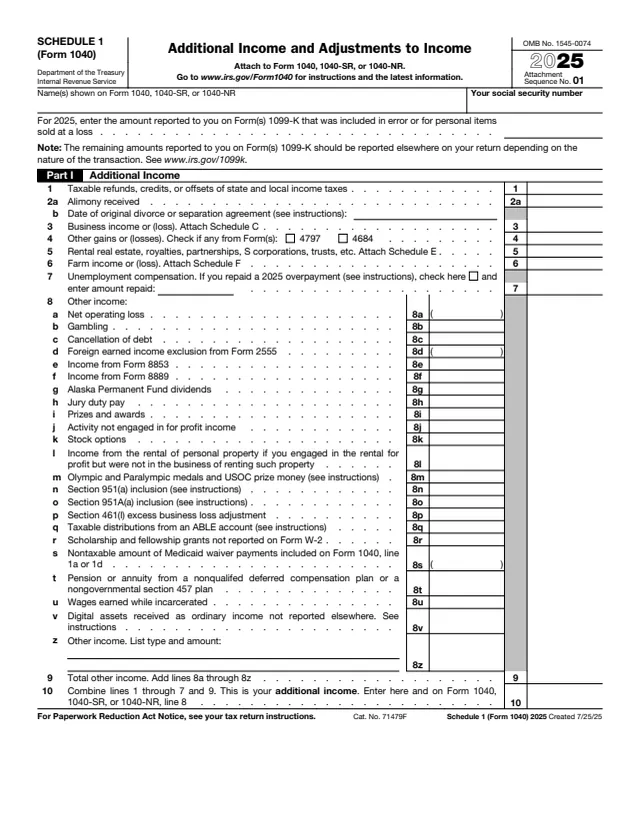
1040
73 fields, 2 pages
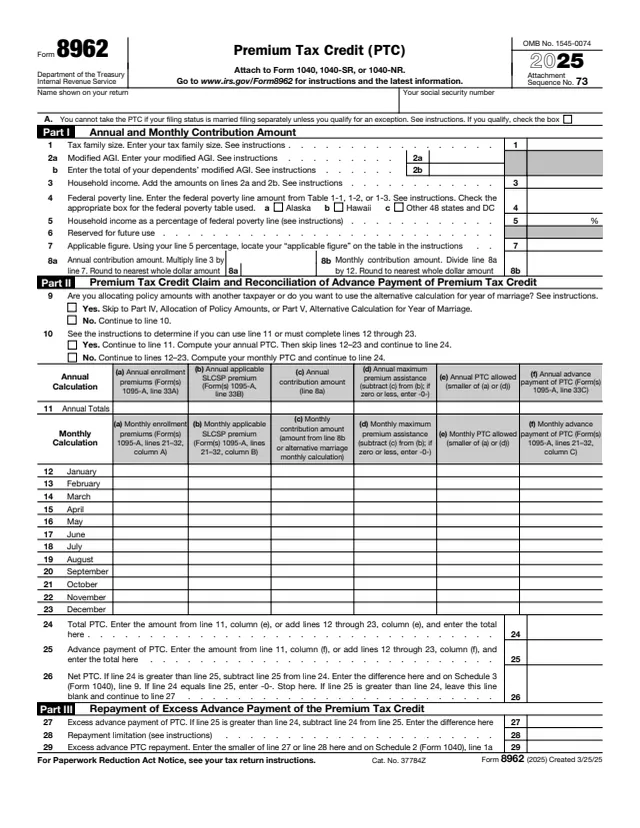
8962
141 fields, 2 pages
1098
41 fields, 4 pages
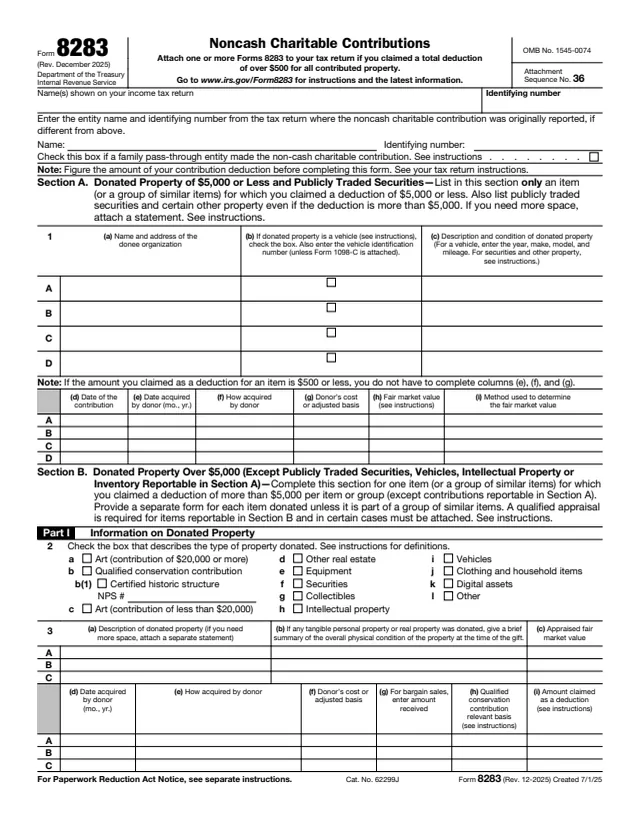
8283
117 fields, 2 pages
No tool matches that search.
The IRS page says that in most cases your federal income tax will be less if you take the larger of your itemized deductions or your standard deduction. Schedule A is where the itemized total is figured.
The 2025 instructions put the overall limit for state and local income, sales and property taxes at $40,000 ($20,000 if married filing separately). They say it is reduced when modified adjusted gross income is more than $500,000 ($250,000 if married filing separately), but not below $10,000 ($5,000 if married filing separately).
Only the part above 7.5% of the amount on Form 1040 or 1040-SR, line 11b. The form says not to include expenses reimbursed or paid by others.
No. Line 5a says you may include either income taxes or general sales taxes, but not both. The box on line 5a is checked when sales taxes are chosen.
No. The 2025 instructions say those deductions, along with no tax on car loan interest and the enhanced deduction for seniors, are claimed on Schedule 1-A, even if you itemize.
The instructions say a cash gift of any amount needs a bank record or a written record from the charity, and a gift of $250 or more also needs a contemporaneous written acknowledgment. They are kept with your records, not attached to the return.