1040

Additional Income and Adjustments to Income

Agency
IRS
Revision
2025
Fillable fields
73
Pages
2
Official source
IRS form page
Checked
October 19, 2026
Fill 1040 online
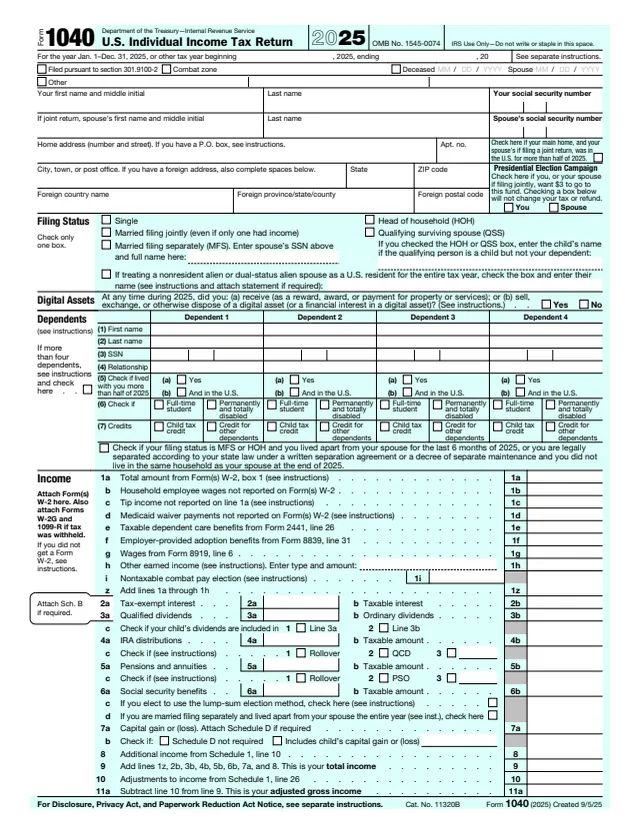
Page 1 of form 1040

Schedule 1 (Form 1040): Additional Income and Adjustments to Income

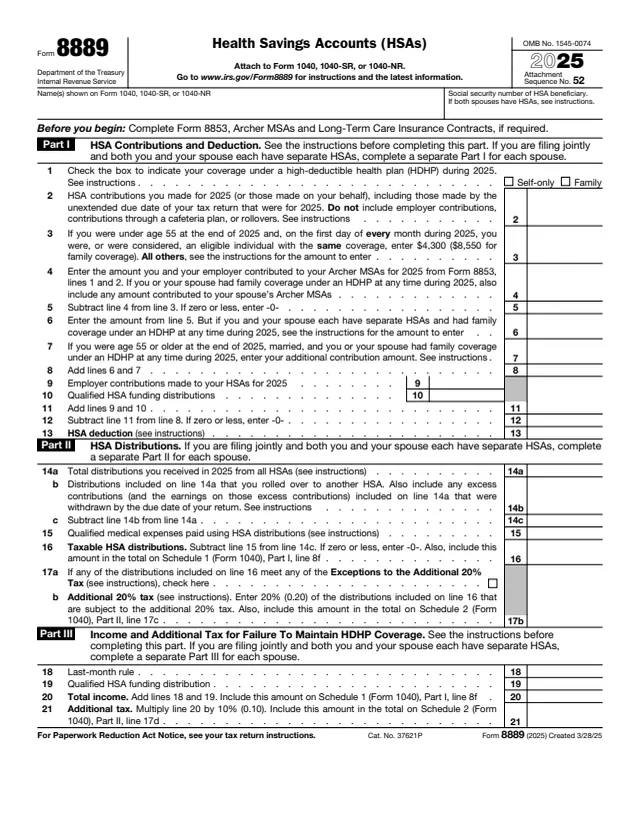
Schedule 1 is the attachment for income and adjustments that have no line of their own on Form 1040. The instructions say to use it to report income or adjustments to income that can't be entered directly on Form 1040, 1040-SR or 1040-NR.

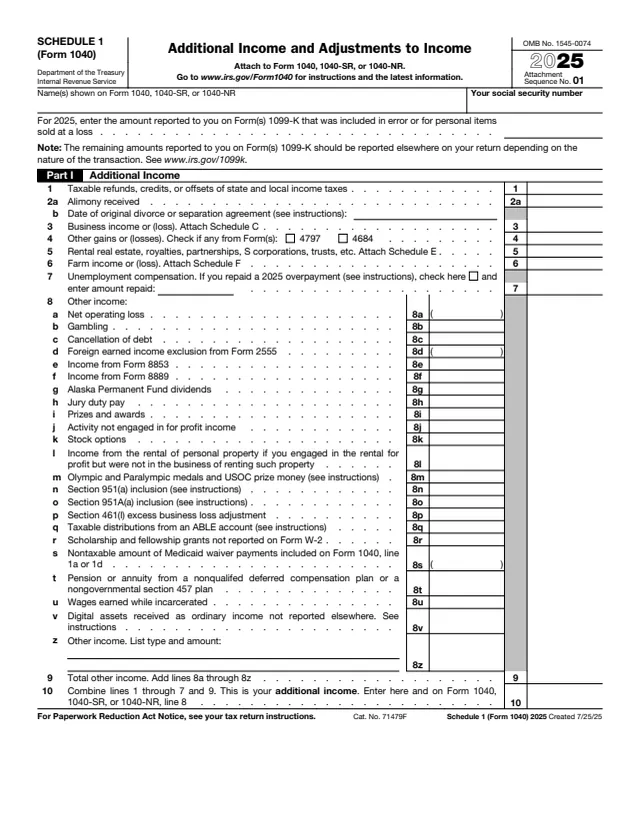
Part I adds up additional income, such as business profit from Schedule C, unemployment compensation, gambling winnings and prizes. Its total on line 10 goes to Form 1040, line 8. Part II adds up adjustments to income, such as educator expenses, the deductible part of self-employment tax and student loan interest. Its total on line 26 goes to Form 1040, line 10.

If none of its lines apply to you, the return doesn't need it.

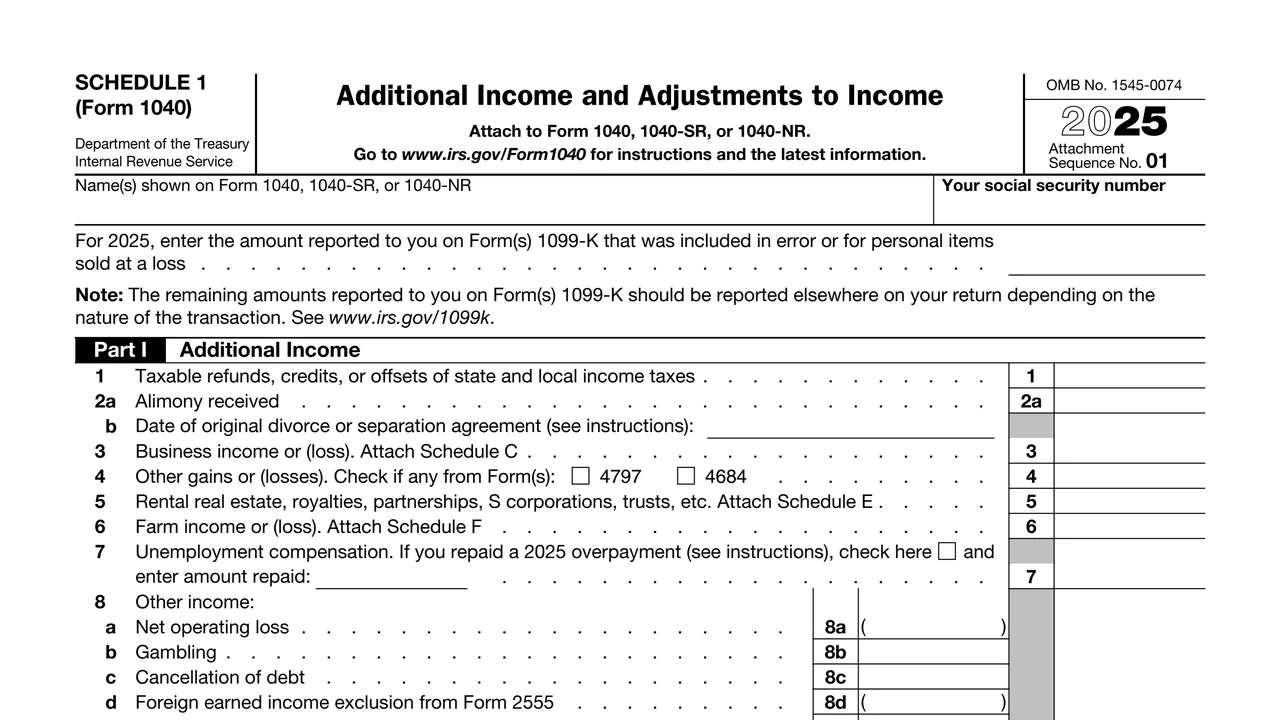
Top of page 1 of Schedule 1 (Form 1040): Additional Income and Adjustments to Income, as printed by IRS

What's on Schedule 1

Form 1099-K line at the top

For 2025, the form asks for any amount reported to you on Form 1099-K that was included in error or for personal items sold at a loss. The rest of a 1099-K is reported elsewhere on the return, depending on the transaction.
Part I, lines 1 to 7

State and local tax refunds on line 1, alimony received on line 2a, business income on line 3, other gains on line 4, Schedule E income on line 5, farm income on line 6 and unemployment compensation on line 7.

Part I, line 8: Other income

Lines 8a to 8z list other income, including a net operating loss (8a), gambling (8b), cancellation of debt (8c), prizes and awards (8i) and digital assets received as ordinary income (8v). Line 9 totals them.

Line 10: Additional income

Combine lines 1 through 7 and 9. The result goes on Form 1040, 1040-SR or 1040-NR, line 8.

Part II, lines 11 to 23

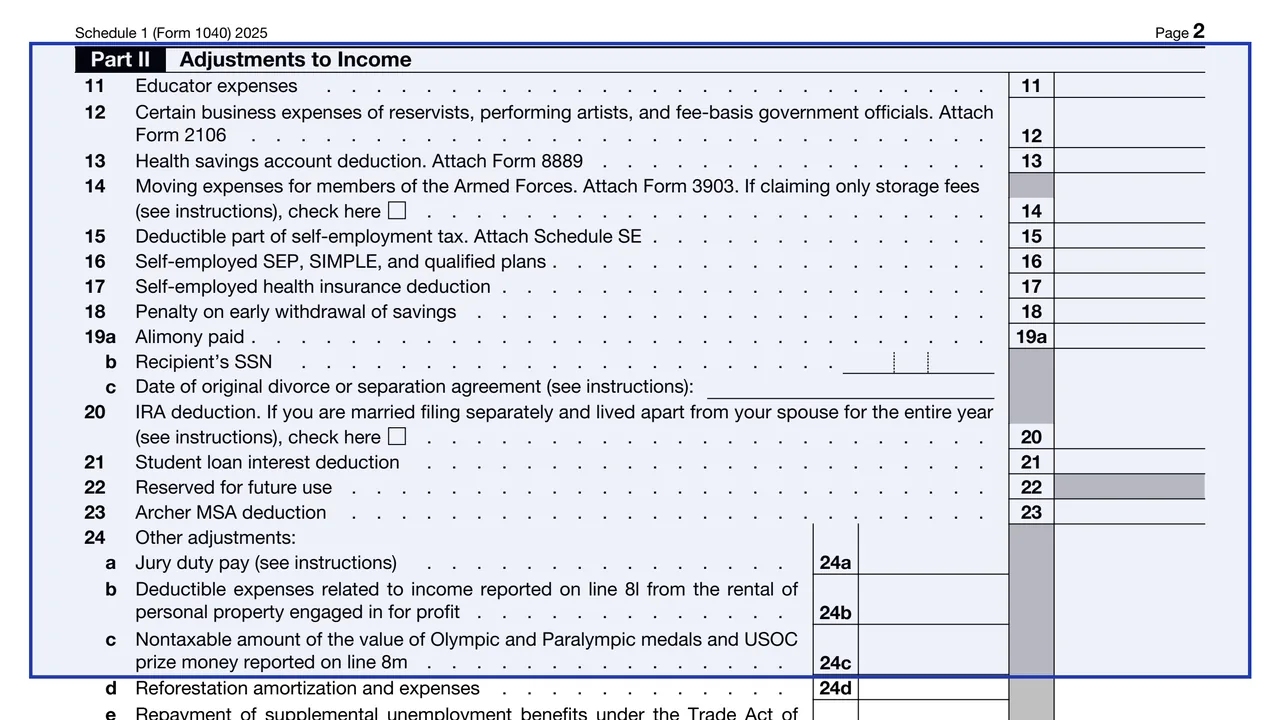
Educator expenses (11), the HSA deduction (13), the deductible part of self-employment tax (15), self-employed retirement plans (16) and health insurance (17), alimony paid (19a), the IRA deduction (20) and student loan interest (21).

Line 24: Other adjustments

Lines 24a to 24z list less common adjustments, such as jury duty pay (24a), reforestation amortization and expenses (24d) and the housing deduction from Form 2555 (24j). Line 25 totals them.

Line 26: Adjustments to income

Add lines 11 through 23 and 25. The result goes on Form 1040, 1040-SR or 1040-NR, line 10.

How to fill out Schedule 1

  1. 1

    Check the Form 1099-K line first

    If a 1099-K included payments sent to you in error or for personal items you sold at a loss, enter that amount at the top. Other 1099-K amounts go where the transaction belongs.

  2. 2

    Finish the schedules that feed Part I

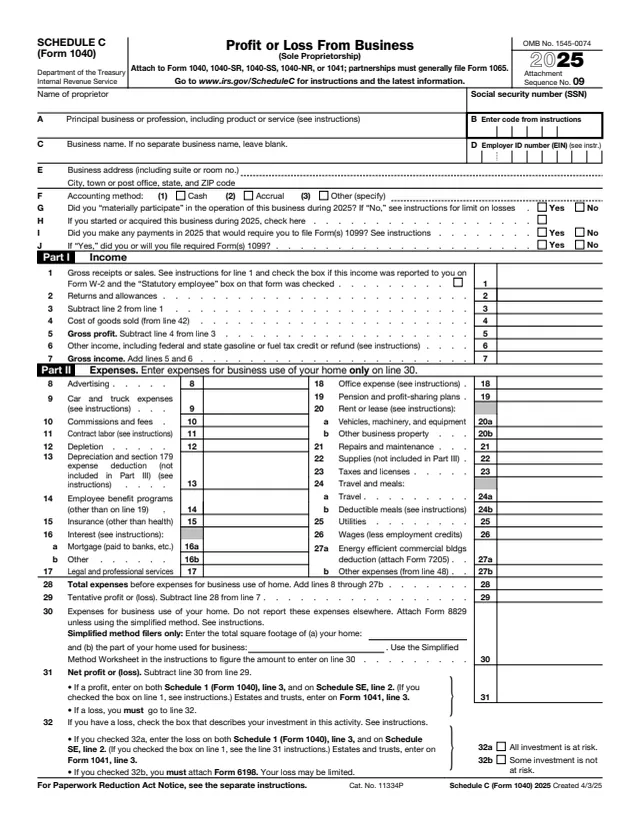
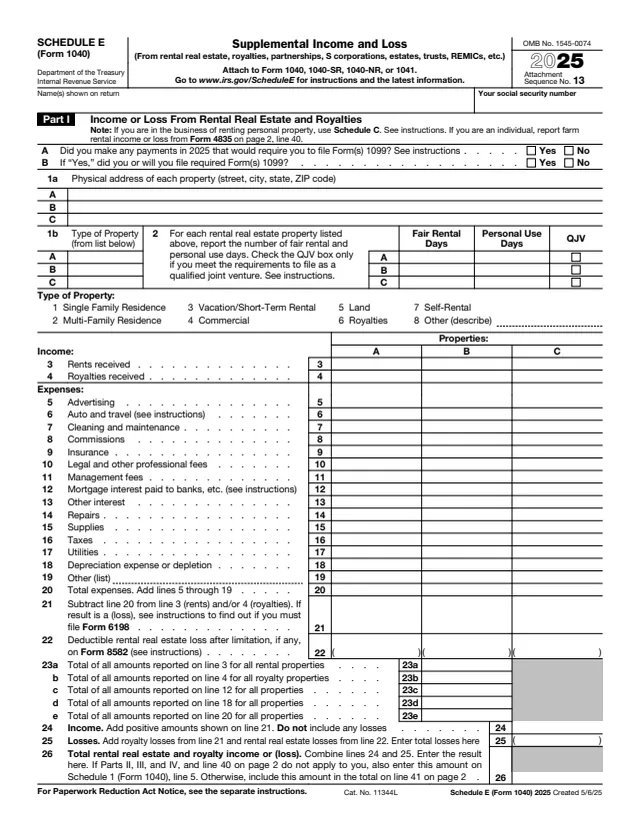
    Lines 3, 5 and 6 come from Schedule C, Schedule E and Schedule F. Complete those first and carry their results over.

  3. 3

    Enter other income on line 8

    Use the lettered line that matches each item. Anything without its own line goes on 8z with its type and amount.

  4. 4

    Carry line 10 to Form 1040

    Line 10 is your additional income, and it goes on Form 1040, line 8.

  5. 5

    Enter adjustments in Part II

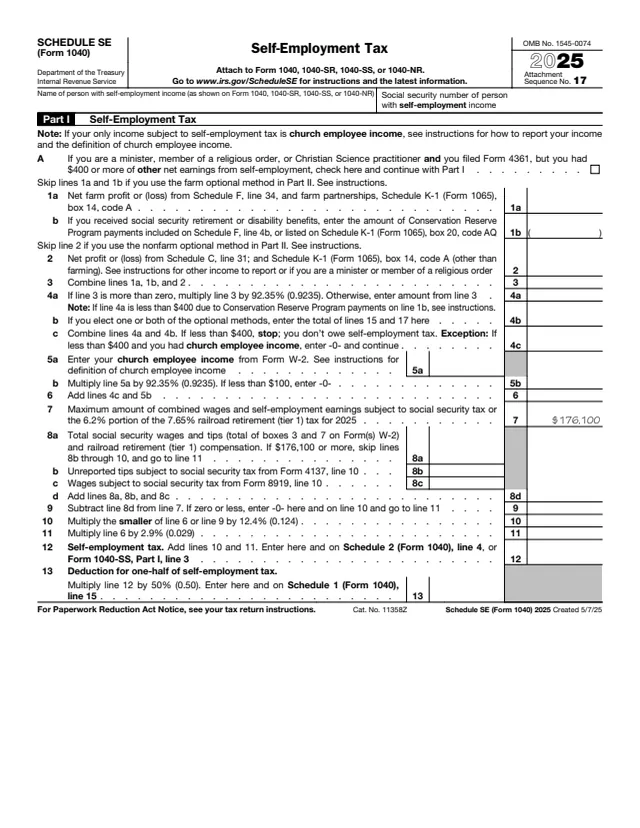
    Some lines need another form attached: Schedule SE for line 15 and Form 8889 for the HSA deduction on line 13.

  6. 6

    Carry line 26 to Form 1040

    Line 26 is your adjustments to income, and it goes on Form 1040, line 10. You can fill this form free on this page.

Why fill Form 1040 on indox

You get the real form, filled in a browser tab, with nothing standing between you and the finished PDF.

  • Fill the form right in your browser, no software to install
  • Free to fill and free to download, with no account
  • The official blank straight from the IRS, not a copy someone retyped
  • Works on a phone, tablet or computer

Deadlines, fees and where to send Schedule 1

Deadline

Schedule 1 is attached to Form 1040, 1040-SR or 1040-NR and is due with it.

Where it goes

Attach it to your return when you mail it, or let tax software transmit it when you e-file.

Cost

The IRS form is free.

Records

Keep the Forms 1099 and the schedules behind each line you fill.

Schedule 1-A is a different form

Schedule 1-A reports additional deductions, such as qualified tips and qualified overtime compensation. It is separate from Schedule 1.

Who files Schedule 1?

  • Self-employed people

    Line 3 takes business income or loss from Schedule C. Part II has lines for the deductible part of self-employment tax, self-employed retirement plans and self-employed health insurance.

  • People who received unemployment

    Line 7 is for unemployment compensation. The instructions say you should receive a Form 1099-G showing the total paid to you in box 1.

  • Landlords, partners and farmers

    Line 5 takes rental real estate, royalty, partnership, S corporation and trust income from Schedule E. Line 6 takes farm income or loss from Schedule F.

  • People with other income or adjustments

    Line 8 lists other income such as gambling, jury duty pay and prizes and awards. Part II covers adjustments such as educator expenses, the HSA deduction and student loan interest.

Official sources and the blank

Do it all with indox

View all 94 tools

Questions about Form 1040

Does everyone need Schedule 1?

No. The instructions say to use it for income or adjustments that can't be entered directly on Form 1040, 1040-SR or 1040-NR. If none of its lines apply, the return doesn't need it.

Where do the Schedule 1 totals go?

The Part I total on line 10 goes to Form 1040, line 8. The Part II total on line 26 goes to Form 1040, line 10.

Where do unemployment benefits go?

On line 7. The instructions say you should receive a Form 1099-G showing the total unemployment compensation paid to you in box 1.

Where do gambling winnings go?

On line 8b. The instructions say to enter gambling winnings not attributable to a trade or business there.

Is Schedule 1 the same as Schedule 1-A?

No. Schedule 1-A reports additional deductions, such as qualified tips and qualified overtime compensation.