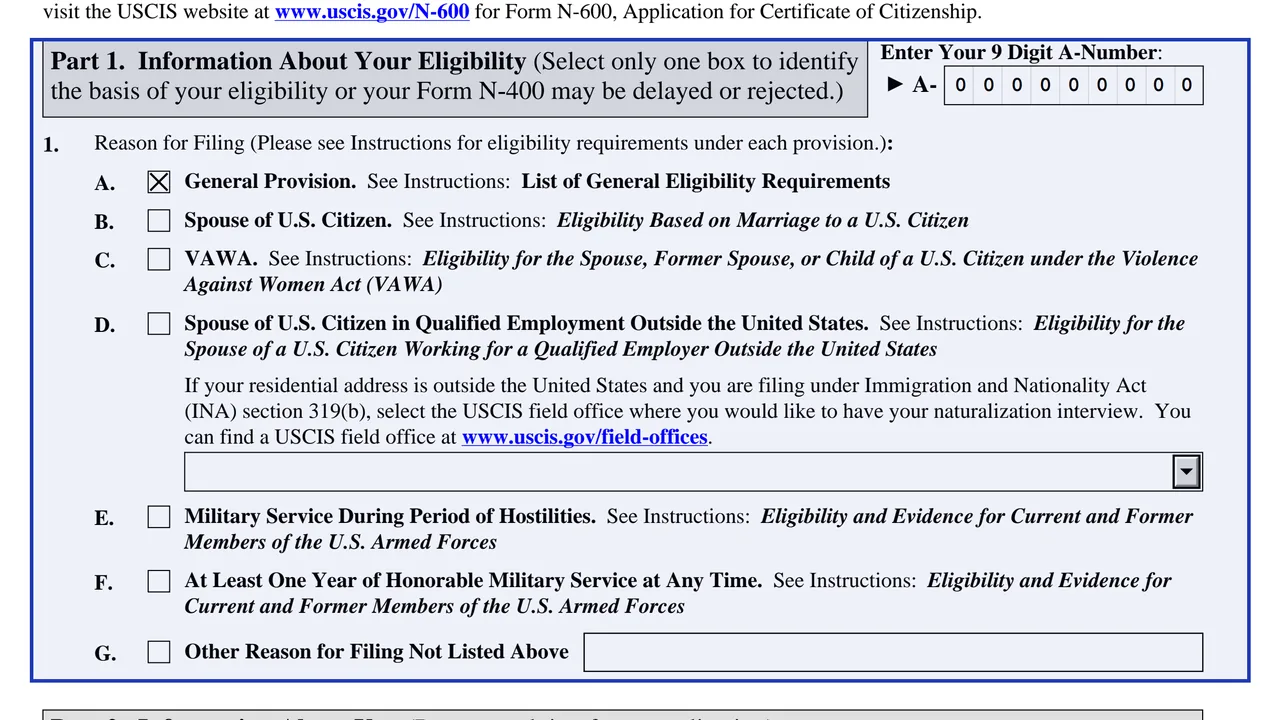
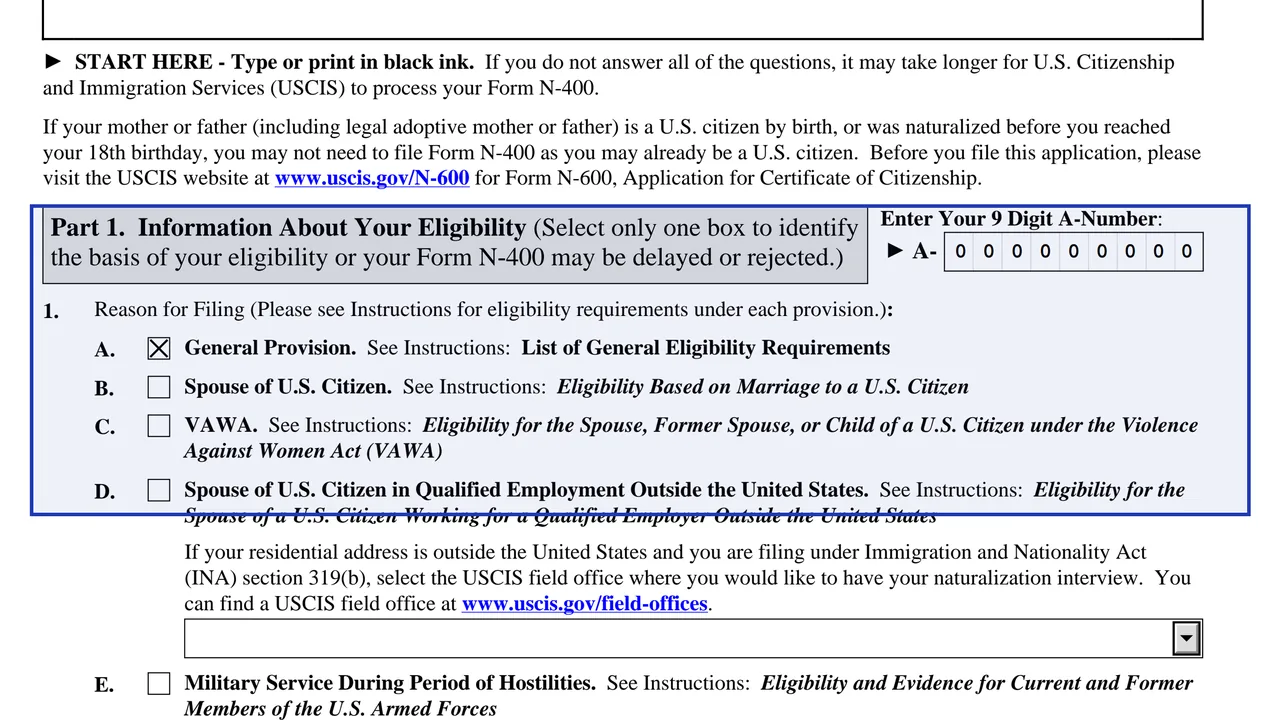
Part 1: Information about your eligibility
The basis for your application, such as 5 years as a permanent resident or 3 years as the spouse of a citizen.
N-400
Application for Naturalization
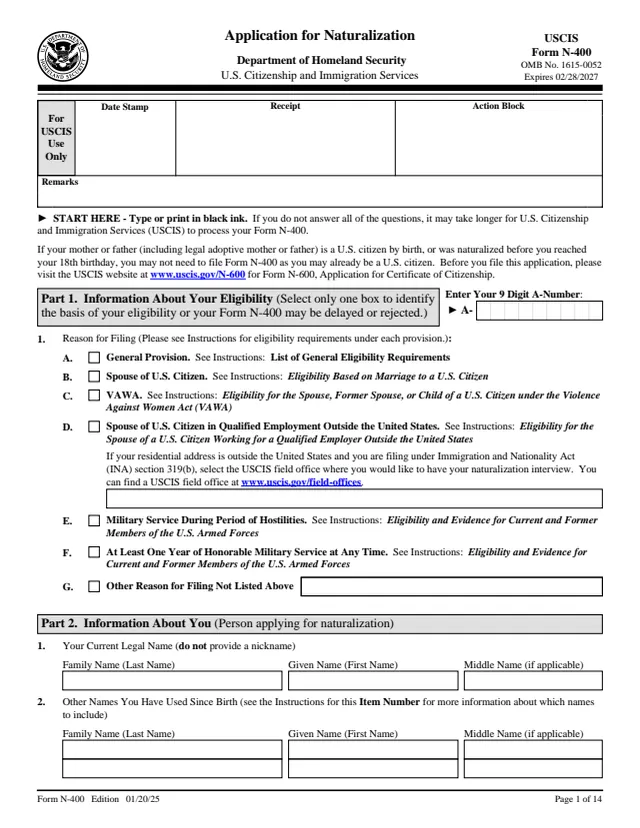
Form N-400 is the application to become a U.S. citizen through naturalization, for people who were born outside the United States and are not already citizens. Most applicants are lawful permanent residents who have held a Green Card for several years.
The form asks for your residence, marriages, children, jobs, schools, trips abroad, and a long list of background questions. USCIS uses it to decide whether you meet the requirements, then you attend a biometrics appointment, an interview with English and civics tests, and, if approved, an oath ceremony.
Because the answers go under oath, accuracy matters more than speed. The trip list, the address history and the background questions are the parts that most often need care.
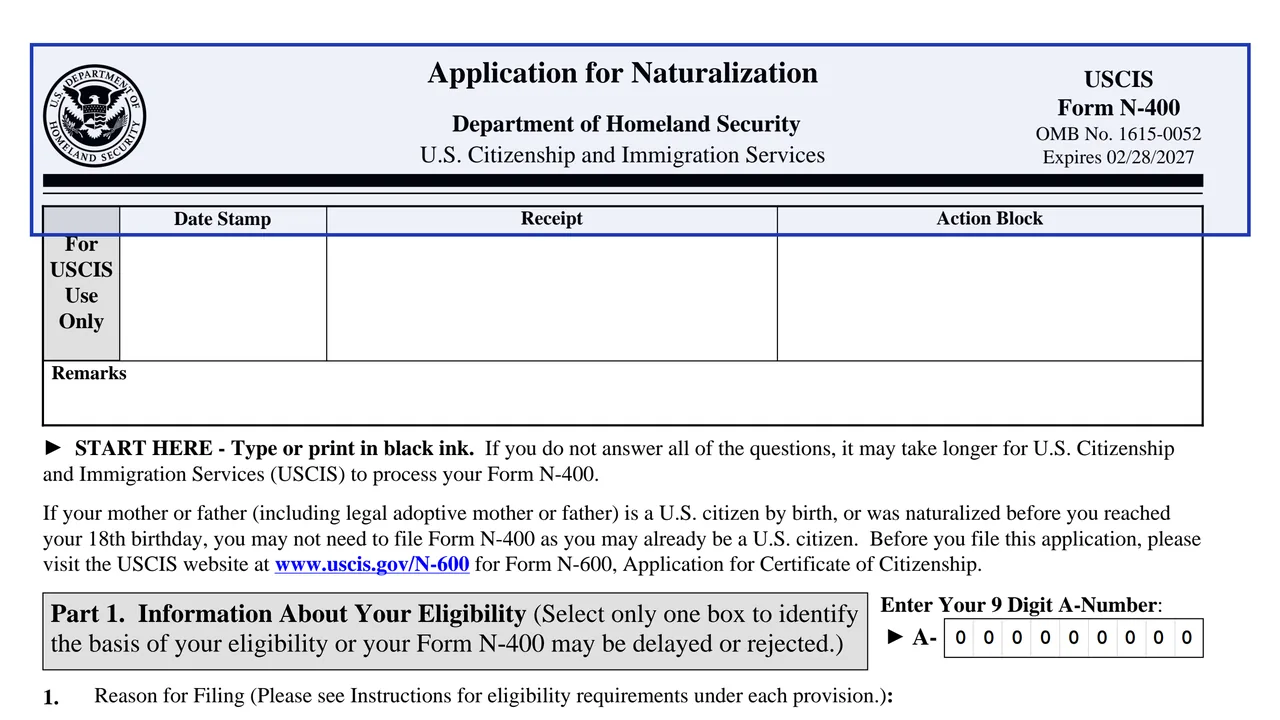
The basis for your application, such as 5 years as a permanent resident or 3 years as the spouse of a citizen.
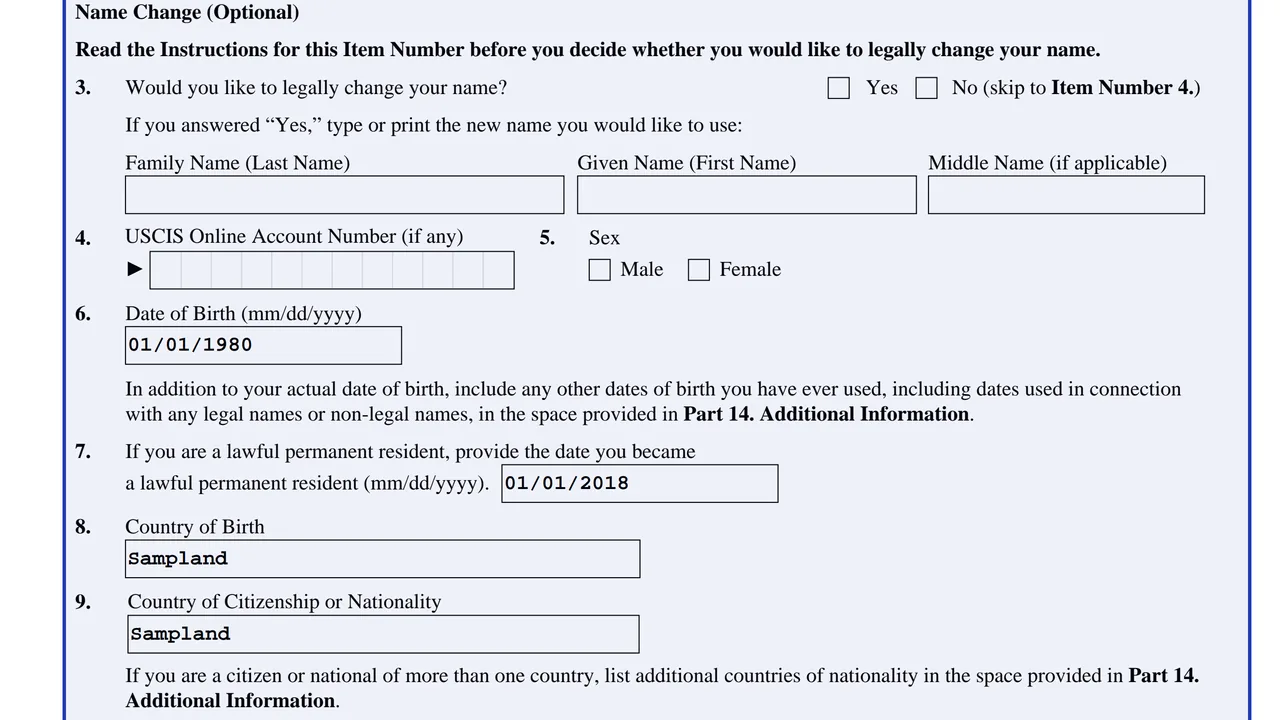
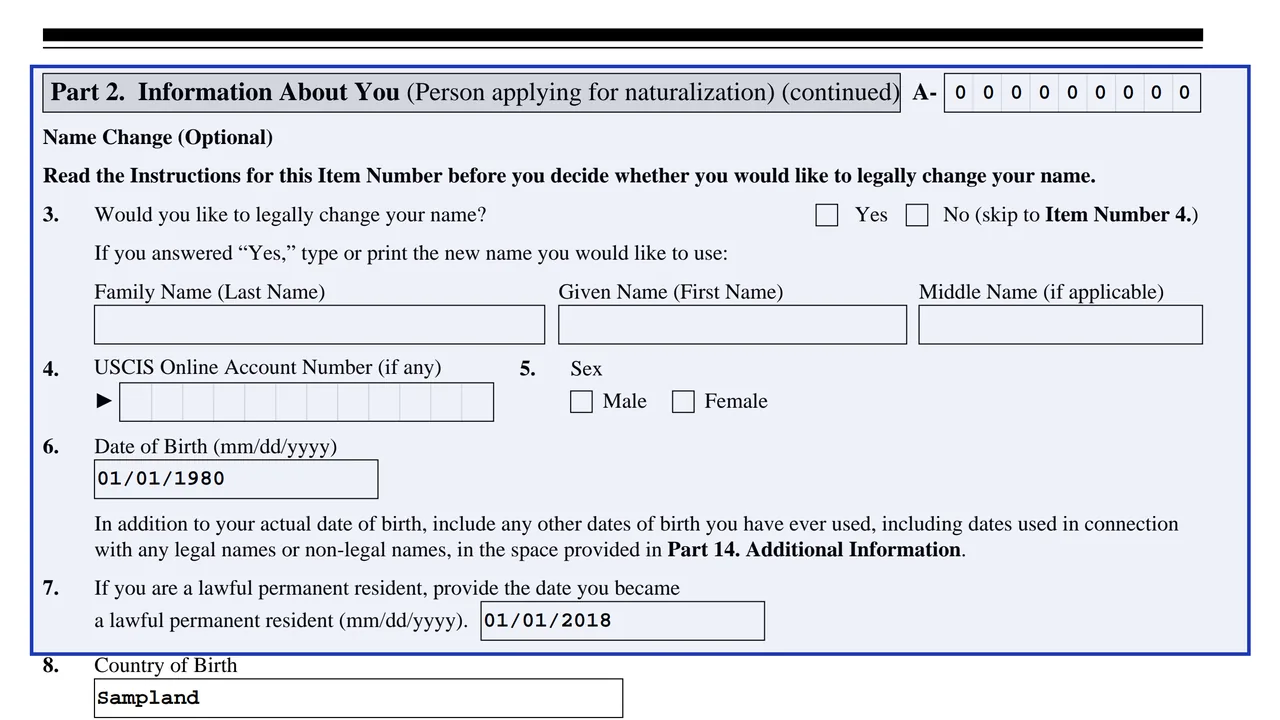
Name, A-Number, date of admission as a permanent resident, birth details, and a question about requesting a disability exception to the English and civics tests.
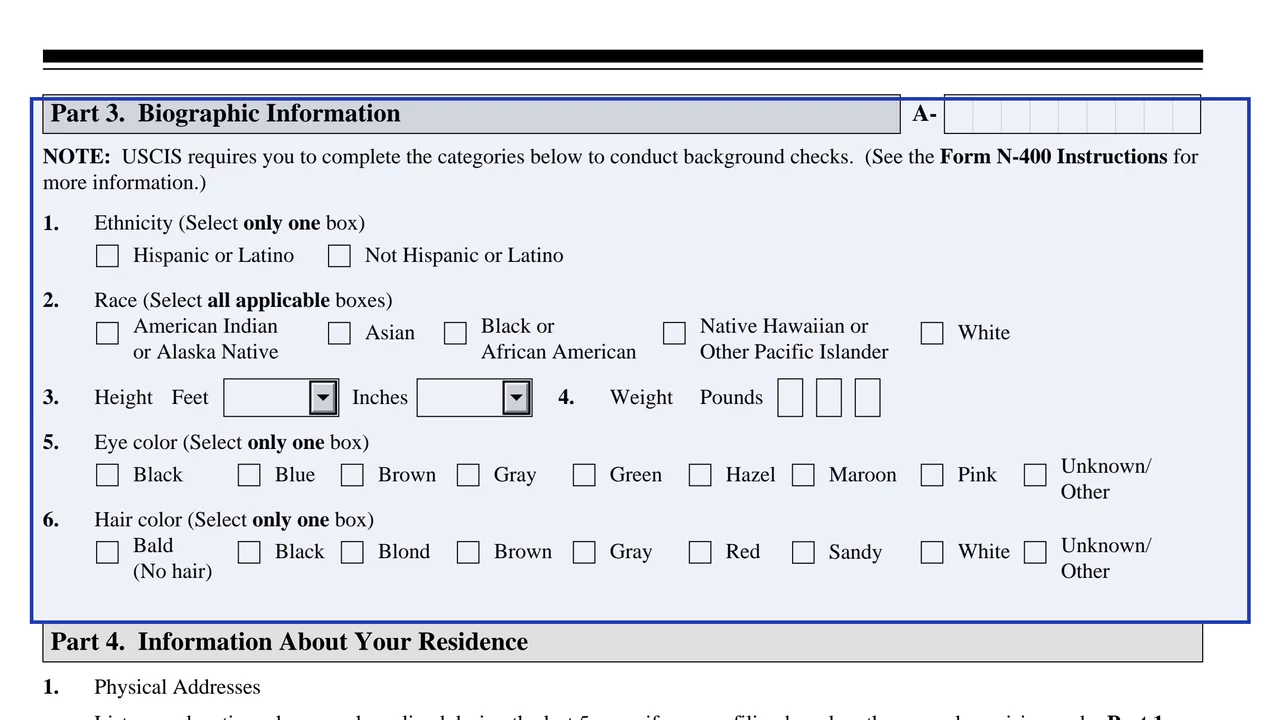
Ethnicity, race, height, weight, eye and hair color.
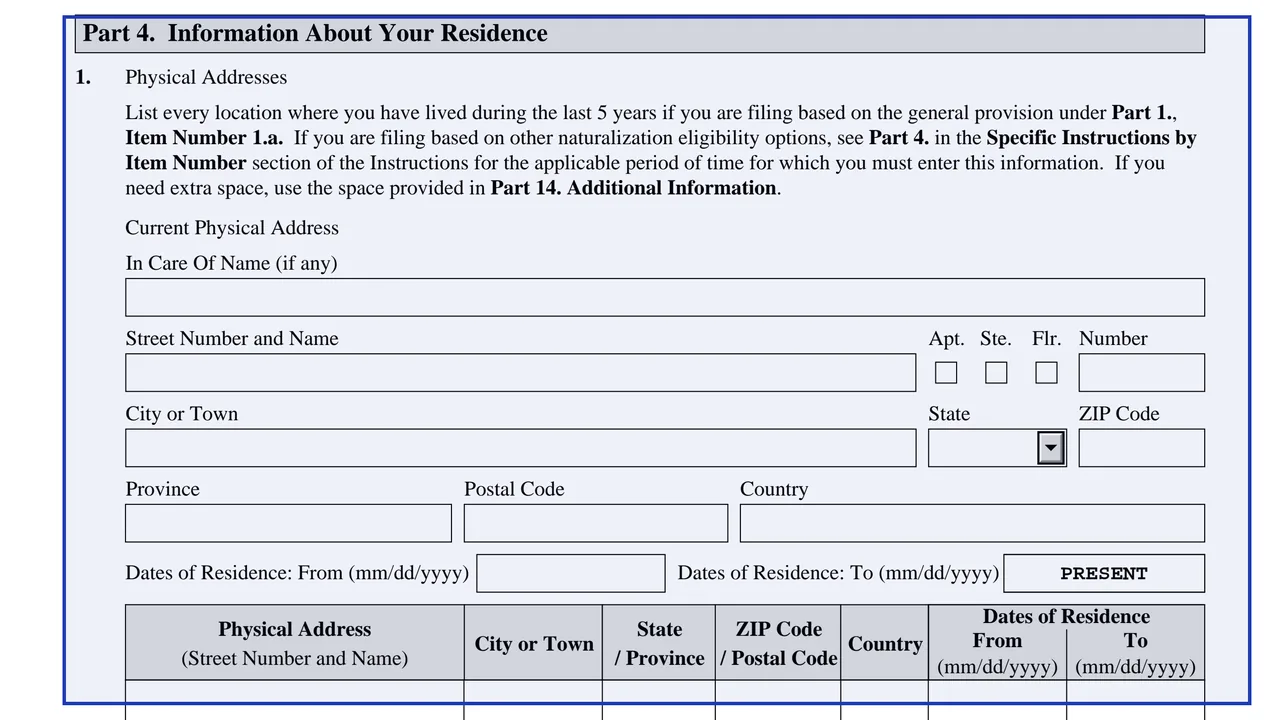
Where you have lived, and your physical and mailing addresses.
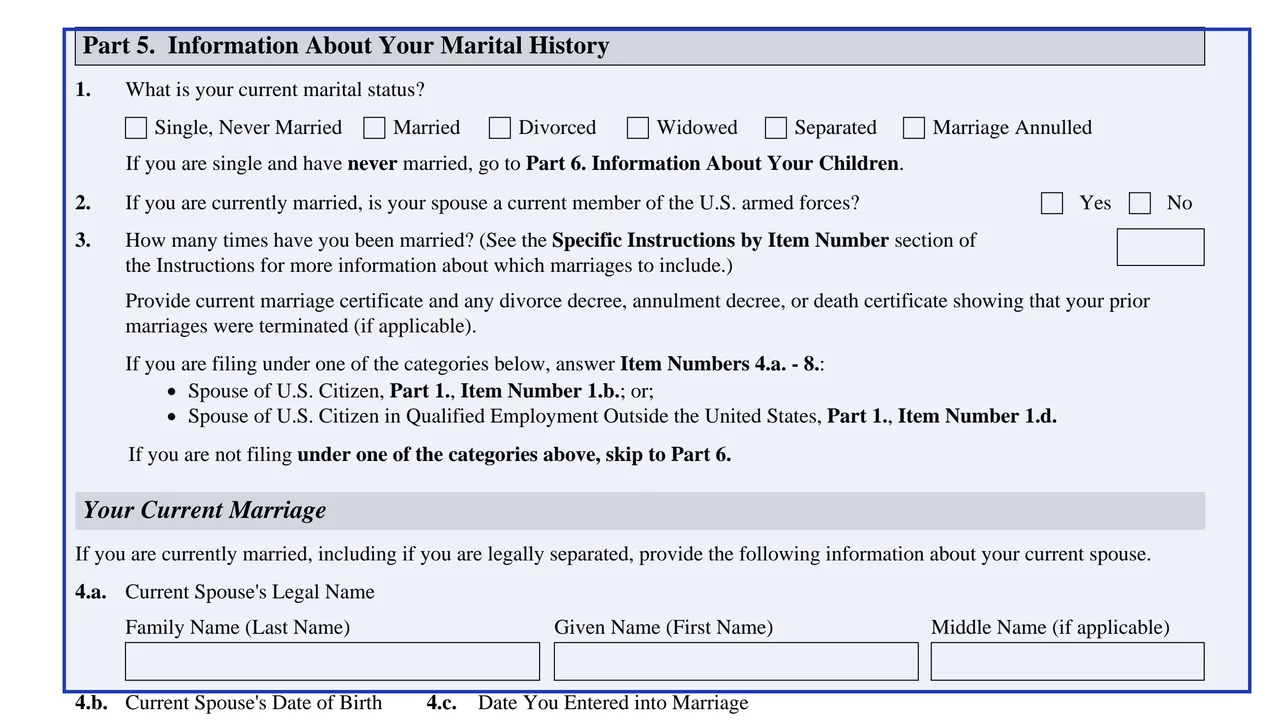
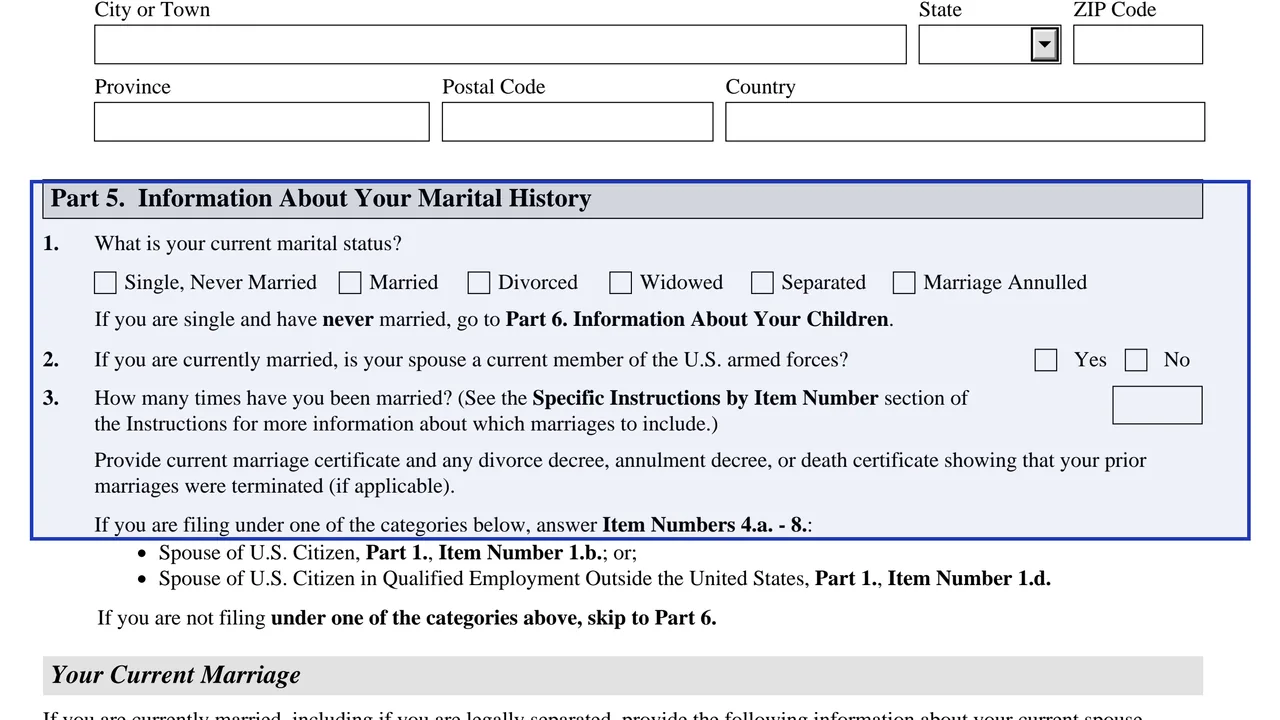
Your current and prior marriages, and your spouse's details when applicable.
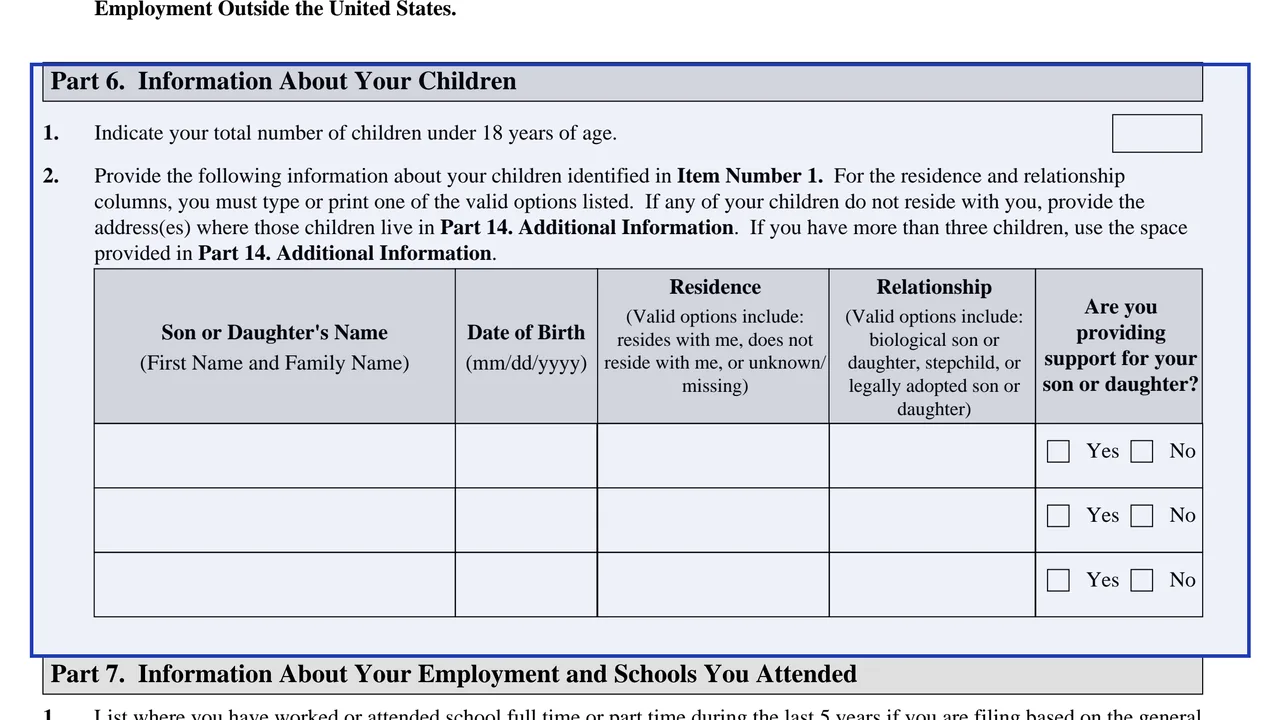
Information about your children.
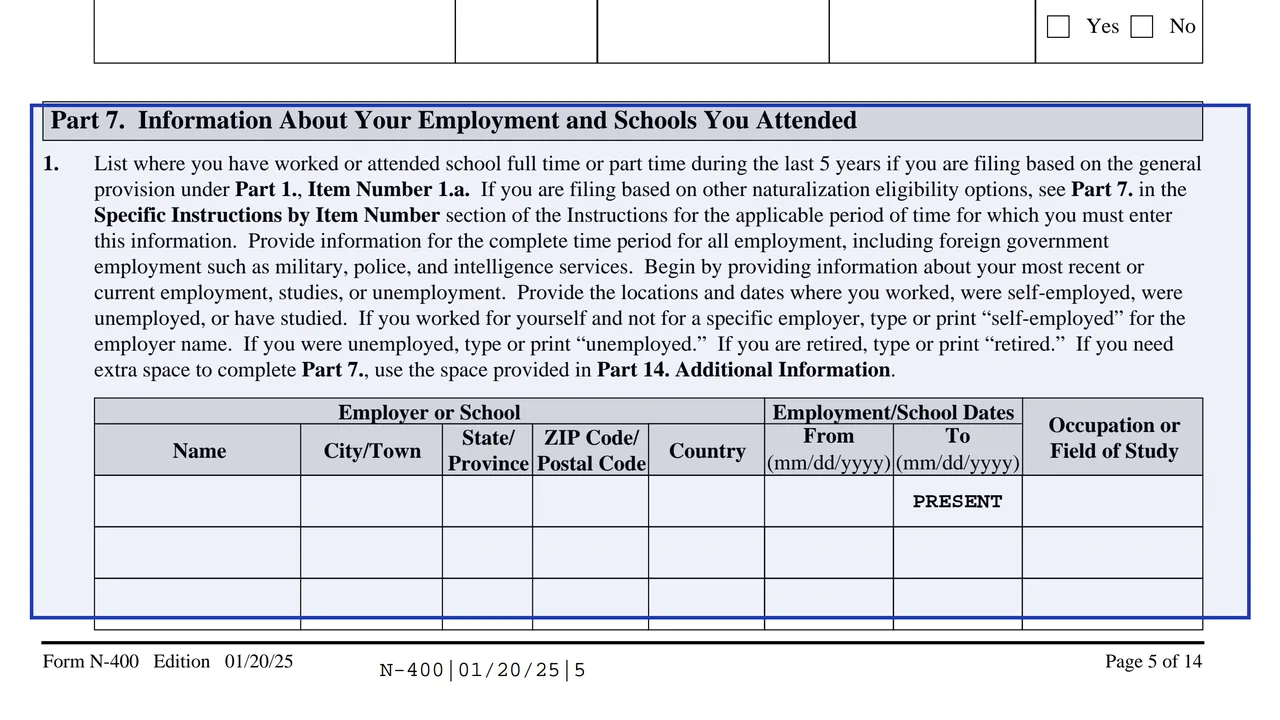
Where you have worked or studied.
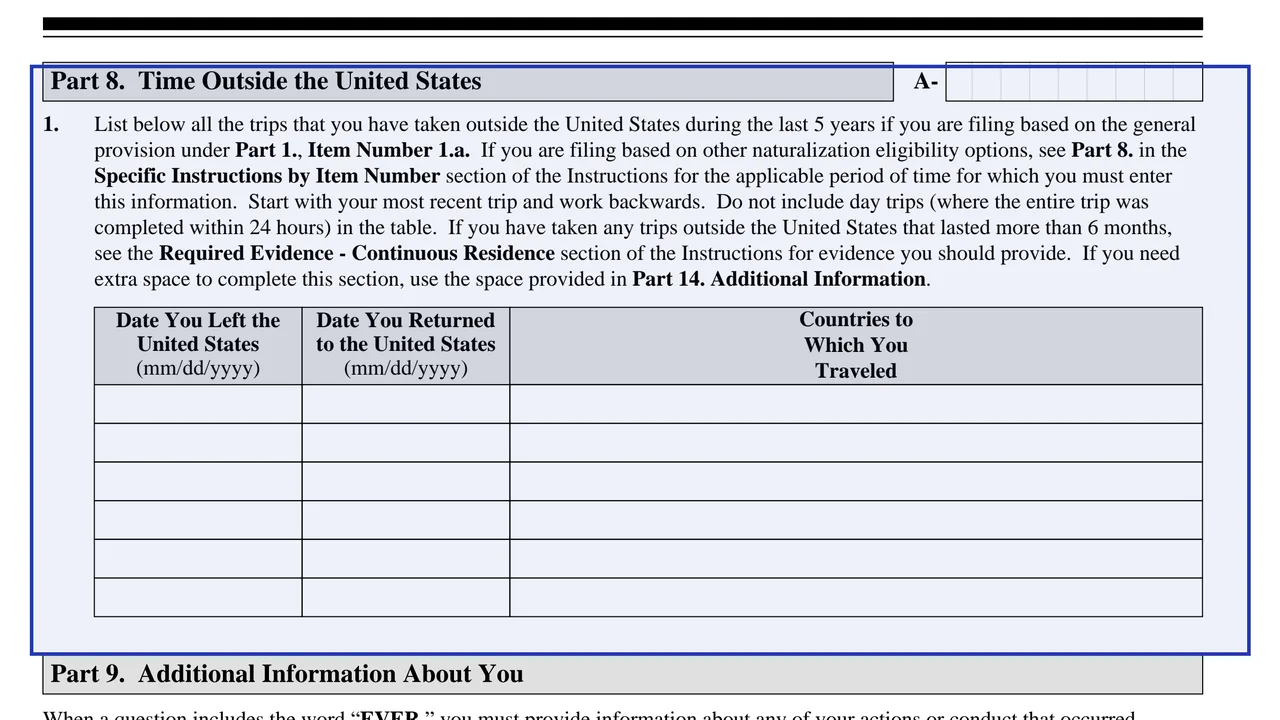
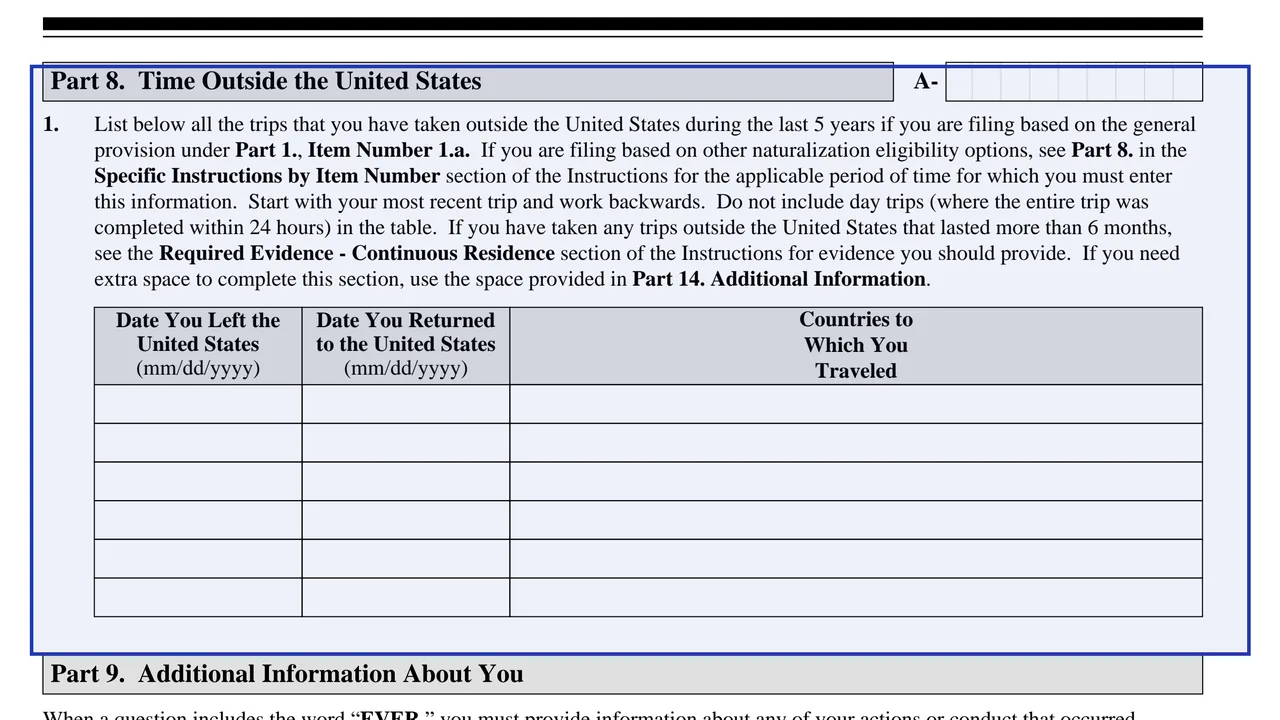
Every trip abroad, used to check continuous residence and physical presence.
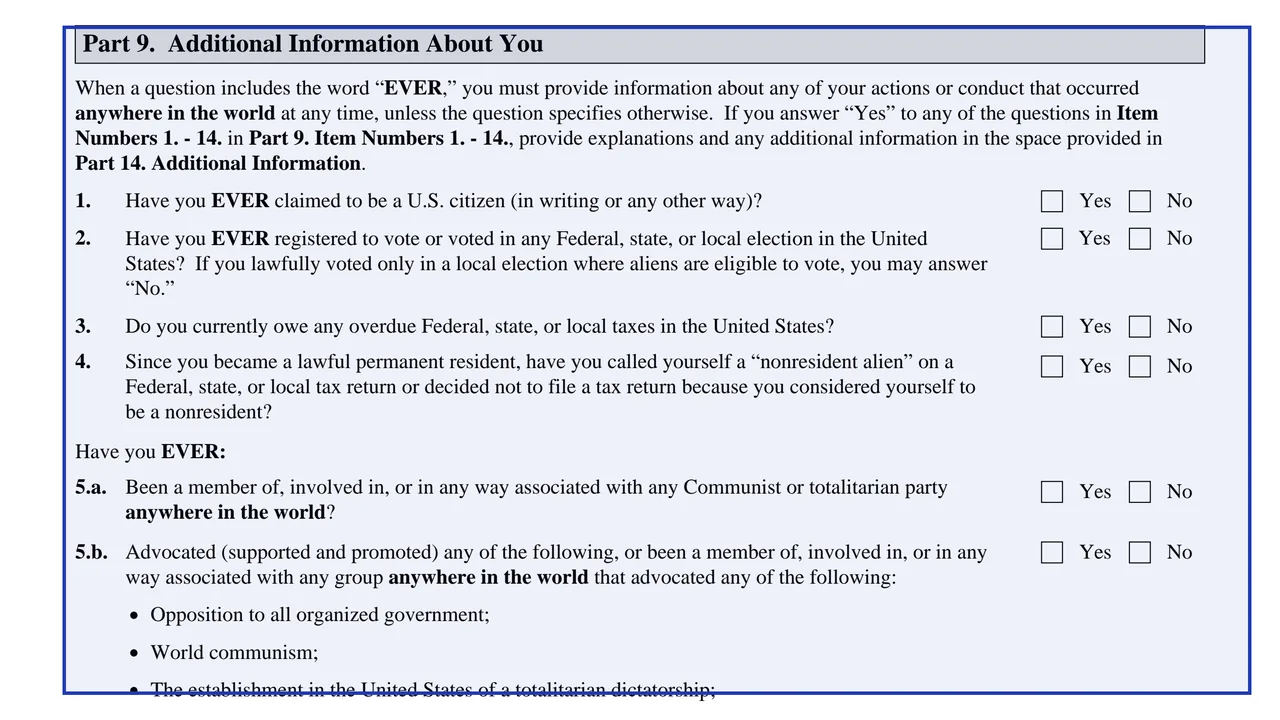
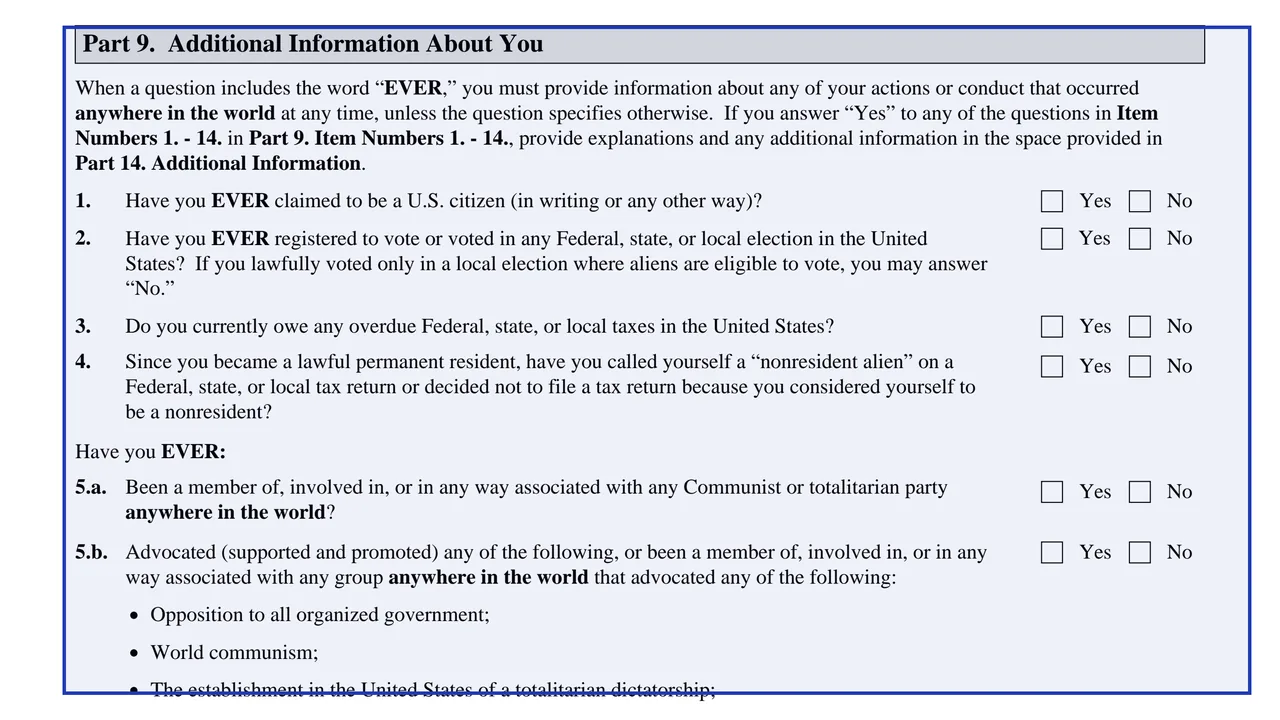
Questions on good moral character and other eligibility topics.
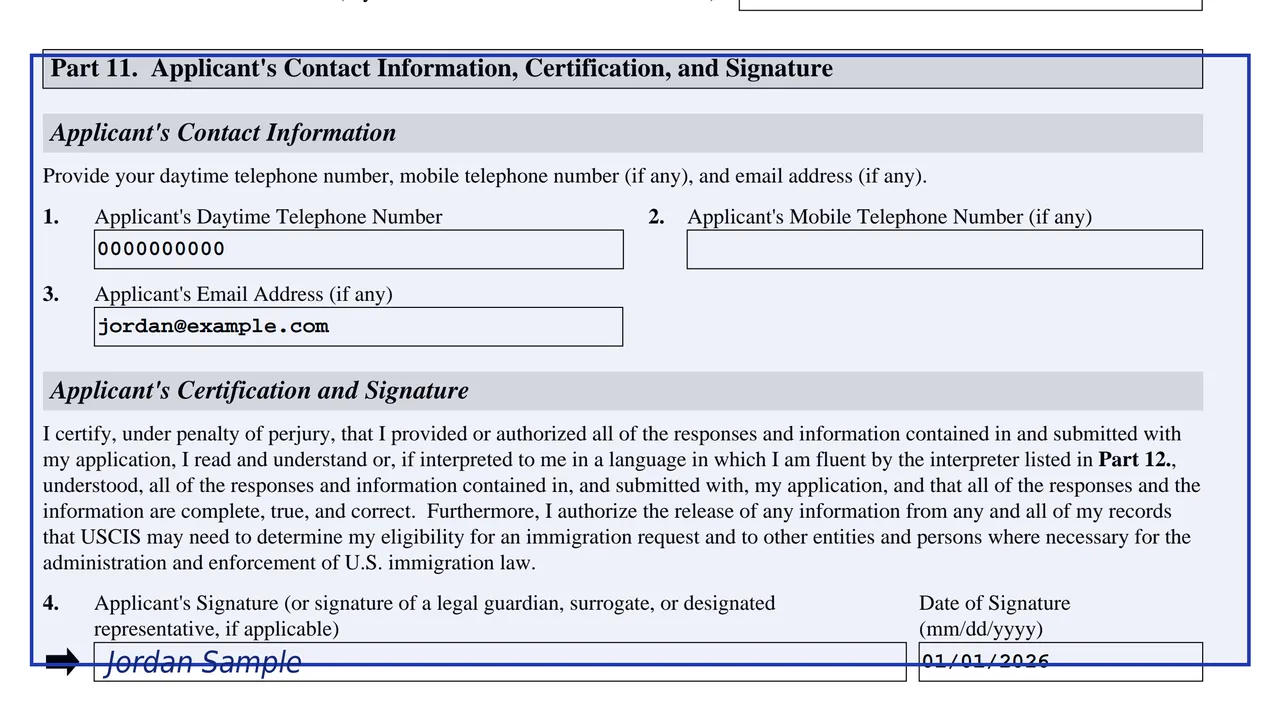
Part 10 is the fee reduction request, Part 11 your statement and signature, Part 12 an interpreter, Part 13 a preparer, Part 14 additional information, Part 15 signing at your interview, and Part 16 the Oath of Allegiance.
You can file up to 90 days before you complete the continuous residence period. USCIS has an Early Filing Calculator, and it rejects applications filed too early.
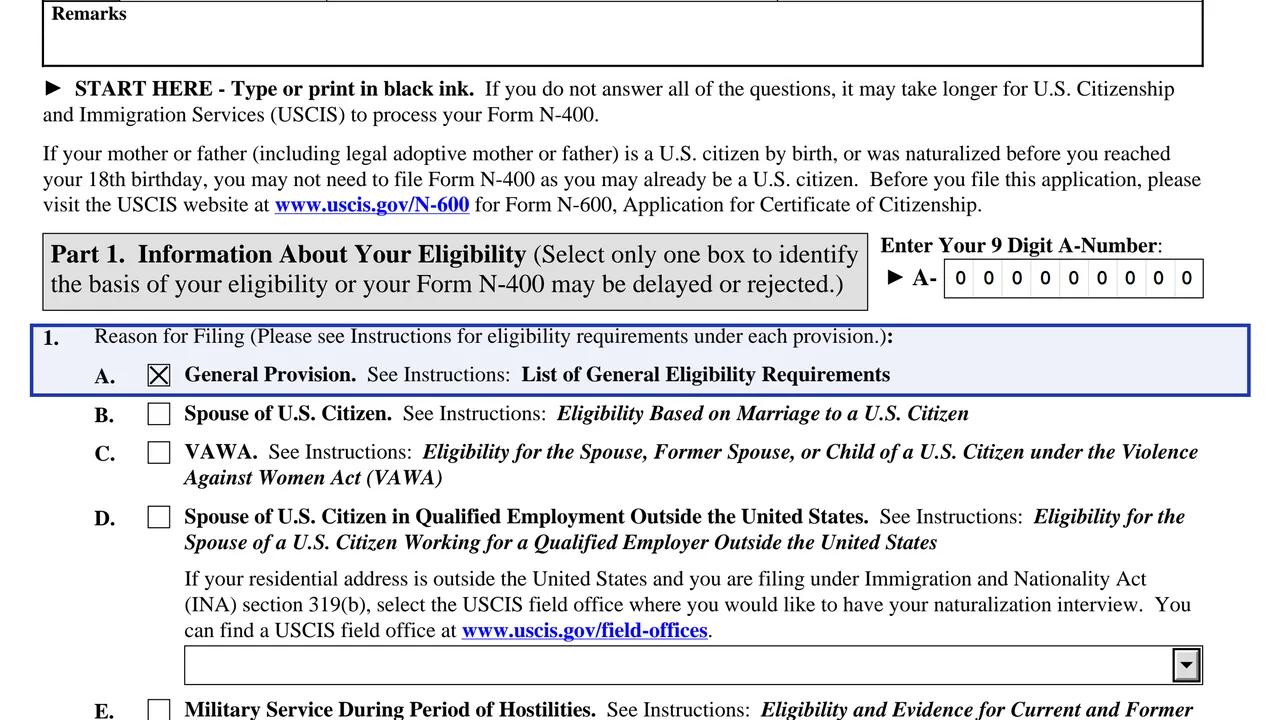
Select the basis that matches your situation and be ready to prove it.
Enter your A-Number and admission date as shown on your card. Answer the disability exception question truthfully. A Yes means Form N-648 must be sent.
Include every trip required by the instructions. If you need more space, use Part 14 and add your name and A-Number to each extra sheet.
Read each in full. If any answer is Yes, USCIS explains what records to attach, such as arrest reports, court dispositions and proof of completed sentences.
A copy of both sides of your Green Card, marriage and divorce records, tax documents, and Selective Service information if it applies to you.
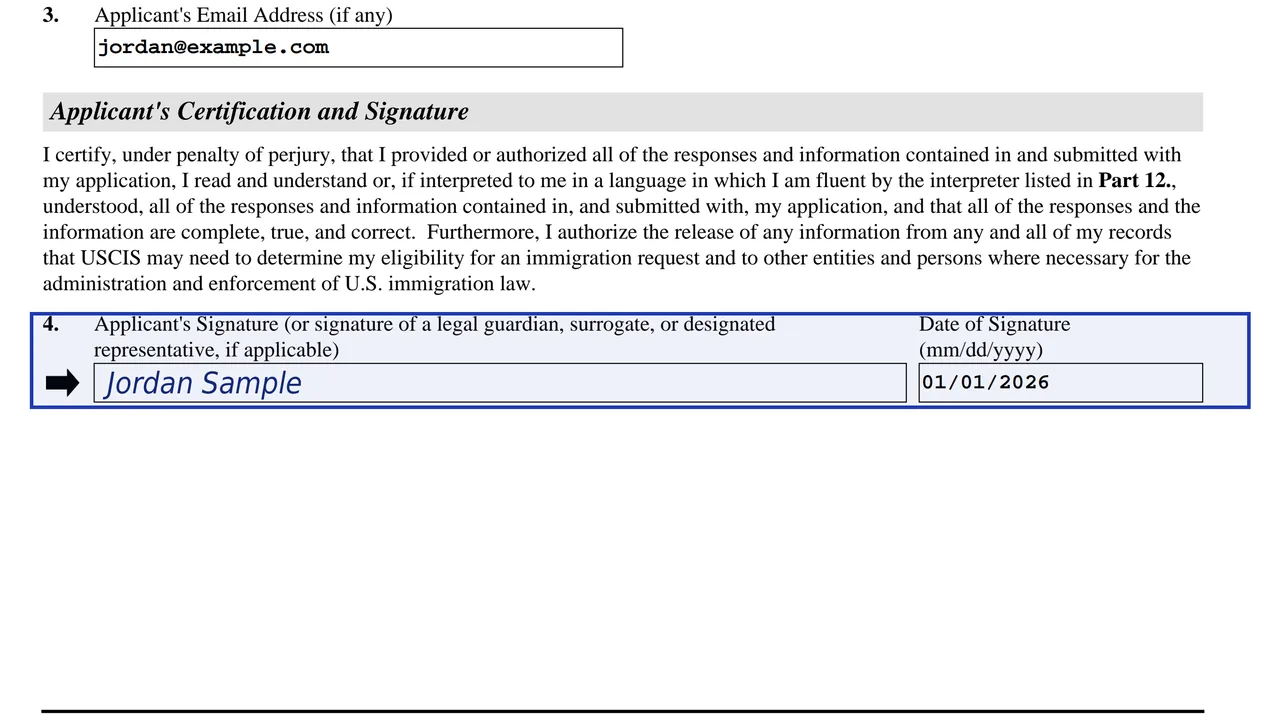
A stamped or typed name is not accepted. You can fill the form online free on this page and print it to sign, or file through a USCIS account.
You get the real form, filled in a browser tab, with nothing standing between you and the finished PDF.
Most applicants can file online. If you are asking for a reduced fee or fee waiver, you must file a paper form. Mailed forms go to the address on the USCIS direct filing addresses page.
The fee is on the USCIS Fee Schedule page, with a reduced-fee option and a fee waiver request on Form I-912. Check the amount on the day you file.
Applicants must generally give biometrics unless USCIS waives it. You then take the English and civics tests at an interview, unless you qualify for an exception based on age and years as a permanent resident or a medical condition.
Age 50 or older with 20 years as a permanent resident, or 55 or older with 15 years, means no English test and the civics test in your language. Age 65 or older with 20 years gets a simplified civics test.
USCIS says the receipt notice extends an expiring Green Card for 2 years from its Card Expires date. If you lose it, you generally still file Form I-90.
Filing too early, leaving out trips, skipping records for any arrest, missing signatures, and forgetting that long trips can break continuous residence. Absences of a year or more generally do so, and Form N-470 may preserve residence in some cases.
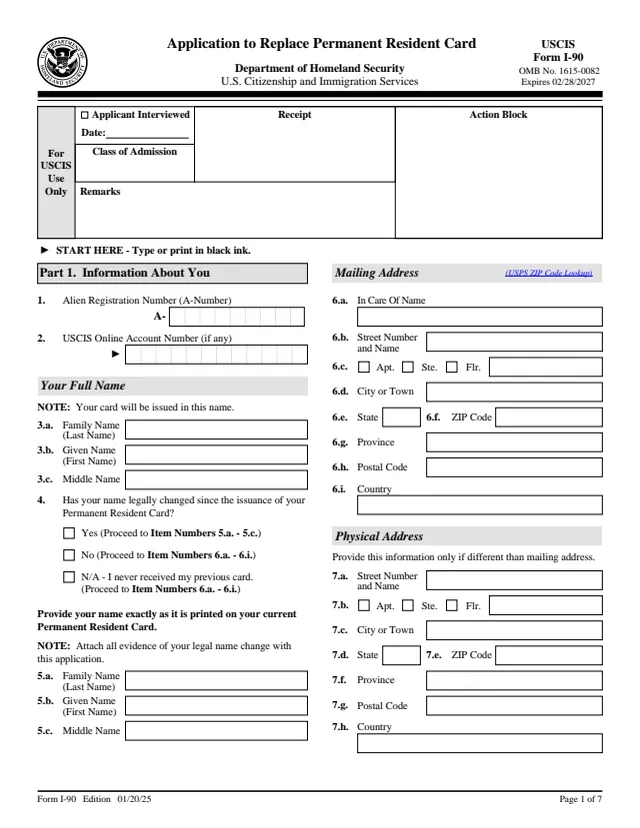
I-90
195 fields, 7 pages
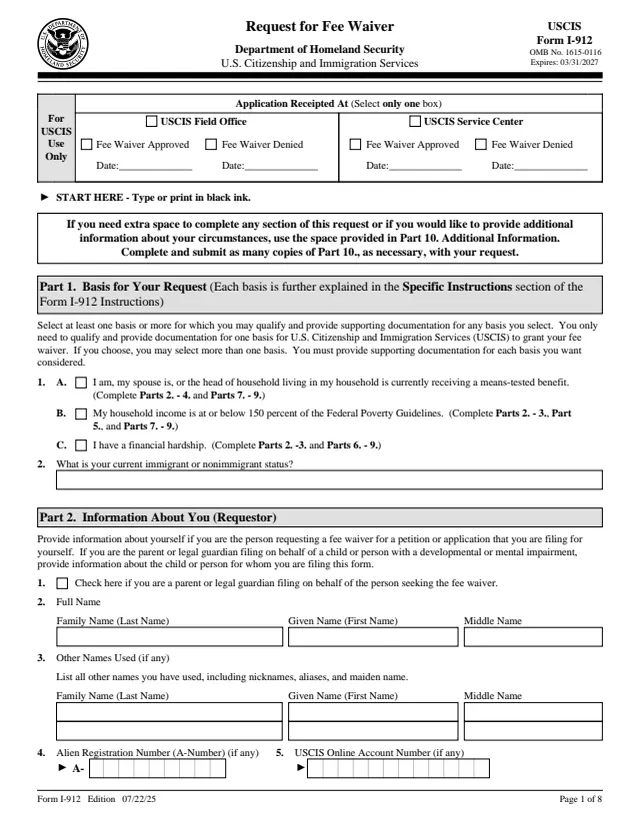
I-912
221 fields, 8 pages
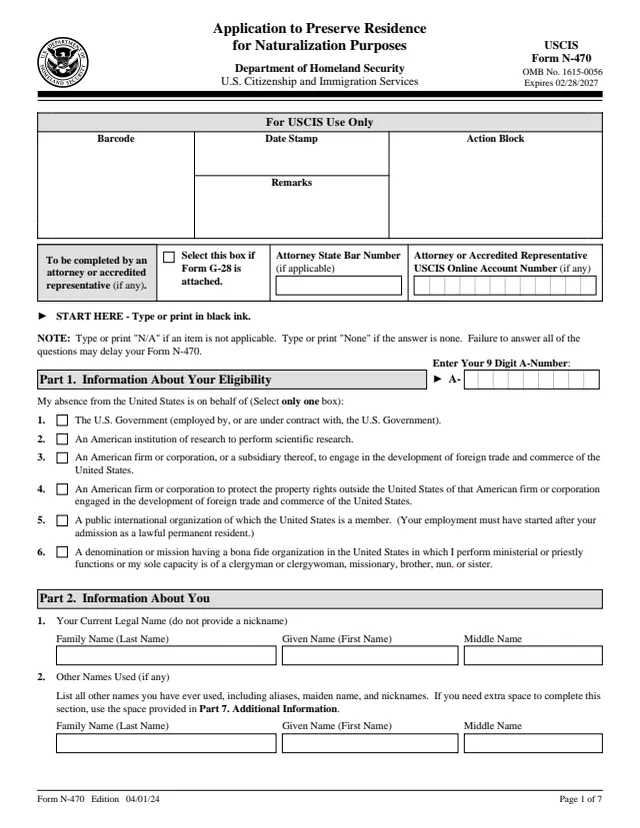
N-470
184 fields, 7 pages
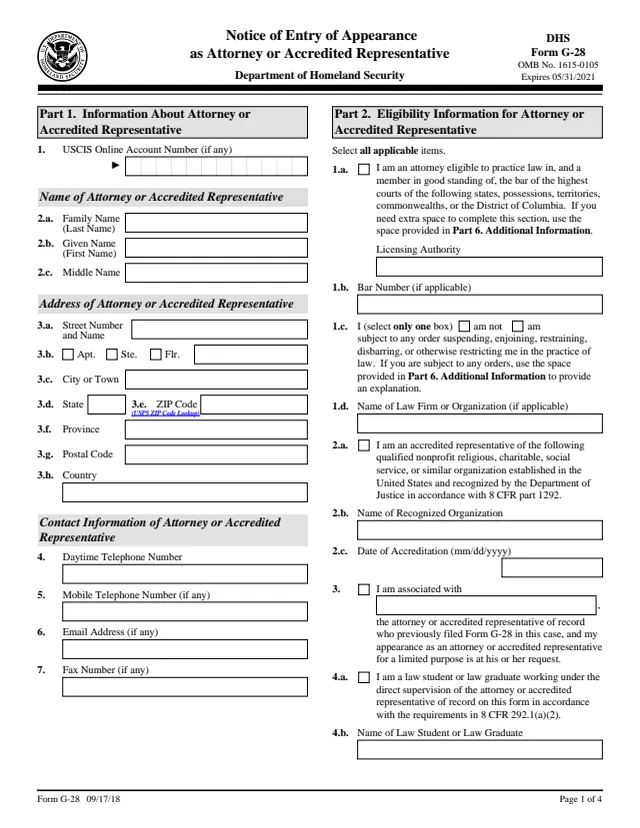
G-28
101 fields, 4 pages
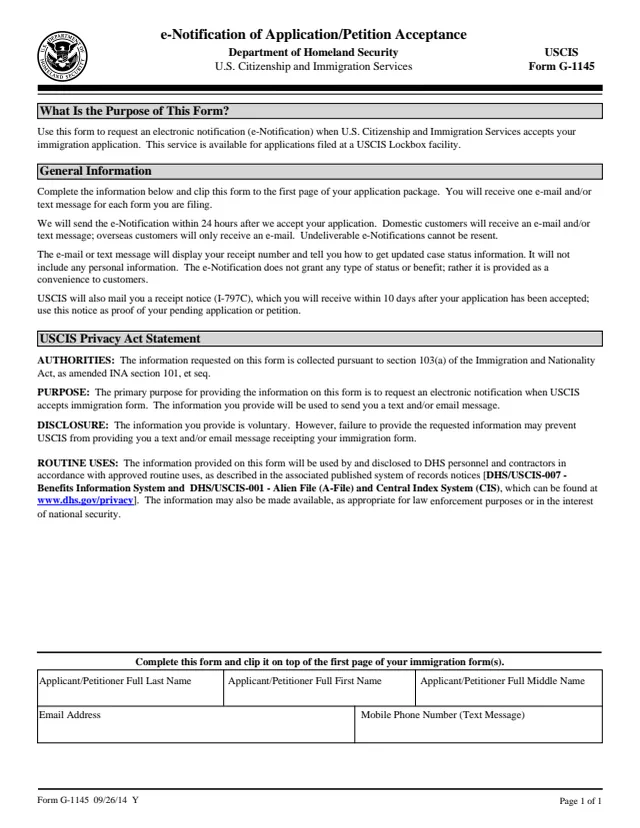
G-1145
6 fields, 1 page
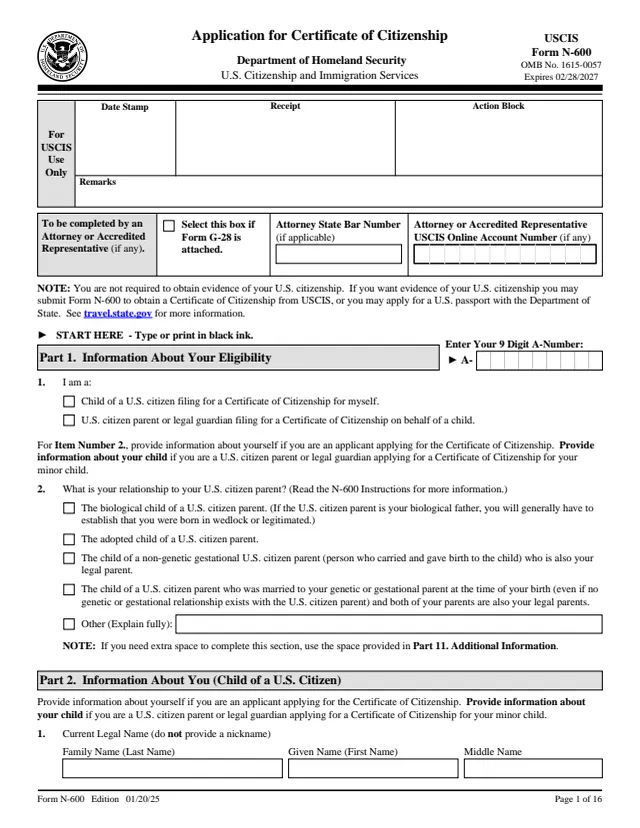
N-600
449 fields, 16 pages
No tool matches that search.
Up to 90 days before you complete the required continuous residence period, as long as you meet every other requirement when you file.
Most applicants do. Exceptions exist by age and time as a permanent resident, and for qualifying disabilities with Form N-648.
Yes, unless you are requesting a reduced fee or fee waiver.
The instructions and checklist list the documents you must send, depending on whether charges were filed, there was a conviction, or the record was cleared.
You may be represented at no cost to the government. The representative submits Form G-28.