Part 1: Information about you
Legal and other names, home address with no PO box, an optional safe mailing address, A-Number, SSN, online account number, marital status, birth details, Form I-94, passport, last entry and current status.
I-918
Petition for U Nonimmigrant Status
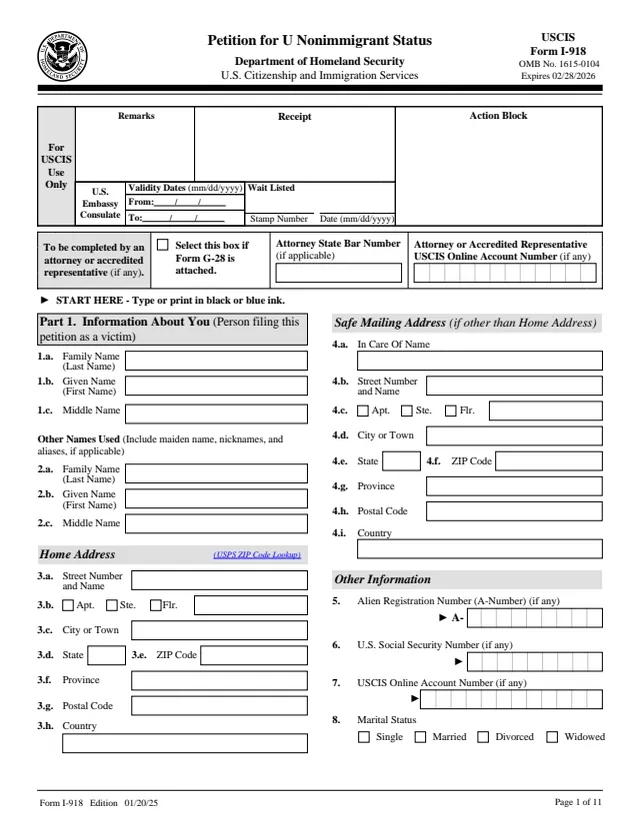
Form I-918, Petition for U Nonimmigrant Status, is used to request temporary immigration benefits by a victim of certain qualifying criminal activity. The victim files it as the principal petitioner, and Form I-918, Supplement A adds qualifying family members.
The instructions list what the principal petitioner demonstrates: being a victim of a qualifying crime listed in INA section 101(a)(15)(U)(iii), having suffered substantial physical or mental abuse as a result, possessing information about the crime, a certification on Form I-918, Supplement B from a government official that the victim was, is or is likely to be helpful to the investigation or prosecution, and that the crime violated U.S. law or occurred in the United States or its territories.
The USCIS page says a statutory cap of 10,000 U-1 visas or grants of status applies each fiscal year, and USCIS has met it every year since fiscal year 2010. The instructions say information about U petitioners is protected under 8 U.S.C. Section 1367.
Legal and other names, home address with no PO box, an optional safe mailing address, A-Number, SSN, online account number, marital status, birth details, Form I-94, passport, last entry and current status.
Yes or No questions on the crime, the abuse, the information you hold, Supplement B, where the crime occurred, age under 16 and immigration proceedings, plus entries in the past five years and where to send notice if you are abroad.
Questions 1.a. to 29.c. The form says to answer Yes where it applies even if records were sealed or cleared, with each Yes explained in Part 8.
Information about your spouse and children, and Item 26 on whether you are petitioning for qualifying family members now.
Your statement, contact details with an optional safe phone number, and signature, then the interpreter and preparer sections and additional information space.
The instructions say an original, properly and timely signed Supplement B is submitted with the original Form I-918, or USCIS denies the petition. Petitioners who received U interim relief do not file one.
The instructions say it covers the nature of the crime, when it occurred, who was responsible, the events around it, how it came to be investigated or prosecuted, and the abuse suffered.
Part 1 takes a safe mailing address, such as a PO box, a friend, an attorney or a community-based organization, and Part 5 takes a safe telephone number.
The instructions say each question is answered and each Yes is explained in Part 8. A waiver of inadmissibility is requested on Form I-192, which can be filed with Form I-918.
A stamped or typed name is not accepted, and the instructions say an unsigned petition is rejected. A family member in the United States also signs Supplement A. This page lets you fill the form online free, then print it to sign.
You get the real form, filled in a browser tab, with nothing standing between you and the finished PDF.
The USCIS page lists three lockboxes by state, each marked Attn: 1367: Dallas (P.O. Box 650745), Chicago (P.O. Box 8075) and Phoenix (P.O. Box 20020), which also takes filings from outside the United States. USCIS changed the location on Oct. 7, 2026, and accepts forms postmarked on or before Nov. 9, 2026, at a prior location.
The USCIS page lists edition 01/20/25 and says a new edition is coming soon. In the meantime, it says the 01/20/25 edition may still be used despite the expiration date.
The instructions say there is no filing fee for Form I-918 or Supplement A. USCIS fees can change, and the I-918 page points to the USCIS Fee Schedule (Form G-1055).
The USCIS checklist names Supplement B, evidence of the crime, the abuse, the information you hold and your helpfulness, a personal statement, Form I-192 if inadmissible, and relationship documents for each Supplement A.
The USCIS page says a principal gets an EAD automatically on approval, while derivatives file Form I-765. Under the bona fide determination process, USCIS recommends filing Form I-765 with Form I-918 or Form I-918A.
The instructions say USCIS may require an interview or biometrics, and a petition may be denied if the appointment is missed.
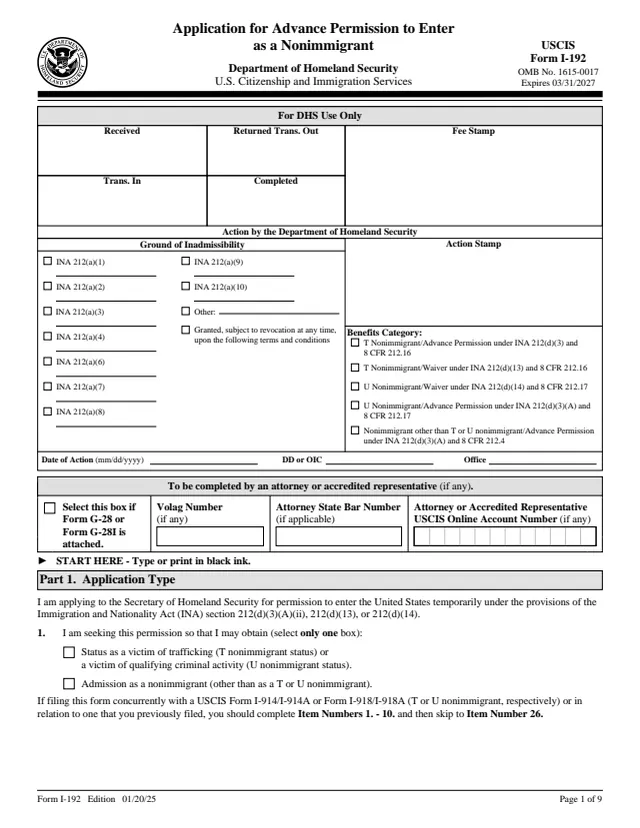
I-192
203 fields, 9 pages
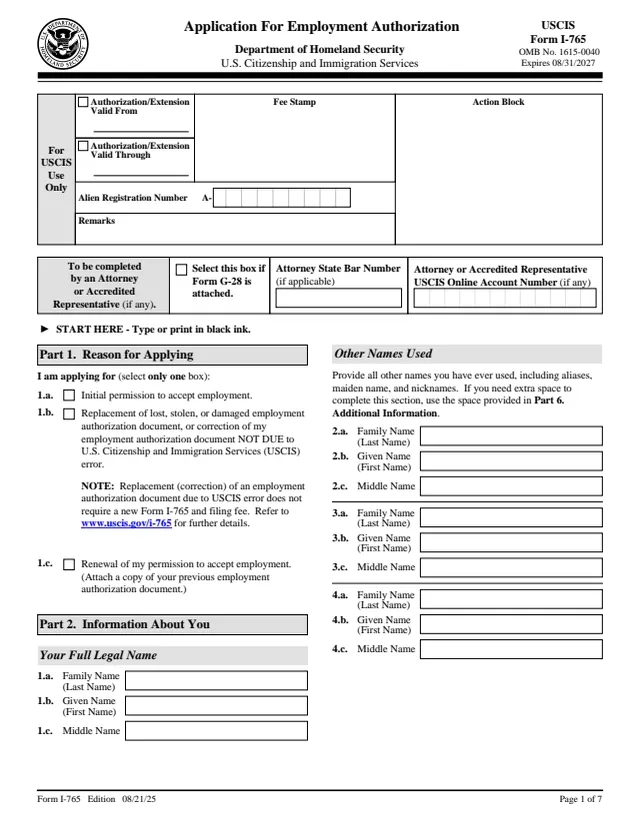
I-765
161 fields, 7 pages
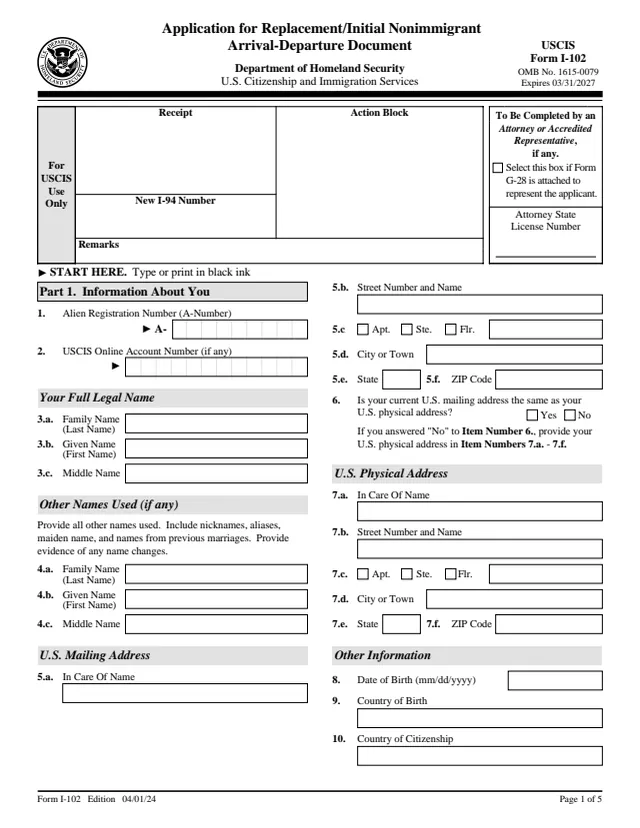
I-102
115 fields, 5 pages
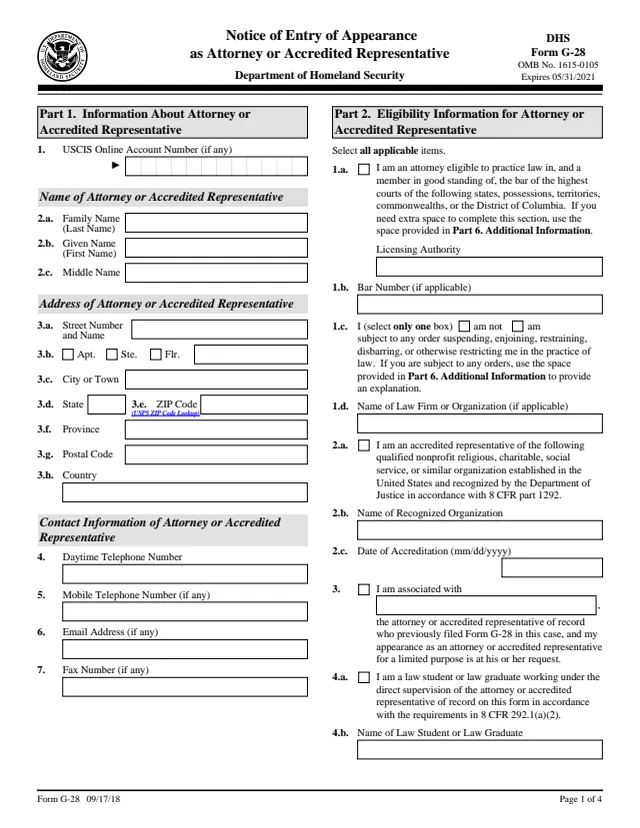
G-28
101 fields, 4 pages
No tool matches that search.
The instructions say an original, properly and timely signed Supplement B goes with the original Form I-918, or USCIS denies the petition. Petitioners who requested and received U interim relief are not required to file one.
The USCIS page says the law caps U-1 status at 10,000 per fiscal year, and USCIS has met the cap every year since fiscal year 2010. Petitions are decided in filing date order.
The USCIS page says it lets USCIS give employment authorization and deferred action to petitioners in the United States with pending bona fide petitions while they wait under the cap. The initial EAD and deferred action last 4 years.
Yes. The instructions say Form I-918, Supplement A can be filed with Form I-918 or at any time after, and evidence already sent with the original petition need not be sent again.
The USCIS page lists mailing to the Dallas, Chicago or Phoenix Lockbox based on where you live and does not list online filing.
The instructions say information about U petitioners and derivatives is protected under 8 U.S.C. Section 1367, and disclosure is prohibited except in certain limited circumstances.