Part 1: Purpose for filing
Whether you are filing for T-1 status for the first time or have filed before, with the earlier receipt number.
I-914
Application for T Nonimmigrant Status
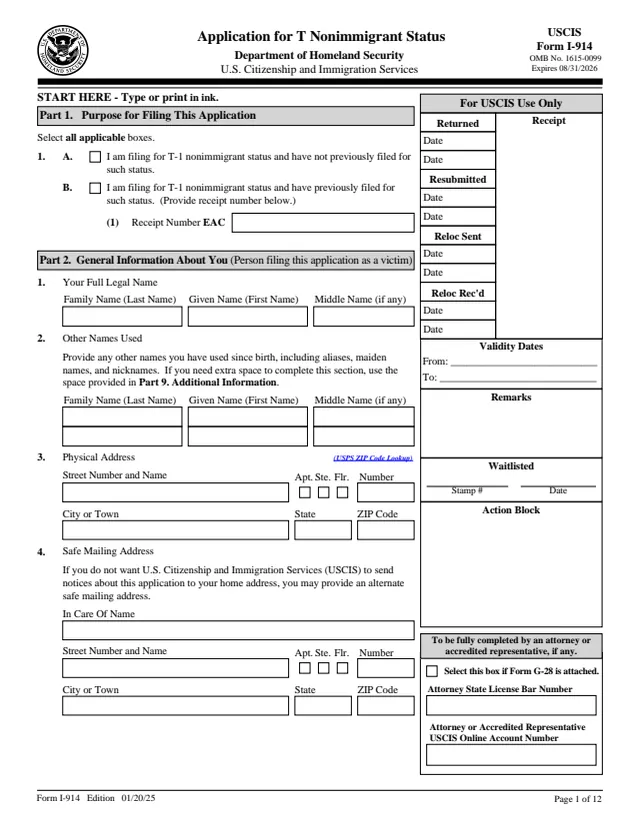
Form I-914, Application for T Nonimmigrant Status, is used to request temporary immigration benefits by a person who is a victim of a severe form of trafficking in persons, also known as human trafficking. The person who was trafficked files it for themselves as the principal applicant.
The instructions list four requirements to demonstrate: being or having been a victim of a severe form of trafficking in persons, physical presence in the United States, American Samoa, the Commonwealth of the Northern Mariana Islands or at a port of entry on account of trafficking, compliance with reasonable requests for assistance from law enforcement (with exceptions for age under 18 and for physical or psychological trauma), and extreme hardship involving unusual and severe harm upon removal.
Form I-914, Supplement A is used for eligible family members, and Form I-914, Supplement B is an optional declaration completed by law enforcement. The instructions say information about T applicants is protected under 8 U.S.C. Section 1367.
Whether you are filing for T-1 status for the first time or have filed before, with the earlier receipt number.
Legal and other names, physical address, an optional safe mailing address, A-Number, SSN, sex, marital status, birth details, citizenship, passport, last entry, Form I-94 and current status.
Yes or No questions on victimization, cooperation or an age or trauma exemption, physical presence, hardship, reporting the crime, entries, a request for an EAD (Item 10) and whether you are applying for family members (Item 11).
Processing questions, each Yes explained in Part 9, and information about your spouse and children whether or not you are applying for them.
Your statement, contact information and signature, the interpreter and preparer sections, and additional information space.
The instructions say a signed personal narrative statement is required. It describes the trafficking, how your presence in the United States relates to it, the hardship you believe removal would cause, and any cooperation with law enforcement.
Part 2, Item 4 takes an alternate address, such as a post office box, a friend, an attorney or a community-based organization, if you do not want notices sent to your home.
The instructions say each question is answered. Part 4 notes that records sealed or cleared still get a Yes, with an explanation in Part 9, including whether the acts relate to the trafficking.
File one Form I-914, Supplement A for each family member, signed by the family member if in the United States. The instructions say a waiver of inadmissibility is requested on Form I-192, filed with Form I-914.
A stamped or typed name is not accepted, and the instructions say an unsigned Form I-914 is rejected. This page lets you fill the form online free, then print it to sign.
You get the real form, filled in a browser tab, with nothing standing between you and the finished PDF.
The USCIS page lists two lockboxes based on where you live: the Elgin Lockbox (USPS to P.O. Box 4221, Carol Stream, IL) or the Phoenix Lockbox (USPS to P.O. Box 20200, Phoenix, AZ), which also takes filings from outside the United States. Check the state list and courier addresses on the I-914 page.
The fee is on the USCIS Fee Schedule page (Form G-1055), which can change. Check it on the day you file.
The USCIS checklist names a personal statement and evidence for each requirement. Without Supplement B, the instructions list other evidence such as court documents, police reports, news articles, affidavits or a grant of Continued Presence.
A principal who answers Yes to Part 3, Item 10 gets an EAD on approval without Form I-765. For a bona fide determination EAD, the instructions say Form I-765 is filed under 8 CFR 274a.12(c)(40).
The instructions say filing does not grant permission to travel, and leaving while the application is pending could affect eligibility. After approval, a T-1 nonimmigrant files Form I-131 for advance parole before leaving.
Send legible photocopies unless an original is requested, and a full English translation with the translator's certification for any foreign-language document.
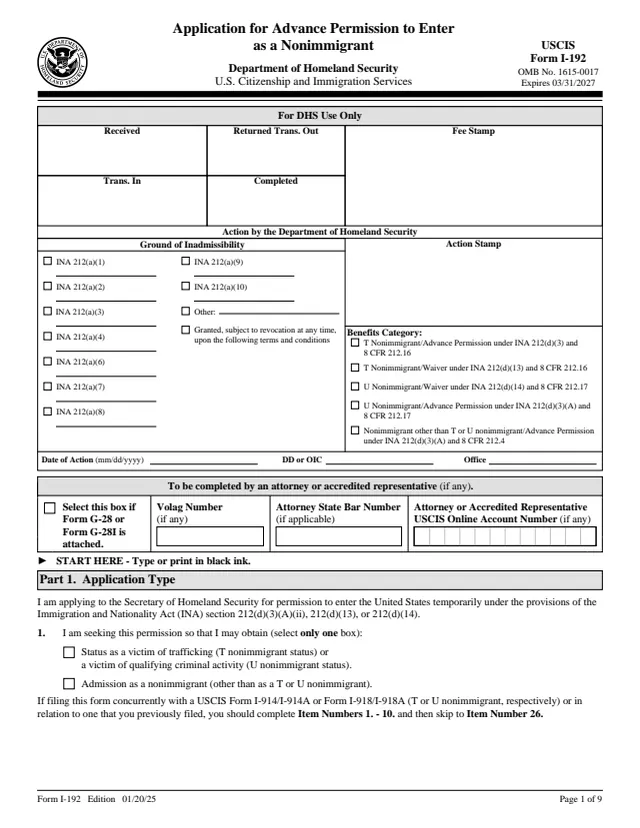
I-192
203 fields, 9 pages
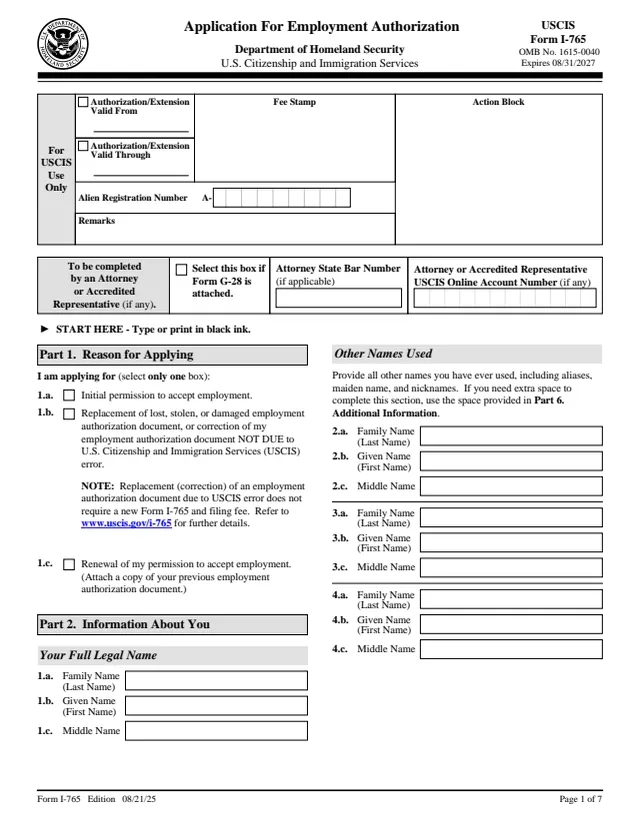
I-765
161 fields, 7 pages
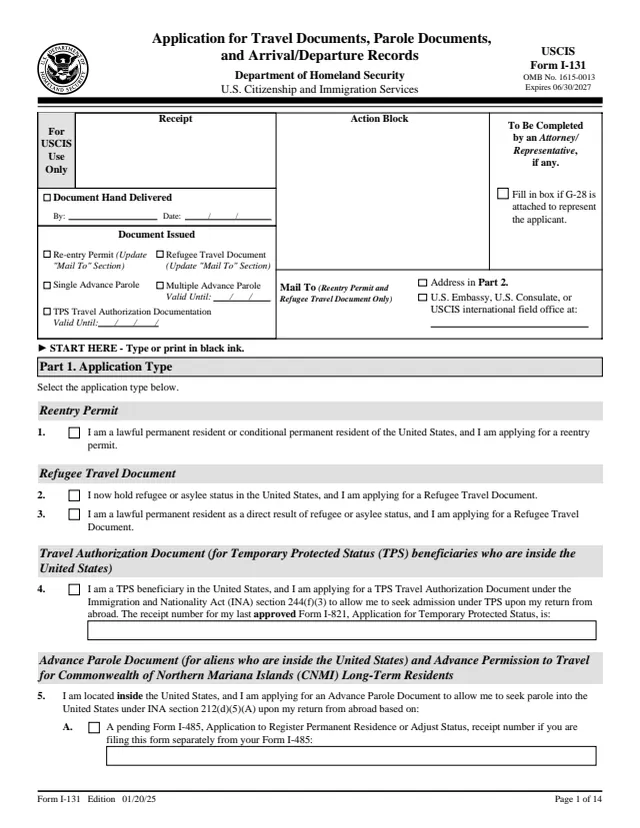
I-131
339 fields, 14 pages
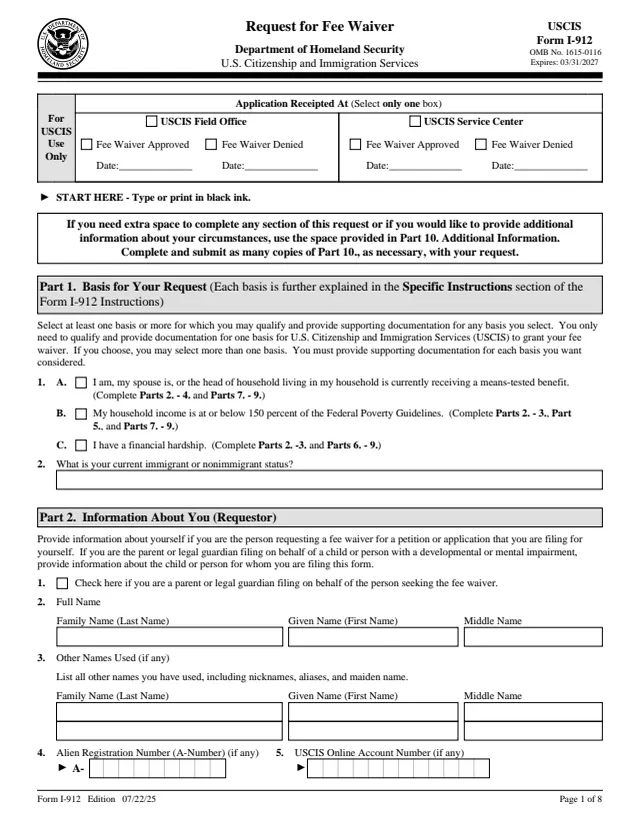
I-912
221 fields, 8 pages
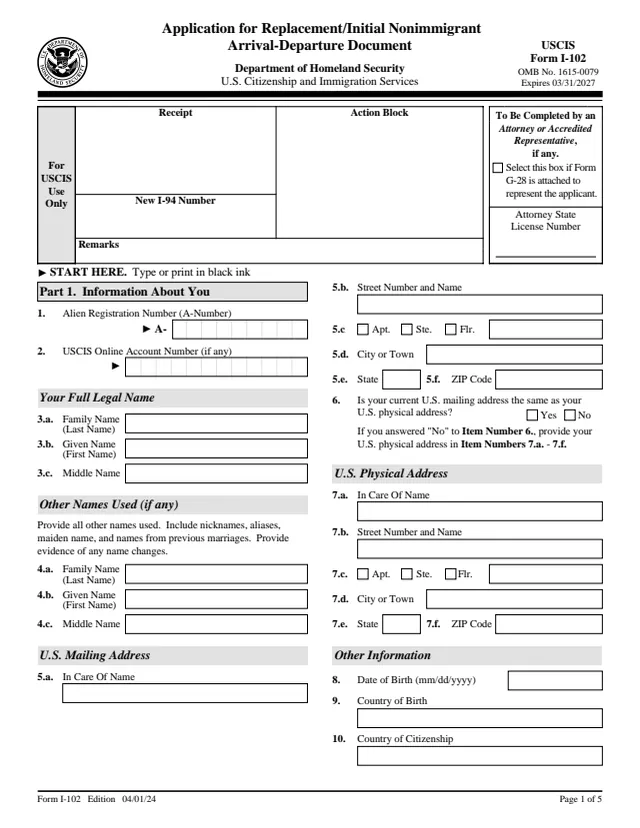
I-102
115 fields, 5 pages
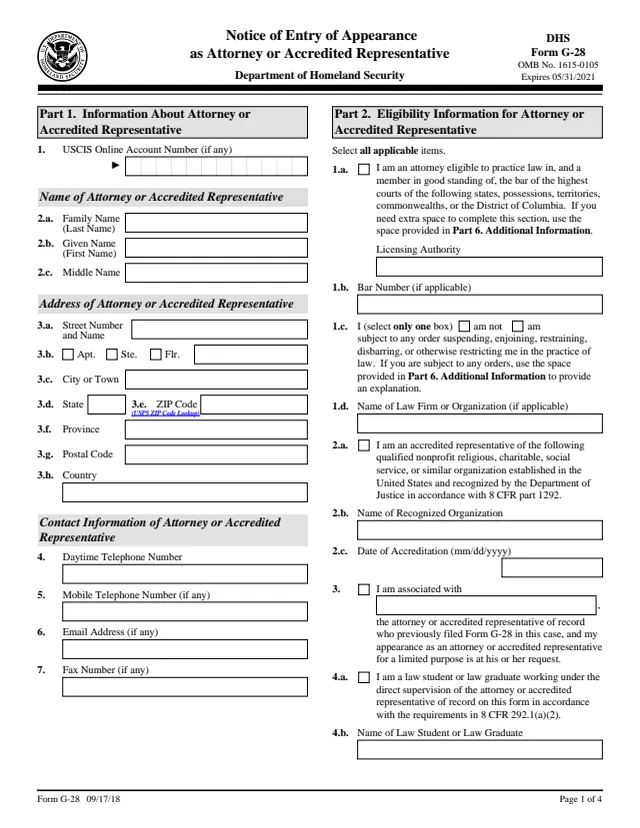
G-28
101 fields, 4 pages
No tool matches that search.
USCIS. The instructions say USCIS, not the law enforcement agency, determines eligibility, and eligibility does not depend on whether the agency pursues an investigation or prosecution.
The instructions say it is not required. Without it, other credible evidence of victimization and cooperation with law enforcement, or of an age or trauma exception, is submitted.
Yes. The instructions say Form I-914, Supplement A can be filed with Form I-914, while it is pending, or while you hold T-1 status, one supplement per family member.
The instructions say information about T applicants and their family members is protected under 8 U.S.C. Section 1367, and disclosure is prohibited except in certain limited circumstances.
The USCIS page lists mailing to the Elgin or Phoenix Lockbox based on where you live and does not list online filing.
USCIS fees change, so this page does not list one. The I-914 page points to the USCIS Fee Schedule, and the instructions point to Form G-1055.