Part 1. Information about you
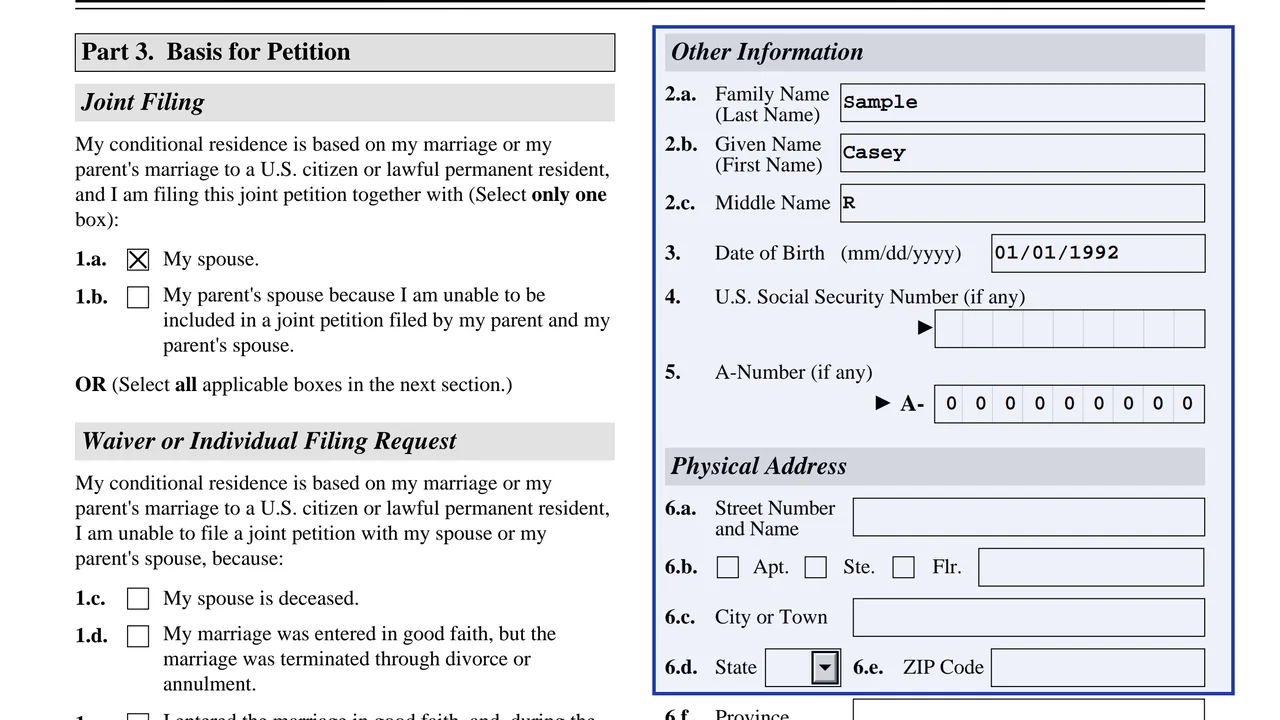
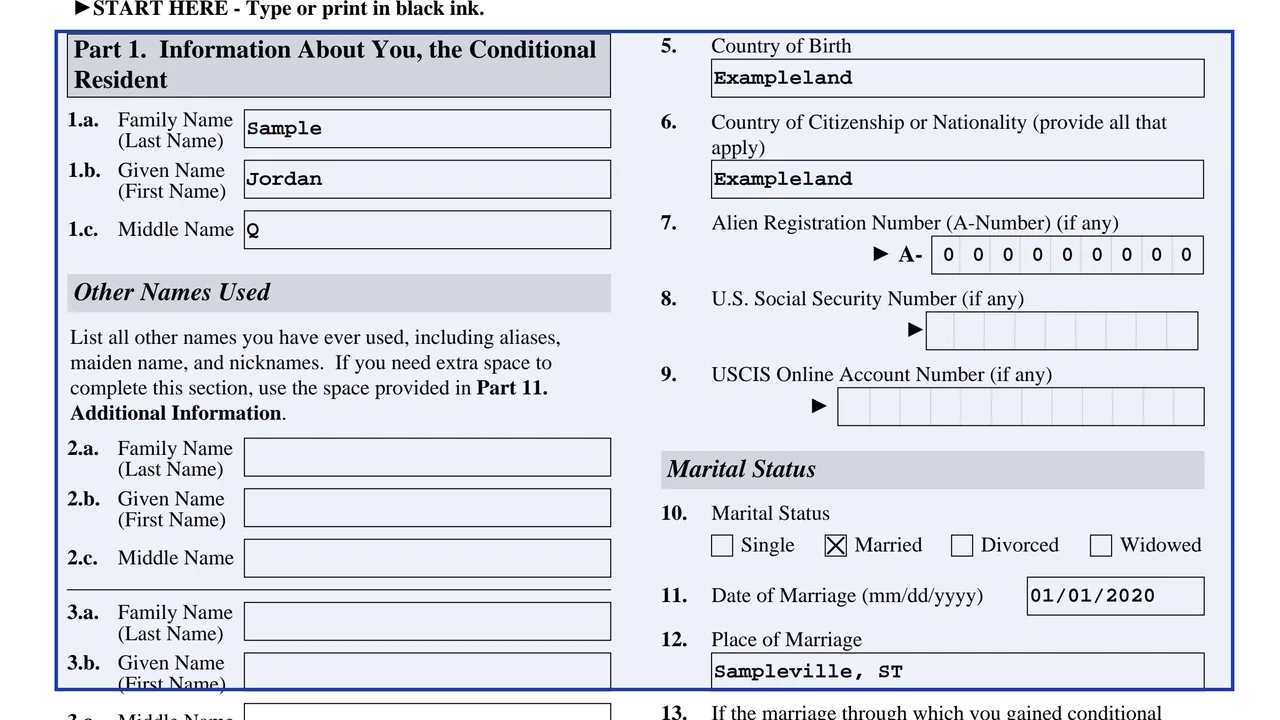
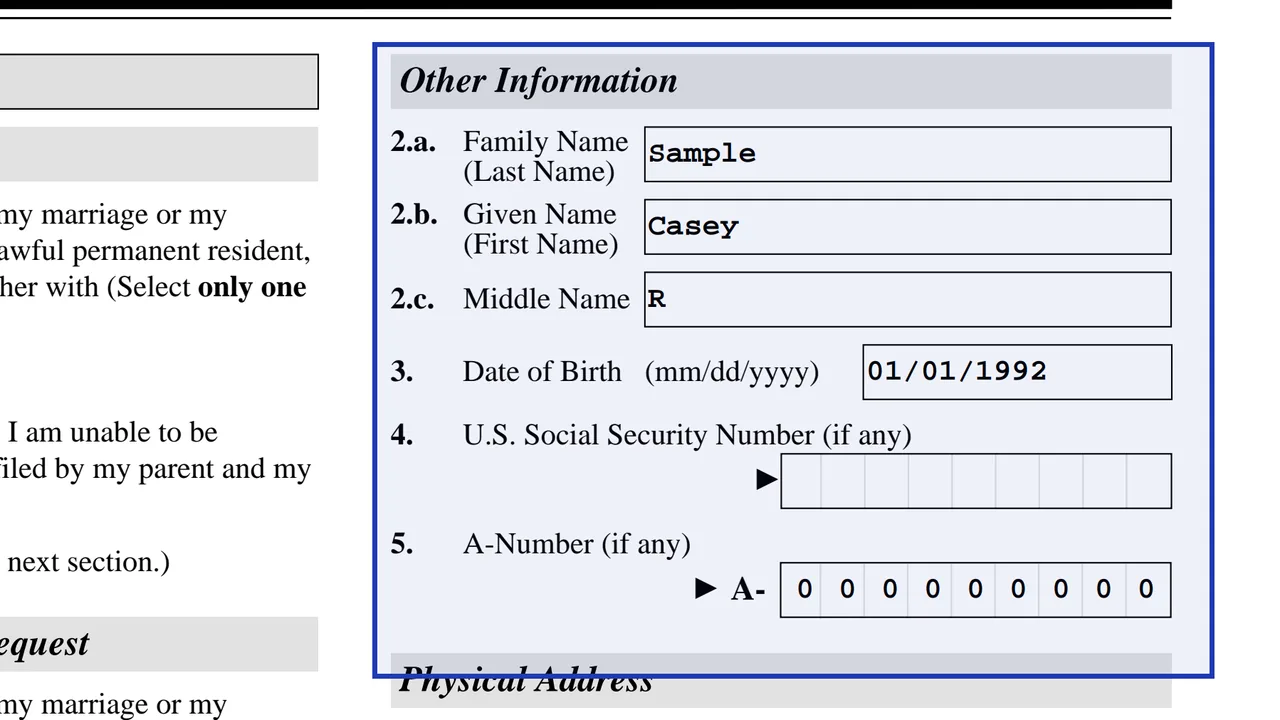
Your name, other names, date of birth, A-Number, Social Security number if any, physical and mailing addresses, and the date your conditional residence expires.
I-751
Petition to Remove Conditions on Residence
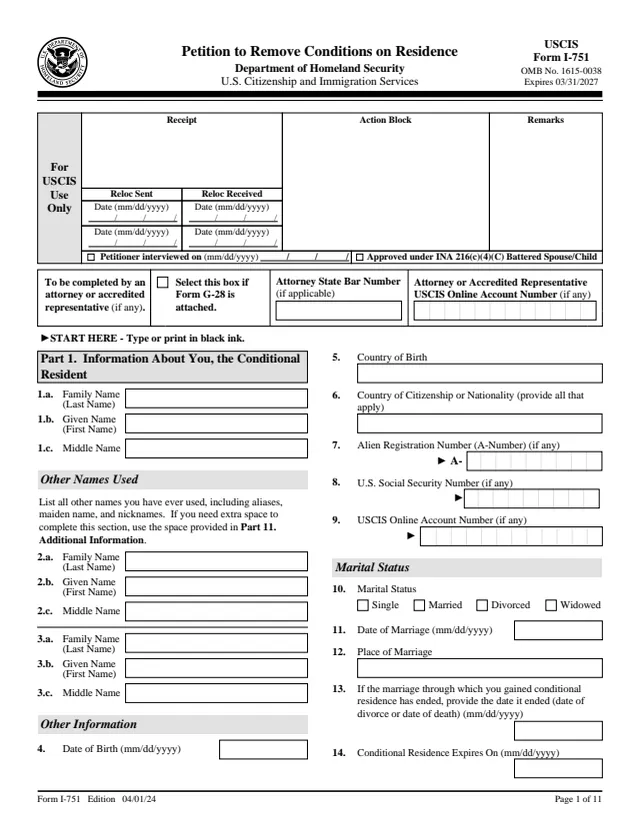
Form I-751 is for people who received a green card through marriage and whose status is conditional. The condition is removed by filing this petition. If you never file it, USCIS instructions say you lose your permanent resident status two years after it was granted, and you become removable from the United States.
Most couples file together, one joint petition signed by both spouses, in a fixed window before the conditional residence expires. Some people file alone and ask USCIS to waive the joint filing requirement, for example after a spouse's death, a divorce or annulment, abuse, or extreme hardship.
USCIS may call you for a biometrics appointment and may ask for more evidence or an interview. You can fill the form online on this page for free and without an account, then print it, sign it and send it with your proof of a real marriage.
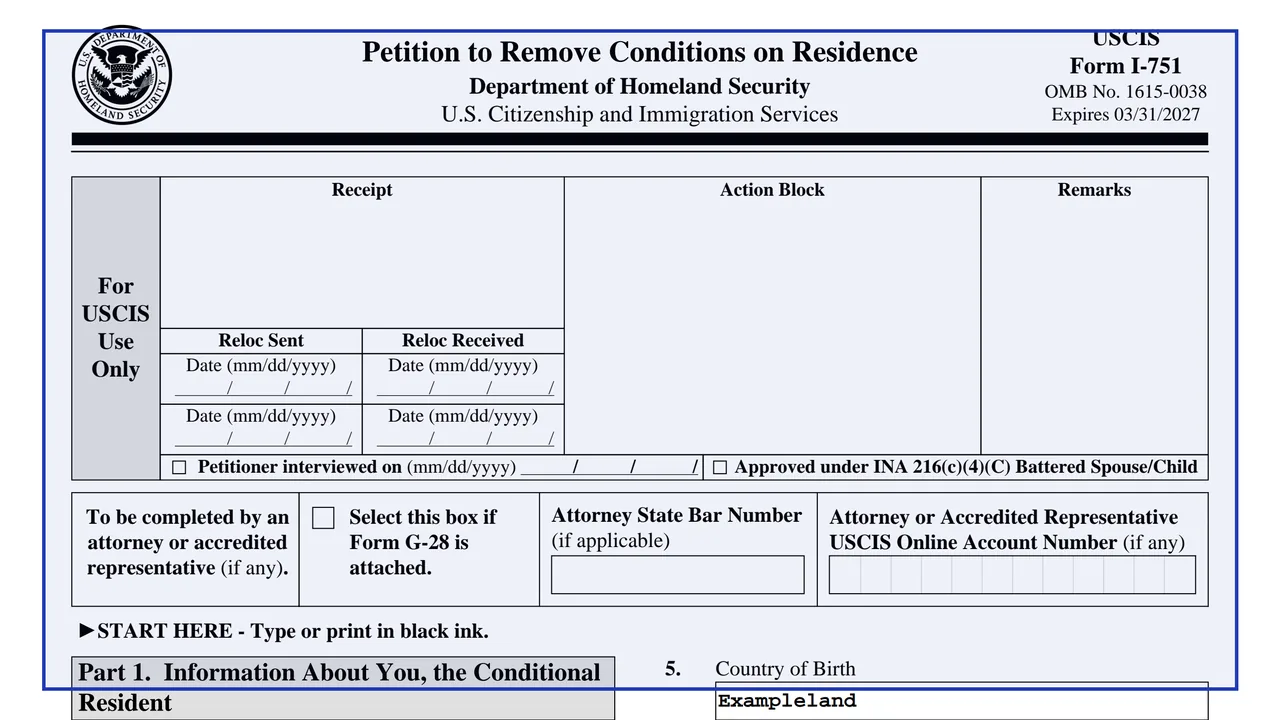
Your name, other names, date of birth, A-Number, Social Security number if any, physical and mailing addresses, and the date your conditional residence expires.
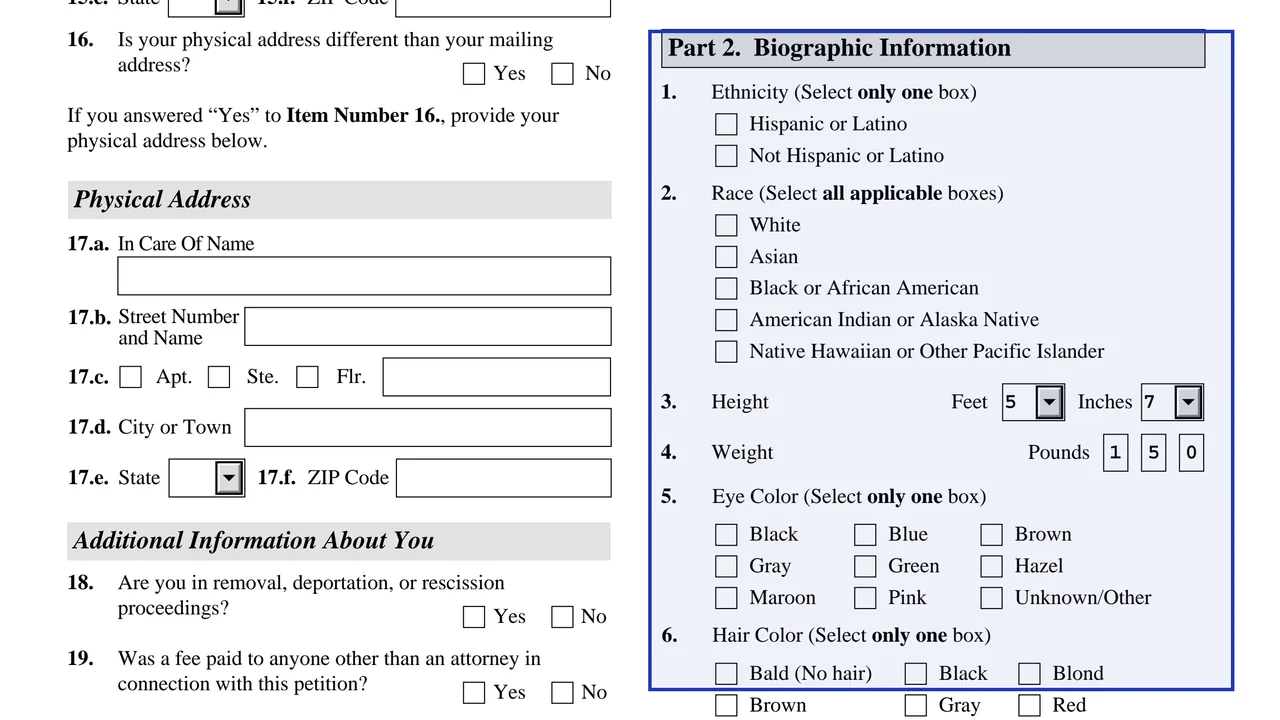
Ethnicity, race, height, weight, eye color and hair color, used to prepare for biometrics.
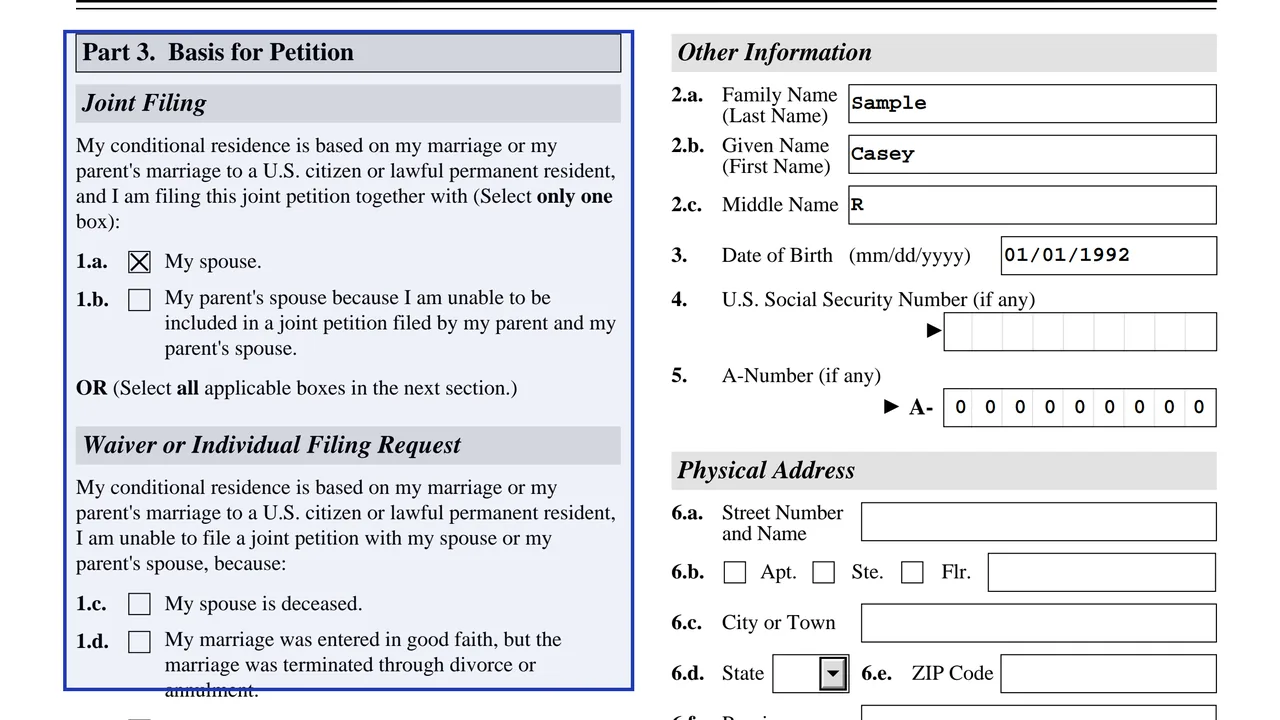
You pick joint filing, or a waiver or individual filing and the reason: deceased spouse, divorce or annulment, abuse, or extreme hardship.
Details about the U.S. citizen or permanent resident spouse, or the parent's spouse for a child filing separately.
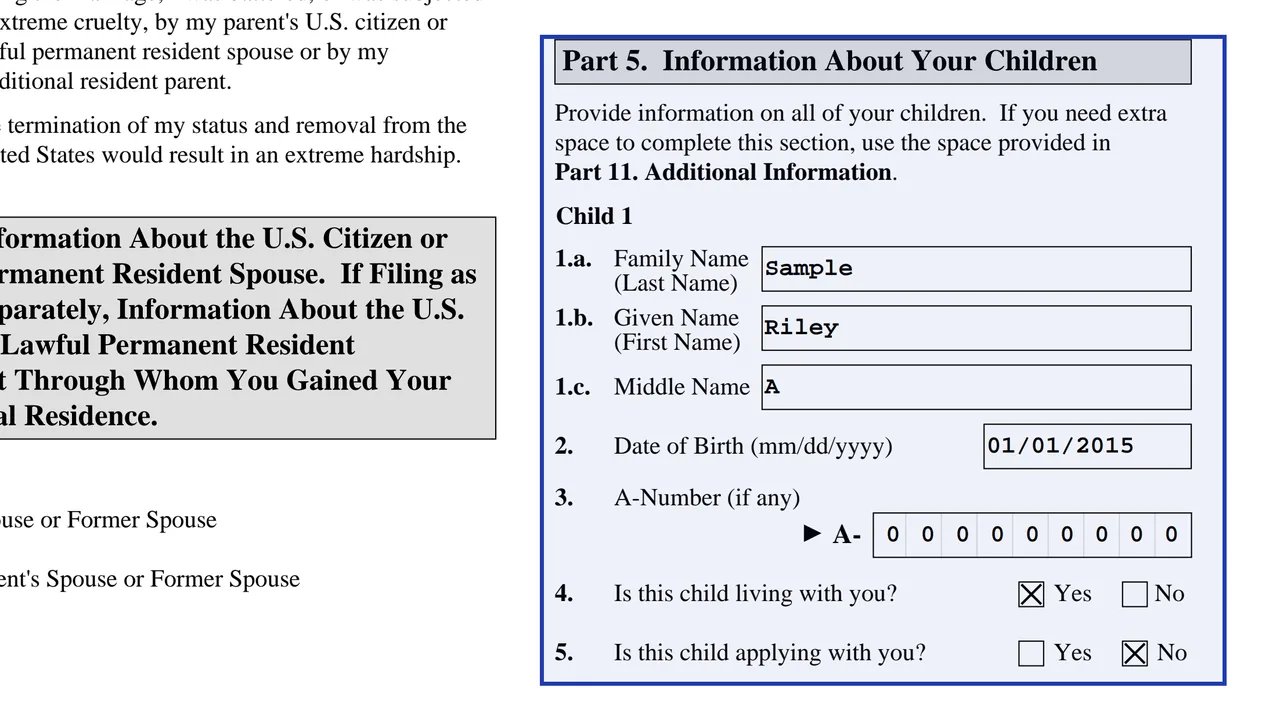
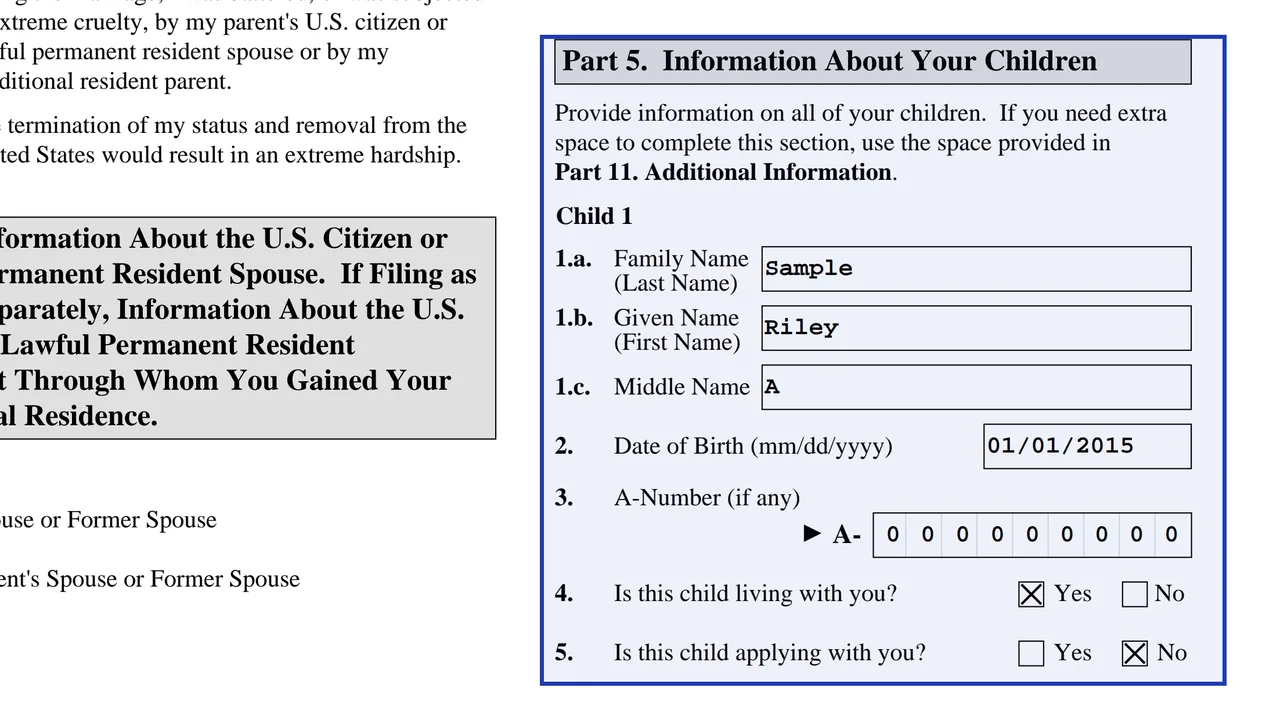
Conditional resident children included in the petition, with their A-Numbers.
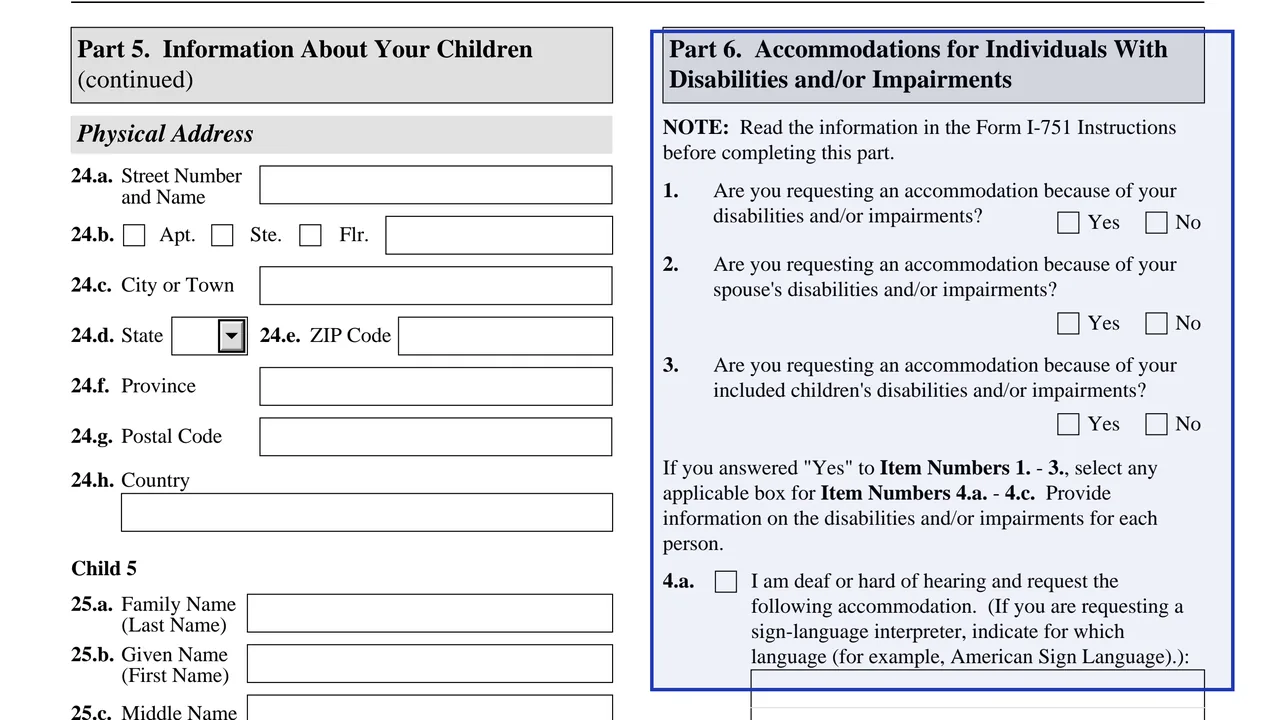
A request for disability accommodations or modifications.
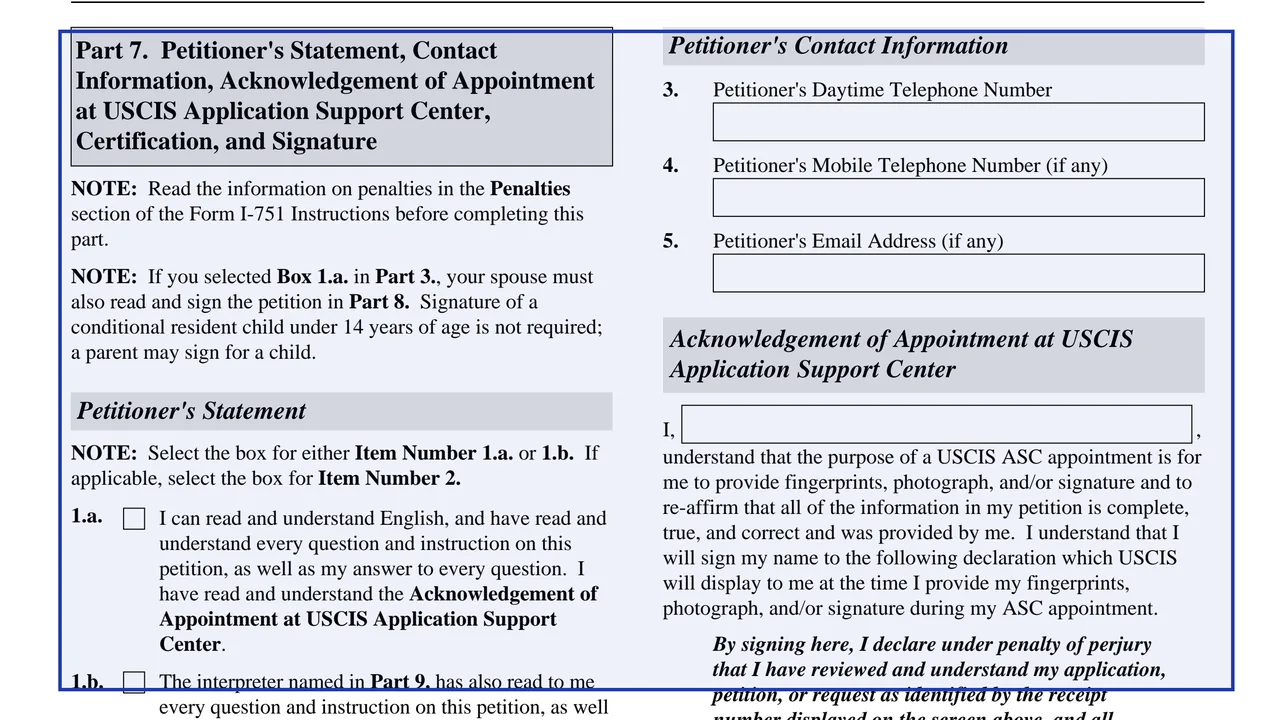
The petitioner signs Part 7. The spouse, or the individual named in Part 4, signs Part 8 on a joint petition. Both parts include an acknowledgement of an appointment at a USCIS Application Support Center.
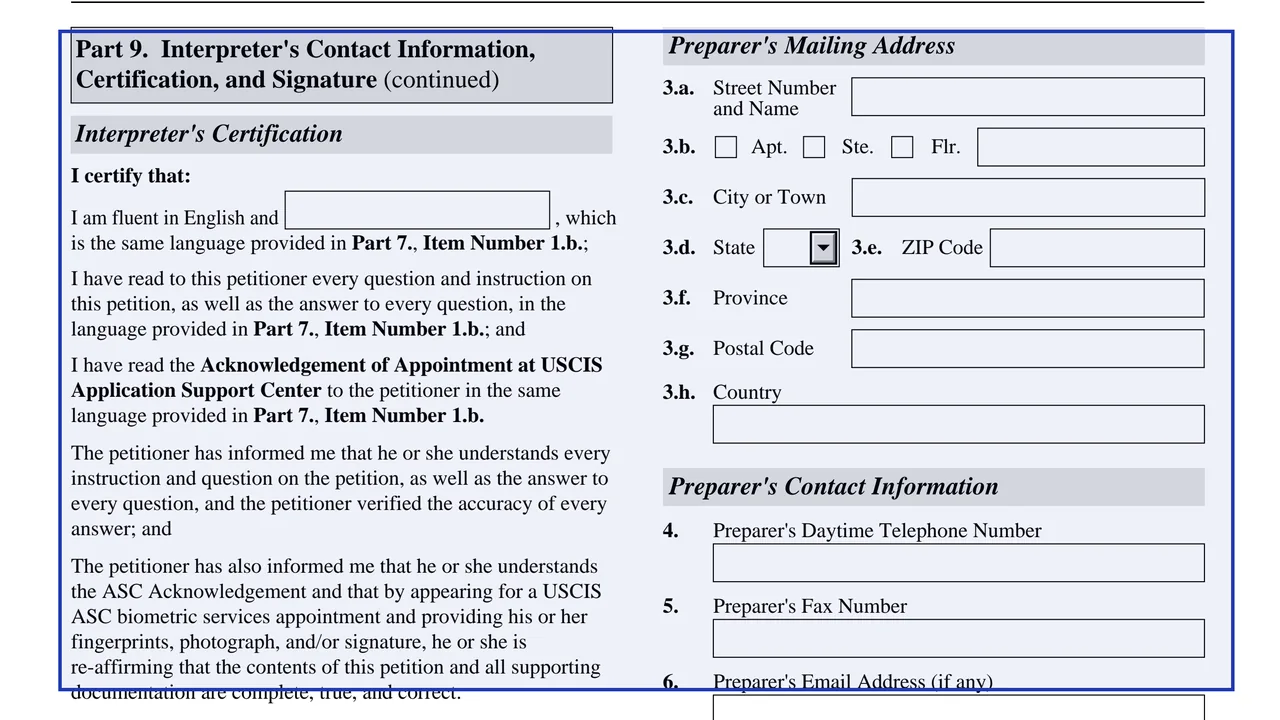
Interpreter details in Part 9, preparer details in Part 10, and Part 11 for additional information.
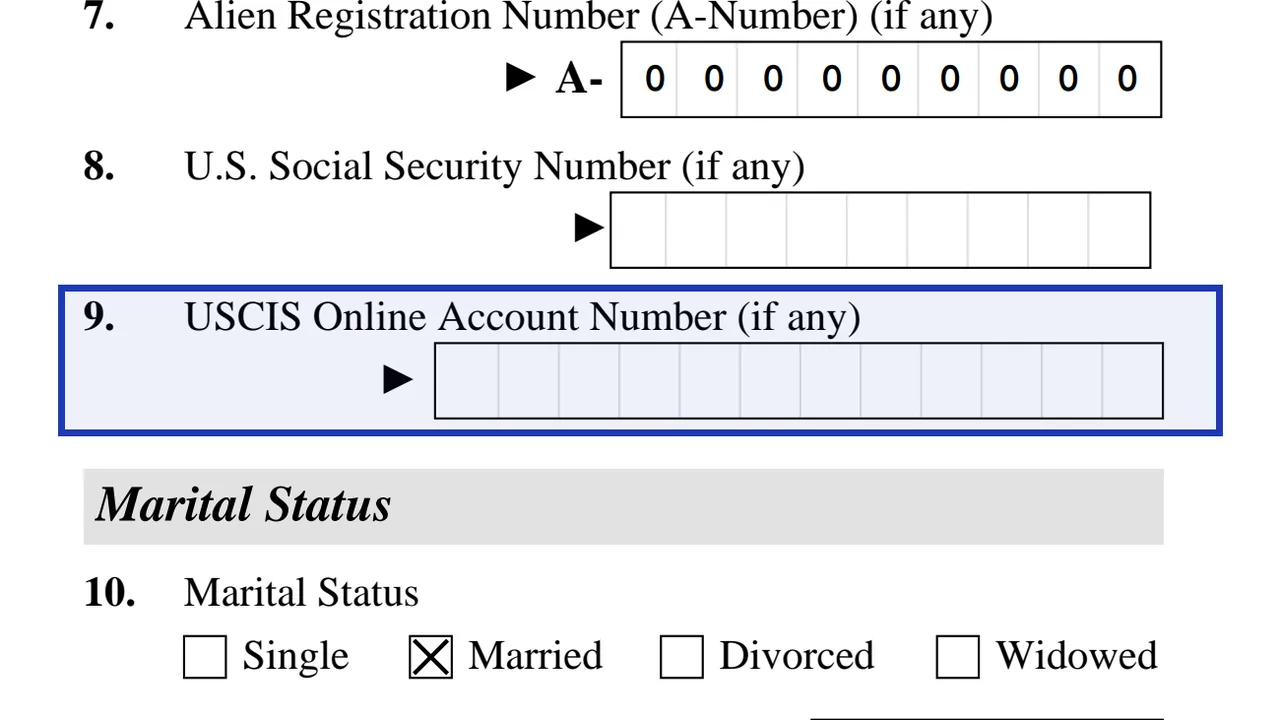
Give your name as it appears on your green card and your A-Number. Item 5, country of birth, and citizenship or nationality can differ, and the instructions say citizenship is not necessarily the country where you were born. Write stateless and explain in Part 11 if it applies.
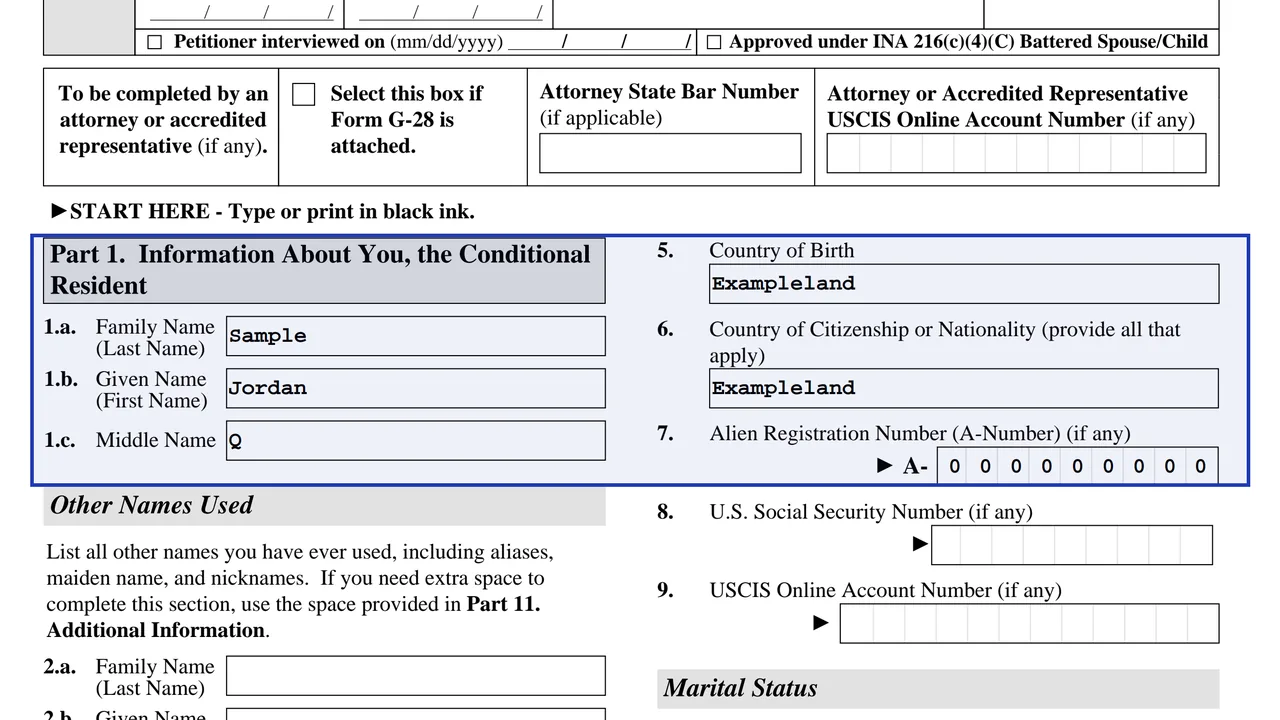
Enter a USCIS Online Account Number only if you have filed a form whose receipt number begins with IOE. It is not your A-Number.
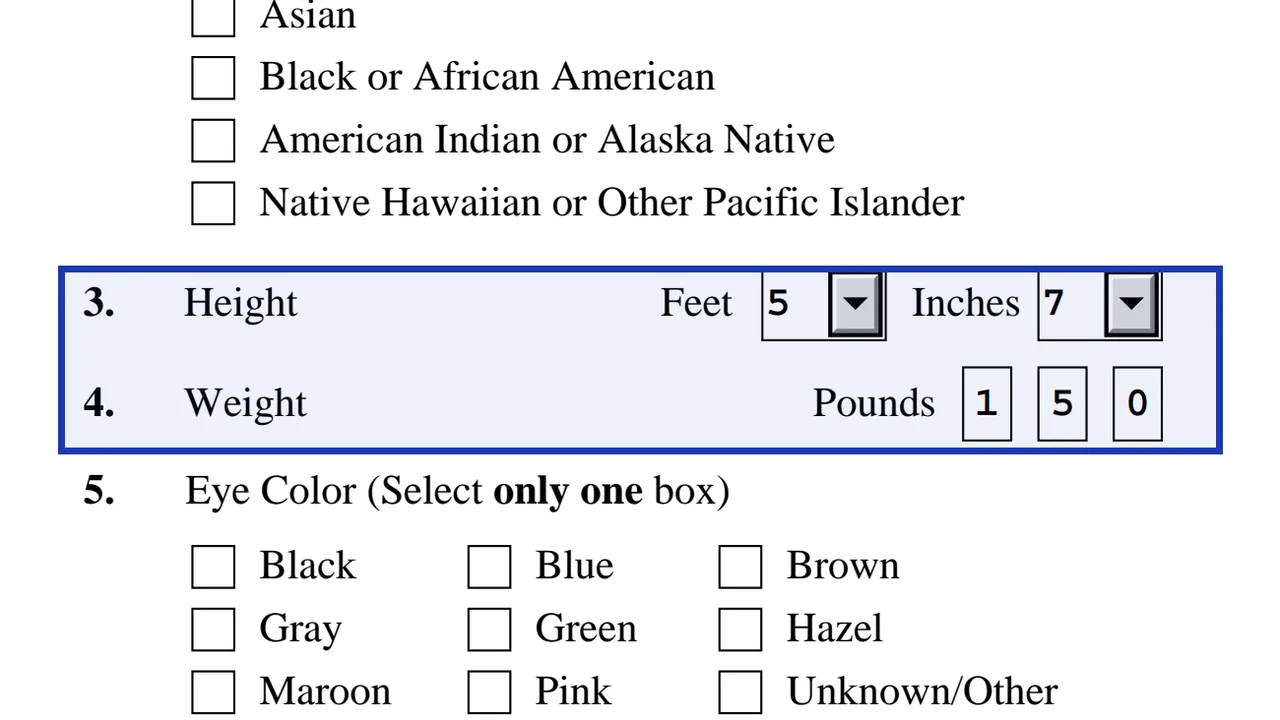
Pick the ethnicity and race boxes that fit. Enter height with the feet and inches fields, and weight in pounds, using 000 if you do not know it.
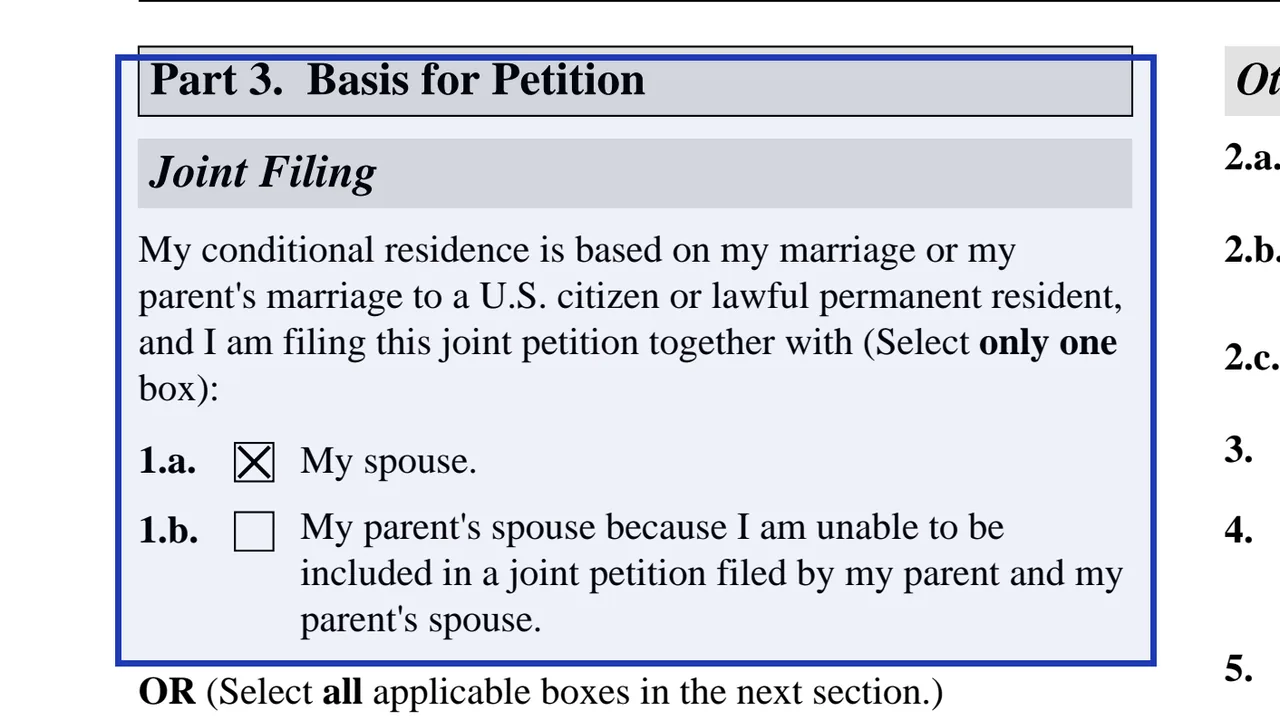
For a joint petition, pick 1.a for your spouse or 1.b if you are a child filing with your parent's spouse. For a waiver, pick the box that matches your situation and read the instructions for the evidence it needs.
Fill in the details of the U.S. citizen or permanent resident spouse, using the other person's legal name and date of birth as they appear on their documents.
Add each conditional resident child you want covered. Children who do not qualify to be listed need their own petition.
Tick the boxes showing whether you read the form yourself or had it interpreted or prepared, then sign and date. A typed or stamped name is not accepted. On a joint petition your spouse signs Part 8.
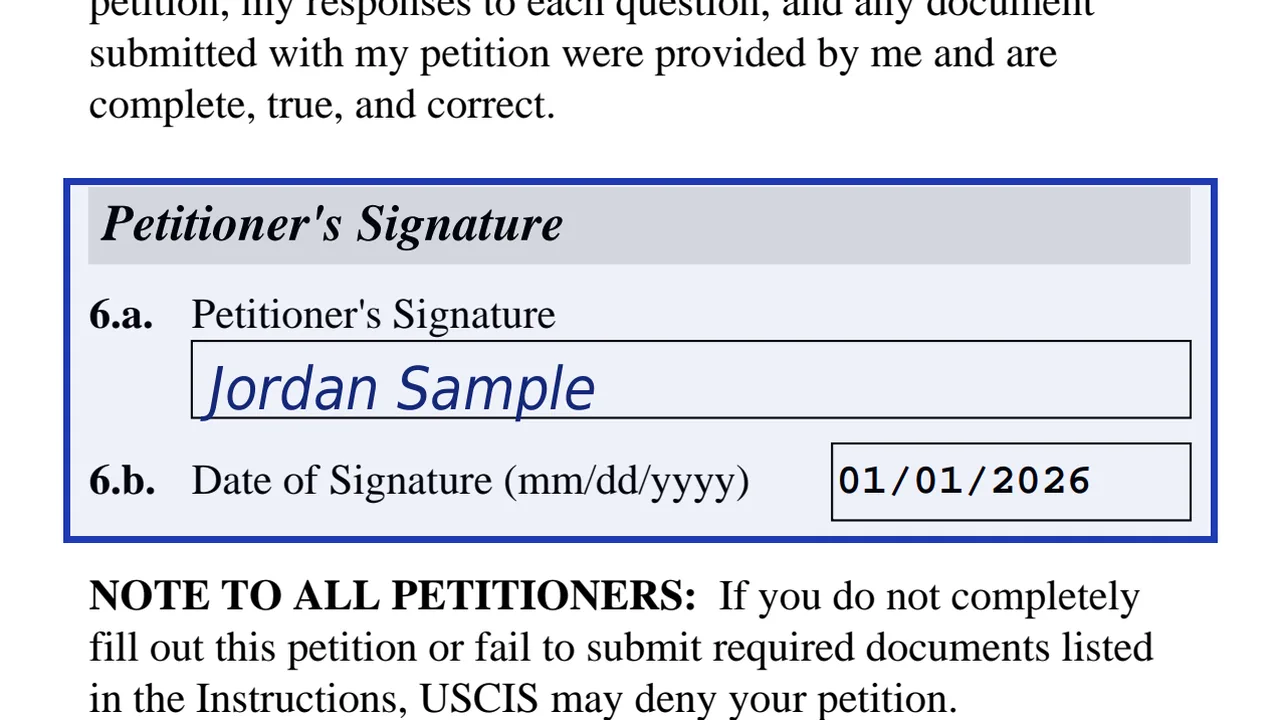
An interpreter signs Part 9 and a preparer signs Part 10. If an attorney or accredited representative helped, they also file Form G-28. Use Part 11 for any answer that needs more room, with the page, part and item number.
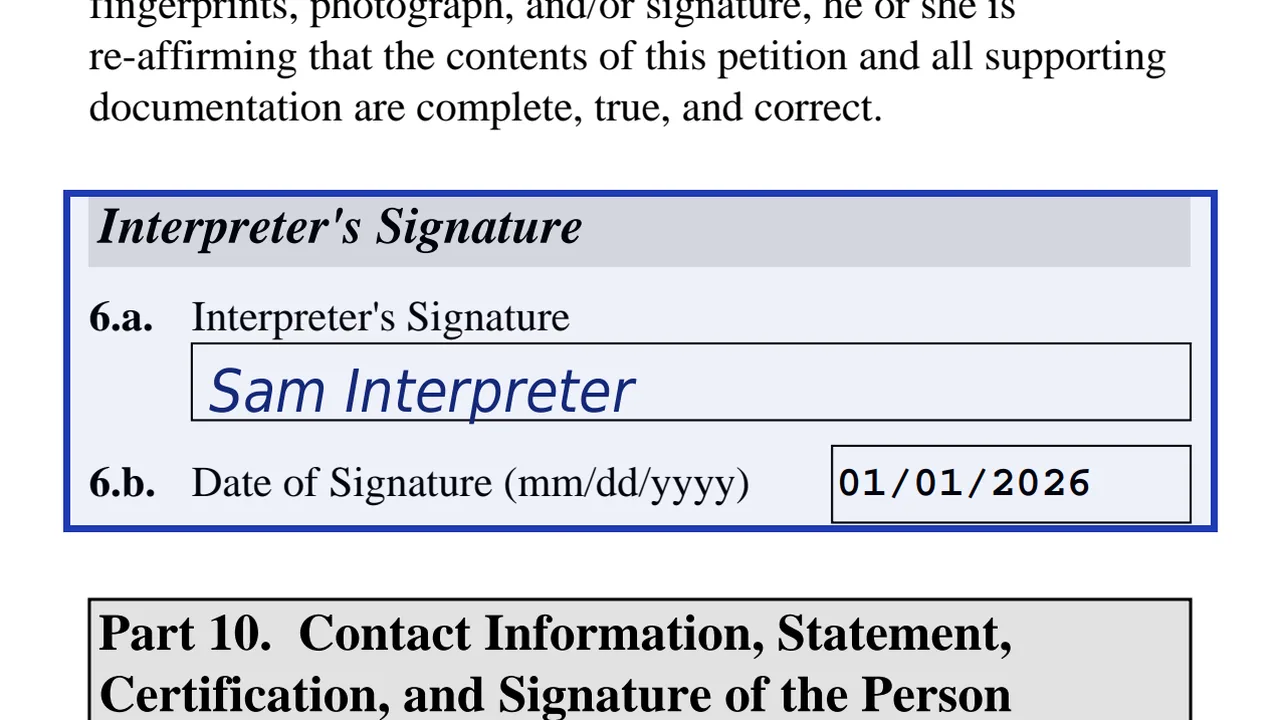
Type or print in black ink. Write N/A where an item does not apply and None where a numeric answer is zero.
You get the real form, filled in a browser tab, with nothing standing between you and the finished PDF.
File during the 90-day period right before your conditional residence expires. USCIS says a petition filed before that window may be rejected, and it has a page to work out the first day.
If you file alone with a waiver, you may file at any time after conditional residence is granted and before you are removed from the United States.
USCIS may excuse a late petition if you explain extraordinary circumstances beyond your control and the delay was reasonable.
You can file online with a USCIS account, or by mail. The mailing address is on the USCIS Direct Filing Addresses page for Form I-751.
Fees change, so check the USCIS fee schedule page before you file.
Attach a copy of both sides of your green card and your children's cards, plus evidence the marriage was real: joint leases, joint financial records, birth certificates of children, and sworn statements from at least two people who know you both. Waiver cases need the death certificate, divorce decree, abuse evidence or hardship evidence that fits.
Filing before the 90-day window opens, sending the wrong edition, leaving signatures off, and not explaining arrests or charges with the court records the instructions list.
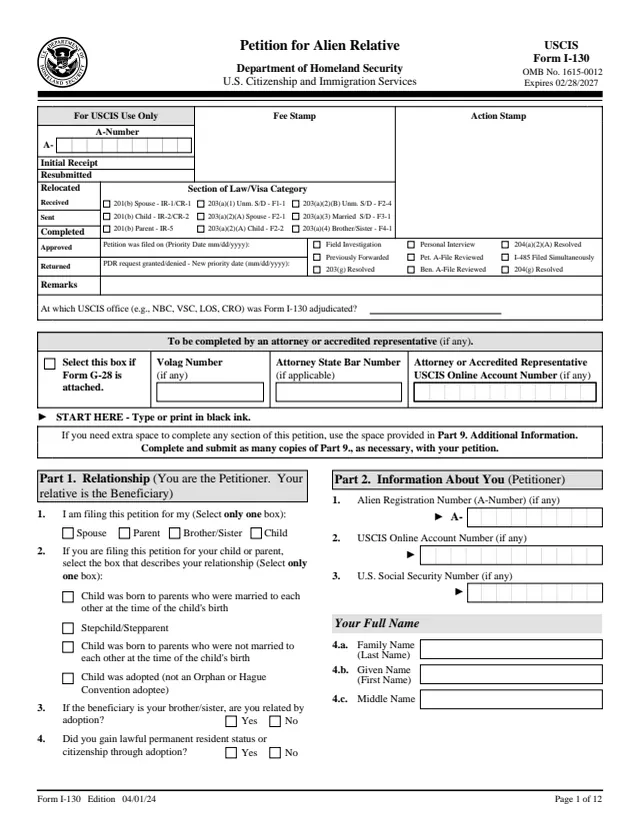
I-130
450 fields, 12 pages
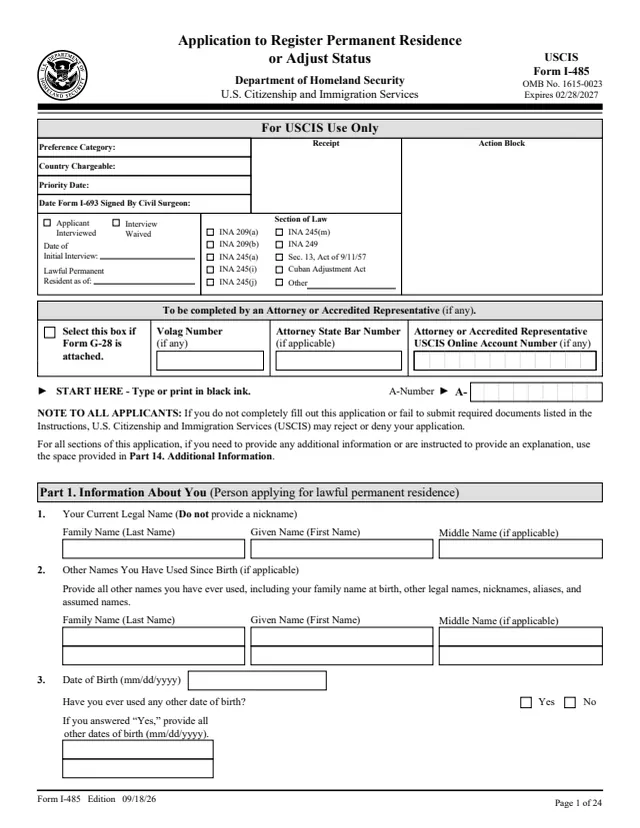
I-485
730 fields, 24 pages
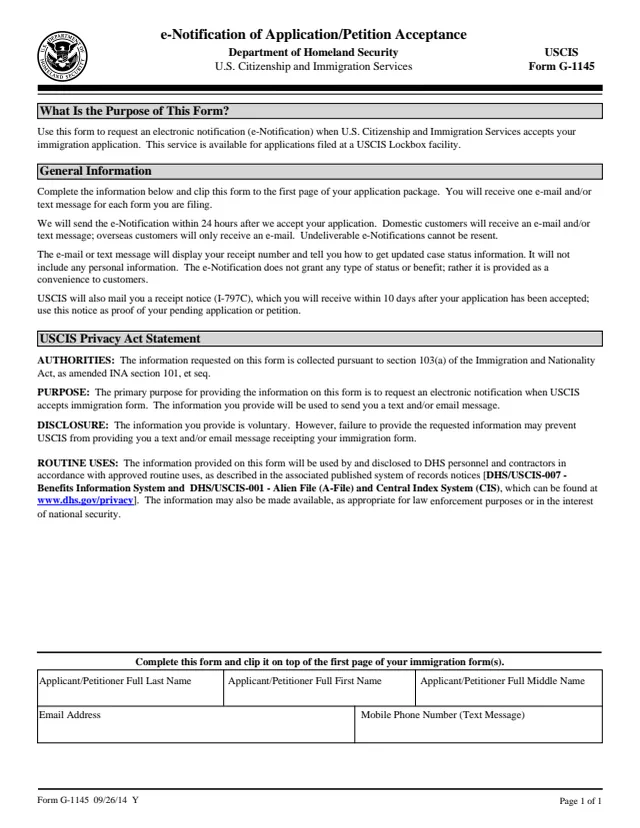
G-1145
6 fields, 1 page
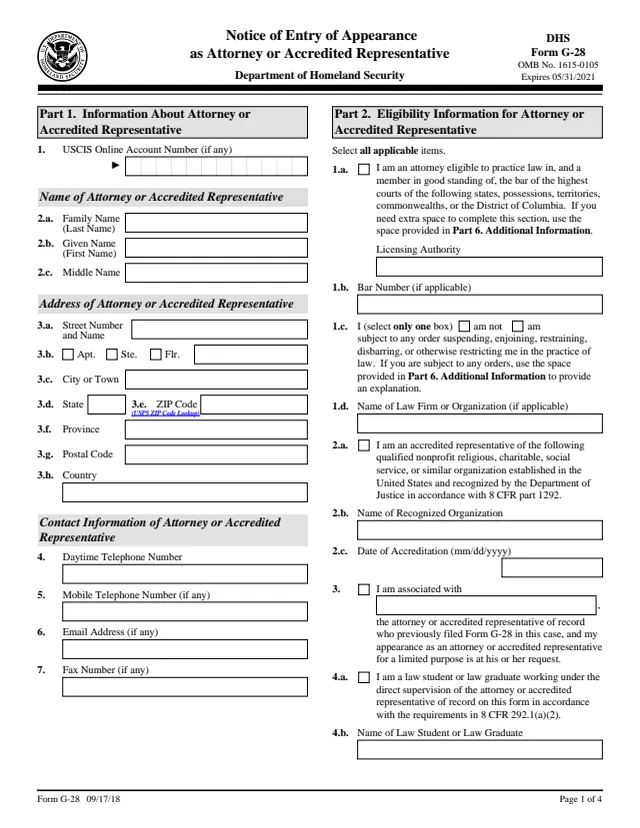
G-28
101 fields, 4 pages
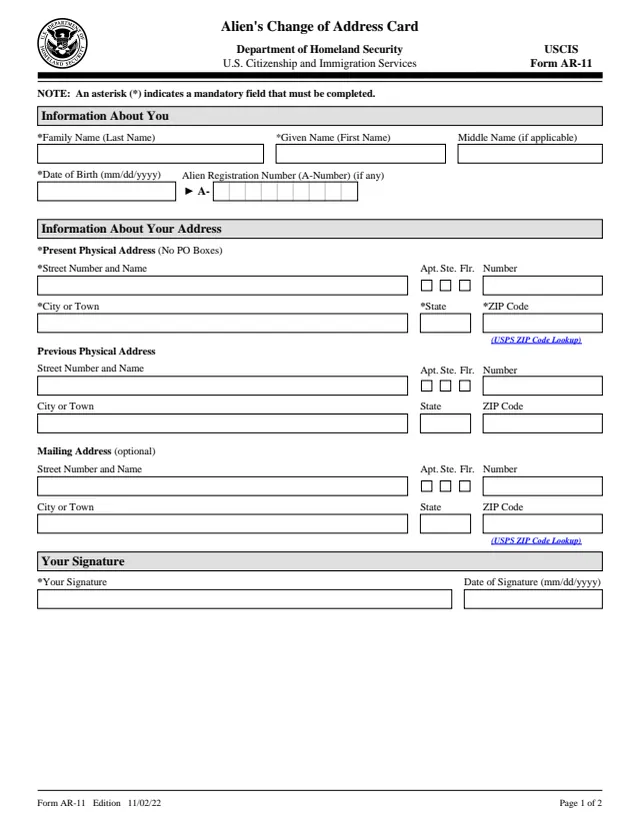
AR-11
31 fields, 2 pages
You file if USCIS granted you conditional residence through marriage to a U.S. citizen or lawful permanent resident.
No tool matches that search.
For a joint petition, during the 90 days before your conditional residence expires. USCIS has a page to find the first day of your window. Waiver cases can file earlier.
The instructions say you lose permanent resident status two years after it was granted and become removable from the United States.
On a joint petition, yes. The petitioner signs Part 7 and the spouse signs Part 8. If you file alone with a waiver, only you sign.
Yes. USCIS lets you file online with a USCIS online account, or by mail on paper.
The instructions ask for court or arresting agency records for each incident, such as dispositions, certified sentencing records, or a statement that no charges were filed.
Children who got conditional status on the same day as you or within 90 days after can be listed in Part 5. Other children must file separately.