I-129F

Petition for Alien Fiancé(e)

Agency
USCIS
Revision
01/20/25
Fillable fields
445
Pages
12
Official source
USCIS form page
Checked
September 10, 2026
Fill I-129F online
Page 1 of form I-129F

Form I-129F: Petition for Alien Fiancé(e)

Form I-129F is how a U.S. citizen asks USCIS to classify a foreign partner as a K nonimmigrant. A K-1 classification lets your fiancé(e) enter the United States to marry you, and a K-3 classification lets your spouse enter to wait for an immigrant visa. Children of a K-1 or K-3 can apply as K-2 or K-4 without a separate petition.

The petitioner is always the U.S. citizen. The foreign partner is the beneficiary. USCIS decides the petition first, then it goes to the Department of State, and the beneficiary applies for the visa at a U.S. embassy or consulate.

The form asks about your history, your beneficiary's history, how you met, and any protection orders or serious criminal history. You can fill it online on this page for free without an account, then print, sign and mail it with the evidence listed below.

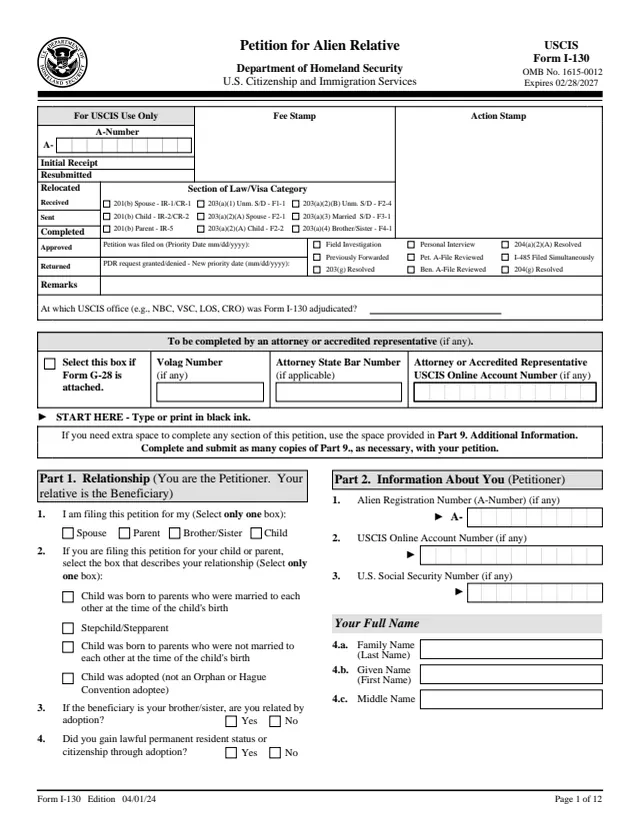
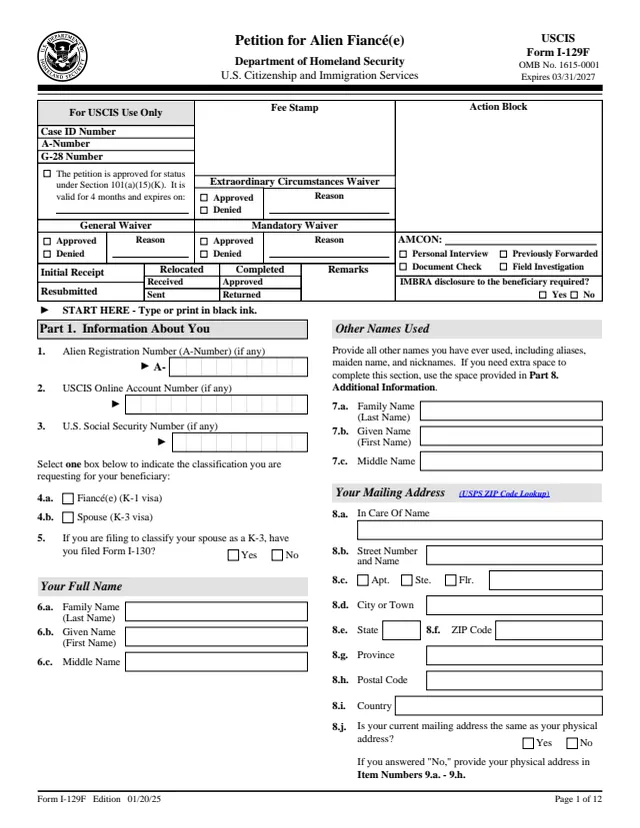
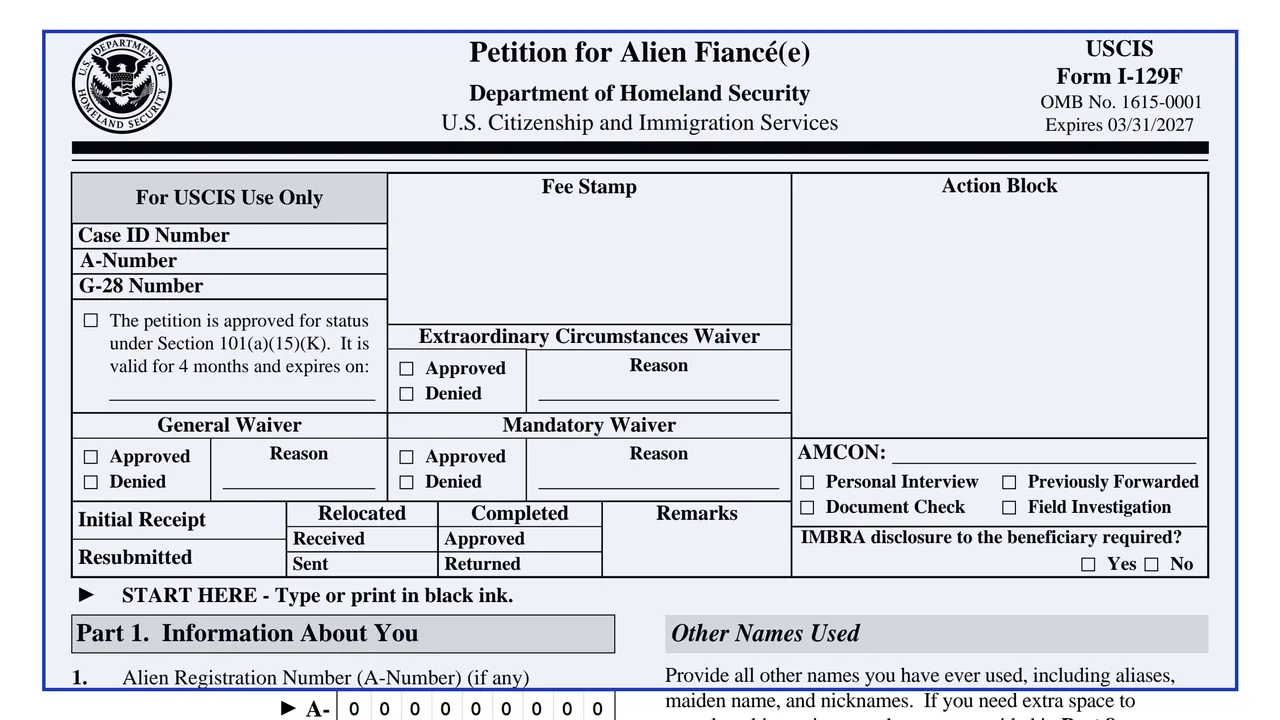
Page 1 of Form I-129F, Petition for Alien Fiancé(e), with the title area and the start of Part 1

What's on Form I-129F

Part 1. Information about you

Your A-Number if any, classification requested (fiancé(e) or spouse), names, mailing address, five-year address and employment history, birth details, parents, previous marriages, how you became a citizen, earlier I-129F filings, children under 18, and places you have lived since 18.
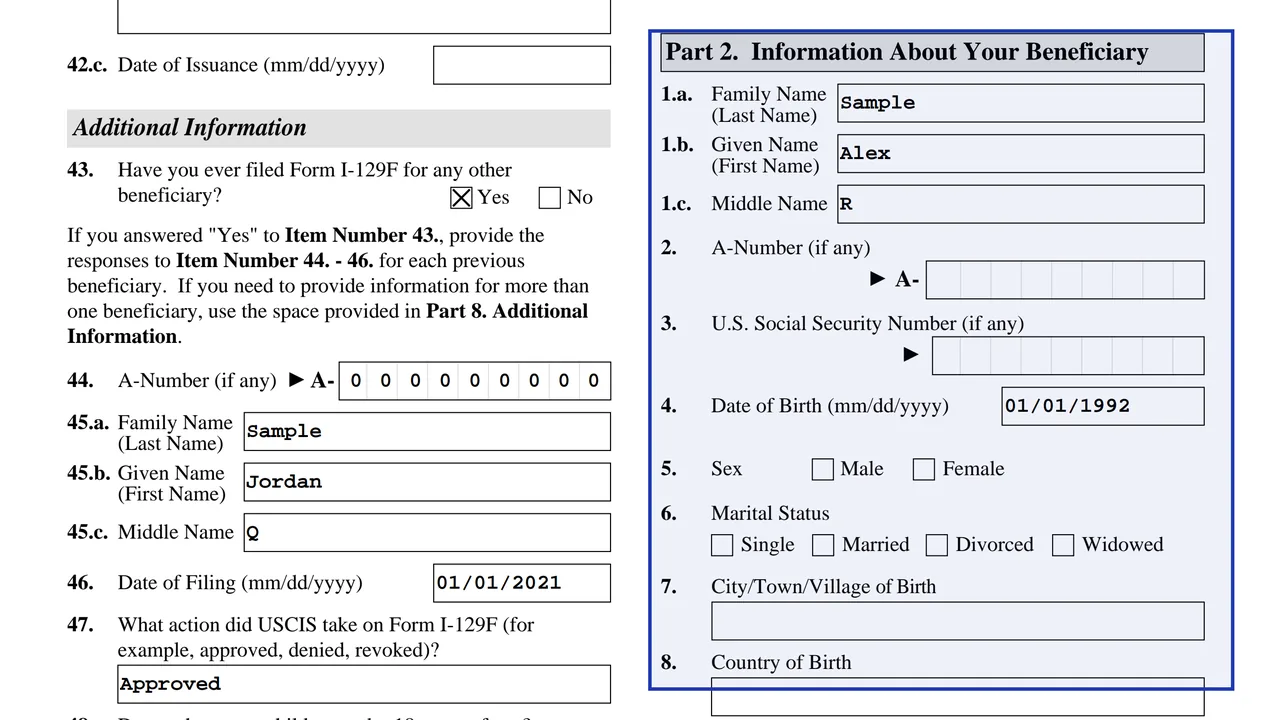
Part 2. Information about your beneficiary

The same kind of detail for your partner: names, birth details, marital history, I-94 data, children, address in the U.S. where they will live, address abroad, name in native alphabet, family relationship to you, whether you met in person, marriage broker details, and the embassy requested.

Part 3. Other information

Protection orders, specified crimes, other arrests and convictions, and the multiple filer waiver request.

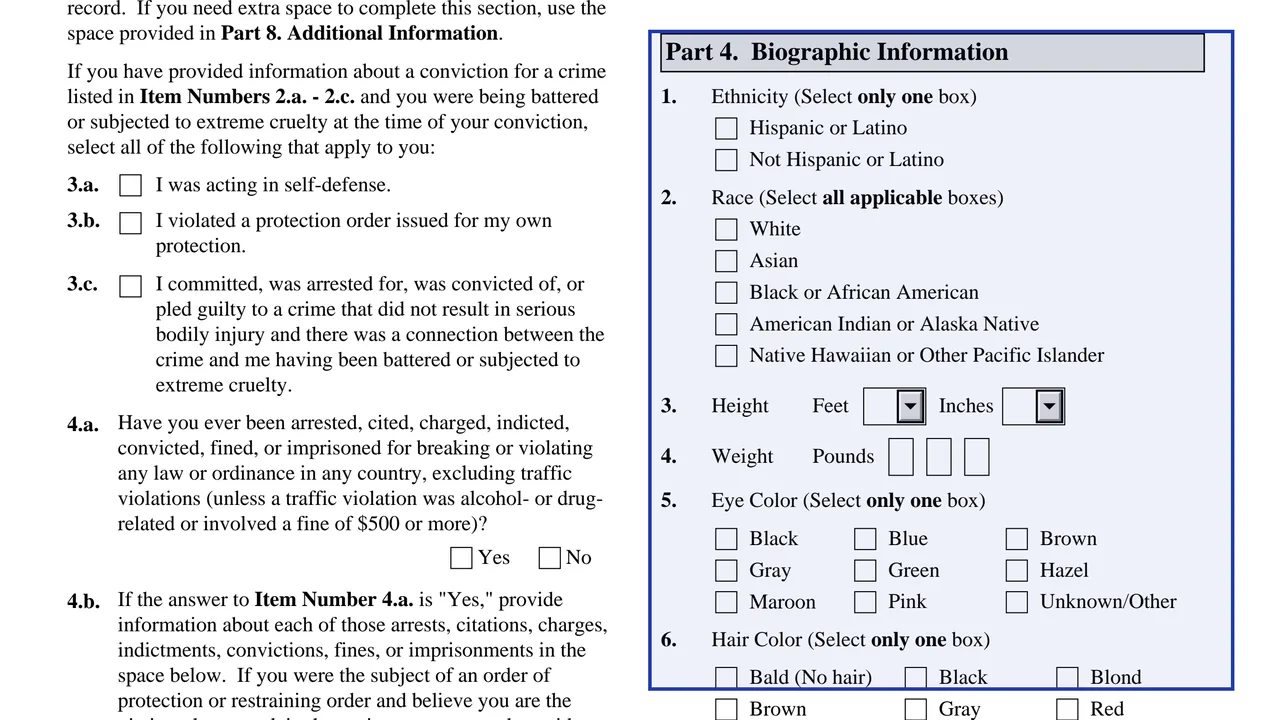
Part 4. Biographic information

Ethnicity, race, height, weight, eye color and hair color.

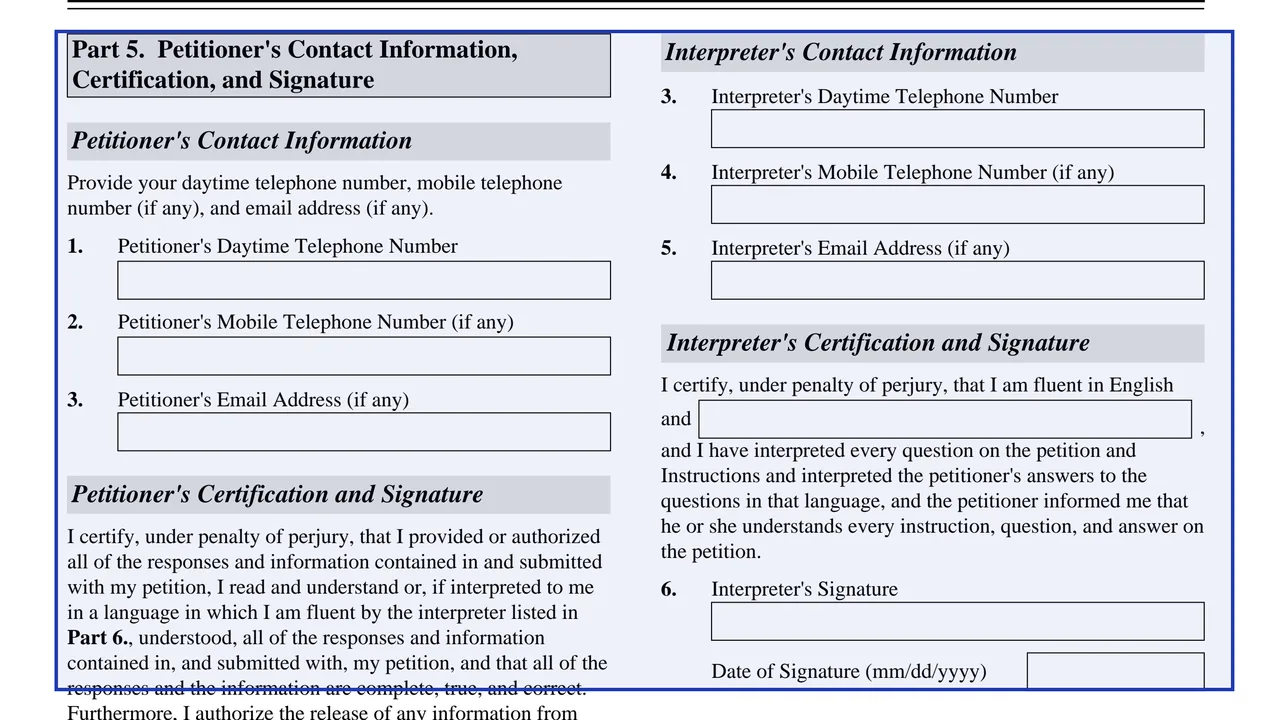
Parts 5 to 7. Signatures

Petitioner's statement and signature, interpreter's certification, and preparer's statement.

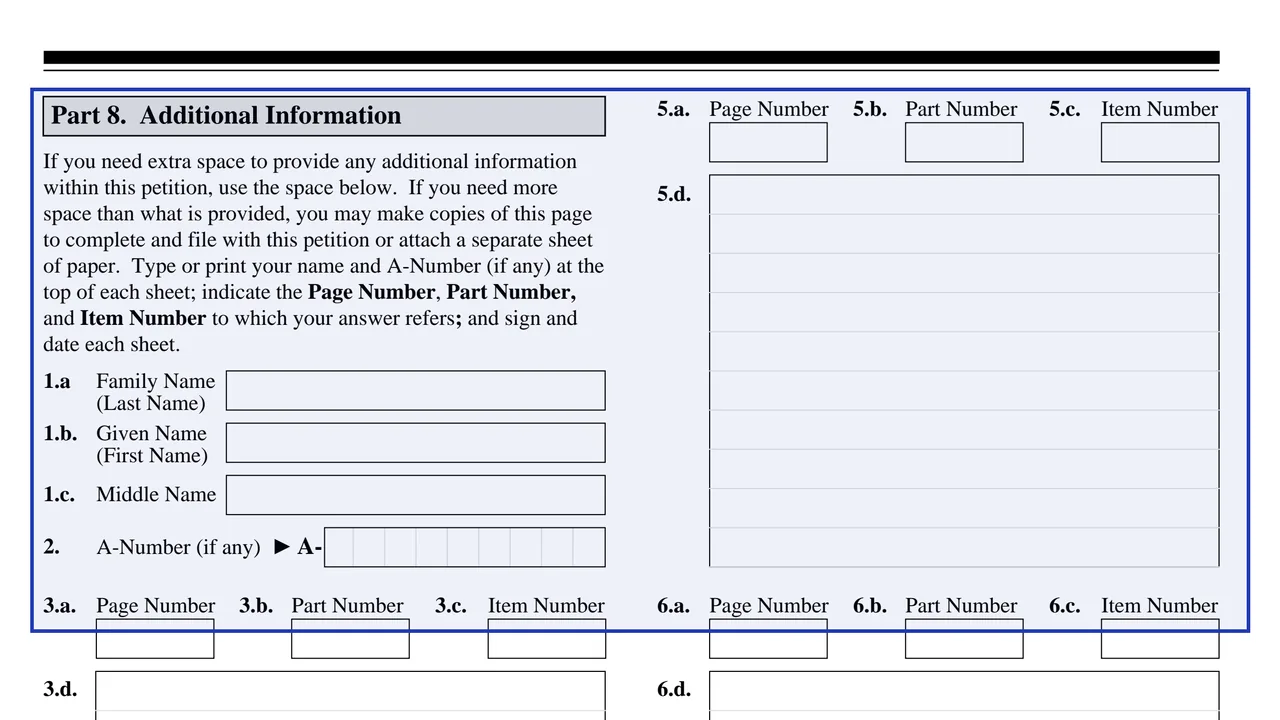
Part 8. Additional information

Extra space for longer answers, with page, part and item numbers.

How to fill out Form I-129F

  1. 1

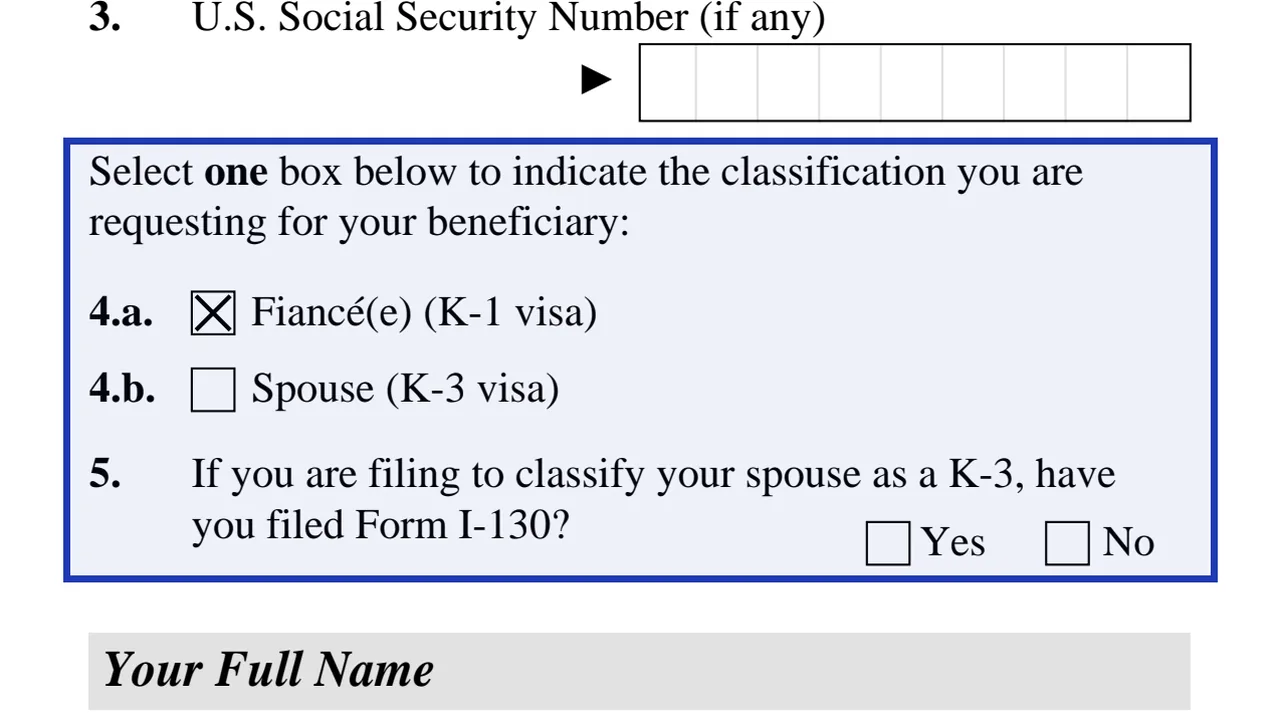
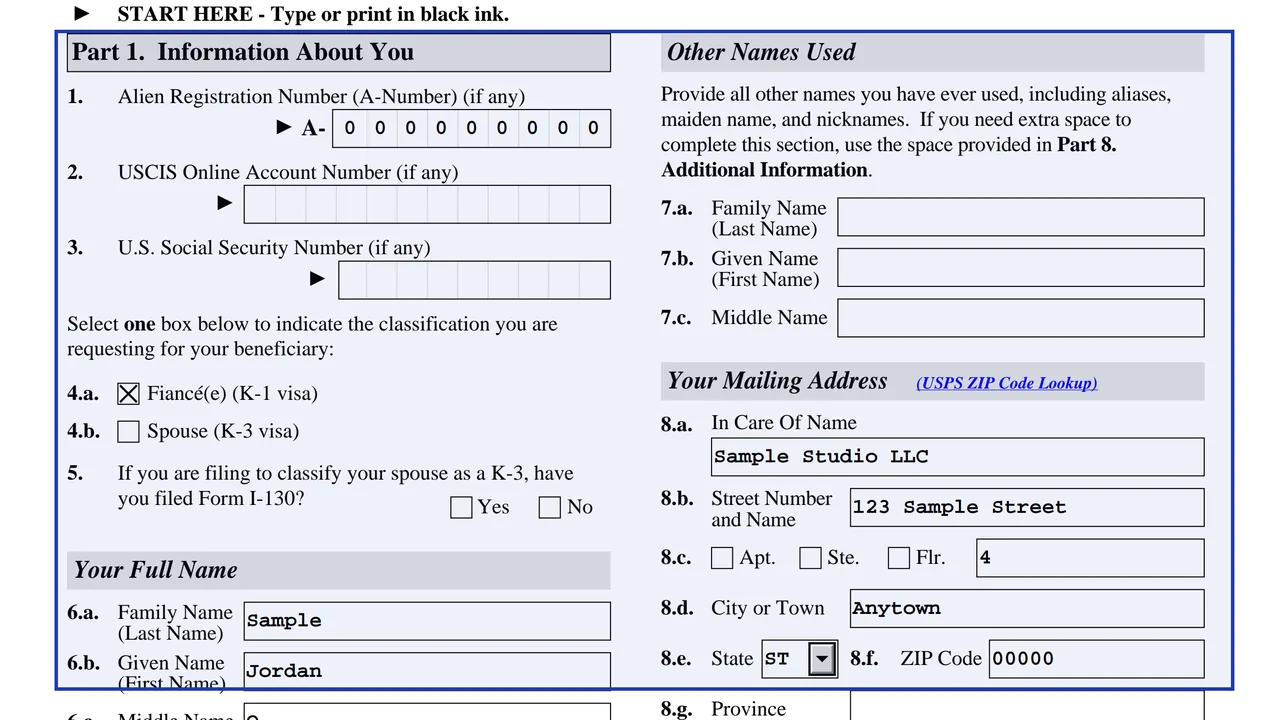
    Part 1, Items 4 and 5: classification

    Tick whether you are filing for a fiancé(e) or a spouse. For a spouse, say whether Form I-130 is filed and attach proof, such as a concurrent I-130, a receipt or approval notice, or the receipt number.

    Form I-129F Part 1 Items 4 and 5 with the fiancé(e) or spouse classification box checked
  2. 2

    Part 1: your history

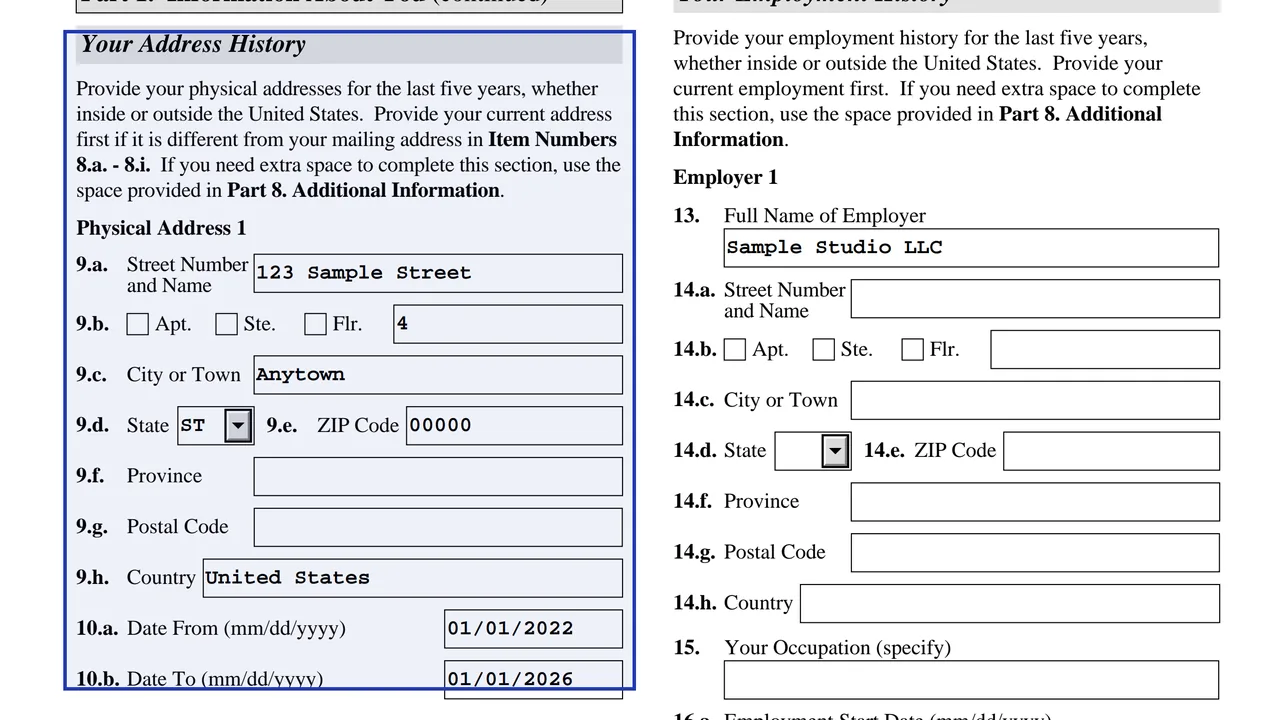
    Give your full legal name, mailing address, and the places you lived and worked in the last five years. If you used other names, list them. Overflow goes in Part 8.

    Form I-129F Part 1 address history with a physical address and from and to dates, sample values
  3. 3

    Part 1, Items 40 to 47: citizenship and prior petitions

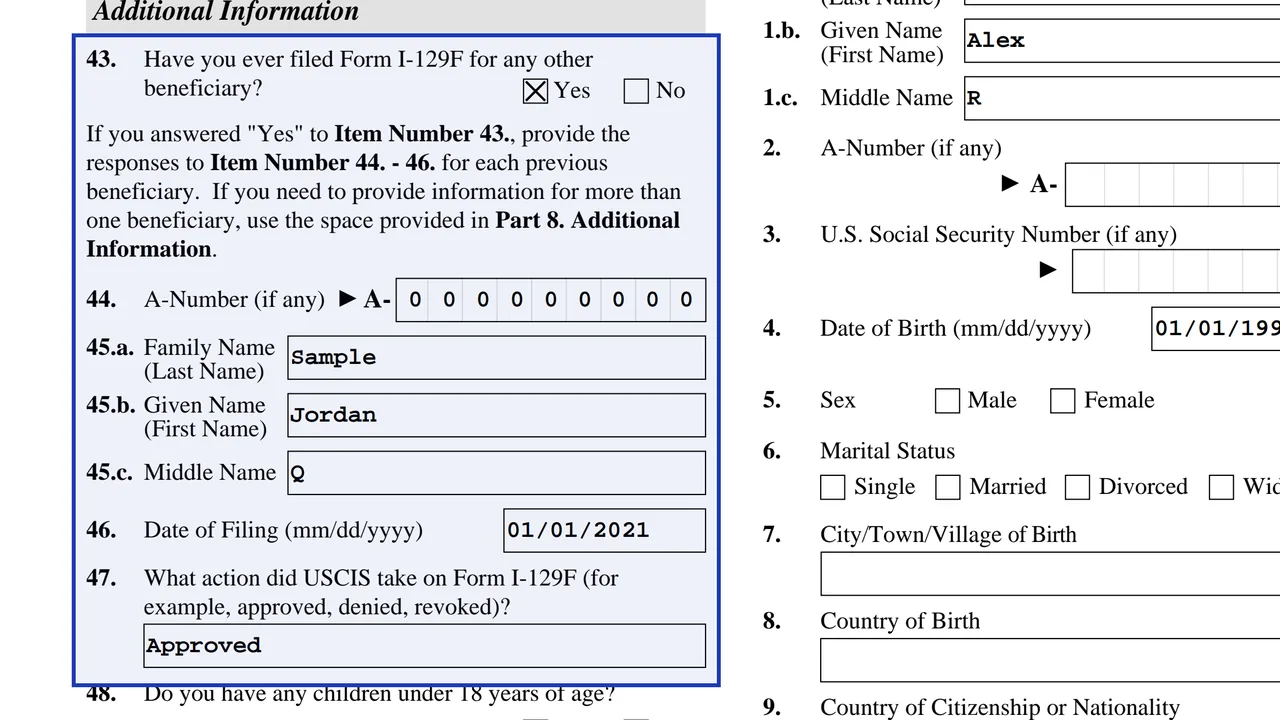
    Say how you obtained citizenship and, if you have filed an I-129F before for anyone, give that person's name and the final action taken.

    Form I-129F Part 1 Items 43 to 47 on earlier I-129F filings, with sample values
  4. 4

    Part 2: your beneficiary

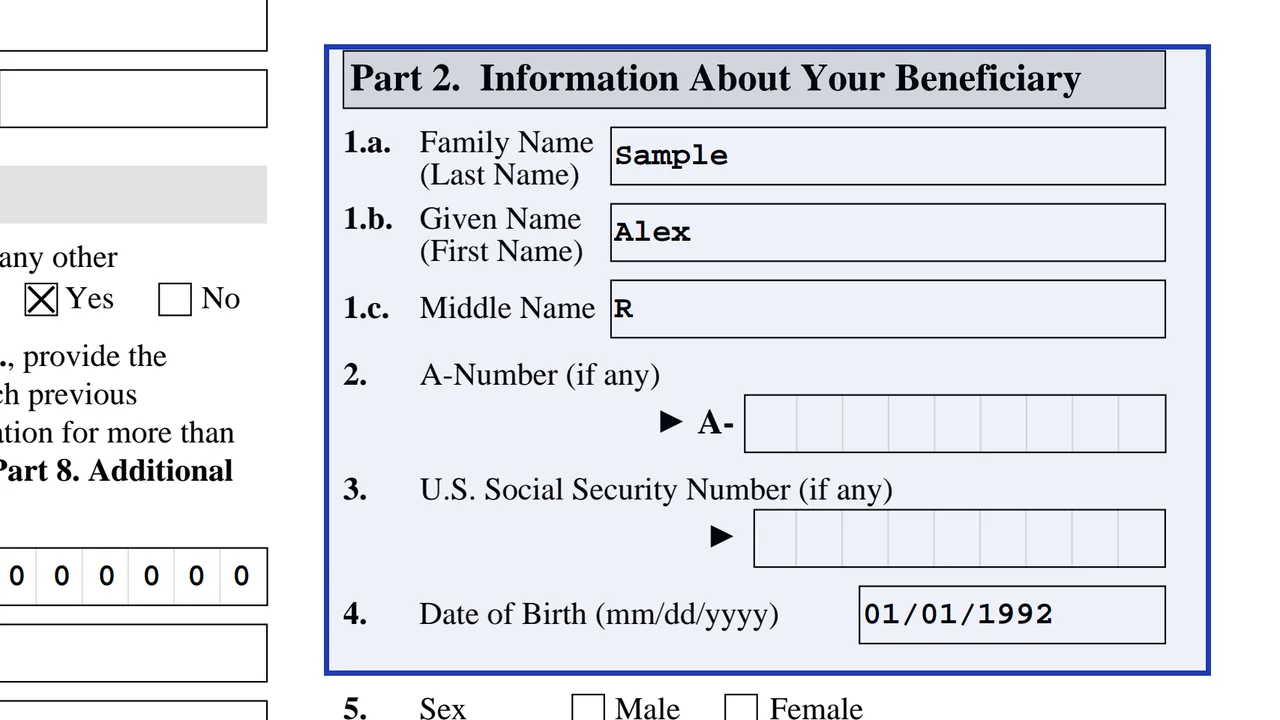
    Use your partner's full legal name and the mailing address in the United States if they have one. Item 11 is a mailing address, Items 45 and 46 are where they intend to live in the U.S., and Items 47 and 48 are the address abroad.

    Form I-129F Part 2 with the beneficiary's legal name and date of birth, sample values
  5. 5

    Part 2, Items 53 and 54: meeting in person

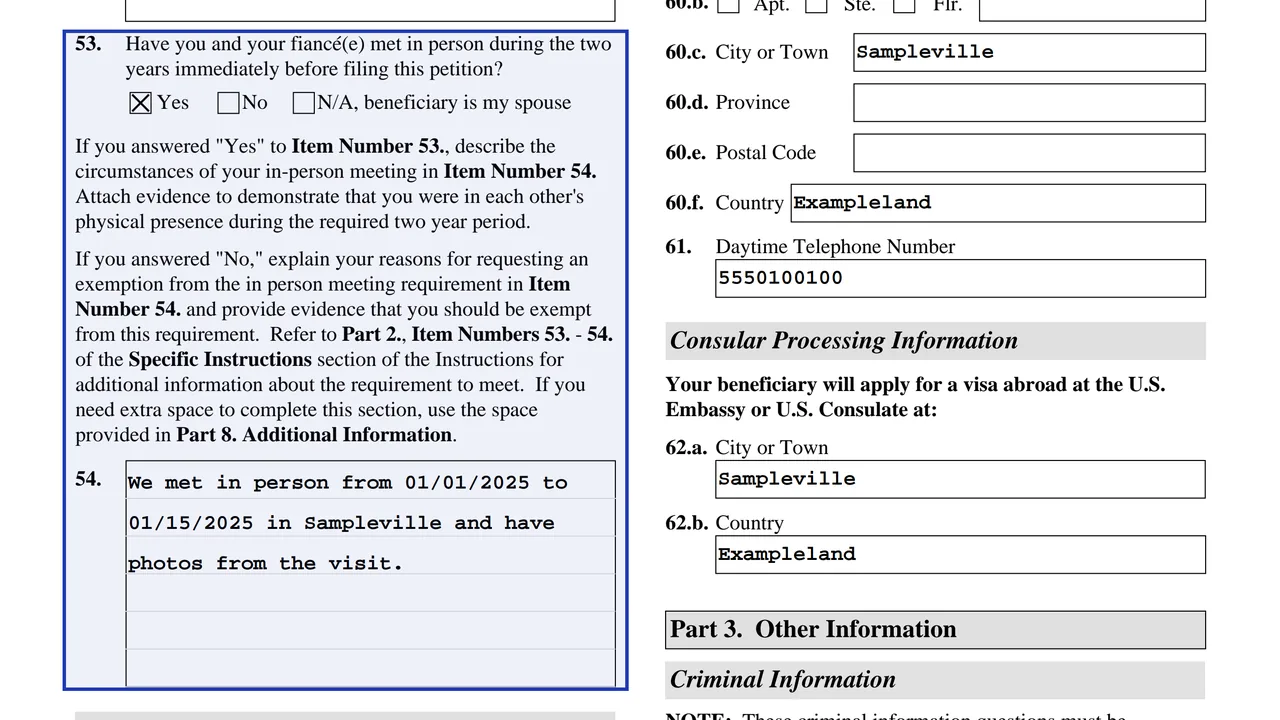
    For a fiancé(e), say whether you met in the past two years and describe it with evidence. If not, explain the exemption you are asking for. Select N/A if the beneficiary is your spouse.

    Form I-129F Part 2 Items 53 and 54 with the in-person meeting answer and a short description
  6. 6

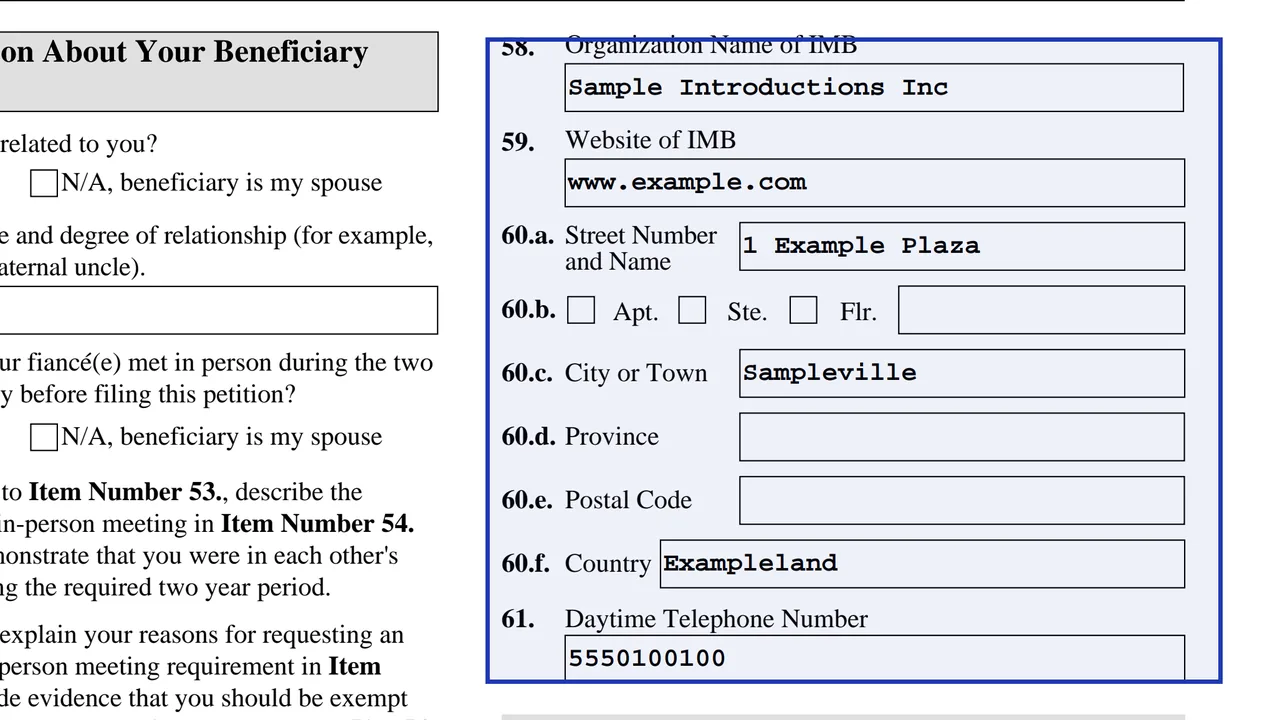
    Part 2, Items 55 to 61: marriage broker

    Say whether you met through an international marriage broker. If yes, give its details and attach the signed consent form the broker obtained from your beneficiary.

    Form I-129F Part 2 Items 58 to 61 with the international marriage broker's name, website and address, sample values
  7. 7

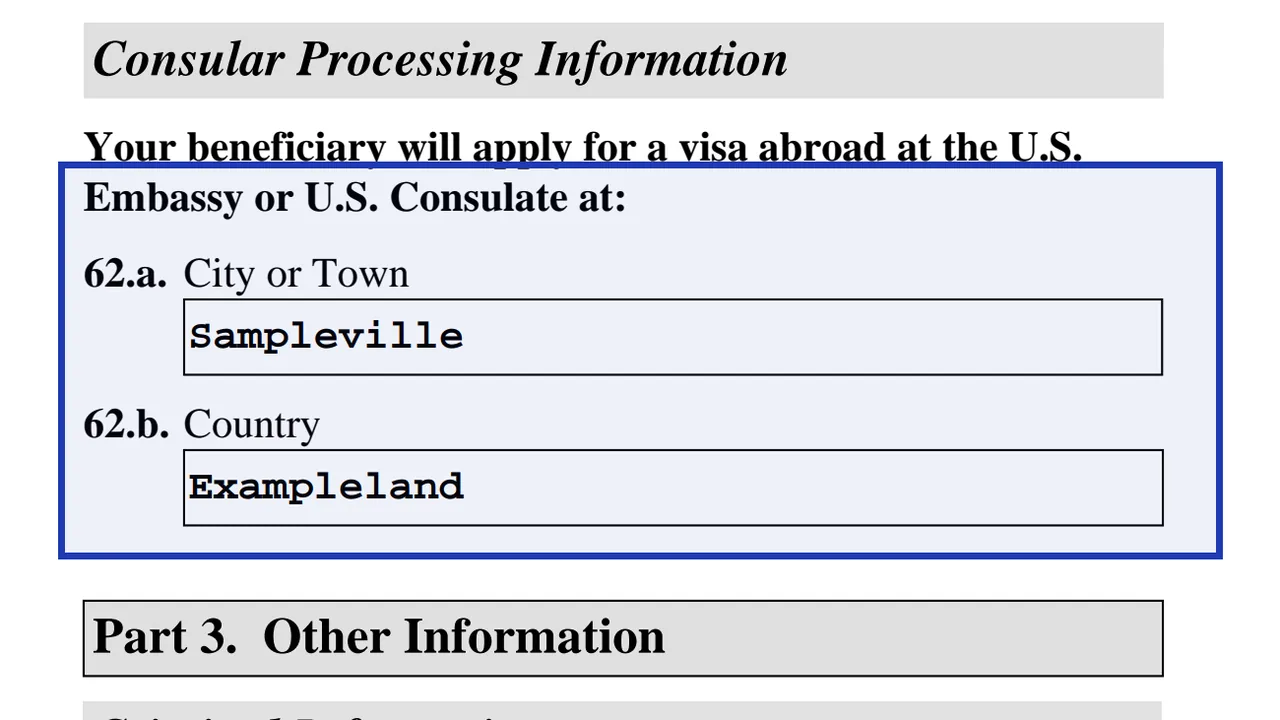
    Part 2, Item 62: embassy

    Name the U.S. embassy or consulate where your beneficiary will apply. A K-3 spouse who married abroad must apply in the country where the marriage took place.

    Form I-129F Part 2 Item 62 with the city and country of the U.S. embassy or consulate entered
  8. 8

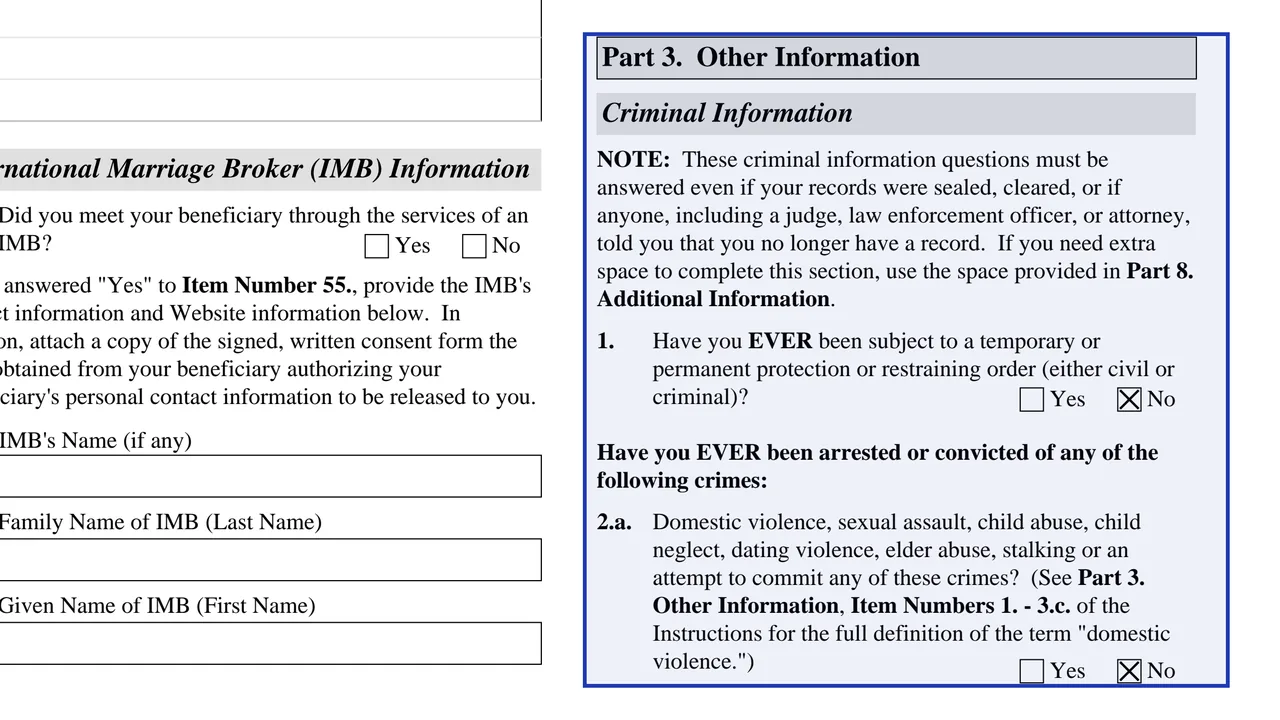
    Part 3: criminal information

    Answer every question. For listed offenses you must send certified court and police records, even if sealed or expunged, and USCIS shares this history with the beneficiary through the Department of State.

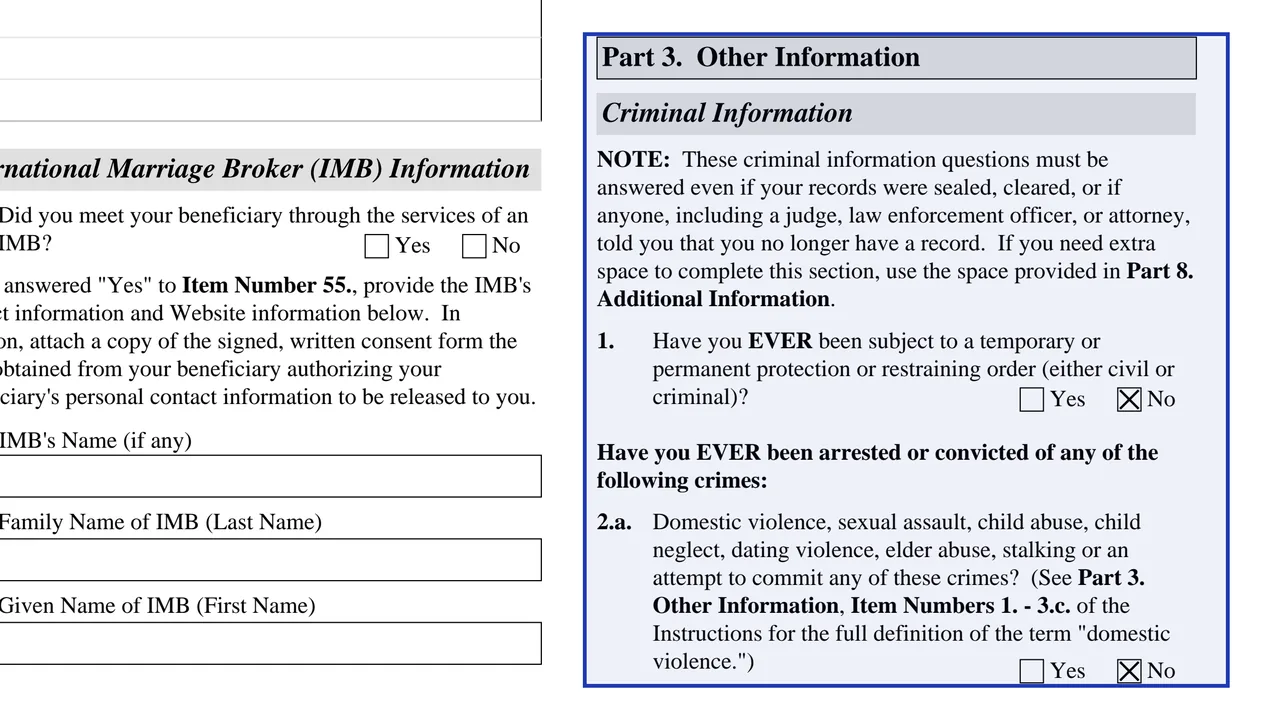
    Form I-129F Part 3 criminal information questions with the Yes or No answers marked
  9. 9

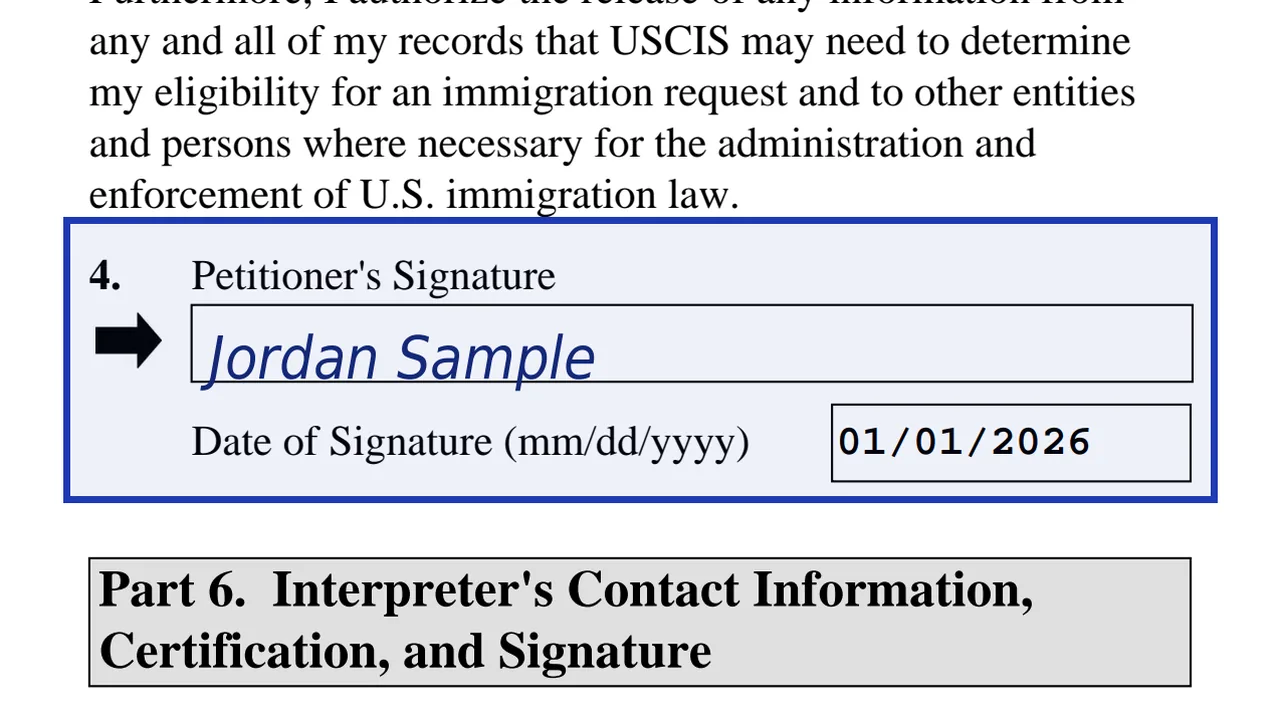
    Part 5: sign

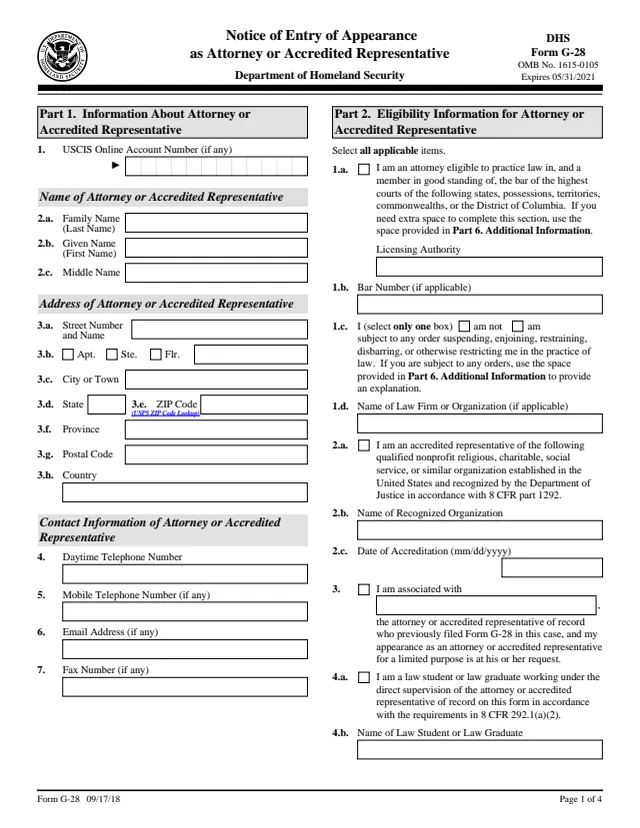
    Tick the interpreter and preparer boxes that apply, sign and date. A typed or stamped name is not accepted. If a lawyer or accredited representative helped, include Form G-28.

    The petitioner's ink signature and date on the Part 5 signature line of Form I-129F, using sample values

Type or print in black ink. Use N/A for items that do not apply and None for a numeric answer of zero.

Why fill Form I-129F on indox

You get the real form, filled in a browser tab, with nothing standing between you and the finished PDF.

  • Fill the form right in your browser, no software to install
  • Free to fill and free to download, with no account
  • The official blank straight from the USCIS, not a copy someone retyped
  • Works on a phone, tablet or computer

Deadlines, fees and where to send Form I-129F

Where to send it

File at the USCIS Dallas lockbox. USPS goes to USCIS, Attn: I-129F, P.O. Box 660151, Dallas, TX 75266-0151. FedEx, UPS and DHL deliveries go to USCIS, Attn: I-129F (Box 660151), 2501 South State Highway 121 Business, Suite 400, Lewisville, TX 75067-8003. USCIS international offices cannot decide this form.

Fee

Fees change, so check the USCIS fee schedule page for Form I-129F before you file.

Evidence of citizenship

A birth certificate, naturalization or citizenship certificate, Consular Report of Birth Abroad, unexpired U.S. passport, or a consular officer's statement.

Other required evidence

One color passport-style photo of you and one of your fiancé(e), taken within 30 days of filing, and proof that earlier marriages ended, such as a divorce decree, annulment or death certificate.

K-1 evidence

Evidence of a genuine intention to marry within 90 days of admission, and evidence you met in person within two years of filing, or evidence for the exemption.

K-3 evidence

Your marriage certificate and the Form I-797C showing Form I-130 was filed, unless you file both together.

Rejection and withdrawal

USCIS rejects an unsigned form and one missing key fields in Parts 1 and 2. To withdraw, send a signed written request. Once the beneficiary has been admitted in K status, you can no longer withdraw.

Who needs to fill out Form I-129F?

  • Petitioning for a fiancé(e) (K-1)

    You and your fiancé(e) are legally free to marry and intend to marry within 90 days after your fiancé(e) is admitted to the United States.

  • The two-year meeting rule

    You must have met in person during the two years before you file. The exceptions are strict long-standing customs of your fiancé(e)'s culture, or extreme hardship to you. Both need supporting evidence.

  • Petitioning for a spouse (K-3)

    You have filed, or are filing, Form I-130 for your spouse and want your spouse to enter as a nonimmigrant while waiting for an immigrant visa.

  • Not used for

    Children of the beneficiary do not need their own petition. USCIS notes that if you have children with your beneficiary, they might already be U.S. citizens through you.

You must be a U.S. citizen. USCIS describes two situations.

Official sources and the blank

Do it all with indox

View all 123 tools

Questions about Form I-129F

Who files Form I-129F?

The U.S. citizen petitioner. The foreign fiancé(e) or spouse is the beneficiary and does not sign the petition.

Do I need to have met my fiancé(e) in person?

Yes, within the two years before you file, unless you establish an exemption for strict long-standing customs or extreme hardship, with evidence.

Does my fiancé(e)'s child need a separate petition?

No. A K-1's child can apply as a K-2 and a K-3's child as a K-4, without a separate petition, if the child is unmarried and under 21.

Where do I mail the form?

To the USCIS Dallas lockbox. The USPS and courier addresses are on the USCIS Form I-129F page.

Can I get email or text notice that USCIS accepted it?

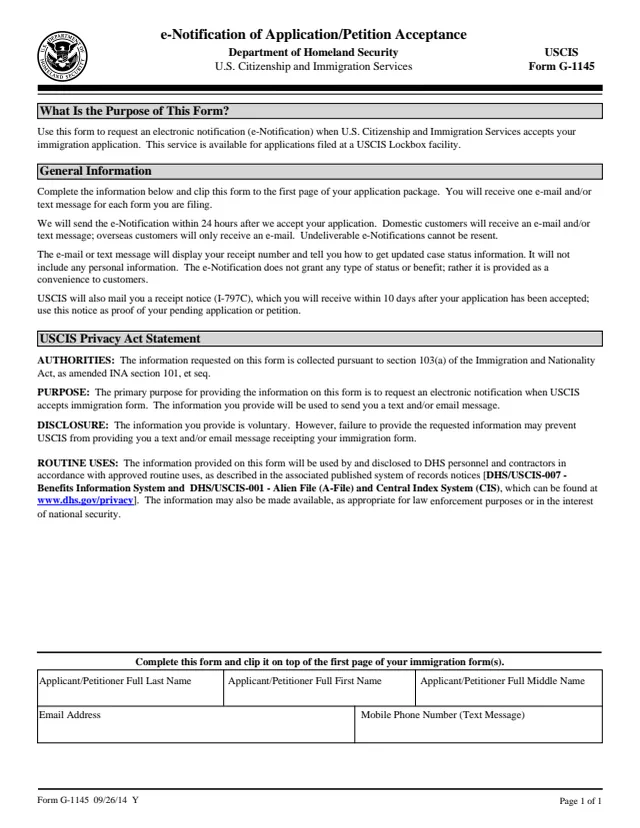
Yes. Fill out Form G-1145 and clip it to the first page of your filing.

Can USCIS approve this at an overseas office?

No. USCIS says it cannot decide this form at its international offices.