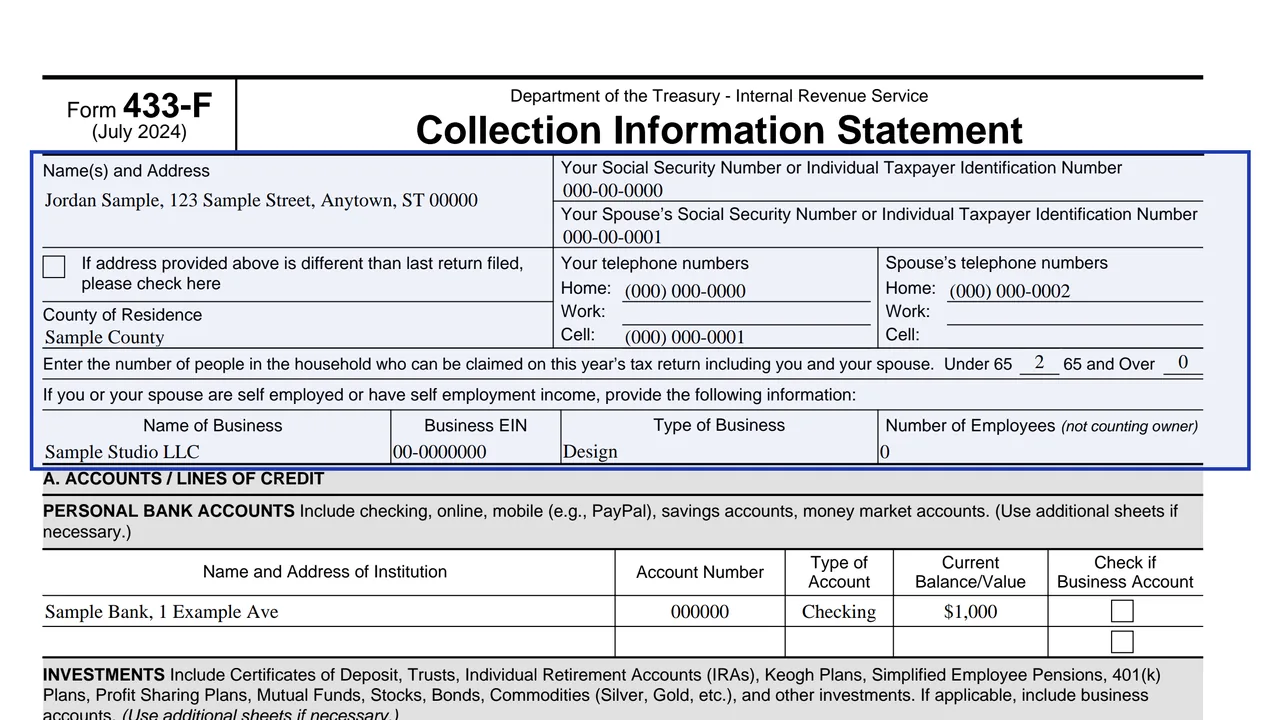
Top of page 1: personal information
Names, address, Social Security or taxpayer ID numbers, phone numbers, county, household size split into under 65 and 65 and over, and business name, EIN and employee count if self-employed.
433F
Collection/Information Statement
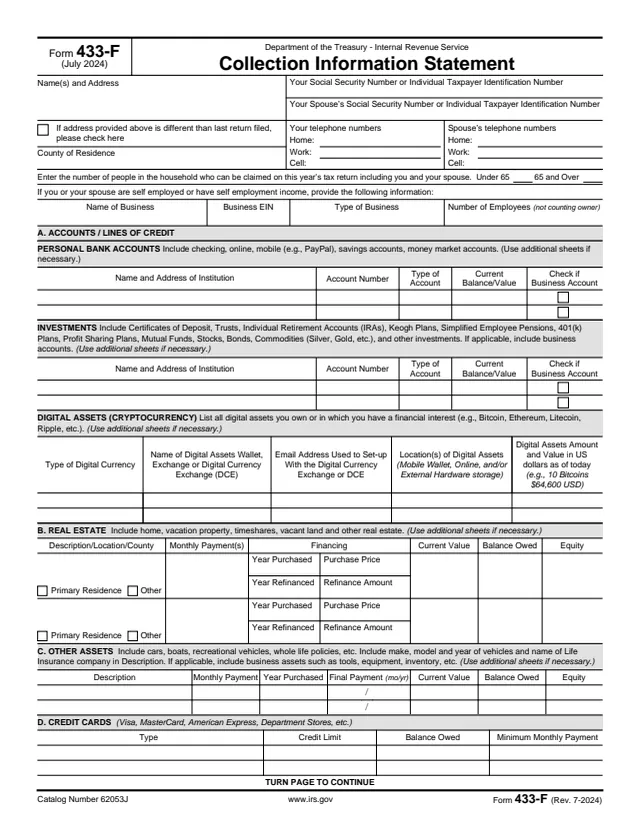
Form 433-F is the Collection Information Statement for individuals. The IRS says it uses the form to get current financial information so it can decide how a wage earner or self-employed person can pay an outstanding tax debt. It lists what you own, what you owe, what you earn and what you spend each month.
You usually see this form when the IRS is working out a payment arrangement, reviewing an installment agreement, or considering whether to pause collection. A notice or an IRS employee will tell you whether to complete it.
The instructions are printed on pages 3 and 4 of the form itself. Keep a copy of what you submit, because the IRS may follow up and ask for proof of the figures.
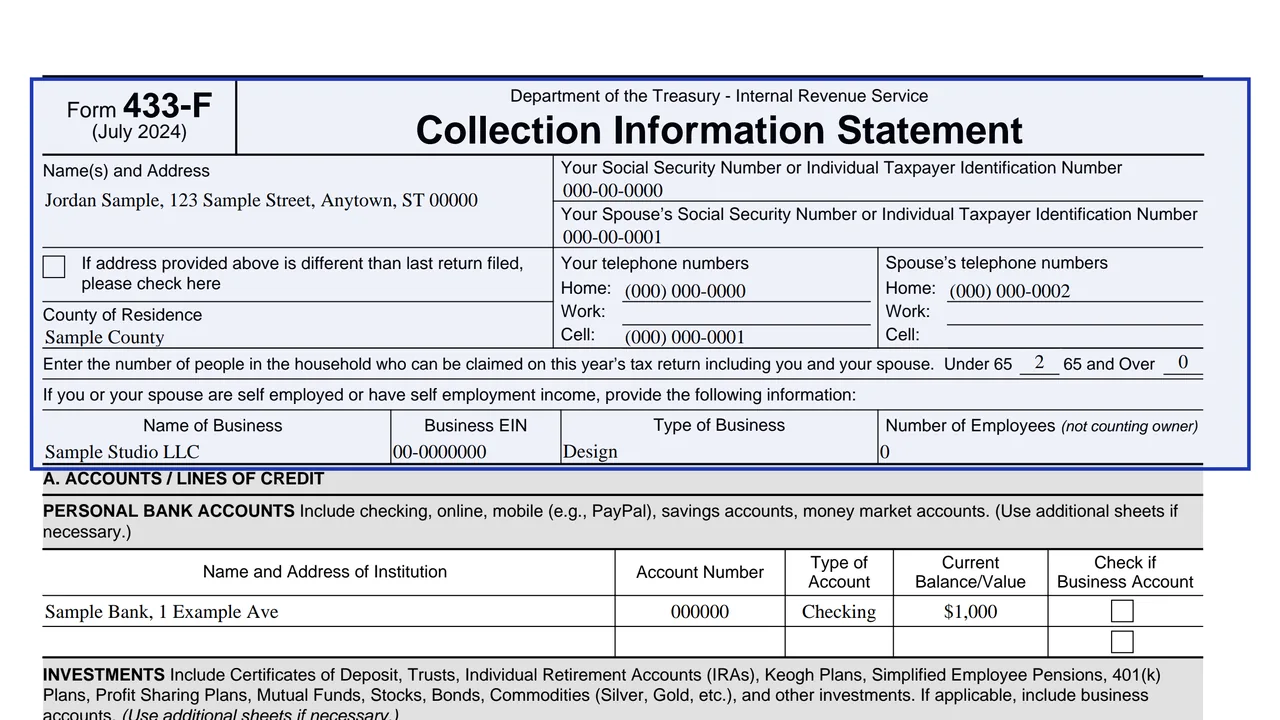
Names, address, Social Security or taxpayer ID numbers, phone numbers, county, household size split into under 65 and 65 and over, and business name, EIN and employee count if self-employed.
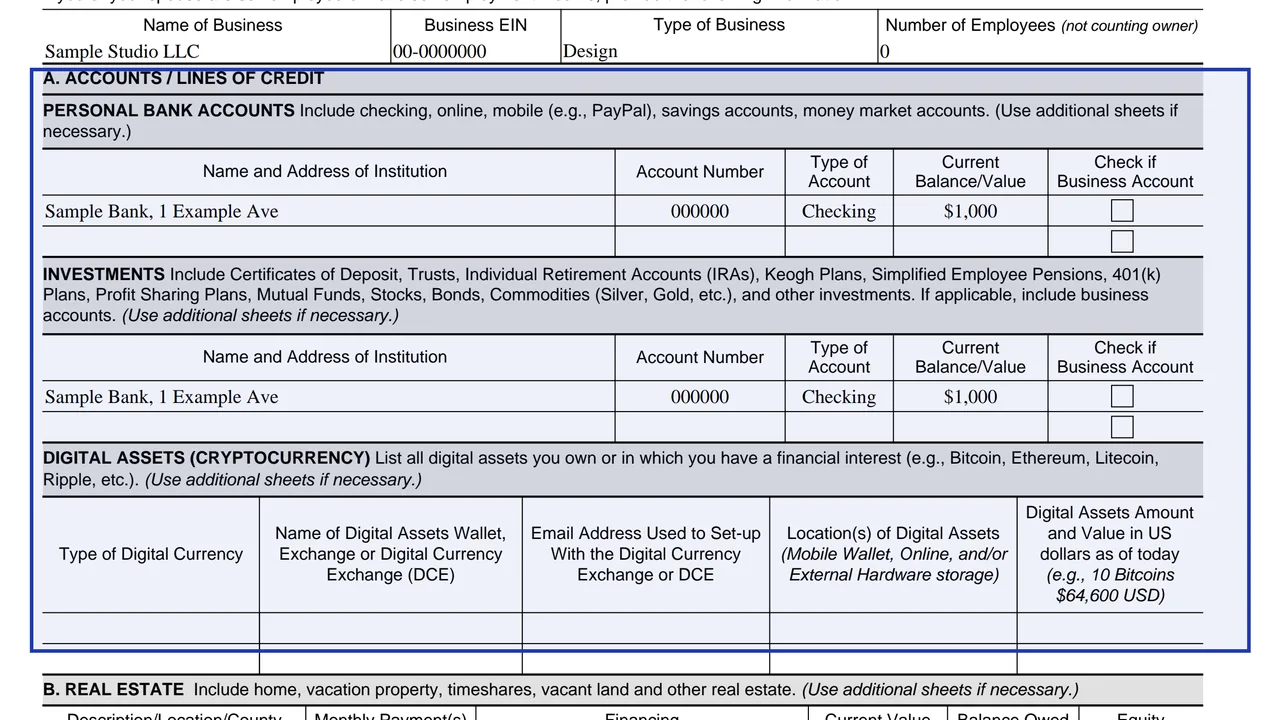
Personal bank accounts, investments such as IRAs and 401(k) plans, and digital assets such as cryptocurrency. List every account, even with a zero balance, but not bank loans.
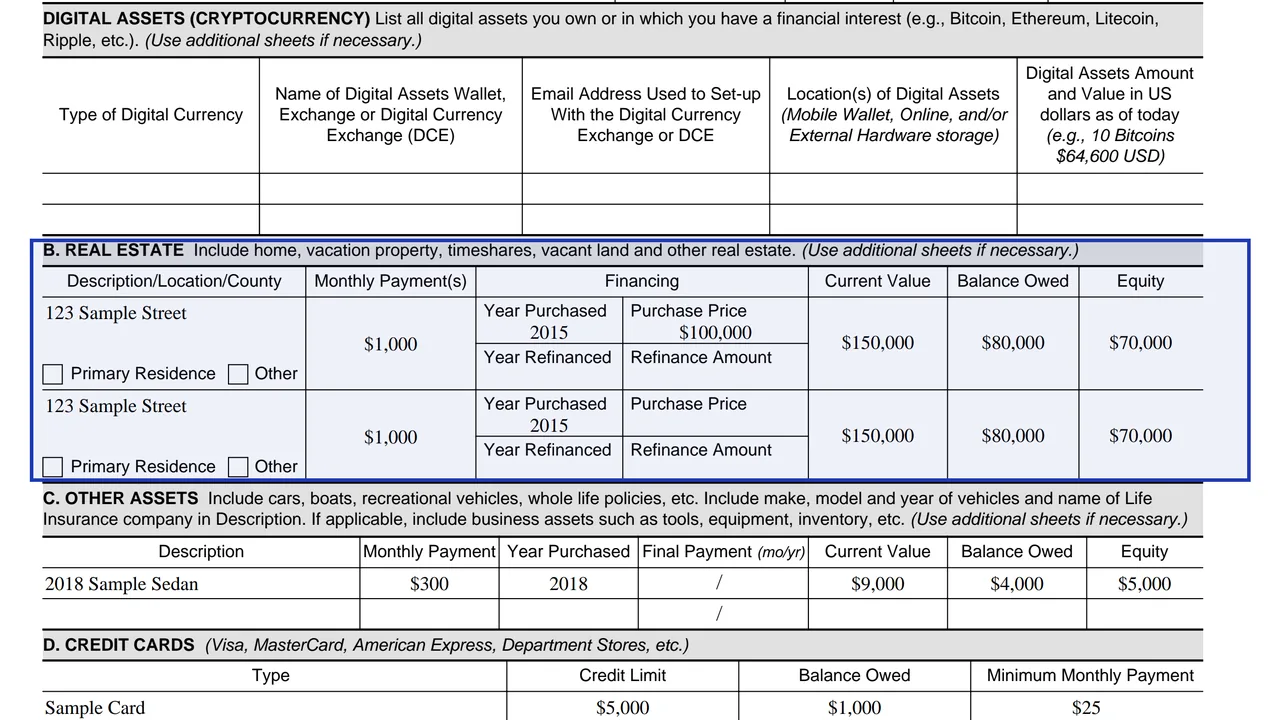
Your home, vacation property, timeshares and land, with purchase and refinance details, monthly payment, current value, balance owed and equity.
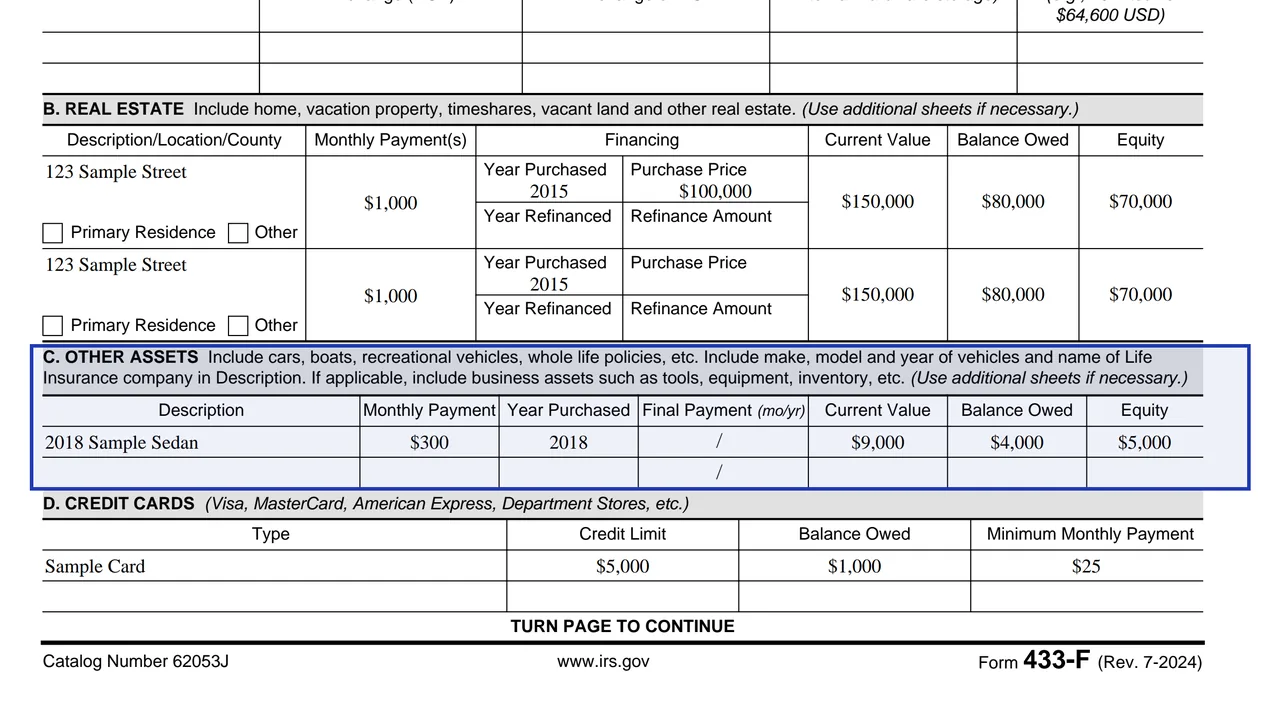
Cars, boats, recreational vehicles, whole life policies and, for business, tools, equipment and inventory.
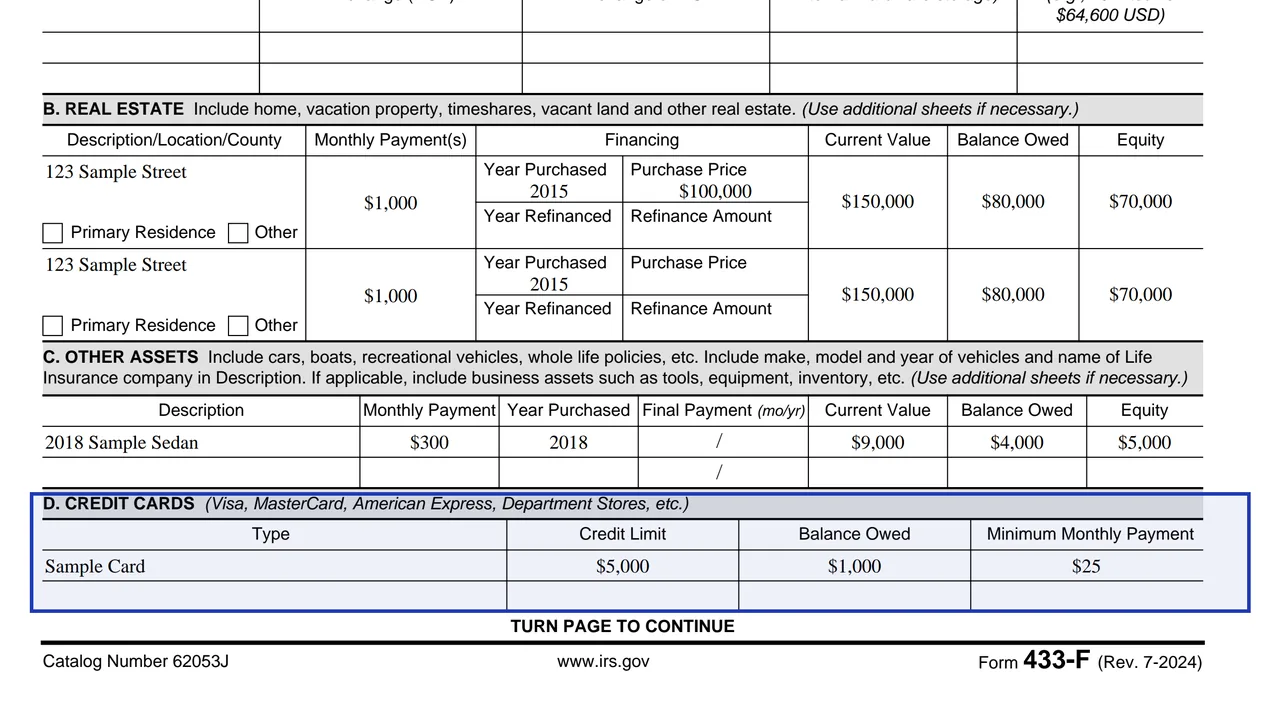
Type, credit limit, balance owed and minimum monthly payment for each card.
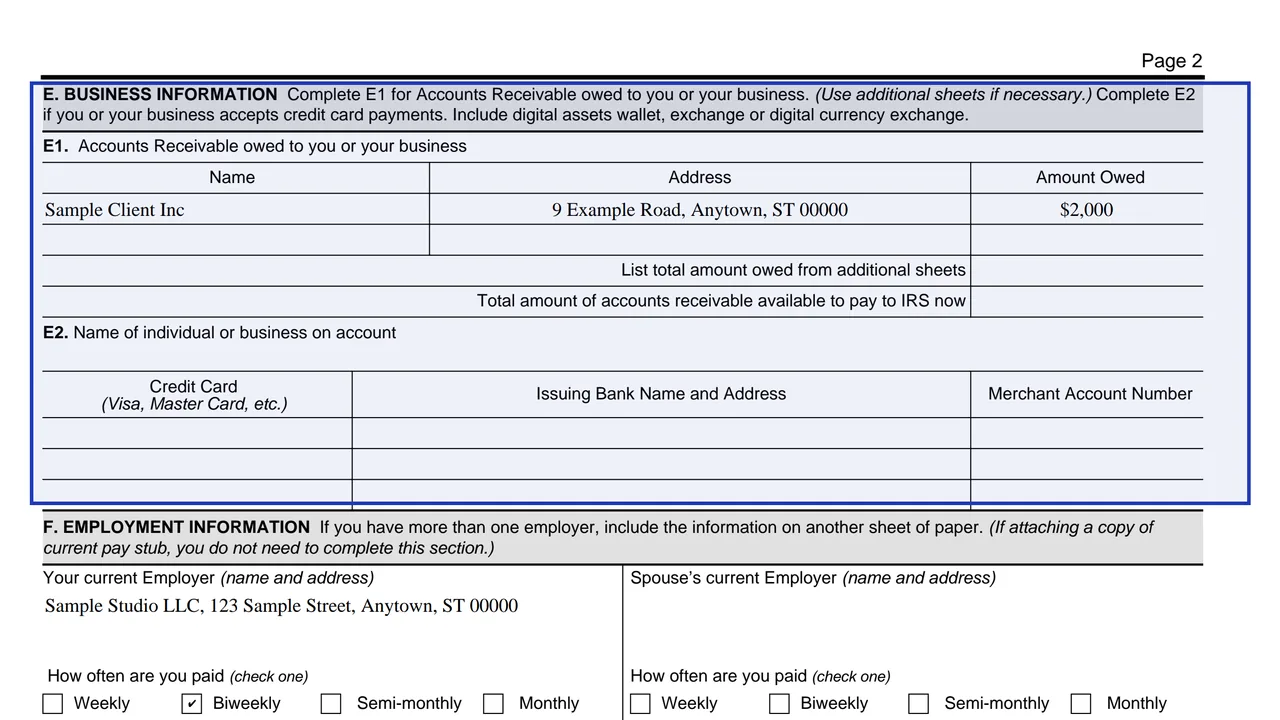
E1 lists accounts receivable owed to you or your business. E2 covers credit card merchant accounts and digital asset wallets or exchanges.
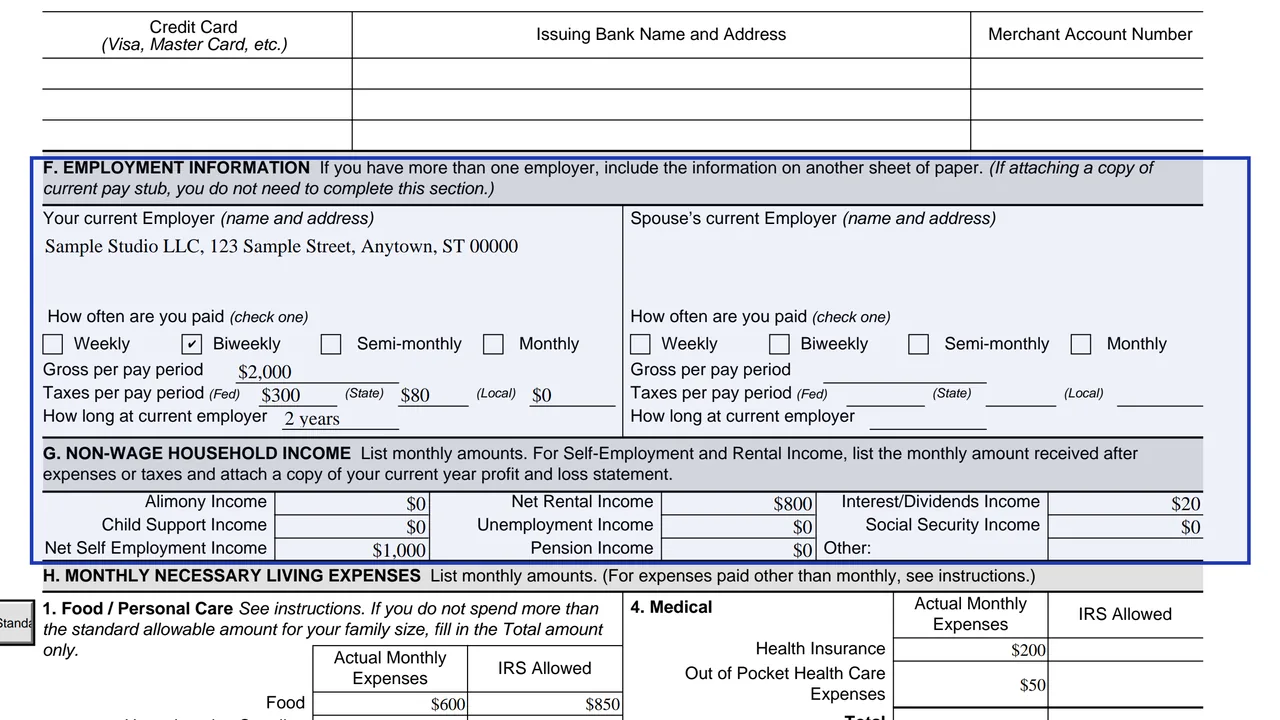
F is employment, for you and your spouse, and can be replaced by a current pay stub. G is non-wage monthly income, such as alimony, child support, net rental, pension and Social Security.
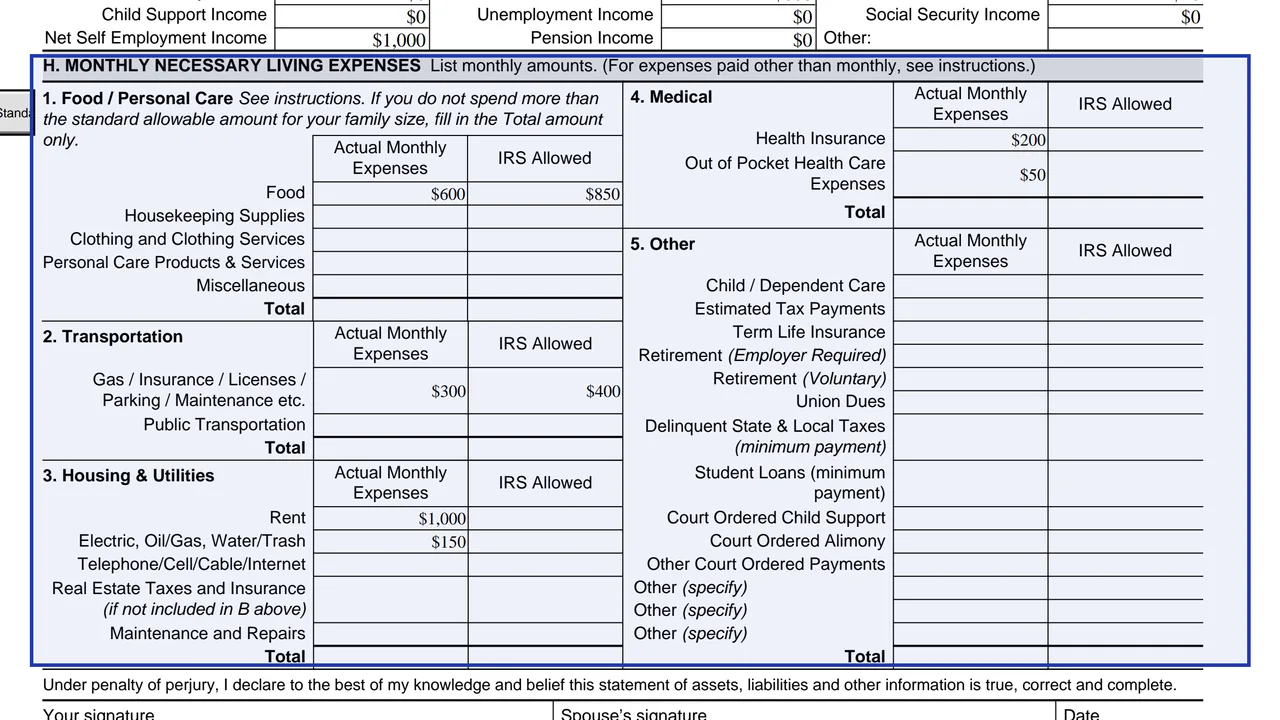
Food and personal care, transportation, housing and utilities, medical, and other expenses, each with an actual column and an IRS allowed column.
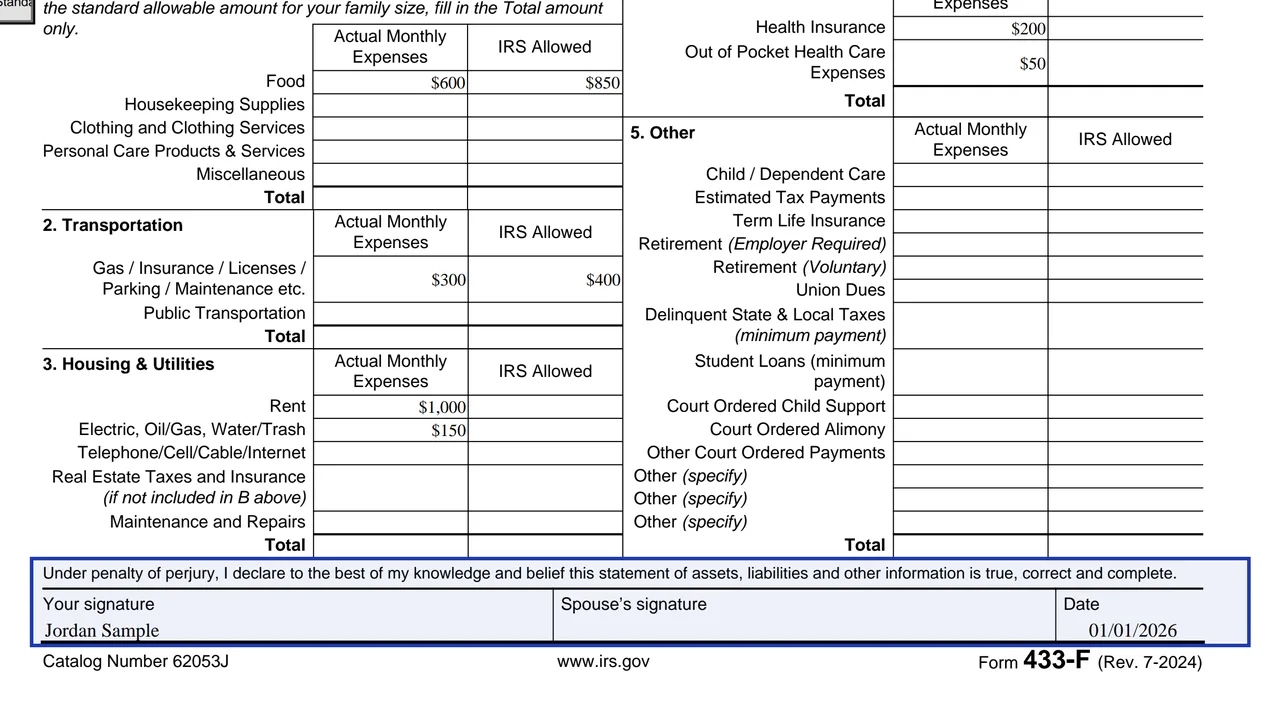
You and your spouse sign and date under penalty of perjury.
Enter names, address, SSNs or ITINs, phone numbers, county and household counts. Count only people you can claim on this year's return.
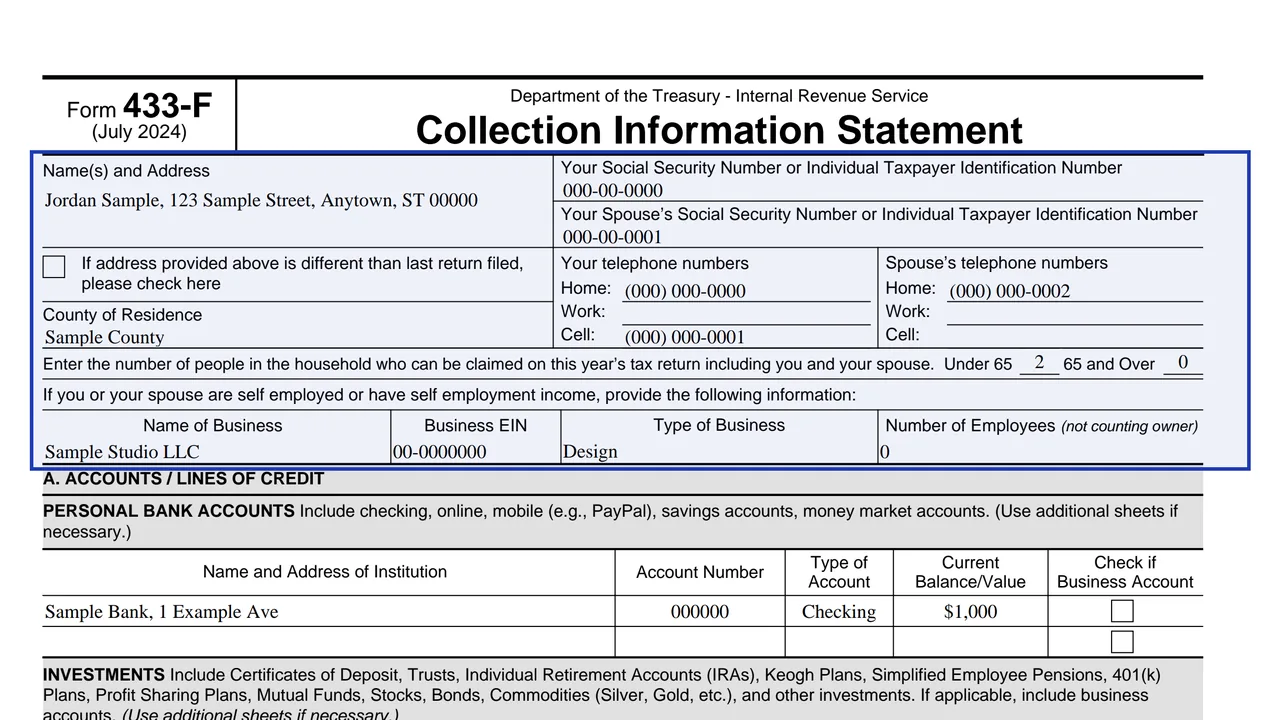
List all accounts, assets and debts. If a question does not apply to a stock or bond, enter N/A. Equity is the current market value minus the amount owed.
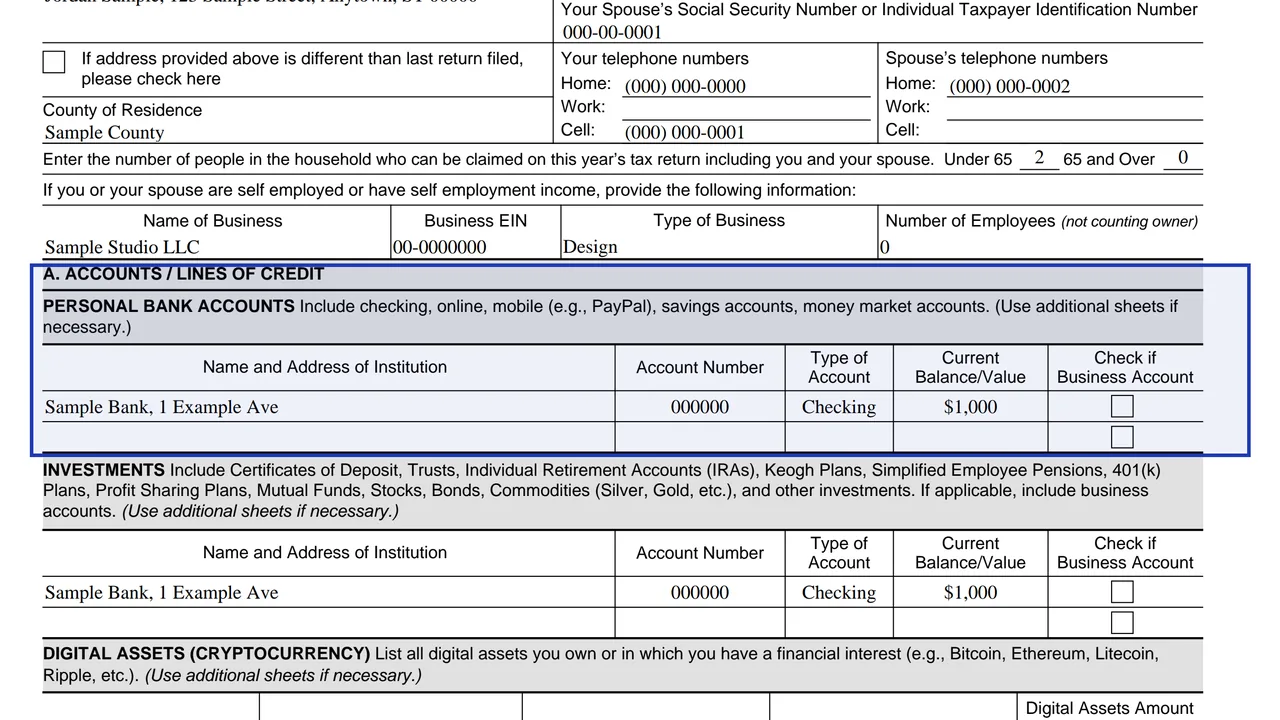
Complete it if you or your spouse are self-employed. Include grants and contracts in accounts receivable.
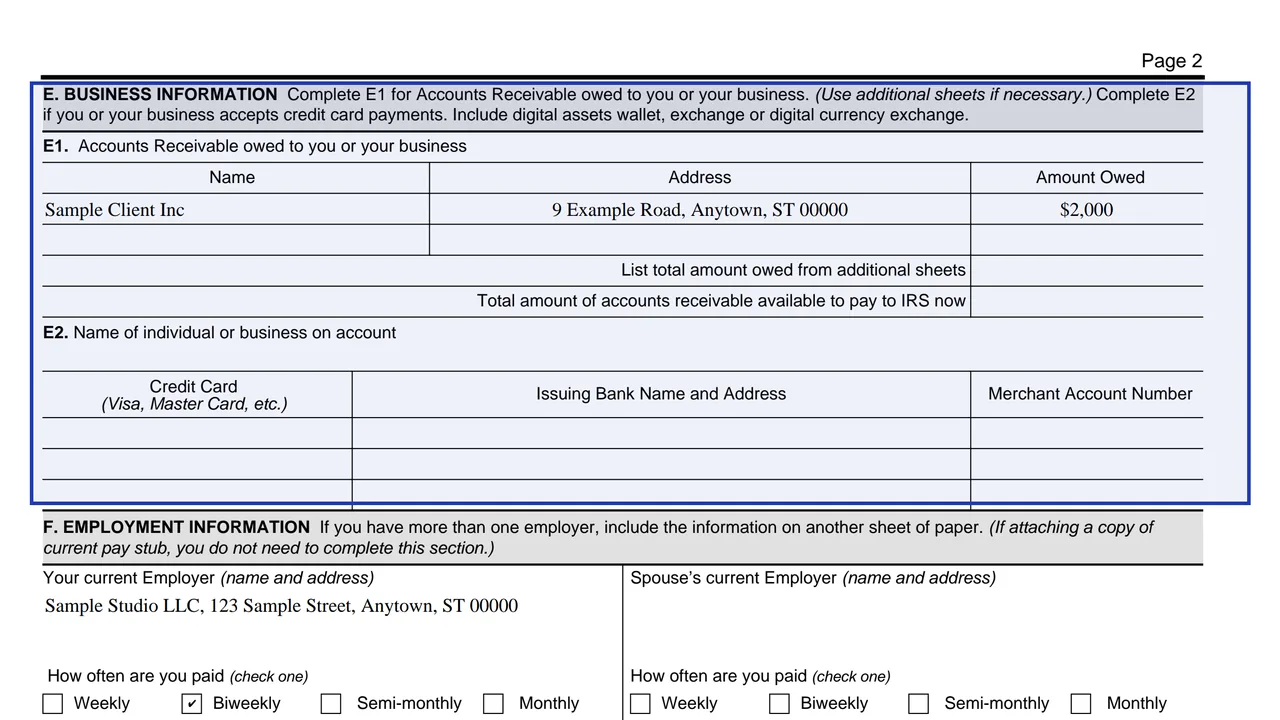
If you attach a current pay stub you do not need to complete Section F.
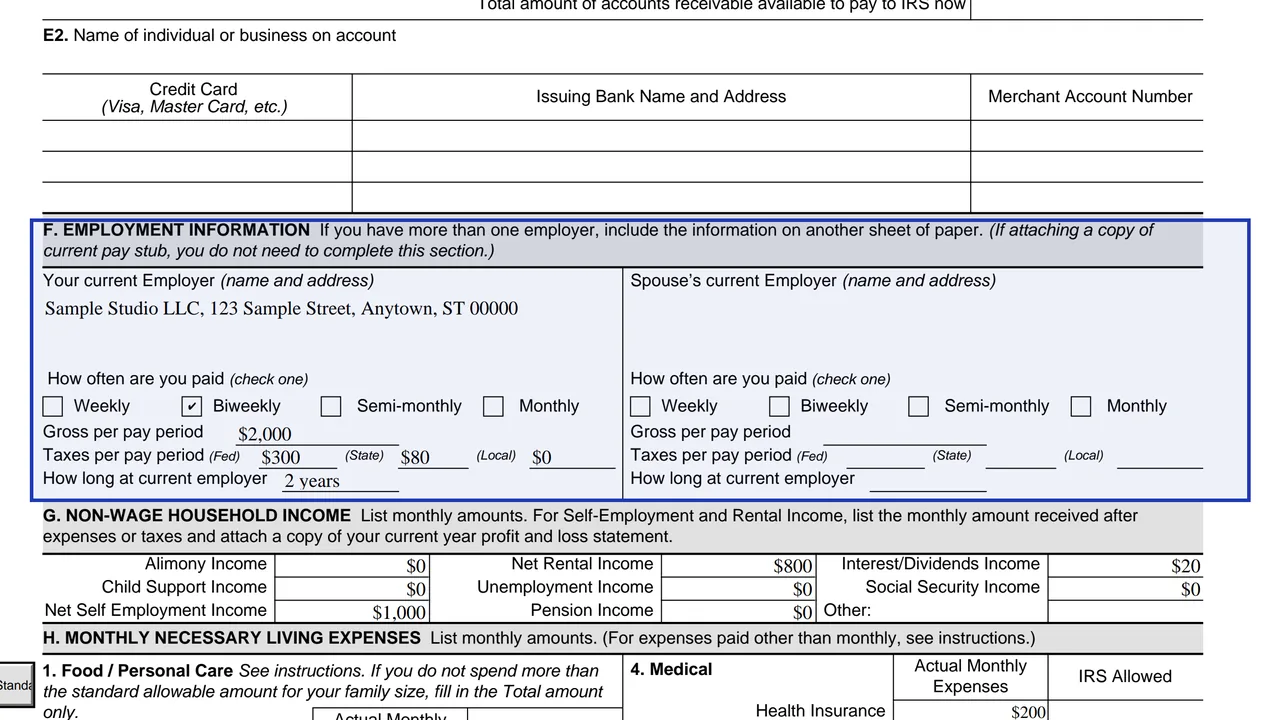
Use monthly amounts. For self-employment and rental income, give the amount after expenses, tied to Schedule C or Schedule E, and enter 0 if it is a loss. Leave out depreciation.
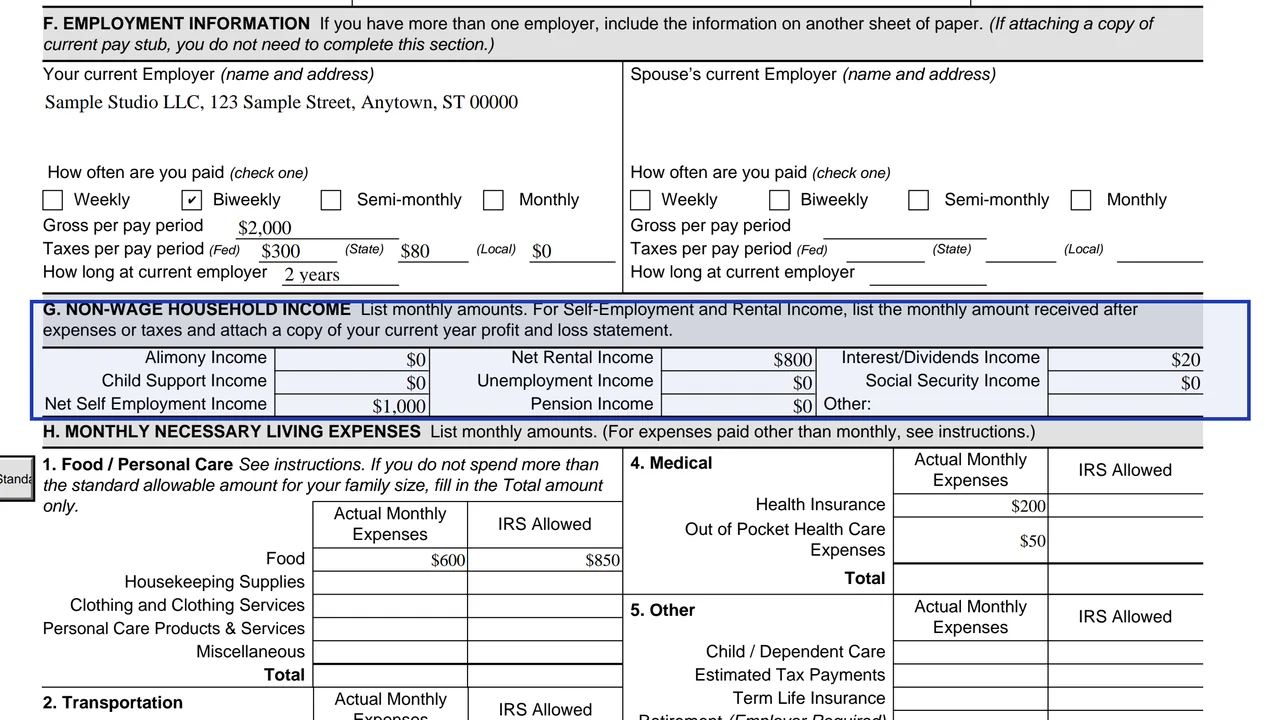
Divide quarterly bills by 3, multiply weekly by 4.3, multiply biweekly by 2.17, and multiply semimonthly by 2.
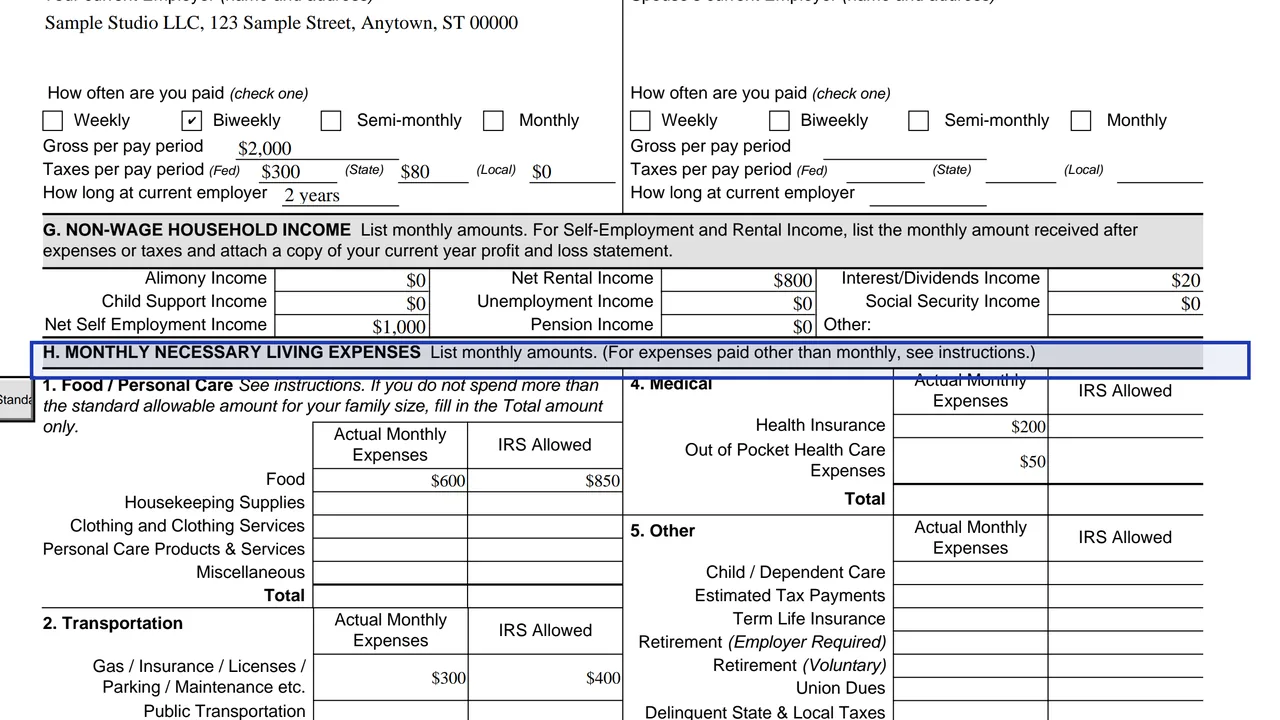
For boxes 1 and 4, enter the IRS allowable standard or your actual cost if it is higher. The standards are on the IRS collection financial standards page. Fill the form online free on this page, then print and sign.
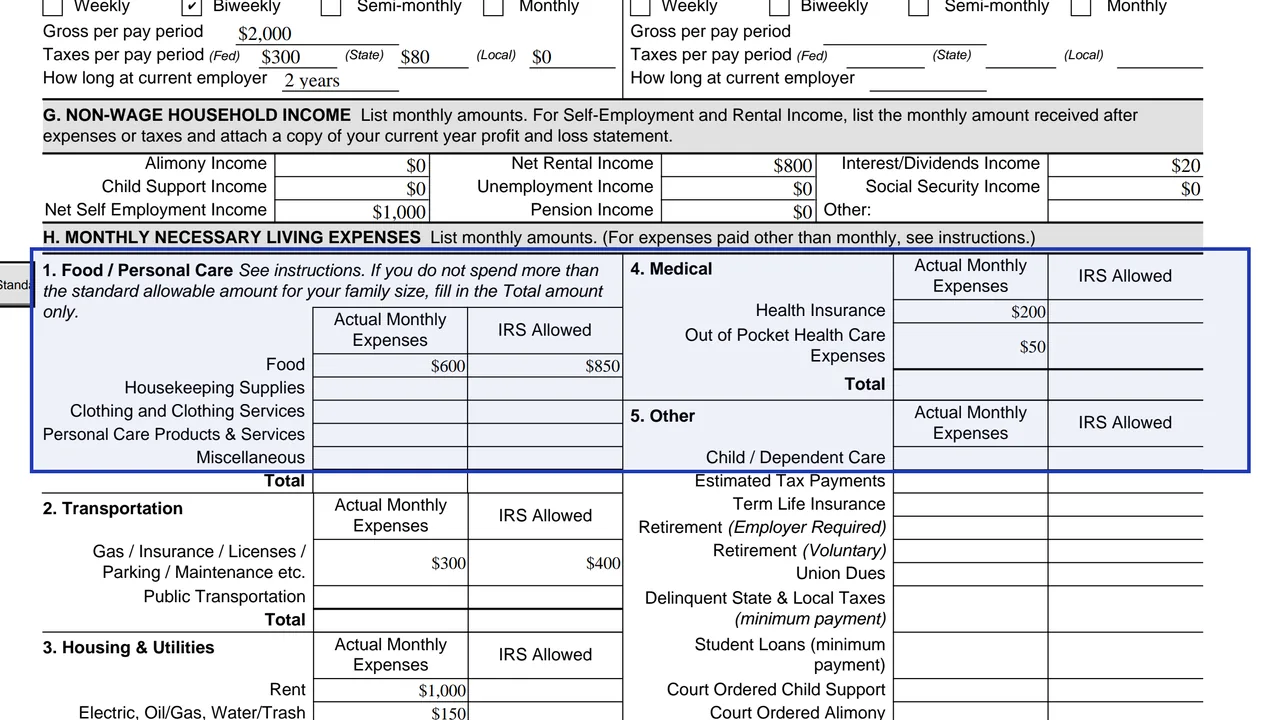
You get the real form, filled in a browser tab, with nothing standing between you and the finished PDF.
The form itself does not give one mailing address. Follow the notice or the IRS employee who asked for it. For a CP522 notice, the IRS says not to mail Form 433-F and to call 800-831-0273 by the date on the notice to review it.
The instructions say that if you request an installment agreement you do not need to send Form 9465 with Form 433-F. They also say you may be able to set up an online payment agreement on irs.gov.
There is no single deadline on the form. Use the date printed on your notice. The IRS says an installment agreement under review can be terminated if you miss that date.
Pay statements, bank and investment statements, loan statements and bills for recurring expenses. Court ordered payments need the order and proof you pay it. Student loans must be federally guaranteed to count.
Leaving out accounts with no balance, listing bank loans in Section A, claiming above-standard expenses without proof, and entering a non-monthly bill without converting it.
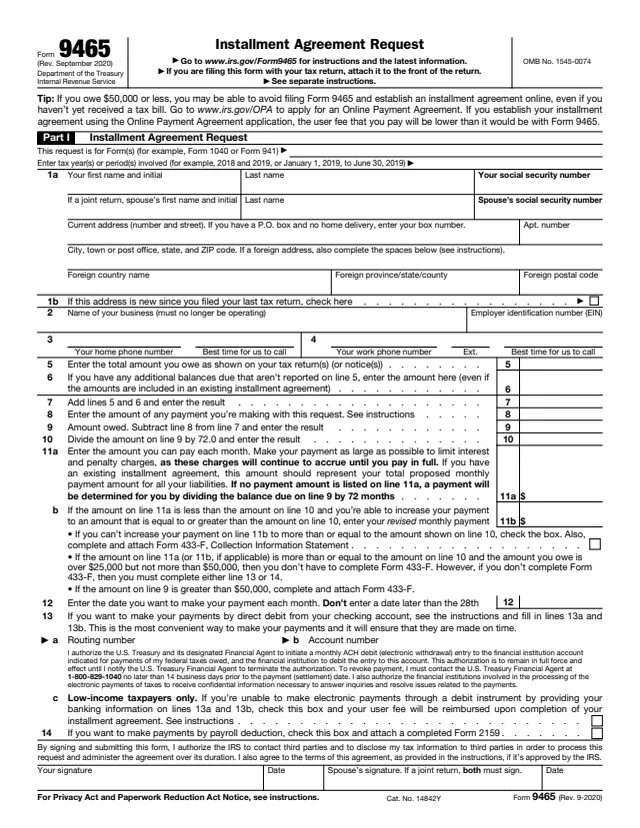
9465
66 fields, 2 pages
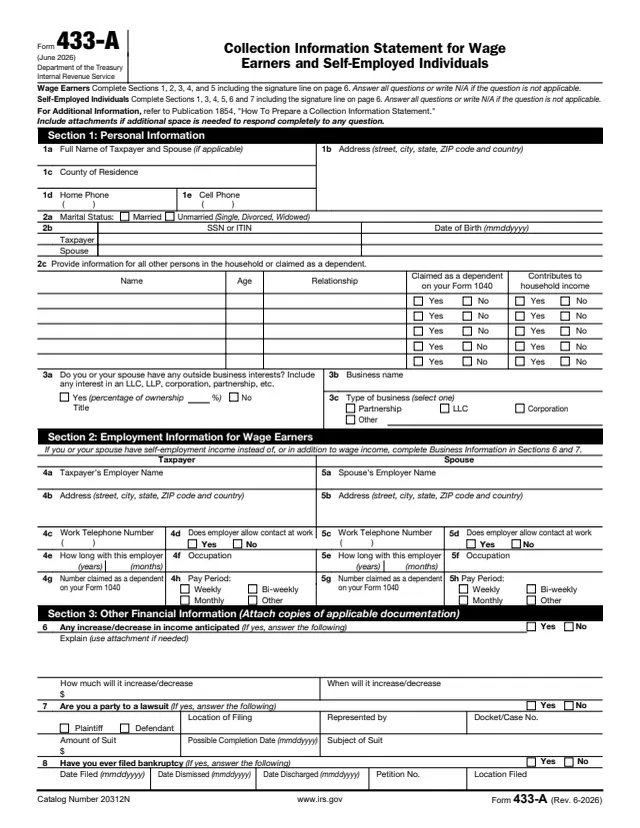
433-A
515 fields, 8 pages
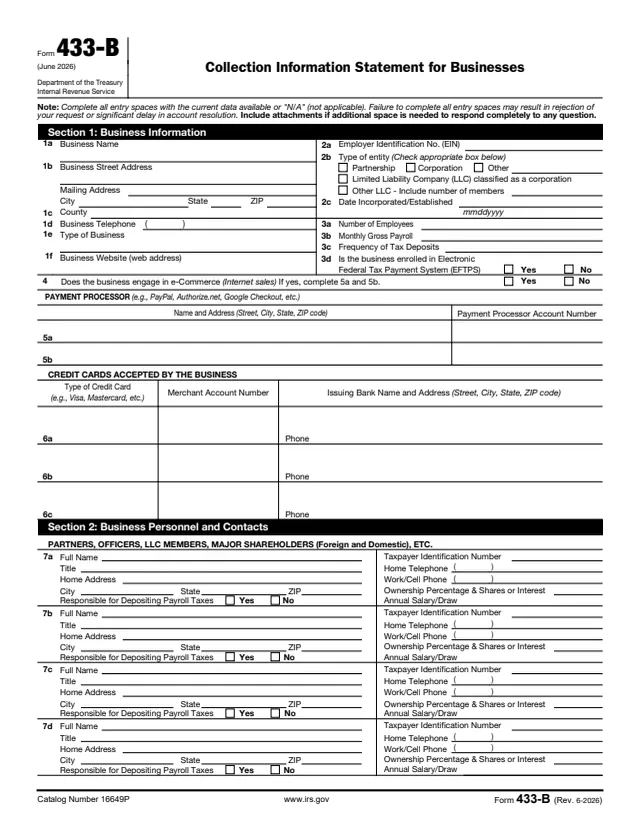
433-B
447 fields, 6 pages

656
115 fields, 8 pages
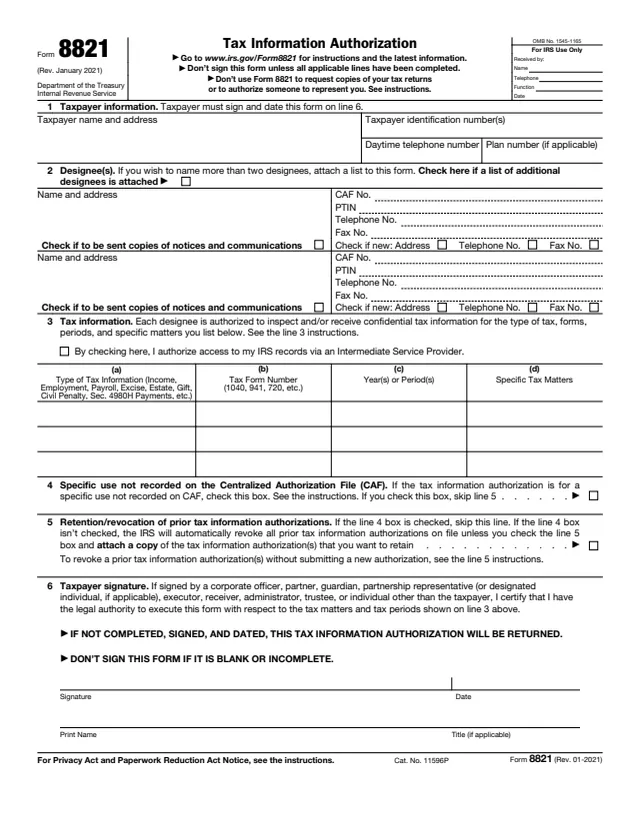
8821
45 fields, 1 page
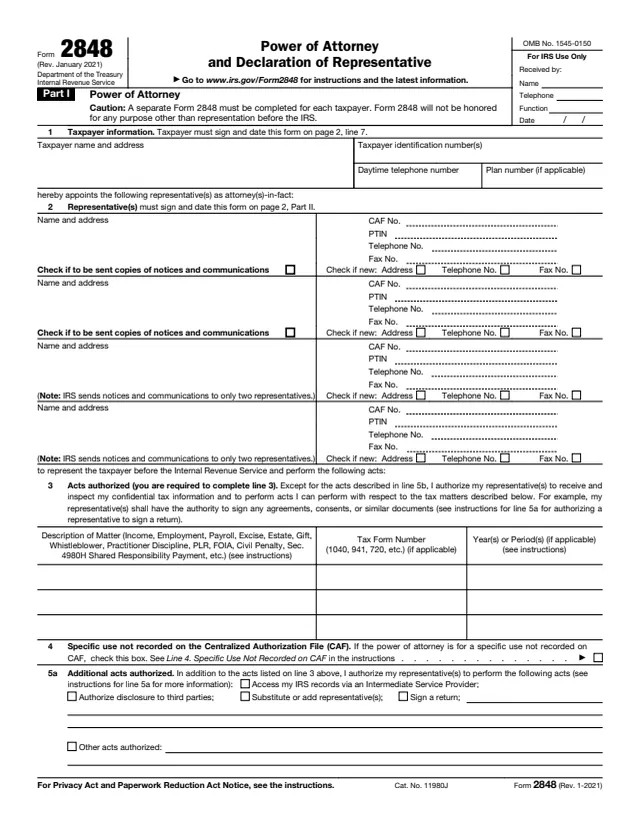
2848
92 fields, 2 pages
No tool matches that search.
No. Both collect financial information. The IRS lists Form 433-A for wage earners and self-employed individuals and Form 433-B for businesses, and it decides which one it needs from you.
The Form 433-F instructions say you do not need to submit Form 9465 along with it when you request an installment agreement.
Not always. For a CP522 notice the IRS says not to mail it and to call by the notice date instead.
Subtract the amount you owe from the current market value of the property or asset.
The form only gives the IRS information. The IRS says it may use that information to decide whether an account is currently not collectible, but the debt still grows with penalties and interest.