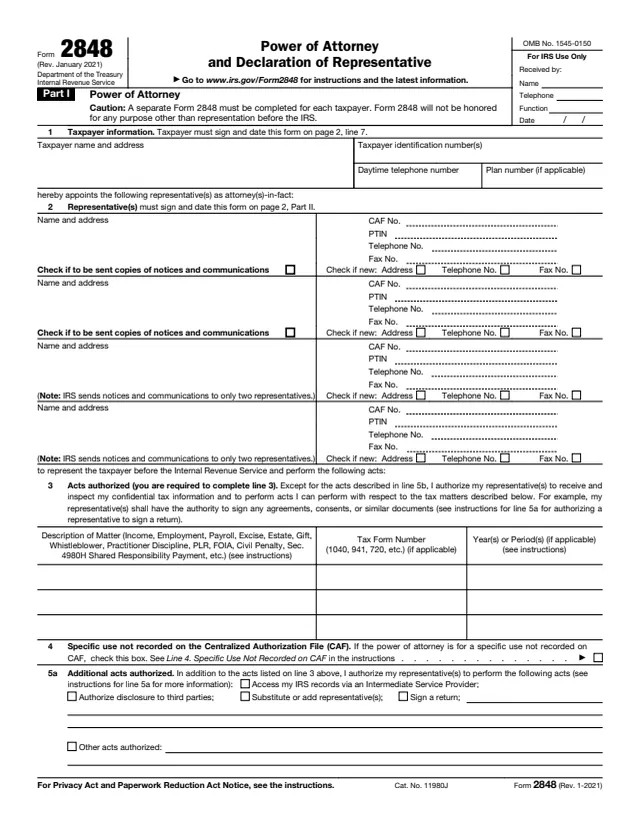
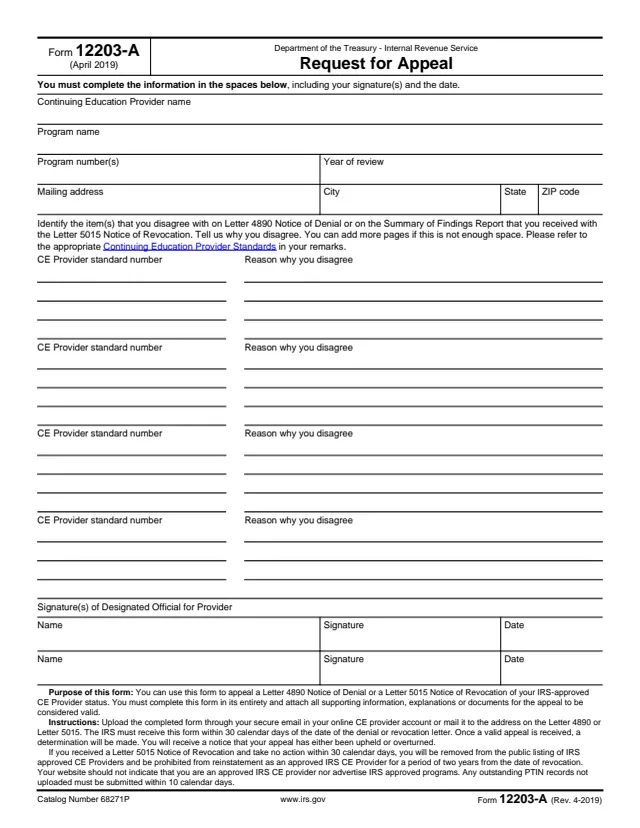
Taxpayer information
Taxpayer name(s), taxpayer identification number(s), mailing address, city, state and ZIP code, tax form number and tax period(s) ended.
12203
Request for Appeals Review
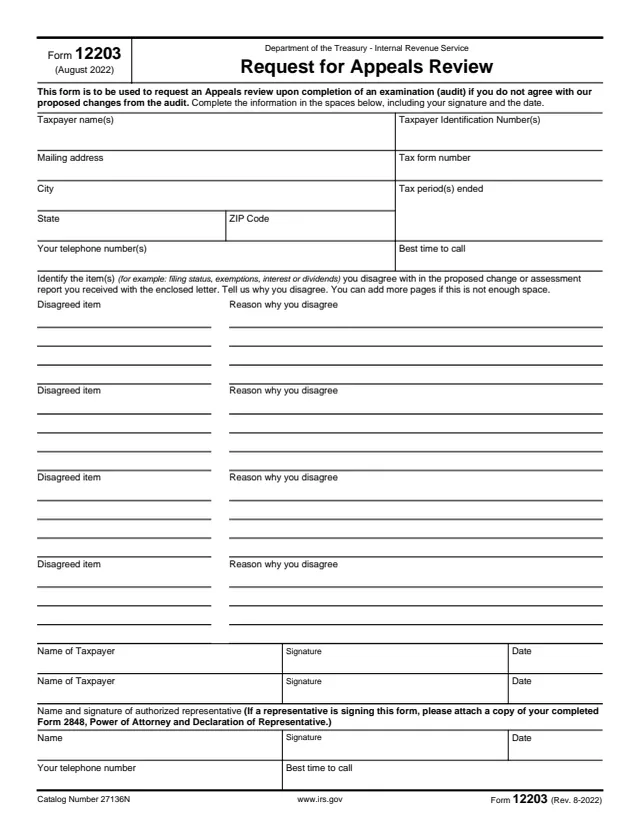
Form 12203 is the IRS Request for Appeals Review. The form says it is used to request an Appeals review upon completion of an examination (audit) when the taxpayer does not agree with the proposed changes from the audit. Page 2 says it is for proposed adjustments from an examination of $25,000 or less to a tax year examined in the IRS letter received with the form.
The review is done by the IRS Independent Office of Appeals, which the form describes as independent of the IRS office proposing the action. The taxpayer lists each disagreed item, such as filing status, exemptions, interest or dividends, with the reason for the disagreement, then signs and dates. An authorized representative can sign with a copy of a completed Form 2848 attached.
You can fill out Form 12203 free in your browser on this page and download it without an account.
Taxpayer name(s), taxpayer identification number(s), mailing address, city, state and ZIP code, tax form number and tax period(s) ended.
The taxpayer's telephone number(s) and the best time to call.
Four rows, each with a disagreed item and the reason why. The form says more pages can be added if there is not enough space.
Two lines, each with the name of the taxpayer, a signature and a date.
Name, signature and date of an authorized representative, with a telephone number and best time to call, and a copy of a completed Form 2848 attached.
The purpose of the form, the steps before an appeal, how Appeals conferences work, the Notice of Deficiency and court options, and the Privacy Act Statement.
Enter the taxpayer name(s) and identification number(s), mailing address, city, state and ZIP code, the tax form number and the tax period(s) ended.
Enter a telephone number and the best time to call.
Identify each item in the proposed change or assessment report received with the IRS letter that is in dispute. The form gives filing status, exemptions, interest or dividends as examples.
Next to each item, state the reason for the disagreement. Add more pages if the space is not enough.
Each taxpayer enters their name, signs and dates the form.
If a representative signs, enter the representative's name, signature, date and phone, and attach a copy of the completed Form 2848, Power of Attorney and Declaration of Representative.
You get the real form, filled in a browser tab, with nothing standing between you and the finished PDF.
The form says to complete it and return it in the envelope provided to the address in the heading of the IRS letter.
The form says a taxpayer who has submitted all supporting information may first discuss the findings with the person named in the letter heading or their supervisor, and appeal if no agreement is reached.
For cases involving income taxes, the form says the IRS sends a formal Notice of Deficiency and a bill. The Notice of Deficiency allows going to the Tax Court.
The form says conferences are conducted in an informal manner, and most differences are settled there without expensive and time consuming court trials.
The Appeals office sends a Notice of Deficiency, and the case can go to the United States Tax Court before paying. For the Court of Federal Claims or a District Court, the form points to Publication 5.
The taxpayer who received the IRS letter about the audit completes it, or an authorized representative signs for them. It goes back to the IRS.
No tool matches that search.
The form says it is used to request an Appeals review upon completion of an examination (audit) when the taxpayer does not agree with the proposed changes.
Page 2 says the form is for proposed adjustments from an examination of $25,000 or less to a tax year examined in the IRS letter received with it.
In the envelope provided, to the address in the heading of the IRS letter.
Yes. The form says the representative is an attorney, a certified public accountant or an enrolled agent authorized to practice before the IRS. For the representative to talk to the IRS without the taxpayer, the form asks for a signed copy of a completed Form 2848.
No. The form says the IRS Independent Office of Appeals is independent of the IRS office proposing the action.
The form says Appeals sends a Notice of Deficiency, after which the case can go to the United States Tax Court before paying the amount due.