Header
Name(s) shown on the return, identifying number, and address.
1127
Application for Extension of Time for Payment of Tax Due to Undue Hardship
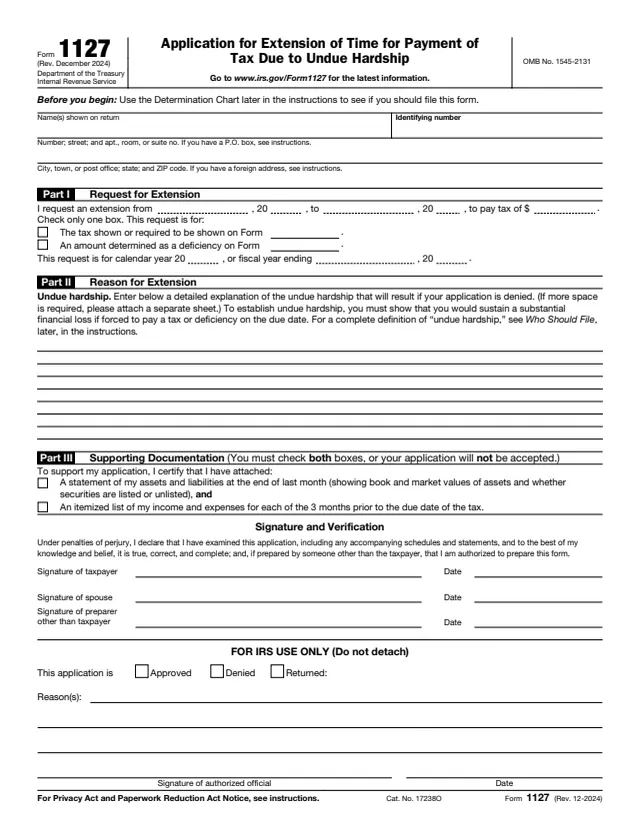
Form 1127 is the application to request an extension of time under Internal Revenue Code section 6161 to pay the tax shown or required to be shown on a return, or an amount determined as a deficiency (an amount owed after an examination of a return). It is for undue hardship, which the instructions define as more than an inconvenience: a substantial financial loss, such as selling property at a sacrifice price, if the tax is paid on the date it is due.
The form says to use the Determination Chart in the instructions before filing. The chart sends extensions of time to file to Form 4868 or Form 2350, estate tax payment extensions to Form 4768, and monthly payment plans to Form 9465 or the Online Payment Agreement. A box for IRS use only records whether the application is approved, denied or returned.
The instructions say interest is owed on any tax not paid by the due date even when an extension of time to pay is obtained. You can fill out the PDF free in your browser on this page and download it without an account.
Name(s) shown on the return, identifying number, and address.
The dates of the extension and the amount of tax, one box for tax shown on a return or an amount determined as a deficiency with the form number, and the calendar or fiscal year.
A detailed explanation of the undue hardship that will result if the application is denied, with a separate sheet attached if more space is needed.
Two boxes certifying that a statement of assets and liabilities and an itemized list of income and expenses for each of the 3 months prior to the due date are attached.
Signatures of the taxpayer, the spouse and any preparer other than the taxpayer, under penalties of perjury, followed by a section for IRS use only.
Enter the name, address and SSN, ITIN or EIN. On a joint application, list both spouses in return order and enter the SSN or ITIN of the spouse named first.
Enter the return due date (not including extensions) or the deficiency payment due date, the proposed payment date and the amount owed. The instructions say the proposed date can be up to 6 months from the return due date, or up to 18 months for a deficiency.
Check only one box, enter the form number the tax relates to, and enter the calendar year or the fiscal year ending month, day and year.
Explain the undue hardship in detail. The instructions say an extension will not be granted if only a general statement of hardship is provided.
Attach the statement of assets and liabilities and the itemized income and expense list, then check both boxes. The form says the application will not be accepted otherwise.
The instructions say the form must be signed and dated, and both spouses sign for a joint return or a joint deficiency.
You get the real form, filled in a browser tab, with nothing standing between you and the finished PDF.
The instructions say to file as soon as a tax liability or deficiency that cannot be paid without undue hardship is known. For tax on an upcoming return, Form 1127 must be received by the return's due date, not including extensions.
For an amount determined as a deficiency, the instructions say Form 1127 must be received on or before the due date for payment indicated in the tax bill.
With the Internal Revenue Service (Attn: Advisory Group Manager) for the area of the legal residence or principal place of business. Pub. 4235 lists the local advisory group addresses.
For a gift tax reportable on Form 709 or 709-NA, the instructions give Department of the Treasury, Internal Revenue Service, Stop 824G, 7940 Kentucky Drive, Florence, KY 41042-2915.
The instructions say an extension of more than 6 months will generally not be granted for tax shown on a return, and a deficiency extension is generally limited to 18 months, with an additional 12 months in exceptional circumstances.
Interest runs on tax not paid by the due date even with an extension. The instructions say penalties may be imposed if the tax is not paid within the extension period granted.
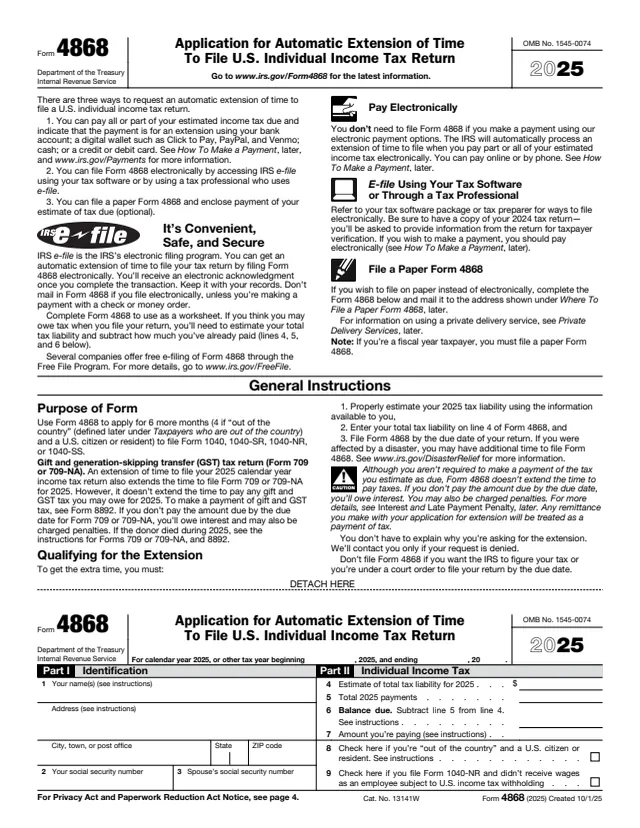
4868
17 fields, 4 pages
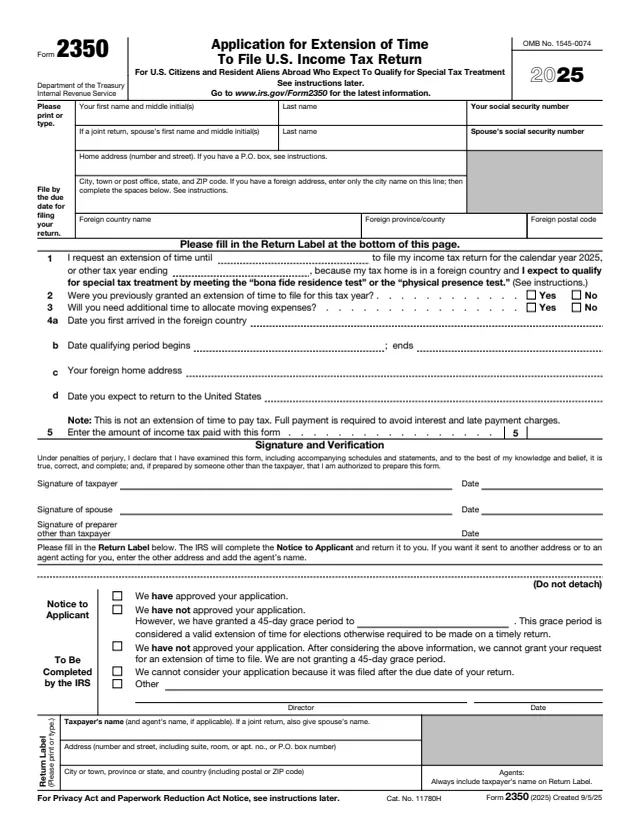
2350
26 fields, 4 pages
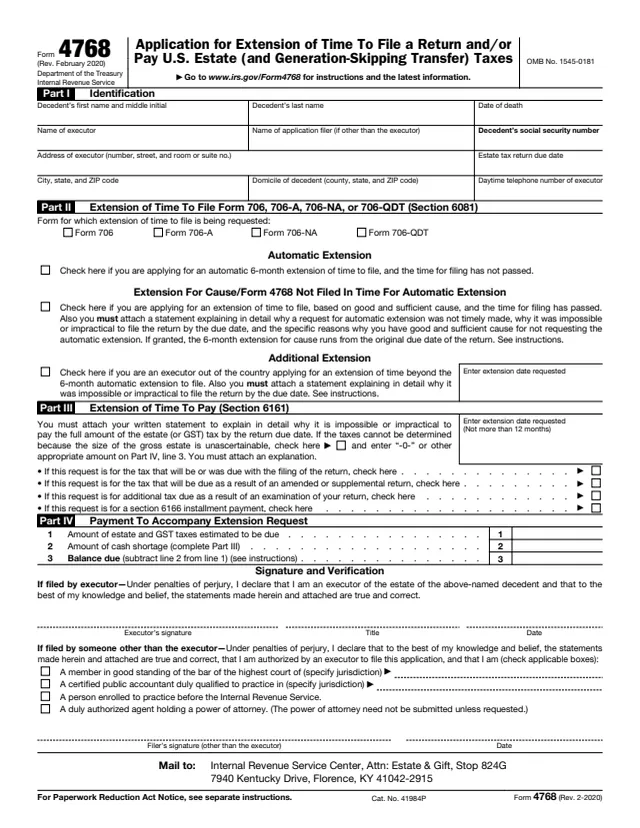
4768
35 fields, 1 page
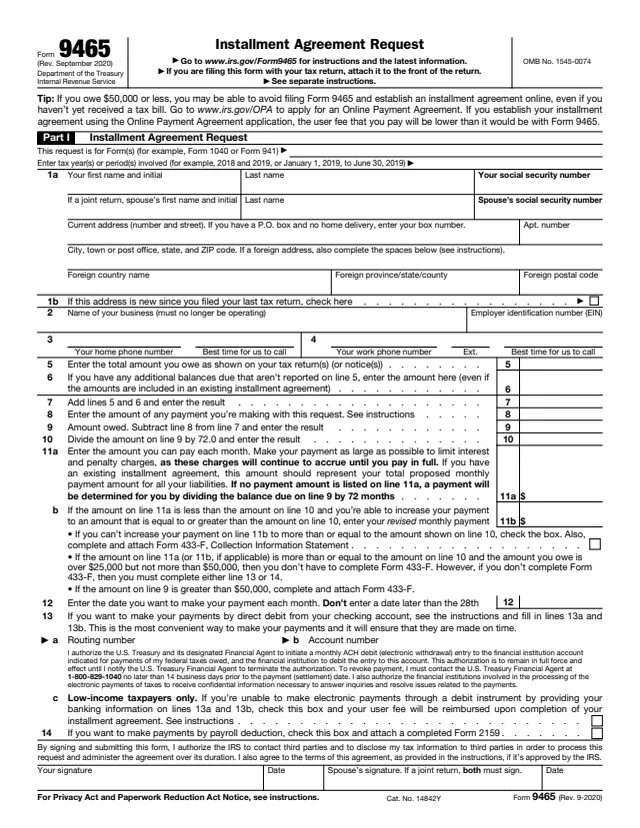
9465
66 fields, 2 pages
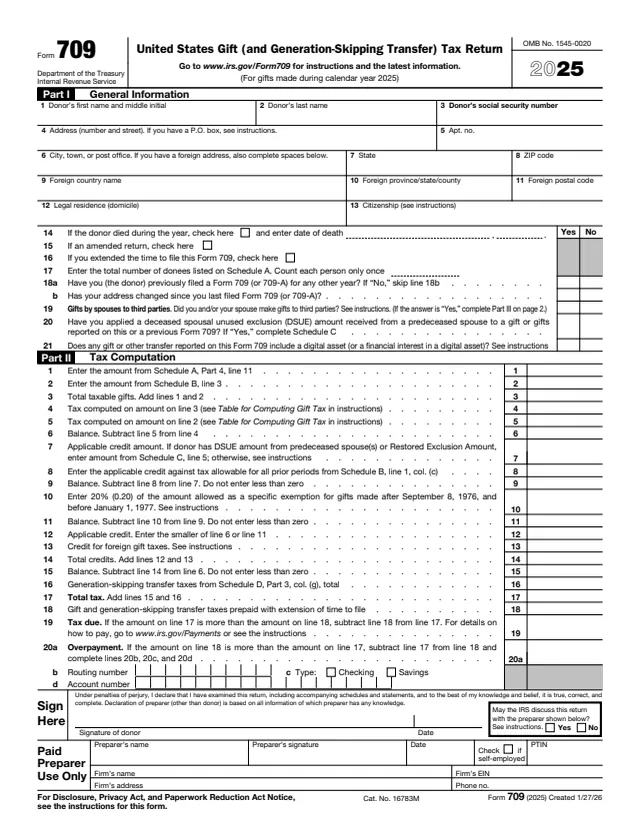
709
1,851 fields, 10 pages
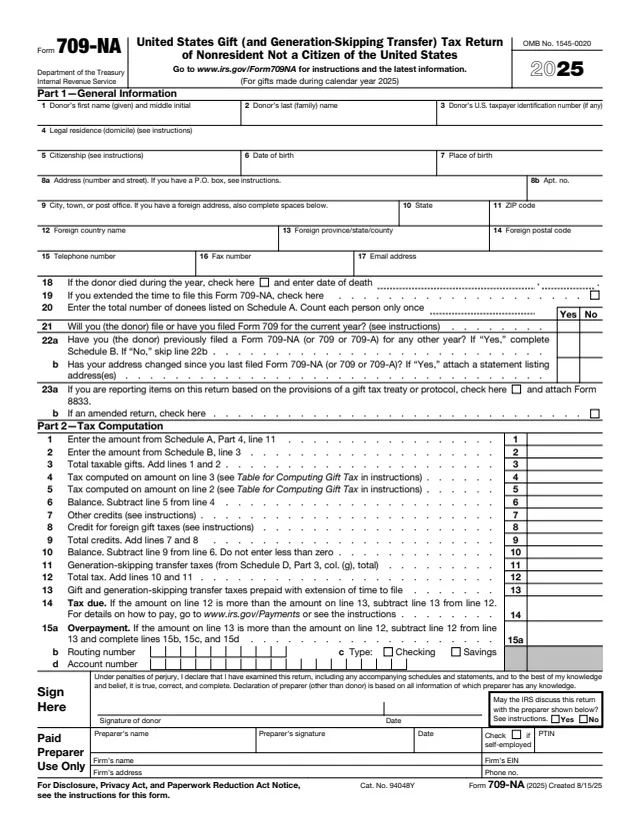
709-NA
889 fields, 8 pages
The taxpayer who owes the tax files it. The instructions give name rules for individuals and for businesses, and the form has a signature line for a preparer other than the taxpayer.
No tool matches that search.
The instructions say it means more than an inconvenience: a substantial financial loss, such as selling property at a sacrifice price, if the tax is paid on the date it is due.
No. The Determination Chart sends extensions of time to file to Form 4868 or Form 2350 and says not to file Form 1127 for that.
The instructions say generally up to 6 months for tax shown on a return, more if out of the country, and generally up to 18 months for a deficiency, with 12 more months possible in exceptional circumstances.
Yes. The instructions say interest is owed on any tax not paid by the due date, regardless of whether an extension of time to pay has been obtained.
A statement of assets and liabilities and an itemized list of income and expenses for each of the 3 months prior to the due date of the tax. The form says the application will not be accepted unless both Part III boxes are checked.
To the IRS Advisory Group Manager for the area of the legal residence or principal place of business, listed in Pub. 4235. Gift tax applications for Form 709 or 709-NA go to the Florence, KY 41042-2915 address.
The instructions say an extension to pay a deficiency will not be granted if the deficiency is due to negligence, intentional disregard of rules and regulations, or fraud with intent to evade tax.