Part 1: Information about you
Full legal name, place of birth, mailing and physical address, A-Number, USCIS online account number, date of birth, citizenship, and your current status as a principal or derivative refugee, refugee or asylee.
I-602
Application by Refugee for Waiver of Inadmissibility Grounds
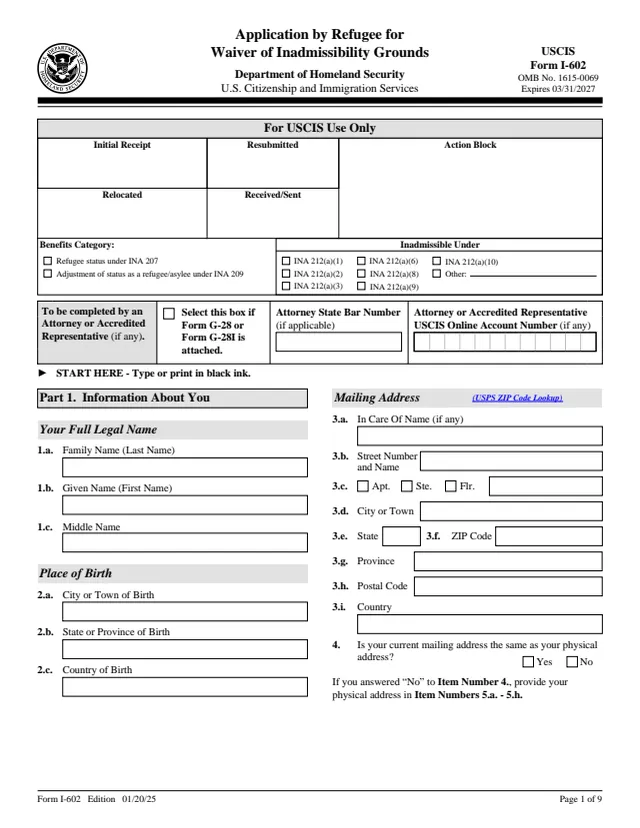
Form I-602, Application by Refugee for Waiver of Inadmissibility Grounds, is how a person seeking to be admitted as a refugee, or a refugee or asylee applying to become a lawful permanent resident, asks for a waiver of certain grounds of inadmissibility.
The instructions say USCIS may grant the waiver if it would serve humanitarian purposes, preserve family unity or be otherwise in the public interest. The USCIS page names reasons such as a felony conviction or health conditions.
The instructions say other applicants for admission or adjustment of status who seek a waiver should consult the Form I-601 instructions instead. They also list grounds with no waiver available and grounds that do not apply to refugees and asylees, where no Form I-602 is needed.
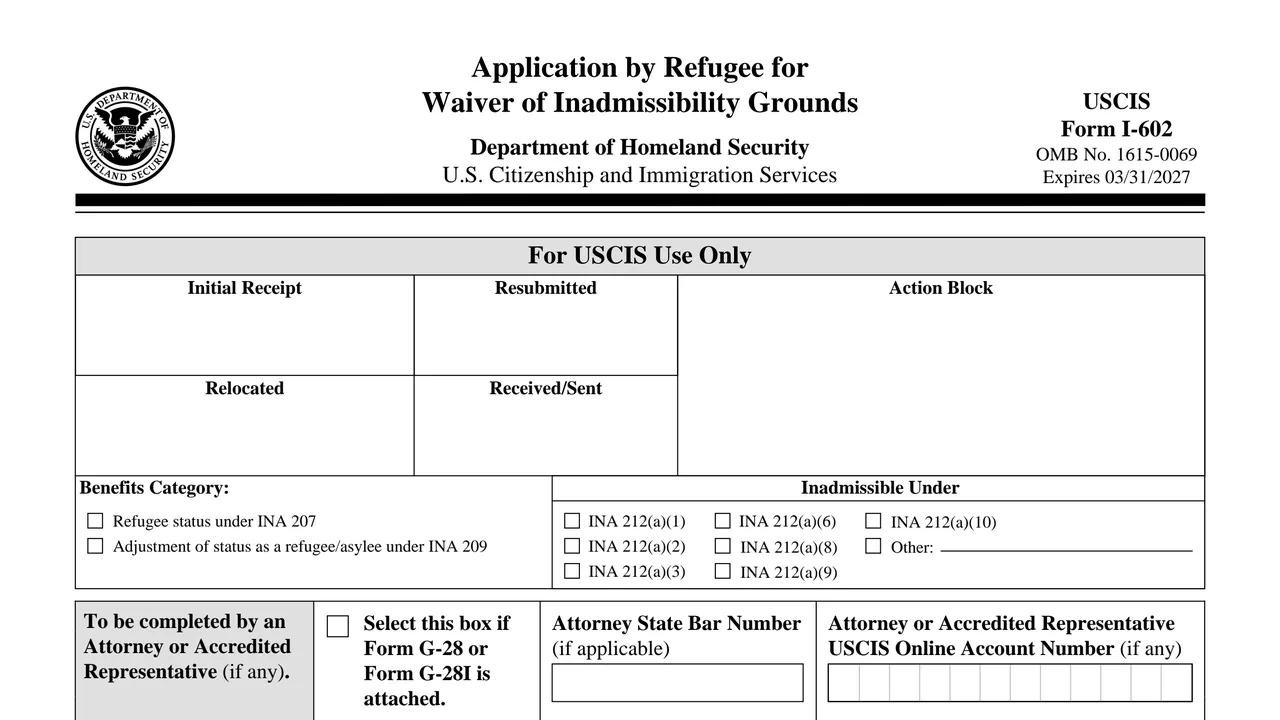
Full legal name, place of birth, mailing and physical address, A-Number, USCIS online account number, date of birth, citizenship, and your current status as a principal or derivative refugee, refugee or asylee.
Items 1 to 35 list grounds of inadmissibility, from health and criminal grounds to fraud, unlawful presence and other grounds, each with its INA section, plus an Other box.
Item 36 is your inadmissibility statement, Item 37 the reasons (humanitarian, family unity, public interest), Item 38 the explanation of those reasons and Item 39 the discretion statement.
For applicants who have or had a physical or mental disorder with associated harmful behavior, with a statement by the applicant and one by the physician or health facility that will treat them.
For applicants with a Class A tuberculosis condition, signed by the applicant, the local health department physician and a state health department official.
Your contact details, certification and signature (Part 5), the interpreter (Part 6), the preparer (Part 7) and additional information space (Part 8).
The USCIS page says the edition date and page numbers should be visible on every printed page, all from the same edition. Type or print in black ink. Write N/A where a question does not apply and None for a zero.
Pick the one option that describes you as a principal or derivative refugee applicant outside or inside the United States, or a refugee or asylee seeking adjustment of status.
The instructions say an approved waiver covers only the grounds and events included in the application, so they ask applicants to disclose all conduct or conditions and list every ground.
Give dates for the acts, convictions or diagnoses. The instructions say records of convictions are certified court documents and an uncertified copy is not sufficient. Then explain the waiver reasons and discretion.
The instructions describe medical reports for health grounds, Form I-693 or Form DS-2054 for a drug abuse or addiction finding, and Parts 3 or 4 completed with the treating physician or health department.
The instructions say a stamped or typewritten name is not accepted, and a parent or legal guardian may sign for an applicant under 14. This page lets you fill the form online free, then print it for signature.
You get the real form, filled in a browser tab, with nothing standing between you and the finished PDF.
The USCIS page says an applicant who filed Form I-590, was interviewed and told they are inadmissible, and for whom a waiver is available, contacts the Resettlement Support Center that helped prepare the Form I-590.
Filed together with Form I-730, it goes to the office processing that petition. If Form I-730 was already filed, it goes to the office with jurisdiction over a residence abroad, or to the office processing the I-730 for someone in the United States.
Filed together with Form I-485, both are mailed as the Direct Filing Addresses for Form I-485 page says. Filed after Form I-485, it goes to the office adjudicating that application.
The instructions say a person in proceedings in Immigration Court files Form I-602 with the appropriate Immigration Court, and the DHS attorney gives pre-order filing instructions.
The fee is on the USCIS Fee Schedule page, and the instructions point to Form G-1055. Fees can change, so check it on the day you file.
The instructions say grounds waived when a person becomes a permanent resident based on refugee or asylee status are permanently waived. A Green Card through any other category needs a waiver of all grounds again.
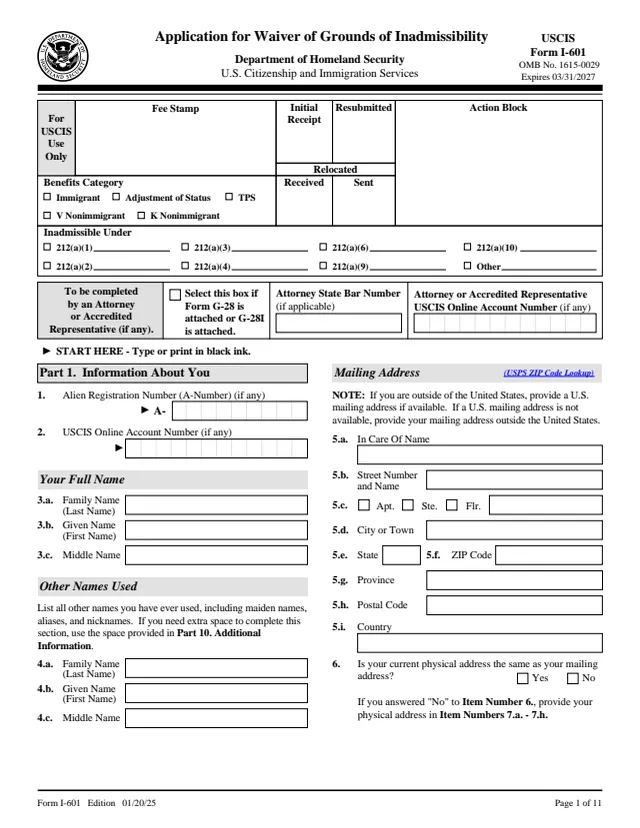
I-601
280 fields, 11 pages
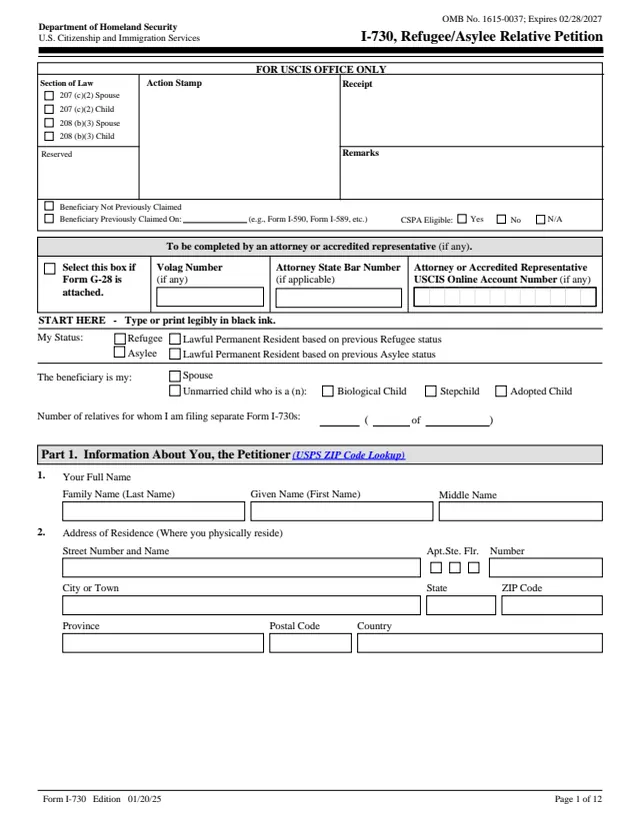
I-730
292 fields, 12 pages
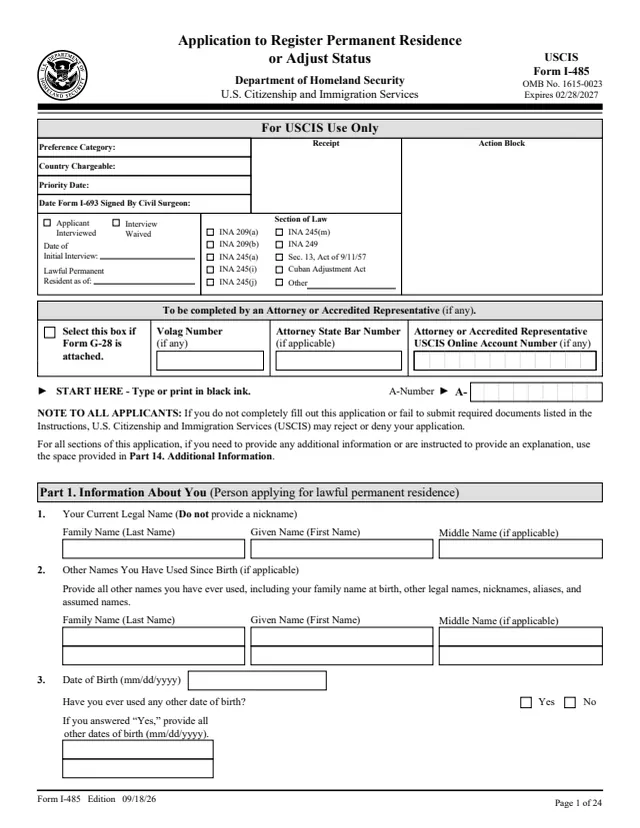
I-485
730 fields, 24 pages
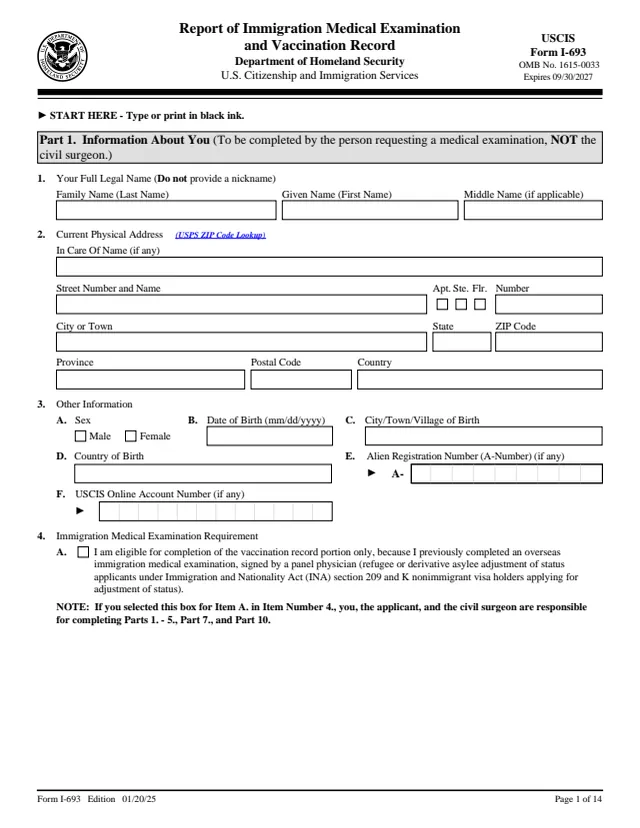
I-693
446 fields, 14 pages
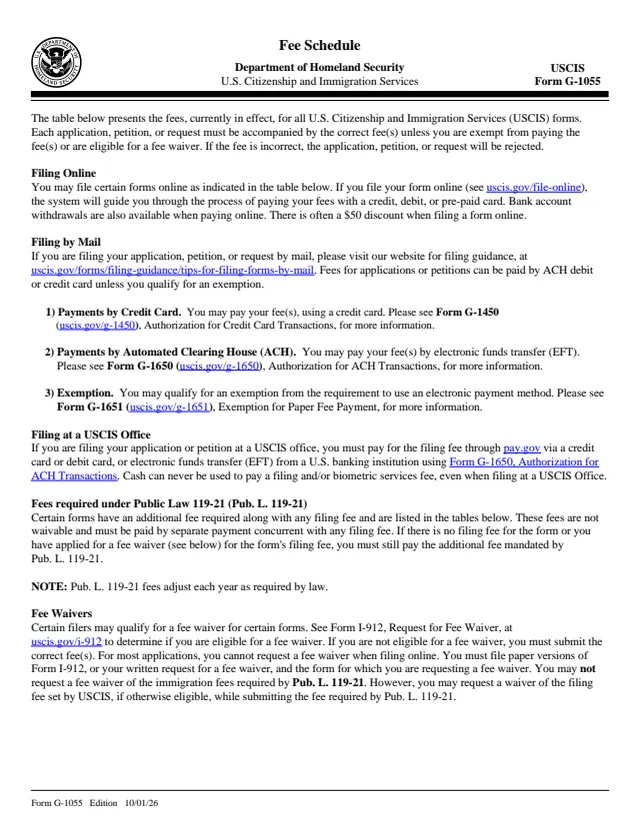
G-1055
64 fields, 58 pages
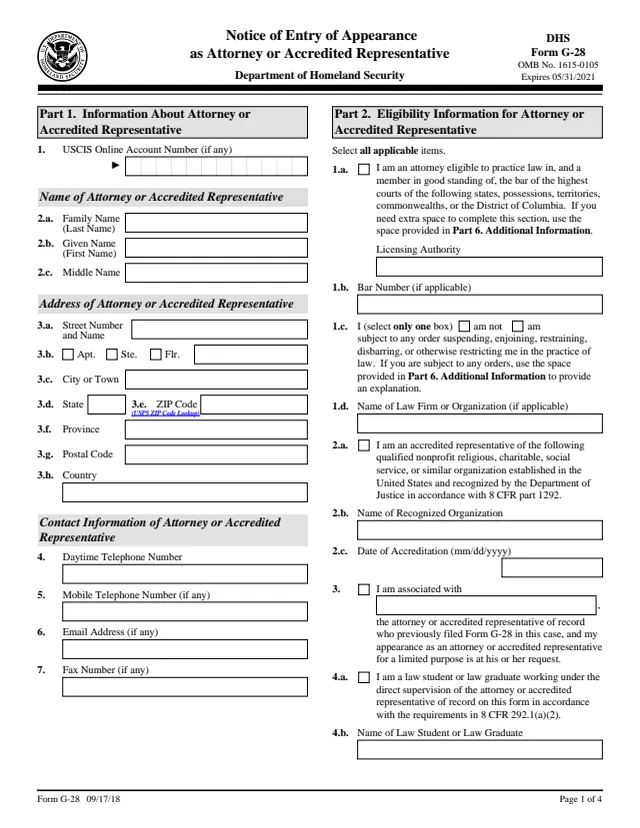
G-28
101 fields, 4 pages
No tool matches that search.
The instructions say Form I-602 is for people seeking admission as a refugee and for refugees or asylees applying for permanent residence. Other applicants seeking a waiver are pointed to the Form I-601 instructions.
The instructions say USCIS may grant the waiver if it would serve humanitarian purposes, preserve family unity or be otherwise in the public interest. Item 37 has a box for each reason.
Yes. The instructions say no waiver is available for controlled substance trafficking, general security grounds, terrorist activities, adverse foreign policy consequences, and Nazi persecution, genocide, torture or extrajudicial killing.
The instructions say public charge, labor certification and immigrant documentation grounds do not apply, and the vaccination ground does not apply to a person seeking to come as a refugee, so no Form I-602 is needed for those.
It depends on the case. The USCIS page lists separate routes for Form I-590 refugee applicants, Form I-730 beneficiaries and Form I-485 applicants. The instructions say Immigration Court cases file with the court.
USCIS fees change, so this page does not list one. The I-602 page points to the USCIS Fee Schedule, and the instructions point to Form G-1055.