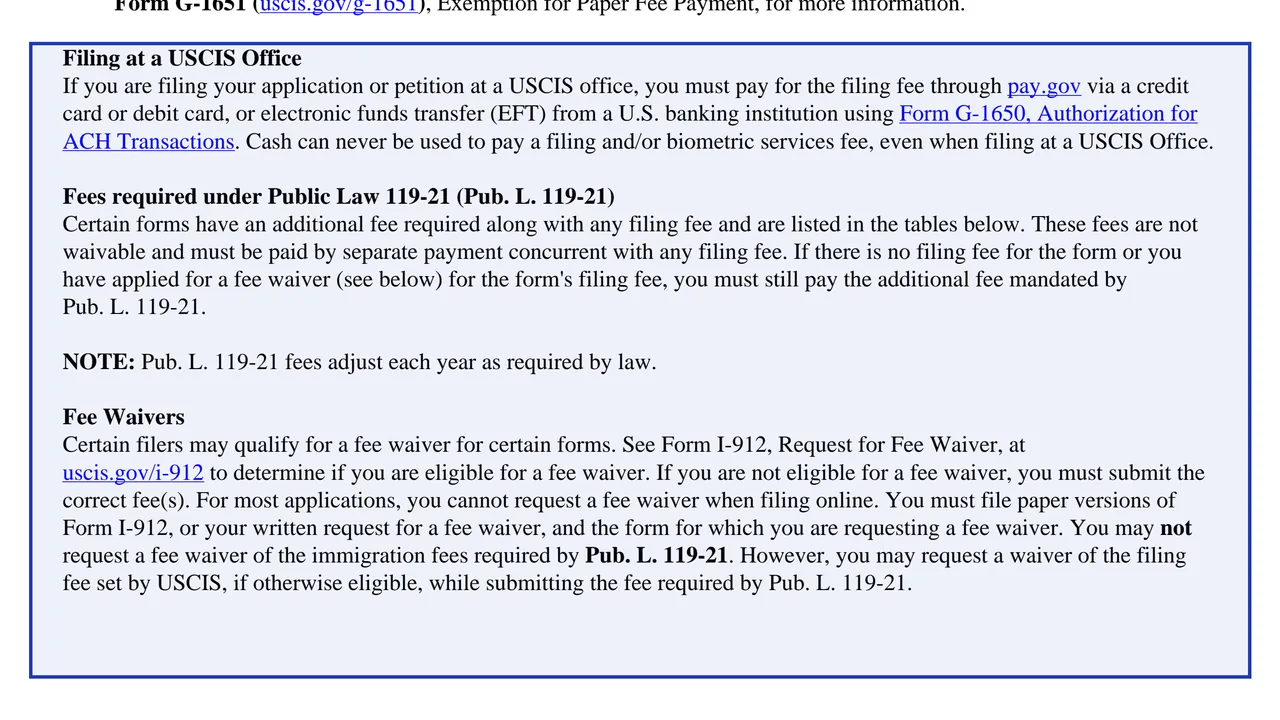
Filing Online and Filing by Mail
How fees are paid when a form is filed online through uscis.gov/file-online, and the three ways to pay by mail: credit card, ACH or an exemption. The schedule notes that filing online often carries a discount.
G-1055
Fee Schedule
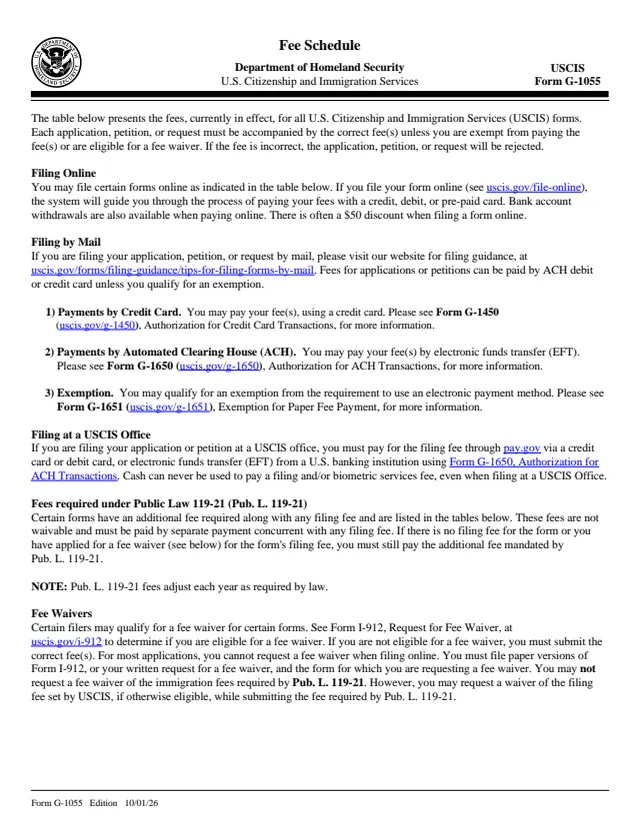
Form G-1055, Fee Schedule, is the USCIS document that lists the fees currently in effect for all USCIS forms. The USCIS page says to use it to verify fee information for immigration forms. It is a reference table rather than an application or petition.
The schedule says each application, petition or request is to be accompanied by the correct fee unless the filer is exempt or eligible for a fee waiver, and that a request with an incorrect fee will be rejected. Forms with several filing purposes appear more than once, one row for each fee.
The USCIS page says the 10/16/26 edition adds the Fiscal Year 2027 H.R. 1 immigration-related fees for Forms I-131, I-589, I-765, I-821 and I-941, effective Oct. 16, 2026. This page does not repeat any fee amounts, because they change. Check the current schedule on uscis.gov on the day you file.
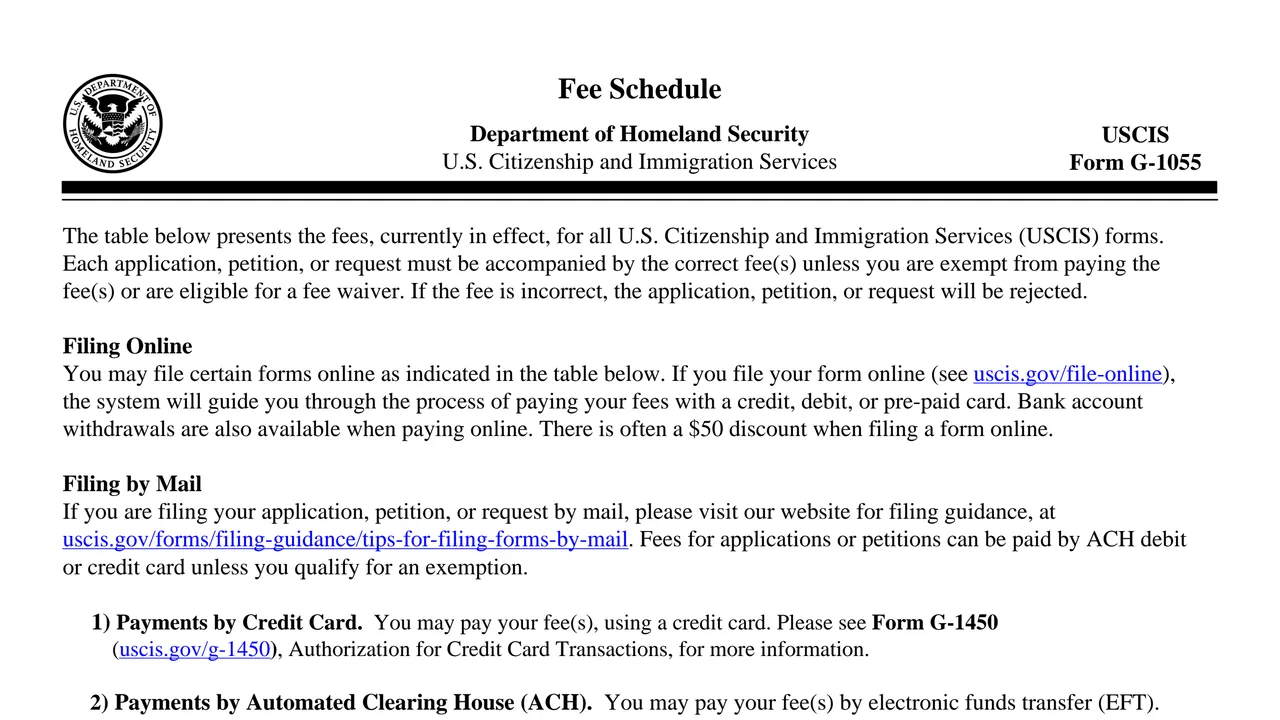
How fees are paid when a form is filed online through uscis.gov/file-online, and the three ways to pay by mail: credit card, ACH or an exemption. The schedule notes that filing online often carries a discount.
Payment through Pay.gov by card or by electronic funds transfer with Form G-1650. Cash can never be used for a filing or biometric services fee.
Certain forms carry an additional fee along with any filing fee. The schedule says these fees are not waivable, are paid by separate payment, and adjust each year as required by law.
Where to check fee waiver eligibility (Form I-912) and how fee-exempt categories appear. The schedule says an exemption only shows the form is free to file, not that a person is eligible to file it.
Three columns: Form Number and Title, Filing Category and Fee(s). Forms are generally listed alphabetically, with a row for each filing purpose and, where it applies, separate paper and online fees.
Some rows also list a DHS Biometric Services Fee, an Asylum Program Fee or a Pub. L. 119-21 fee next to the filing fee.
The current edition runs 60 pages.
The USCIS page lists edition 10/16/26, printed at the bottom of each page. Fees change, so open the schedule on uscis.gov on the day you file.
The schedule says it can be searched by form number, form name or fee, and that forms are generally in alphabetical order.
Forms with different filing purposes are listed more than once. Read the Filing Category column to find the row that matches the request.
Some rows show a separate paper filing fee and online filing fee for the same category.
Check the row for a biometric services fee, an Asylum Program Fee or a Pub. L. 119-21 fee. The schedule says Pub. L. 119-21 fees are paid by separate payment along with any filing fee.
For a paper filing, the schedule points to Form G-1450 or Form G-1650, or Form G-1651 for an exemption. The USCIS page says online filings are paid through Pay.gov.
You get the real form, filled in a browser tab, with nothing standing between you and the finished PDF.
The USCIS page offers Form G-1055 as a download to verify fee information and lists no filing address for it. The schedule says the correct fee goes with each application, petition or request.
The schedule says a request with an incorrect fee will be rejected. The USCIS page says a request postmarked on or after Oct. 16, 2026 without the proper new fee for one of the updated forms will be rejected.
Form I-912 covers fee waivers. The schedule says Pub. L. 119-21 fees cannot be waived, though a waiver of the USCIS filing fee may be requested, if otherwise eligible.
The schedule says no Form I-912 or formal request is needed for a fee-exempt form or category, and that an exemption does not show eligibility to file in all circumstances.
The USCIS page describes a court order on the payment requirement for certain H-1B petitions and a pause on certain Pub. L. 119-21 fees for Ms. L. Settlement Class members. Check the page for the current status.
The current edition is 10/16/26. The USCIS page says the edition date is at the bottom of each page of the schedule.
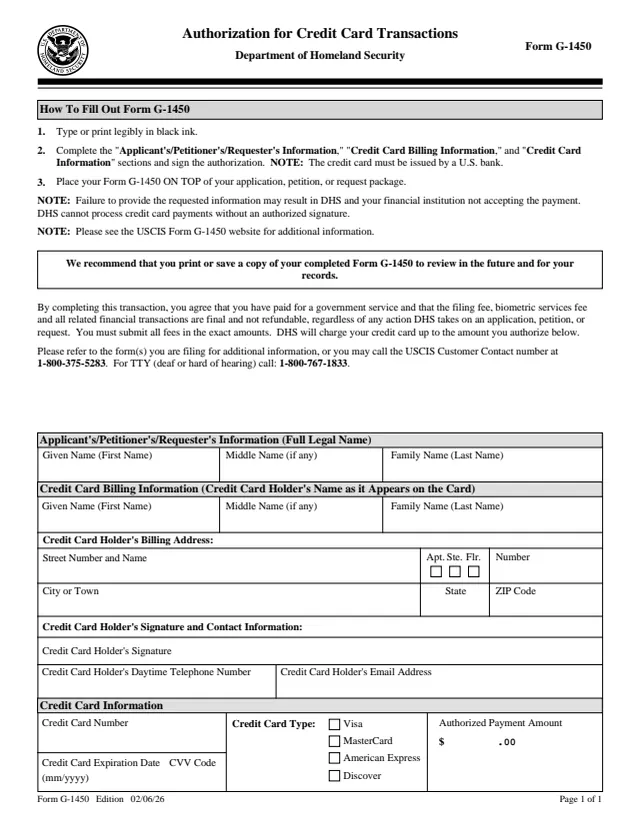
G-1450
29 fields, 1 page
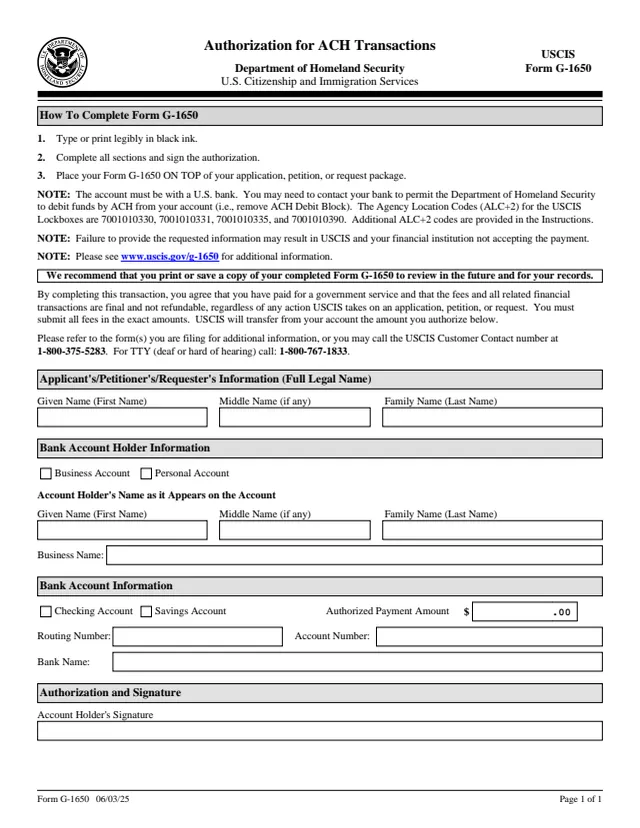
G-1650
17 fields, 1 page
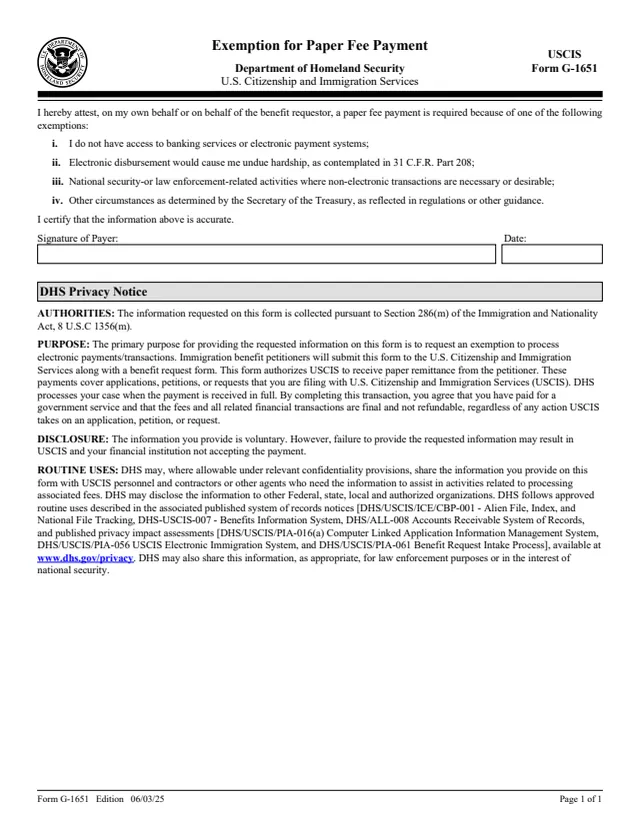
G-1651
3 fields, 1 page
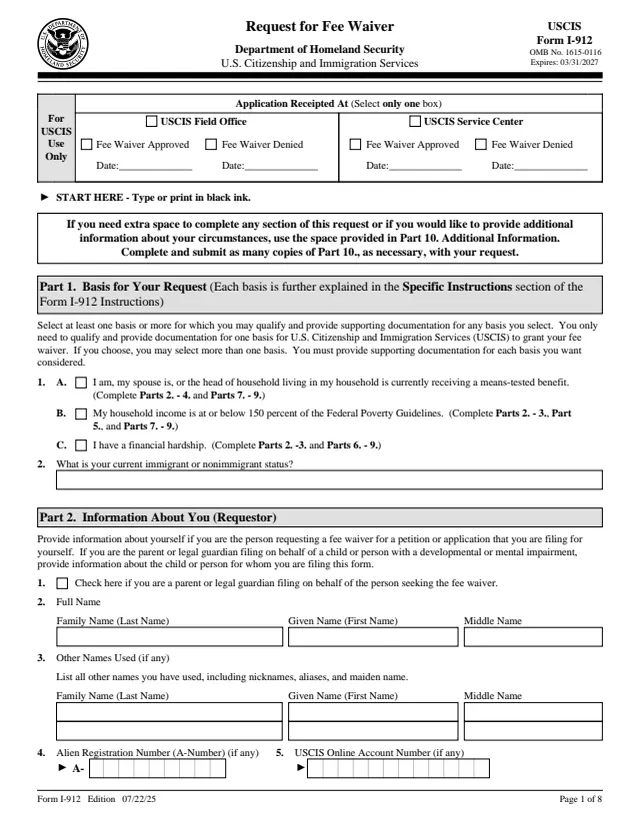
I-912
221 fields, 8 pages
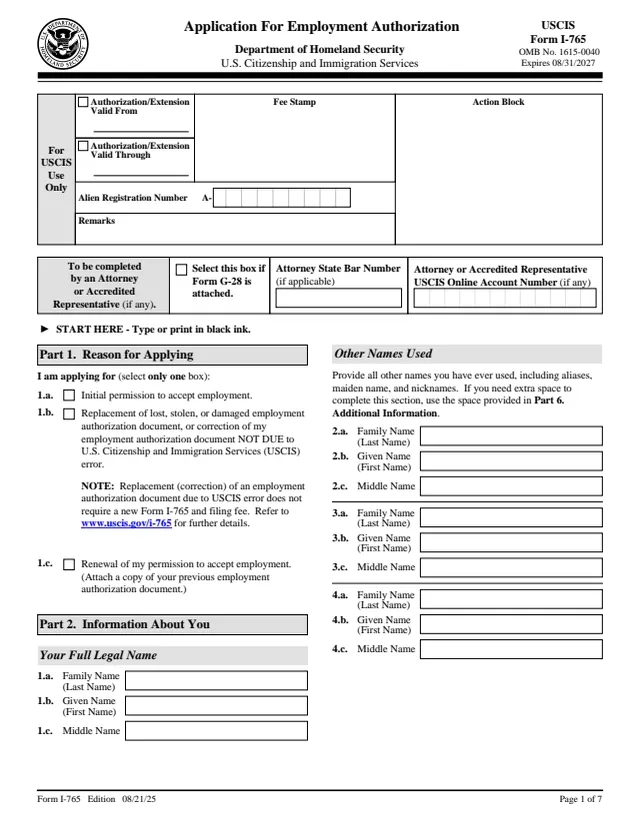
I-765
161 fields, 7 pages
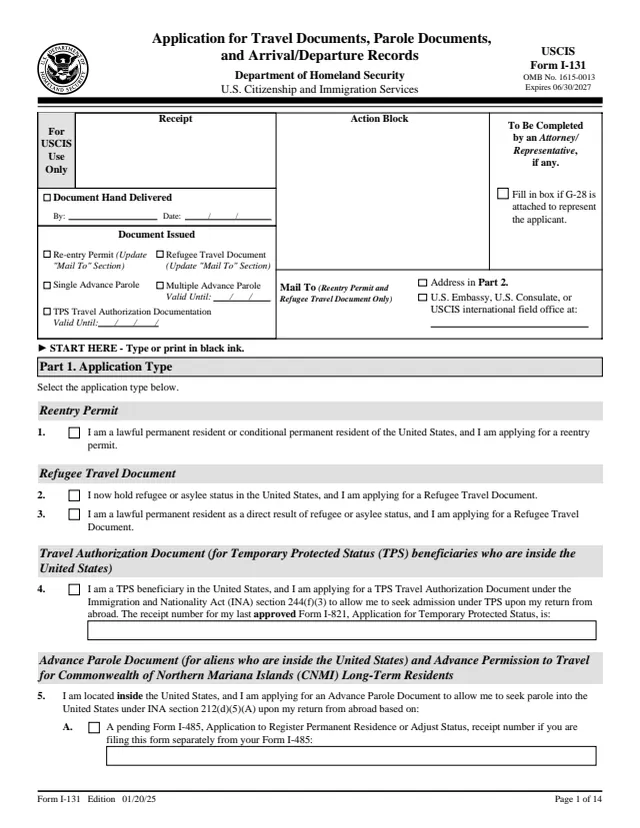
I-131
339 fields, 14 pages
No tool matches that search.
The fees currently in effect for all USCIS forms, by form number and filing category, along with how to pay, fee waivers and fee exemptions.
USCIS fees change, and the schedule says Pub. L. 119-21 fees adjust each year as required by law. Check the current Form G-1055 on uscis.gov on the day you file.
The USCIS page offers it as a download to verify fee information and lists no filing address for it. The fee itself goes with the application, petition or request.
No. The schedule says cash can never be used to pay a filing or biometric services fee, even when filing at a USCIS office.
No. The schedule says they are not waivable and are still due when a form has no filing fee or a fee waiver was requested for the filing fee.
The USCIS page says it adds the Fiscal Year 2027 H.R. 1 immigration-related fees for Forms I-131, I-589, I-765, I-821 and I-941, effective Oct. 16, 2026.