I-191

Application for Relief Under Former Section 212(c) of the Immigration and Nationality Act (INA)

Agency
USCIS
Revision
Edition 01/20/25
Fillable fields
499
Pages
18
Official source
USCIS form page
Checked
October 20, 2026
Fill I-191 online
Page 1 of form I-191

Form I-191: Application for Relief Under Former Section 212(c) of the INA

Form I-191, Application for Relief Under Former Section 212(c) of the Immigration and Nationality Act (INA), is the USCIS form a lawful permanent resident uses to request relief under former INA section 212(c). The instructions describe it for a person who was lawfully admitted for permanent residence and is subject to removal because of a conviction before April 1, 1997, for a crime that makes them inadmissible or deportable.

Congress repealed former section 212(c) effective April 1, 1997. The USCIS page explains that the U.S. Supreme Court decided in 2001 (INS v. St. Cyr) that the repeal does not apply to permanent residents who pleaded guilty to a crime before that date, and that in Matter of Abdelghany (BIA 2014) the Board of Immigration Appeals held that the relief is also available to otherwise eligible permanent residents convicted after a trial before April 1, 1997.

The instructions say a person in deportation, exclusion or removal proceedings cannot file Form I-191 with USCIS, and that the relief is sought before an immigration judge instead. They also note that this version of the form meets the requirement of 8 CFR 1212.3 to file the Form I-191 previously titled "Application for Advance Permission to Return to Unrelinquished Domicile".

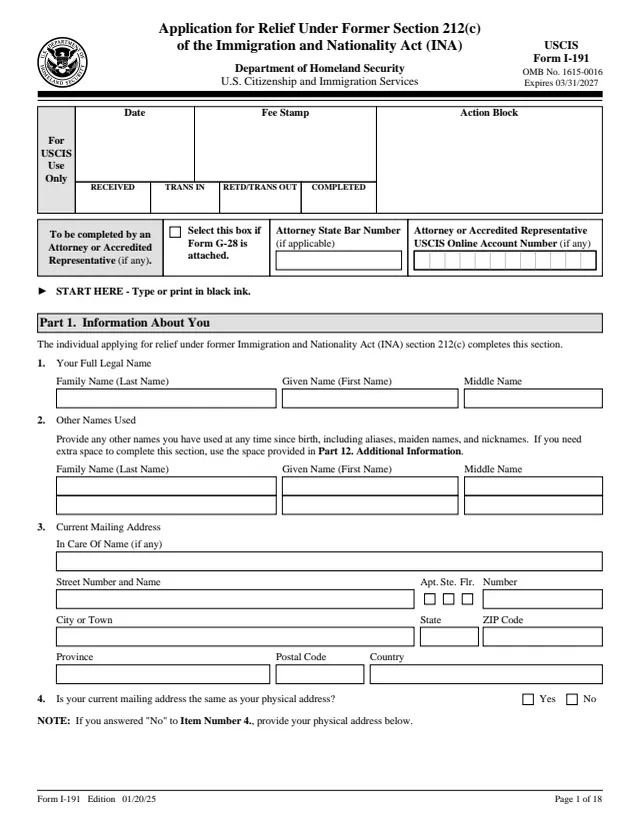
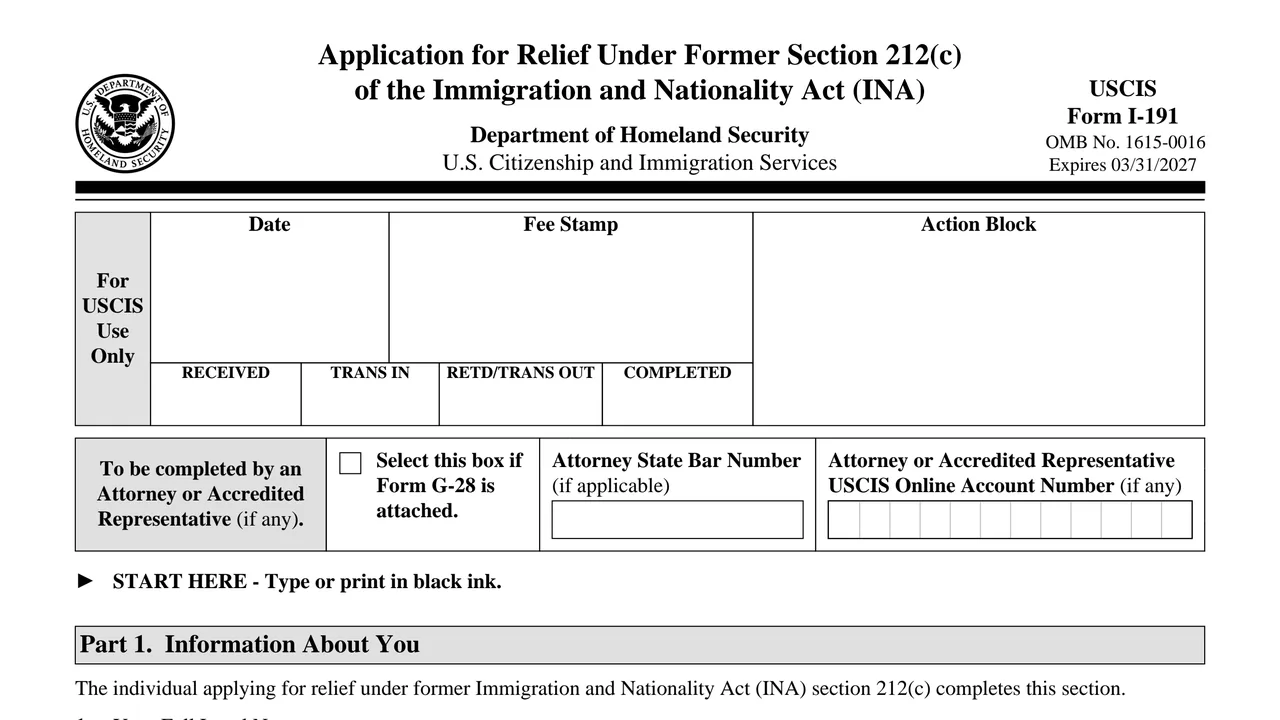
Top of page 1 of Form I-191: Application for Relief Under Former Section 212(c) of the INA, as printed by USCIS

What's on Form I-191

Part 1: Information about you

Name, other names, mailing and physical address, date of birth, A-Number, USCIS online account number, citizenship, place of birth, when and how permanent resident status was obtained, passport, last arrival and each trip from and to the United States since becoming a permanent resident.
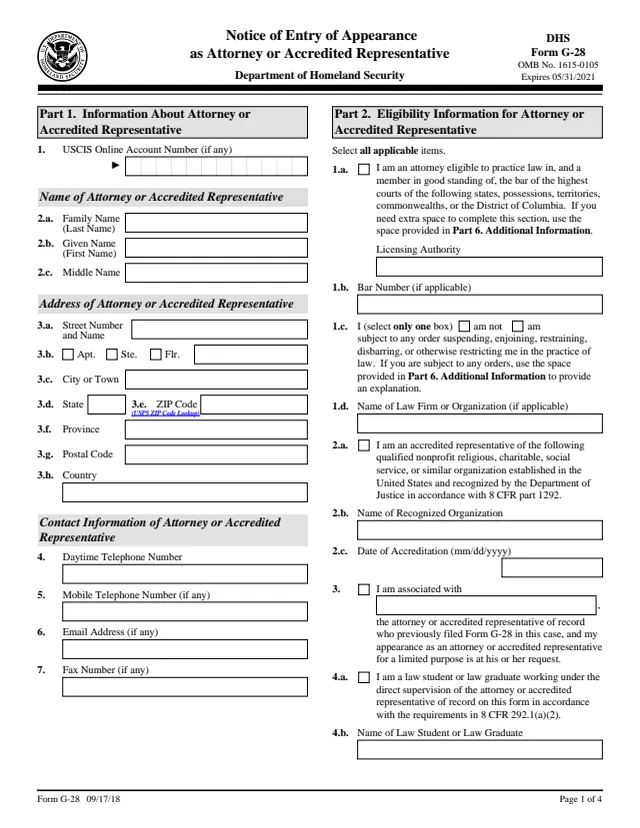
Parts 2 and 3: Biographic information and convictions

Ethnicity, race, height, weight, eye and hair color, then each conviction in the United States and abroad with the court, case number, whether it followed a trial or a guilty or no contest plea, the plea date, the offense, the law cited and the sentence.

Parts 4 to 6: Residences, employment and family

Every residence and every employer during the last seven years, most recent first, then information about a spouse, all children and both parents.

Parts 7 and 8: Other grounds and discretion

An explanation of any other grounds of removal and any other arrests, charges or offenses, then a statement on why USCIS or an immigration judge should approve the application as a matter of discretion.

Parts 9 to 13: Signatures, extra space and USCIS decision

The applicant's contact information, certification and signature, the interpreter and preparer sections, Part 12 for additional information, and Part 13, which is for USCIS only.

How to fill out Form I-191

  1. 1

    Type or print in black ink and answer every item

    Write N/A where a question does not apply and None for a zero. Extra answers go in Part 12 with the page, part and item number, and the instructions ask for the name and A-Number at the top of any added sheet, signed and dated.

  2. 2

    List every trip since becoming a permanent resident

    Items 19 to 21 ask for each trip separately: cities and states of departure and arrival, dates, means of transportation and purpose. A box marks whether the information is approximate.

  3. 3

    List all convictions with court records

    The instructions ask for every conviction in the United States and abroad, with certified copies of the charging document, any plea agreement showing the date it was signed, and the court judgment for each one.

  4. 4

    Leave no gaps in the seven-year history

    Parts 4 and 5 cover the last seven years, most recent first. The instructions say there should be no gaps in residences, and a period without work is entered as Unemployed in the Name of Employer field.

  5. 5

    Write the discretion statement in Part 8

    The instructions list unfavorable factors, such as the criminal record, and favorable factors, such as family ties, length of lawful residence, hardship, military service, lawful employment and rehabilitation. A separate sheet may be used if it is filed with the form.

  6. 6

    Sign Part 9 yourself

    A stamped or typewritten name is not accepted, and a parent or legal guardian may sign for an applicant under 14. Leave Part 13 blank. This page lets you fill the form online free, then print it for your signature.

Why fill Form I-191 on indox

You get the real form, filled in a browser tab, with nothing standing between you and the finished PDF.

  • Fill the form right in your browser, no software to install
  • Free to fill and free to download, with no account
  • The official blank straight from the USCIS, not a copy someone retyped
  • Works on a phone, tablet or computer

Where to file, evidence and fees

Where to file

The USCIS page gives one address for USPS, FedEx, UPS and DHL deliveries: USCIS, ATTN: I-191, 3 Intake Way, Minneapolis, MN 55438-1455. The instructions say a United States address is needed to file this application.

Filing while in proceedings

The instructions say a person served with Form I-221, I-122, I-862 or I-863 files with the appropriate Immigration Court, and that the DHS attorney provides pre-order filing instructions on background and security investigations.

Fee

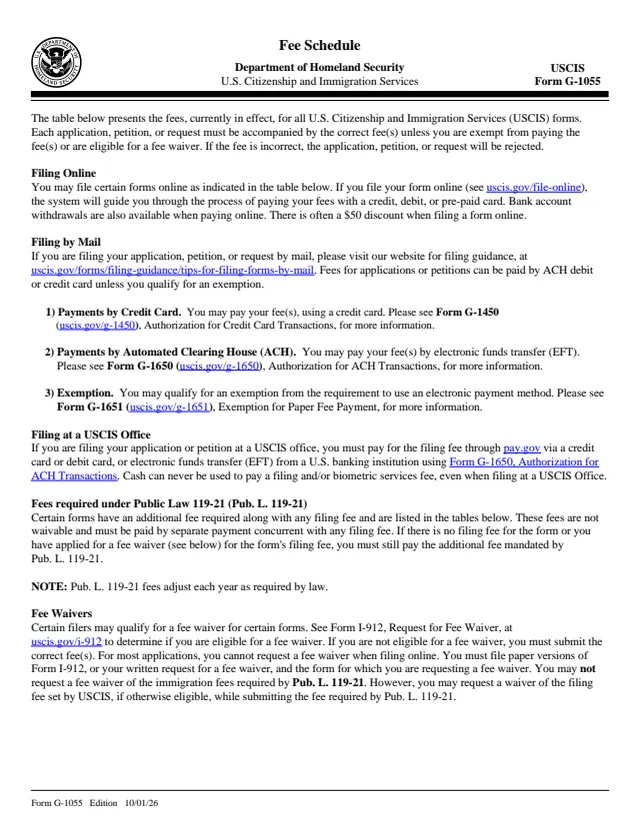
The fee is on the USCIS Fee Schedule page, and the instructions point to Form G-1055. Fees can change, so check it on the day you file.

Edition and pages

The USCIS page lists edition 01/20/25. For a printed form, the page says the edition date and page numbers need to be visible on every page, all from the same edition, or the form may be rejected.

Biometrics and interview

USCIS may ask for an interview or biometrics. The instructions say missing a biometrics appointment may lead to denial, and an applicant before an immigration judge may have the application found abandoned.

Copies and translations

Send legible photocopies unless an original is requested, and include a full English translation with the translator's certification for any foreign-language document.

Who files Form I-191?

  • Lawful permanent residents

    The instructions describe an applicant who was lawfully admitted for permanent residence, still has that status and obtained it lawfully. They say permanent resident status ends once an administratively final order of exclusion, deportation or removal is issued.

  • Seven years of unrelinquished domicile

    The instructions list at least seven consecutive years of domicile in the United States immediately before filing. The period starts when the person became a permanent resident or a lawful temporary resident under INA section 210 or 245A.

  • Convictions before April 1, 1997

    The conviction after trial or guilty plea that made the person deportable or removable occurred before April 1, 1997. The instructions explain which version of former section 212(c) applies, based on whether the plea or conviction came before November 29, 1990, before April 24, 1996, or before April 1, 1997.

  • People in proceedings

    The instructions say someone in deportation, exclusion or removal proceedings cannot file Form I-191 with USCIS. The request goes before an immigration judge, and the application is filed with the appropriate Immigration Court.

  • When relief is not available

    The instructions list grounds that make the relief unavailable, such as security related inadmissibility grounds, international child abduction, or failing to appear for proceedings after proper notice, plus aggravated felonies and other offenses for later conviction dates.

Official sources and the blank

Do it all with indox

View all 94 tools

Questions about Form I-191

Can I file Form I-191 if I am in removal proceedings?

No. The instructions say a person in deportation, exclusion or removal proceedings cannot file Form I-191 with USCIS. The relief is sought before an immigration judge, and the application goes to the Immigration Court.

Is relief under former section 212(c) still available after the 1997 repeal?

The USCIS page says the Supreme Court decided in 2001 that the repeal does not apply to permanent residents who pleaded guilty before April 1, 1997, and the BIA held in 2014 that it also covers otherwise eligible permanent residents convicted after a trial before that date.

Does meeting the requirements mean the application is approved?

No. The instructions say USCIS or an immigration judge has discretion and approves only when the favorable factors outweigh the unfavorable ones. They add that the criminal history that makes a person removable is by itself an unfavorable factor.

What happened to the Application for Advance Permission to Return to Unrelinquished Domicile?

The instructions say this version of Form I-191 meets the requirement of 8 CFR 1212.3 to file the Form I-191 previously titled Application for Advance Permission to Return to Unrelinquished Domicile.

Can Form I-191 be filed online?

The USCIS page gives a delivery address in Minneapolis for USPS, FedEx, UPS and DHL and does not list an online filing option.

What is the Form I-191 filing fee?

USCIS fees change, so this page does not list one. The I-191 page points to the USCIS Fee Schedule, and the instructions point to Form G-1055.