Caption
The district, United States of America v. the defendant, and the case number.
AO 442
Arrest Warrant
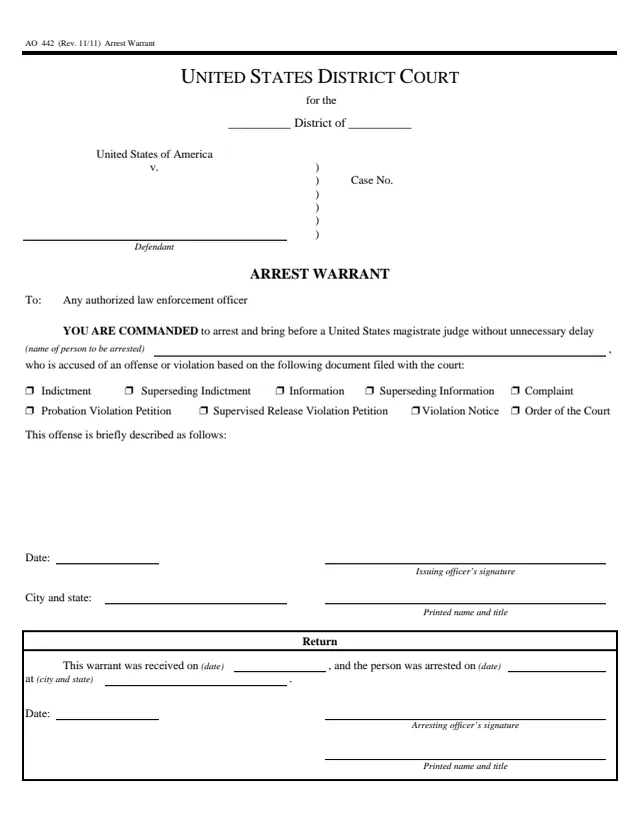
AO 442, Arrest Warrant, is a United States District Court warrant addressed to any authorized law enforcement officer. It commands the officer to arrest a named person and bring them before a United States magistrate judge without unnecessary delay. The U.S. Courts list it under Law Enforcement, Grand Jury, and Prosecution Forms. The current version is Rev. 11/11, and the U.S. Courts page lists it as effective on November 1, 2011.
Page 1 names the person, the document filed with the court that the accusation rests on, a brief description of the offense, the issuing officer's signature, and the return, which the arresting officer completes. Page 2 holds personal identifiers for law-enforcement use only. It is a court-issued warrant, not a form members of the public file.
This page explains the form in plain words and is not legal advice. You can fill it out free in your browser on this page and download the result without an account.
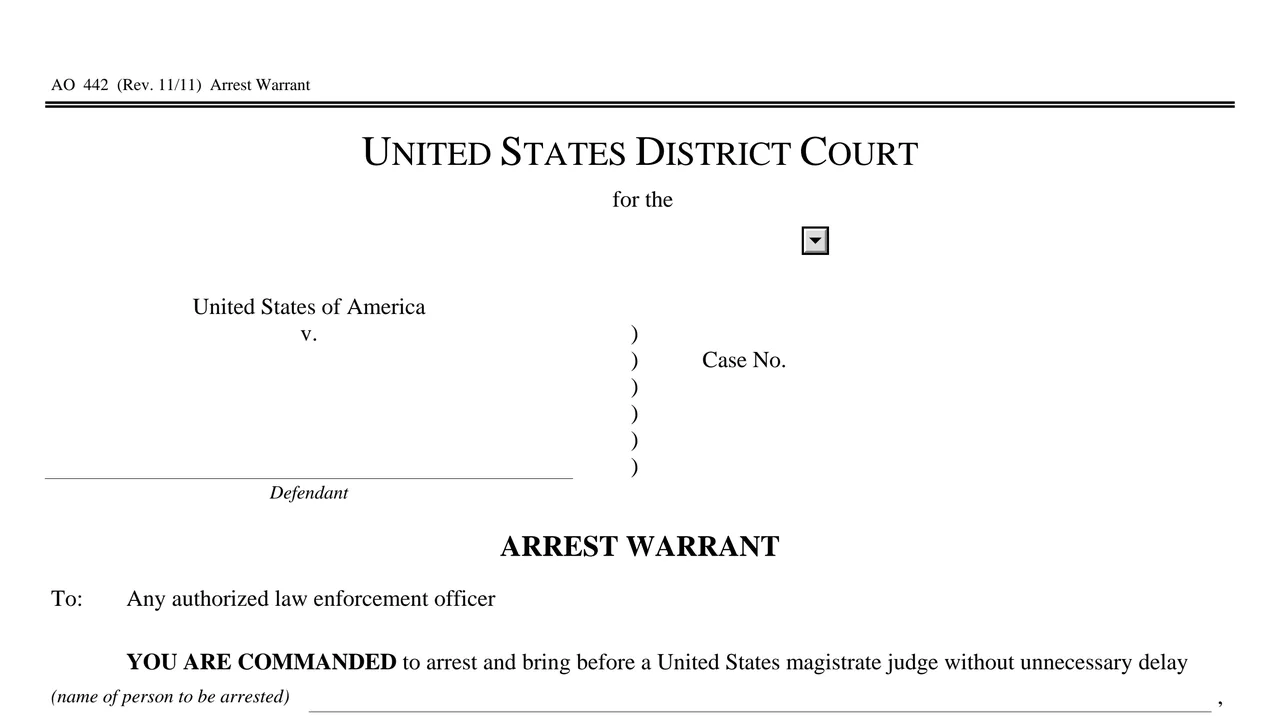
The district, United States of America v. the defendant, and the case number.
"YOU ARE COMMANDED to arrest and bring before a United States magistrate judge without unnecessary delay" the person named.
Boxes for Indictment, Superseding Indictment, Information, Superseding Information, Complaint, Probation Violation Petition, Supervised Release Violation Petition, Violation Notice, and Order of the Court, then a brief description of the offense.
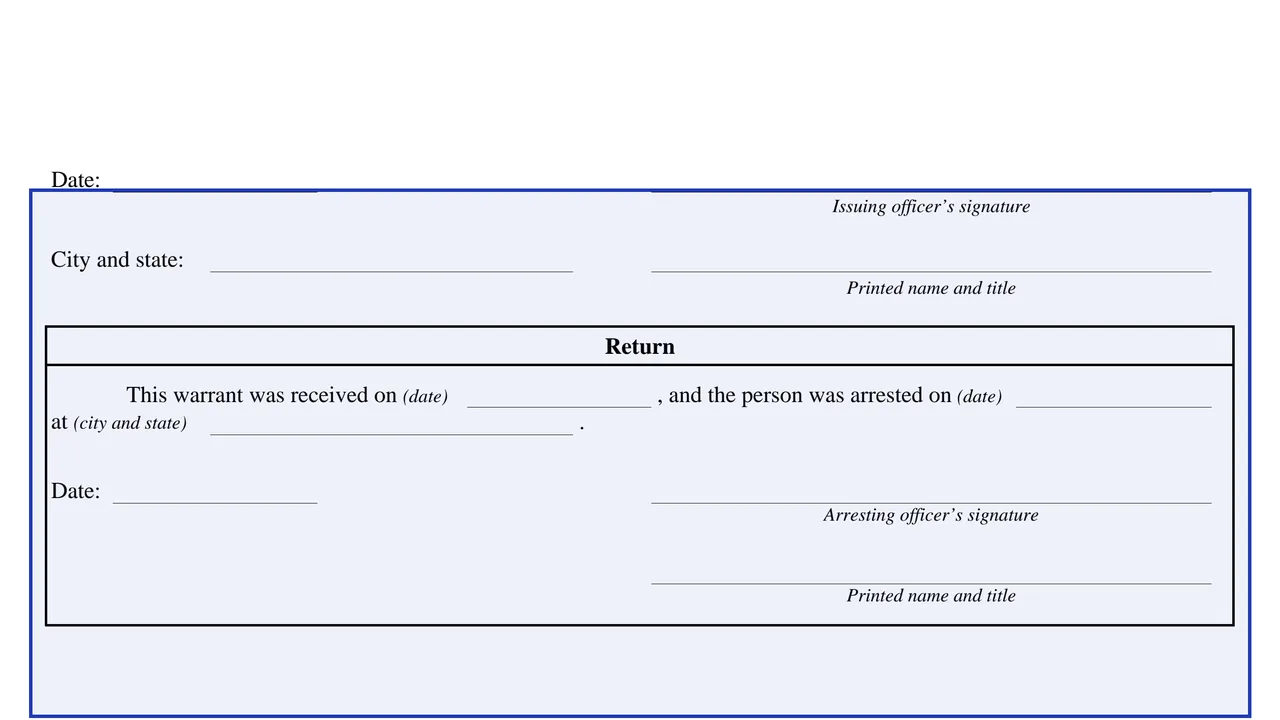
The date, the issuing officer's signature, the city and state, and a printed name and title.
The date the warrant was received, the date and the city and state of the arrest, and the arresting officer's signature, printed name and title.
Name, known aliases, last known and prior addresses, employment, phone numbers, place and date of birth, Social Security number, physical description, history of violence, weapons and drug use, known associates, FBI number, vehicle, investigative agency, and any pretrial services or probation officer.
Enter the district, the defendant's name and the case number.
Enter the name of the person to be arrested and check the box for the document filed with the court that the accusation is based on.
Write a brief description of the offense in the space provided.
The issuing officer enters the date, signs, and fills in the city and state and a printed name and title.
After the arrest, the arresting officer fills in the date received, the date and place of arrest, and signs with a printed name and title.
Page 2 says it contains personal identifiers provided for law-enforcement use only and should not be filed in court with the executed warrant unless under seal.
You get the real form, filled in a browser tab, with nothing standing between you and the finished PDF.
The warrant is captioned for the United States District Court for the district named, and directs that the person be brought before a United States magistrate judge.
It is addressed to any authorized law enforcement officer, and the arresting officer completes the return.
Page 2 is marked Not for Public Disclosure. The form says it contains personal identifiers provided for law-enforcement use only and should not be filed in court with the executed warrant unless under seal.
The form does not print a fee.
AO 91
21 fields, 1 page
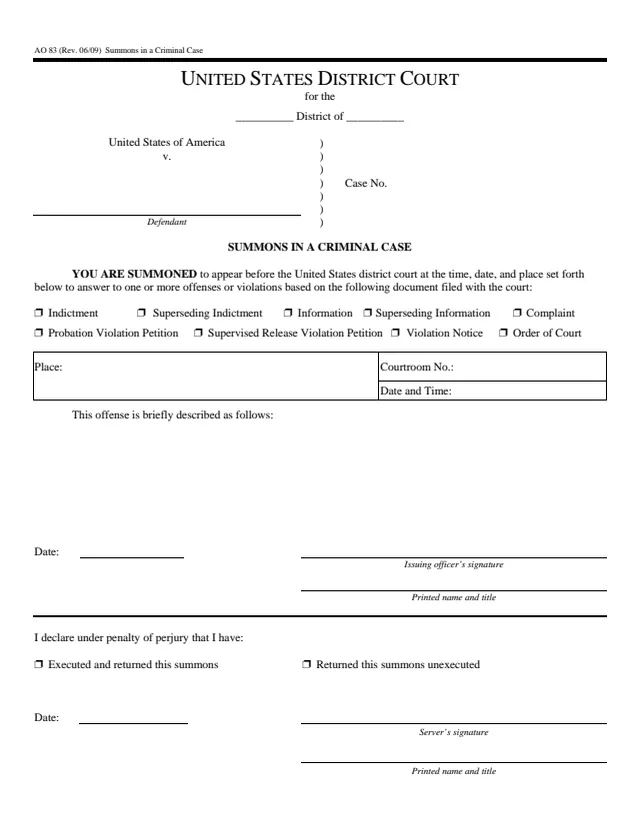
AO 83
44 fields, 2 pages
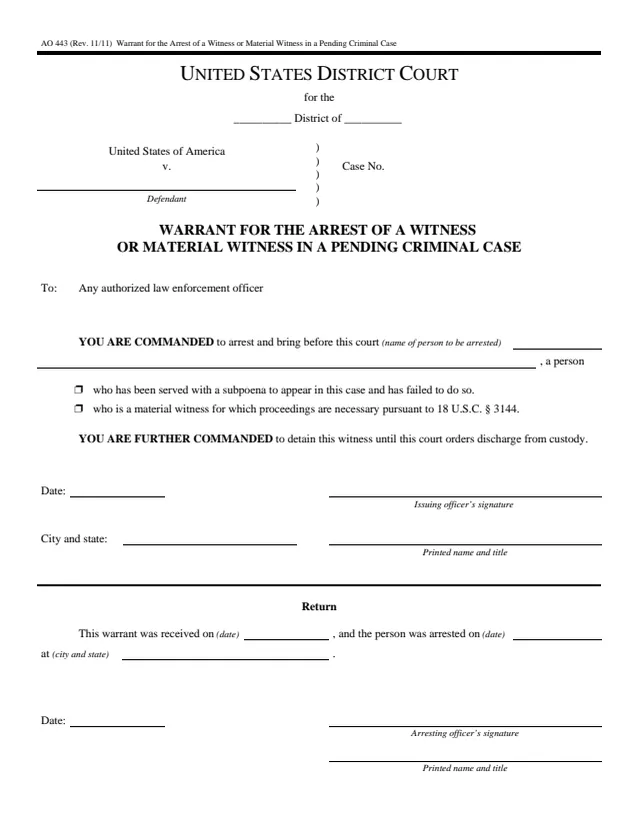
AO 443
47 fields, 2 pages
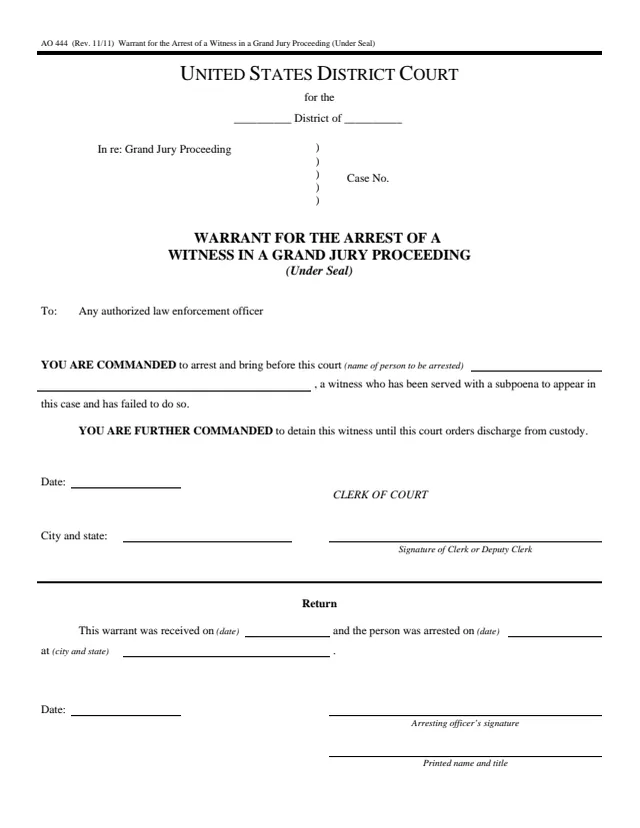
AO 444
45 fields, 2 pages
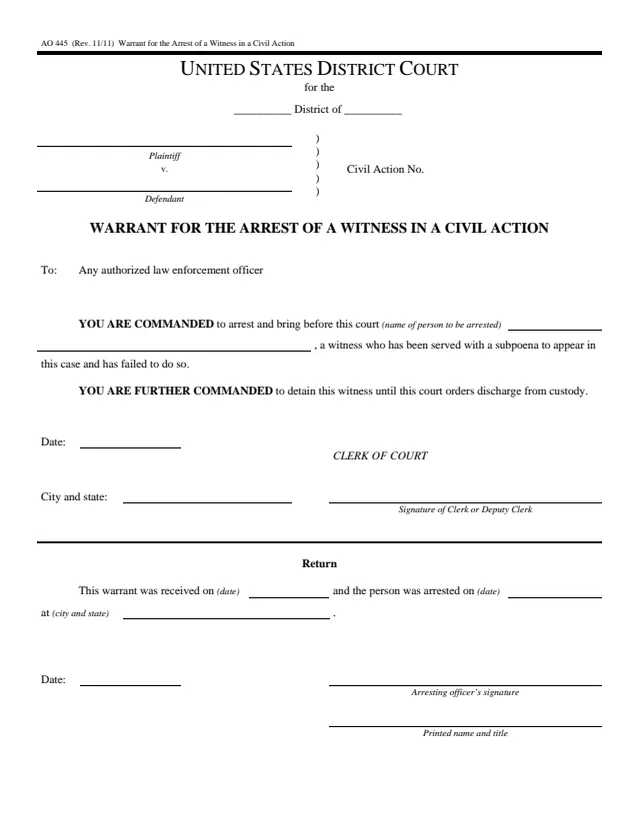
AO 445
46 fields, 2 pages
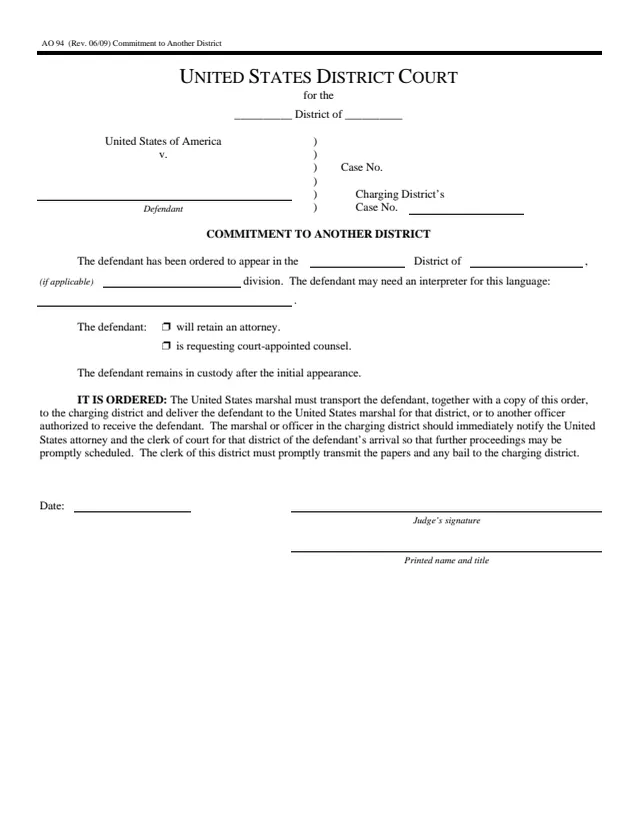
AO 94
15 fields, 1 page
The warrant names who issues it, who executes it and who completes the return.
No tool matches that search.
The form is addressed "To: Any authorized law enforcement officer."
The issuing officer signs page 1 with a printed name and title. The arresting officer signs the return after the arrest.
The form lists an Indictment, Superseding Indictment, Information, Superseding Information, Complaint, Probation Violation Petition, Supervised Release Violation Petition, Violation Notice, or Order of the Court.
The form says a United States magistrate judge, without unnecessary delay.
The form says page 2 contains personal identifiers provided for law-enforcement use only and should not be filed in court with the executed warrant unless under seal. It is marked Not for Public Disclosure.
No. It is a court-issued warrant signed by an issuing officer and addressed to law enforcement officers.