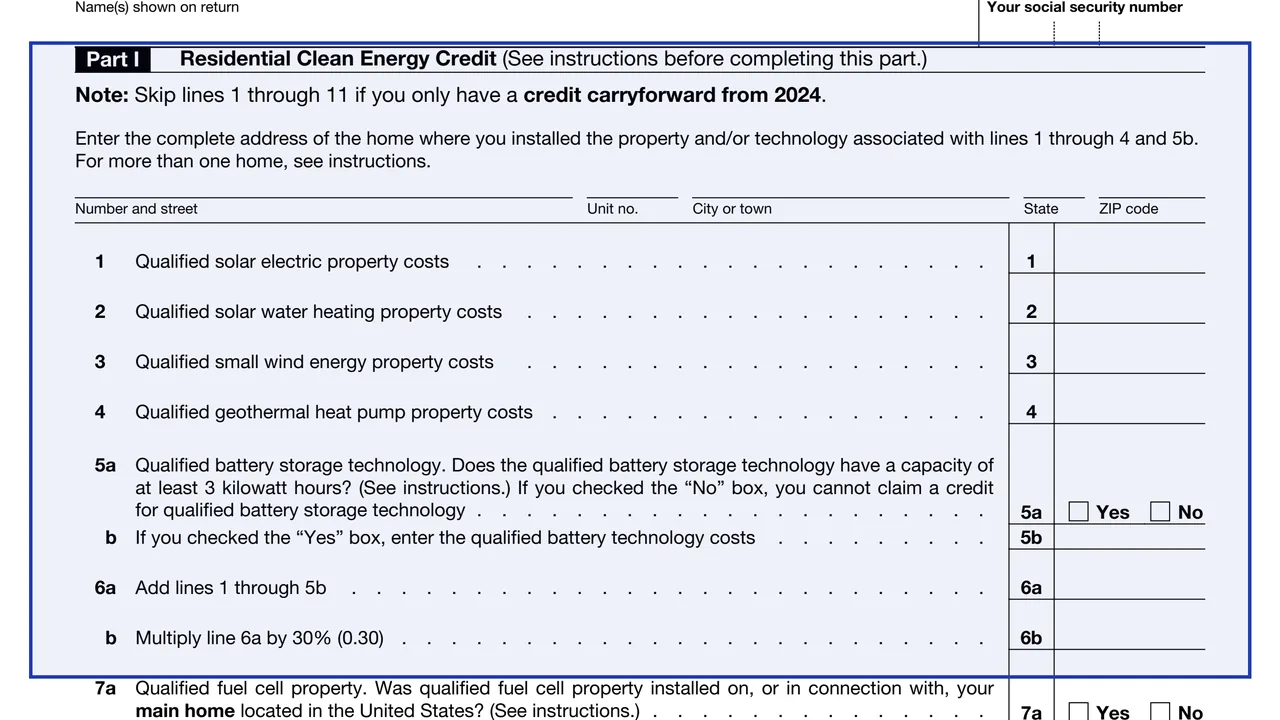
Part I, lines 1 to 6: clean energy costs
The home's address, then the costs of solar electric, solar water heating, small wind, geothermal heat pump and battery storage property. Line 6b multiplies the total by 30% (0.30).
5695
Residential Energy Credits
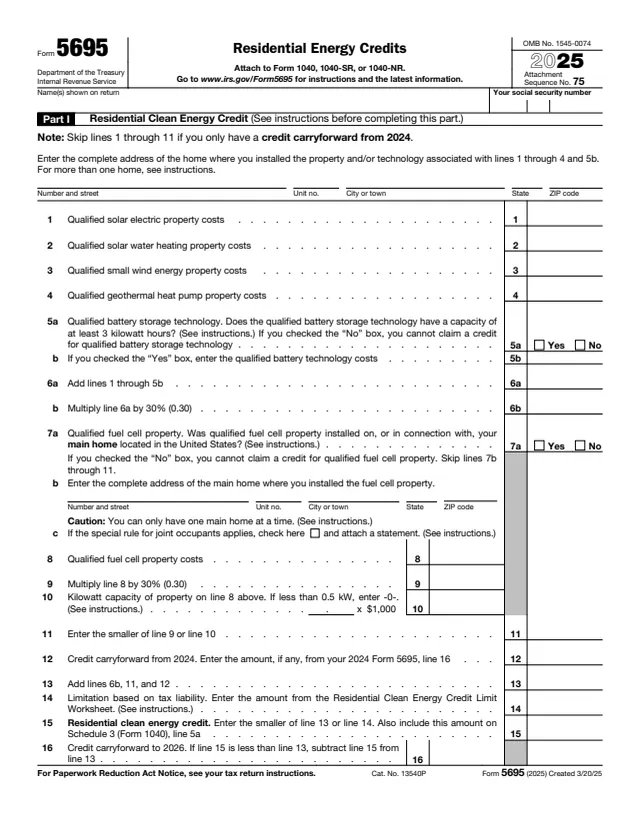
Form 5695 is used to figure and take the residential energy credits on an individual income tax return. The About page names the two credits: the residential clean energy credit in Part I and the energy efficient home improvement credit in Part II. The instructions say the form is also used to take any residential clean energy credit carryforward from 2024 or to carry the unused portion to 2026.
The form says to attach it to Form 1040, 1040-SR or 1040-NR. Part I covers solar electric, solar water heating, small wind, geothermal heat pump, battery storage and fuel cell costs. Part II covers insulation, exterior doors, windows and skylights, central air conditioners, water heaters, furnaces and boilers, panelboards, home energy audits, heat pumps and biomass stoves.
The 2025 instructions say residential clean energy credits cannot be claimed for expenditures made after December 31, 2025, and the energy efficient home improvement credit cannot be claimed for expenditures or property placed in service after that date. You can fill out the Form 5695 PDF free in your browser on this page and download it without an account.
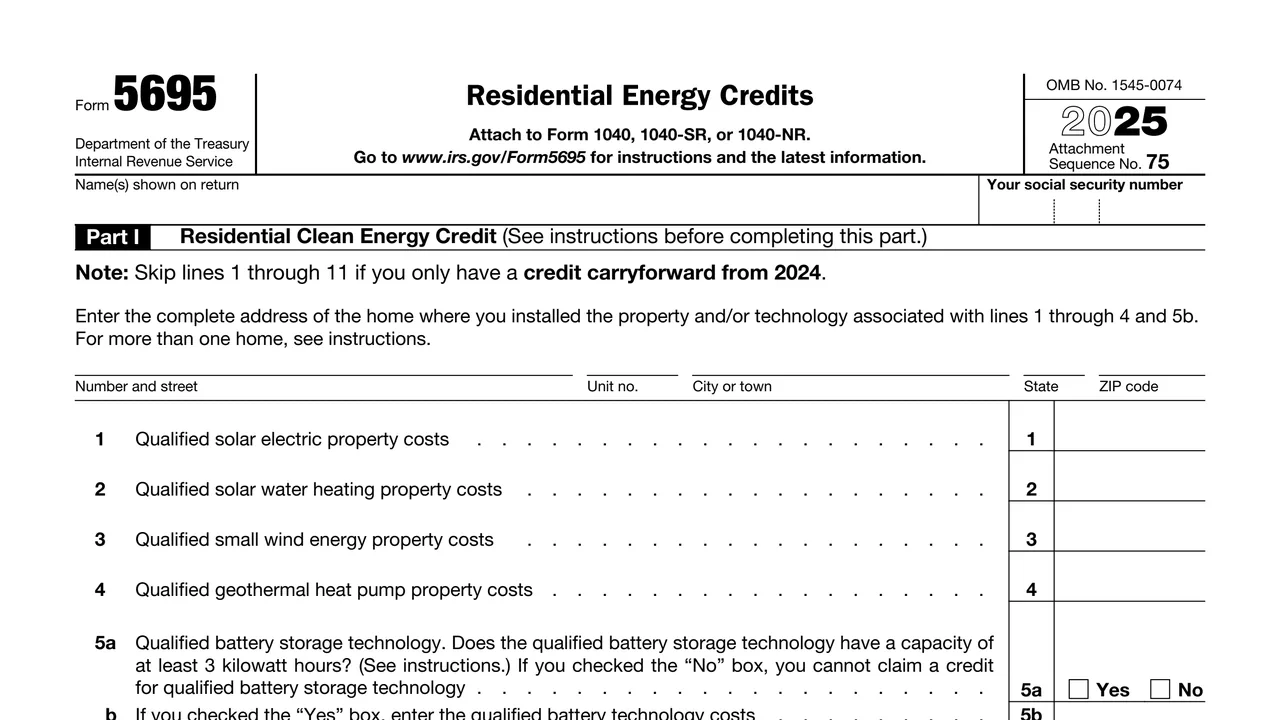
The home's address, then the costs of solar electric, solar water heating, small wind, geothermal heat pump and battery storage property. Line 6b multiplies the total by 30% (0.30).
Fuel cell property at the main home with its kilowatt capacity, the 2024 carryforward, the tax liability limit, the credit that goes on Schedule 3 (Form 1040), line 5a, and the carryforward to 2026.
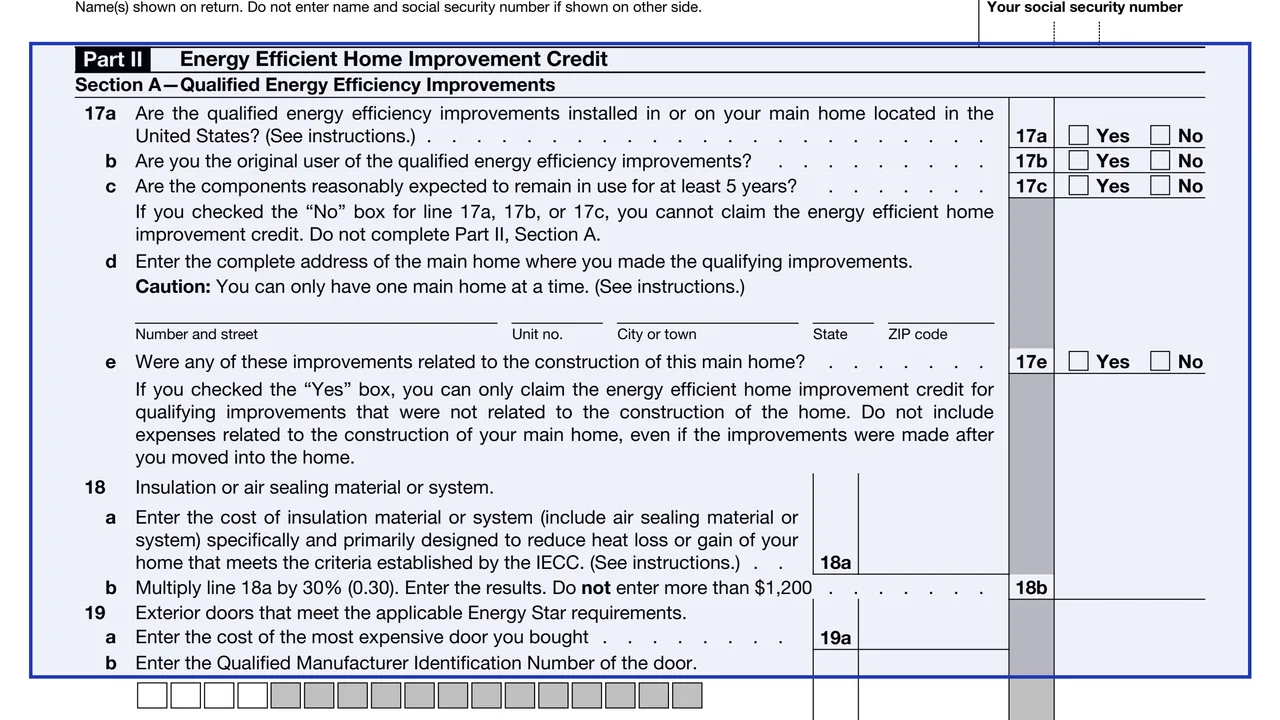
Lines 17a to 17e ask about the main home, original use, a 5 year expected life and construction. Lines 18 to 20 cover insulation, exterior doors and windows and skylights, with their dollar caps.
Lines 21 to 26 cover central air conditioners, water heaters, furnaces and boilers, enabling property such as panelboards and home energy audits, each with its own cap.
Line 28 caps the combined items at $1,200, line 29 adds heat pumps and biomass stoves with a $2,000 cap, and line 32 is the credit that goes on Schedule 3 (Form 1040), line 5b.
Above line 1, enter the address of the home with the property. The instructions say that with more than one home, you list the one with the greatest total cost and attach a statement with the other addresses.
Enter the amounts paid for each type of property, including labor for onsite preparation, assembly or original installation. Line 5a asks whether battery storage has at least 3 kilowatt hours of capacity, and line 10 multiplies fuel cell kilowatt capacity by $1,000.
Enter any 2024 carryforward, then the amount from the Residential Clean Energy Credit Limit Worksheet in the instructions on line 14. The instructions say to file the form even if you cannot use any of the credit in 2025.
Answer the yes and no questions about the main home, original use, the 5 year life and construction. The form says a No on line 17a, 17b or 17c means not completing Section A.
Enter costs and, where asked, the Qualified Manufacturer Identification Number (QMID). The instructions say not to include installation costs on the Section A lines, and to attach a statement listing the QMID and cost of items on the all other lines.
Enter the amount from the Energy Efficient Home Improvement Credit Limit Worksheet on line 31 and the smaller amount on line 32. Check line 32a for joint occupancy or line 32b for a condominium or cooperative share.
You get the real form, filled in a browser tab, with nothing standing between you and the finished PDF.
The form says to attach it to Form 1040, 1040-SR or 1040-NR. It is not filed on its own.
The form prints caps of $1,200 for insulation, $250 for one door and $500 for all doors, $600 for windows and for each energy property item, $150 for audits, $1,200 combined and $2,000 for heat pumps and biomass stoves.
The instructions say you can rely on the manufacturer's written certification that a product qualifies, but not to attach it to your return. Keep it for your records.
The instructions say a public utility subsidy not included in gross income reduces the cost of the product before the credit is figured, including when a contractor receives it for you.
The instructions say the cost basis of the home is reduced by the amount of any residential energy credit allowed.
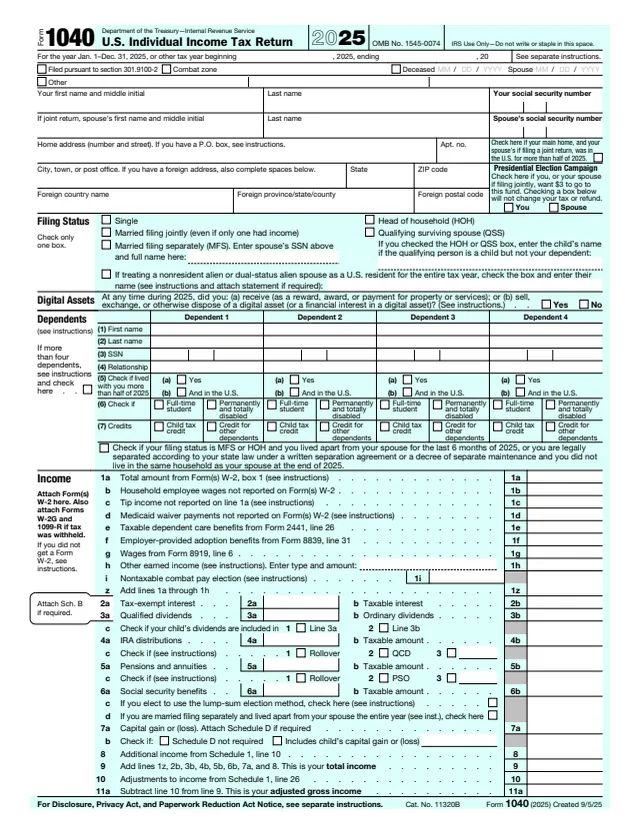
1040
199 fields, 2 pages
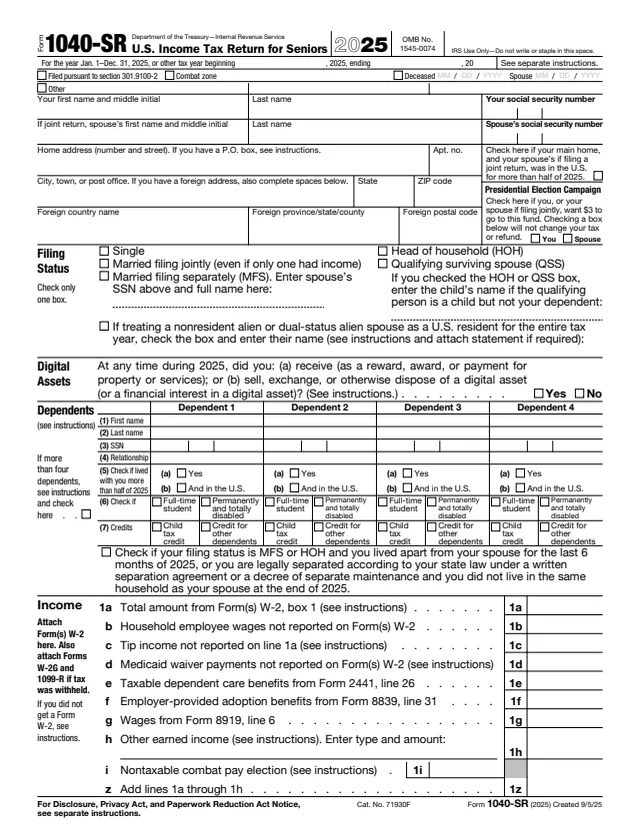
1040-SR
200 fields, 4 pages
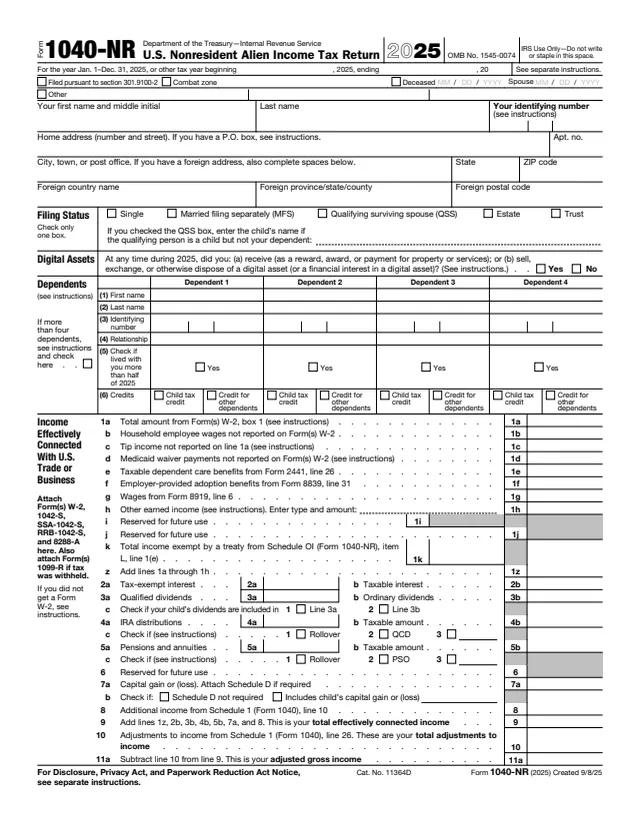
1040-NR
171 fields, 2 pages
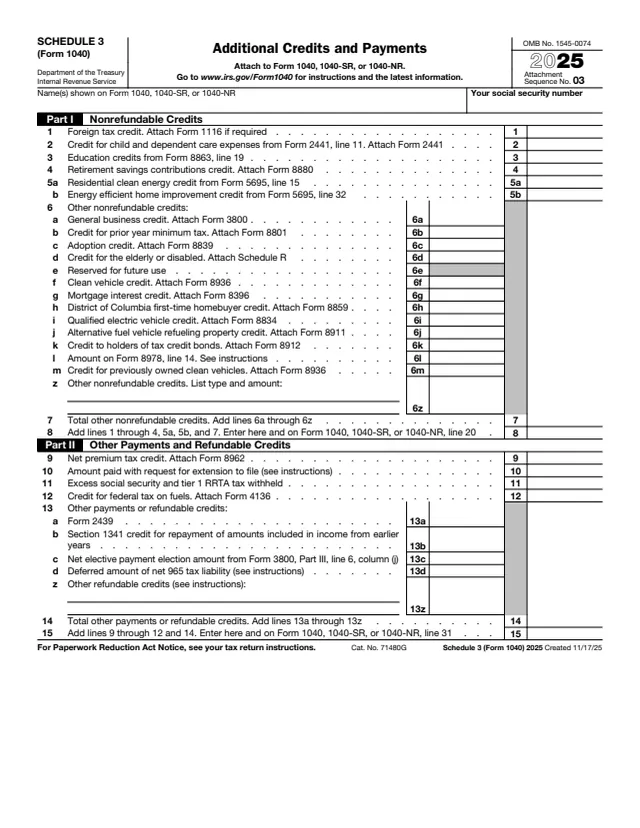
1040
37 fields, 1 page
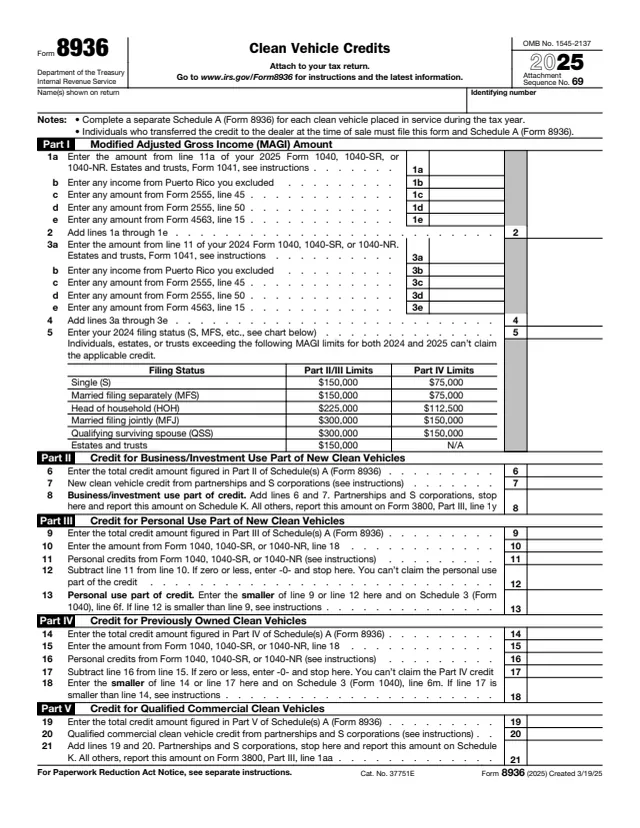
8936
31 fields, 1 page
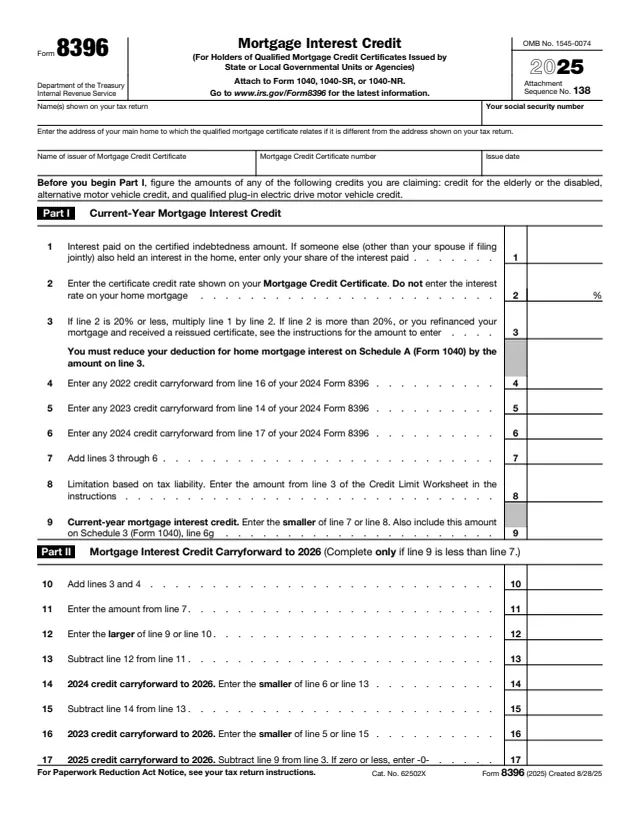
8396
26 fields, 2 pages
The form is completed by individual taxpayers and attached to their own Form 1040, 1040-SR or 1040-NR. The instructions say you may be able to take the credits if you made energy saving improvements to your home located in the United States in 2025.
No tool matches that search.
Two: the residential clean energy credit in Part I and the energy efficient home improvement credit in Part II, according to the About page.
No. The form says to attach it to Form 1040, 1040-SR or 1040-NR.
The instructions describe it as the four-character alphanumeric qualified manufacturer identification number reported for each item of specified property placed in service in 2025.
For Part I, the instructions say the unused portion can be carried to 2026 on line 16. The form is filed even if none of the credit can be used in 2025.
The instructions say each joint occupant completes their own Form 5695 and attaches a statement of how costs or credit were allocated. This does not apply to married couples filing a joint return.
The 2025 instructions say the residential clean energy credit cannot be claimed for expenditures made after December 31, 2025, and the home improvement credit cannot be claimed for expenditures or property placed in service after that date.