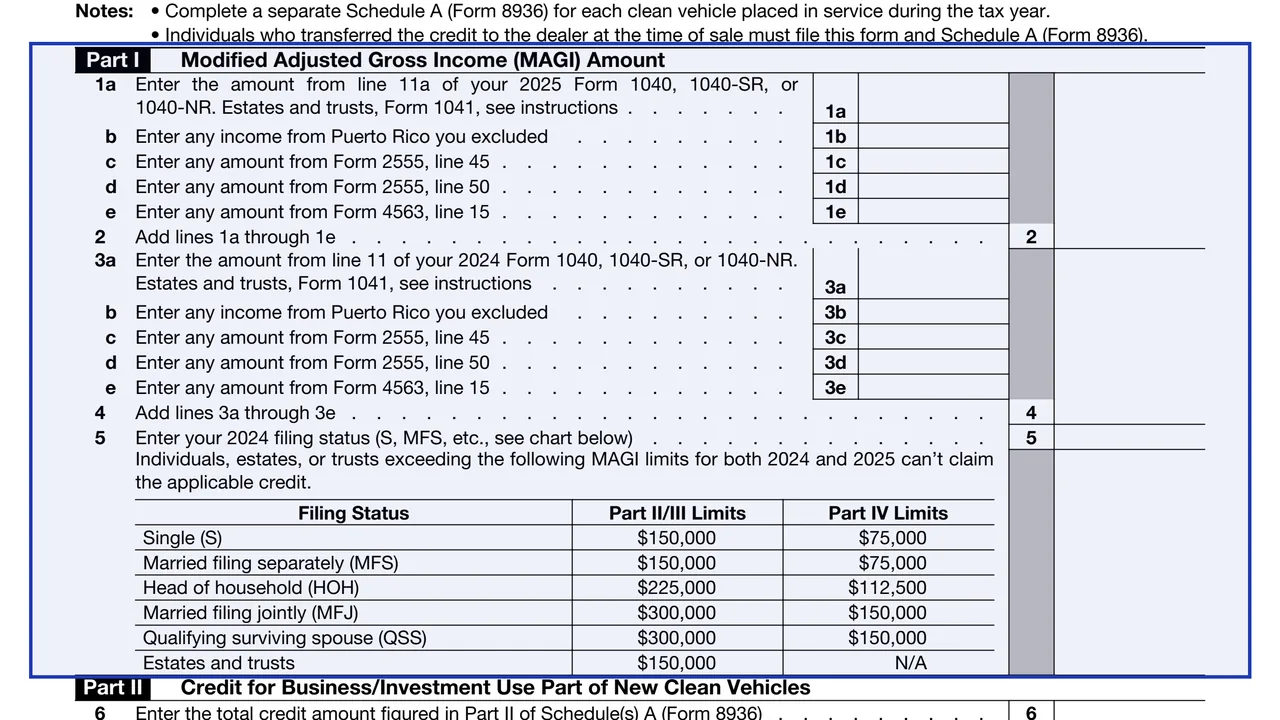
Part I: MAGI amount
Lines 1a to 5 build 2025 and 2024 modified AGI with Puerto Rico income and amounts from Form 2555 and Form 4563, plus the 2024 filing status and a chart of limits.
8936
Clean Vehicle Credits
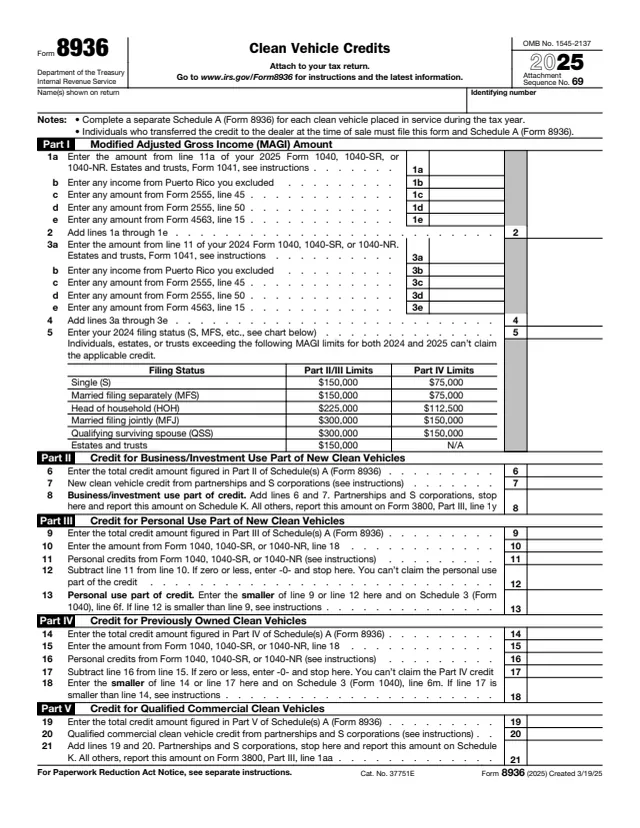
Form 8936, Clean Vehicle Credits, is used with Schedule A (Form 8936) to figure three credits for clean vehicles placed in service during the tax year: the new clean vehicle credit, the previously owned clean vehicle credit and the qualified commercial clean vehicle credit. The form notes say a separate Schedule A (Form 8936) is completed for each clean vehicle.
The form is attached to the tax return. Part I figures modified adjusted gross income for 2024 and 2025, and Parts II to V carry the totals from each Schedule A to Form 3800, Schedule 3 (Form 1040) or, for partnerships and S corporations, Schedule K.
The 2025 instructions say taxpayers cannot claim clean vehicle credits for new, previously owned, or commercial clean vehicles acquired after September 30, 2025. They say a vehicle is "acquired" as of the date a written binding contract is entered into and a payment has been made. You can fill out Form 8936 free in your browser on this page and download it without an account.
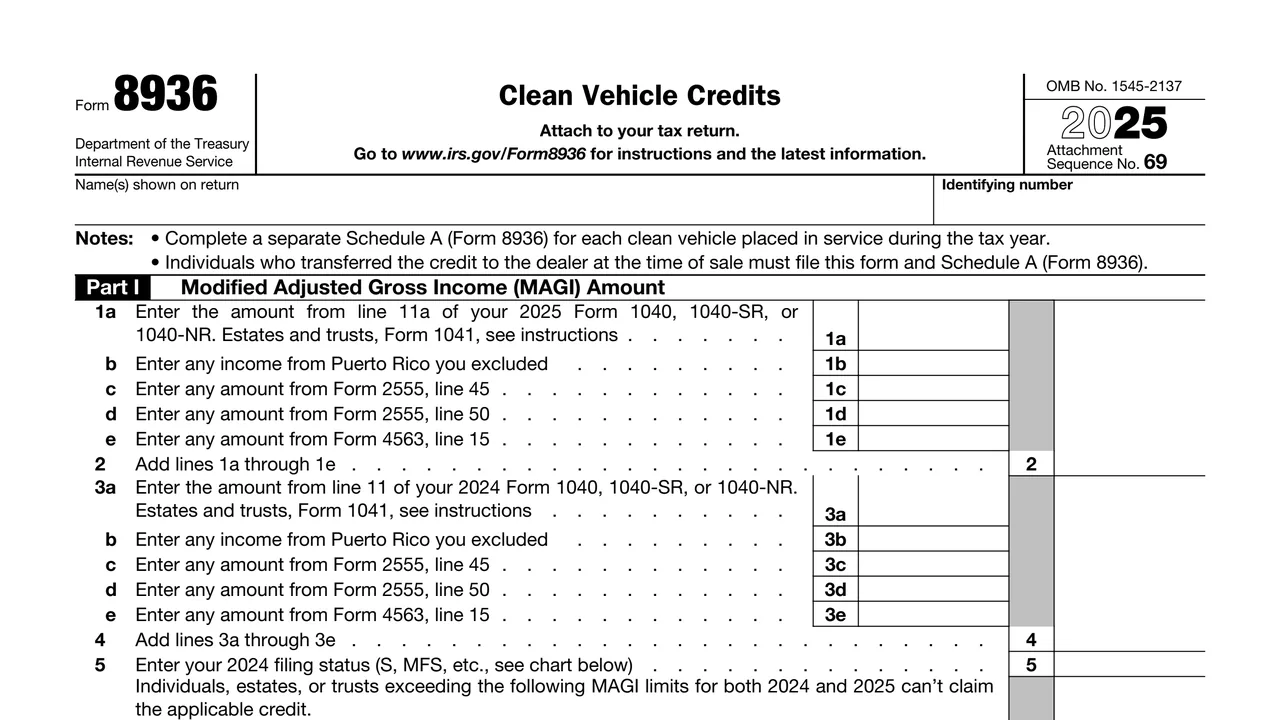
Lines 1a to 5 build 2025 and 2024 modified AGI with Puerto Rico income and amounts from Form 2555 and Form 4563, plus the 2024 filing status and a chart of limits.
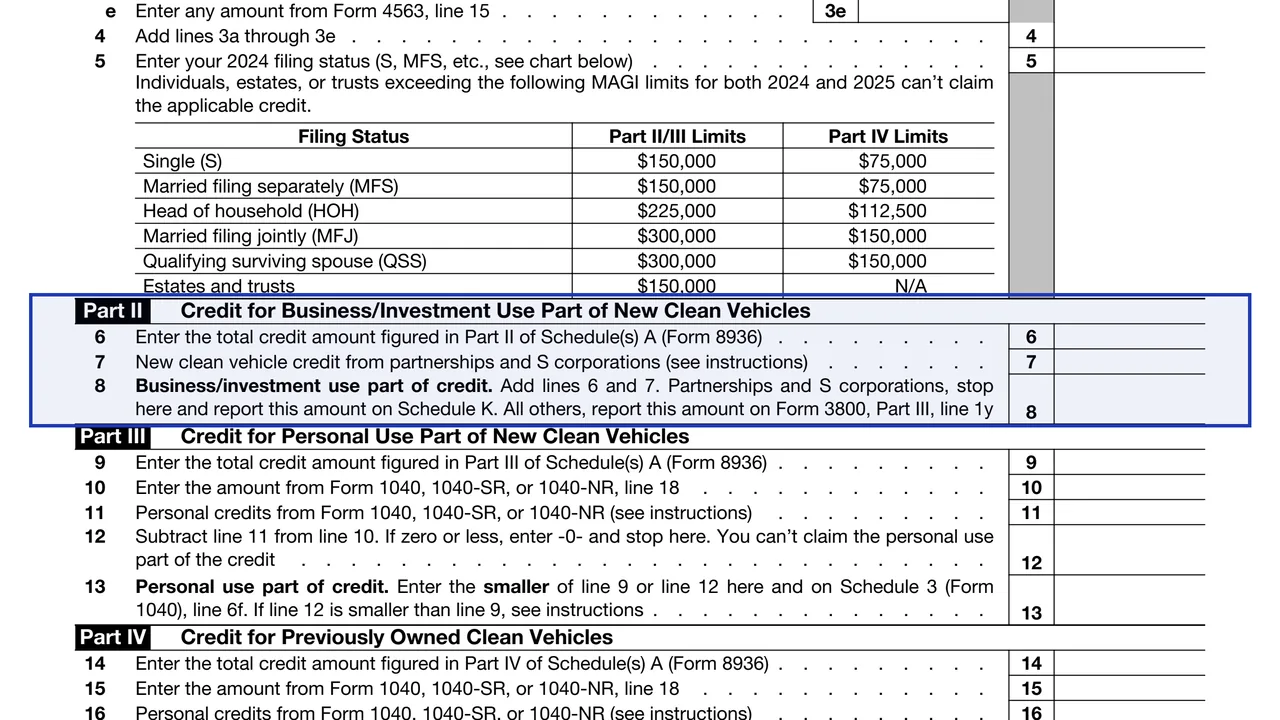
Lines 6 to 8 total the business/investment use part from Schedule A and from partnerships and S corporations, reported on Form 3800, Part III, line 1y.
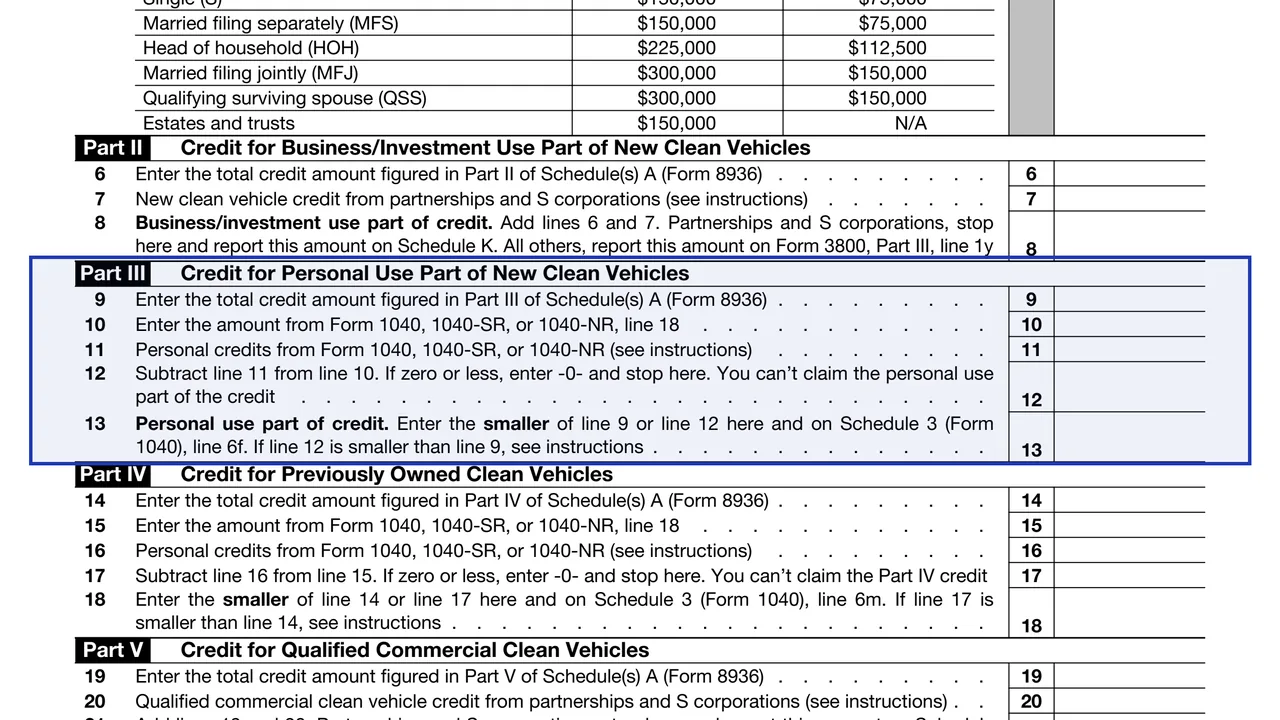
Lines 9 to 13 limit the personal use part to the tax, with the result on Schedule 3 (Form 1040), line 6f.
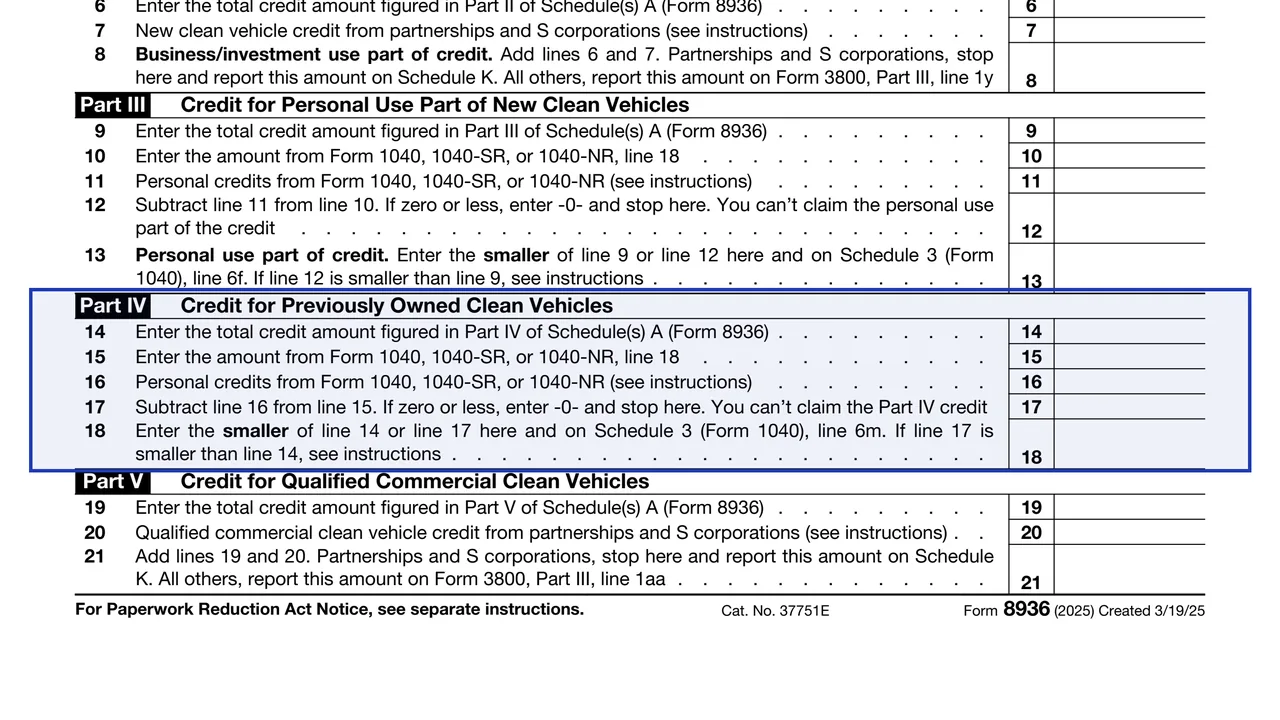
Lines 14 to 18 do the same for previously owned clean vehicles, with the result on Schedule 3 (Form 1040), line 6m.
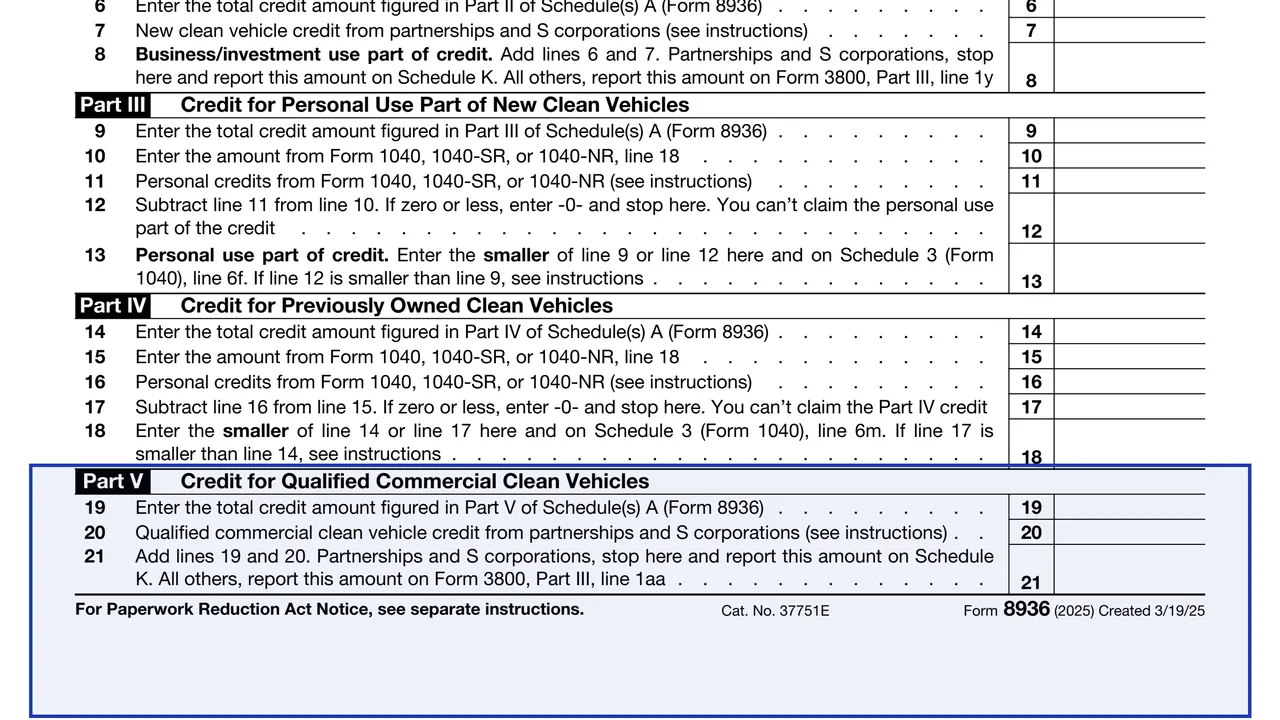
Lines 19 to 21 total the commercial credit from Schedule A and from partnerships and S corporations, reported on Form 3800, Part III, line 1aa.
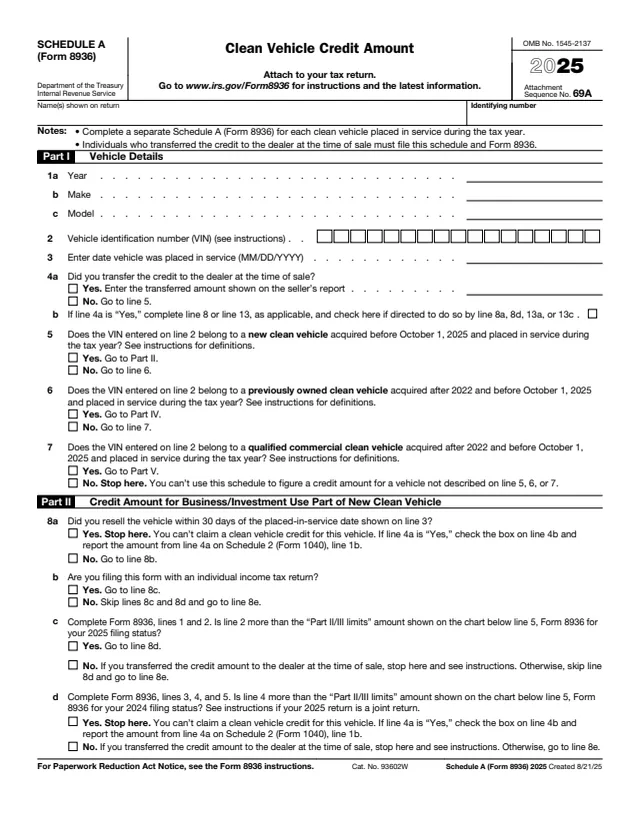
One per vehicle. It records the VIN, the placed in service date and any credit transfer, and figures each credit amount.
Fill out one Schedule A per vehicle. The instructions say the VIN is generally 17 characters, the placed in service date is the date the taxpayer takes possession, and a transferred credit amount is on the seller's report.
Enter 2025 and 2024 modified AGI with the listed add-backs and the 2024 filing status, then compare to the chart. The form says filers over the limits for both years cannot claim the credit. Estates and trusts see the instructions.
Enter the Schedule A total on line 6 and credits from Schedule K-1 (Form 1065) box 15 or Schedule K-1 (Form 1120-S) box 13, code AY, on line 7. The instructions say a personal use claim also needs Part II filled out.
Enter the Schedule A total, the amount from line 18 of Form 1040, 1040-SR or 1040-NR and the personal credits the instructions list. Line 13 goes on Schedule 3 (Form 1040), line 6f.
Follow the same pattern for a previously owned vehicle. Line 18 goes on Schedule 3 (Form 1040), line 6m.
Enter the Schedule A total and credits from Schedule K-1 code AZ. Line 21 goes to Form 3800, Part III, line 1aa, or to Schedule K for partnerships and S corporations.
You get the real form, filled in a browser tab, with nothing standing between you and the finished PDF.
The form says "Attach to your tax return," with a Schedule A (Form 8936) for each vehicle.
The instructions say clean vehicle credits cannot be claimed for new, previously owned, or commercial clean vehicles acquired after that date.
The instructions say the dealer or seller gives the buyer and the IRS a report with the buyer's name and TIN, the VIN, the battery capacity and the maximum credit, filed through the IRS Energy Credits Online (ECO) portal for vehicles placed in service after December 31, 2023.
The instructions say the vehicle's basis is reduced by the Schedule A amount on line 9 (new), line 17 (previously owned) or line 26 (commercial).
The instructions say a buyer who transferred the credit to the dealer and no longer qualifies when filing repays the amount transferred.
The instructions say that if the vehicle is leased, only the lessor and not the lessee is entitled to the credit.
8936
65 fields, 3 pages
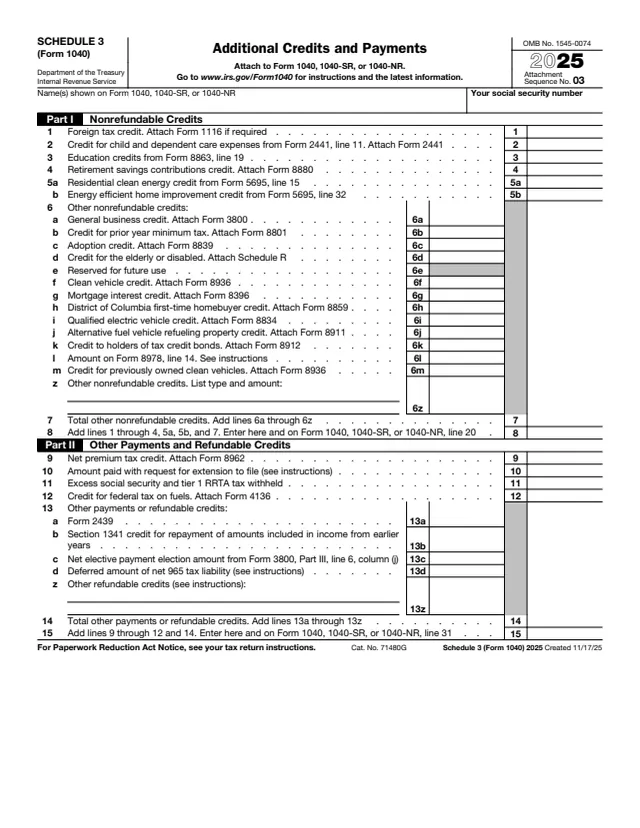
1040
37 fields, 1 page
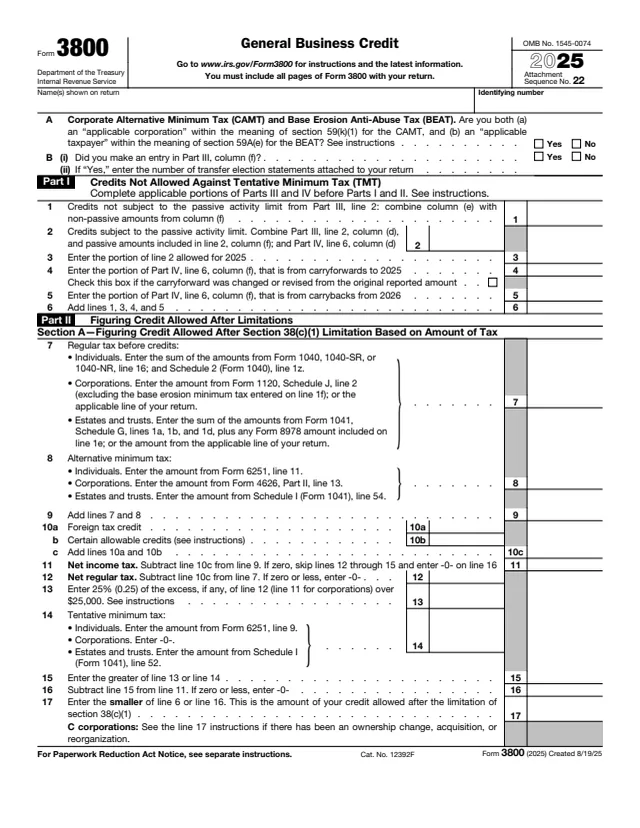
3800
1,921 fields, 9 pages
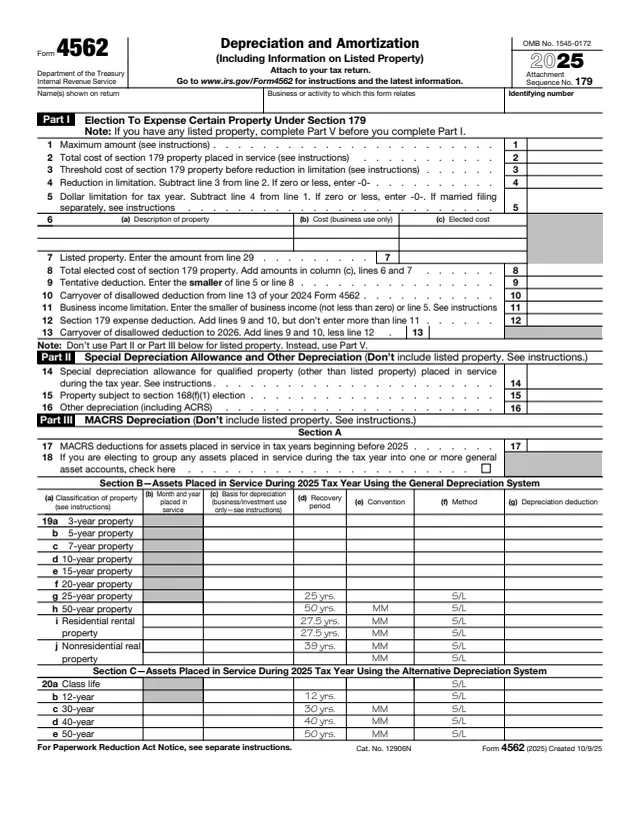
4562
277 fields, 3 pages
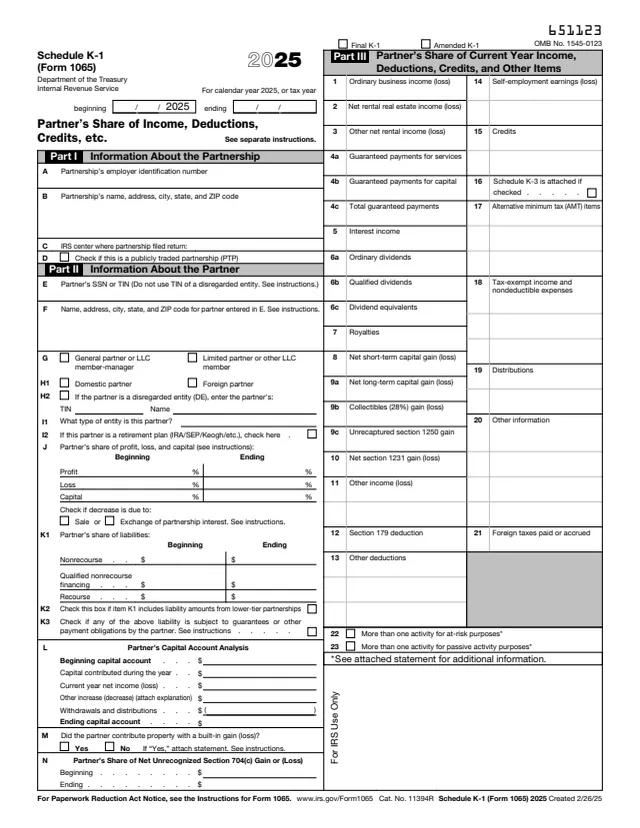
1065
111 fields, 1 page
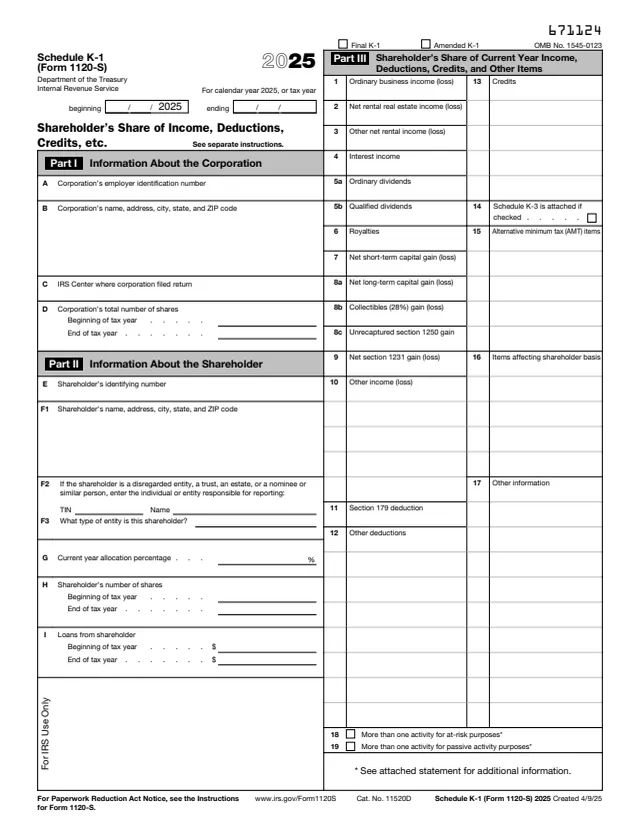
1120-S
114 fields, 1 page
The form and instructions name several kinds of filers, each attaching it to their own return.
No tool matches that search.
The 2025 instructions say no, for new, previously owned and commercial clean vehicles alike. A vehicle is acquired when a written binding contract is entered into and a payment has been made.
Yes. The form notes say individuals who transferred the credit to the dealer at the time of sale file this form and Schedule A (Form 8936).
The chart shows $150,000 for single or married filing separately, $225,000 for head of household and $300,000 for married filing jointly or qualifying surviving spouse for Parts II and III. Part IV limits are $75,000, $112,500 and $150,000.
The instructions say it is the lesser of $4,000 or 30% of the sales price, and the sales price cannot exceed $25,000.
No. The instructions say only the lessor, not the lessee, is entitled to the credit.
The instructions say any part that cannot be used because of the tax liability limit is lost and cannot be carried back or forward.
The form says a separate Schedule A (Form 8936) is completed for each clean vehicle placed in service during the tax year.