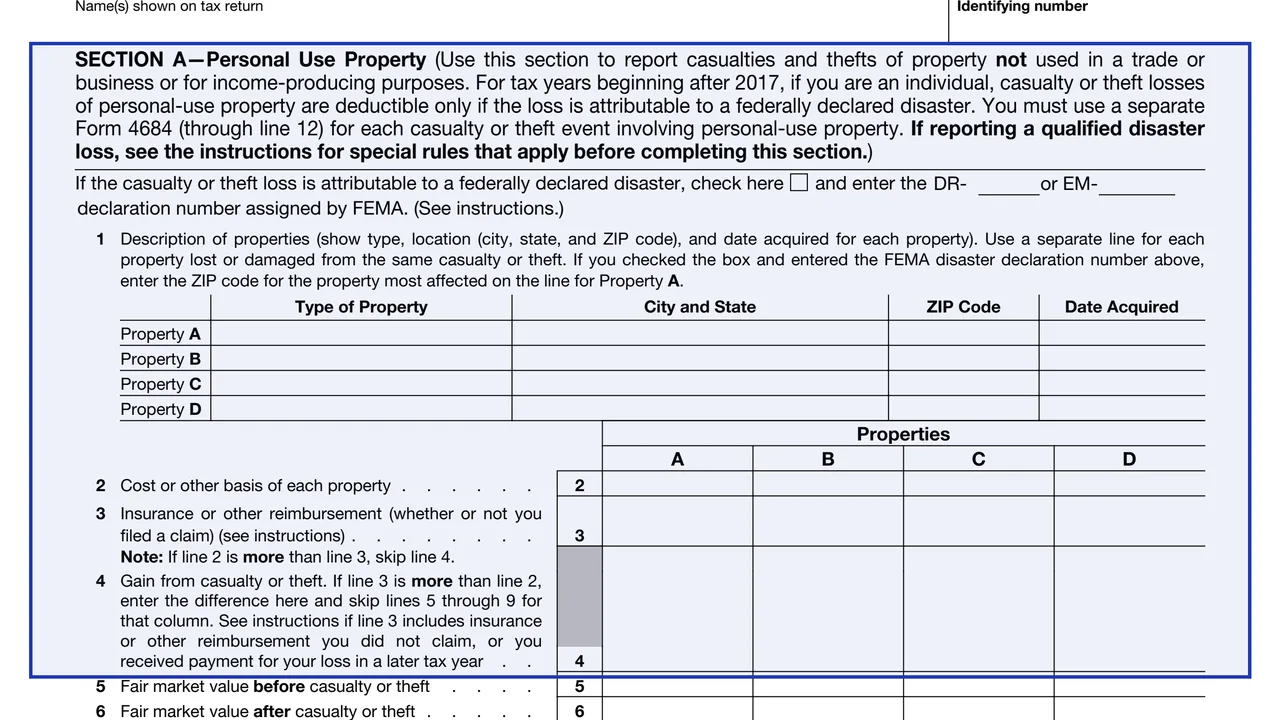
FEMA declaration box
A check box and a space above line 1 for the DR or EM declaration number assigned by FEMA when the loss is attributable to a federally declared disaster.
4684
Casualties and Thefts
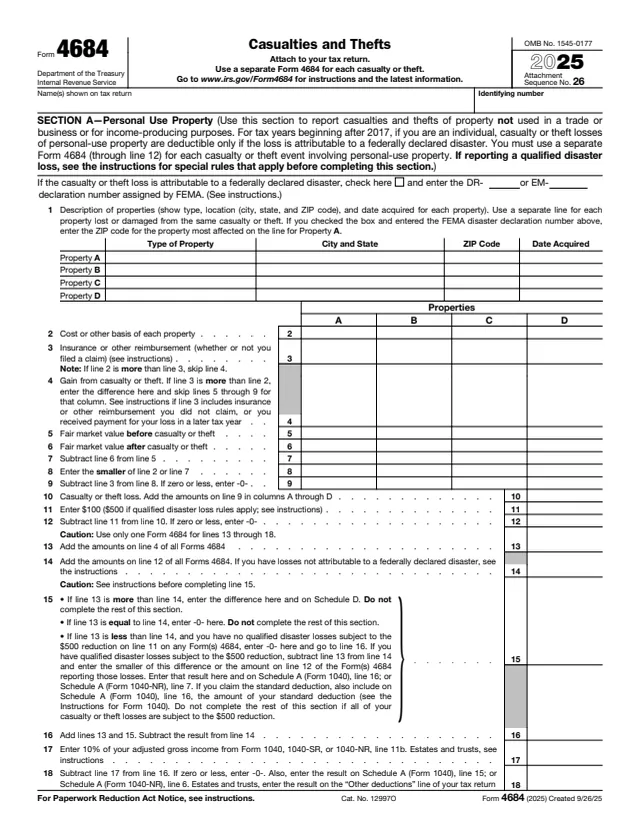
Form 4684 is the IRS form for casualties and thefts. The instructions say: "Use Form 4684 to report gains and losses from casualties and thefts. Attach Form 4684 to your tax return." It is not filed on its own.
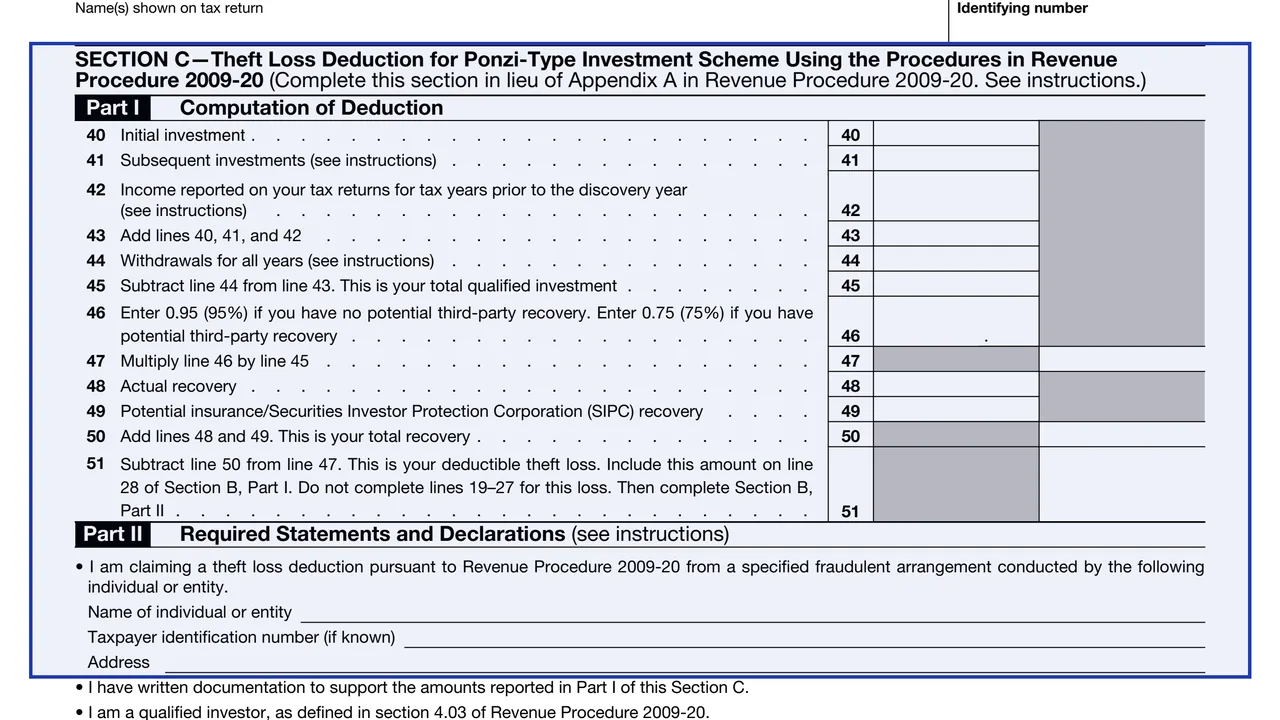
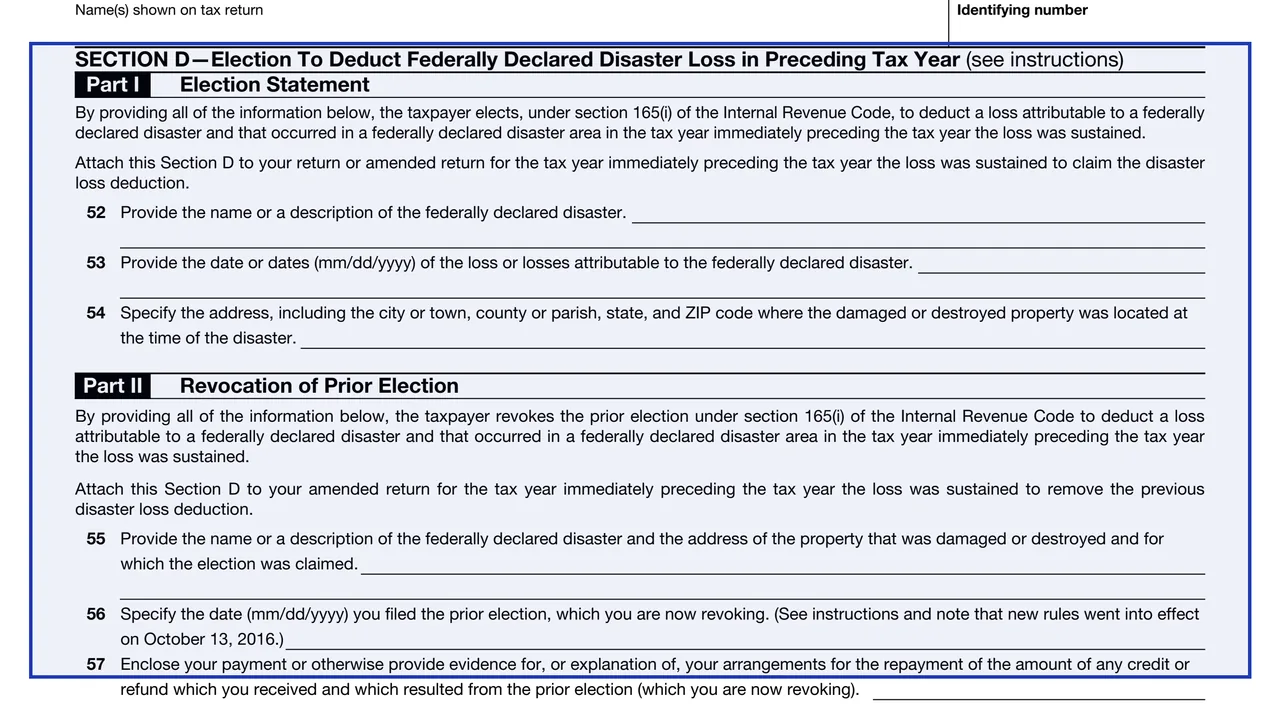
The 2025 form has four sections. Section A covers personal-use property, Section B covers business and income-producing property, Section C covers a theft loss from a Ponzi-type investment scheme under Revenue Procedure 2009-20, and Section D is an election to deduct a federally declared disaster loss in the preceding tax year, or to revoke that election.
The form says that for tax years beginning after 2017, an individual's casualty or theft losses of personal-use property are deductible only if the loss is attributable to a federally declared disaster. It also says to use a separate Form 4684 for each casualty or theft. You can fill out Form 4684 free in your browser on this page and download it without an account.
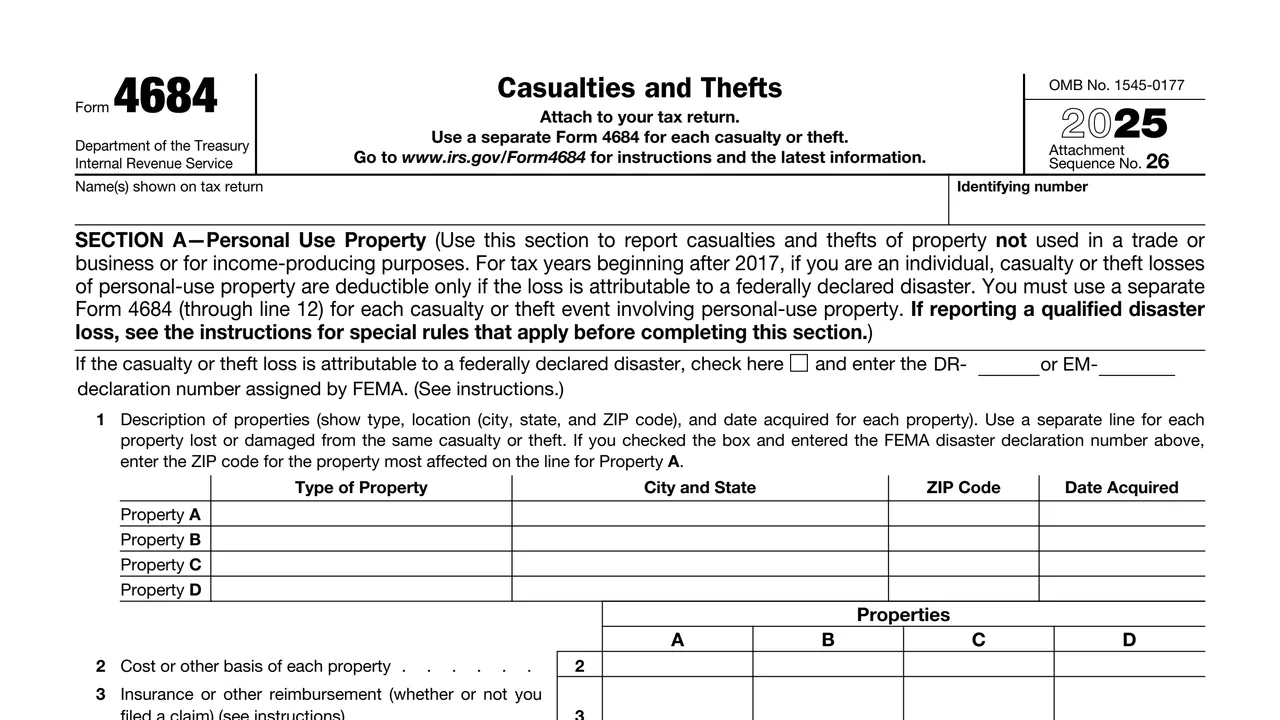
A check box and a space above line 1 for the DR or EM declaration number assigned by FEMA when the loss is attributable to a federally declared disaster.
Lines 1 to 12 figure each casualty or theft for up to four properties, A to D. Lines 13 to 18 combine all Forms 4684 and apply the 10% of adjusted gross income limit.
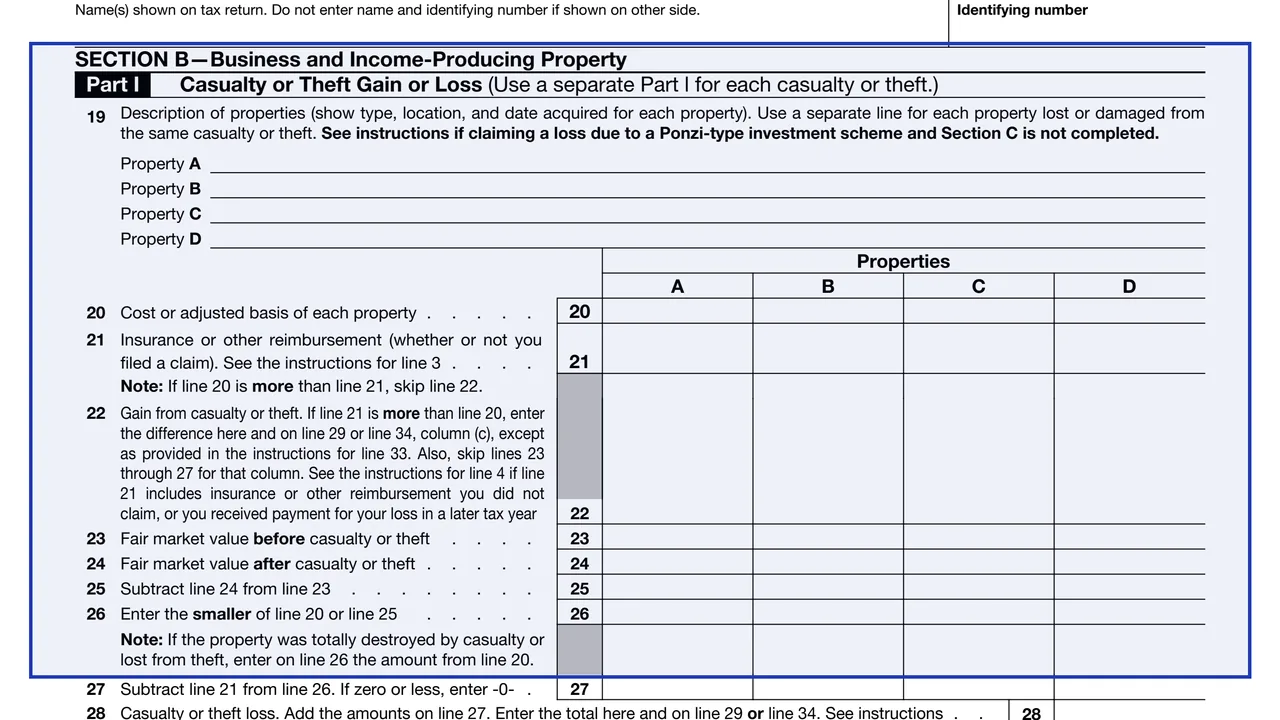
Lines 19 to 28 figure the gain or loss for business and income-producing property, with a separate Part I for each casualty or theft.
Lines 29 to 39 summarize gains and losses, split between property held one year or less and property held more than one year.
Part I, lines 40 to 51, computes the deductible theft loss. Part II holds the required statements and declarations, including the name and address of the individual or entity that ran the arrangement.
Part I, lines 52 to 54, is the election statement. Part II, lines 55 to 57, revokes a prior election.
The instructions say Section A is for personal-use property, Section B for business or income-producing property, Section C for a Ponzi-type scheme loss under Revenue Procedure 2009-20, and Section D to make or revoke the preceding year election.
For a federally declared disaster, check the box and enter the DR or EM number, for example "DR-4865" as the instructions show. On line 1, describe each property with its type, city, state, ZIP code and date acquired.
Enter the cost or other basis, the insurance or other reimbursement (the form says whether or not you filed a claim), and the fair market value before and after. The form does the subtraction column by column.
Add the losses on line 9. Line 11 says to enter $100, or $500 if qualified disaster loss rules apply, then subtract it on line 12.
The form says to use only one Form 4684 for these lines. Line 17 is 10% of adjusted gross income from Form 1040, 1040-SR, or 1040-NR, line 11b, and line 18 carries to Schedule A.
List each casualty or theft on line 29 or 34 by holding period. The form sends the results to Form 4797 or Schedule A, and partnerships and S corporations to Schedule K.
You get the real form, filled in a browser tab, with nothing standing between you and the finished PDF.
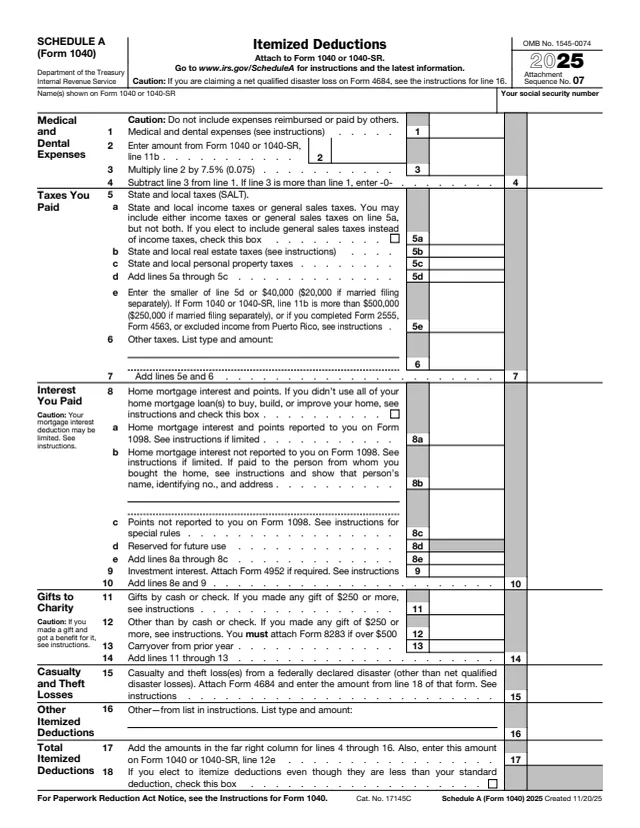
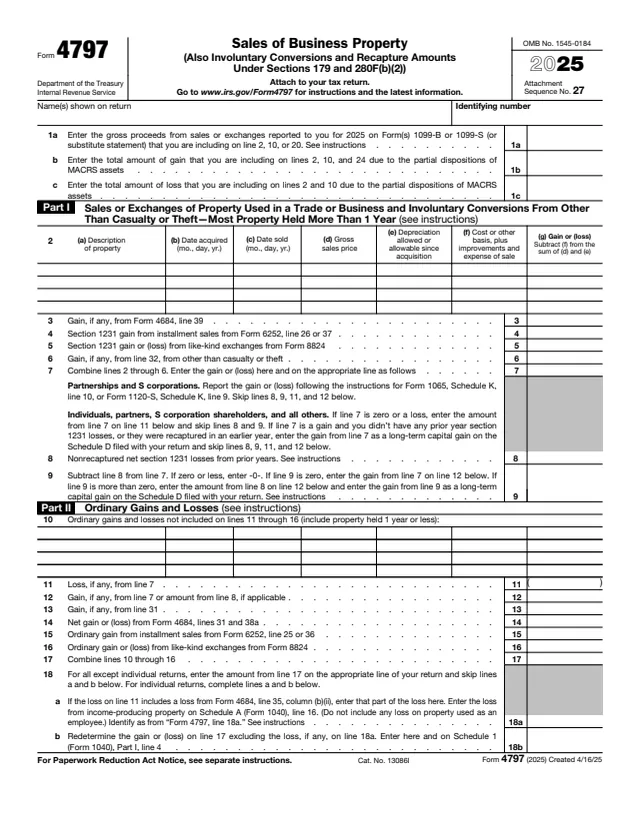
The form says "Attach to your tax return." Its results flow to Schedule A (Form 1040), Schedule D, Form 4797, or Schedule K of Form 1065 or Form 1120-S, as each line states.
The form says to use a separate Form 4684 (through line 12) for each casualty or theft event involving personal-use property, and a separate Section B, Part I for each business casualty or theft.
The instructions say the Section D election is made on or before the date that is 6 months after the regular due date for filing the original return (without extensions) for the disaster year.
The instructions say to adjust deductions on Form 1040-X, explain the reasons for the adjustment and attach Form 4684 to show how the loss was figured.
If a safe harbor method in Revenue Procedure 2018-08 is used, the instructions say to attach a statement saying so and to enter the decrease in fair market value on line 7, not lines 5 and 6.
The instructions list money or property misplaced or lost, breakage under normal conditions, and progressive damage from termites, moths, other insects or disease as losses that cannot be deducted.
1040
33 fields, 1 page
4797
182 fields, 2 pages
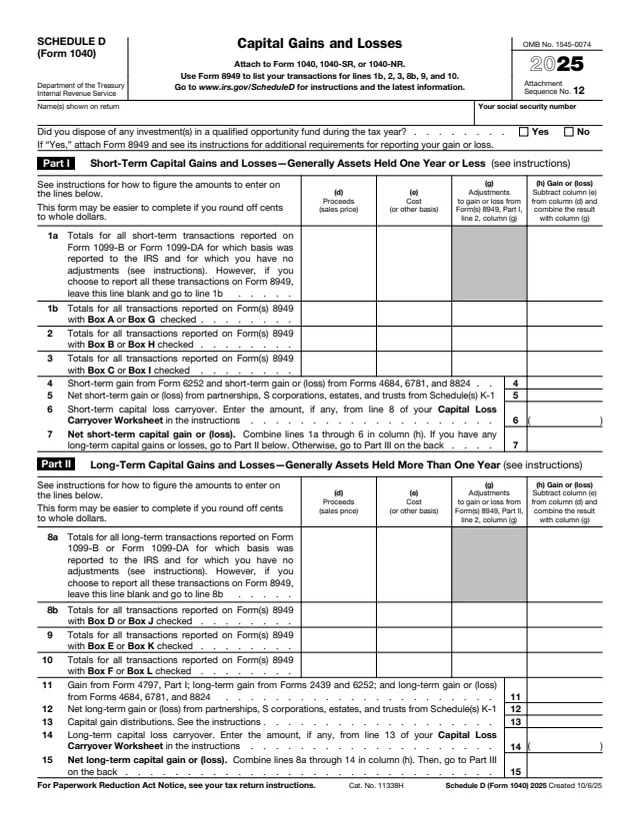
1040
55 fields, 2 pages
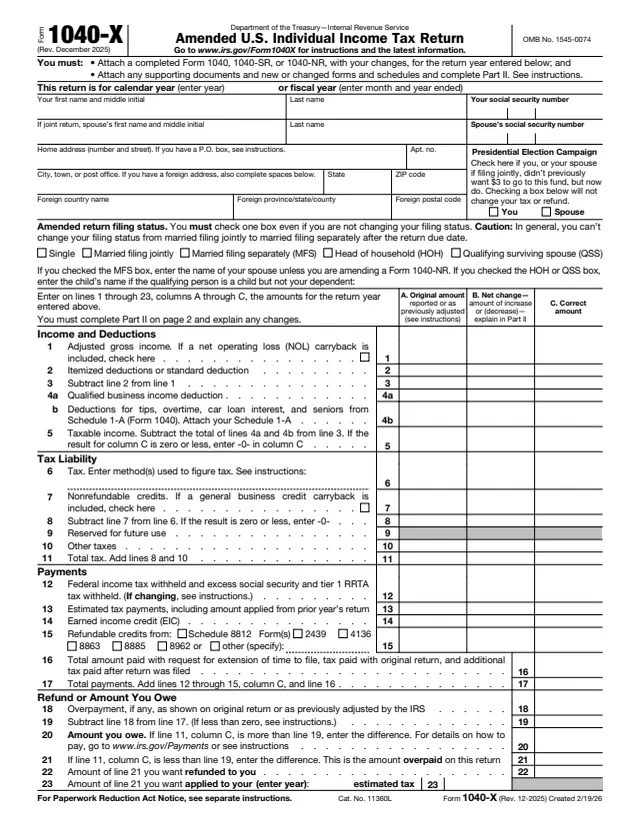
1040-X
166 fields, 2 pages
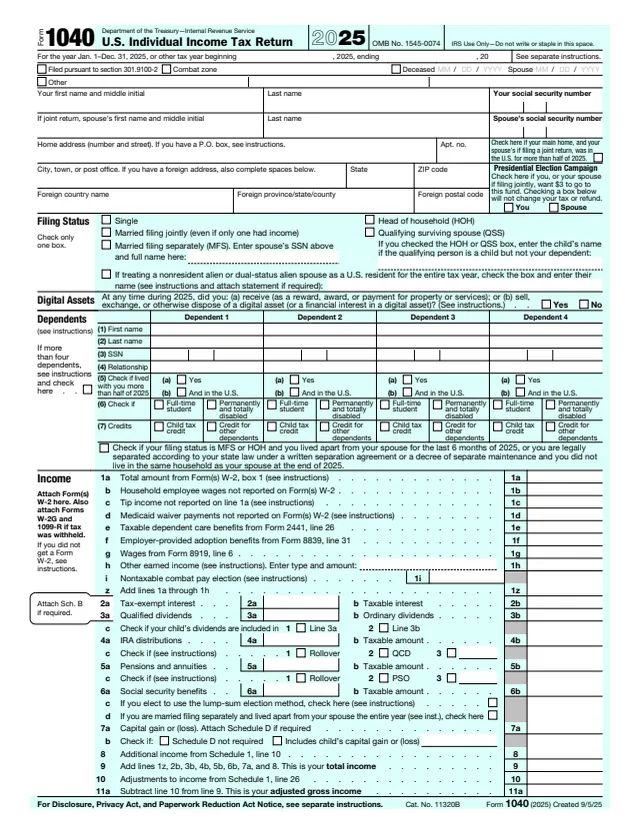
1040
199 fields, 2 pages
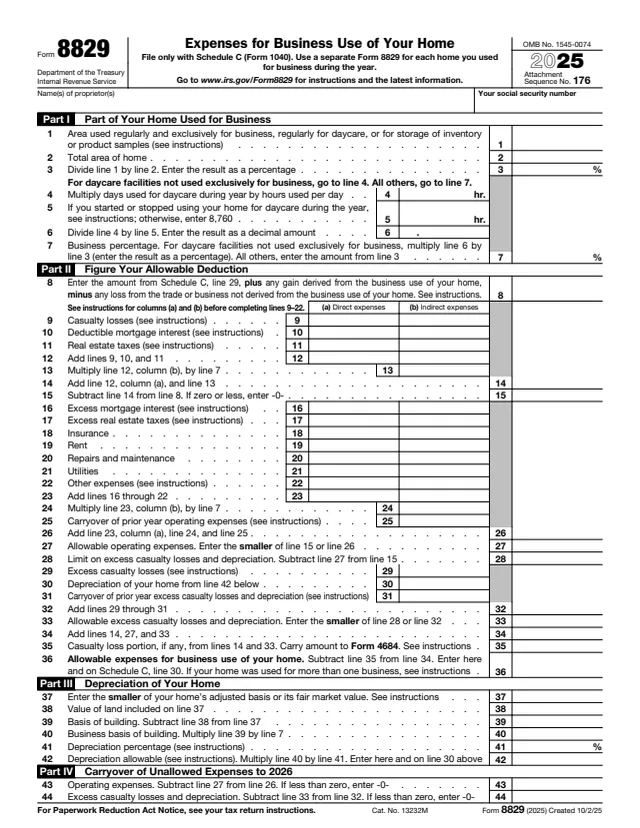
8829
58 fields, 1 page
The taxpayer who had the casualty or theft completes the form and attaches it to their own return. The sections used depend on the kind of property and the kind of loss.
No tool matches that search.
No. The form says to attach it to your tax return, and the instructions say the same.
The form says that for tax years beginning after 2017, an individual's personal-use casualty or theft losses are deductible only if attributable to a federally declared disaster. The instructions describe an exception to the extent of personal casualty gains.
The form says to use a separate Form 4684 through line 12 for each casualty or theft event involving personal-use property, and only one Form 4684 for lines 13 through 18.
The instructions say to include your insurance coverage whether or not you are filing a claim. Their example is a $2,000 car with a $500 deductible, where $1,500 is entered on line 3.
The form says to enter $100, or $500 if qualified disaster loss rules apply. The instructions explain when the $500 amount is used.
Section D is the election under section 165(i) to deduct a federally declared disaster loss in the tax year immediately before the year the loss was sustained. Part II of Section D revokes a prior election.
The instructions say a list of federally declared disasters and FEMA declaration numbers is at FEMA.gov/Disaster. The number is DR or EM followed by four numbers.