Name, address and SSN
Your name and SSN, your spouse's for a joint return, your home address, and fields for a foreign country, province or county and foreign postal code.
2350
Application for Extension of Time to File U.S. Income Tax Return (Spanish Version)
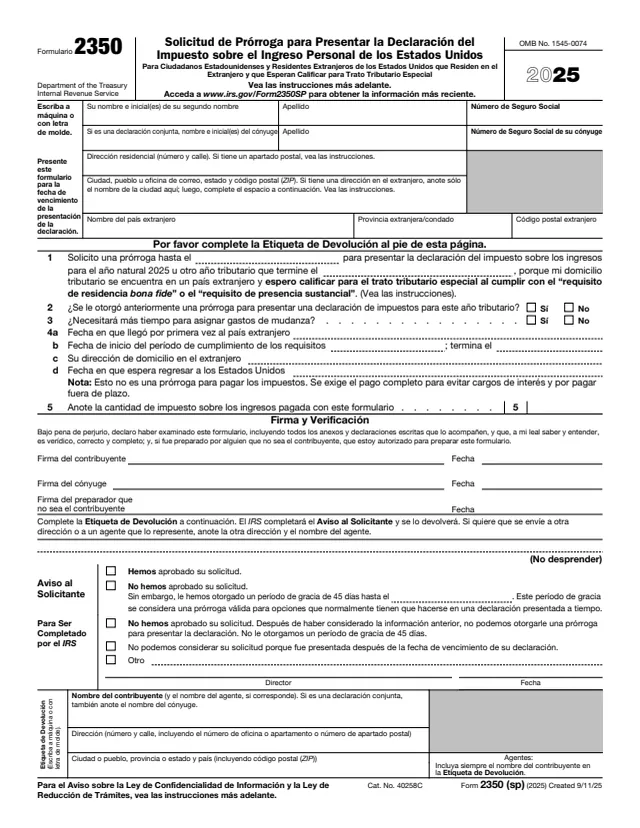
Form 2350 (sp) is the Spanish version of Form 2350, Application for Extension of Time to File U.S. Income Tax Return, for tax year 2025. The PDF is in Spanish under the title "Solicitud de Prórroga para Presentar la Declaración del Impuesto sobre el Ingreso Personal de los Estados Unidos". Its subtitle says it is for U.S. citizens and resident aliens who live abroad and expect to qualify for special tax treatment. Page 1 is the form, page 2 is blank, and pages 3 and 4 hold the instructions in Spanish.
The instructions say to use it only if you expect to file Form 2555 and need time to meet the bona fide residence test or the physical presence test for the foreign earned income exclusion and/or the foreign housing exclusion or deduction. Everyone else asks for more time on Form 4868. An extension, if given, generally runs to 30 days after the date you expect to meet either test, and it is not more time to pay.
The English edition, Form 2350, has its own page. You can fill out this Spanish PDF free in your browser on this page and download the result without an account.
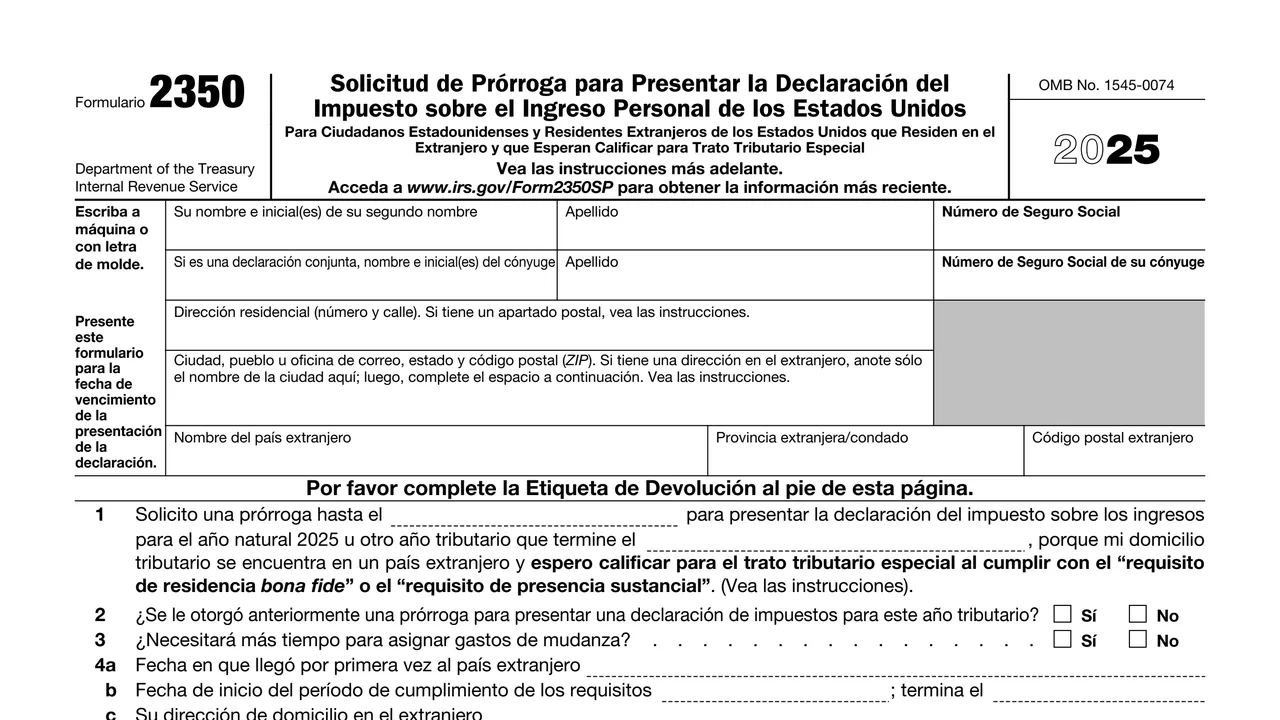
Your name and SSN, your spouse's for a joint return, your home address, and fields for a foreign country, province or county and foreign postal code.
The date you ask for, for calendar year 2025 or another tax year, with the statement that your tax home is in a foreign country and you expect to meet one of the two tests.
Two Sí or No questions: whether you were already given an extension for this tax year, and whether you need more time to allocate moving expenses.
Your first arrival date in the foreign country, the start and end of the qualifying period, your foreign home address and the date you expect to return to the United States.
Income tax paid with the form, then the signature and verification section for the taxpayer, the spouse and a preparer other than the taxpayer.
The IRS marks the notice as approved, not approved with a 45-day grace period, not approved, or not considered because it came after the due date, and mails it to the Return Label address.
Type or print your name, address and SSN as they appear on your return. The instructions say not to abbreviate the country name and to list a joint filer spouse in the same order as on the return.
Bona fide residence test: the date 12 months and 30 days (90 days if allocating moving expenses) from the first day of your next full tax year. Physical presence test: the same period counted from your first full 24-hour day abroad.
Enter the day, month and year you arrived, the first full day abroad as the start of the qualifying period and the date you expect to qualify as its end, your current foreign address, and your planned return date. Leave 4d blank if you have none.
Enter any income tax paid with the form. The instructions say that when you file Form 1040 or 1040-SR, this payment goes on Schedule 3 (Form 1040), line 10.
Generally the taxpayer asking for the extension signs. A person with a close personal or business relationship may sign with a written statement of the reason, and a person holding a power of attorney may also sign.
Fill in the Return Label so the IRS can mail you the Notice to Applicant. The instructions say to keep the notice with your records and not attach it to your return.
You get the real form, filled in a browser tab, with nothing standing between you and the finished PDF.
By the due date of Form 1040 or 1040-SR, which the instructions give as April 15, 2026, for a 2025 calendar year return, or June 15, 2026, if you have 2 extra months for being out of the country. They advise filing early enough to still file on time if the request is denied.
The IRS recommends e-filing and sends an electronic acknowledgment. Do not mail a paper Form 2350 if you e-filed it. The instructions say fiscal year taxpayers file on paper.
Department of the Treasury, Internal Revenue Service, Austin, TX 73301-0045. The instructions say a paper form can also be handed to a local IRS representative or other IRS employee.
Form 2350 does not extend the time to pay. Options listed include Direct Pay, cash, your IRS online account, EFTPS, a debit or credit card, a digital wallet, or check or money order.
Late payment is generally ½ of 1% of unpaid tax per month, up to 25%. Late filing is generally 5% per month, generally up to 25%, and more than 60 days late the minimum is $525 or the balance due, whichever is smaller.
An extension to file the 2025 calendar year income tax return also extends the time to file Form 709 for 2025, but not to pay gift and GST tax. The instructions point to Form 8892 for that payment.
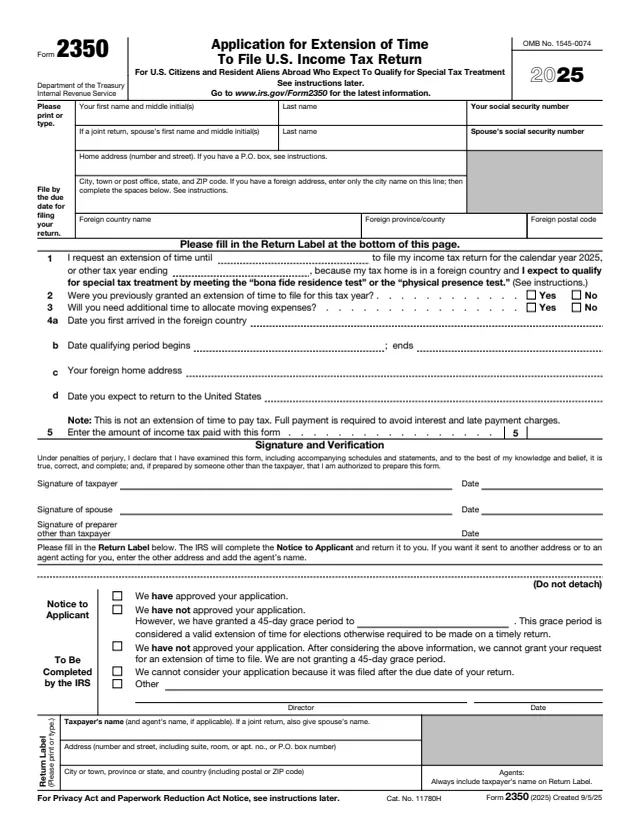
2350
26 fields, 4 pages
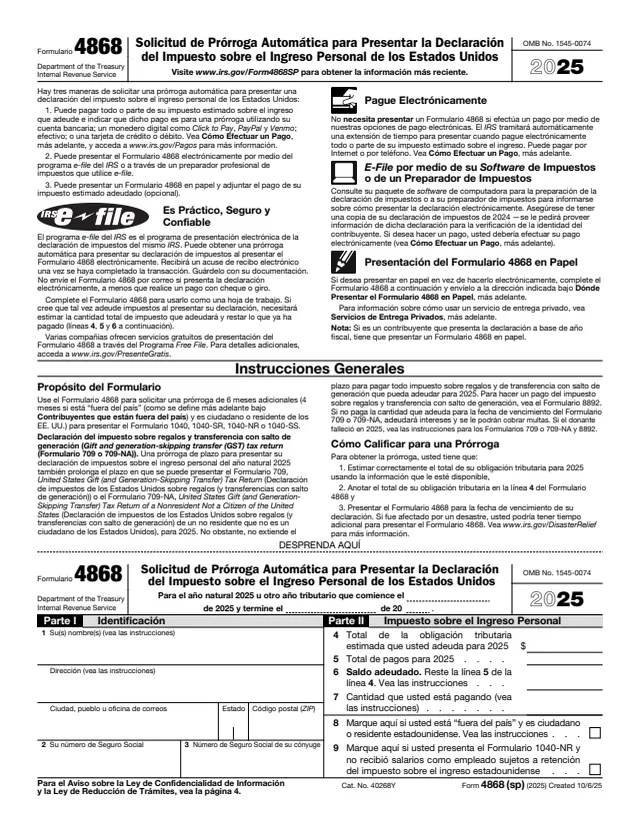
4868
17 fields, 4 pages
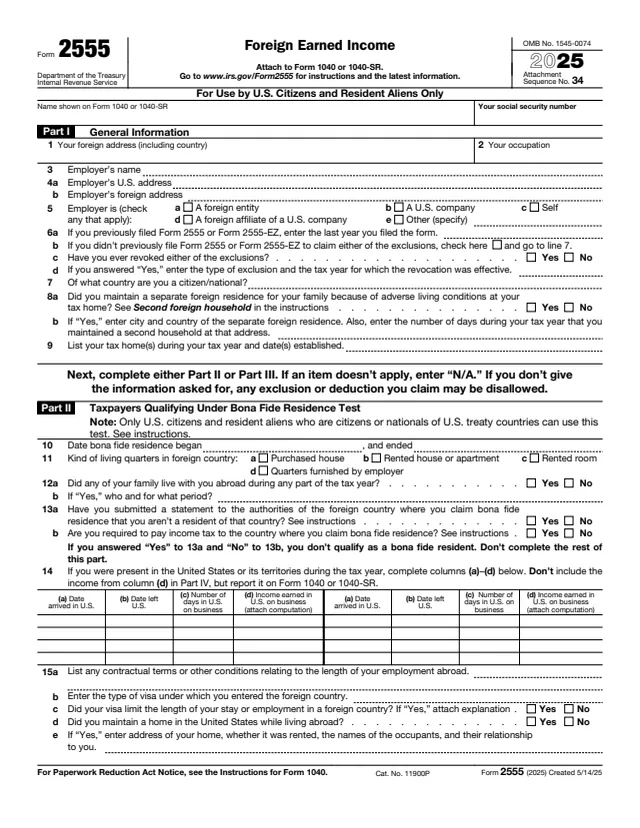
2555
160 fields, 3 pages
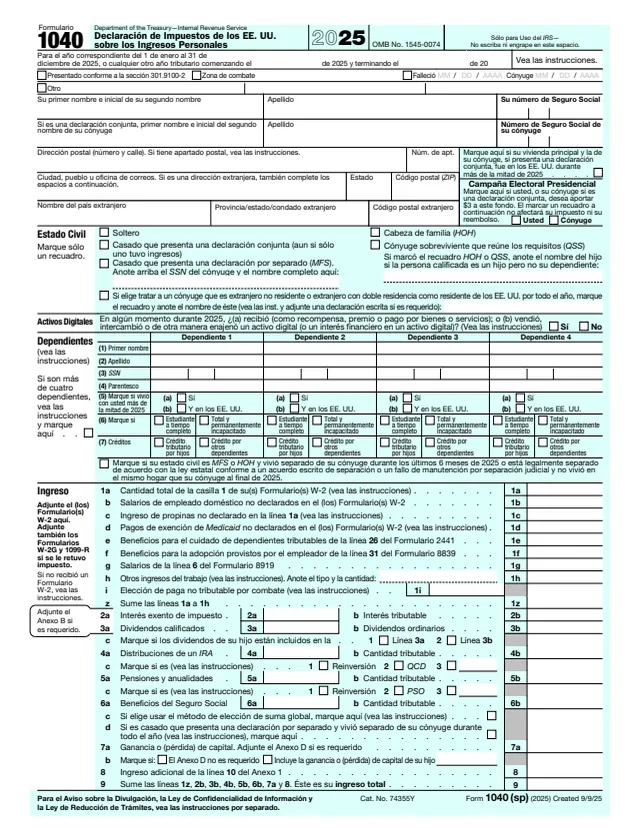
1040
199 fields, 2 pages
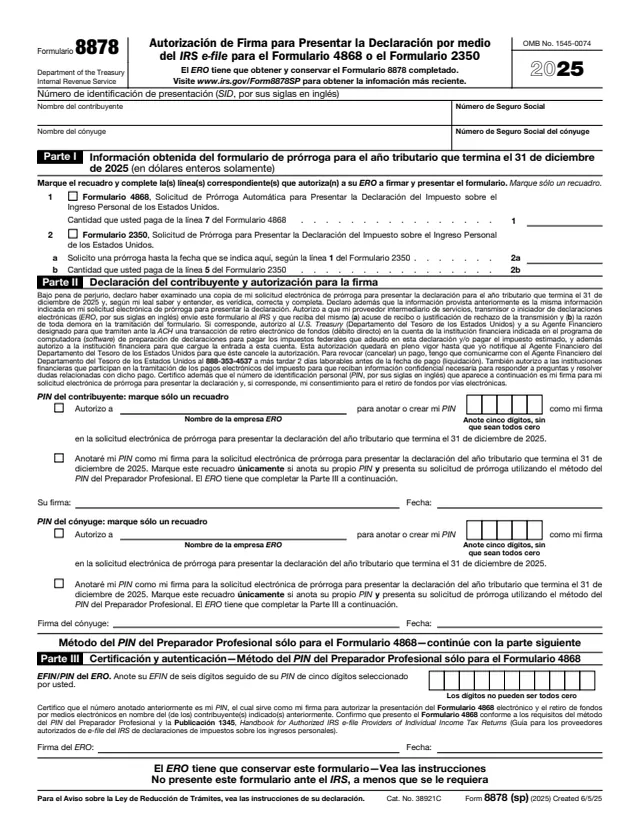
8878
19 fields, 2 pages
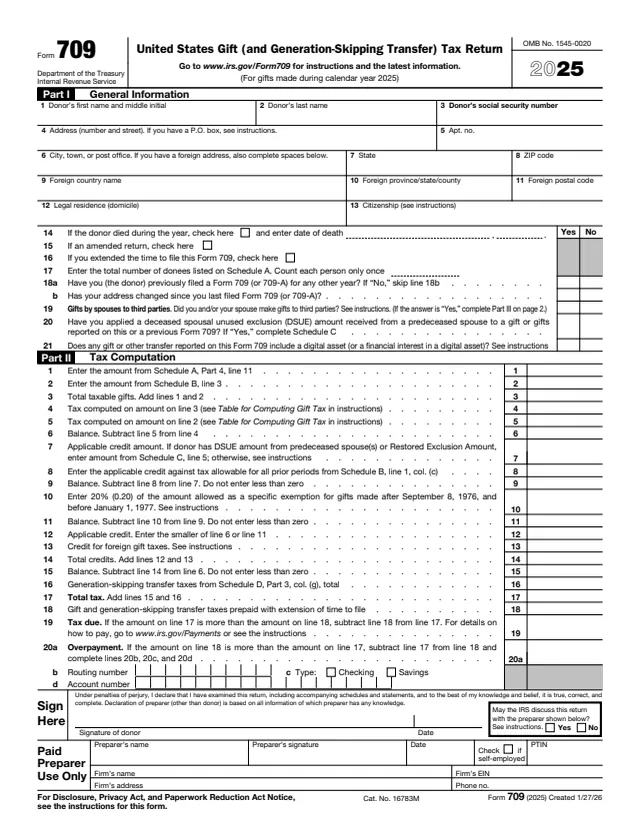
709
1,851 fields, 10 pages
The taxpayer completes and signs it and sends it to the IRS, which fills in the Notice to Applicant ("Aviso al Solicitante") and mails it back. The instructions say to file it when all three apply: you are a U.S. citizen or resident alien, you expect to qualify for the exclusions under one of the two tests but not until after your return is due, and your tax home is in a foreign country for the whole qualifying period.
No tool matches that search.
Yes. The IRS lists it as the Spanish version of Form 2350, and the form and its instructions are in Spanish. This page explains it in English.
The instructions say Form 2350 is only for those who expect to file Form 2555 and need time to meet the bona fide residence or physical presence test. They send all other taxpayers to Form 4868.
The instructions say generally to 30 days after the date you expect to meet either test, or up to 90 days after the end of the year following the year you moved if you allocate moving expenses.
No. The form says it is not an extension to pay tax and that full payment is required to avoid interest and late payment charges.
The IRS completes the Notice to Applicant and mails it to the Return Label address. A denial can still come with a 45-day grace period, which the form says counts as a valid extension for elections normally made on a timely return.
The bona fide residence test covers a U.S. citizen who is a bona fide resident of a foreign country for an uninterrupted period that includes an entire tax year. The physical presence test covers at least 330 full days in a foreign country in any 12-month period. The Spanish form calls them the "requisito de residencia bona fide" and the "requisito de presencia sustancial".