Header
Your name, the occupation in which you incurred expenses, and your social security number.
2106
Employee Business Expenses
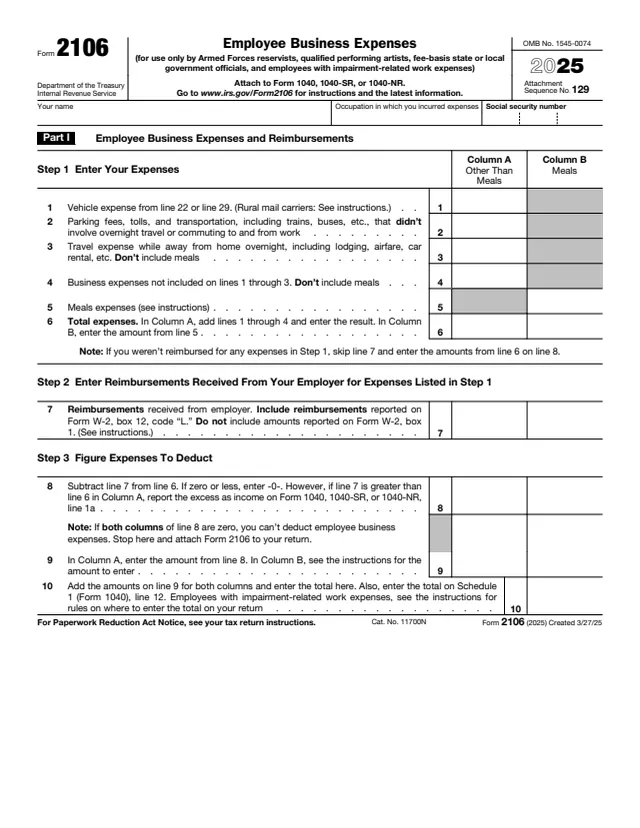
Form 2106, Employee Business Expenses, is the 2025 IRS form that certain employees attach to Form 1040, 1040-SR or 1040-NR to figure job expenses. The IRS describes these as ordinary and necessary expenses for their job: an ordinary expense is common and accepted in the field, and a necessary expense is helpful and appropriate.
The form says it is for use only by Armed Forces reservists, qualified performing artists, fee-basis state or local government officials, and employees with impairment-related work expenses. The instructions say other employees may not use Form 2106, because miscellaneous itemized deductions subject to the 2% floor were eliminated for tax years beginning after 2017.
Part I lists expenses, subtracts employer reimbursements and figures the amount to deduct. Part II covers vehicle expenses, either by the standard mileage rate of 70 cents a mile for 2025 or by actual expenses and depreciation. You can fill out the PDF free in your browser on this page and download it without an account.
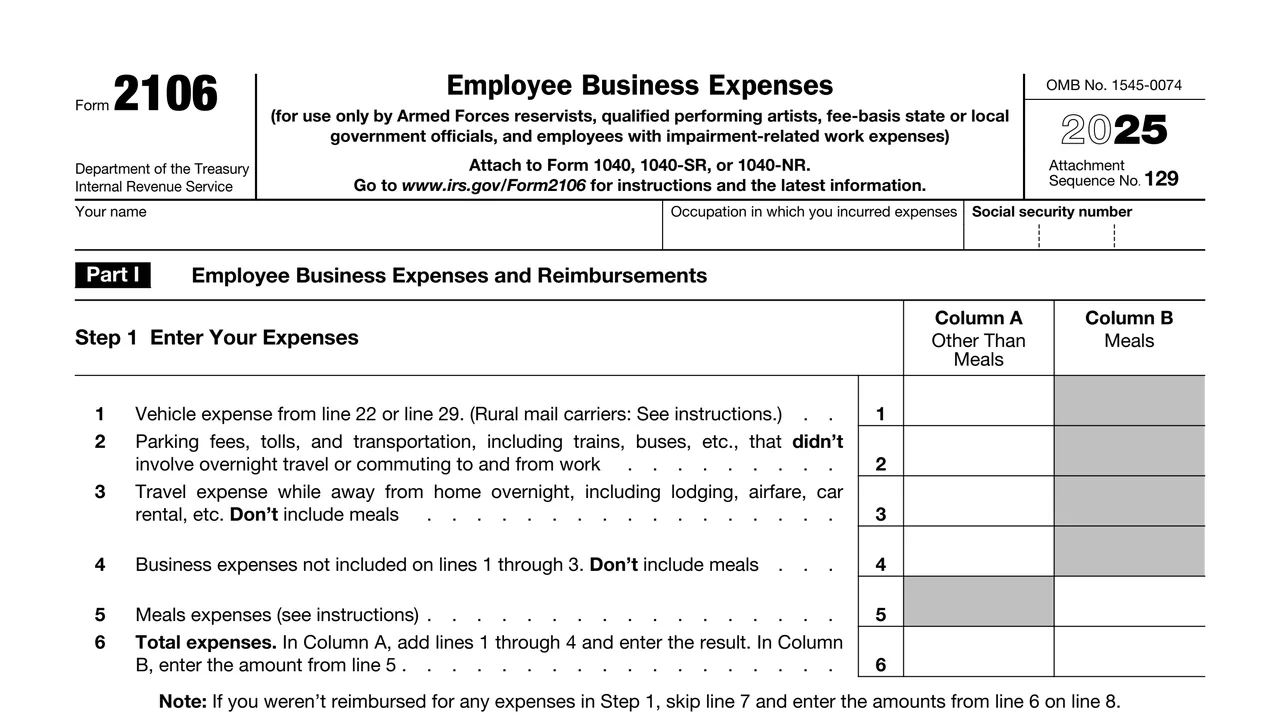
Your name, the occupation in which you incurred expenses, and your social security number.
Lines 1 to 6 in two columns, meals and other than meals: vehicle expense, parking, tolls and local transportation, overnight travel, other business expenses and meals.
Line 7 holds reimbursements received from the employer, including amounts reported on Form W-2, box 12, code L, but not amounts reported in box 1.
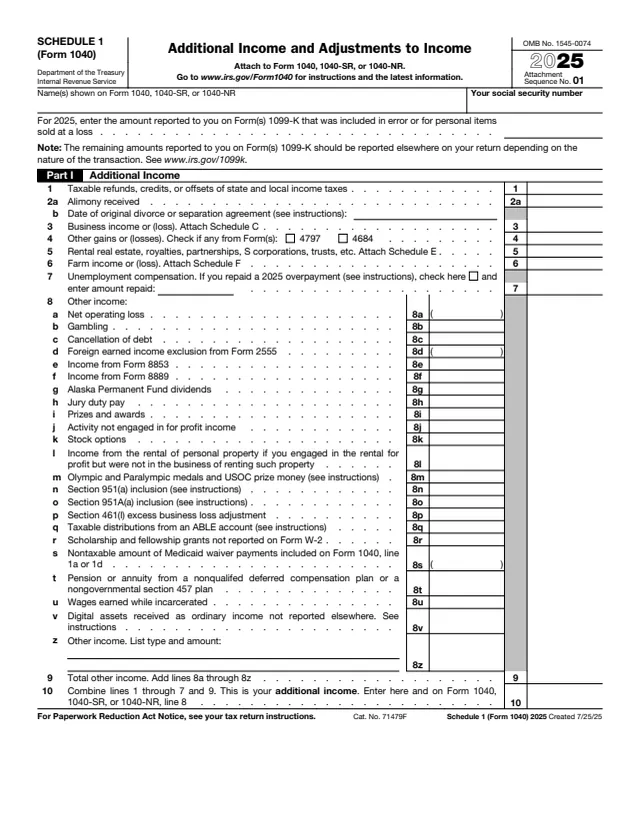
Lines 8 to 10 subtract reimbursements, apply the meals rule and carry the total to Schedule 1 (Form 1040), line 12, with a different place for impairment-related expenses.
Vehicle information on lines 11 to 21, such as the date placed in service and total, business and commuting miles, and the standard mileage rate on line 22.
Actual expenses on lines 23 to 29, such as gas, repairs, insurance and rentals, and depreciation of an owned vehicle on lines 30 to 38.
Enter vehicle expense from line 22 or 29, then parking, tolls and transportation that didn't involve overnight travel or commuting, overnight travel without meals, and other job expenses on line 4.
Enter allowable meals, including meals while away from the tax home overnight. The instructions allow the standard meal allowance, the federal M&IE rate, instead of actual cost.
Enter employer reimbursements for the Step 1 expenses, including Form W-2, box 12, code L. If nothing was reimbursed, the form says to skip line 7 and enter the line 6 amounts on line 8.
Subtract line 7 from line 6. The instructions say generally only 50% of business meal expenses can be deducted, which applies on line 9. Add both columns on line 10.
Use one column per vehicle. Enter total miles, business miles without commuting, and the business-use percentage. With the standard mileage rate, line 22 multiplies business miles by 70 cents.
For actual expenses, enter operating costs, rentals and the value of an employer-provided vehicle, apply the business percentage, then add depreciation from Section D or Form 4562.
You get the real form, filled in a browser tab, with nothing standing between you and the finished PDF.
The form says to attach it to Form 1040, 1040-SR or 1040-NR.
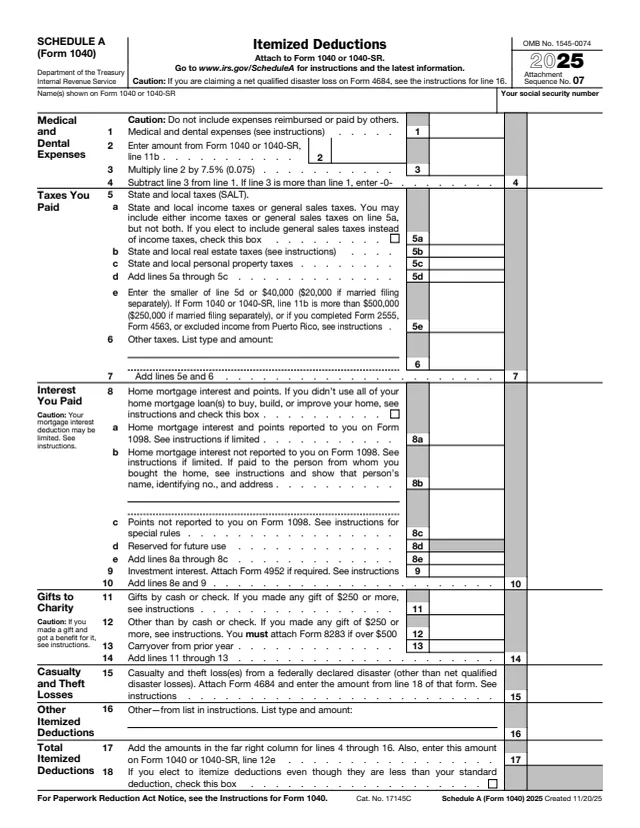
For reservists, performing artists and fee-basis officials, the instructions point to Schedule 1 (Form 1040), line 12. Impairment-related work expenses go on Schedule A (Form 1040), line 16, or Schedule A (Form 1040-NR), line 7.
If line 7 is greater than line 6 in Column A, the form says to report the excess as income on Form 1040, 1040-SR or 1040-NR, line 1a.
The instructions say travel, gifts and car expenses need records of time, place, business purpose and amounts, and generally receipts for all lodging and any other expense of $75 or more.
Complete and attach a second Form 2106, page 2. The instructions say the standard mileage rate can't be used for five or more vehicles used at the same time, such as fleet operations.
1040
73 fields, 2 pages
1040
33 fields, 1 page
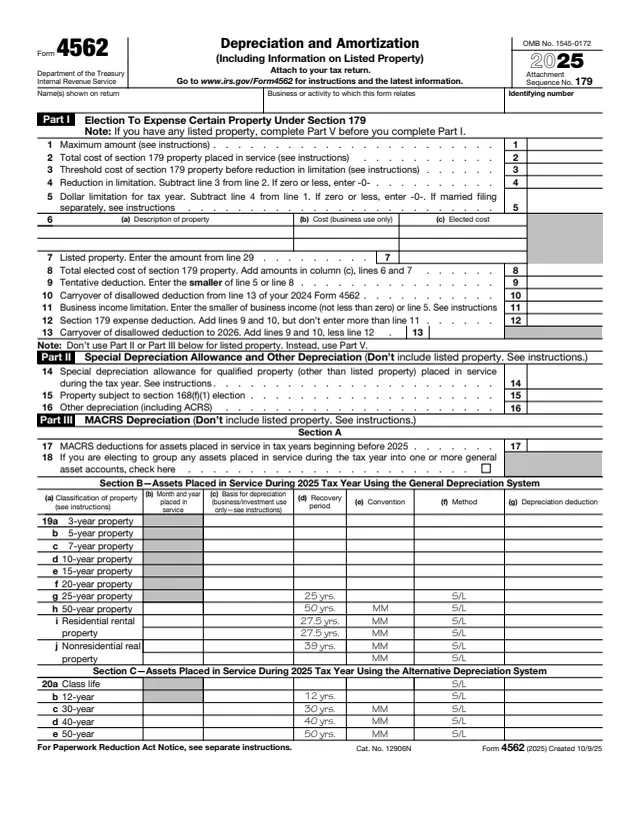
4562
277 fields, 3 pages
W-2
568 fields, 11 pages
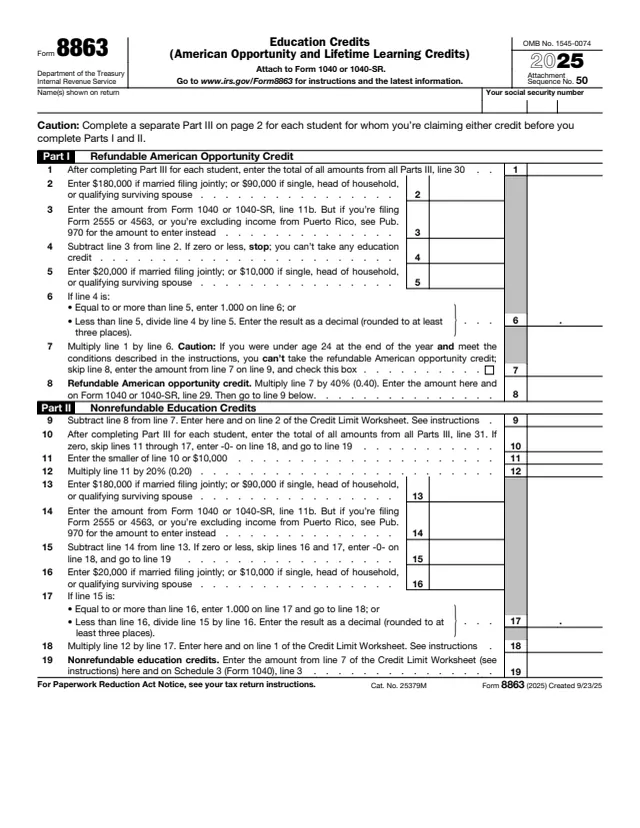
8863
77 fields, 2 pages
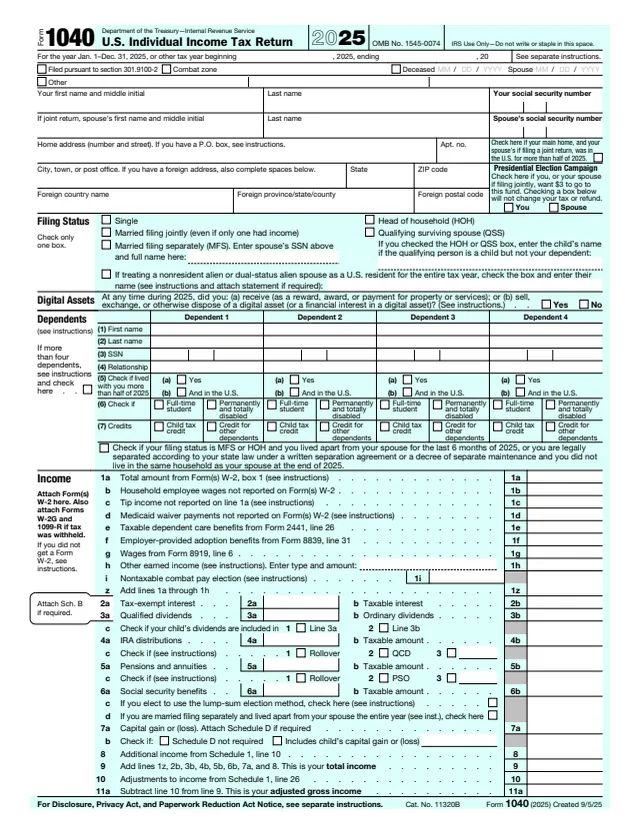
1040
199 fields, 2 pages
The form and its instructions limit it to four groups of employees, and the instructions say where each group reports the total.
No tool matches that search.
No. The instructions say it may be used only by Armed Forces reservists, qualified performing artists, fee-basis state or local government officials, and employees with impairment-related work expenses.
Line 22 multiplies business miles by 70 cents (0.70). The instructions cite Notice 2025-05 for the 2025 rate.
No. The instructions say the expenses of commuting to and from work aren't deductible, and commuting miles aren't business miles on line 13.
The instructions say generally only 50% of business meal expenses can be deducted, including meals while away from home on business.
The part for travel more than 100 miles from home for reserve service goes on Schedule 1 (Form 1040), line 12, with Form 2106 attached. The instructions say it is deductible whether or not the filer itemizes.
The form says to report the Column A excess as income on Form 1040, 1040-SR or 1040-NR, line 1a.