I-945

Public Charge Bond

Agency
USCIS
Revision
Edition 09/18/26
Fillable fields
186
Pages
9
Official source
USCIS form page
Checked
October 20, 2026
Fill I-945 online
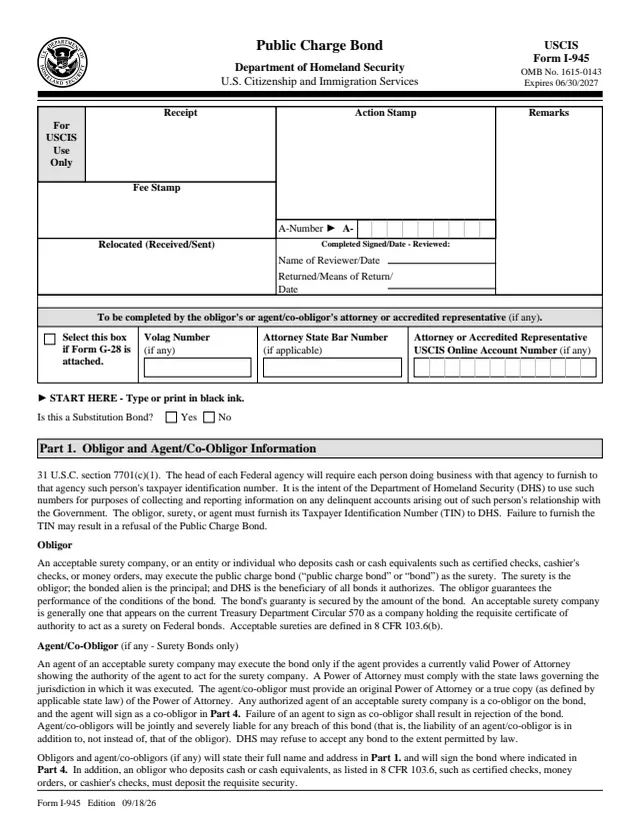
Page 1 of form I-945

Form I-945: Public Charge Bond

Form I-945, Public Charge Bond, is the form used to submit a public charge bond. The instructions say an alien found inadmissible under section 212(a)(4) of the Immigration and Nationality Act may, if otherwise admissible, be admitted after posting a suitable and proper bond in the amount and under the conditions set by DHS or the Department of State.

The USCIS page says the bond is posted as security for performance and fulfillment of the bonded alien's financial obligations to the U.S. government, and that USCIS has to invite a person before they may post one.

The bond is executed by an obligor, such as an acceptable surety company or a person or entity depositing cash or cash equivalents. The form sets out the terms: what counts as a breach, how long the bond stays in effect, and how it is substituted or cancelled.

What's on Form I-945

Part 1: Obligor and agent/co-obligor

The obligor's name or company, addresses, phone, email and Taxpayer Identification Number (TIN), the agent's details and Power of Attorney number, the premium rate, and anyone who asked the surety company to post the bond.
Part 2: The alien for whom the bond is furnished

Name, A-Number, online account number, the Form I-485 receipt number or the DOS consular (NVC) or Diversity Visa (KCC) case number, addresses, birth details, contact details and whether a representative is involved.

Part 3: General terms and conditions

Refund of a cash deposit with interest when the bond is cancelled, forfeiture of the deposit on breach, notices, reporting address changes within 30 days, appeal rights and any other conditions imposed.

Part 3 continued: Substitution, breach and cancellation

How a substitute bond works, that receiving any means-tested public benefit is a breach, that the bond stays in effect until the alien naturalizes, permanently departs or dies or it is cancelled, and when it may be cancelled.

Part 4: Statement and signature

The guarantee statement with the bond sum, the certification under penalty of perjury, the obligor's or agent/co-obligor's signature, and a section for DHS to record the start date and acceptance.

Part 5: Additional information

Extra space with the obligor's name, Power of Attorney number and the alien's A-Number. The instructions say it is not used to amend the terms of Parts 3 or 4.

How to fill out Form I-945

  1. 1

    Start from the USCIS communication

    The page says the package includes a copy of the communication from USCIS that tells the person to submit the form, and the cash or surety bond amount it specifies. USCIS rejects the form without them.

  2. 2

    Use the current edition and write clearly

    Type or print in black ink with the edition date and page numbers visible on every page. Write N/A where a question does not apply and None for a zero.

  3. 3

    Complete Part 1 with the TIN

    Answer the substitution bond question, then give the obligor's details. The form says the obligor, surety or agent furnishes its TIN, and that failure to furnish it may result in refusal of the bond.

  4. 4

    Give the alien's case number in Part 2

    The instructions say to enter the Form I-485 receipt number for an adjustment applicant, or the DOS Consular Case Number (NVC Case Number) for an immigrant visa applicant already interviewed.

  5. 5

    Leave the bond terms unchanged

    Fill in any conditions in Part 3 and the bond sum in Part 4. The instructions say USCIS rejects the bond if Part 5 is used to add terms that alter Parts 3 or 4.

  6. 6

    Sign Part 4

    The obligor or the agent/co-obligor signs. A stamped or typewritten name is not acceptable, and USCIS rejects an unsigned or incomplete Form I-945. This page lets you fill the form online free, then print it to sign.

Why fill Form I-945 on indox

You get the real form, filled in a browser tab, with nothing standing between you and the finished PDF.

  • Fill the form right in your browser, no software to install
  • Free to fill and free to download, with no account
  • The official blank straight from the USCIS, not a copy someone retyped
  • Works on a phone, tablet or computer

Where to file, bond payment and fees

Where to file

The USCIS page sends Form I-945 to the Dallas, Phoenix or Chicago lockbox based on where the filer lives, each with a U.S. Postal Service P.O. Box and a FedEx, UPS and DHL street address. Check the table on the page.

Filing location change

The USCIS page says the filing location changed on Sept. 18, 2026. The Montclair, California facility accepted forms postmarked on or before Oct. 19, 2026 and rejects any Form I-945 postmarked after that date.

Fee

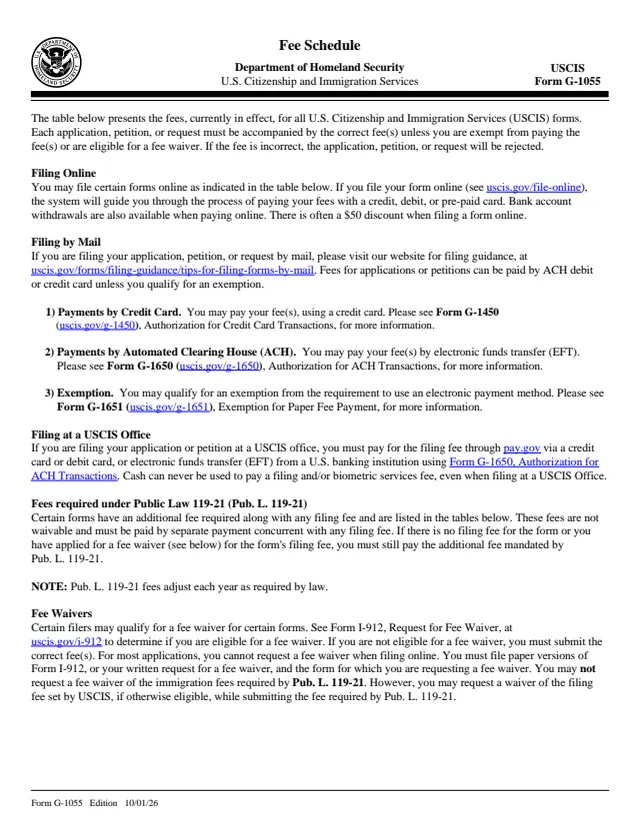
The filing fee is on the USCIS Fee Schedule page (Form G-1055), which can change. Check it on the day you file. The bond amount is separate and is the one stated in the USCIS communication.

Paying a cash bond

The USCIS page says instructions for paying a bond are in the Notice of Intent to Deny the person received. The instructions also point to uscis.gov/I-945 and the USCIS Contact Center for the most current payment information.

Compliance review

The instructions say DHS may verify the information before or after accepting the bond, including through public records, contact with agencies, unannounced site inspections and interviews.

Cancelling the bond later

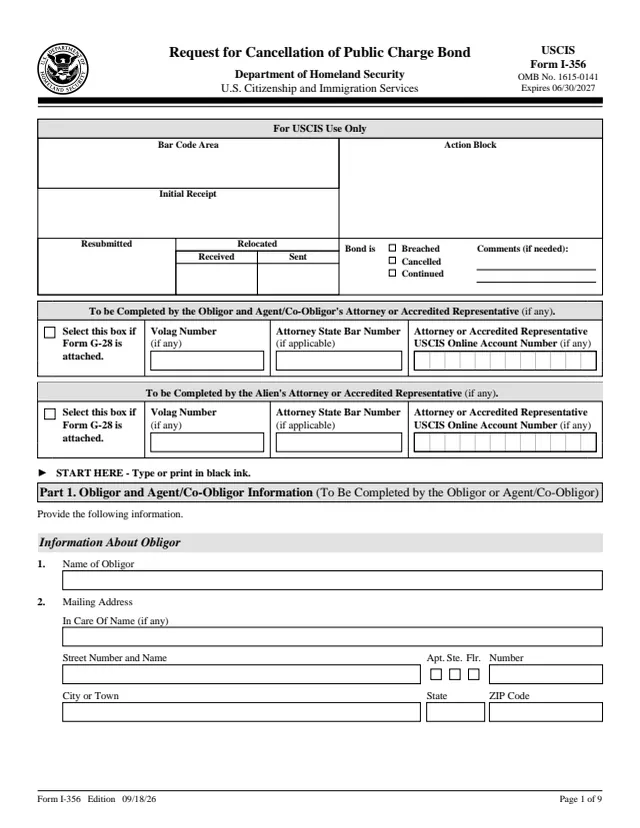
Cancellation is requested with Form I-356, Request for Cancellation of Public Charge Bond. The form lists death, permanent departure, naturalization, or the fifth anniversary of becoming a permanent resident, each without a prior breach.

Who files Form I-945?

  • Applicants invited to post a bond

    The USCIS page says to use the form only if USCIS determined the person inadmissible on public charge grounds (INA 212(a)(4)) and notified them that they may submit a public charge bond. USCIS rejects the form without that notice.

  • Obligors

    The form says an acceptable surety company, or an entity or individual who deposits cash or cash equivalents such as certified checks, cashier's checks or money orders, may execute the bond. The obligor guarantees the bond's conditions.

  • Agents and co-obligors

    For surety bonds only, an agent of the surety company may execute the bond with a currently valid Power of Attorney. The form says the agent signs as co-obligor in Part 4 and is liable in addition to the obligor.

  • Attorneys and representatives

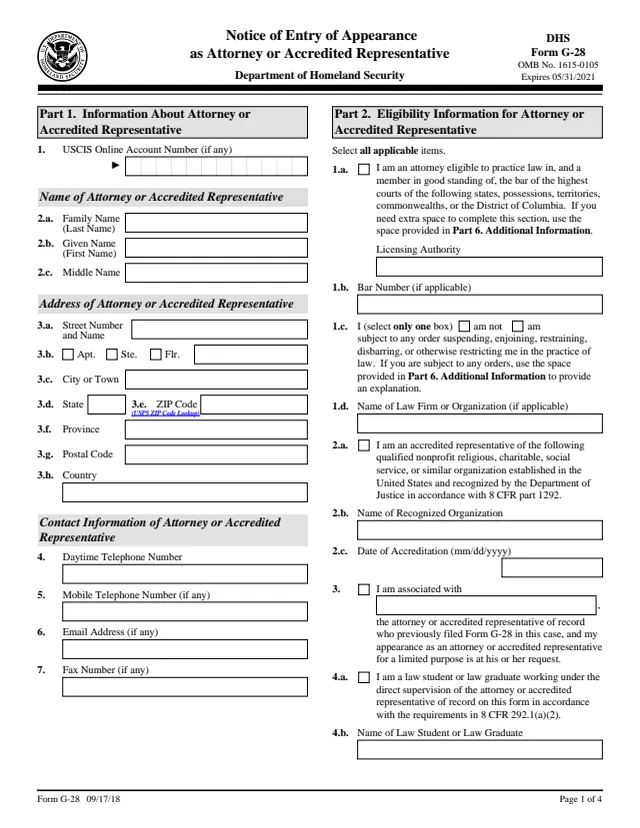
    The instructions say a representative of the alien submits a new Form G-28 for the bond, even if one is already on file with Form I-485, or USCIS cannot communicate with them about the bond.

  • Substitute bonds

    The form asks whether this is a substitution bond. The same obligor or a new obligor may substitute the bond on file, and the form says the substitute takes on the liabilities of earlier obligors.

Official sources and the blank

Do it all with indox

View all 123 tools

Questions about Form I-945

Can I file Form I-945 without being asked?

No. The USCIS page says to use it only if USCIS determined the person inadmissible on public charge grounds and notified them that they may submit a bond, and that USCIS rejects the form otherwise.

Who can be the obligor on a public charge bond?

The form says an acceptable surety company, generally one listed on Treasury Department Circular 570, or an entity or individual who deposits cash or cash equivalents may execute the bond.

What counts as a breach of the bond?

The form lists the alien receiving any means-tested public benefit, or not complying with other conditions imposed as part of the bond. A final breach creates a claim for the full amount of the bond.

How long does a public charge bond last?

The form says it stays in effect until the alien naturalizes, permanently departs or dies, or the bond is otherwise cancelled under 8 CFR 103.6.

How is a public charge bond cancelled?

With Form I-356. The form says the obligor, agent/co-obligor or the alien may file it, and the alien may do so without permission from the obligor.

What is the Form I-945 filing fee?

USCIS fees change, so this page does not list one. The I-945 page points to the USCIS Fee Schedule, and the instructions point to Form G-1055.