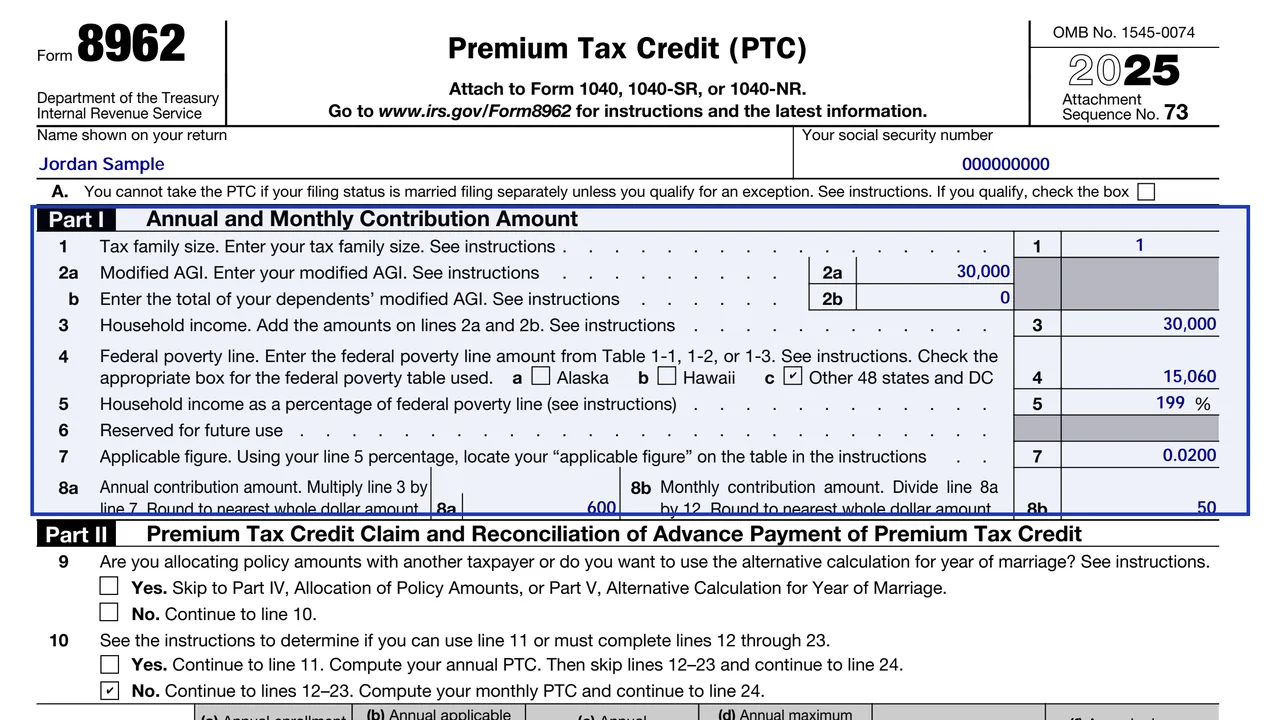
Part I: Annual and monthly contribution amount
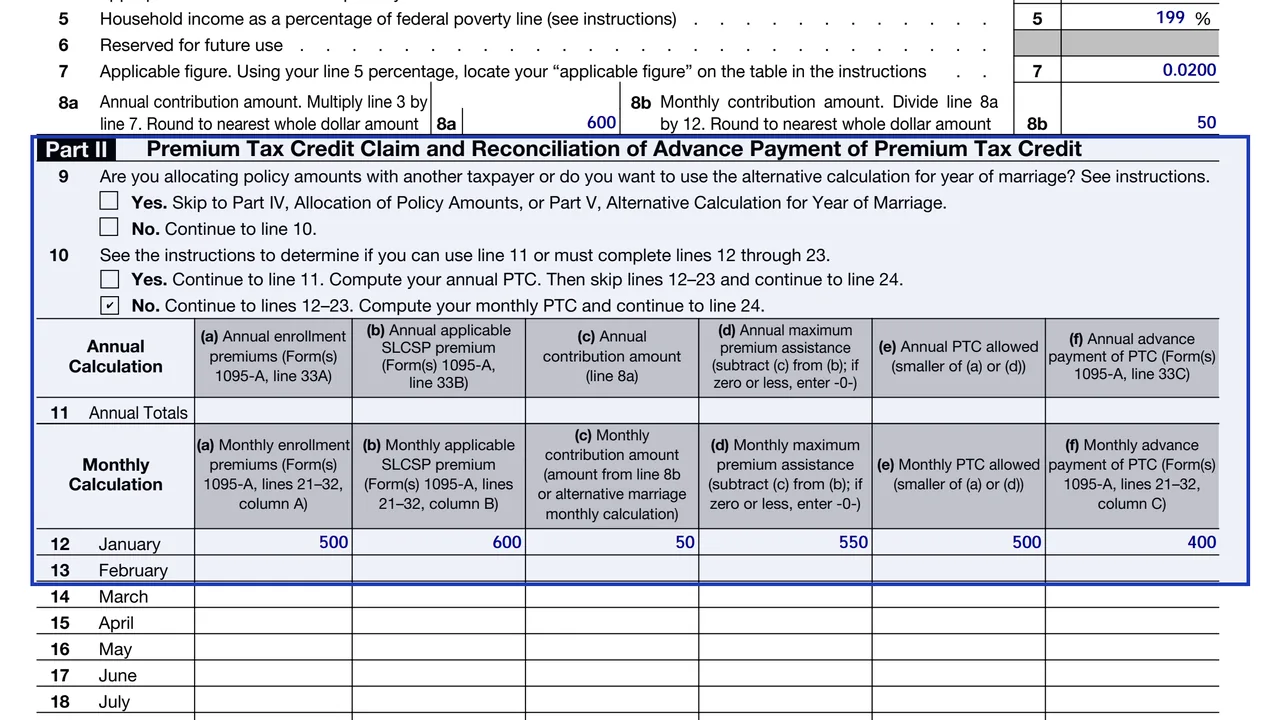
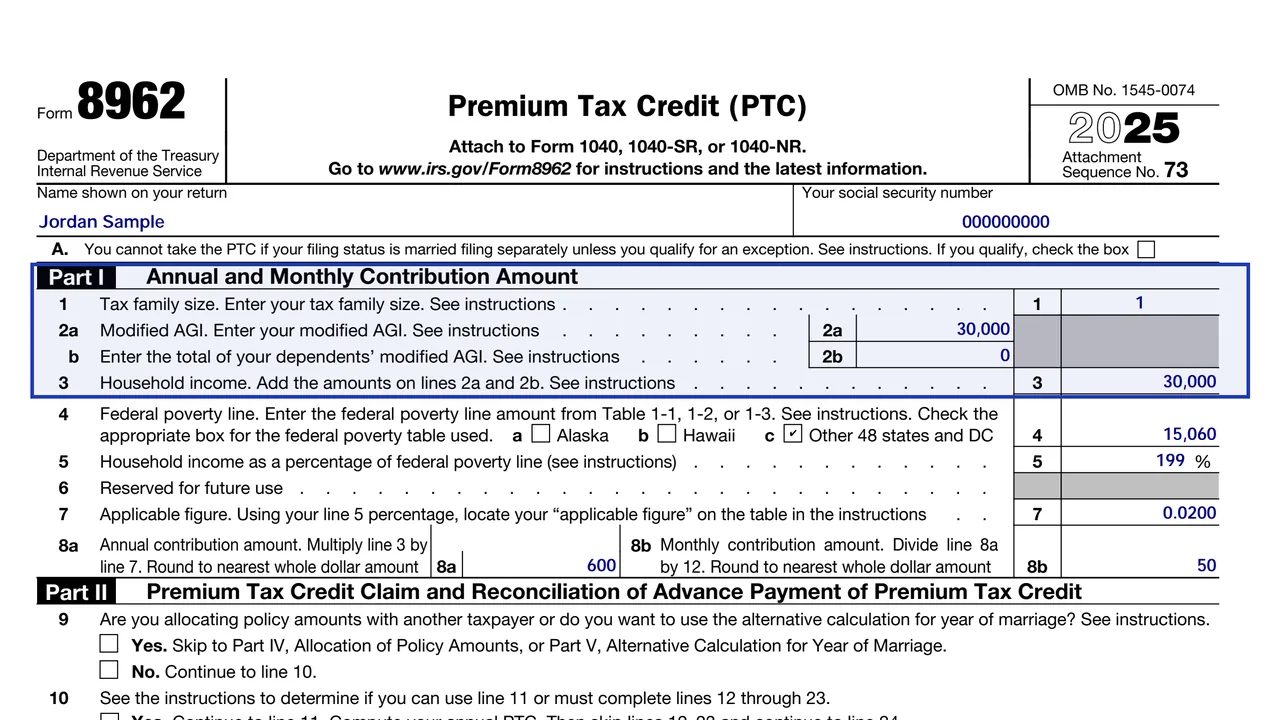
Lines 1 through 8b figure your tax family size, modified adjusted gross income, household income as a percentage of the poverty line, the applicable figure and your monthly contribution amount.
8962
Premium Tax Credit (PTC)
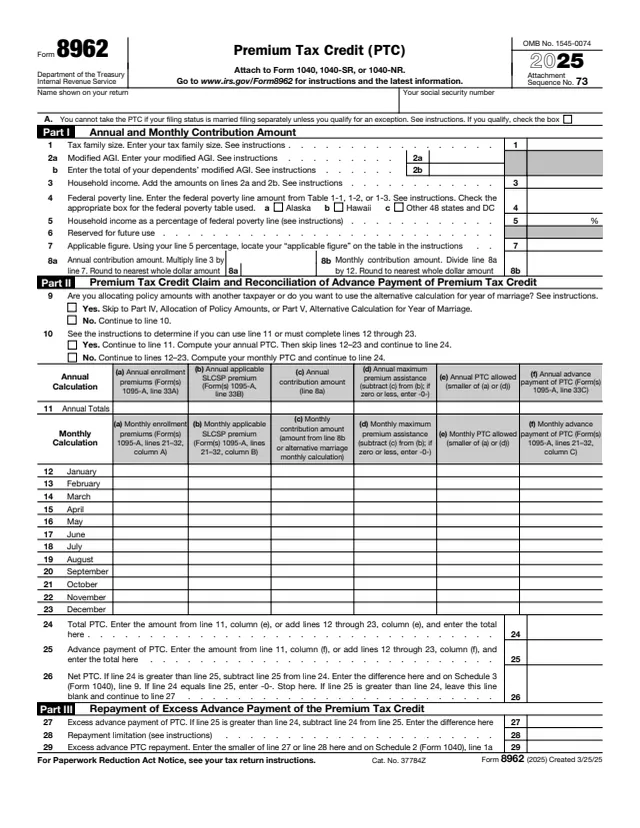
Form 8962 is how you figure the premium tax credit and reconcile it with any advance payments of that credit. If you bought health insurance through the Marketplace and the government paid part of your monthly premium in advance, this form compares what was paid with what you were actually entitled to.
If you were entitled to more than was paid, the difference reduces your tax or increases your refund. If you were paid more than you were entitled to, the excess may have to be repaid with your return, and the instructions have a table that limits repayment for some incomes.
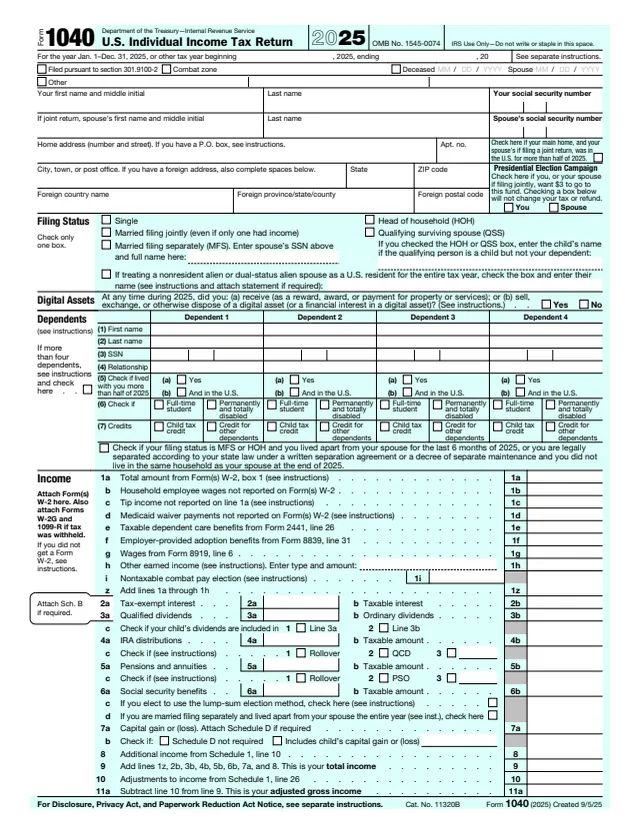
You attach the form to Form 1040, 1040-SR or 1040-NR. The numbers come from Form 1095-A, which the Marketplace sends you.
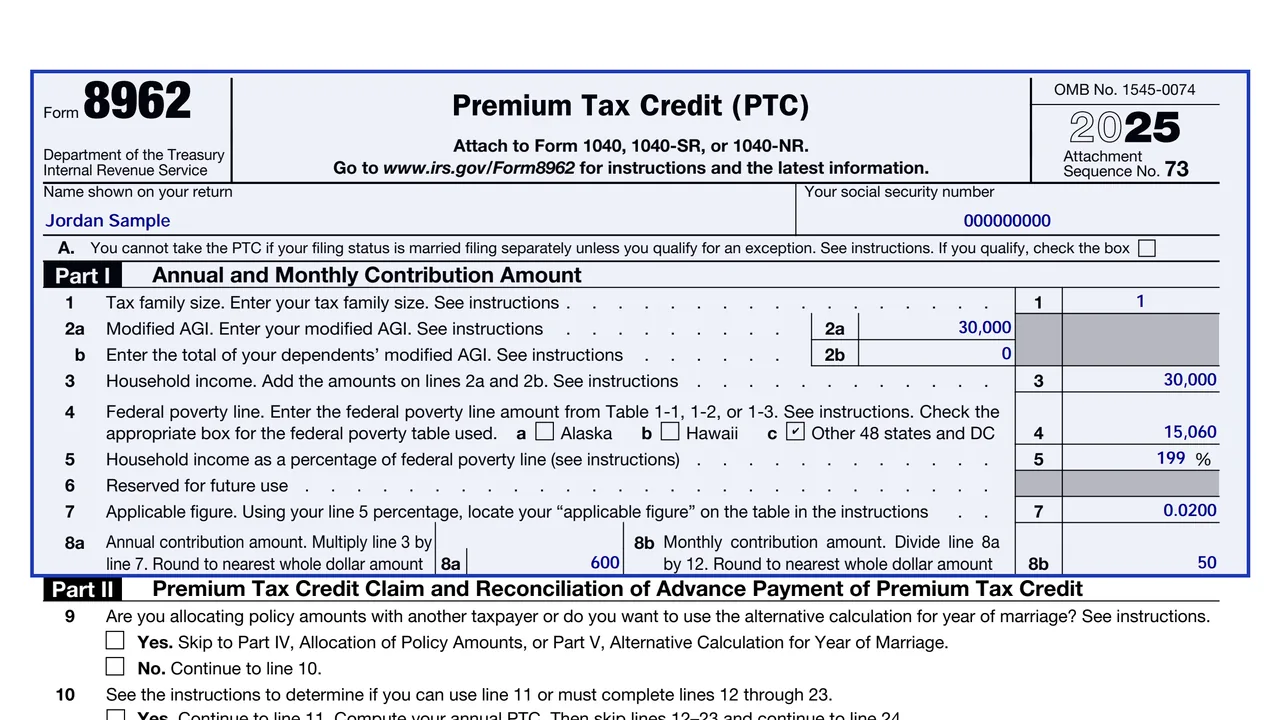
Lines 1 through 8b figure your tax family size, modified adjusted gross income, household income as a percentage of the poverty line, the applicable figure and your monthly contribution amount.
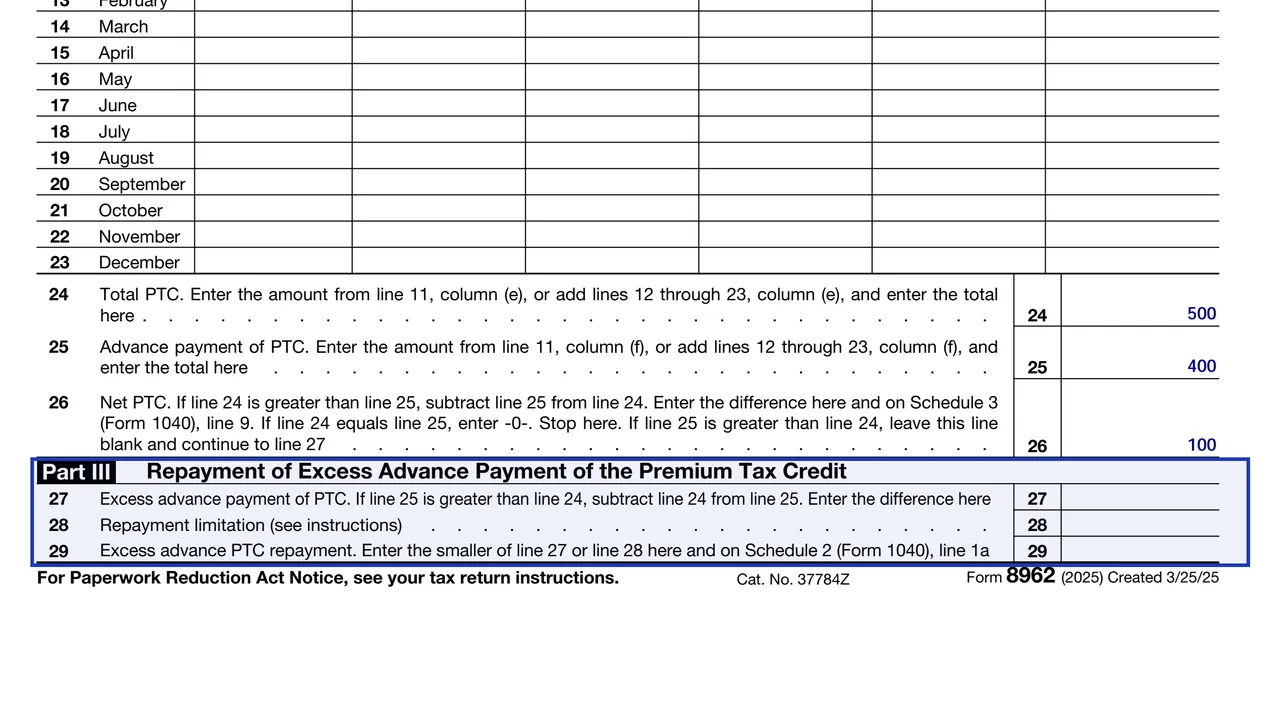
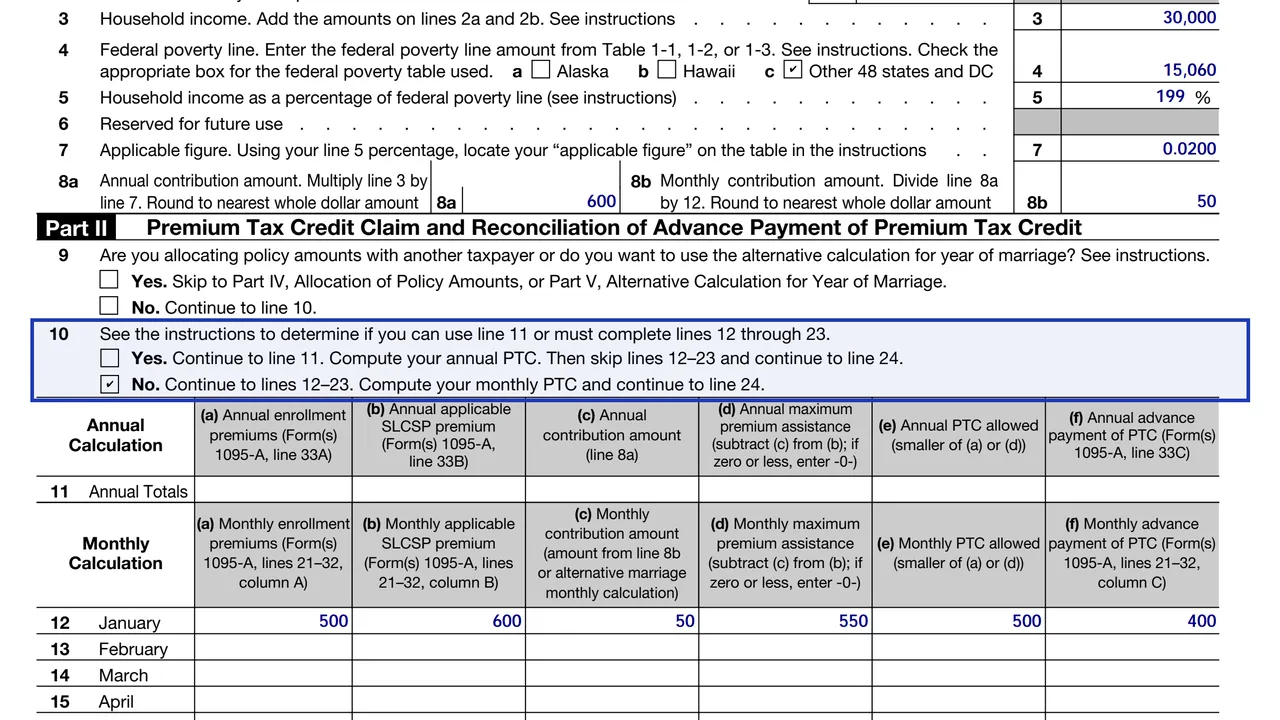
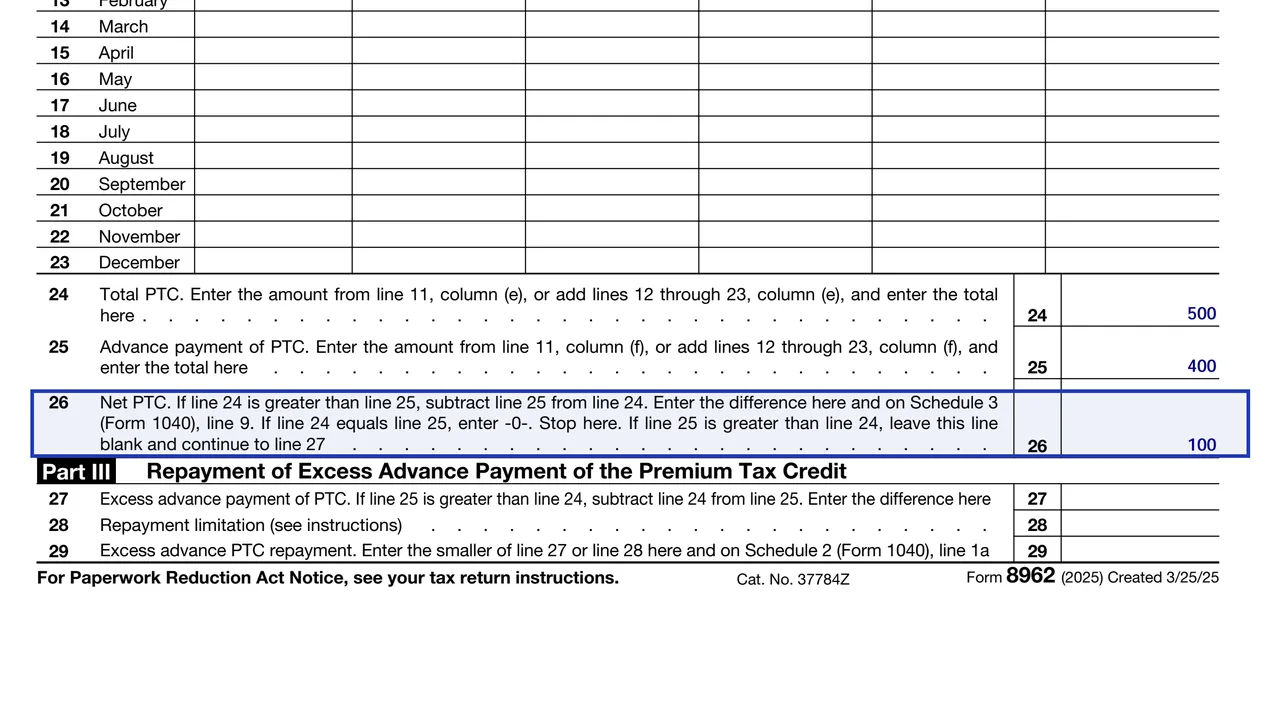
Line 9 asks about allocating policy amounts. Line 10 decides whether you use annual totals on line 11 or monthly figures on lines 12 through 23. Lines 24 through 26 compare the credit with the advance payments you received.
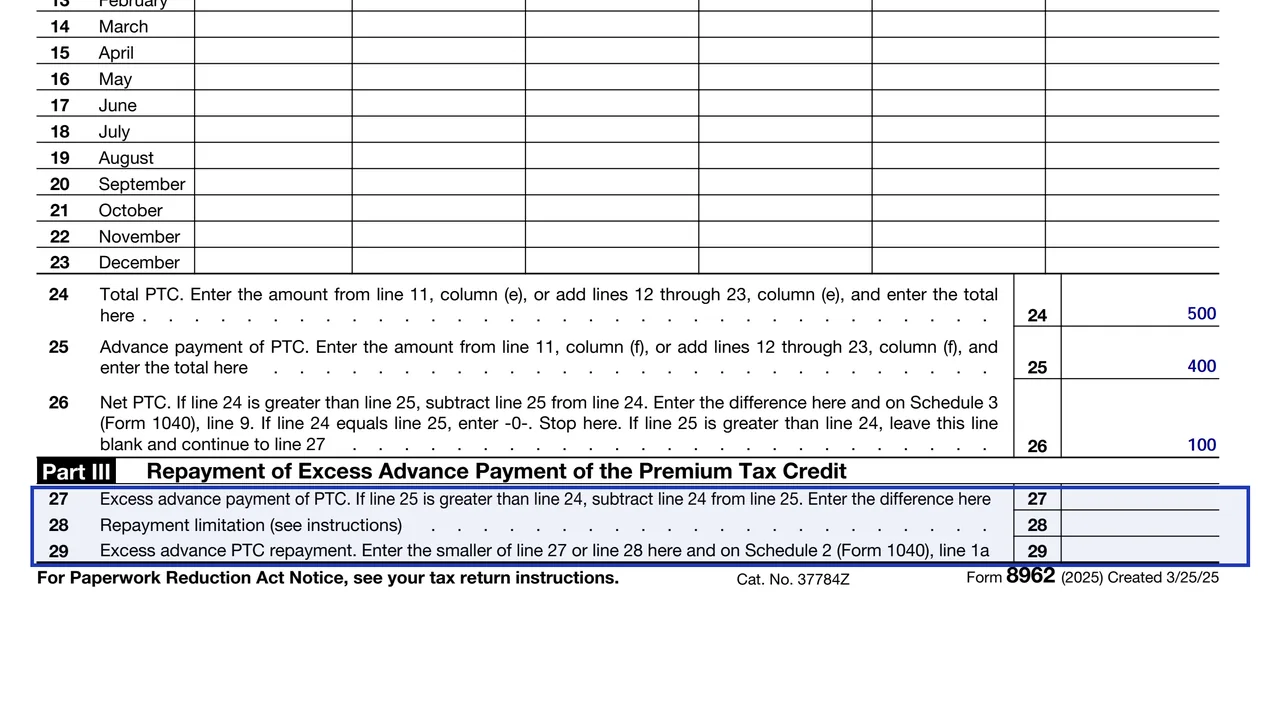
Lines 27 through 29 compute the excess, apply the repayment limit from Table 5 when it applies, and give the amount you repay.
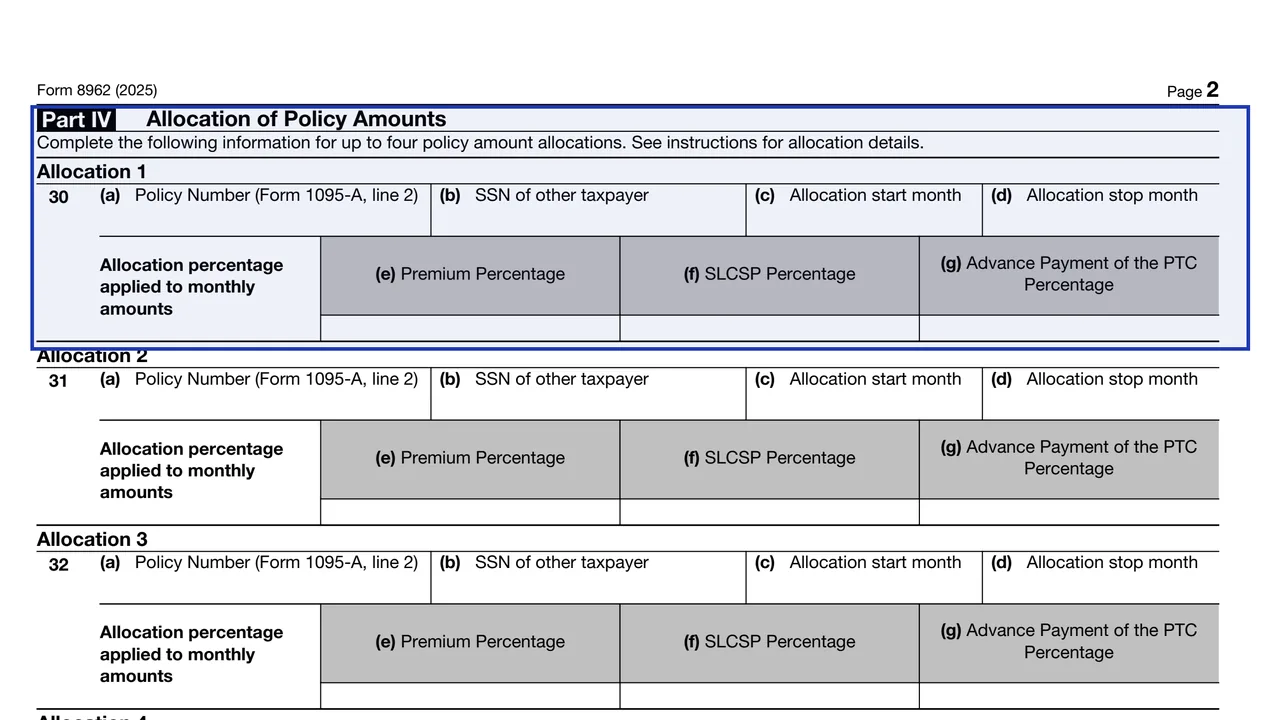
Use it when a plan covered people in more than one tax family, such as after a divorce or when spouses file separately.
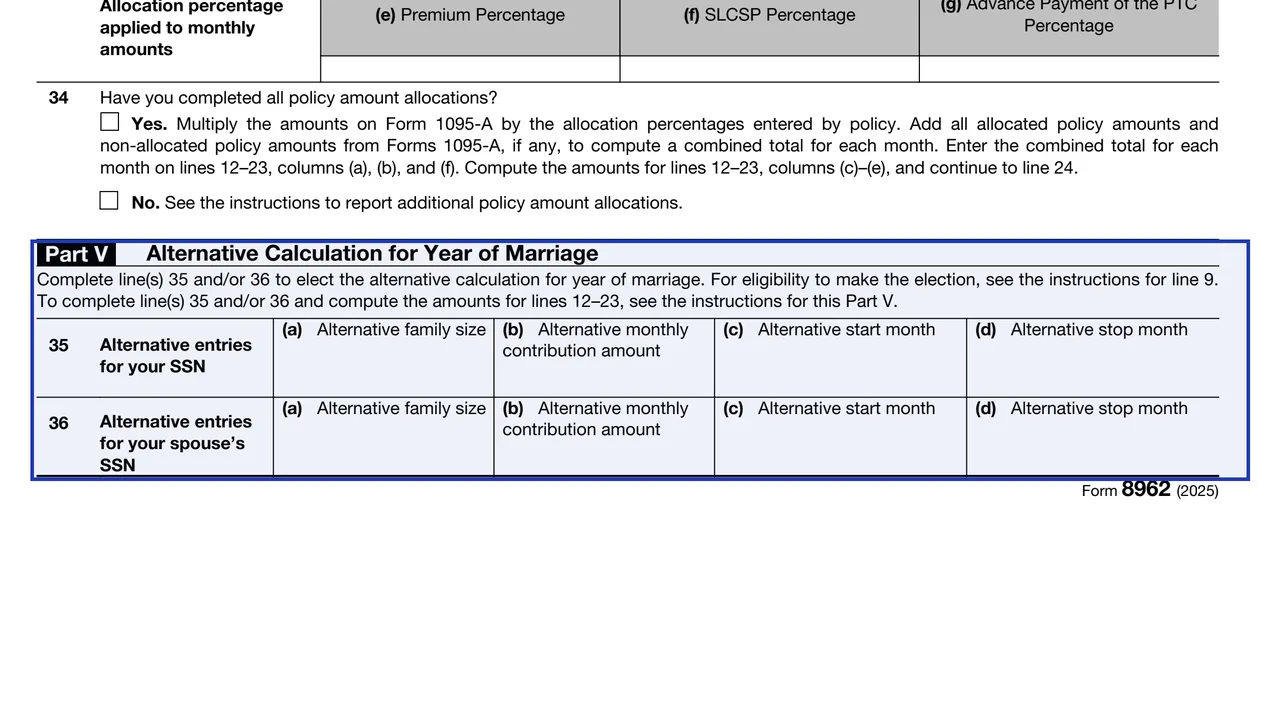
An optional calculation for people who married in 2025 that may reduce the excess advance payment you must repay.
The Marketplace should send it by January 31, 2026. Use the version marked CORRECTED if you received one, and ignore any marked VOID.
Enter your tax family size and income. The form then gives your percentage of the poverty line and monthly contribution amount.
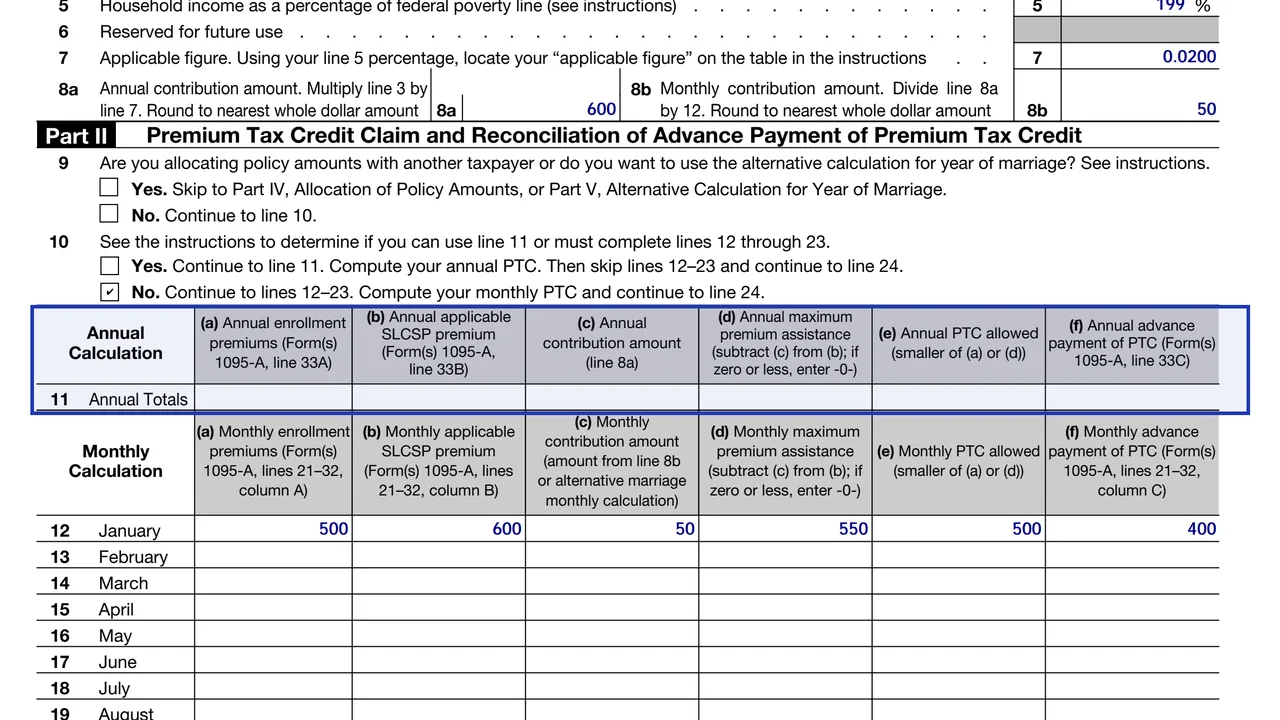
If you had full-year coverage with unchanged premiums and SLCSP amounts on Form 1095-A, you may check Yes and use line 11 with the annual amounts from Form 1095-A, line 33. Otherwise check No and fill in lines 12 through 23.
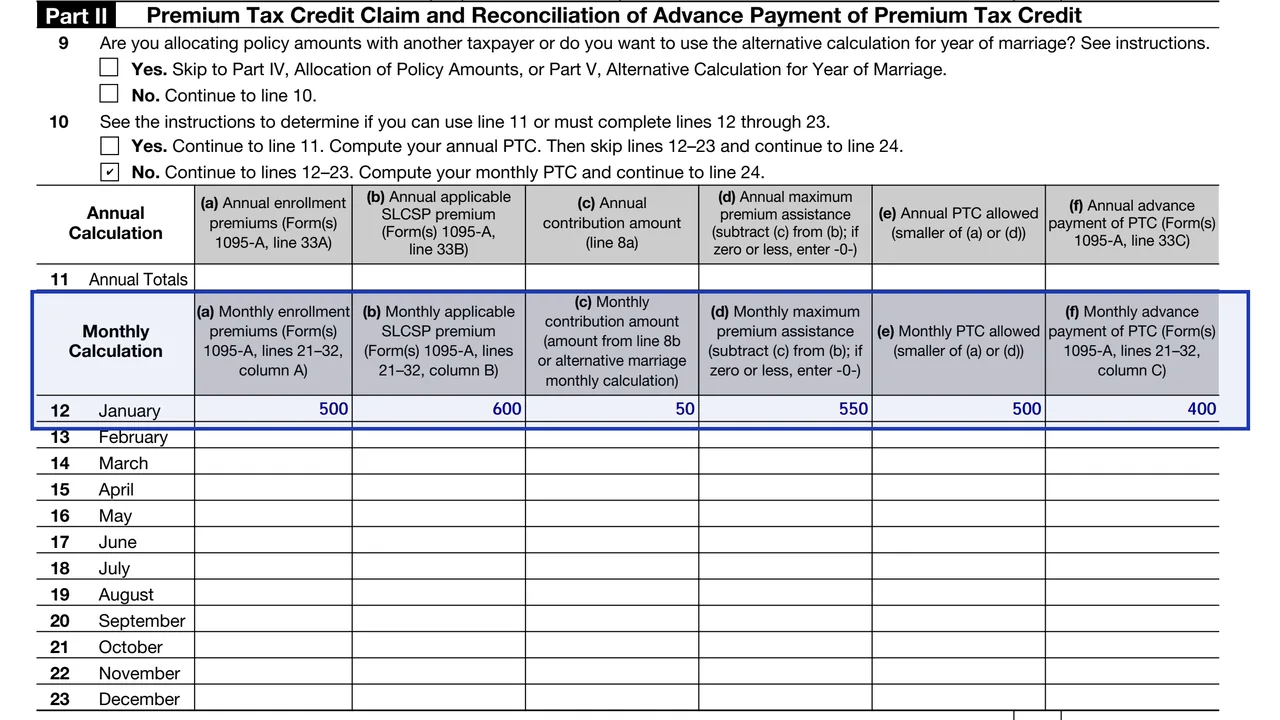
Column (a) is the monthly enrollment premium, (b) the applicable second lowest cost silver plan premium, (c) your monthly contribution amount, (d) column (b) minus (c) not below zero, (e) the smaller of (a) or (d), and (f) the monthly advance payment.
Line 24 totals column (e), and line 25 totals column (f).
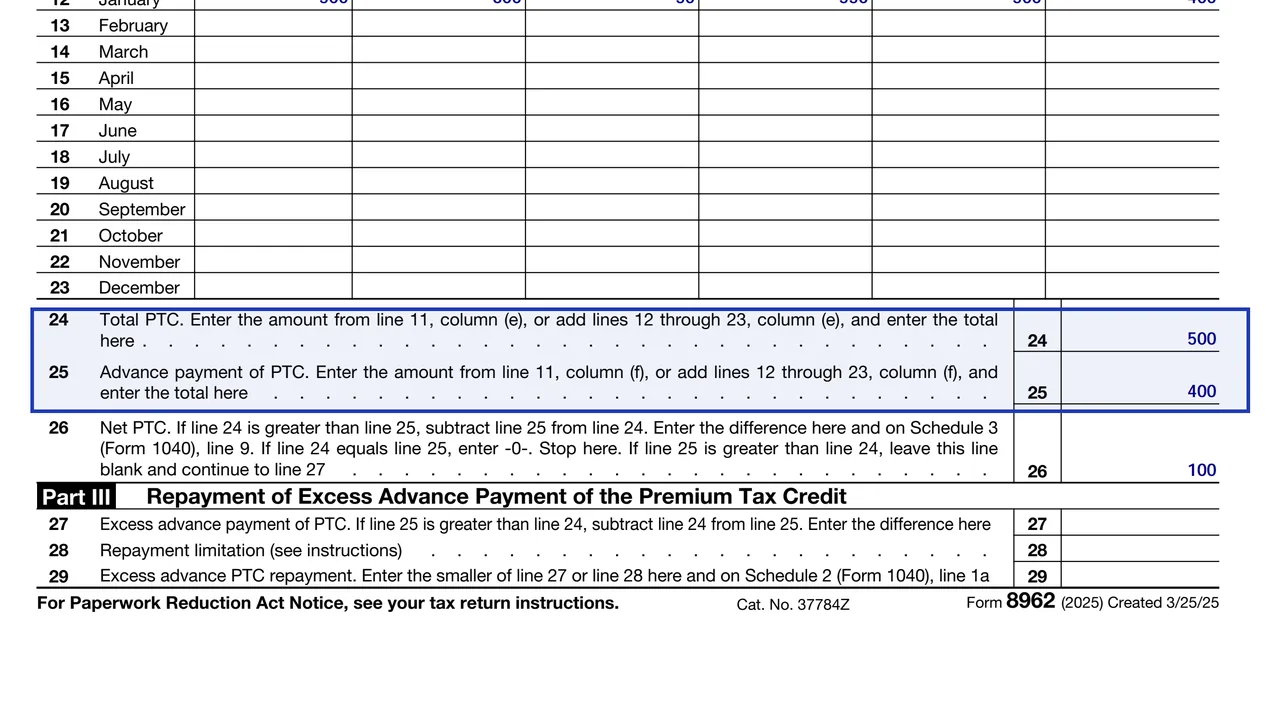
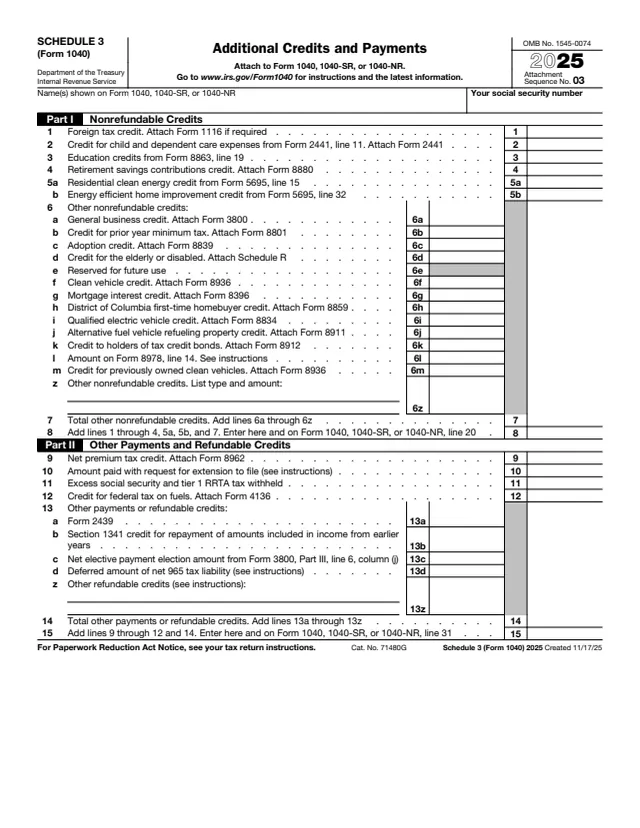
If line 24 is larger, line 26 is your net credit and it goes to Schedule 3 (Form 1040), line 9. If line 25 is larger, move to Part III. You can fill this form free on this page.
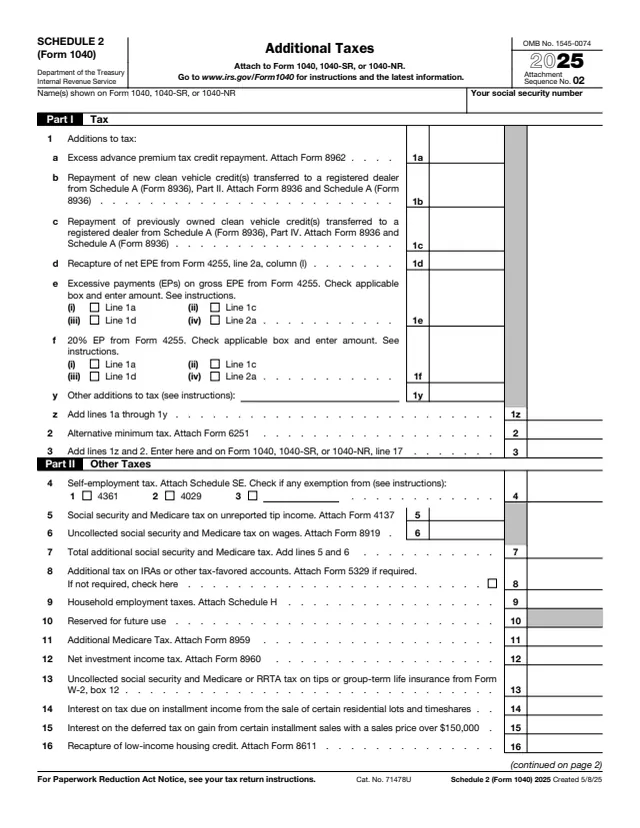
Line 29 is the smaller of the excess on line 27 and the cap on line 28. If line 5 is 400 or more, the cap does not apply and line 28 stays blank. The repayment goes to Schedule 2 (Form 1040), line 1a.
You get the real form, filled in a browser tab, with nothing standing between you and the finished PDF.
Form 8962 is filed with your income tax return, so it is due when the return is due.
Attach it to Form 1040, 1040-SR or 1040-NR. E-filing software carries it with the return.
The form is free from the IRS.
The form's numbers come from it, so keep every copy including corrected versions.
Using a VOID Form 1095-A, skipping the form when advance payments were made, entering annual totals when the premium changed during the year and forgetting policy shares after a divorce are frequent errors.
No tool matches that search.
You file it only if you want to claim the premium tax credit. If advance payments were made for anyone in your tax family, you must file it either way.
From Form 1095-A, which the Marketplace should send by January 31.
Use the corrected version. Ignore any form marked VOID.
The excess may be repaid, but the repayment can be limited by Table 5 in the instructions depending on your income.
Part V offers an optional alternative calculation that may reduce the excess you must repay.
No. The instructions say you must file an income tax return to claim the credit or reconcile advance payments.