Header
The calendar year, the name or names shown on the return and your Social Security number.
8888
Allocation of Refund
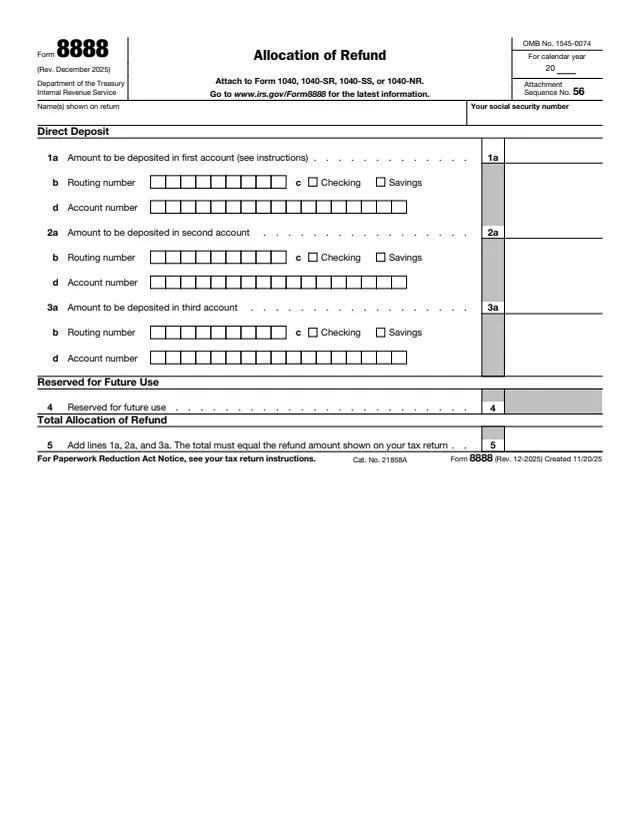
Form 8888, Allocation of Refund, is attached to Form 1040, 1040-SR, 1040-SS or 1040-NR. The instructions say to use it to have the IRS directly deposit a refund (or part of it) to either two or three accounts at a bank or other financial institution (such as a mutual fund, brokerage firm or credit union) in the United States.
The form has three sets of lines for an amount, routing number, account type and account number, a line reserved for future use, and a total on line 5 that the form says must equal the refund amount shown on the return. The instructions say the program that let a refund buy savings bonds has been discontinued, and Form 8888 is now only used to split a direct deposit refund between two or more accounts. For a deposit to only one account, the instructions say not to complete this form and to request direct deposit on the tax return instead.
The instructions say the form has been converted from annual revision to continuous use. You can fill it out free in your browser on this page and download the result without an account.
The calendar year, the name or names shown on the return and your Social Security number.
The amount to be deposited, the routing number, a checking or savings box, and the account number.
The same four entries for a second account on lines 2a to 2d and a third account on lines 3a to 3d.
The line is printed as reserved for future use.
The sum of lines 1a, 2a and 3a. The form says the total must equal the refund amount shown on your tax return.
Enter the part of the refund for each account. The instructions say each deposit must be at least $1, and if processing is delayed the entire refund goes to the last valid account listed.
Enter the routing number. The instructions say it must be nine digits and the first two digits must be 01 through 12 or 21 through 32.
Check one box for the account type. For an IRA, HSA, brokerage or similar account, the instructions say to ask the financial institution which box to check.
Enter the account number, up to 17 characters (both numbers and letters). Include hyphens but omit spaces and special symbols, enter it left to right, and leave unused boxes blank.
Add lines 1a, 2a and 3a. The instructions say the total must equal the refund on the return, or the refund may be delayed.
The instructions say not to file a Form 8888 with numbers or letters crossed out or whited out, or the IRS will reject the allocation.
You get the real form, filled in a browser tab, with nothing standing between you and the finished PDF.
The form says to attach it to Form 1040, 1040-SR, 1040-SS or 1040-NR.
The instructions say the number of refunds that can be directly deposited to a single account or prepaid debit card is limited to three a year.
If a financial institution rejects one or two but not all of the deposits, the instructions say the additional amount is deposited to the last valid account listed.
The instructions say an increase goes to the last account listed. A decrease is taken first from line 3, next from line 2 and finally from line 1.
Past-due federal tax is taken first from line 3, then line 2, then line 1. Other offsets by the Bureau of the Fiscal Service come first from the account with the lowest routing number.
The instructions say that starting in October 2025 the IRS will generally stop issuing paper checks for federal disbursements, including tax refunds, unless an exception applies.
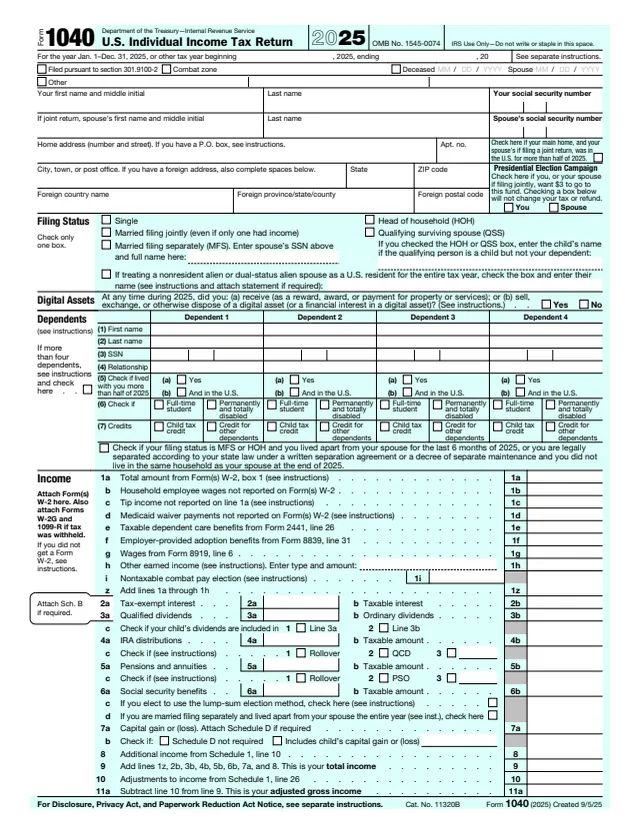
1040
199 fields, 2 pages
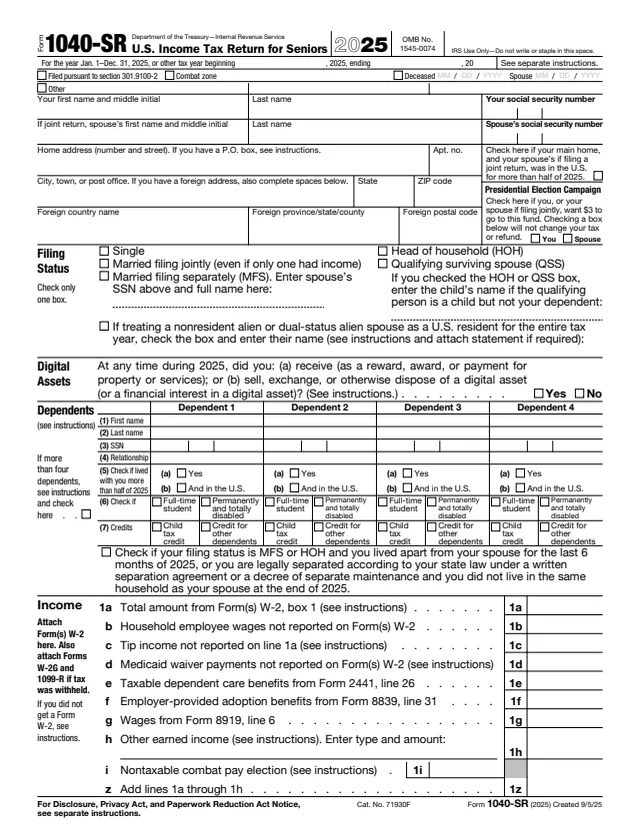
1040-SR
200 fields, 4 pages
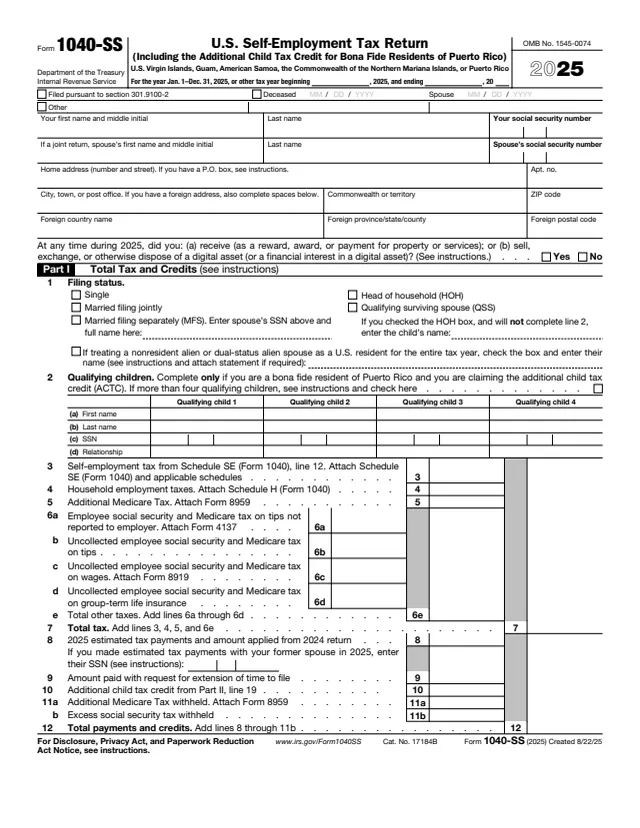
1040-SS
132 fields, 3 pages
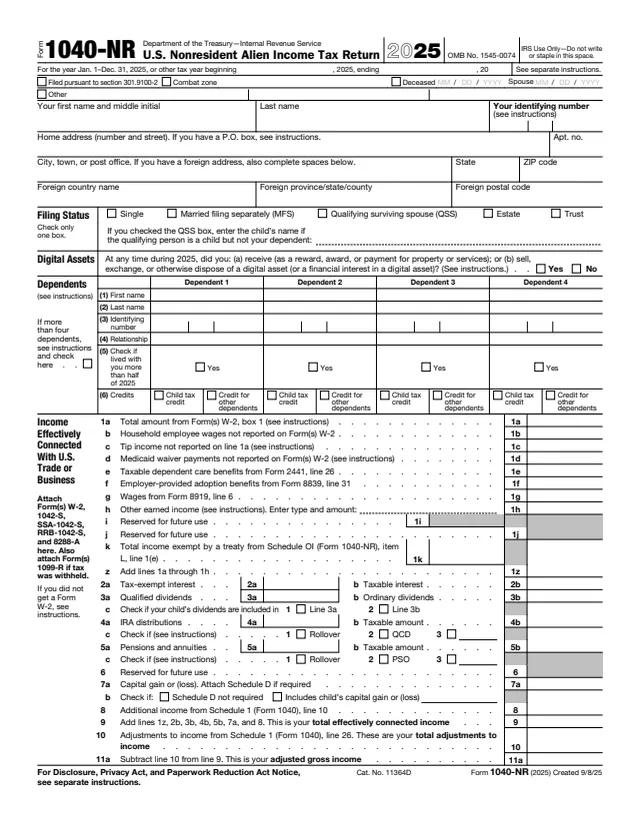
1040-NR
171 fields, 2 pages
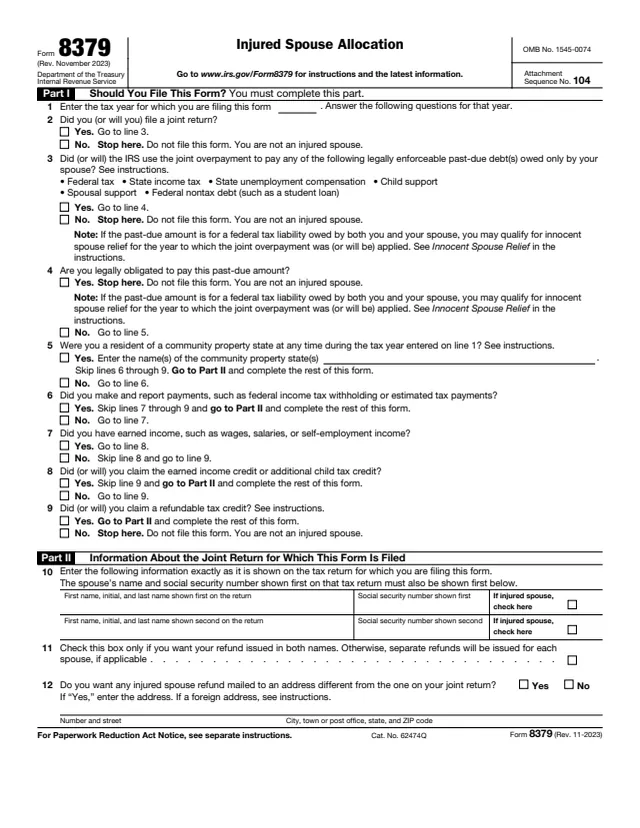
8379
63 fields, 2 pages
Individuals who file Form 1040, 1040-SR, 1040-SS or 1040-NR and want their refund split by direct deposit attach it to the return.
No tool matches that search.
No. The instructions say not to complete this form for one account and to request direct deposit on the tax return instead.
No. The instructions say that program has been discontinued and the form is now only used to split a direct deposit refund.
Up to three, on lines 1, 2 and 3. Each deposit must be at least $1, the instructions say.
The instructions list a traditional IRA, Roth IRA or SEP IRA, but not a SIMPLE IRA. They say to establish the IRA first and tell the trustee or custodian which year the deposit is for.
The instructions say not to request a deposit to an account that is not in your name, such as your tax return preparer's account.
The instructions say an increase from a math error goes to the last account listed, and a decrease comes first from line 3, then line 2, then line 1.