Box 1
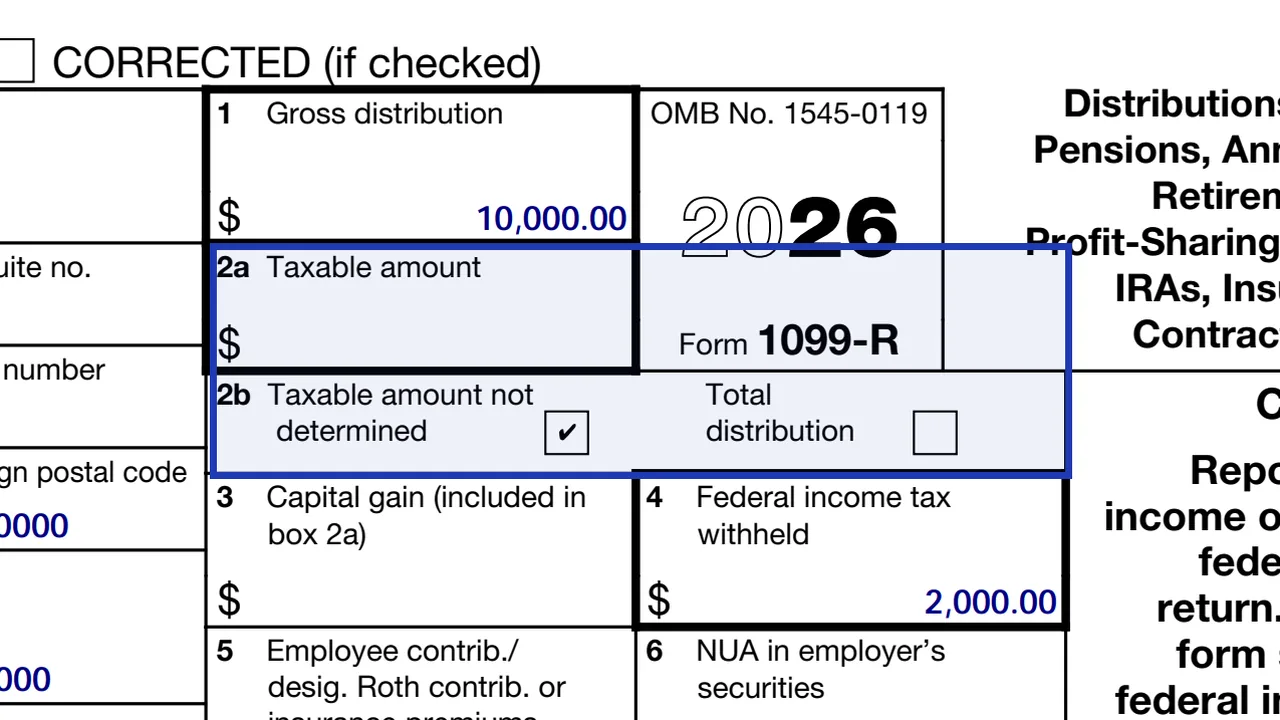
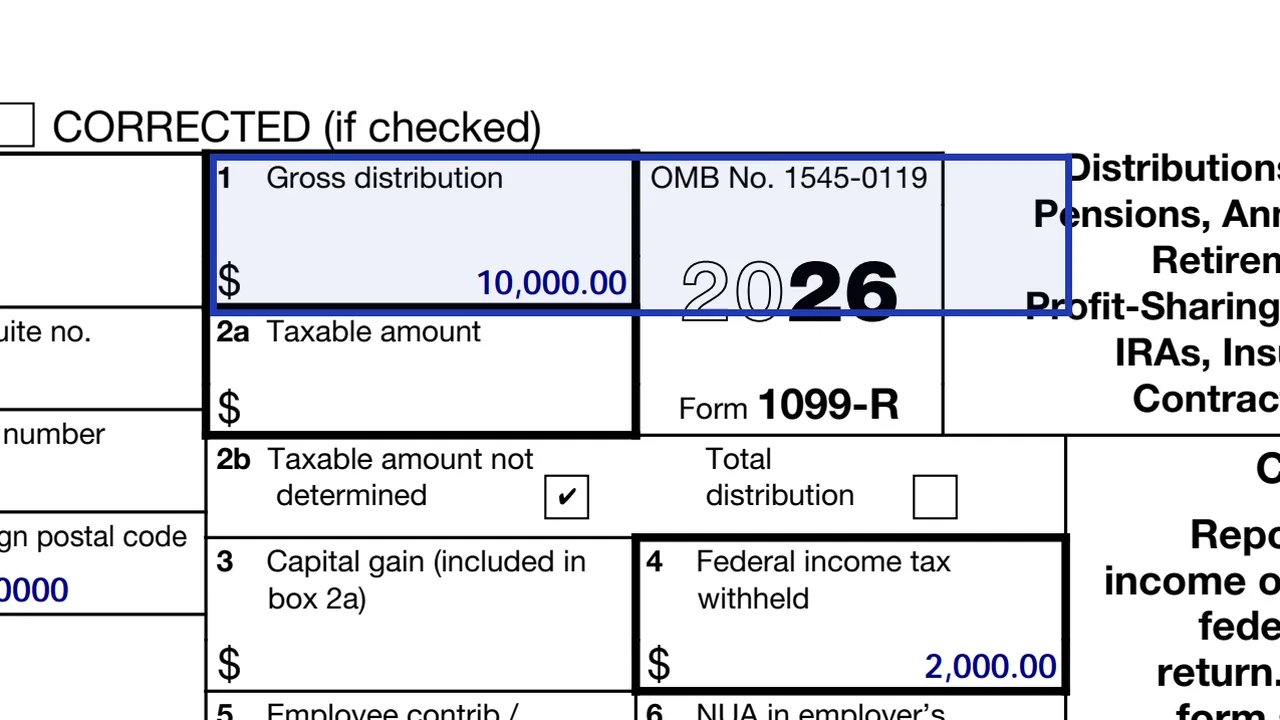
Gross distribution before withholding, including direct rollovers and Roth IRA conversions.
1099-R
Distributions From Pensions, Annuities, Retirement or Profit-Sharing Plans, IRAs, Insurance Contracts, etc.
Form 1099-R reports money paid out of a retirement plan or similar arrangement. That includes pensions, annuities, individual retirement arrangements (IRAs), profit-sharing and retirement plans, insurance contracts and survivor income benefit plans. The plan administrator, custodian or insurer sends you a copy and files another with the IRS.
If you took a distribution, rolled money over or converted an IRA to a Roth IRA, expect to receive this form. The payer completes it. The distribution code in box 7 tells the IRS what kind of payment it was, so it matters a great deal for how your return treats the money.
If you are the payer, you file one for each person to whom you made a designated distribution of $10 or more, according to the instructions. This page covers the 2026 form, for distributions made in 2026.
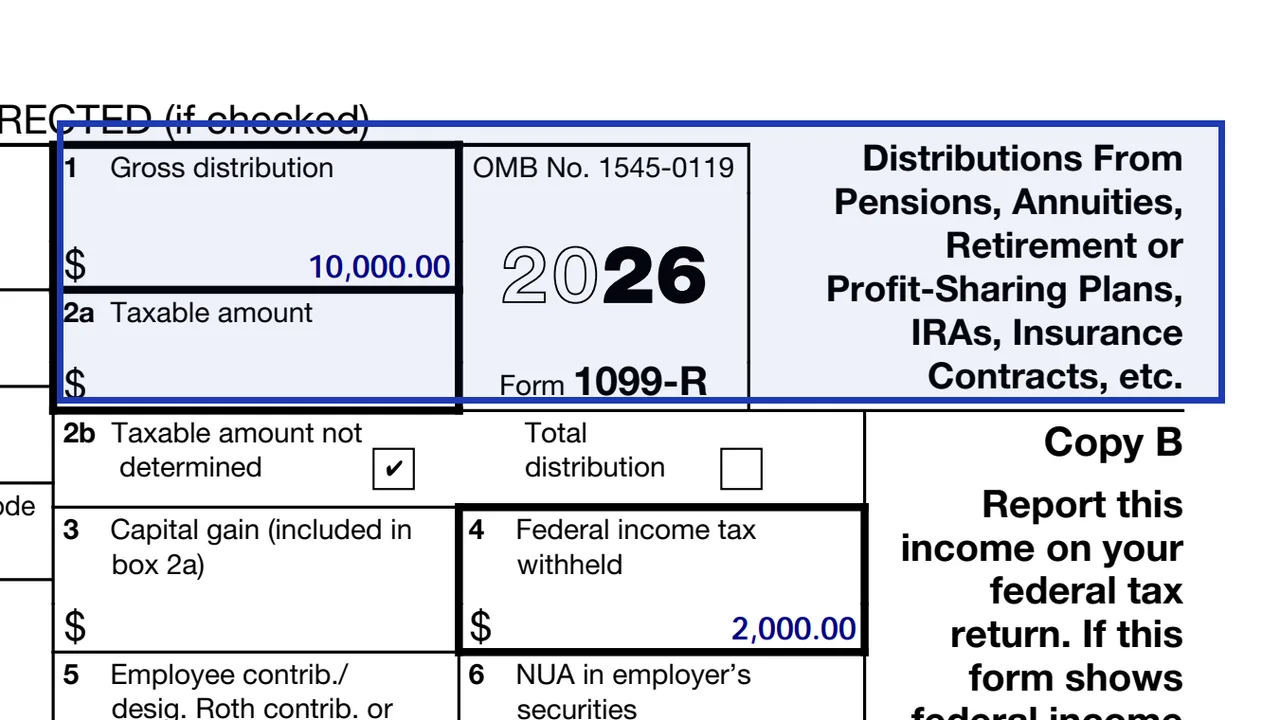
Gross distribution before withholding, including direct rollovers and Roth IRA conversions.
2a is the taxable amount. 2b has two checkboxes: taxable amount not determined, and total distribution.
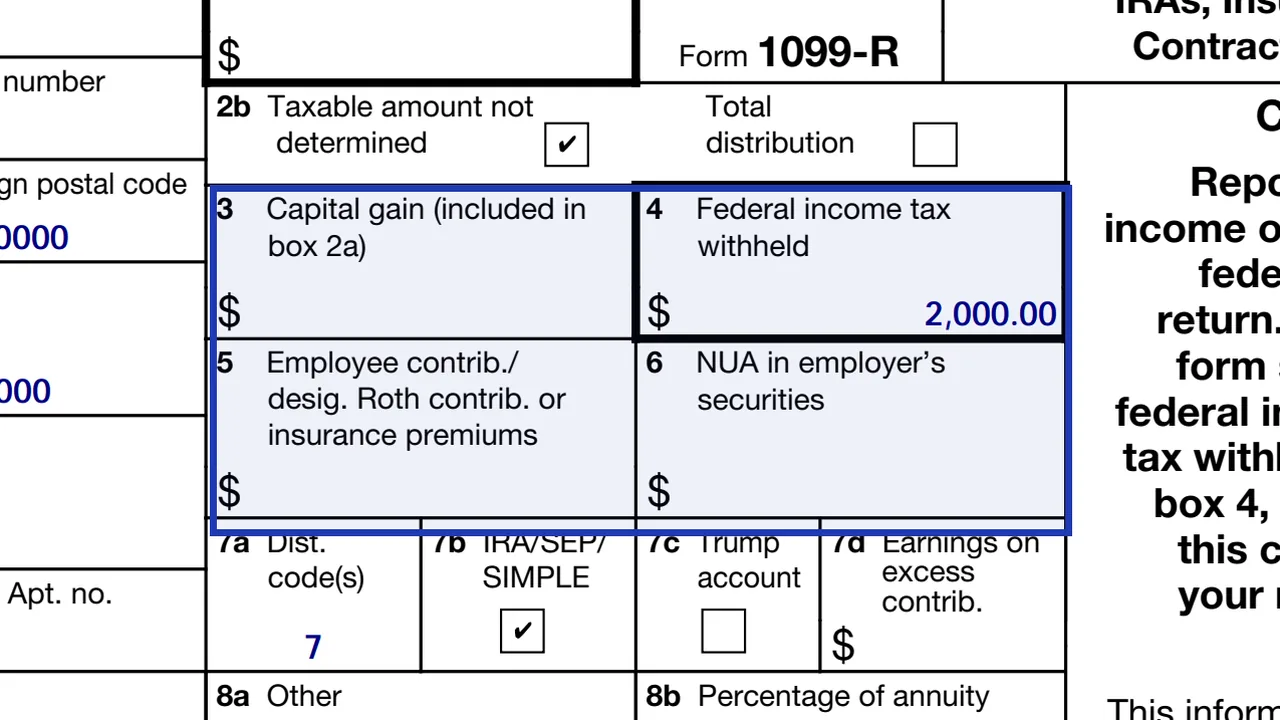
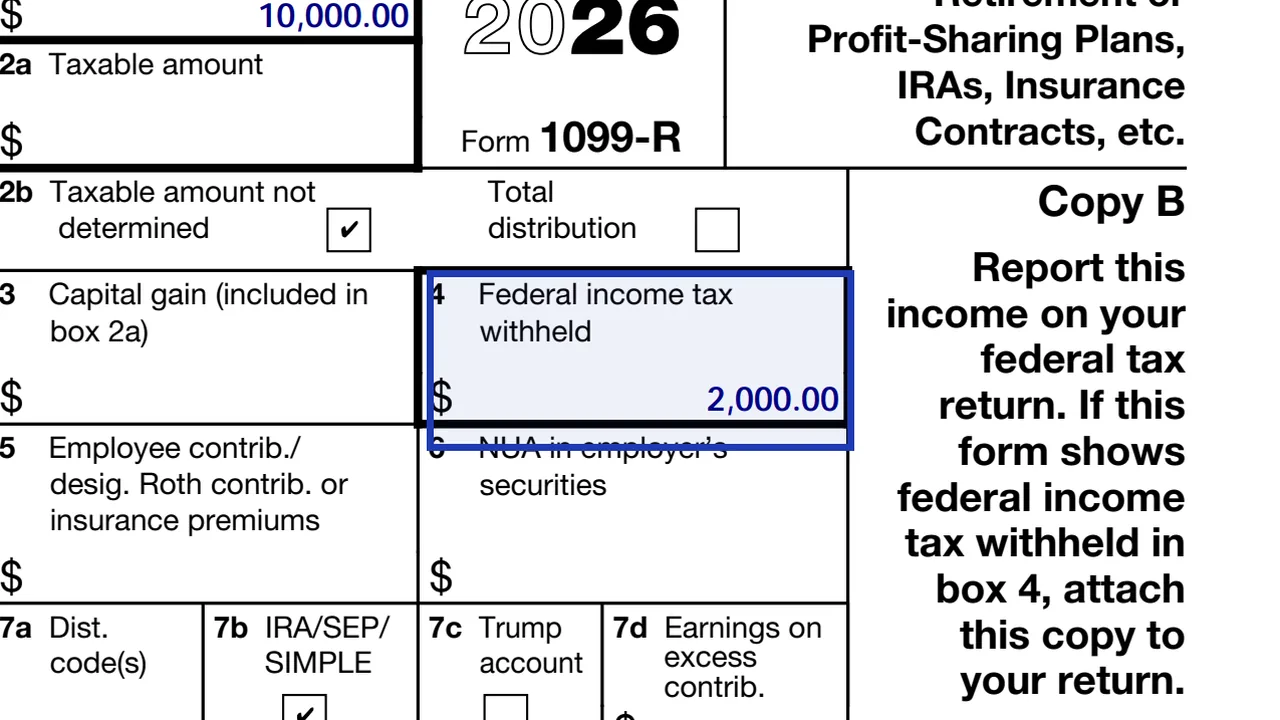
Box 3 capital gain included in 2a, box 4 federal income tax withheld, box 5 employee contributions, designated Roth contributions or insurance premiums, box 6 net unrealized appreciation in employer securities.
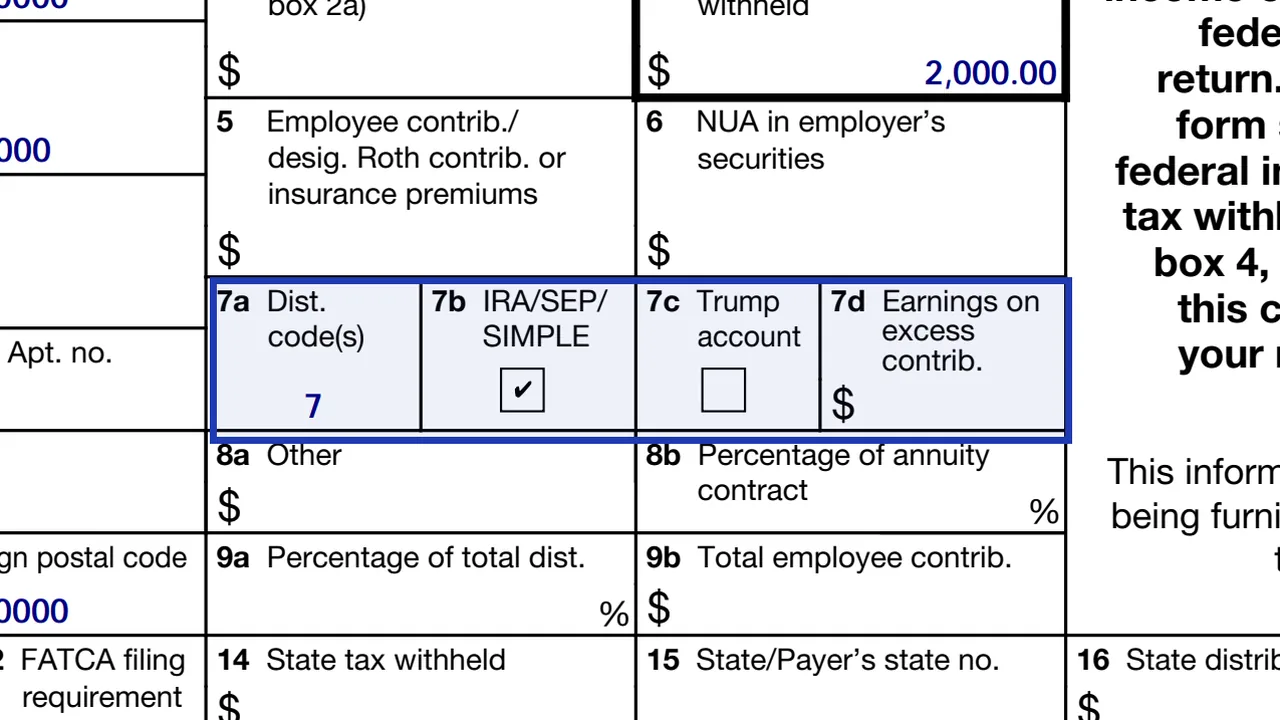
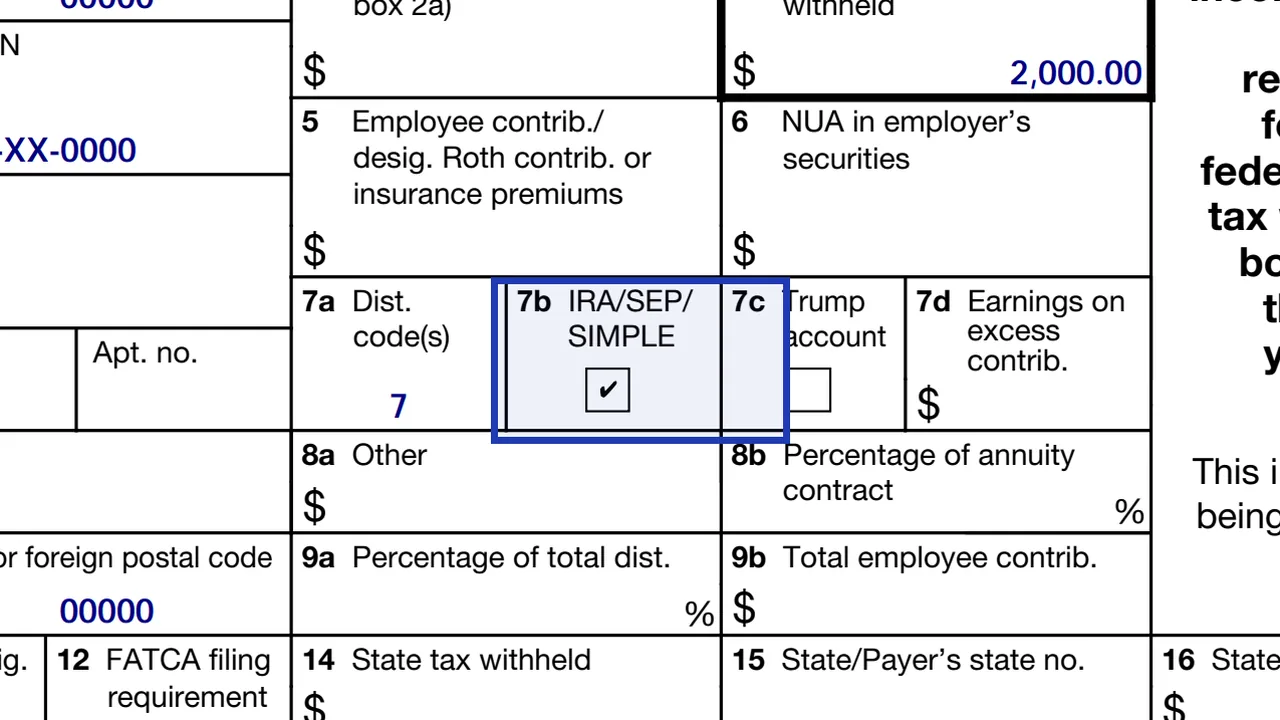
7a holds one or more codes. Examples include 7 for a normal distribution, 4 for death benefits, G for a direct rollover and J for an early distribution from a Roth IRA. 7b is the IRA/SEP/SIMPLE checkbox, 7c is the Trump account checkbox and 7d is earnings on excess contributions.
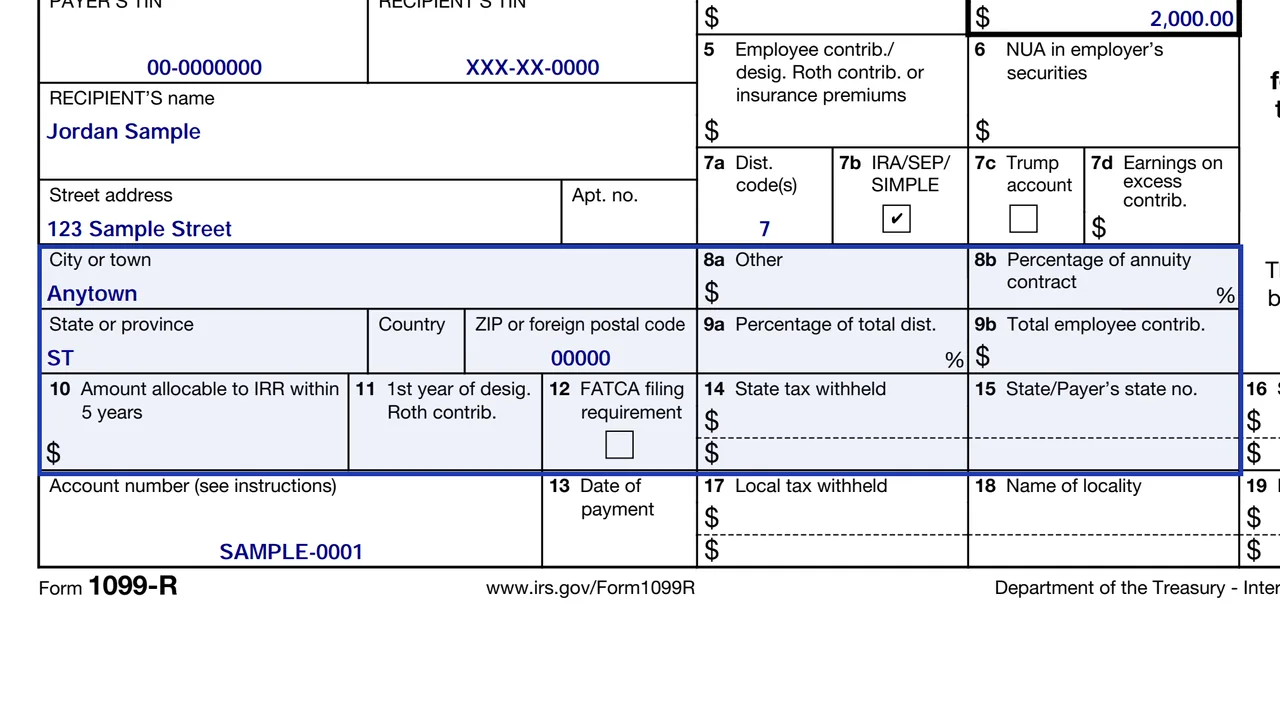
Box 8 other amounts, box 10 the amount allocable to an in-plan Roth rollover within five years, and box 11 the first year of designated Roth contributions.
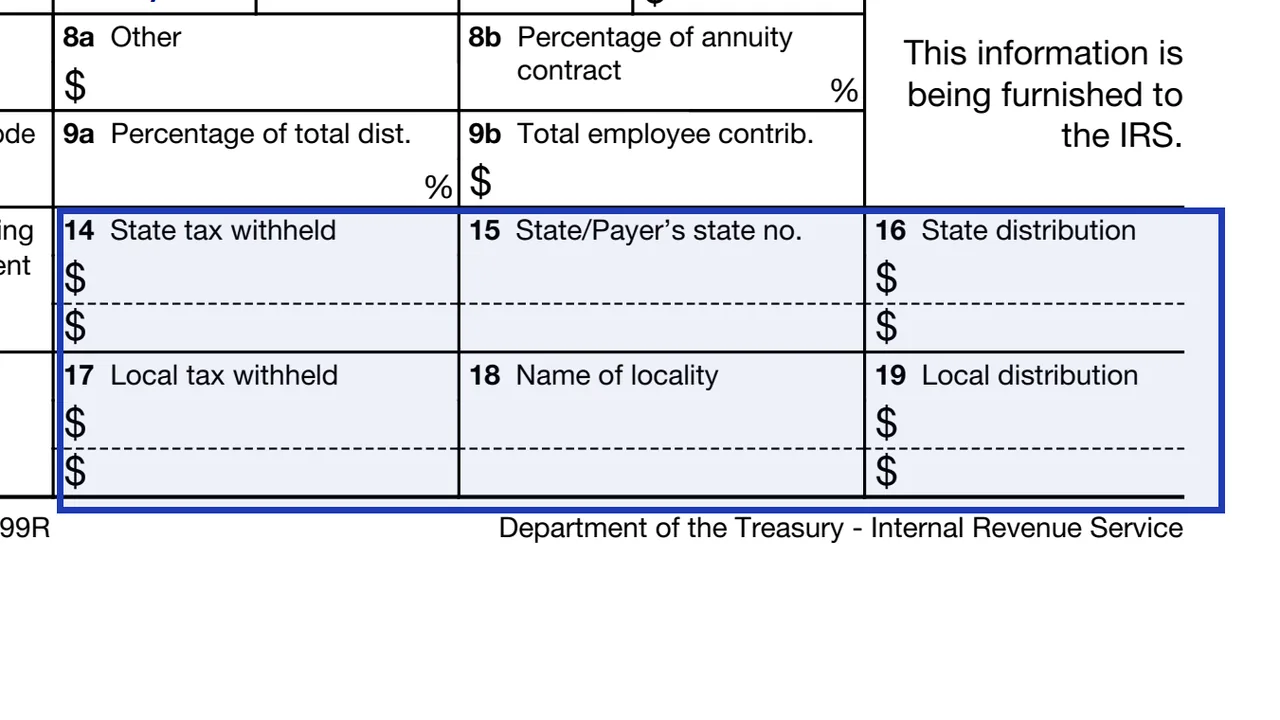
The form has further boxes for state and local tax information, including state tax withheld.
Enter the payer's name, address and TIN, and the recipient's name, address and TIN. You may truncate the recipient's TIN on the recipient copy but not on the copy filed with the IRS.
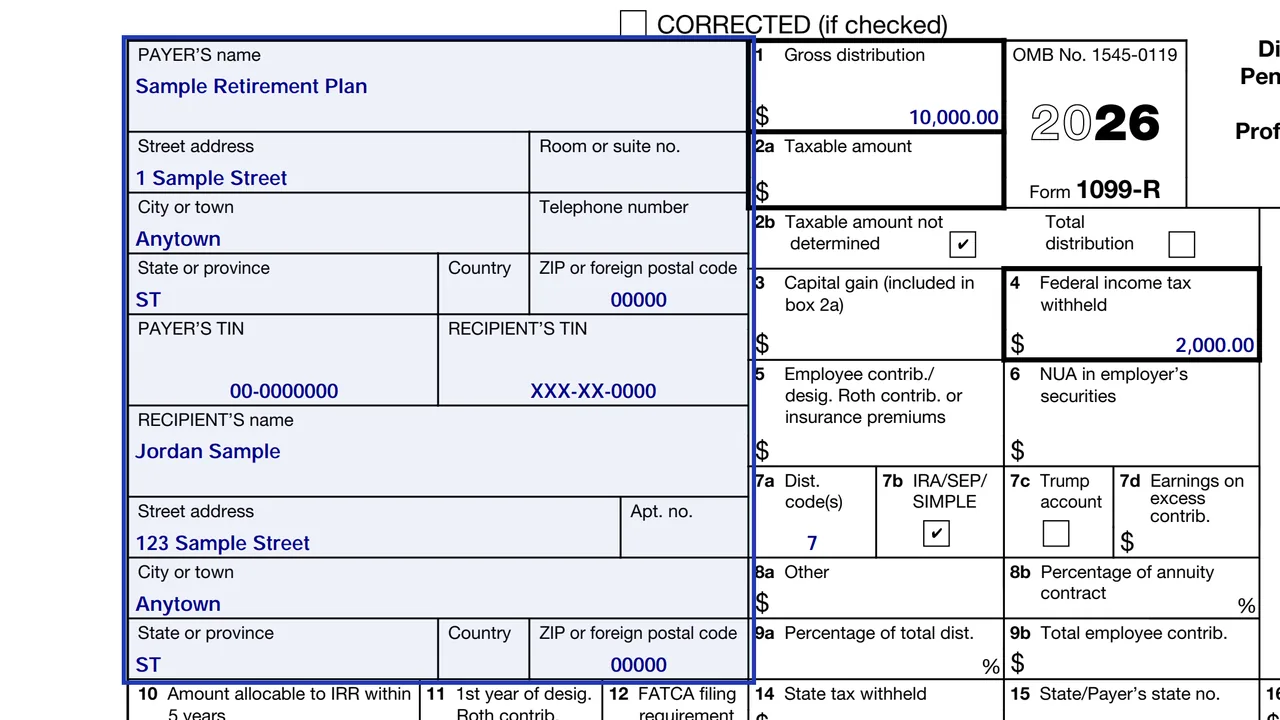
Enter the total distribution before federal income tax or other deductions were withheld.
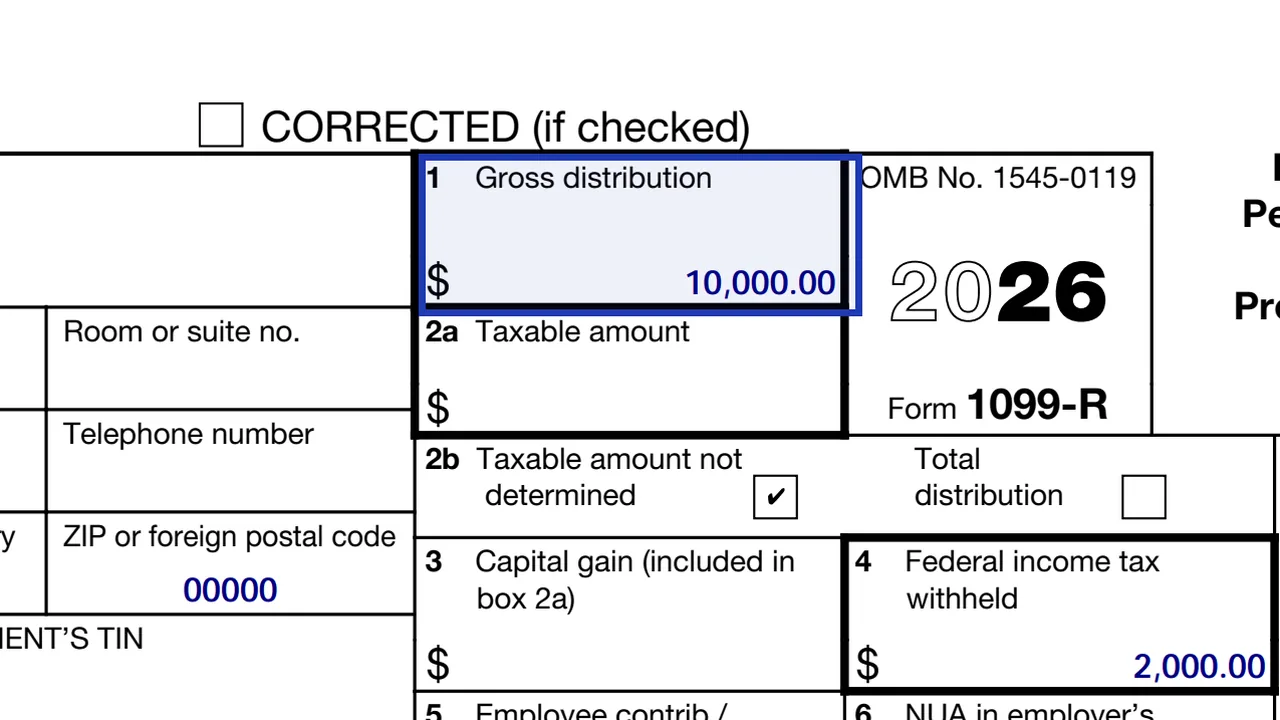
Enter the taxable amount. If it cannot be determined, check the 'Taxable amount not determined' box in 2b. Check 'Total distribution' when the distribution closes out the account.
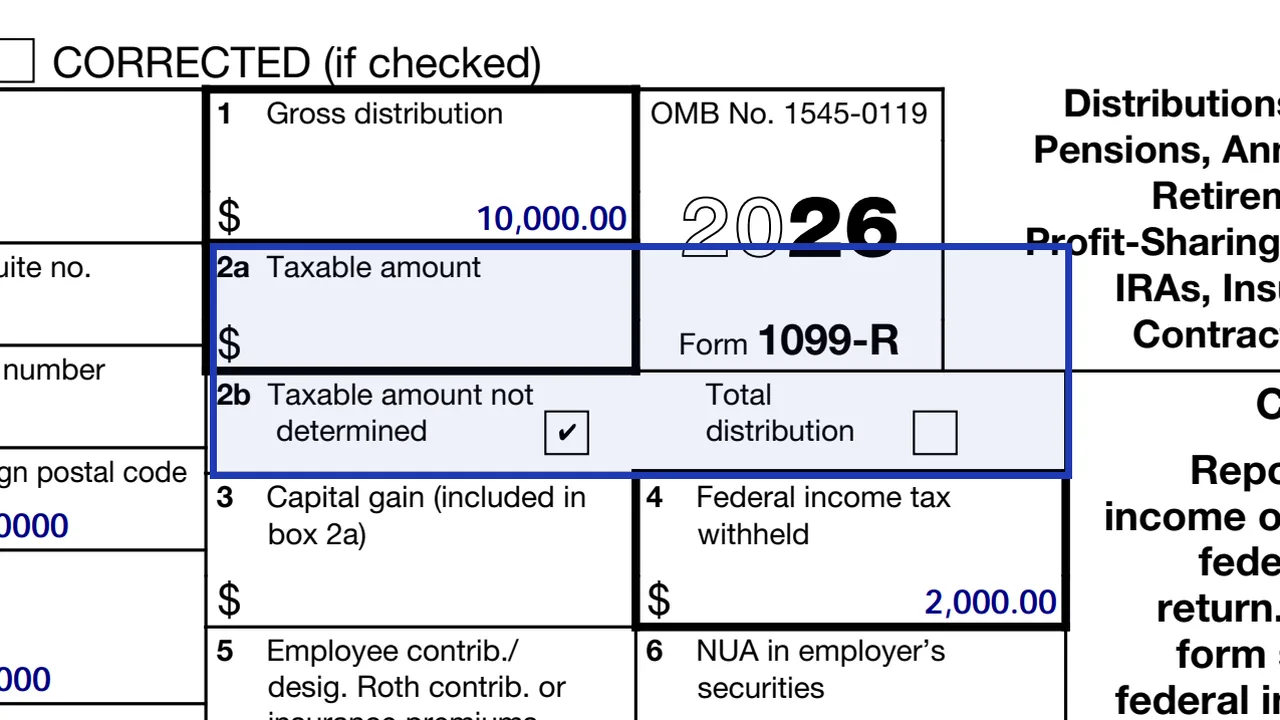
Enter any federal income tax withheld, including mandatory withholding of 20% on eligible rollover distributions that were not rolled over directly.
Choose the correct distribution code from the code table in the instructions. A wrong code can change how the IRS treats the distribution.
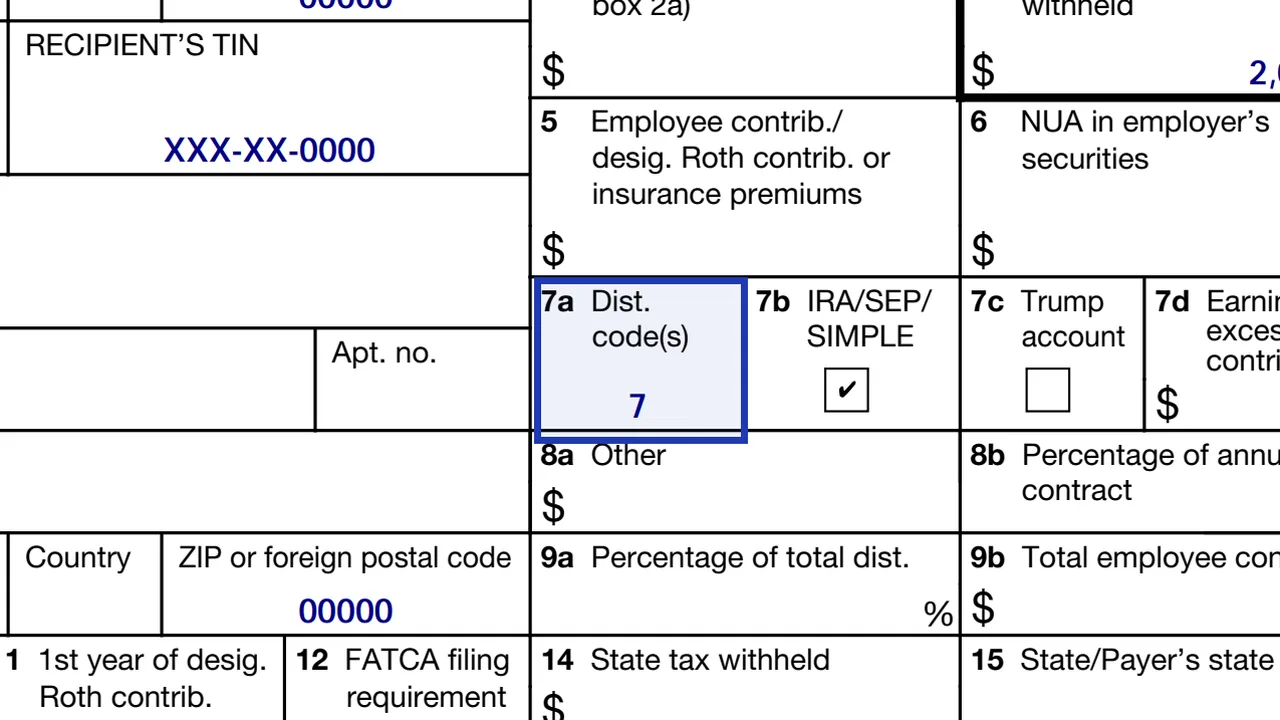
Check the IRA/SEP/SIMPLE box when the distribution is from one of those arrangements.
You get the real form, filled in a browser tab, with nothing standing between you and the finished PDF.
The General Instructions for Certain Information Returns list the due dates each year. For 2025 returns, paper filing with the IRS was due March 2, 2026 and electronic filing March 31, 2026.
If you must file 10 or more information returns in total, you must file electronically. The IRS offers its free IRIS portal. Paper filers send Copy A with Form 1096.
File a corrected form promptly when you find an error.
The instructions refer to Publication 1099 for penalty details. Printed Copy A from the PDF cannot be scanned, so do not file it.
A wrong box 7 code, reporting a direct rollover as taxable, and mixing up box 1 gross distribution with box 2a taxable amount.
5498
83 fields, 4 pages
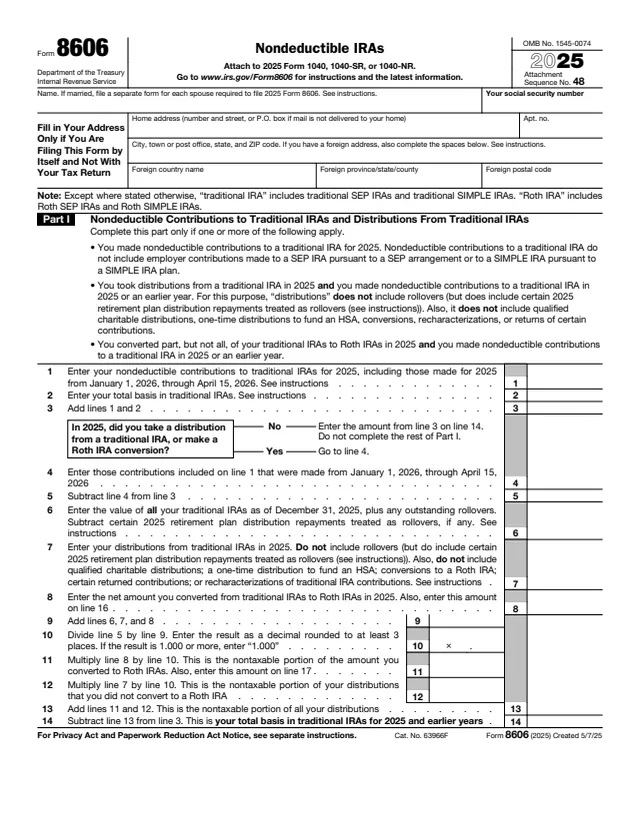
8606
45 fields, 2 pages
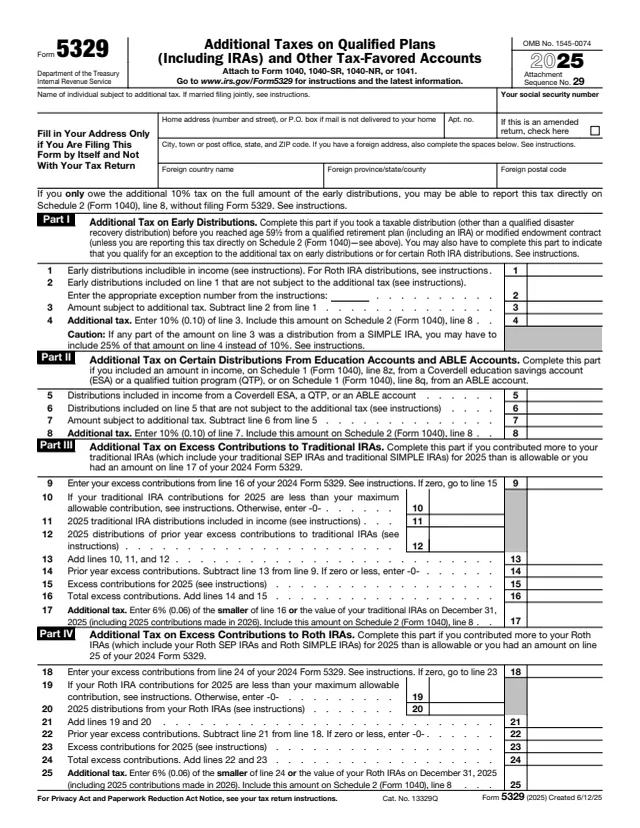
5329
75 fields, 3 pages
1099-INT
127 fields, 7 pages
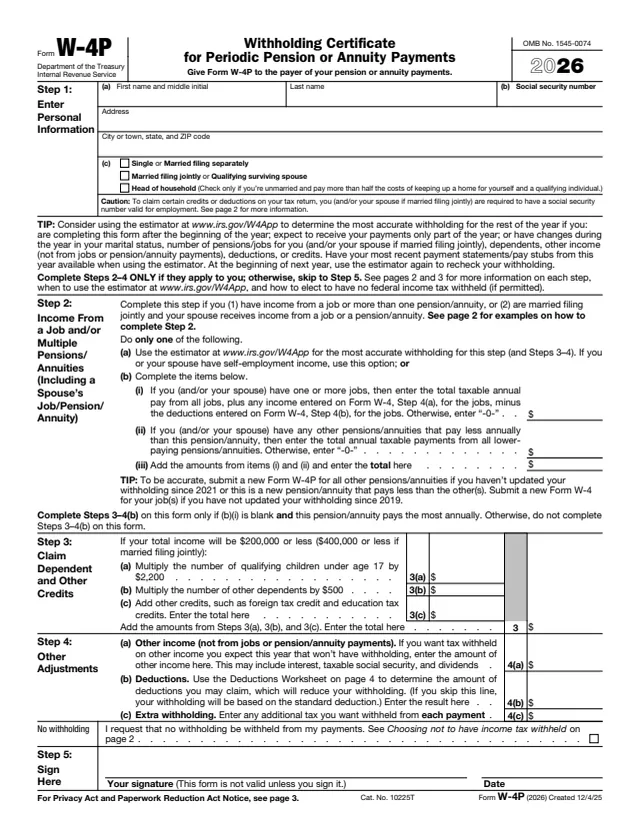
W-4P
44 fields, 4 pages
1096
55 fields, 3 pages
The payer of the distribution files, not the person who received it.
No tool matches that search.
The payer, such as the plan administrator, IRA custodian or insurer. You receive Copy B for your return.
It tells the IRS the type of distribution. Codes in the instructions include 7 for normal distributions, 4 for death benefits and G for direct rollovers.
Box 1 is the gross distribution before withholding. Box 2a is the taxable amount, which can be less than the gross.
Yes. A direct rollover appears in box 1 with a distribution code, even though it is not necessarily taxable.
The instructions say to file for each person who received a designated distribution of $10 or more.
The payer may truncate the recipient's TIN on the recipient copy, but not on the copy filed with the IRS. The payer's TIN is never truncated.