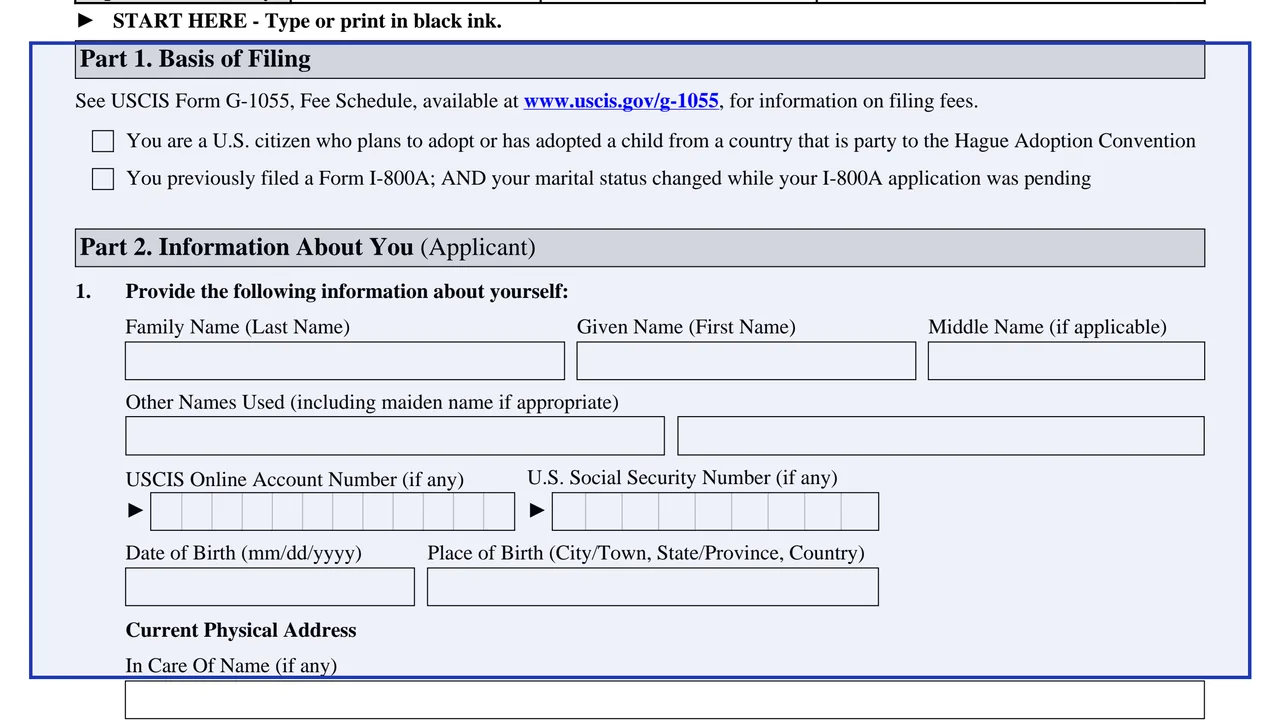
Part 1: Basis of filing
Two boxes: a U.S. citizen who plans to adopt or has adopted from a Hague Adoption Convention country, or a prior Form I-800A filer whose marital status changed while that application was pending.
I-800A
Application for Determination of Suitability to Adopt a Child from a Convention Country
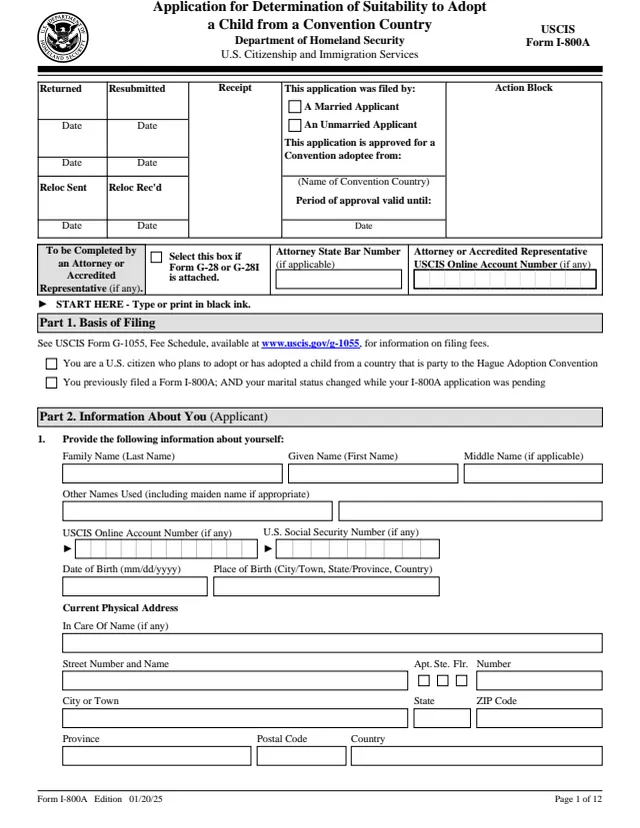
Form I-800A, Application for Determination of Suitability to Adopt a Child from a Convention Country, is the form USCIS uses to adjudicate the eligibility and suitability of applicants who want to adopt a child habitually resident in a Hague Adoption Convention country. The instructions say the Convention entered into force for the United States on April 1, 2008.
The instructions describe Form I-800A as the start of the immigration process. Once the Central Authority of the child's country proposes a placement and the applicant accepts it, Form I-800, Petition to Classify Convention Adoptee as an Immediate Relative, is filed for that child. The instructions caution against accepting any placement before Form I-800A is approved.
A home study is part of the application. The instructions say an approval is valid for 15 months, and three supplements cover adult household members, consent to share case information, and requests for action on an approved Form I-800A.
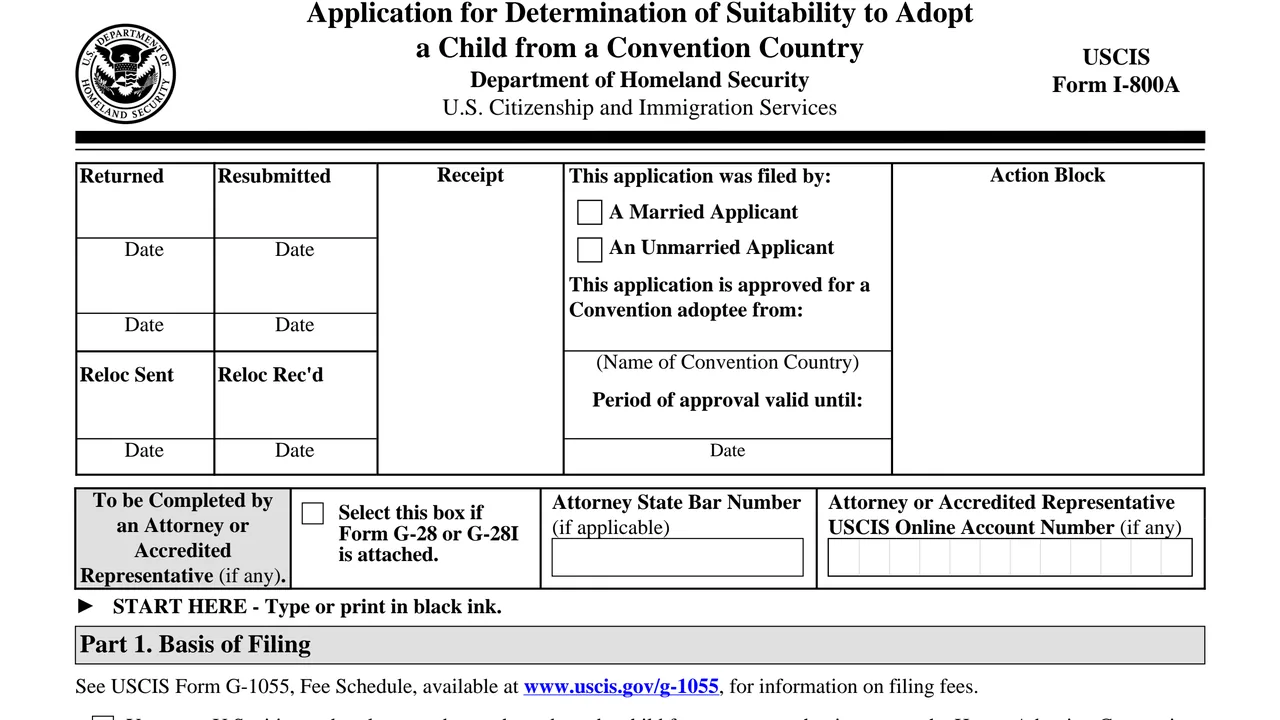
Two boxes: a U.S. citizen who plans to adopt or has adopted from a Hague Adoption Convention country, or a prior Form I-800A filer whose marital status changed while that application was pending.
Name, numbers, birth details, physical and mailing address, the intended Convention country, how you are a habitual resident, how you became a U.S. citizen, marital history and contact details.
Part 2, Item 10 and Part 3, Item 8 ask whether you or your spouse were ever arrested, cited or convicted, pardoned, placed in a diversion or deferred adjudication program, or investigated by a child welfare agency.
The spouse's names, numbers, birth details, whether the spouse lives with you, prior marriages, and U.S. citizenship, nationality or immigration status.
Whether the home study is attached or will come from a State authority, the adoption service provider, State preadoption requirements, adoption abroad or in the United States, the number of children, earlier adoption filings and the people in your home.
The applicant's and spouse's statements, certification and signatures, then the interpreter and preparer sections.
Type or print in black ink. The USCIS page says the edition date and page numbers should be visible on every printed page, all from the same edition. Write N/A where a question does not apply and None for a zero.
The USCIS page says the form is rejected if the Part 2 family name or physical address is missing, or if it is not signed.
The form says each question in Part 2, Item 10 and Part 3, Item 8 has to be answered. A Yes answer comes with certified final disposition records and a signed statement with dates, places and any mitigating circumstances.
Item 1 says whether the home study is attached or will be sent by the State authority. The instructions say not to file until that authority is ready to send it, and that a home study is not more than 6 months old when submitted.
Supplement 1 for each adult household member, Supplement 2 to consent to USCIS sharing case details with your adoption service provider, and Supplement 3 to request action on an approved Form I-800A.
The applicant and the spouse, if married, each sign. The instructions say a stamped or typewritten name is not accepted. This page lets you fill the form online free, then print it for signature.
You get the real form, filled in a browser tab, with nothing standing between you and the finished PDF.
The USCIS page lists USCIS, Adoption I-800A, P.O. Box 660087, Dallas, TX 75266-0087 for USPS, and a street address in Lewisville, Texas for FedEx, UPS and DHL. The instructions say to check www.uscis.gov/I-800A for the most current information.
The fee is on the USCIS Fee Schedule page, and the form points to Form G-1055. Fees can change, so check it on the day you file.
The USCIS checklist lists proof of your U.S. citizenship, proof of marriage and that all prior marriages ended if applicable, proof of your spouse's citizenship, status or identity if applicable, the home study, and proof of State preadoption requirements if applicable.
The instructions say an authorized home study preparer prepares and personally signs the home study under penalty of perjury. One not prepared by an accredited agency is reviewed and approved by one, unless a public domestic authority prepared it.
The instructions say the applicant, the spouse and each household member 18 or older give biometrics. People living abroad go to a USCIS international office, U.S. Embassy, U.S. Consulate or U.S. military installation.
The instructions say the approval period is 15 months, and Form I-800 is filed for a specific child during that period. Supplement 3 requests an extension before the approval expires, but no more than 90 days before, with an updated home study.
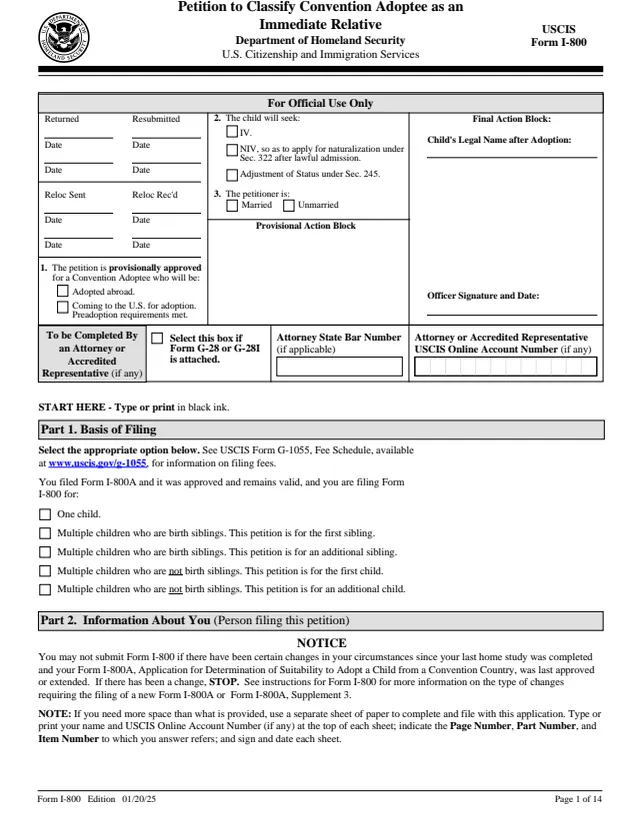
I-800
331 fields, 14 pages
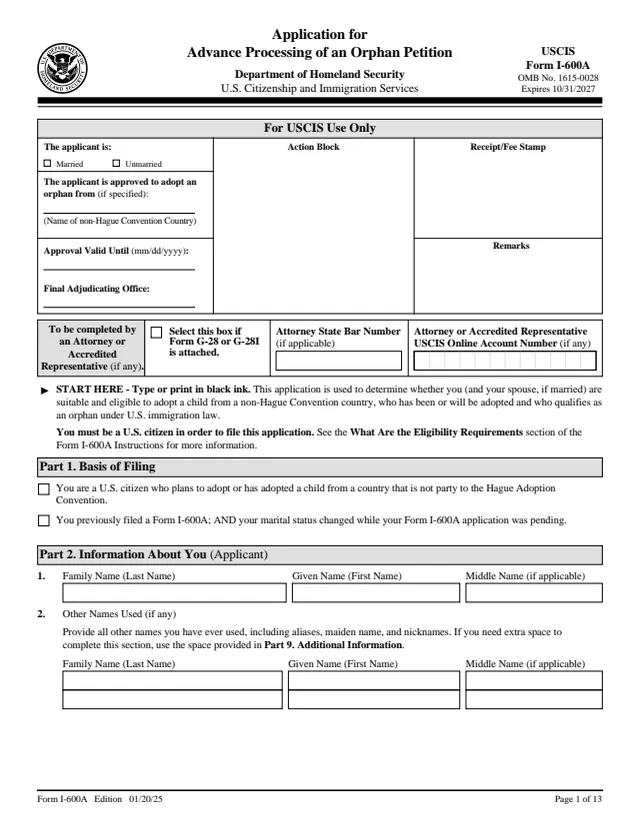
I-600A
308 fields, 13 pages
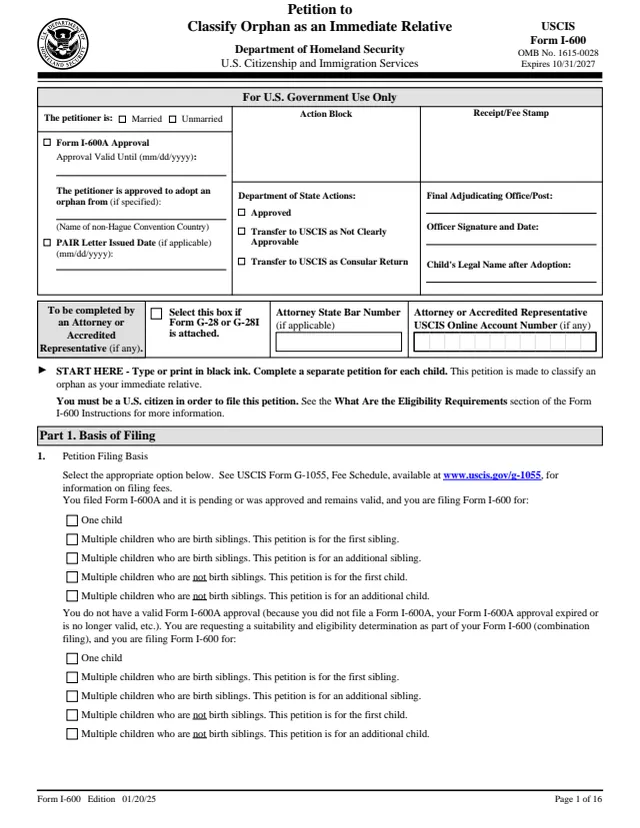
I-600
436 fields, 16 pages
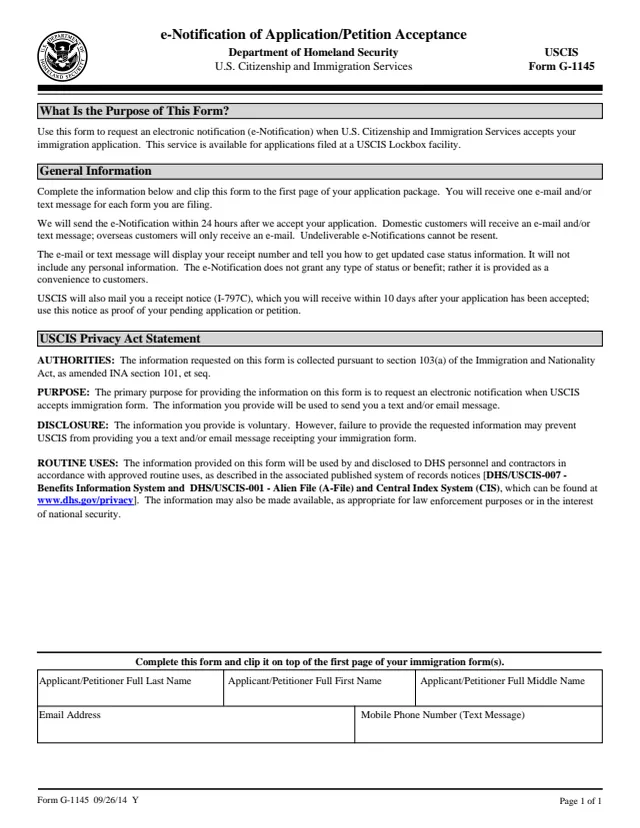
G-1145
6 fields, 1 page
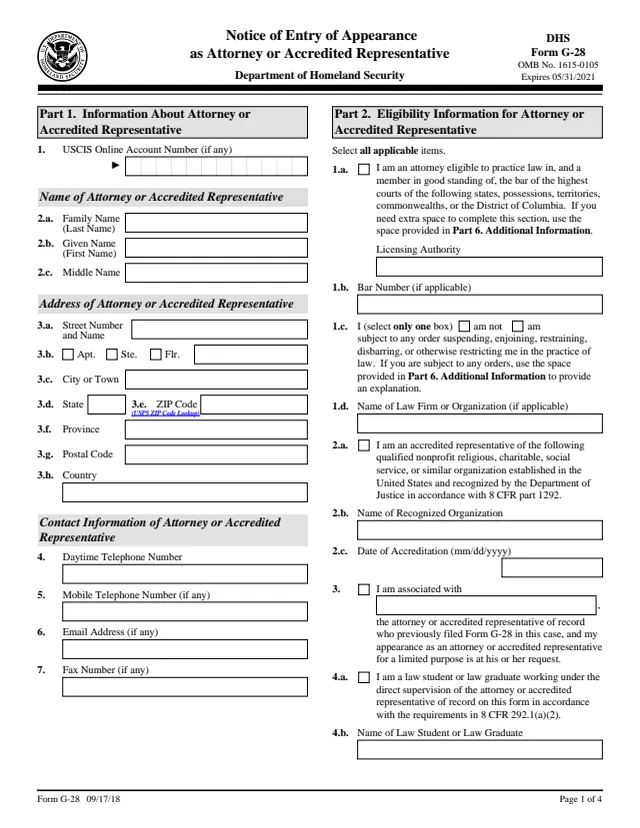
G-28
101 fields, 4 pages
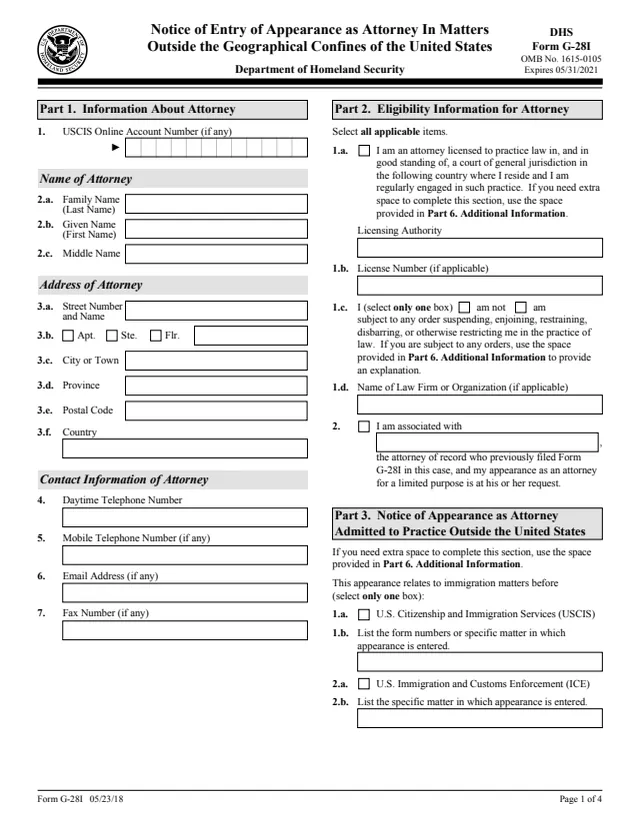
G-28I
83 fields, 4 pages
No tool matches that search.
The instructions say that once the Central Authority proposes a placement and it is accepted, Form I-800 is filed before adopting or obtaining custody. They list Form I-800A approval, Form I-800 provisional approval and a Department of State notice under Article 5 as coming first.
The instructions say 15 months from the date of approval. An extension is requested with Supplement 3 before it expires, but no more than 90 days before.
The instructions say the spouse may be a U.S. citizen, a non-citizen U.S. national, or an alien who holds a lawful status if living in the United States. They also say a status other than permanent residence is a factor in judging family stability.
The instructions list significant changes, such as a move, a new child in the home or a different Convention country, that call for an amended home study with Supplement 3. A marriage or the end of a marriage revokes the approval automatically, and a new Form I-800A is filed.
Only where a State authority reviews the home study first and sends it to USCIS directly. The instructions say to mark that in Part 4, Item 1, and USCIS then sends a notice with the date the home study is due.
USCIS fees change, so this page does not list one. The I-800A page points to the USCIS Fee Schedule, and the instructions point to Form G-1055.