History and muscle key
A PROBLEM AND BRIEF CLINICAL HISTORY block and a KEY TO MANUAL MUSCLE EVALUATION from 100% 5 N Normal down to 0% 0 0 Zero.
SF529
MUSCLE FUNCTION BY NERVE DISTRIBUTION: Trunk and Lower Extremity
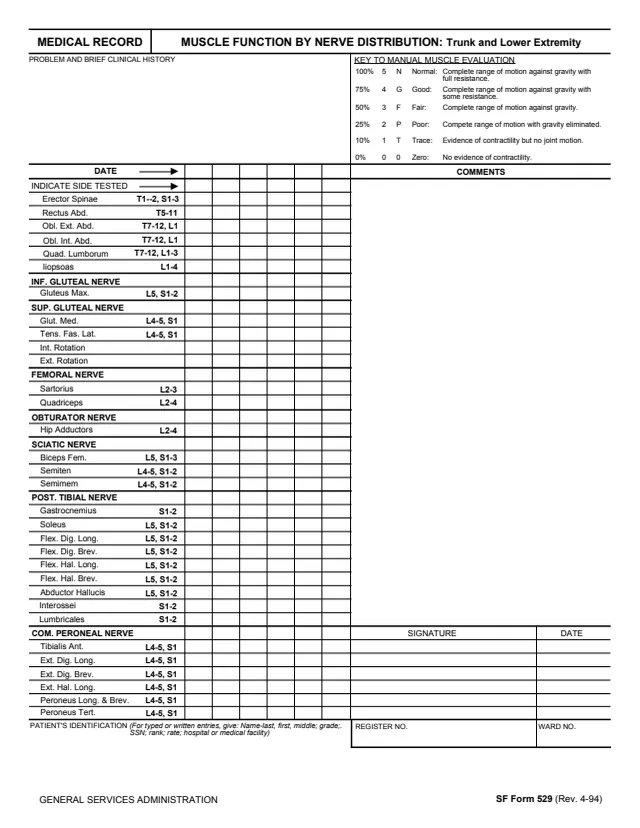
Standard Form 529 (SF 529), Muscle Function by Nerve Distribution: Trunk and Lower Extremity, is a two-sided medical record printed as SF Form 529 (Rev. 4-94). The footer of the front names the General Services Administration, and GSA hosts a copy in its forms library. The form prints no prescribing regulation.
The front holds the problem and brief clinical history, a key to manual muscle evaluation, and rows of trunk and leg muscles grouped under their nerves, from the inferior gluteal nerve to the common peroneal nerve, each with spinal levels such as L4-5, S1 printed beside it. The back is a single ADDITIONAL COMMENTS page.
The PDF prints no instructions. You can fill it out free in your browser on this page and download the result without an account.
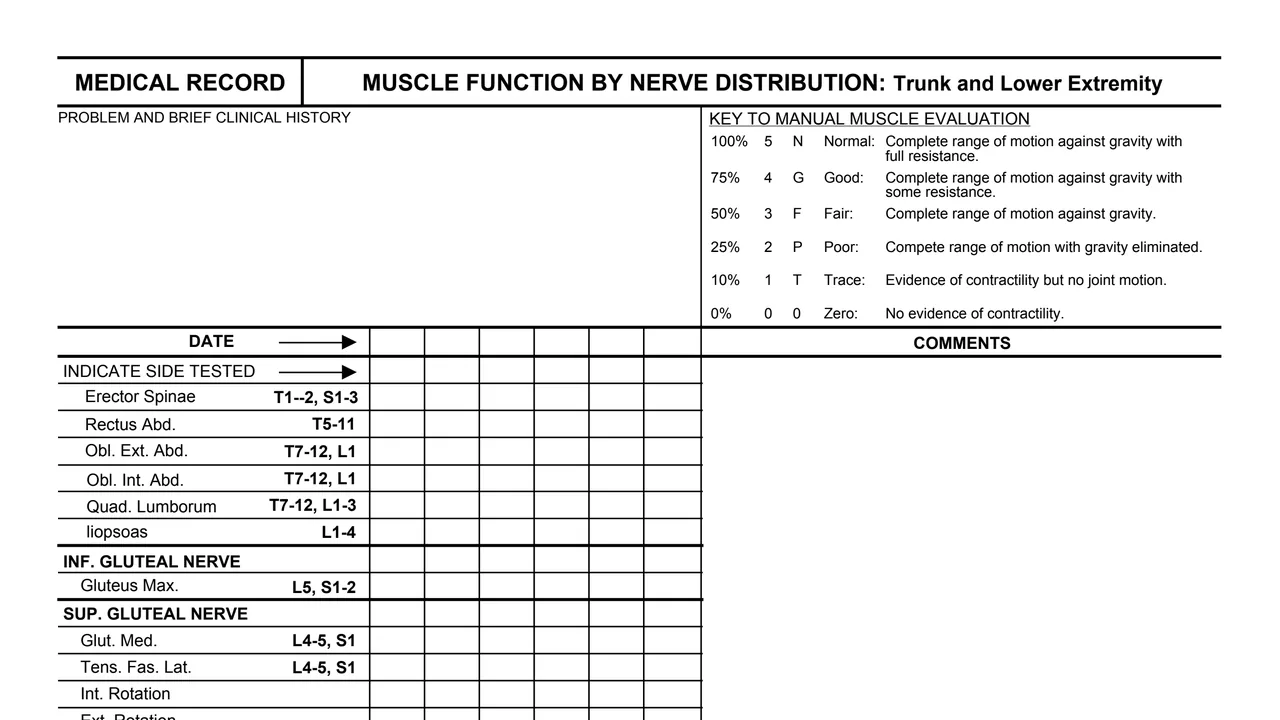
A PROBLEM AND BRIEF CLINICAL HISTORY block and a KEY TO MANUAL MUSCLE EVALUATION from 100% 5 N Normal down to 0% 0 0 Zero.
Erector spinae, Rectus Abd., the external and internal obliques and Quad. Lumborum, each with its spinal levels, such as T5-11 for Rectus Abd.
Muscles under the inferior and superior gluteal, femoral, obturator and sciatic nerves, including Gluteus Max., Quadriceps, Hip Adductors and Biceps Fem.
Muscles under the posterior tibial nerve, from Gastrocnemius to Lumbricales, and the common peroneal nerve, from Tibialis Ant. to Peroneus Tert.
A COMMENTS column, SIGNATURE and DATE rows, the patient's identification, and register and ward numbers.
The back is one open area headed ADDITIONAL COMMENTS, marked SF Form 529 (Rev. 4-94) Back.
Fill in the problem and brief clinical history at the top of the front.
Enter the date and the side tested at the head of a column.
Enter results in the row for each muscle. The key on the front gives the grades 5 N, 4 G, 3 F, 2 P, 1 T and 0.
Use the COMMENTS column, and the ADDITIONAL COMMENTS page on the back if needed, then sign and date in the SIGNATURE and DATE rows.
Complete the patient's identification with the register and ward numbers at the foot of the front.
These steps follow the order of the blocks on the two pages.
You get the real form, filled in a browser tab, with nothing standing between you and the finished PDF.
The PDF prints no filing address. It is labeled Medical Record, and the identification block names the hospital or medical facility.
The footer of the front reads GENERAL SERVICES ADMINISTRATION and SF Form 529 (Rev. 4-94). GSA's page lists a current revision date of 06/1994 and leaves the authority blank.
The PDF prints no instructions, Privacy Act statement or burden estimate.
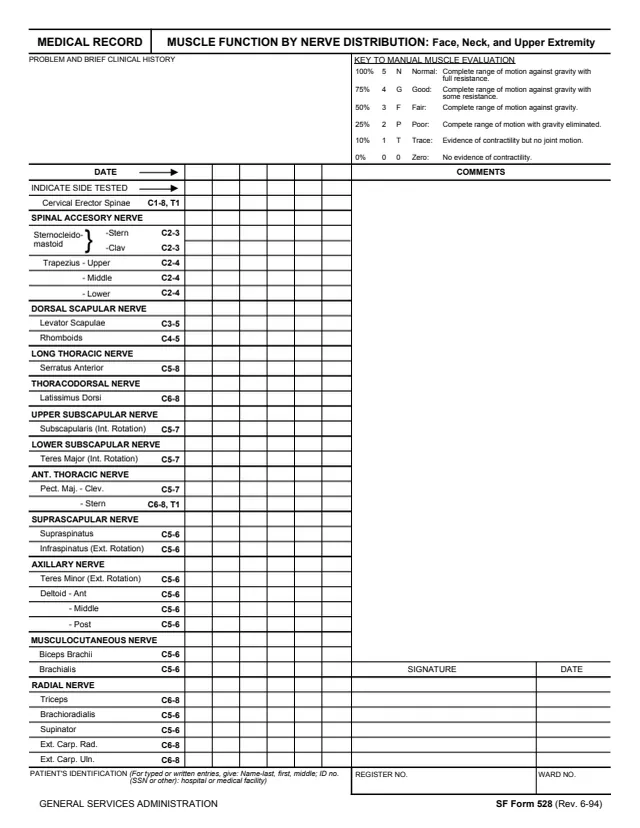
SF528
480 fields, 2 pages
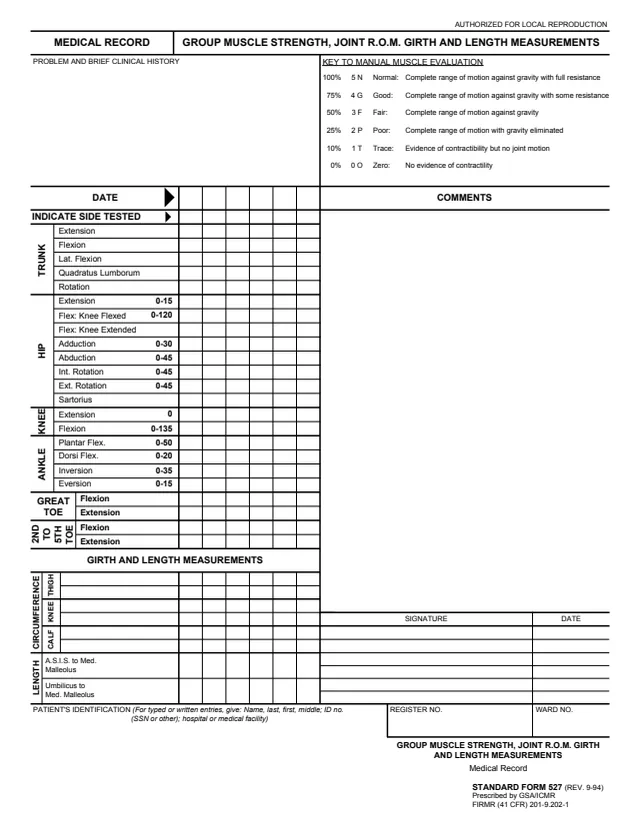
SF527
718 fields, 2 pages
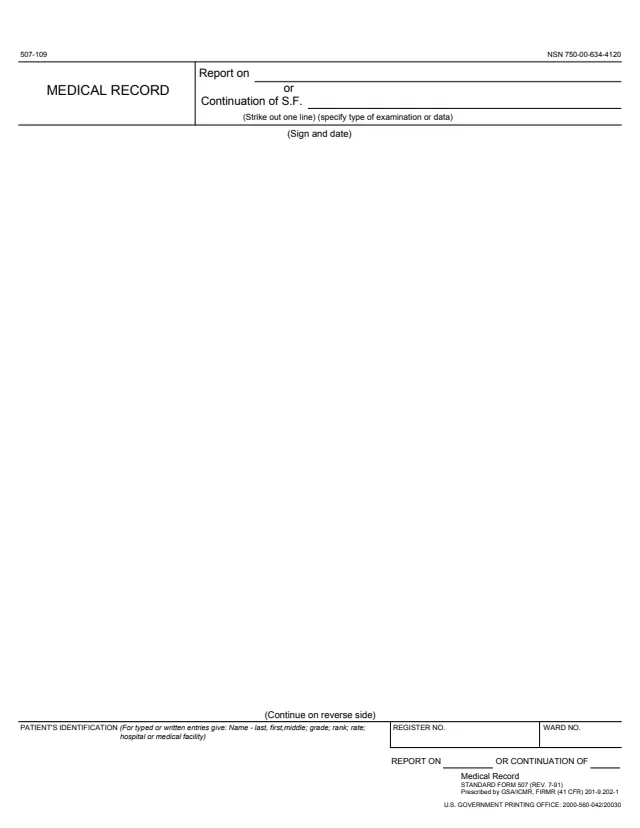
SF507
9 fields, 2 pages
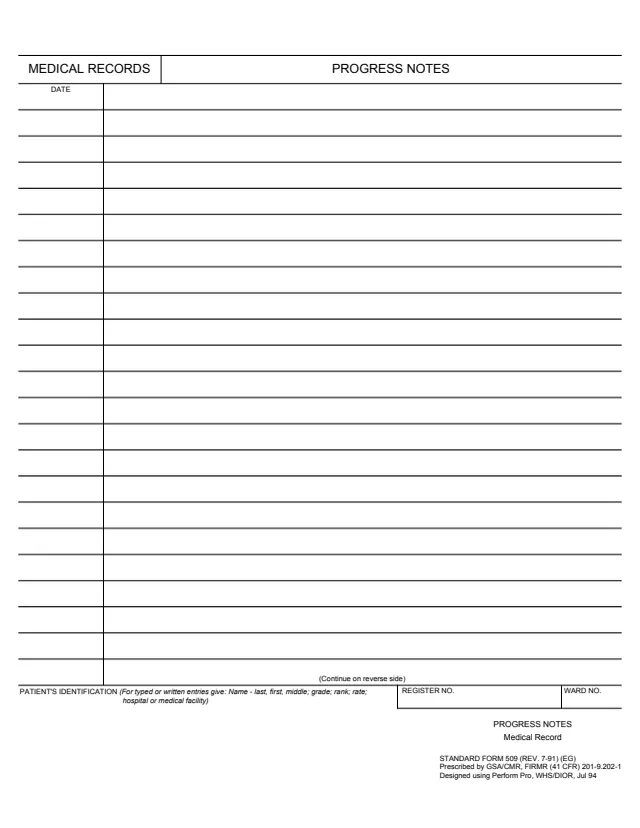
SF509
92 fields, 2 pages
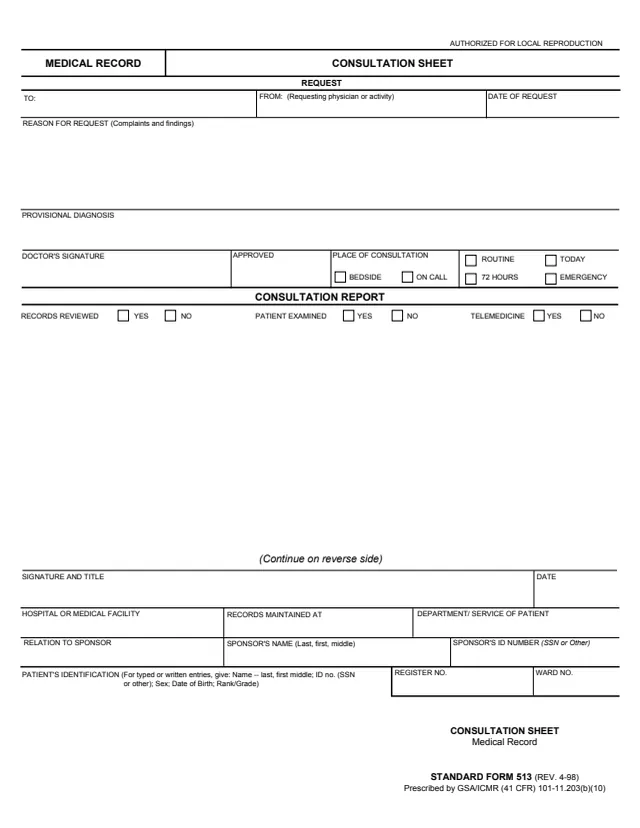
SF513
34 fields, 1 page
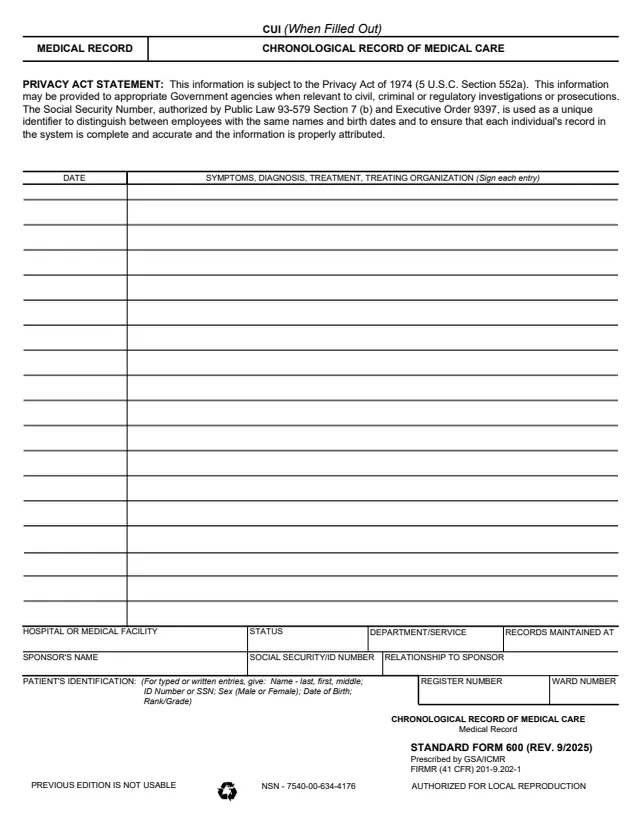
SF600
127 fields, 2 pages
The form prints no instructions. Its blocks show who signs and whose record it is.
No tool matches that search.
The footer of the front names the General Services Administration and reads SF Form 529 (Rev. 4-94). GSA hosts a copy in its forms library.
The PDF prints Rev. 4-94. GSA's page lists a current revision date of 06/1994.
Trunk muscles come first, then leg muscles grouped under the nerve that supplies them, such as the femoral, sciatic, posterior tibial and common peroneal nerves, with spinal levels printed beside each muscle.
The front has SIGNATURE and DATE rows. The form does not name a role for the signer.
No. The PDF prints only the form's labeled blocks, the muscle key and an additional comments page.