Sections 1 to 6: instructions
Background on joint consolidation loans, the three ways to apply, terms used in the form, how to complete it, the servicer mailing addresses and a help phone number.
Joint Consolidation Separation
Joint Consolidation Loan Separation Application and Promissory Note
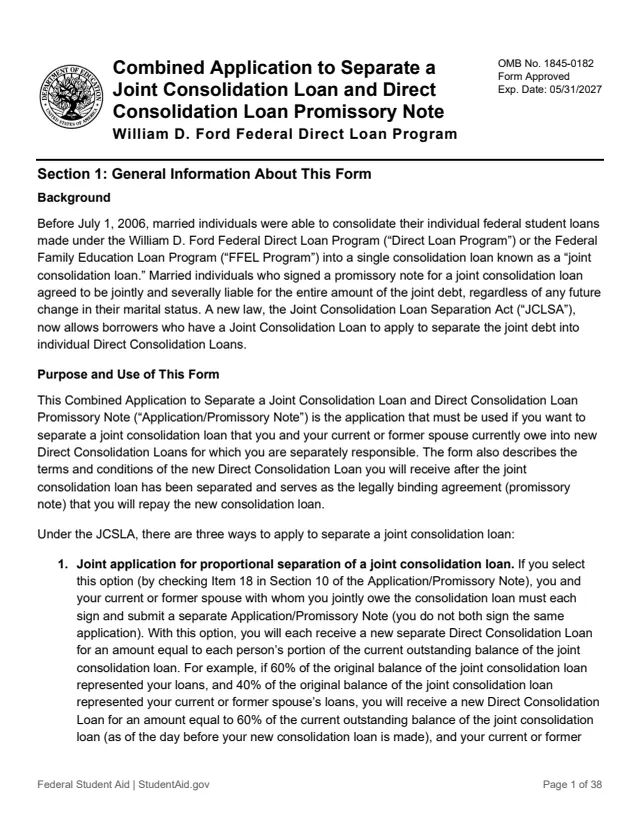
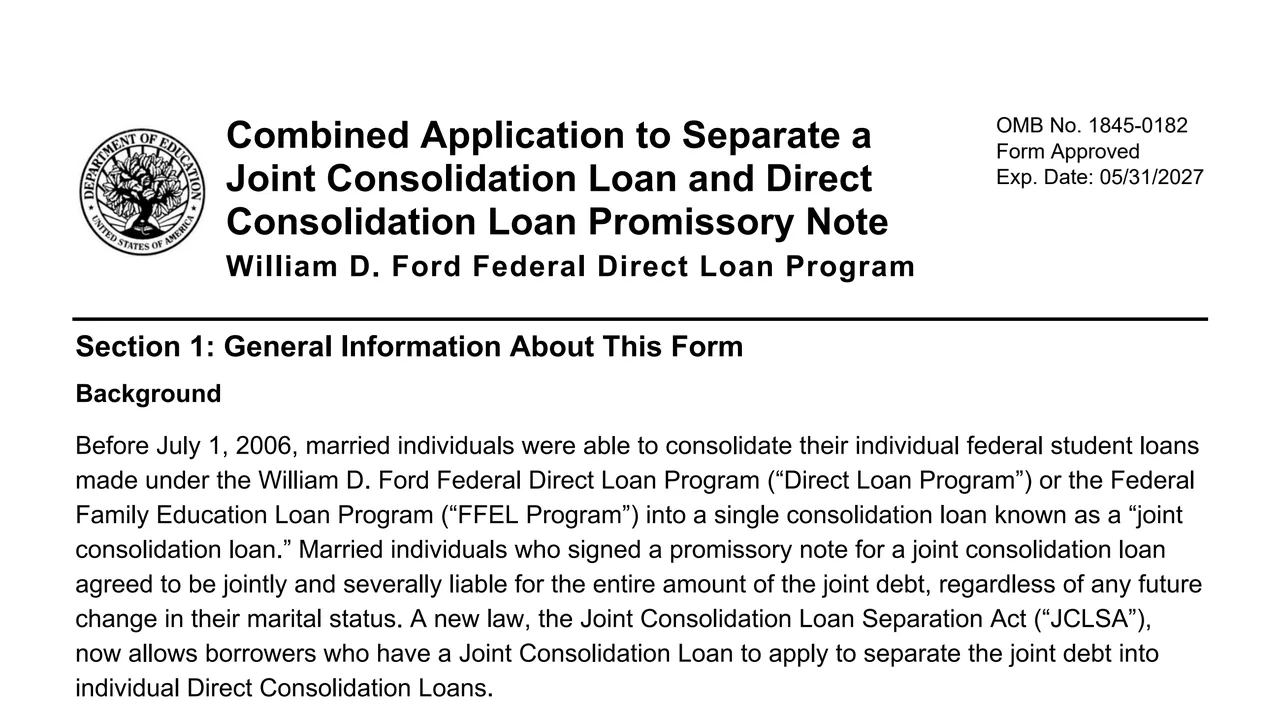
The Combined Application to Separate a Joint Consolidation Loan and Direct Consolidation Loan Promissory Note is a U.S. Department of Education form under the William D. Ford Federal Direct Loan Program. The form explains that before July 1, 2006, married borrowers could combine their federal student loans into one joint consolidation loan, and each agreed to be liable for the whole debt regardless of any later change in marital status. The Joint Consolidation Loan Separation Act now lets them apply to split that debt into individual Direct Consolidation Loans.
The form is both the application and the promissory note for the new loan, and it calls itself a legally binding contract. The co-borrower does not sign your form: when both co-borrowers apply, each sends a separate one.
You can fill it out free in your browser on this page and download the result without an account.
Background on joint consolidation loans, the three ways to apply, terms used in the form, how to complete it, the servicer mailing addresses and a help phone number.
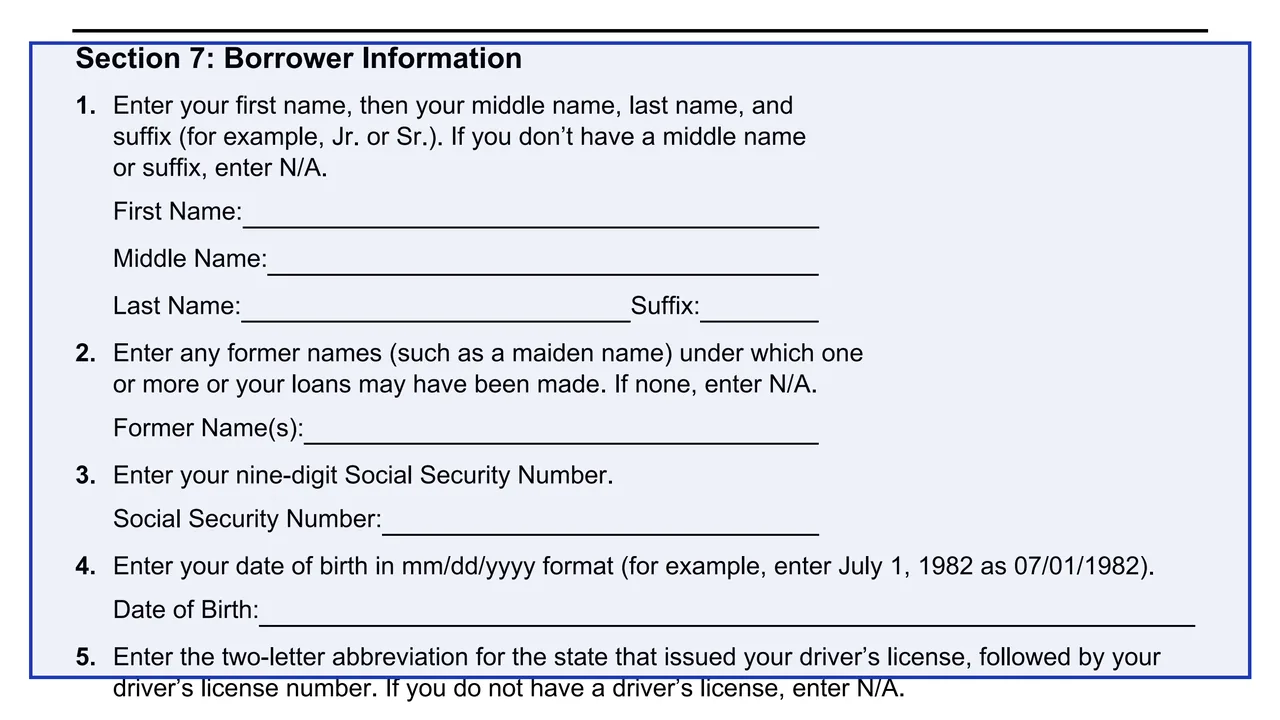
Items 1 to 12: name, former names, Social Security number, date of birth, driver's license state and number, email, phone numbers, permanent and mailing address, and employer name, address and work phone.
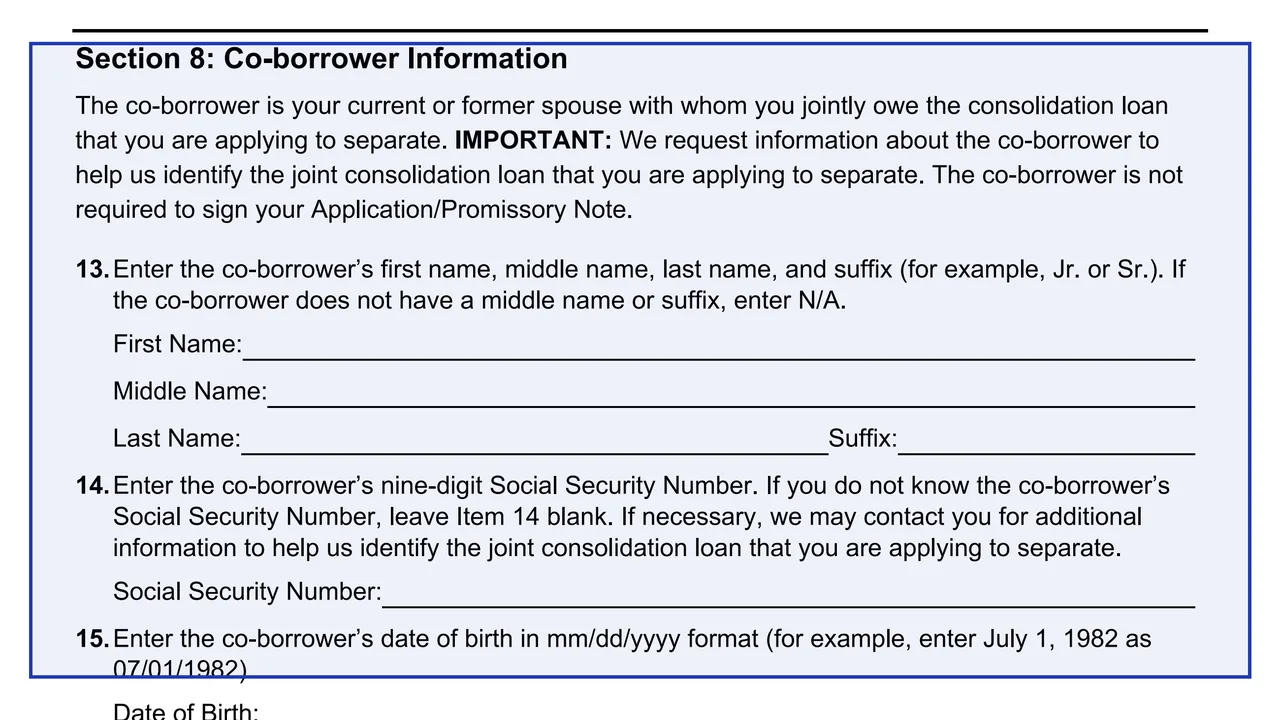
Items 13 to 15: the co-borrower's name, Social Security number if known, and date of birth, used to identify the joint loan.
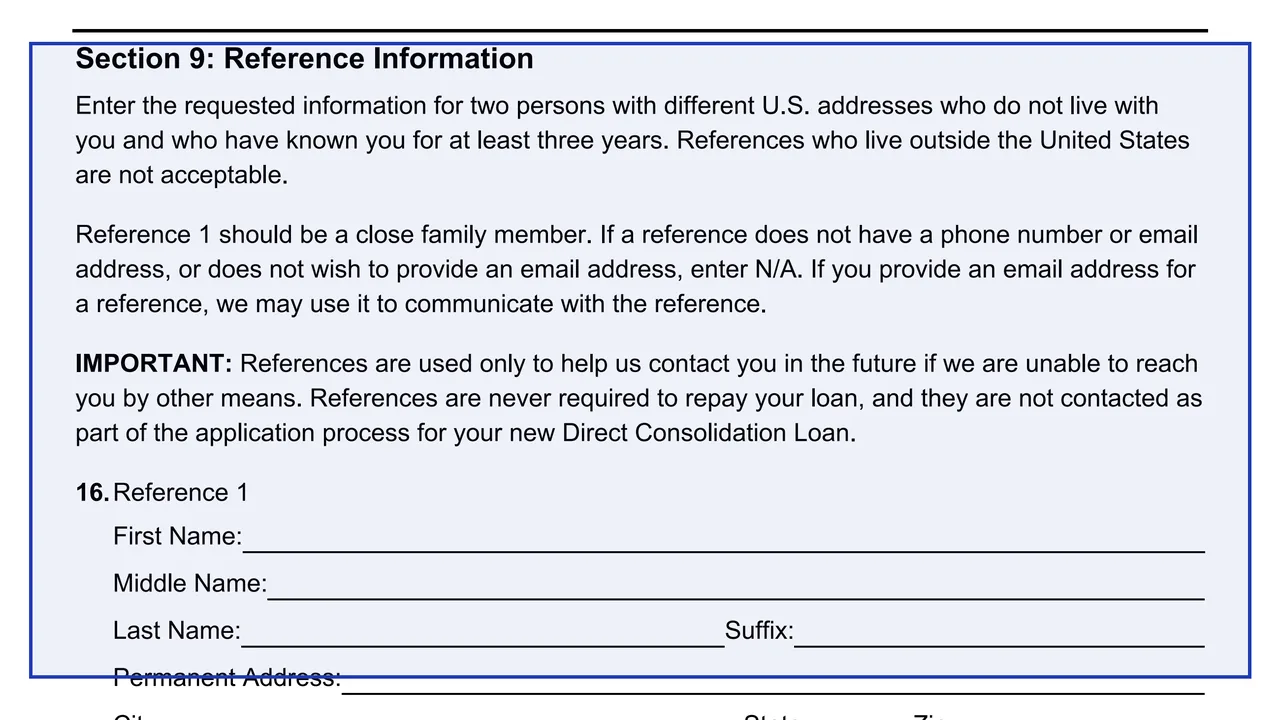
Items 16 and 17: two people with different U.S. addresses who do not live with you and have known you for at least three years. The form says references never repay the loan.
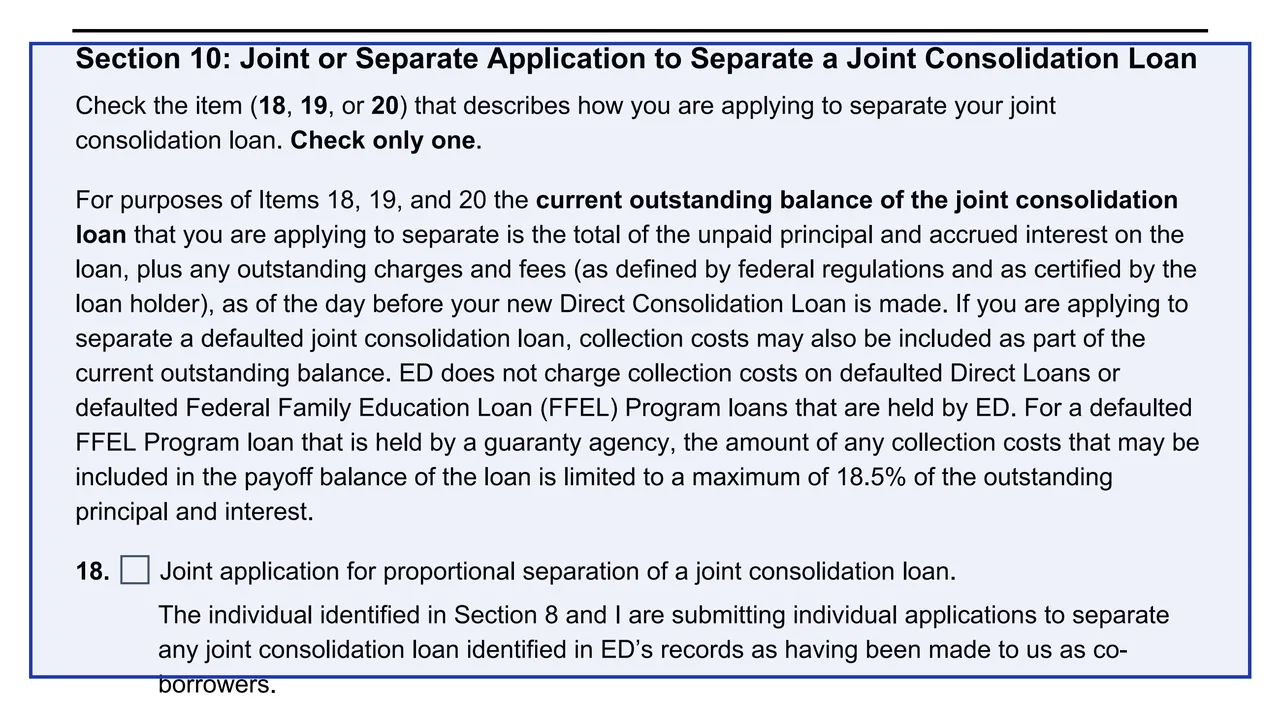
Check one of Items 18, 19 or 20: joint proportional separation, joint separation by divorce decree, court order or settlement agreement, or a separate application.
Repayment plan selection, the certifications and authorizations in Items 21 to 23, the promises and signature in Items 24 and 25, then the loan terms and borrower rights in Section 14.
Pick one of Items 18, 19 or 20 in Section 10. For Item 18 or 19, the form says the co-borrower sends a separate form with the same item checked.
Your details, the co-borrower's details and two references. The form asks for dates as mm/dd/yyyy and N/A where an item does not apply.
The form points to the Repayment Plan Selection form for the Standard, Graduated or Extended plan, or the Income-Driven Repayment Plan Request on StudentAid.gov or on paper.
Item 24 includes a promise not to sign before reading the entire form. Sign and date Item 25; the form says an unsigned application cannot be processed.
Send pages 6 through 16, the repayment plan form and, with Item 19, a copy of the divorce decree, court order or settlement agreement. The form says to keep a copy.
Before paying off the joint loan, the Department sends a notice with the payoff amount for your portion and the deadline to cancel.
You get the real form, filled in a browser tab, with nothing standing between you and the finished PDF.
The form lists one Greenville, TX address per servicer: Aidvantage (ATTN: ED Loan Consolidation, PO Box 300005), and Nelnet Servicing (PO Box 300007), Edfinancial (PO Box 300008), CRI Servicing (PO Box 300009) and MOHELA (PO Box 300006), each in care of Aidvantage.
For help completing the application, the form gives 1-800-433-3243.
For Items 18 and 19, the form says neither application is processed until both co-borrowers apply with the same item checked. If one cancels by the deadline, processing of the other application stops too.
The form says to keep making payments on the joint loan, unless a deferment or forbearance was granted, until written notice that it has been separated.
Unless the Department says otherwise in writing, the new loan's rate equals the joint loan's rate the day before the new loan is made. The form says the first payment is due within 60 days after the payoff, unless a deferment or forbearance applies.
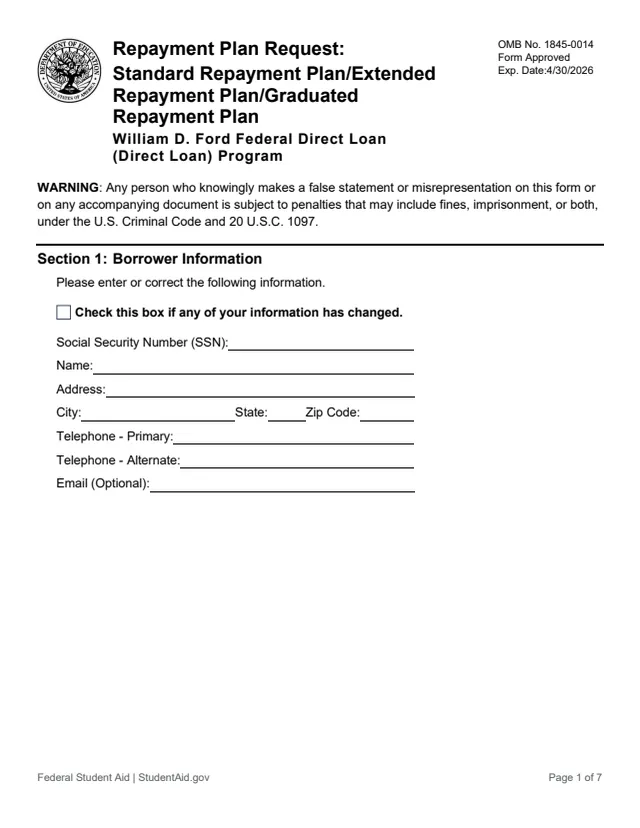
Repayment Plan Request
19 fields, 7 pages
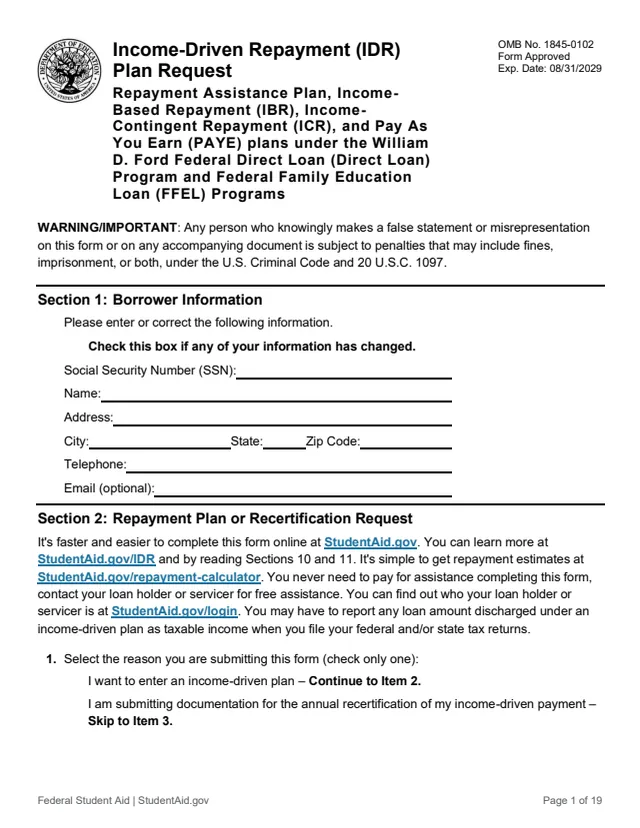
IDR Plan Request
52 fields, 19 pages
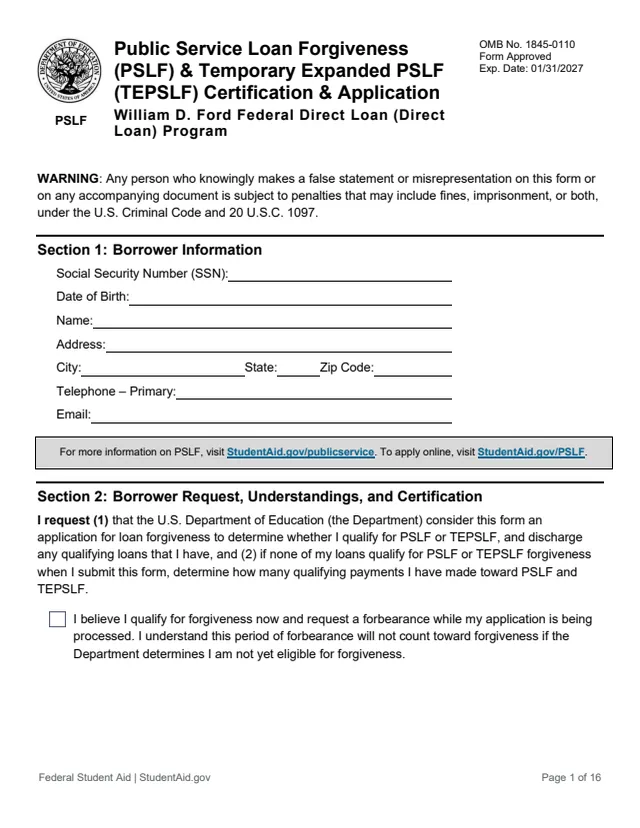
PSLF
30 fields, 16 pages
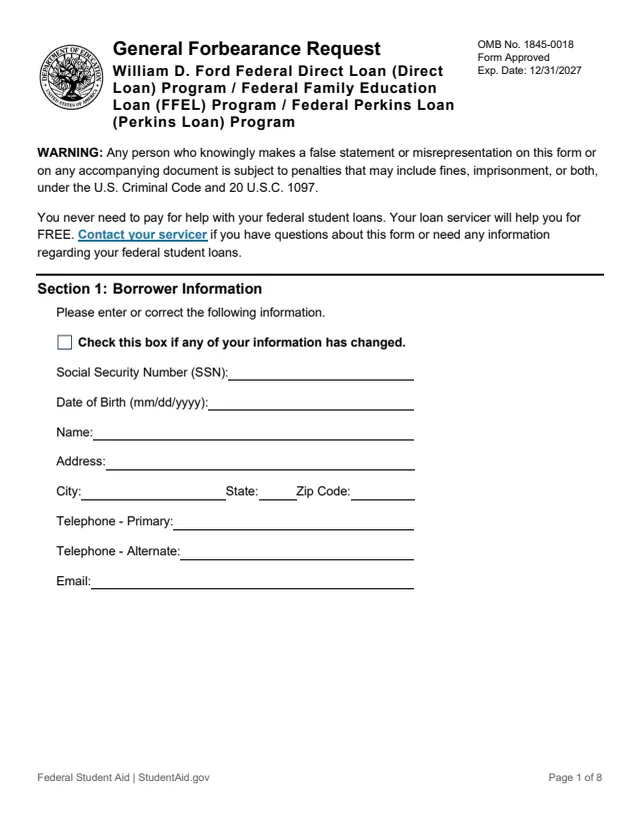
General Forbearance
24 fields, 8 pages
1098-E
43 fields, 4 pages
The form says it is only for separating a joint consolidation loan currently owed by you and the co-borrower named in Section 8.
No tool matches that search.
No. The form says the co-borrower does not sign your Application/Promissory Note. For a joint application under Item 18 or 19, the co-borrower sends a separate form and checks the same item.
Item 20 is the separate application. The form says it is for an applicant who certifies economic abuse or domestic violence by the co-borrower, as defined in the Violence Against Women Act, or being unable to reach the co-borrower or get their loan information, or whom the Department allows to apply separately.
Under Items 18 and 20, the form takes the share of the original joint loan balance that came from your own loans and multiplies it by the current outstanding balance. Under Item 19, it uses the percentage set in the divorce decree, court order or settlement agreement.
The form says the co-borrower is notified in writing and is solely responsible for the remaining balance of the joint consolidation loan.
Pages 6 through 16, plus the repayment plan form and, with Item 19, the divorce decree, court order or settlement agreement. The form says to omit pages 17 to 38.
The payoff notice gives a deadline to cancel. For a joint application, the form says a cancellation by either co-borrower stops processing of both applications.