I and II: Sealing and counsel
Whether any attached documents should be filed under seal, a table of attachments with Attached? and Request to Seal? boxes, and a request for an appointed attorney.
AO 250
Motion for Sentence Reduction Under 18 U.S.C. § 3582(c)(1)(A)
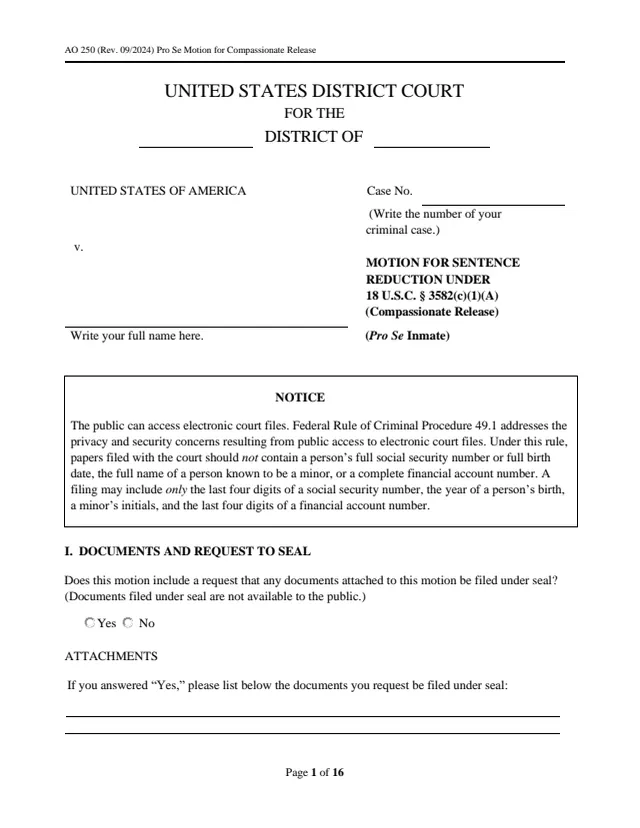
AO 250, Motion for Sentence Reduction Under 18 U.S.C. § 3582(c)(1)(A), is a 16-page motion form for a United States District Court that the form headers call Pro Se Motion for Compassionate Release. The caption marks it for a Pro Se Inmate. The U.S. Courts lists it under Criminal Forms, effective on September 1, 2020 and updated on September 1, 2024, and the edition printed on the form is Rev. 09/2024 (Rev. 09/24 on page 7).
The motion asks about sealing attachments, appointment of counsel, the sentence, exhaustion of administrative remedies, the grounds for release under the policy statement at §1B1.13 of the U.S. Sentencing Guidelines, and earlier motions, and ends with a declaration under penalty of perjury. Three attachments follow: a proposed release plan, a cover page for medical records, and a cover sheet for additional information.
This page explains the form in plain words and is not legal advice. You can fill it out free in your browser on this page and download the result without an account.
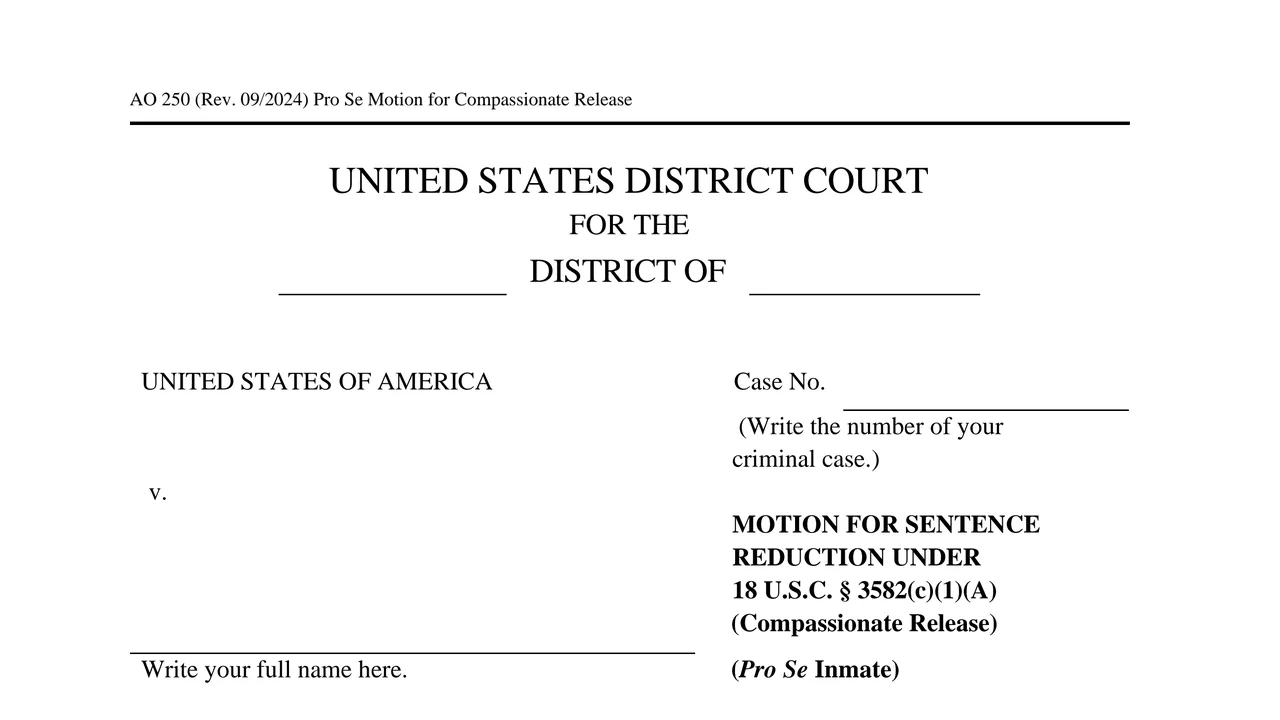
Whether any attached documents should be filed under seal, a table of attachments with Attached? and Request to Seal? boxes, and a request for an appointed attorney.
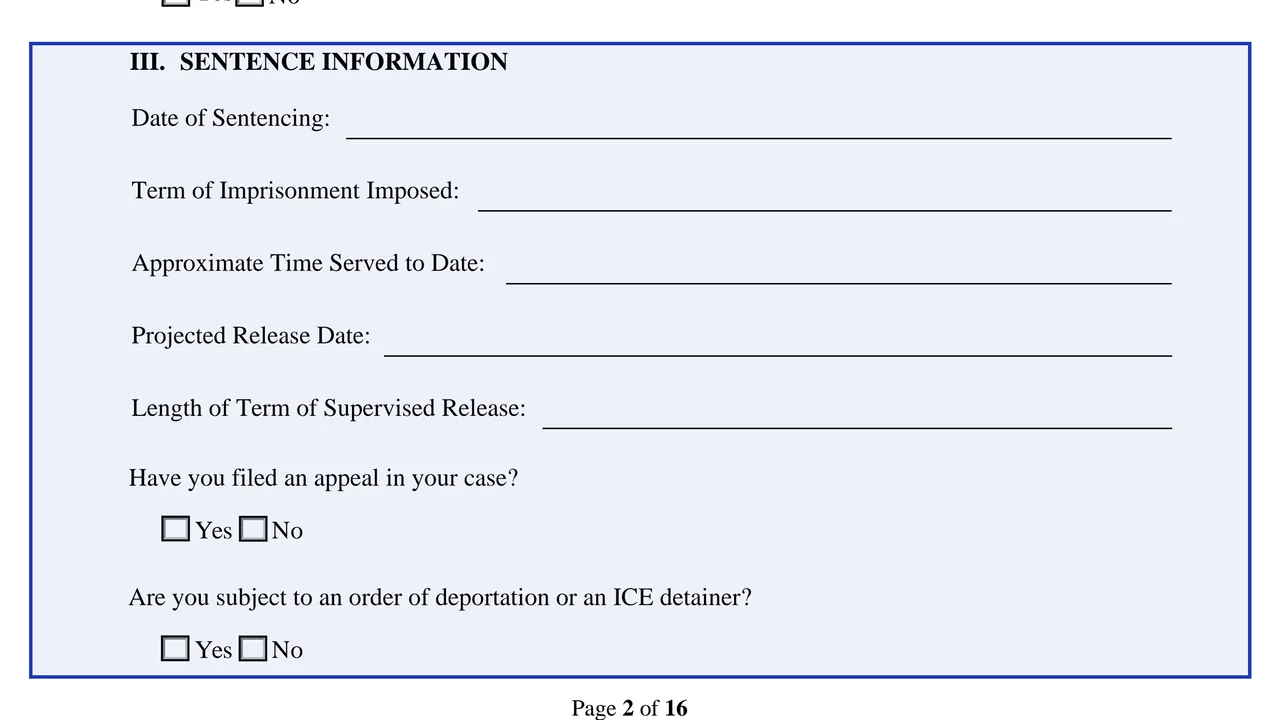
Date of sentencing, term imposed, approximate time served, projected release date, length of supervised release, any appeal, and any order of deportation or ICE detainer.
Whether a request went to the warden and on what date, why not if it did not, and whether the warden denied it. The form asks for copies of correspondence with the BOP.
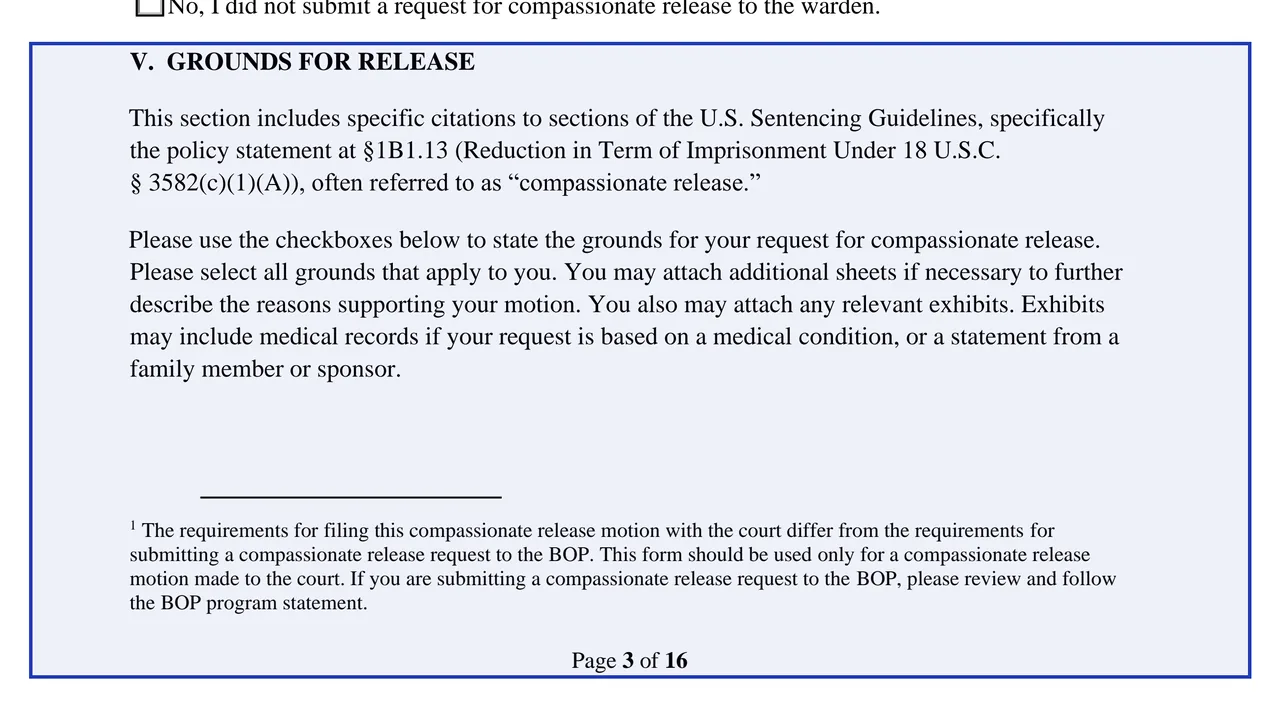
Part A asks about age 70, 30 years served and a BOP danger determination. Part B lists checkboxes citing §1B1.13(b), from medical conditions and age to family caregiving, abuse in custody and an unusually long sentence, then space to explain.
Any earlier motions under 18 U.S.C. § 3582(c)(1)(A) in any court, whether any were granted, what has changed since, and the movant's declaration and signature.
A proposed release plan (housing, employment and medical needs), a cover page for medical records and additional medical information, and a cover sheet for additional information, each with its own seal question and signature.
The form cites Federal Rule of Criminal Procedure 49.1: a filing may include only the last four digits of a social security number, the year of birth, a minor's initials and the last four digits of a financial account number.
Enter the district, the number of the criminal case and your full name where the form says to write it.
Mark each attachment as attached or not and whether it should be sealed. The form says the release plan, medical records and additional information are encouraged but not required.
Fill in Section III, then Section IV with the dates of any request to the warden and any denial, and include copies of written correspondence with the BOP.
The form says to select all grounds that apply, explain the basis below, and attach extra sheets or exhibits if needed. Confidential details may go on a separate page with a seal request in Section I.
Sign the declaration in Section VII. Each attachment used has its own declaration and signature block.
You get the real form, filled in a browser tab, with nothing standing between you and the finished PDF.
The form is captioned for a United States District Court, in the criminal case. A footnote says the form is only for a compassionate release motion made to the court, and a request to the BOP follows the BOP program statement.
The form says 18 U.S.C. § 3582(c)(1)(A) allows the motion after fully exhausting all administrative rights to appeal a failure of the BOP to bring a motion, or 30 days after the warden received the request, whichever is earlier.
The form says documents filed under seal are not available to the public. If the court grants a seal request, they are placed in the electronic court files but not available to the public.
The form and its U.S. Courts page do not print a fee.
The U.S. Courts page offers AO 250 as a 16-page PDF, updated on September 1, 2024.
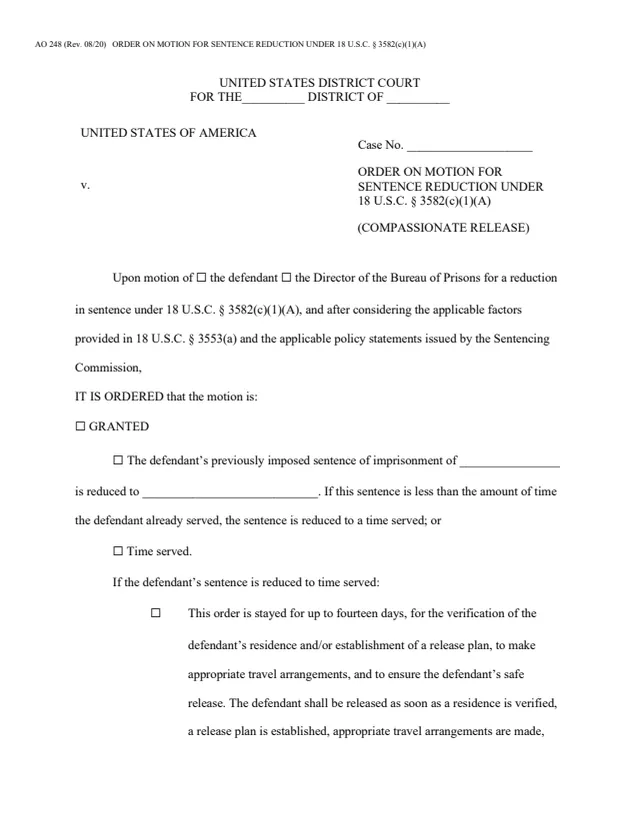
AO 248
32 fields, 4 pages
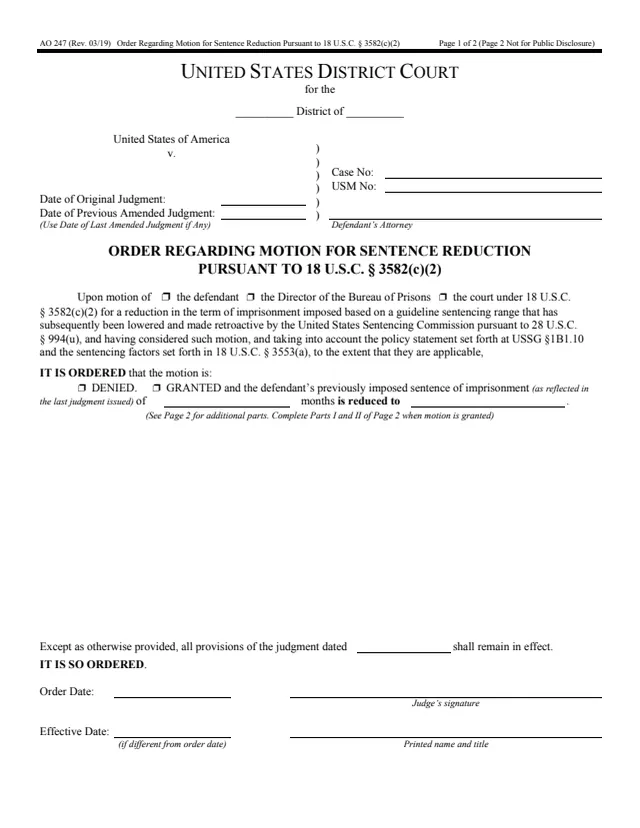
AO 247
30 fields, 2 pages
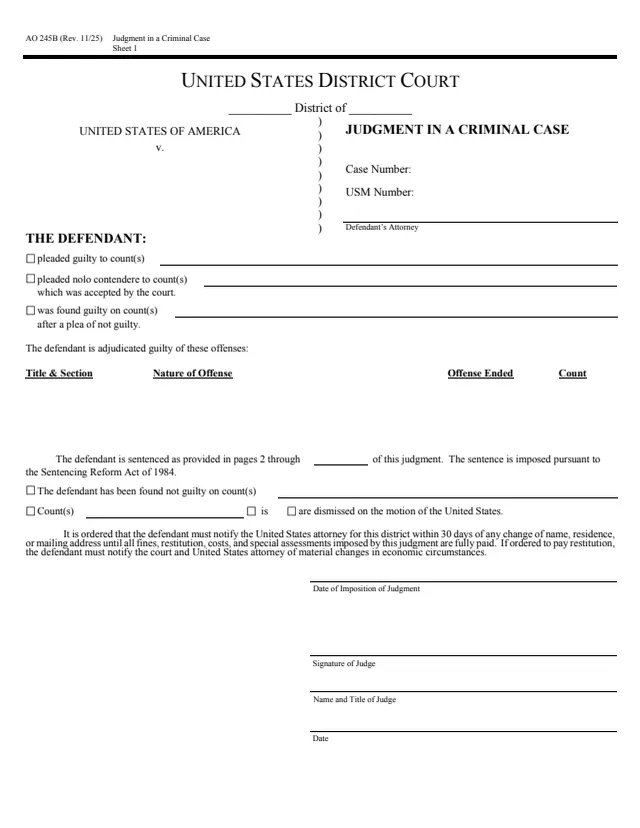
AO 245B
767 fields, 25 pages
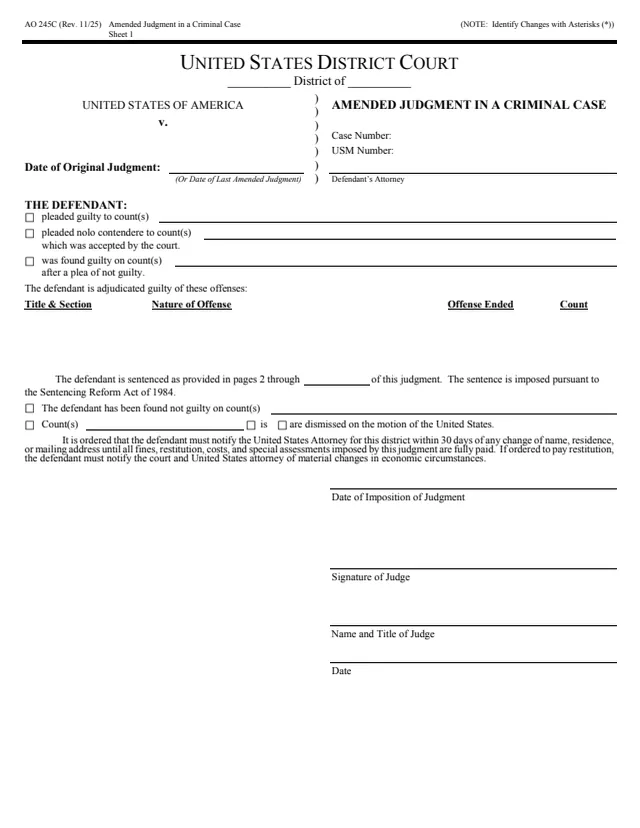
AO 245C
638 fields, 22 pages
The form is written to the person bringing the motion. It names these people.
No tool matches that search.
No. A footnote says the requirements for the court motion differ from those for a request to the BOP, that this form is only for a motion made to the court, and that a request to the BOP follows the BOP program statement.
It says 18 U.S.C. § 3582(c)(1)(A) allows it after fully exhausting all administrative rights to appeal a failure of the BOP to bring a motion, or 30 days after the warden received the request, whichever is earlier.
The form says you are not required to provide medical records or the additional information, and that the proposed release plan is encouraged but not required.
Yes, by request. Section I and each attachment ask whether documents should be filed under seal. The form says sealed documents are placed in the electronic court files but are not available to the public if the court grants the request.
Section II has a yes or no box for the request that an attorney be appointed to help.
The notice cites Federal Rule of Criminal Procedure 49.1: no full social security number or full birth date, no full name of a person known to be a minor, and no complete financial account number. The release plan says to use only initials for anyone under 18.
Yes. Section VI asks whether any earlier motions under 18 U.S.C. § 3582(c)(1)(A) were filed in any court, whether any were granted, and what has changed since.