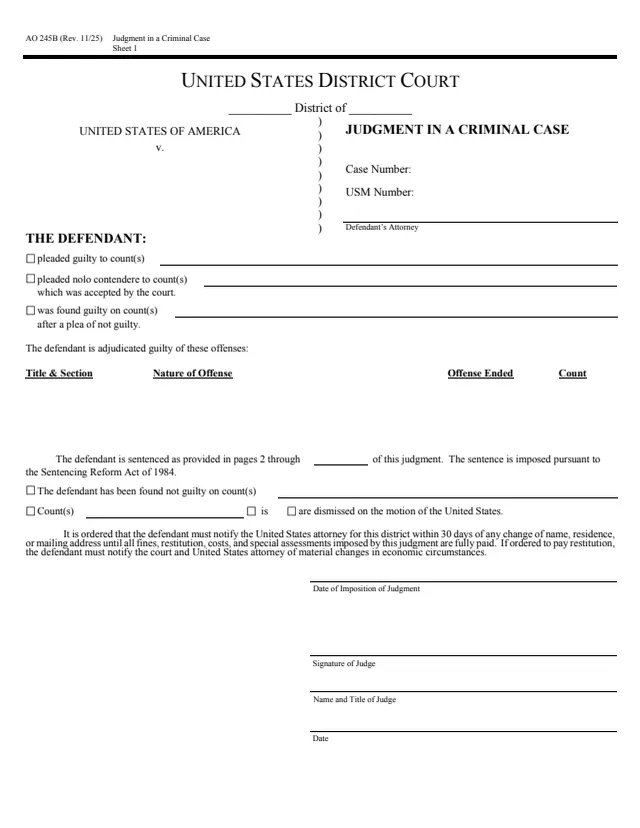
Caption
The United States District Court and district, United States of America v. the defendant, and the case number.
AO 246A
Order of Discharge and Dismissal Under 18 U. S. C. § 3607(a)
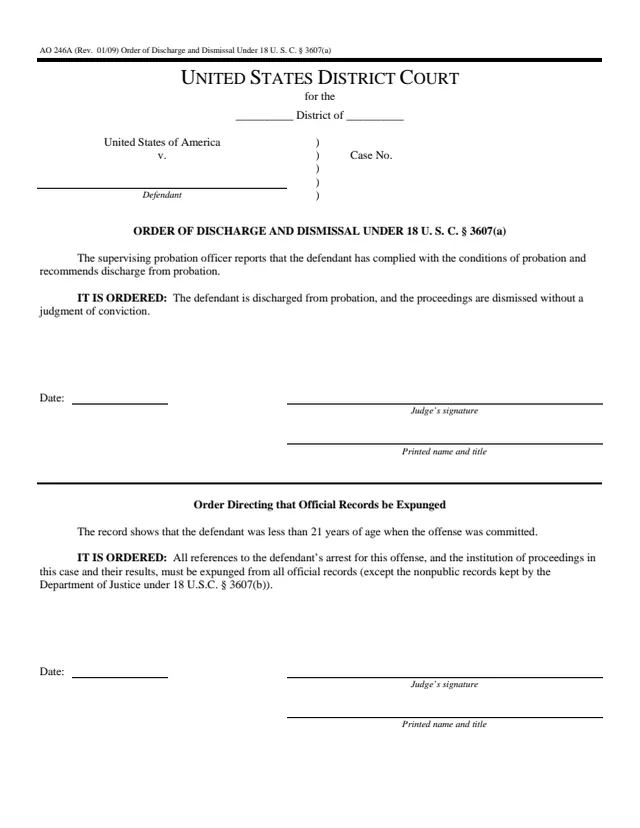
AO 246A, Order of Discharge and Dismissal Under 18 U. S. C. § 3607(a), is a one-page order of a United States District Court. It recites that the supervising probation officer reports the defendant has complied with the conditions of probation and recommends discharge, and orders that the defendant is discharged from probation and the proceedings are dismissed without a judgment of conviction.
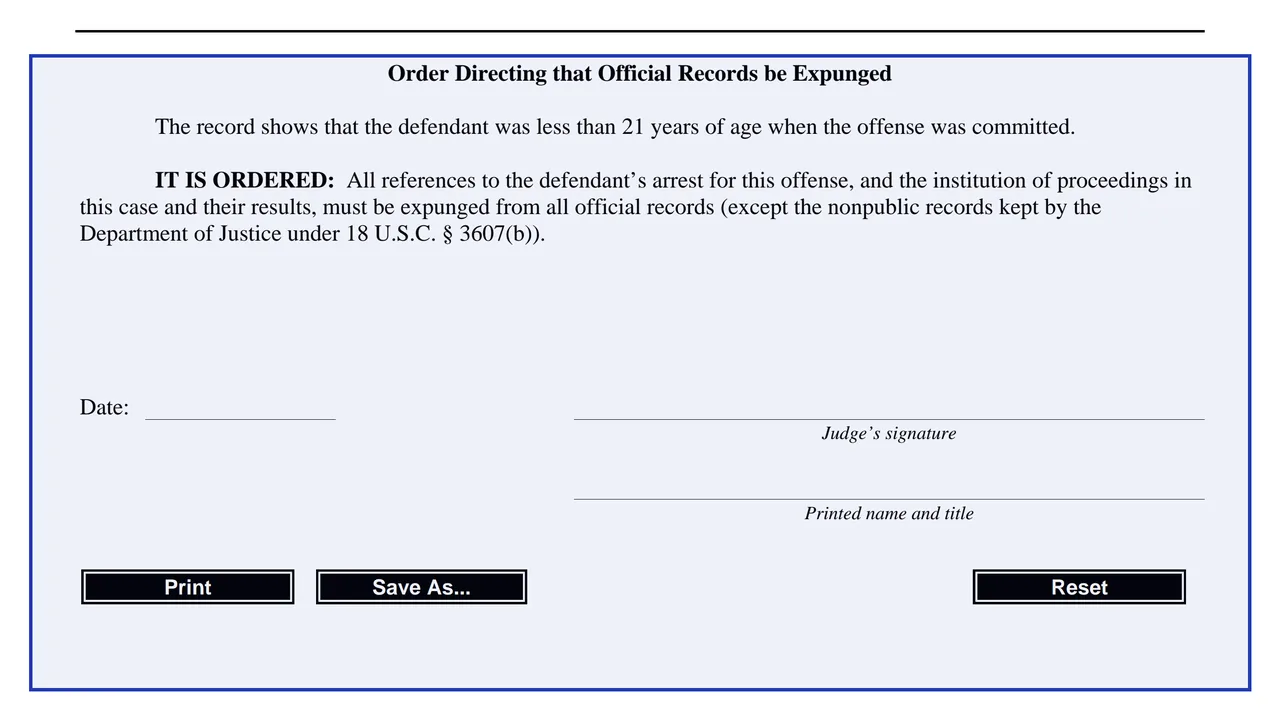
Below it is a second order, Order Directing that Official Records be Expunged, which recites that the record shows the defendant was less than 21 years of age when the offense was committed. The U.S. Courts lists the form under Expungement and Benefit Reinstatement Forms. The page says it is effective on January 1, 2009, and the edition printed on the form is Rev. 01/09.
It is a court order the judge signs. This page explains the form in plain words and is not legal advice. You can fill it out free in your browser on this page and download the result without an account.
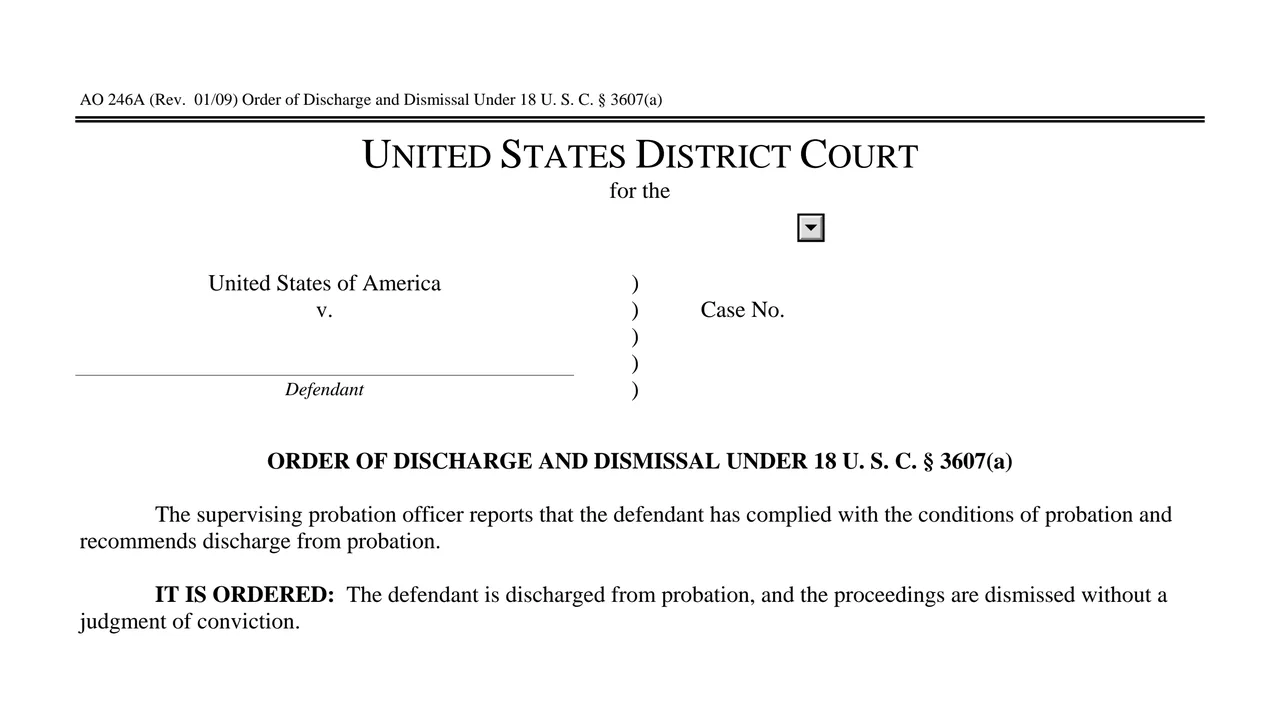
The United States District Court and district, United States of America v. the defendant, and the case number.
A recital that the supervising probation officer reports the defendant has complied with the conditions of probation and recommends discharge.
The order that the defendant is discharged from probation and the proceedings are dismissed without a judgment of conviction, with the date and the judge's signature.
A recital that the defendant was less than 21 years of age when the offense was committed, and an order that all references to the arrest, the institution of proceedings and their results be expunged from all official records.
The expungement order excepts the nonpublic records kept by the Department of Justice under 18 U.S.C. § 3607(b), and has its own date and judge's signature.
Enter the district, the defendant's name and the case number.
The judge dates and signs the first order and adds a printed name and title.
The second order is separate on the page, with its own recital about the defendant's age at the time of the offense and its own date and judge's signature.
The PDF has Print, Save As and Reset buttons at the bottom of the page.
You get the real form, filled in a browser tab, with nothing standing between you and the finished PDF.
All references to the defendant's arrest for the offense, and the institution of proceedings in the case and their results, in all official records, except the nonpublic records kept by the Department of Justice under 18 U.S.C. § 3607(b).
The form does not print a fee. It is a court order the judge signs.
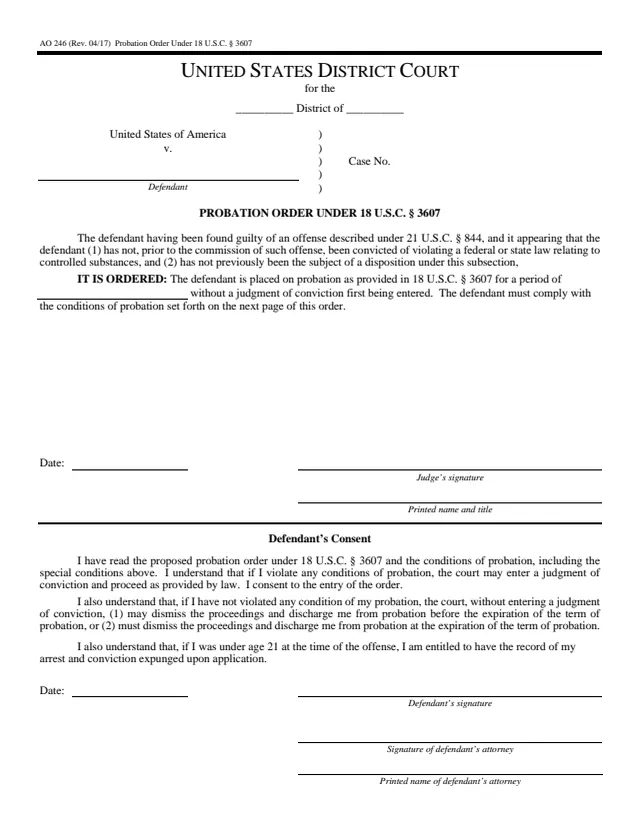
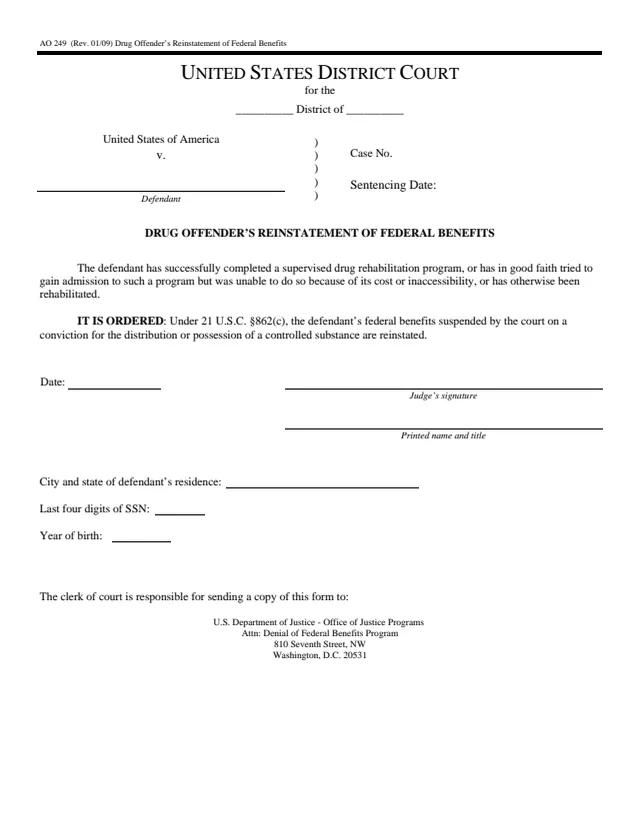
AO 246, Probation Order Under 18 U.S.C. § 3607, is another U.S. Courts form under the same section. The U.S. Courts lists AO 246A under Expungement and Benefit Reinstatement Forms, the same category as AO 249, Drug Offender's Reinstatement of Federal Benefits.
The court completes and signs the order. These are the people and offices it names.
No tool matches that search.
The court. The judge dates and signs each of the two orders on the page. The form has no signature line for the defendant.
It says the defendant is discharged from probation and the proceedings are dismissed without a judgment of conviction, after the supervising probation officer reports compliance with the conditions of probation and recommends discharge.
It recites that the record shows the defendant was less than 21 years of age when the offense was committed.
The order excepts the nonpublic records kept by the Department of Justice under 18 U.S.C. § 3607(b).
The form does not print one. It is an order the court signs.