Caption and affidavit
The district, the plaintiff or petitioner, the defendant or respondent and the civil action number, then the signed and dated affidavit and a short instructions box.
AO 239
Application to Proceed in District Court Without Prepaying Fees or Costs (Long Form)
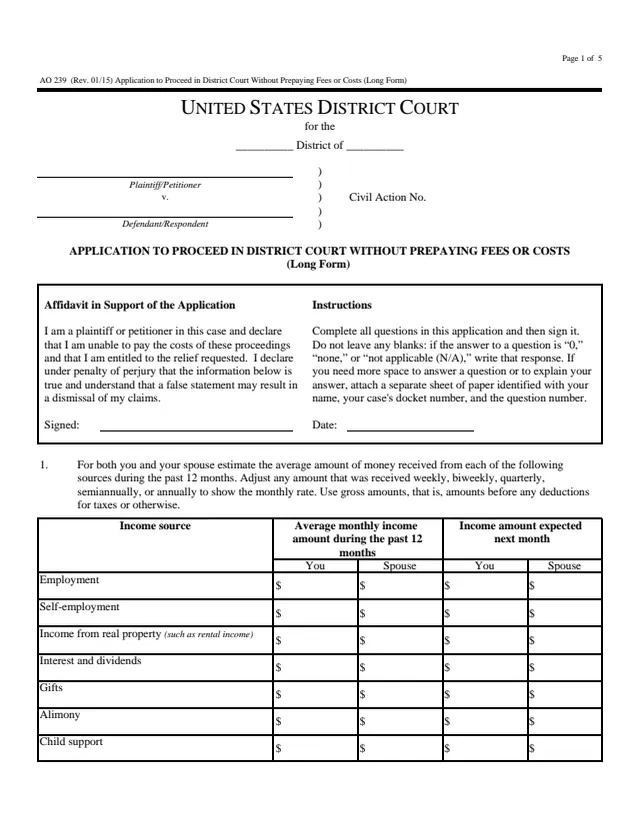
AO 239, Application to Proceed in District Court Without Prepaying Fees or Costs (Long Form), is a U.S. Courts form for a case in a United States district court. The U.S. Courts lists it under Fee Waiver Application Forms, effective on January 1, 2015, and the printed form is marked Rev. 01/15.
The form opens with an affidavit in which a plaintiff or petitioner declares that they are unable to pay the costs of the proceedings and are entitled to the relief requested. It is signed under penalty of perjury, and the affidavit says a false statement may result in a dismissal of the claims. The 5-page form then asks 12 questions about the applicant's and spouse's income over the past 12 months, work history for the past two years, cash and bank accounts, assets, money owed to them, dependents, monthly expenses, expected changes, money spent on the lawsuit and legal residence.
This page explains the form in plain words and is not legal advice. You can fill it out free in your browser on this page and download the result without an account.
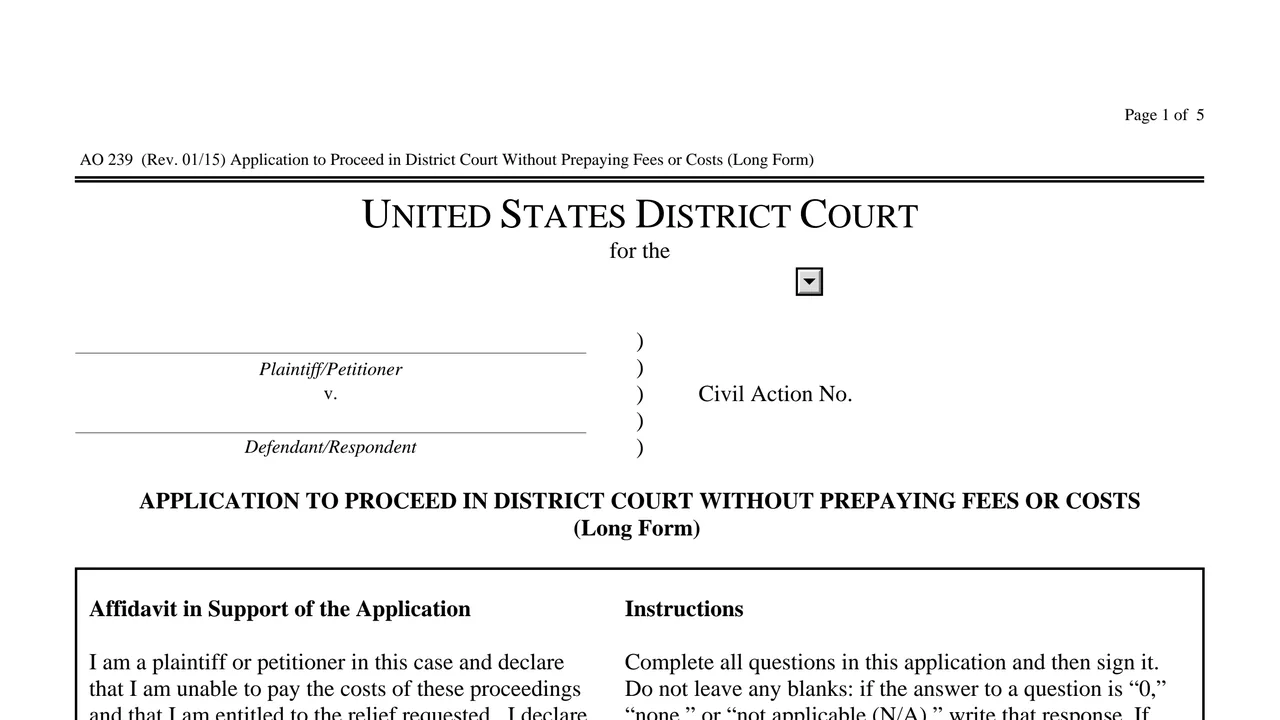
The district, the plaintiff or petitioner, the defendant or respondent and the civil action number, then the signed and dated affidavit and a short instructions box.
Average monthly amounts over the past 12 months and amounts expected next month, for the applicant and spouse, from employment, self-employment, rental income, interest and dividends, gifts, alimony, child support, retirement, disability, unemployment, public assistance and other sources.
The past two years of work for the applicant and then the spouse, most recent employer first, with address, dates of employment and gross monthly pay.
Cash on hand and bank accounts, then a home, other real estate, up to two motor vehicles with make, year, model and registration, other assets, and anyone who owes the applicant or spouse money.
People who rely on the household for support, then average monthly expenses such as housing, utilities, food, clothing, medical, transportation, insurance, taxes, installment payments and support paid to others.
Expected major changes in the next 12 months, money spent on expenses or attorney fees for the lawsuit, any other explanation of why the costs cannot be paid, and the city and state of legal residence, daytime phone, age and years of schooling.
Enter the district, the plaintiff or petitioner, the defendant or respondent and the civil action number. The affidavit at the top has its own signature and date lines.
The form says to complete all questions and then sign it. Where the answer is 0, none or not applicable, it says to write that response rather than leave a blank.
The form says to adjust weekly, biweekly, quarterly, semiannual or annual amounts to a monthly rate, and to use gross amounts before deductions for taxes or otherwise.
Give the past two years of employment, most recent first, then cash and bank balances and assets with their values. The form says not to list clothing and ordinary household furnishings.
Question 8 asks for the average monthly expenses of the applicant and family, with the amounts paid by the spouse shown in their own column.
The form says a separate sheet for more space is identified with the applicant's name, the case's docket number and the question number. A yes to question 9 is described on an attached sheet.
You get the real form, filled in a browser tab, with nothing standing between you and the finished PDF.
The form is captioned for a United States District Court in a named district, in a case with a civil action number. The form and its U.S. Courts page do not give submission instructions.
The form asks to proceed without prepaying fees or costs. Neither the form nor its U.S. Courts page lists fee amounts.
The affidavit is declared under penalty of perjury, and it says a false statement may result in a dismissal of the claims.
Separate sheets for extra answers, certified institutional account statements for prisoners, a detailed statement of business, profession or farm expenses, and a sheet describing any expected major changes.
The U.S. Courts page lists AO 239 as effective on January 1, 2015, as a PDF download. The printed form is marked Rev. 01/15.
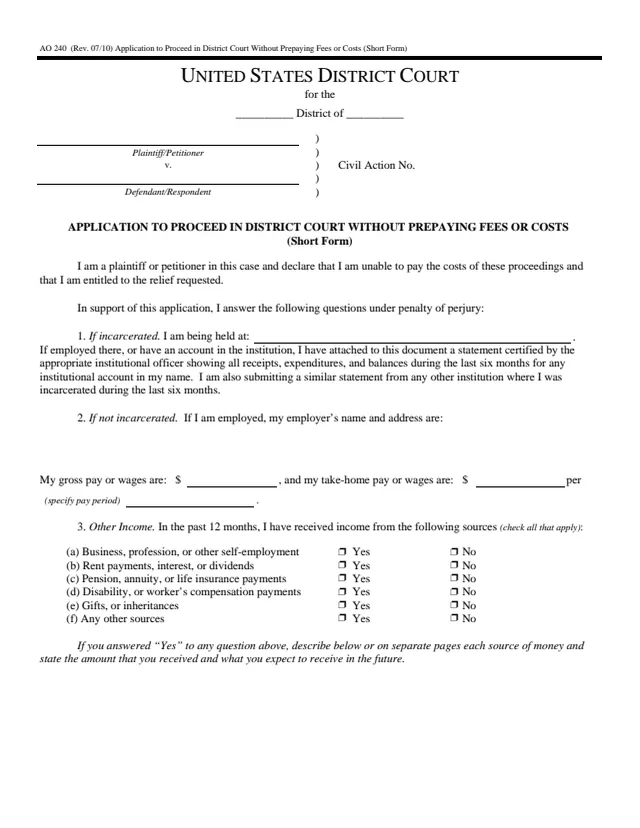
AO 240
28 fields, 2 pages
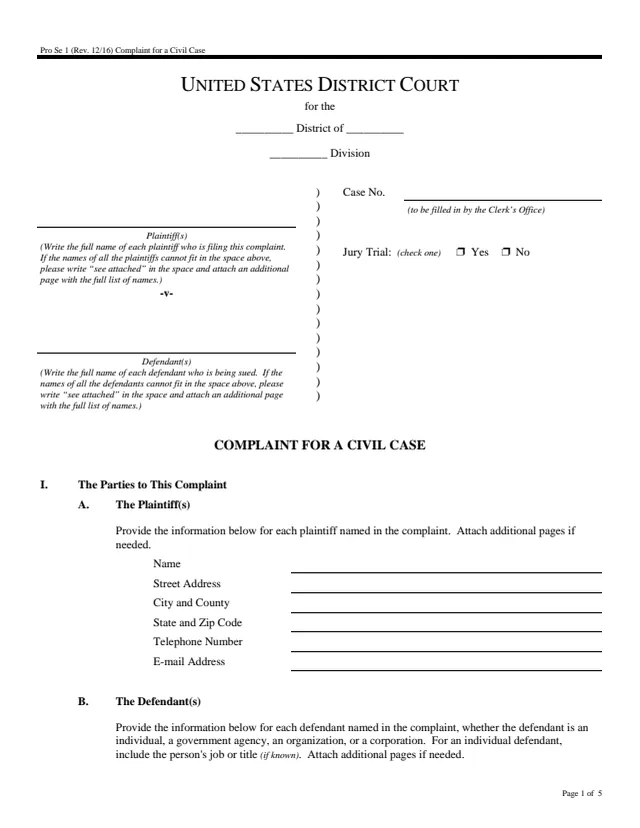
Pro Se 1
76 fields, 5 pages
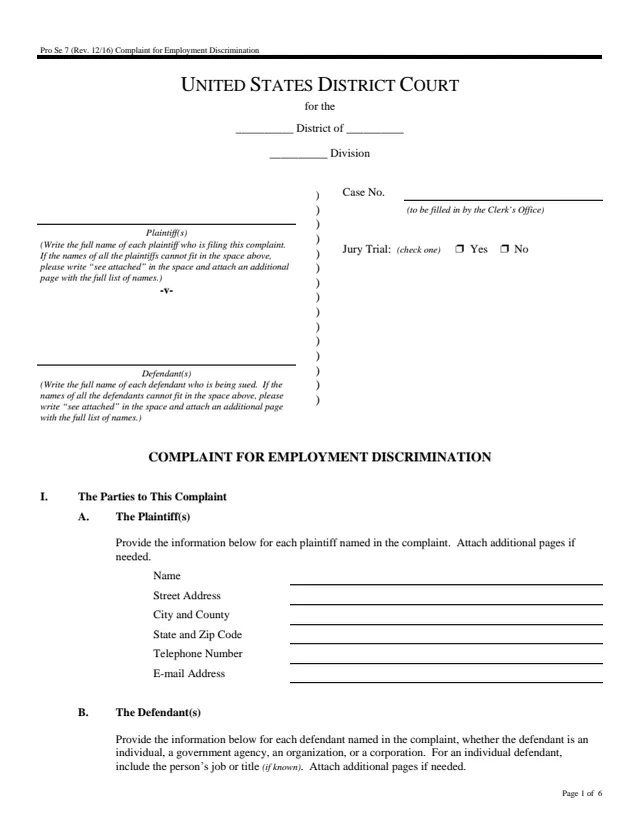
Pro Se 7
99 fields, 6 pages
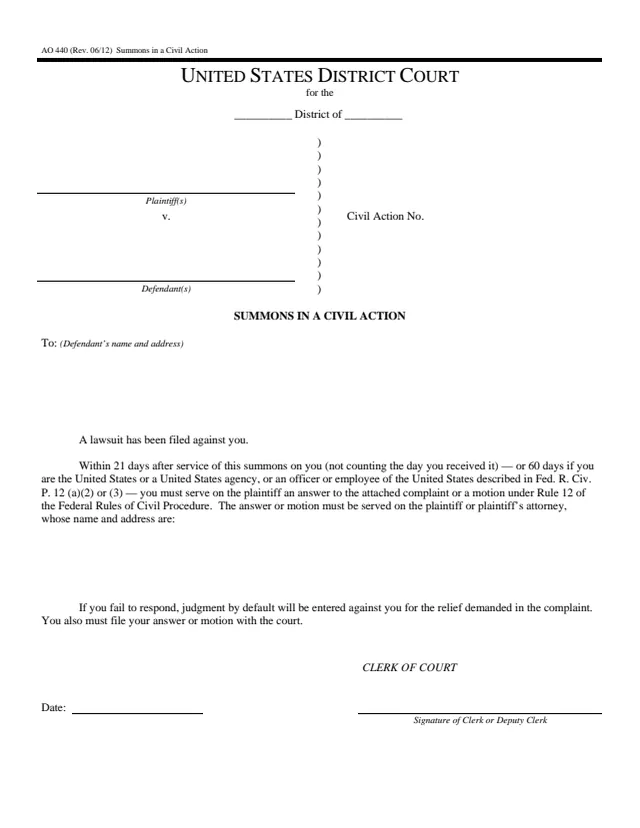
AO 440
34 fields, 2 pages
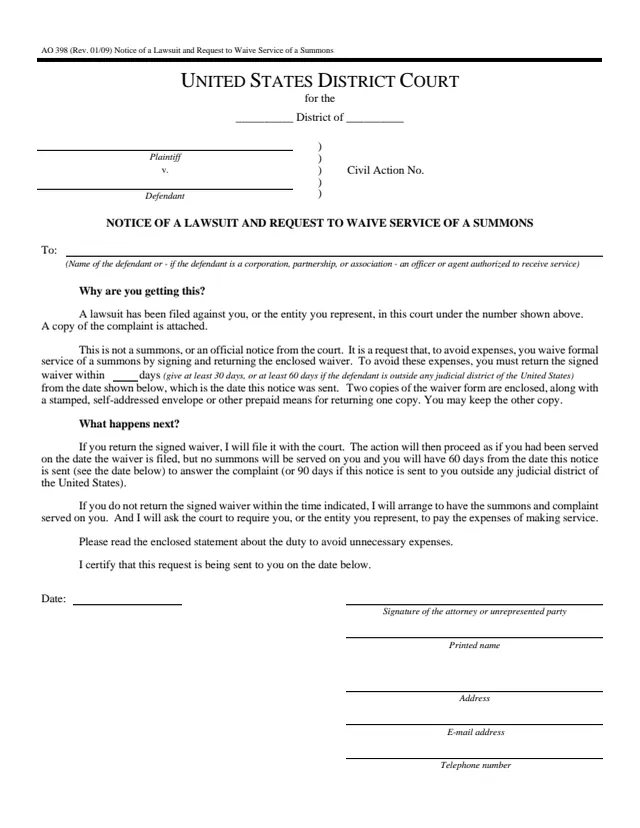
AO 398
15 fields, 1 page
The form is written for a plaintiff or petitioner in a federal district court case and asks about their household.
No tool matches that search.
Yes. The affidavit says the applicant declares under penalty of perjury that the information is true, and that a false statement may result in a dismissal of the claims.
Yes. Question 1 has separate columns for the applicant's and the spouse's income, and question 3 asks for the spouse's employment history for the past two years. Bank accounts, money owed and expenses also have a spouse column.
The form says not to leave any blanks. Where the answer is 0, none or not applicable (N/A), it says to write that response.
The form says a prisoner attaches a statement certified by the appropriate institutional officer showing all receipts, expenditures and balances during the last six months, with one certified statement for each account.
Question 7 asks for the name of each person who relies on the applicant or spouse for support, using initials only for anyone under 18, with the relationship and age.
Question 5 says not to list clothing and ordinary household furnishings.
No. The form and its U.S. Courts page do not list fee amounts.