Caption
The United States District Court and district, the plaintiff and defendant names, and the civil action number.
AO 398
Notice of a Lawsuit and Request to Waive Service of a Summons
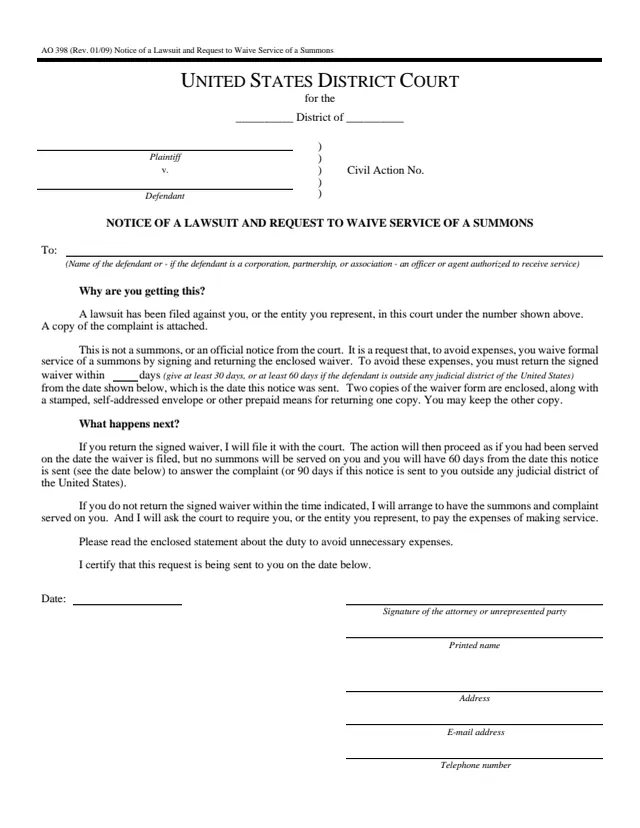
AO 398, Notice of a Lawsuit and Request to Waive Service of a Summons, is a U.S. Courts form for a civil action in a United States District Court. The U.S. Courts page lists it under Notice of Lawsuit, Summons, Subpoena, effective on January 1, 2009, and the PDF is dated Rev. 01/09.
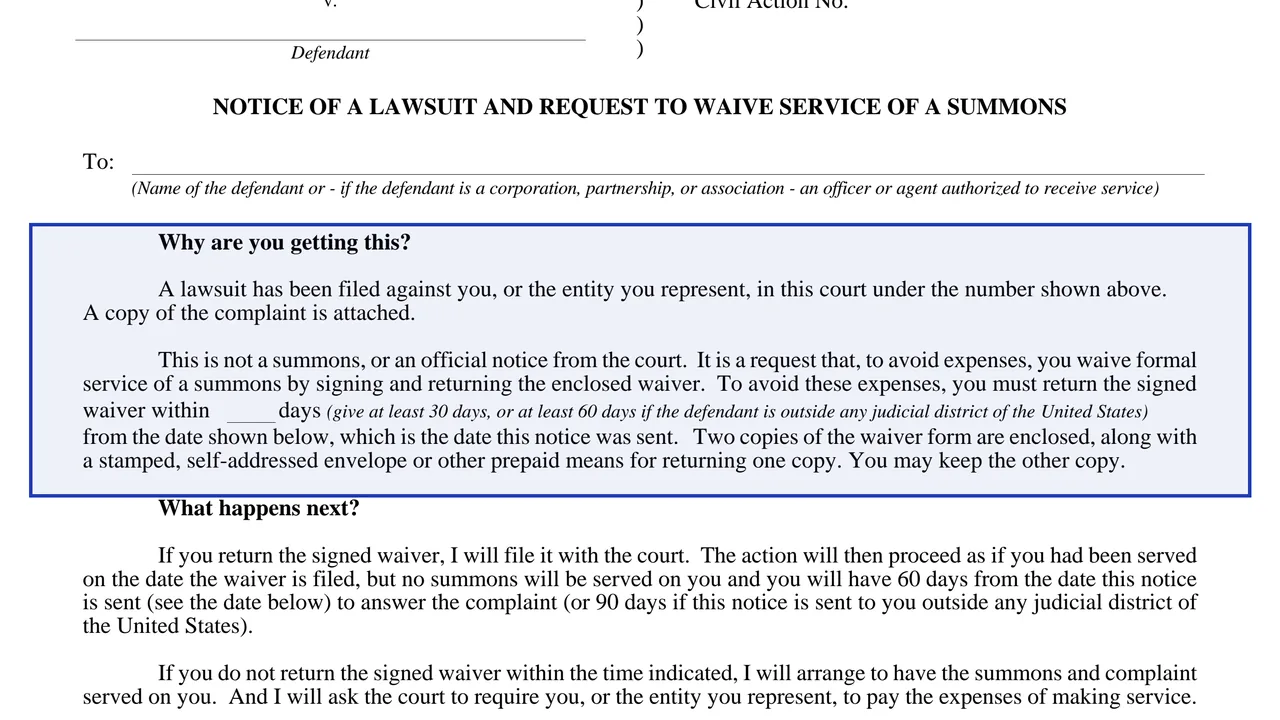
The form itself says it is not a summons, or an official notice from the court. It tells the person or entity being sued that a lawsuit has been filed, says a copy of the complaint is attached, and asks them, to avoid expenses, to waive formal service of a summons by signing and returning an enclosed waiver. It is signed by the attorney or unrepresented party who sends it.
This page explains the form in plain words and is not legal advice. You can fill it out free in your browser on this page and download the result without an account.
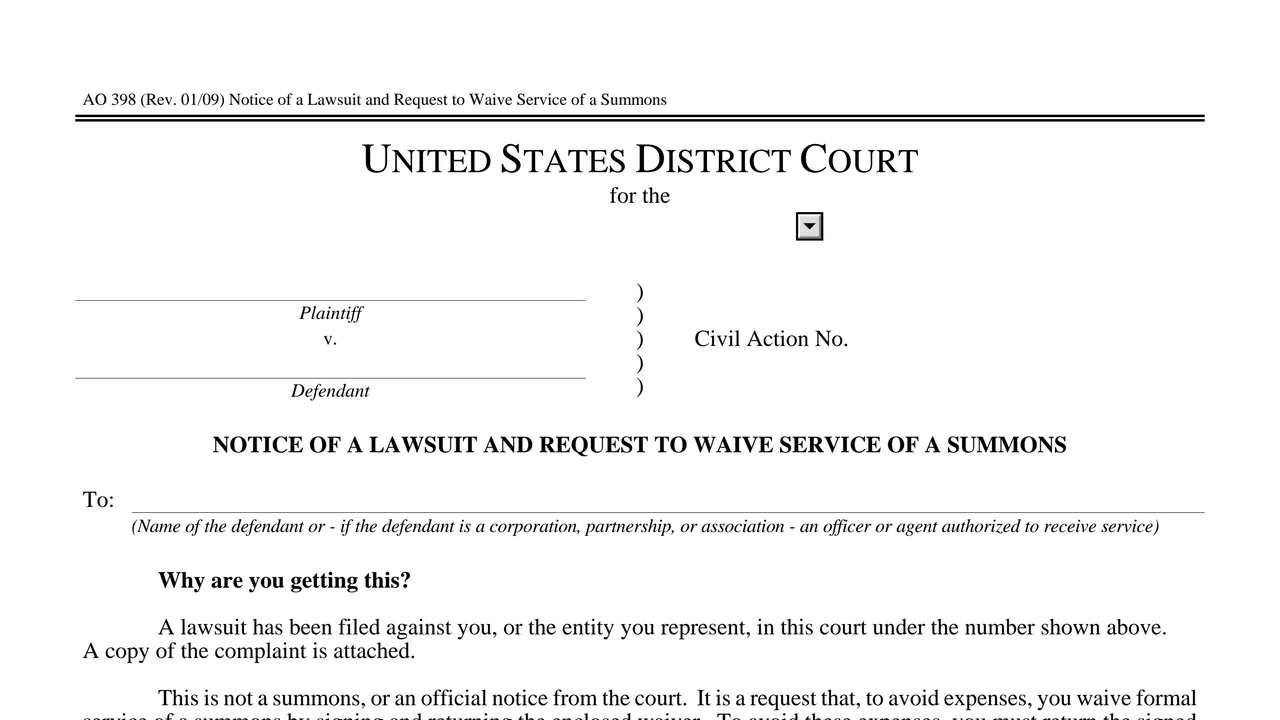
The United States District Court and district, the plaintiff and defendant names, and the civil action number.
The name of the defendant, or, if the defendant is a corporation, partnership or association, an officer or agent authorized to receive service.
Says a lawsuit has been filed and a copy of the complaint is attached. A blank sets the days to return the waiver. Two copies of the waiver are enclosed with a stamped, self-addressed envelope or other prepaid means for returning one copy.
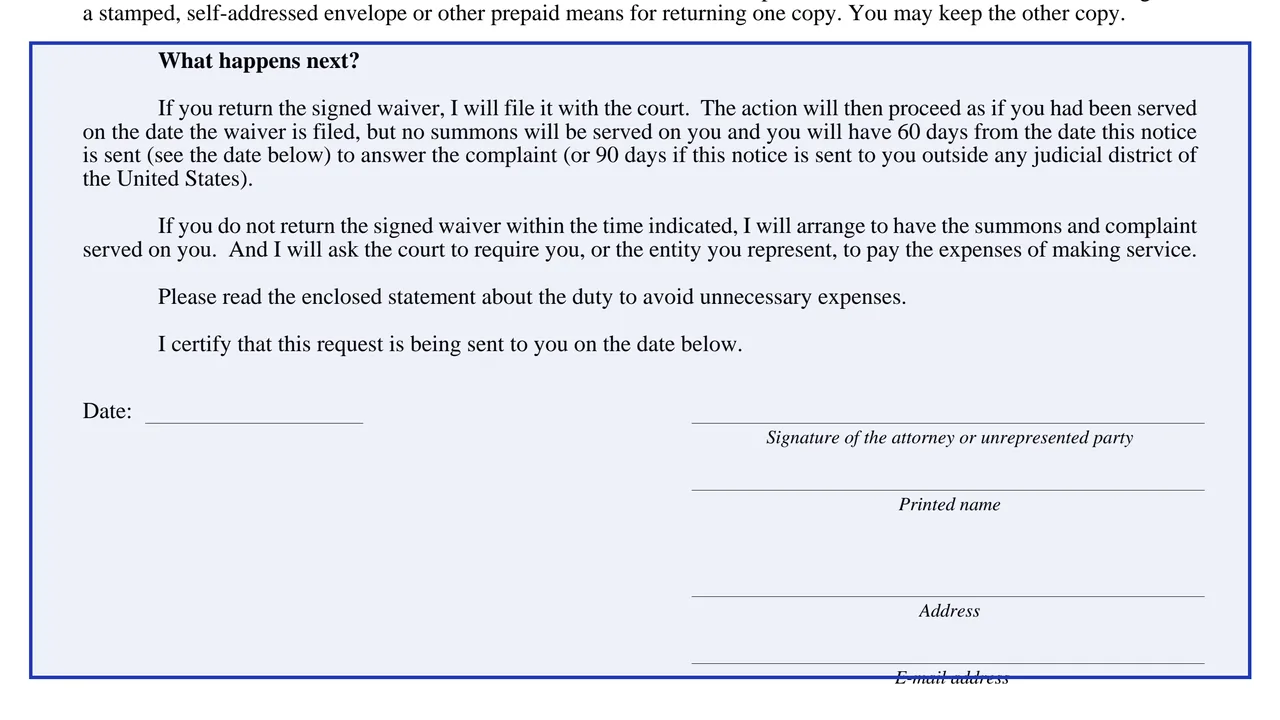
Explains what follows if the signed waiver is returned and what follows if it is not, and points to the enclosed statement about the duty to avoid unnecessary expenses.
The sender certifies that the request is being sent on the date below, then signs and adds a printed name, address, email address and telephone number.
Enter the district, the plaintiff and defendant names and the civil action number. The form says the lawsuit has already been filed in this court under the number shown.
Write the defendant's name on the To line, or an officer or agent authorized to receive service for a corporation, partnership or association.
The form says to give at least 30 days, or at least 60 days if the defendant is outside any judicial district of the United States, counted from the date the notice was sent.
The form says a copy of the complaint is attached, and that two copies of the waiver form are enclosed with a stamped, self-addressed envelope or other prepaid means for returning one copy.
Enter the date the notice is sent, sign as the attorney or unrepresented party, and add the printed name, address, email address and telephone number.
You get the real form, filled in a browser tab, with nothing standing between you and the finished PDF.
To the defendant, not to the court. The form says it is not a summons, or an official notice from the court. If the defendant returns the signed waiver, the sender files the waiver with the court.
The return period runs from the date shown on the notice, which the form says is the date it was sent. After a waiver, the form gives 60 days from that date to answer the complaint, or 90 days if the notice is sent outside any judicial district of the United States.
The form does not print a filing fee. It says that if the signed waiver is not returned in time, the sender will ask the court to require the defendant, or the entity represented, to pay the expenses of making service.
The U.S. Courts page offers AO 398 as a PDF.
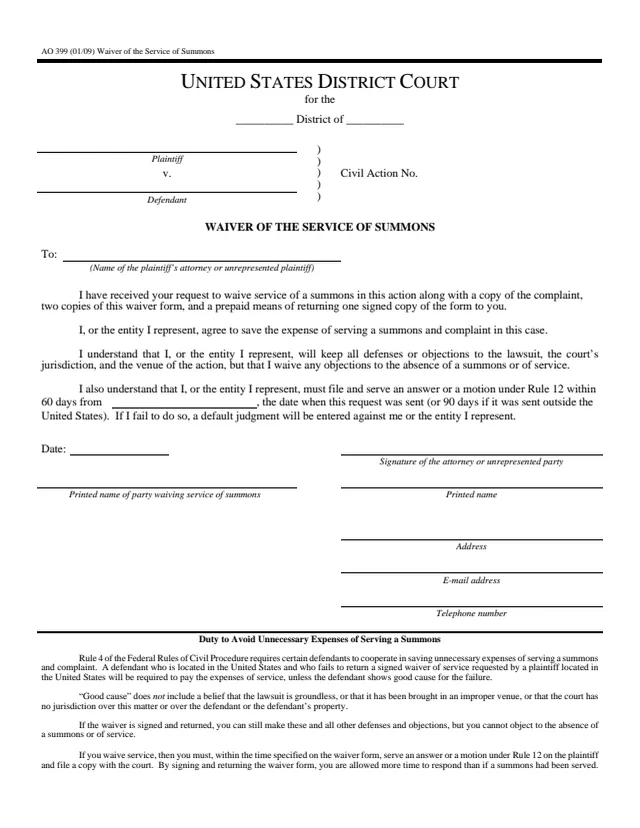
AO 399
16 fields, 1 page
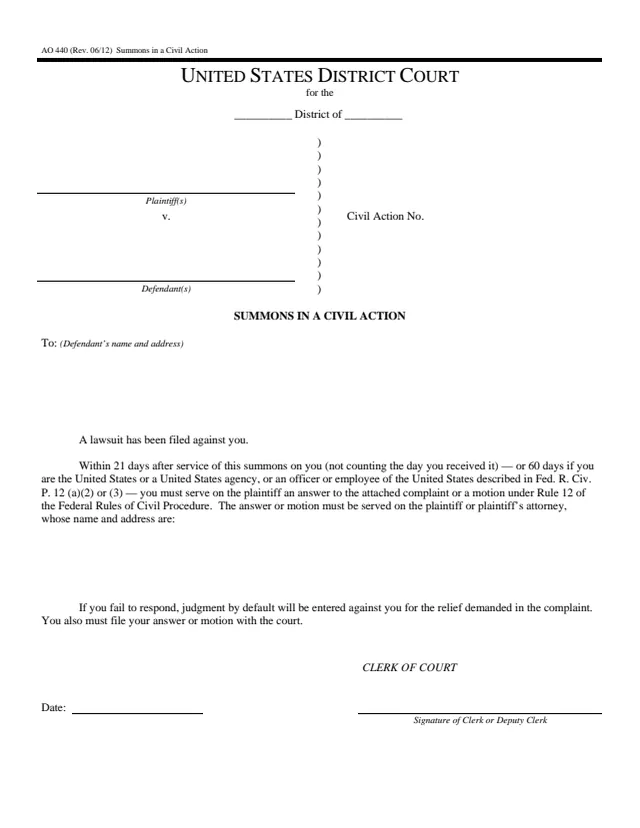
AO 440
34 fields, 2 pages
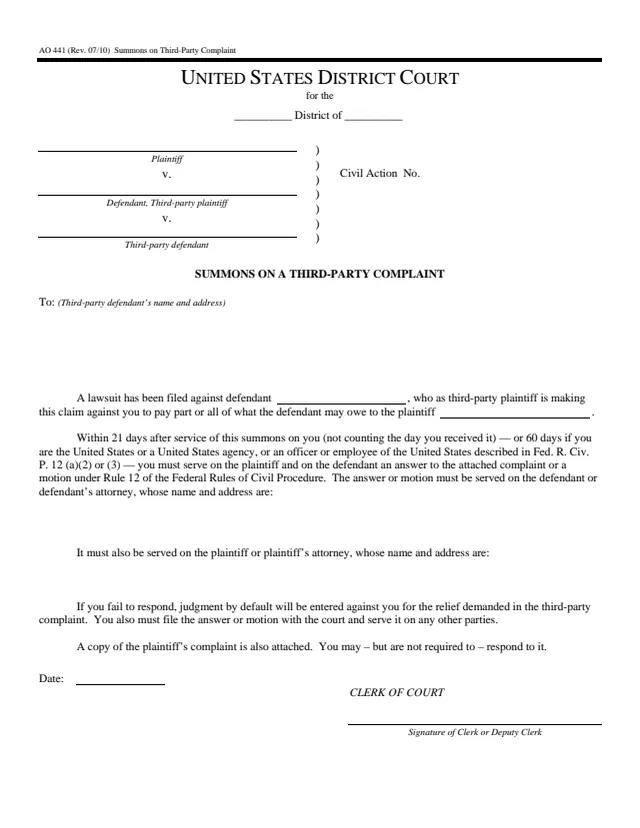
AO 441
40 fields, 2 pages
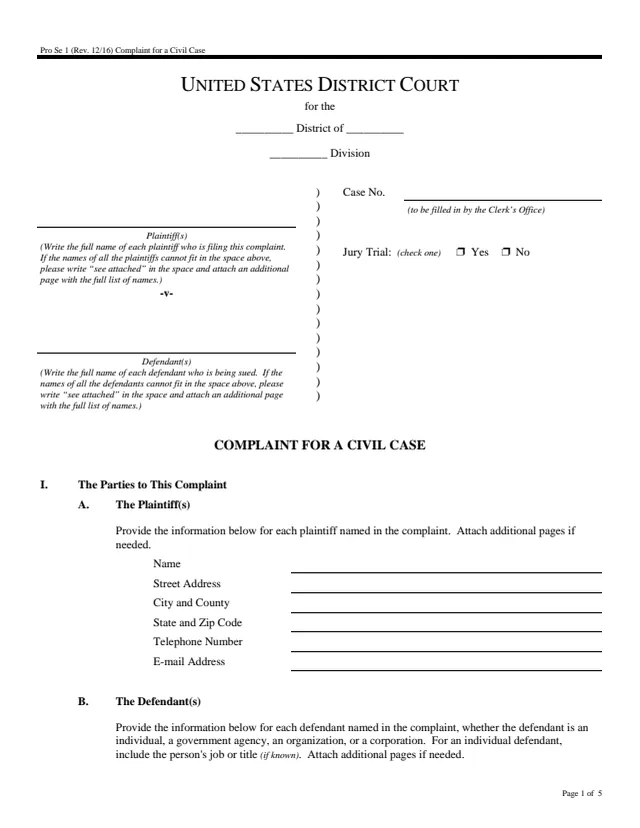
Pro Se 1
76 fields, 5 pages
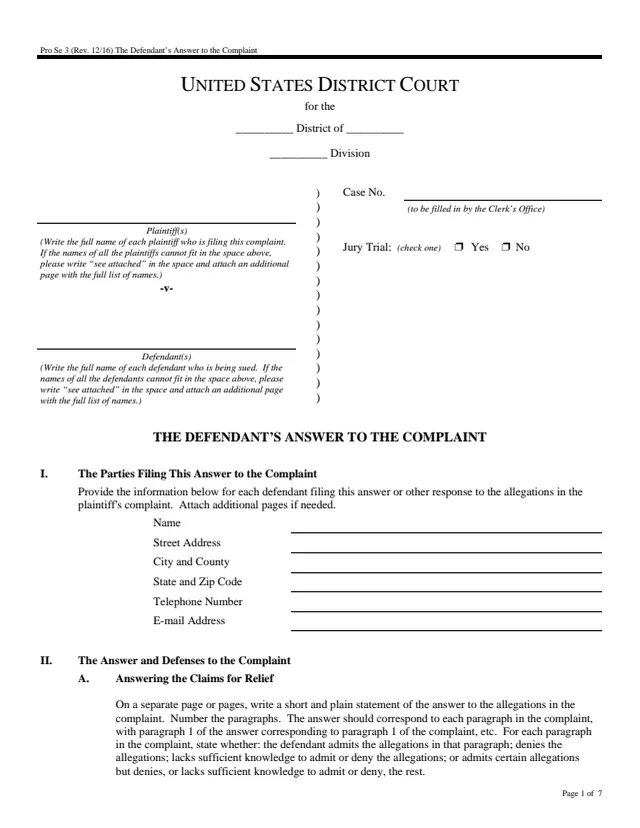
Pro Se 3
65 fields, 7 pages
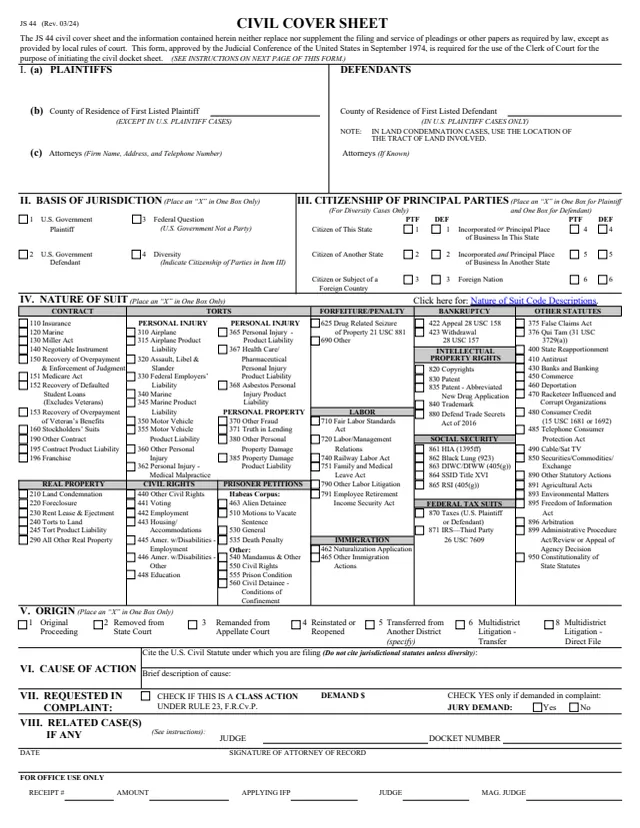
JS 44
35 fields, 2 pages
The form is sent by one side of a civil lawsuit to the defendant. It names these people.
No tool matches that search.
No. The form says it is not a summons, or an official notice from the court. It is a request that, to avoid expenses, the defendant waive formal service of a summons by signing and returning the enclosed waiver.
The attorney or unrepresented party who sends it. The signature block also asks for a printed name, address, email address and telephone number.
The sender writes the number of days in a blank. The form says to give at least 30 days, or at least 60 days if the defendant is outside any judicial district of the United States, from the date the notice was sent.
The form says the sender files it with the court, the action proceeds as if the defendant had been served on the date the waiver is filed, no summons is served, and the defendant has 60 days from the date the notice is sent to answer the complaint (or 90 days if it is sent outside any judicial district of the United States).
The form says the sender will arrange to have the summons and complaint served and will ask the court to require the defendant, or the entity represented, to pay the expenses of making service.
No. The form does not print a fee. Its cost wording is about the expenses of making service.