Bond type and fuel
Boxes for an original, strengthening or superseding bond, boxes for gasoline, diesel fuel or kerosene excise tax, and spaces for the effective date and the bond number.
928
Taxable Fuel Bond
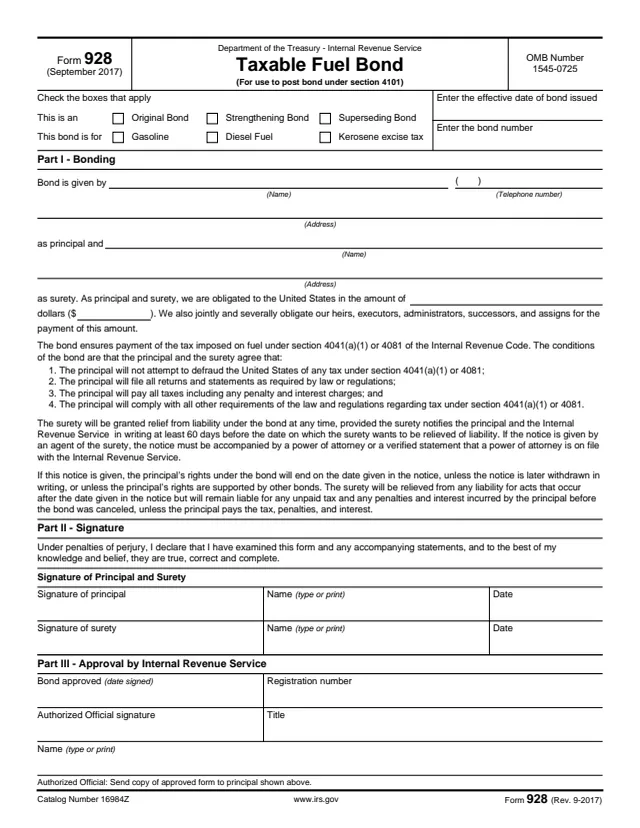
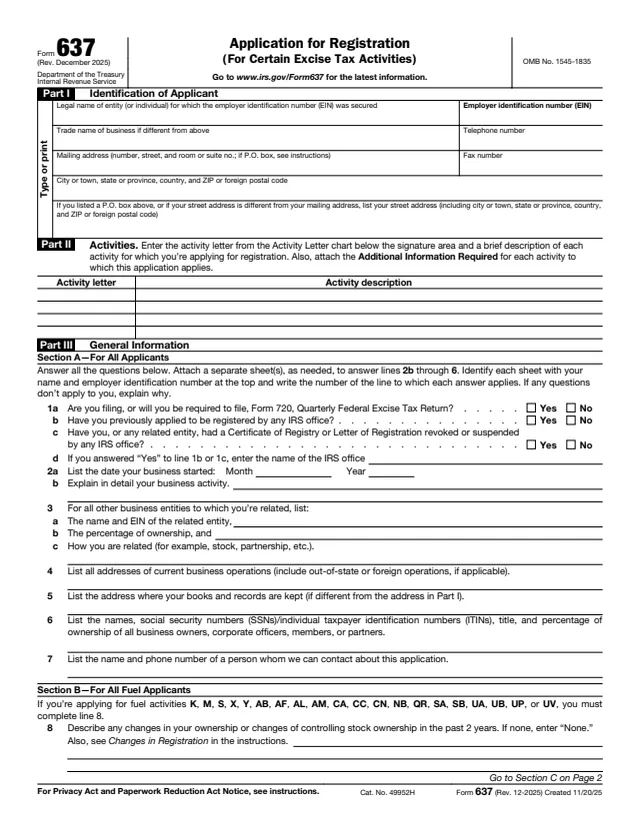
Form 928, Taxable Fuel Bond, is used to post bond required under section 4101, Registration and bond. The instructions say it is completed by any person the Internal Revenue Service requires to post bond as a condition of registration, or to retain an existing registration, on Form 637 for purposes of the excise tax imposed on gasoline, diesel fuel or kerosene.
The bond is given by the registrant as principal and by a surety, who together are obligated to the United States for the bond amount. The form says the bond ensures payment of the tax imposed on fuel under section 4041(a)(1) or 4081. An authorized IRS official approves it in Part III. The instructions are printed on page 2 of the form.
You can fill out Form 928 free in your browser on this page and download it without an account.
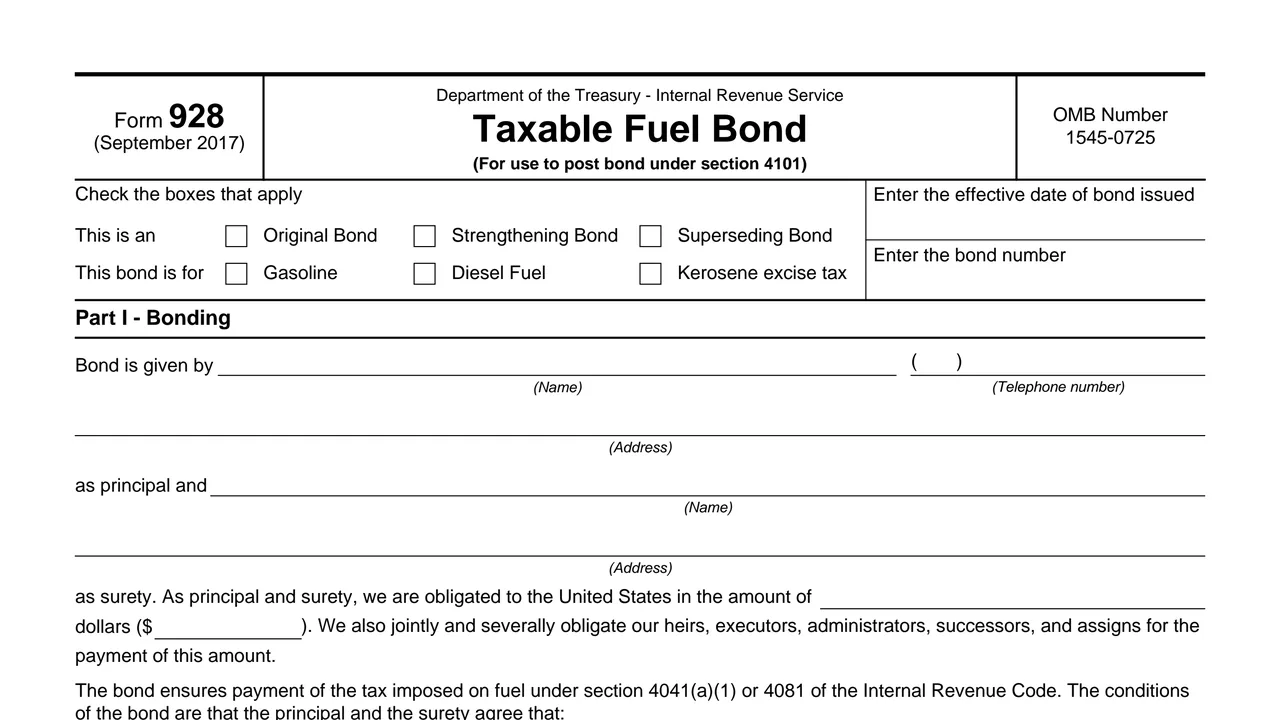
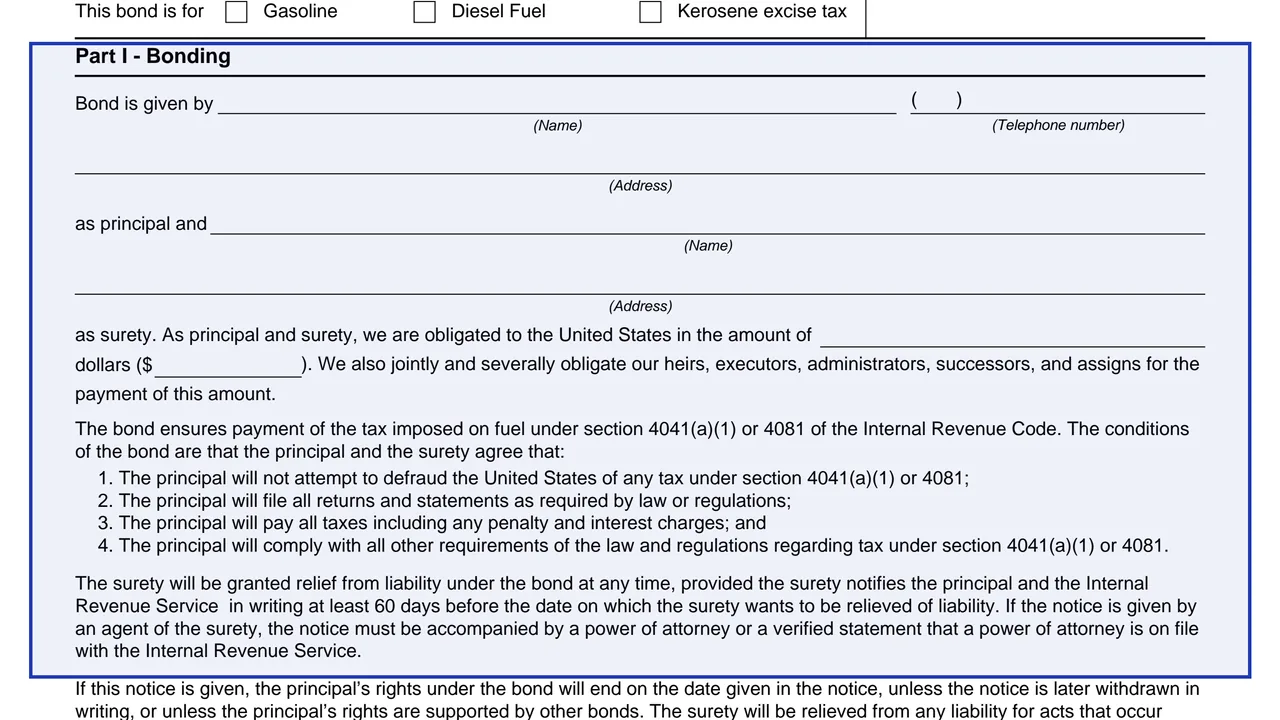
Boxes for an original, strengthening or superseding bond, boxes for gasoline, diesel fuel or kerosene excise tax, and spaces for the effective date and the bond number.
The name, telephone number and address of the principal, the name and address of the surety, and the bond amount in words and in dollars.
Four promises by the principal: not to attempt to defraud the United States of tax under section 4041(a)(1) or 4081, to file required returns, to pay all taxes, penalties and interest, and to follow the other rules.
Text explaining that the surety can be relieved of liability by notifying the principal and the IRS in writing at least 60 days before the date it wants to be relieved.
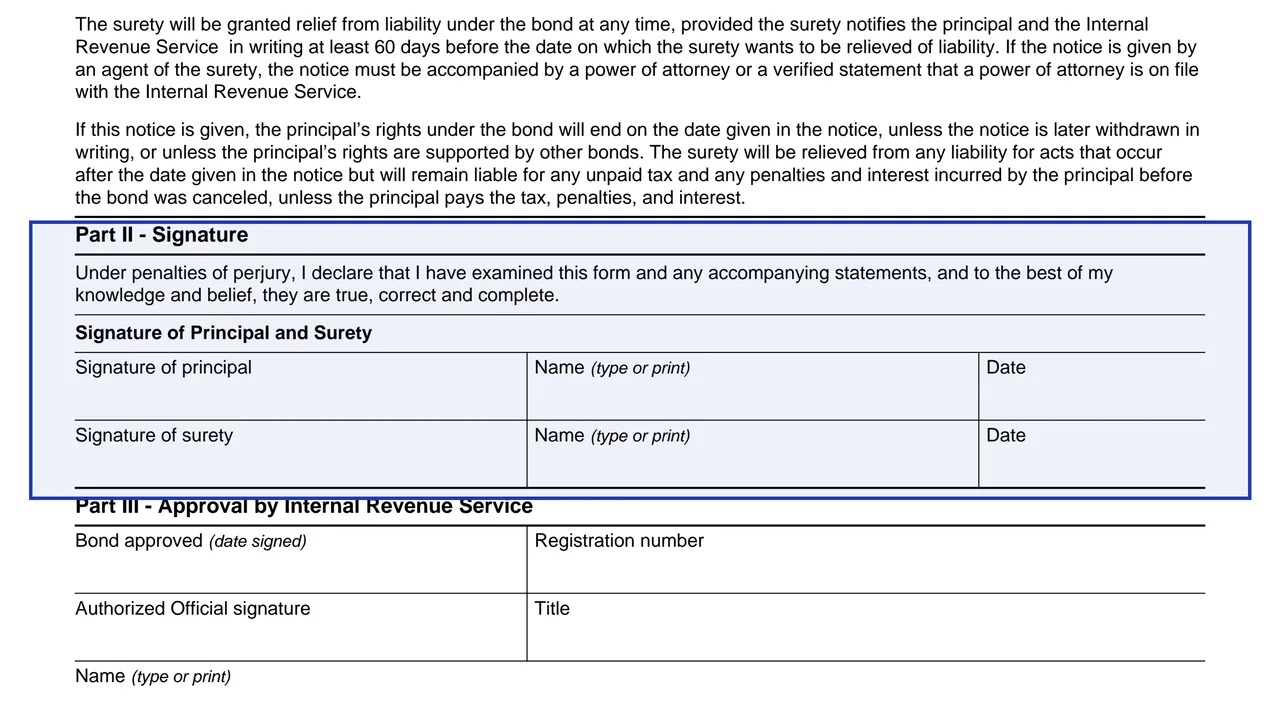
A penalties of perjury declaration with signature, printed name and date lines for the principal and for the surety.
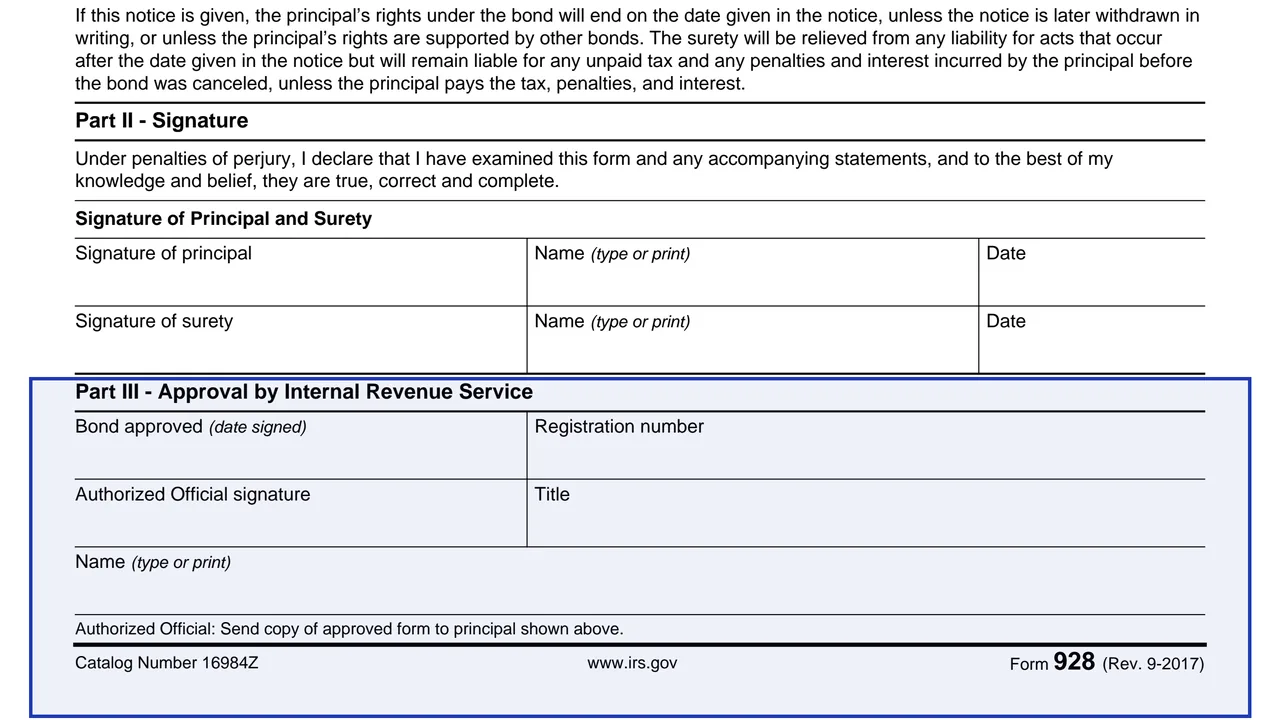
Spaces for the approval date, registration number, and the authorized official's signature, title and printed name.
Check whether this is an original, strengthening or superseding bond, and check the fuel the bond is for. Enter the effective date of the bond issued and the bond number.
Enter the name, telephone number and address of the principal, then the name and address of the surety.
Enter the amount in words and in dollars. The instructions say the IRS determines the amount based on the registrant's financial capabilities, tax history and expected liability, within the limits printed in the instructions.
The principal and the surety each sign, print their name and date the form. The instructions list who signs for an individual, corporation, partnership, trust or estate.
Part III is for approval by the Internal Revenue Service and is completed by the authorized official.
You get the real form, filled in a browser tab, with nothing standing between you and the finished PDF.
The instructions say to file Form 928 in duplicate with the IRS employee who required the posting of the bond.
The instructions say the liability on the bond is a continuing one, not made for a fixed period. If the quarterly liability changes, they say to contact the IRS immediately after the quarter to see if a strengthening or superseding bond is necessary.
A strengthening bond increases an existing bond, and a superseding bond replaces it. The instructions say registration may be suspended or revoked if one is not submitted when required.
The form says the surety notifies the principal and the IRS in writing at least 60 days before the date it wants to be relieved, and stays liable for tax, penalties and interest incurred before the bond was canceled.
The instructions say the bond may also have to be changed if there is a substantial change in ownership or management of the business.
Form 928 is completed by a fuel excise tax registrant and its surety when the IRS requires a bond, and it is filed with the IRS employee who required it.
No tool matches that search.
The instructions say it is used to post bond required under section 4101 for the excise tax on gasoline, diesel fuel or kerosene.
The instructions say any person the IRS requires to post bond as a condition of registration, or to keep an existing registration, on Form 637.
The instructions say to file it in duplicate with the IRS employee who required the posting of the bond.
The instructions say the surety is listed in the Department of the Treasury Circular 570 as an acceptable surety or reinsurer on Federal bonds.
The instructions say the IRS sets the amount, taking into account financial capabilities, tax history and expected liability under sections 4041(a)(1) and 4081, up to the limits printed in the instructions.
No fixed period is set. The instructions say the liability is a continuing one, though the IRS may require a strengthening or superseding bond.