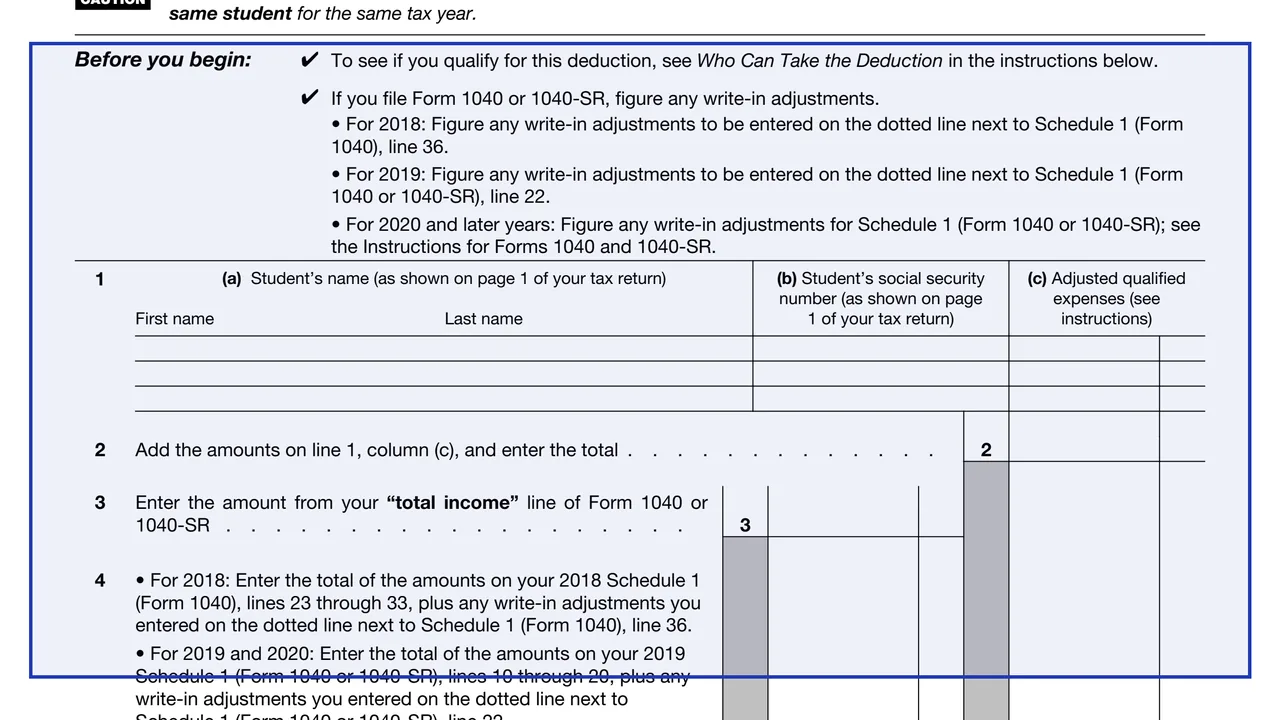
Before you begin
Check boxes pointing to Who Can Take the Deduction and to the Schedule 1 write-in adjustments for 2018, 2019, or 2020 and later years.
8917
Tuition and Fees Deduction
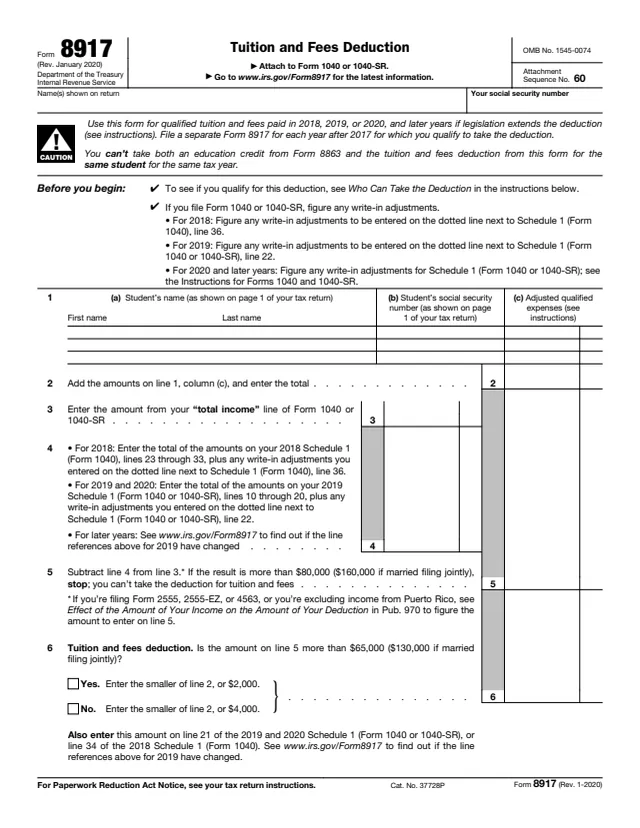
Form 8917 is used to figure and take the deduction for tuition and fees expenses paid. The form says to attach it to Form 1040 or 1040-SR. The instructions say Form 8917 (Rev. January 2020) covers qualified tuition and fees paid in calendar years 2018, 2019 and 2020, and later years if the deduction is extended, with a separate form for each year after 2017.
The instructions also say: "Don't claim the deduction for expenses paid after 2020 unless the credit is extended again." The About page lists a May 2022 recent development titled "Form 8917, Tuition and Fees Deduction, Is Now Historical".
The deduction is based on adjusted qualified education expenses paid to an eligible postsecondary institution. You can fill out the form free in your browser on this page and download the result without an account.
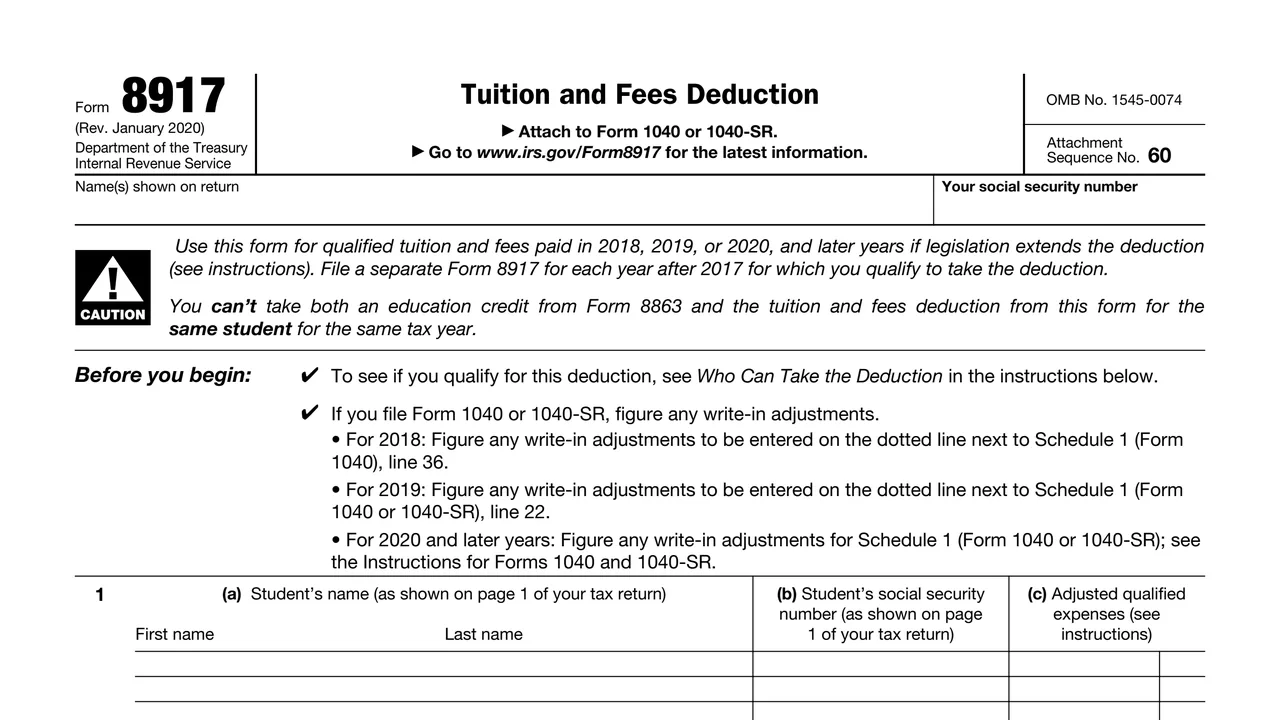
Check boxes pointing to Who Can Take the Deduction and to the Schedule 1 write-in adjustments for 2018, 2019, or 2020 and later years.
Each student's name and social security number as shown on page 1 of the return, and adjusted qualified expenses in column (c).
The total of column (c), the total income line of Form 1040 or 1040-SR, the Schedule 1 adjustments listed on line 4, and the difference on line 5.
The smaller of line 2 or $2,000 if line 5 is more than $65,000 ($130,000 if married filing jointly), otherwise the smaller of line 2 or $4,000.
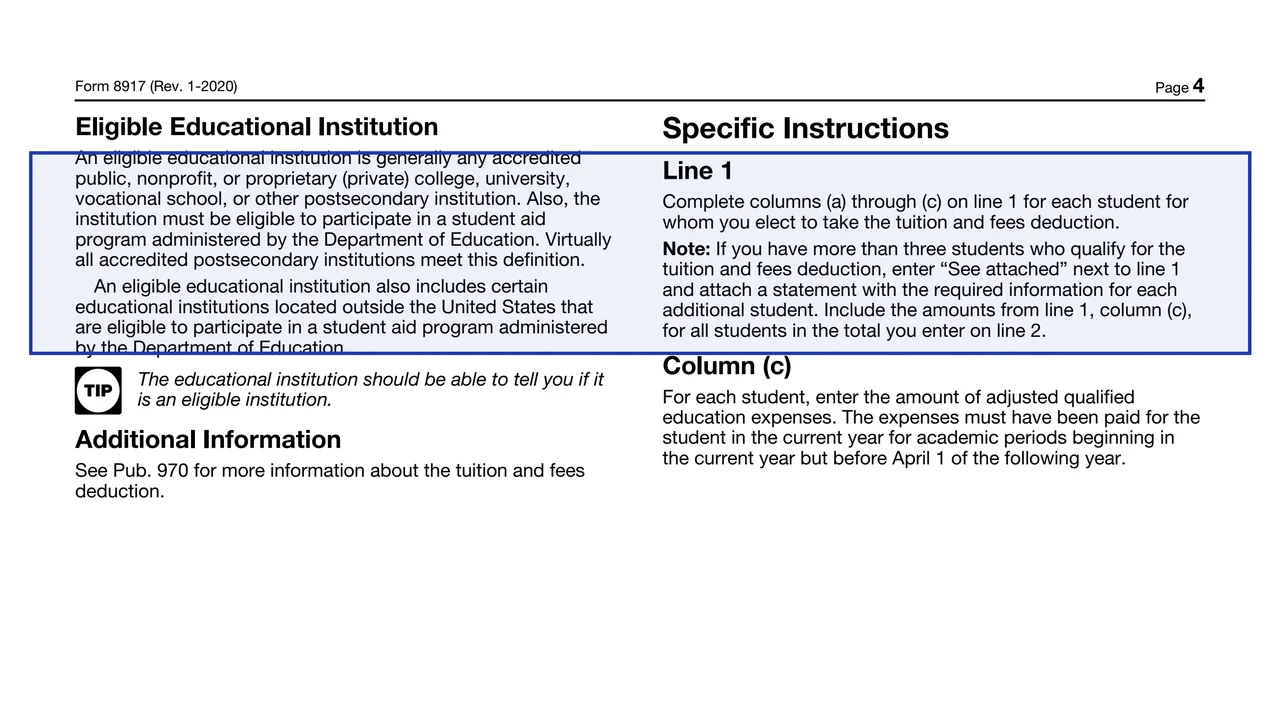
Complete columns (a) through (c) for each student. For more than three students, the instructions say to enter "See attached" next to line 1 and attach a statement with the same information.
Enter adjusted qualified education expenses paid for the student in the current year for academic periods beginning in the current year but before April 1 of the following year, reduced by tax-free educational assistance and refunds.
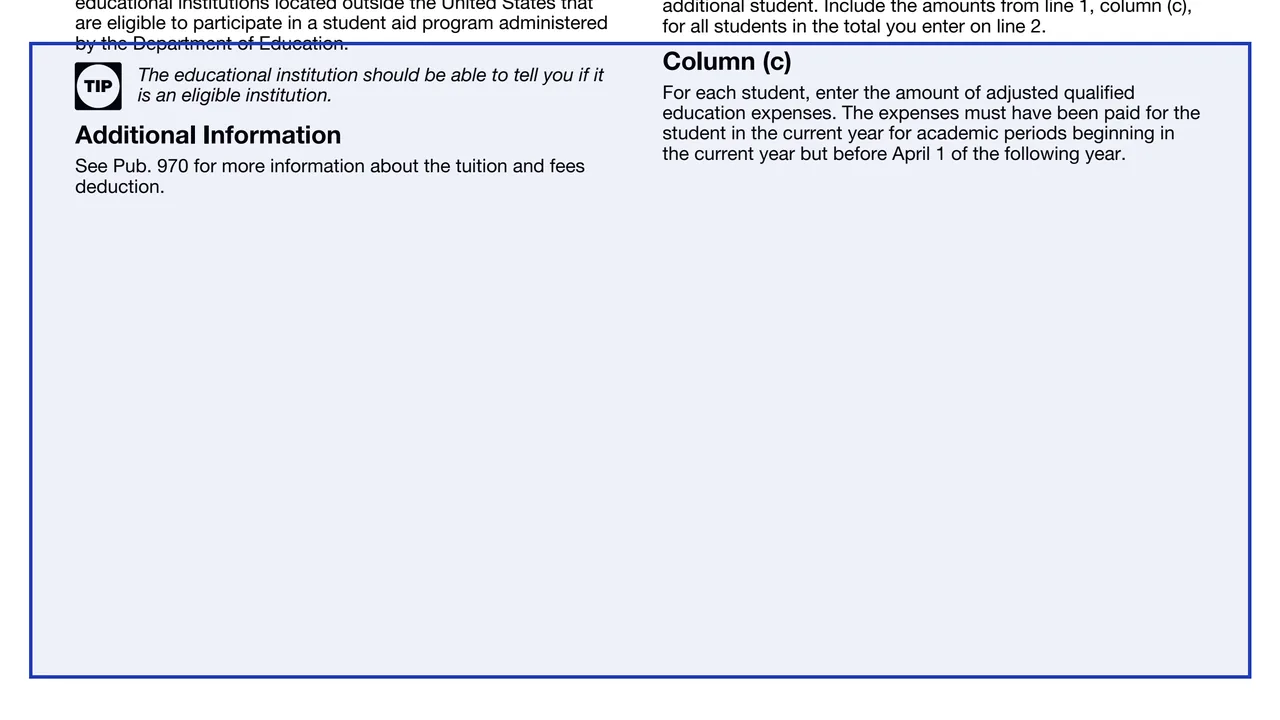
Add column (c) on line 2. Enter total income from Form 1040 or 1040-SR on line 3, and the Schedule 1 adjustments the form lists for the year on line 4.
Subtract line 4 from line 3. The form says Form 2555, 2555-EZ or 4563 filers, and those excluding income from Puerto Rico, see Pub. 970 for the amount to enter.
Enter the smaller amount the form shows. The form says to also enter it on line 21 of the 2019 and 2020 Schedule 1 (Form 1040 or 1040-SR), or line 34 of the 2018 Schedule 1 (Form 1040).
You get the real form, filled in a browser tab, with nothing standing between you and the finished PDF.
The form says to attach it to Form 1040 or 1040-SR.
The form says to file a separate Form 8917 for each year after 2017 for which the deduction is taken.
The instructions say Form 8917 is no longer updated annually, and to use the applicable Form 8917 for previous years, for example the 2017 form for 2017 expenses.
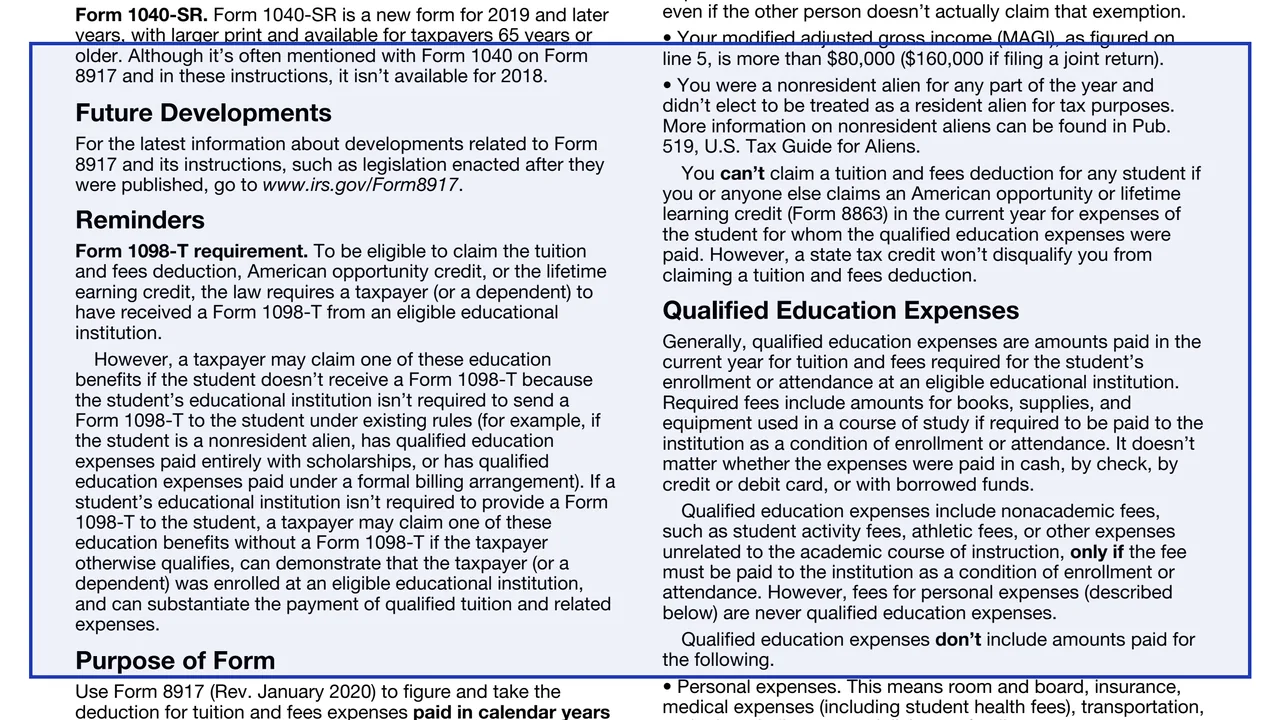
The instructions exclude personal expenses such as room and board, insurance, medical expenses and transportation, and courses involving sports, games or hobbies unless part of the degree program or job skills.
The instructions say expenses paid in the current year for an academic period that begins in the first 3 months of the following year count for the current year only.
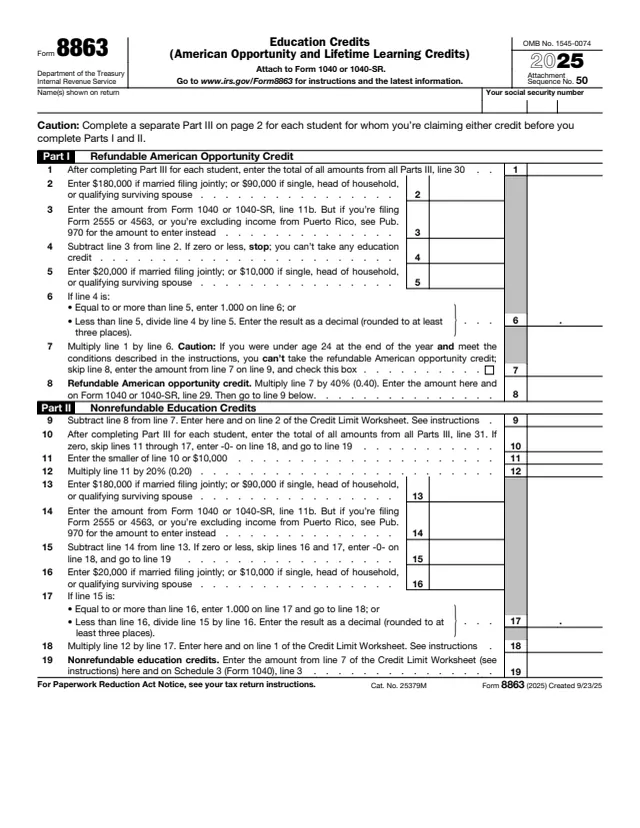
8863
77 fields, 2 pages
1098-T
56 fields, 4 pages
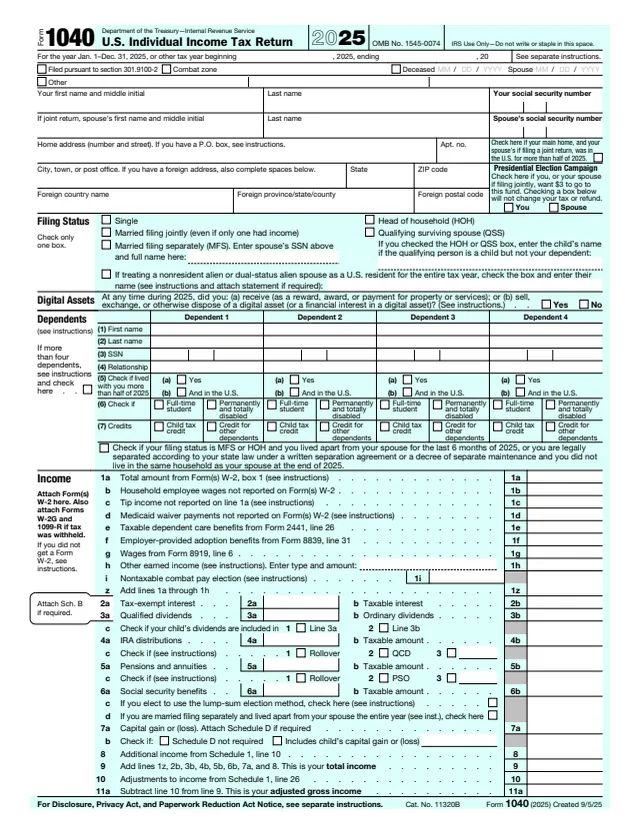
1040
199 fields, 2 pages
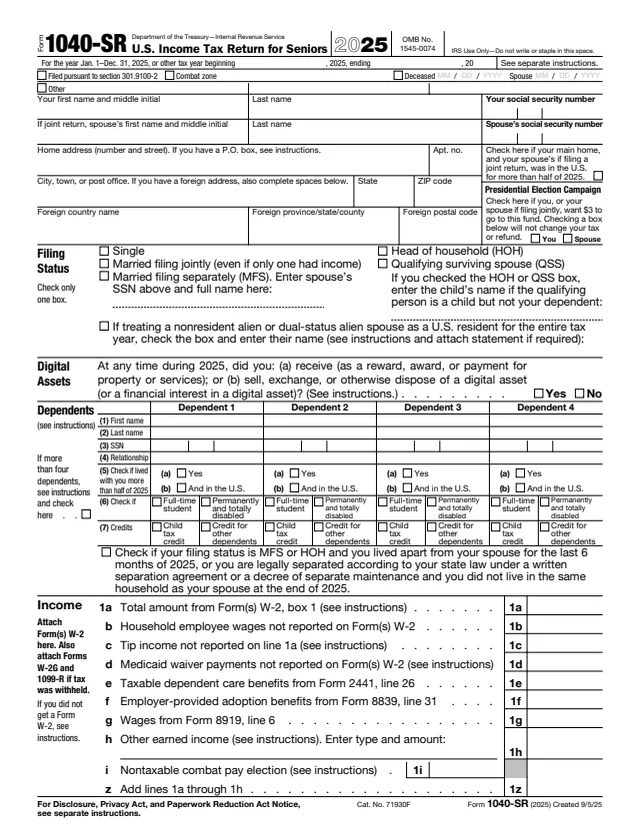
1040-SR
200 fields, 4 pages
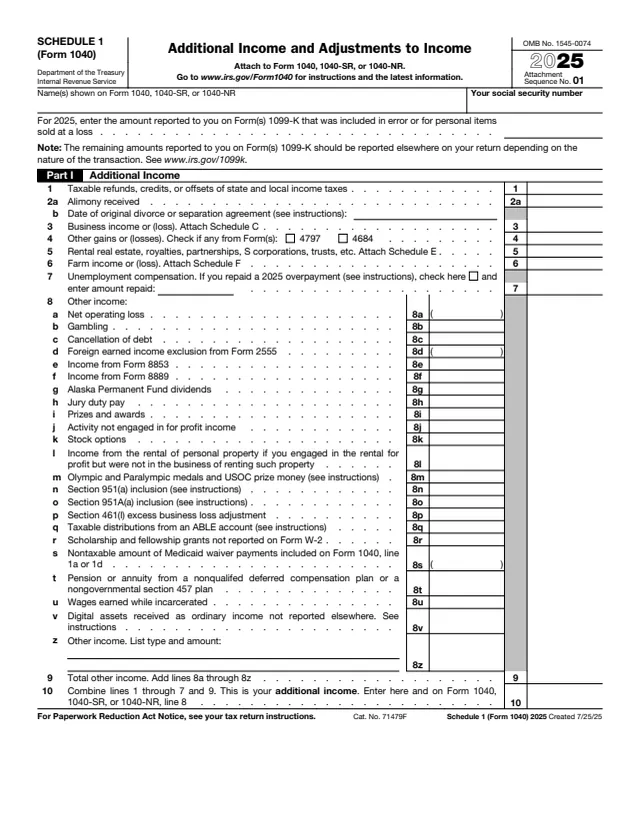
1040
73 fields, 2 pages
The form is attached to an individual income tax return. The instructions describe who may be able to take the deduction and who can't.
No tool matches that search.
The instructions say qualified tuition and fees paid in 2018, 2019 and 2020, and later years if legislation extends the deduction. They say not to claim it for expenses paid after 2020 unless it is extended again.
The form says an education credit from Form 8863 and the tuition and fees deduction can't both be taken for the same student for the same tax year.
The form says no deduction if line 5 is more than $80,000 ($160,000 if married filing jointly). Above $65,000 ($130,000 jointly) the deduction is the smaller of line 2 or $2,000, otherwise the smaller of line 2 or $4,000.
The instructions say the law requires a Form 1098-T from an eligible educational institution, except when the institution isn't required to send one, for example to a nonresident alien student.
The instructions say generally tuition and fees required for enrollment or attendance at an eligible educational institution, including books, supplies and equipment if required to be paid to the institution as a condition of enrollment or attendance. Personal expenses never count.
The instructions say it is generally any accredited public, nonprofit or proprietary postsecondary institution eligible to participate in a student aid program administered by the Department of Education.