Caution box
The income limits and the age, dependent and student rules under which the form says the credit cannot be taken.
8880
Credit for Qualified Retirement Savings Contributions
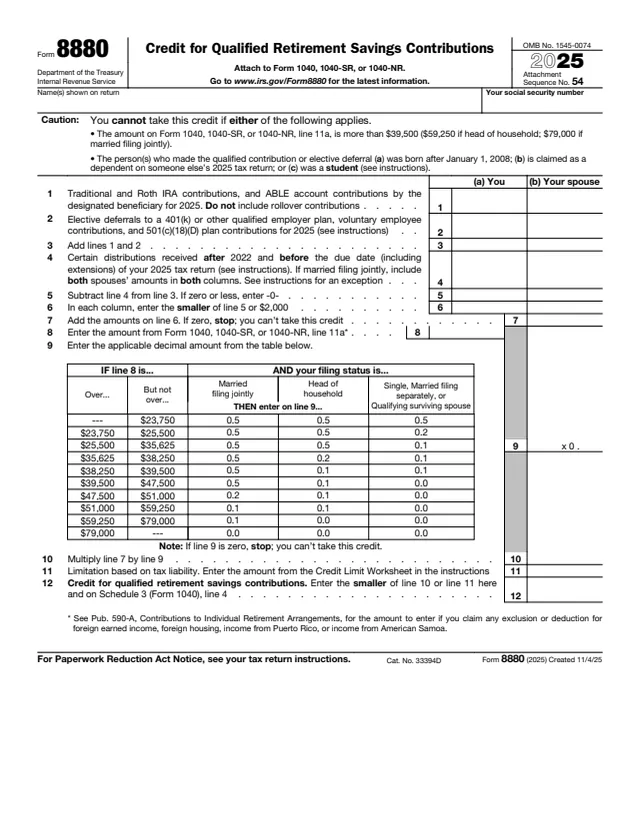
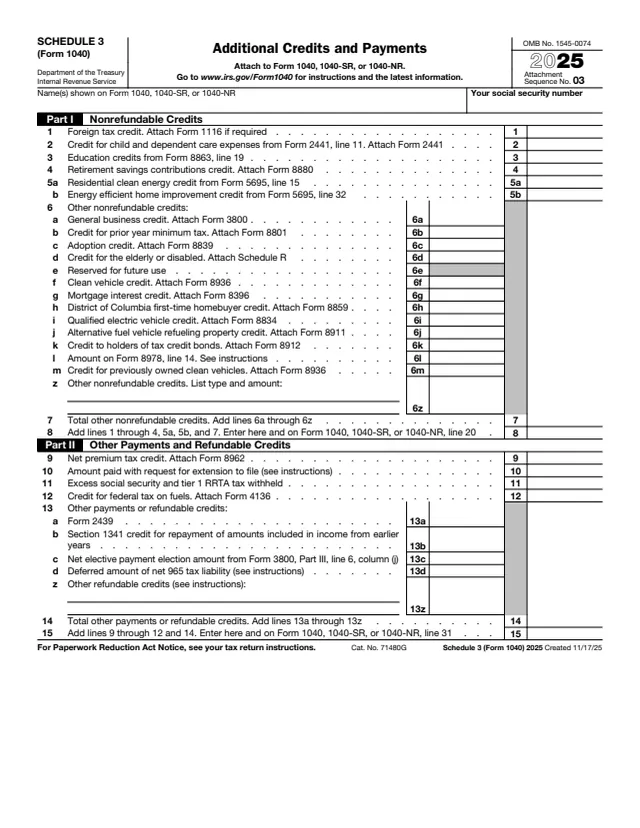
Form 8880, Credit for Qualified Retirement Savings Contributions, is used "to figure the amount, if any, of your retirement savings contributions credit (also known as the saver's credit)." The instructions say the maximum credit is $1,000 ($2,000 if married filing jointly). The 2025 form is attached to Form 1040, 1040-SR or 1040-NR, and the credit on line 12 also goes on Schedule 3 (Form 1040), line 4.
The form adds up contributions to traditional and Roth IRAs, ABLE account contributions by the designated beneficiary, and elective deferrals and voluntary contributions to workplace plans, then subtracts certain distributions. A caution box at the top lists the income limits and the other cases in which the form says the credit cannot be taken.
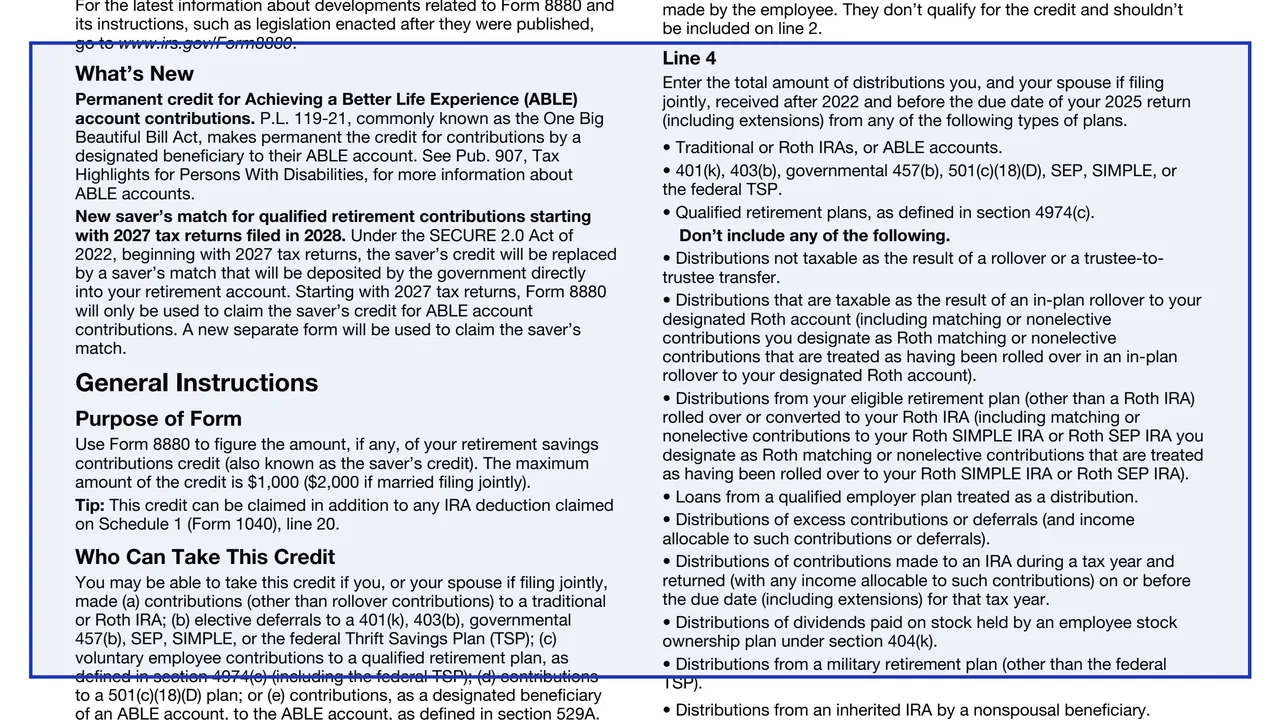
The instructions are printed on page 2 of the form. They say that starting with 2027 tax returns the saver's credit will be replaced by a saver's match, and Form 8880 will only be used for ABLE account contributions. You can fill out Form 8880 free in your browser on this page and download it without an account.
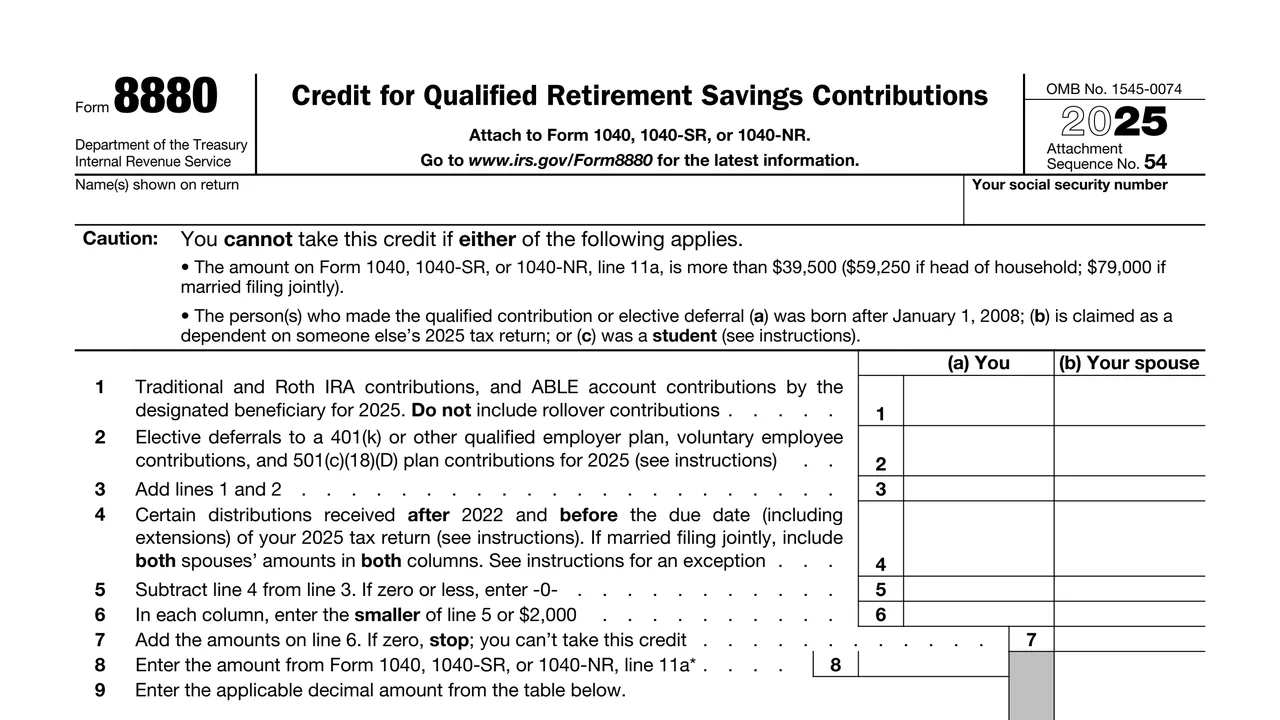
The income limits and the age, dependent and student rules under which the form says the credit cannot be taken.
IRA and ABLE contributions, then elective deferrals and other plan contributions, in column (a) for the filer and column (b) for the spouse.
Certain distributions received after 2022 and before the due date (including extensions) of the 2025 return, subtracted from the contributions.
Each column is capped at the smaller of line 5 or $2,000, then the two columns are added.
The amount from line 11a of the return, a decimal from the table by filing status (0.5, 0.2, 0.1 or 0.0), and line 7 multiplied by that decimal.
The limit from the Credit Limit Worksheet, and the smaller of line 10 or line 11 as the credit.
If either item in the caution box applies, the form says the credit cannot be taken.
Enter IRA and ABLE contributions on line 1, without rollover contributions. Enter deferrals and plan contributions on line 2. The instructions say these may be shown in box 12 of Form W-2, and that section 414(h)(2) contributions are not included.
Enter distributions from the listed plans, leaving out the kinds the instructions exclude, such as rollovers and returned excess contributions. On a joint return both spouses' amounts go in both columns, with an exception the instructions describe.
Subtract line 4 from line 3, cap each column at $2,000 and add the columns. If line 7 is zero, the form says to stop.
Enter line 11a from the return and pick the decimal for that amount and filing status from the table. If line 9 is zero, the form says to stop.
Multiply line 7 by line 9. Complete the Credit Limit Worksheet on page 2 for line 11. Enter the smaller of line 10 or line 11 on line 12 and on Schedule 3 (Form 1040), line 4.
You get the real form, filled in a browser tab, with nothing standing between you and the finished PDF.
The form says to attach it to Form 1040, 1040-SR or 1040-NR.
The credit on line 12 is also entered on Schedule 3 (Form 1040), line 4.
The instructions say a student is someone who, during any part of 5 calendar months of 2025, was enrolled as a full-time student at a school or took a full-time, on-farm training course given by a school or a state, county, or local government agency.
The instructions say this credit can be claimed in addition to any IRA deduction claimed on Schedule 1 (Form 1040), line 20.
The instructions say a saver's match, deposited by the government into the retirement account, will replace the saver's credit, and a new separate form will be used to claim it.
1040
37 fields, 1 page
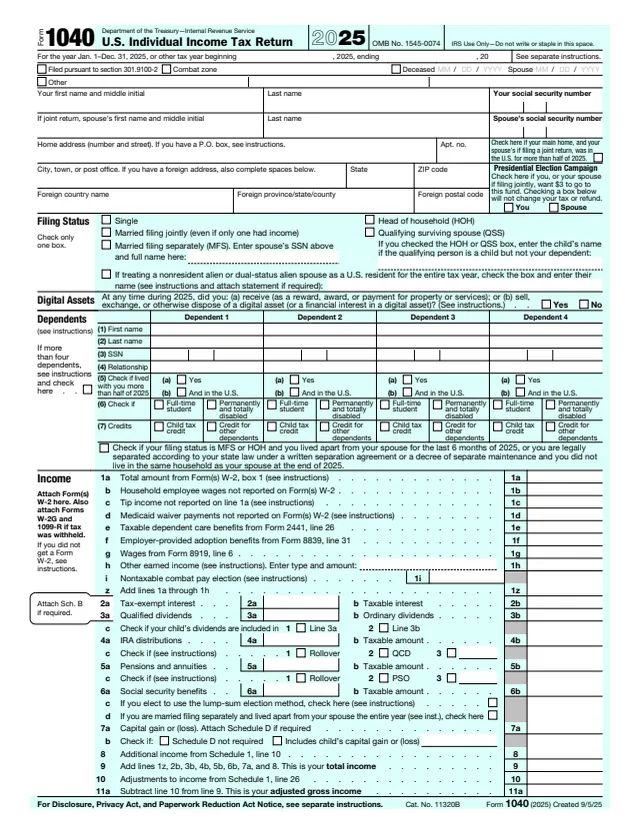
1040
199 fields, 2 pages
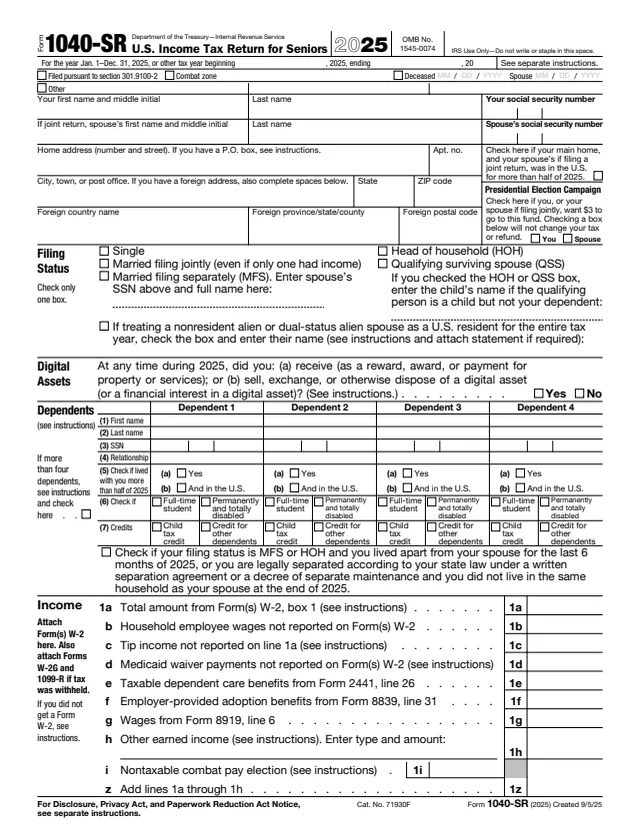
1040-SR
200 fields, 4 pages
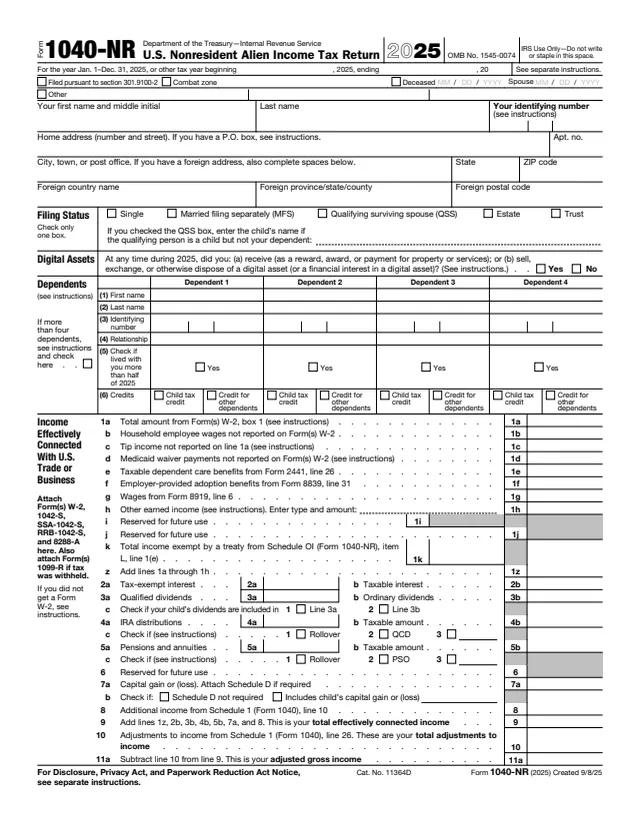
1040-NR
171 fields, 2 pages
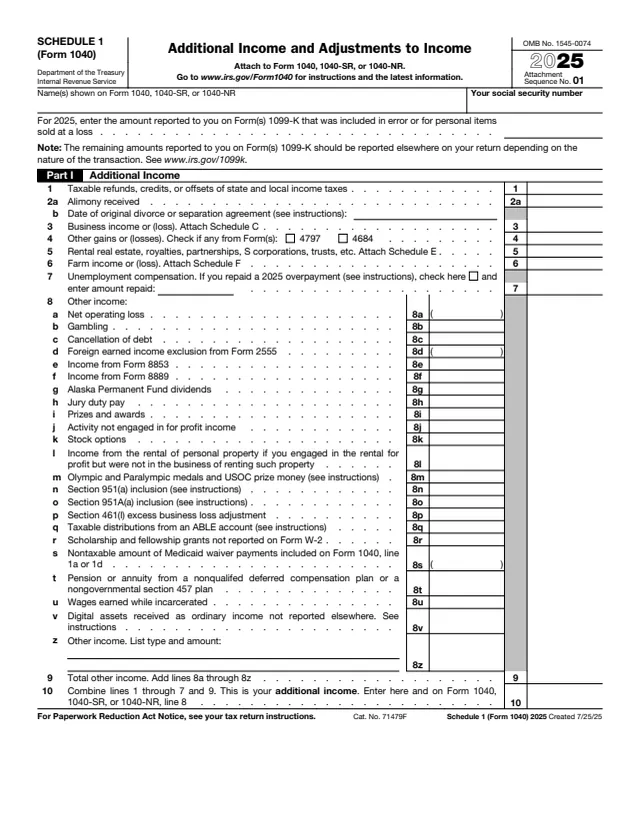
1040
73 fields, 2 pages
W-2
568 fields, 11 pages
Individuals who file Form 1040, 1040-SR or 1040-NR complete it. The instructions say the credit may be available if the filer, or a spouse on a joint return, made one of the contributions they list.
No tool matches that search.
It is the retirement savings contributions credit. Form 8880 figures the amount, if any, based on qualified contributions minus certain distributions.
The instructions say the maximum is $1,000, or $2,000 if married filing jointly.
The form says the credit cannot be taken if line 11a is more than $39,500, $59,250 for head of household, or $79,000 for married filing jointly.
No. Line 1 says not to include rollover contributions.
Someone enrolled full time at a school, or in a full-time on-farm training course, during any part of 5 calendar months of 2025. The instructions say on-the-job training, correspondence schools and internet-only schools do not count.
Yes. The instructions say it can be claimed in addition to any IRA deduction on Schedule 1 (Form 1040), line 20.
The instructions say that starting with 2027 tax returns a saver's match replaces it, and Form 8880 will only be used for ABLE account contributions.